The controversial discovery that our brains can generate new neurons surprisingly late in life is now prompting a rethink of adult brain health, pointing the way to better treatments for stroke, dementia and depression By Jamie Ducharme
Often described as a genius, physicist Sabrina Pasterski built and flew her own plane by the age of 16 and is now developing a mind-bending idea that could finally unify gravity and quantum theory By Miriam Frankel
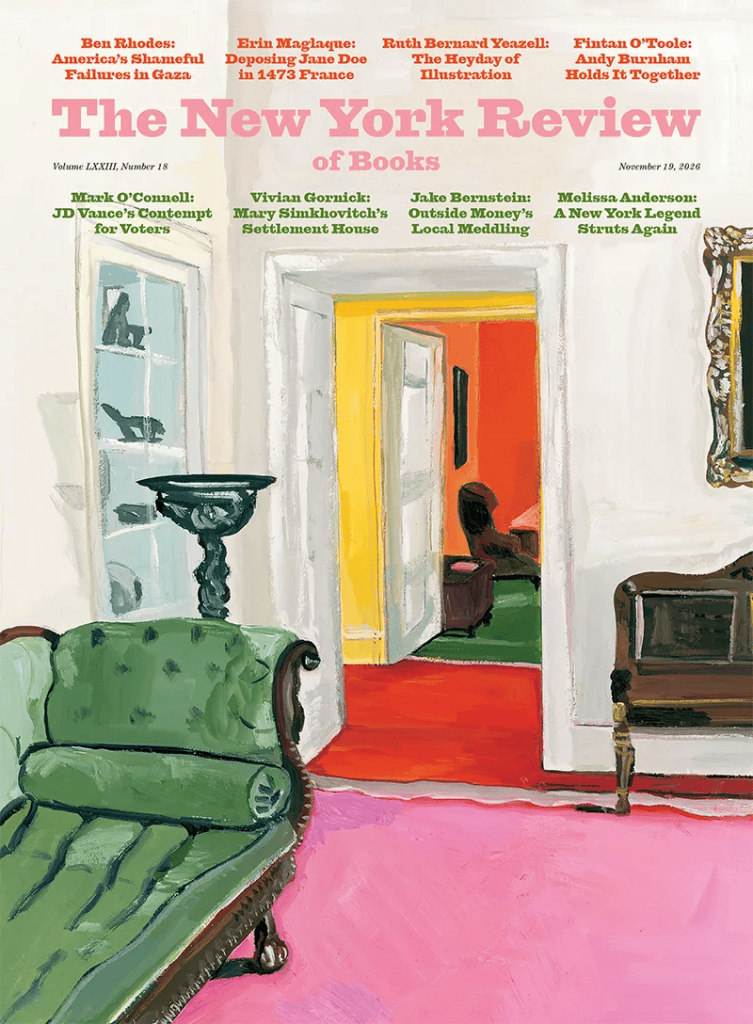
As Israel’s assault on Gaza grew worse and worse, Joe Biden and his advisers acted as though they had no option but to offer their unconditional support. Why couldn’t they see the destruction they were enabling? By Ben Rhodes
Mary K. Simkhovitch, the founder of Greenwich House, believed in the radical idea that housing should be made as livable for the working class as it was for the middle class. By Vivian Gornick
A forensic study of a rape survivor from 1473 Dijon reveals a legal process surprisingly accepting of imperfect victims and contradictory testimony. By Erin Maglaque
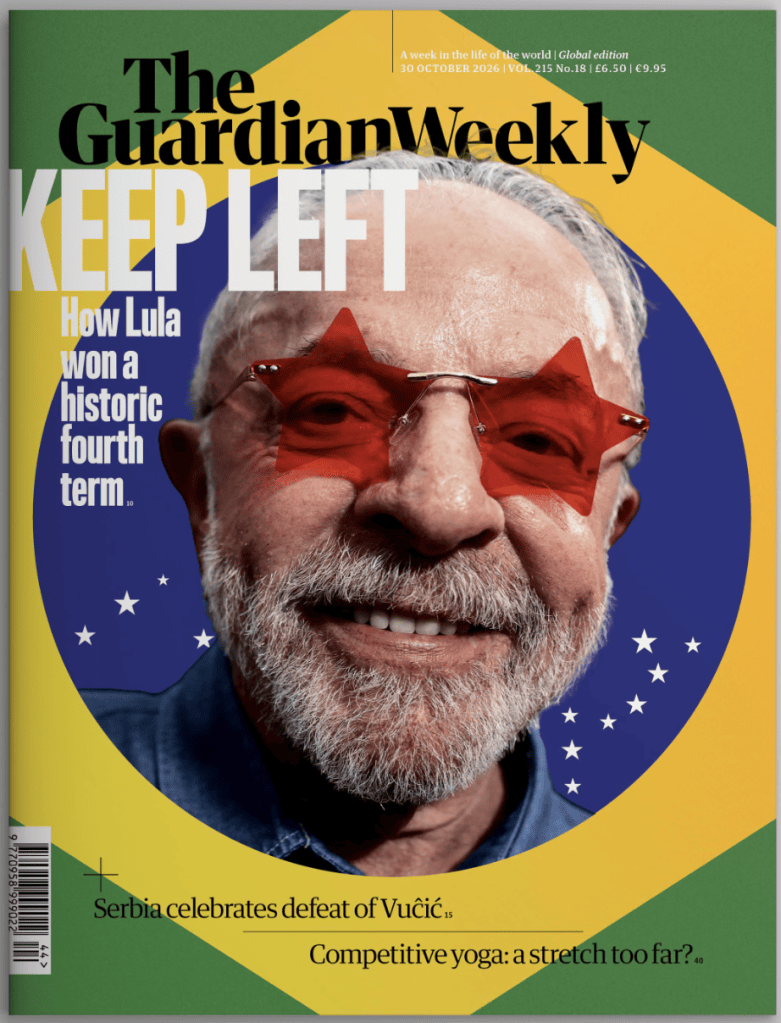
How many grinning faces, jubilant crowds and celebrating politicians can you fit into a single issue of the Guardian Weekly? That’s not a question that often troubles us, but the spectacular triumph of President Luiz Inácio Lula da Silva, winning a historic second-round vote after losing the first to rightwing opponent Flávio Bolsonaro, and the victory of the student-led campaign against autocrat Aleksandar Vučić in Serbia gave me a happy problem to solve this week. In an era when the right seems to be riding high in the world, popular pushbacks against strongmen politicians is something to celebrate.
For our Brazil cover story, Tom Phillips and Tiago Rogero report on the reaction to Lula’s victory and how he pulled eventual success from the jaws of what, until the first results came on Sunday evening, seemed a probable defeat. As government health minister Alexandre Padilha said that evening: “It’s a massive victory – not just for Brazil. It’s also an important signal to the rest of Latin America and to the world.” But, as commentator Jordana Timerman cautions, Brazil has been an exception in Latin America in successfully resisting Donald Trump’s attempt to achieve hegemony over the region.
Spotlight| ‘Pure arrogance’ Google has been in the dock in Finland over the illegal felling of hectares of woodland for its datacentres, reports Miranda Bryant
Science| Out of the blue Why are more planes encountering invisible air turbulence, what can they do about it and what effect will more frequent incidents have on travellers, asks Patrick Keneally
Feature| Bent out of shape? Competitive yoga may sound like anathema to some devotees of the ancient practice but, as Anita Chaudhuri discovers, there is a movement among some yogis to make it an Olympic sport
Opinion| Lame duck presidents can be dangerous beasts If Democratic midterm gains hamper Donald Trump at home, we should be very worried about what he might do abroad when foreign policy is his last bastion of power, says Steve Bloomfield
Culture| Stay faithful As the second series of Celebrity Traitors draws to its conclusion, Michael Hogan meets the people who made it the world’s biggest TV show and finds out why Claudia Winkleman never wants to leave the castle
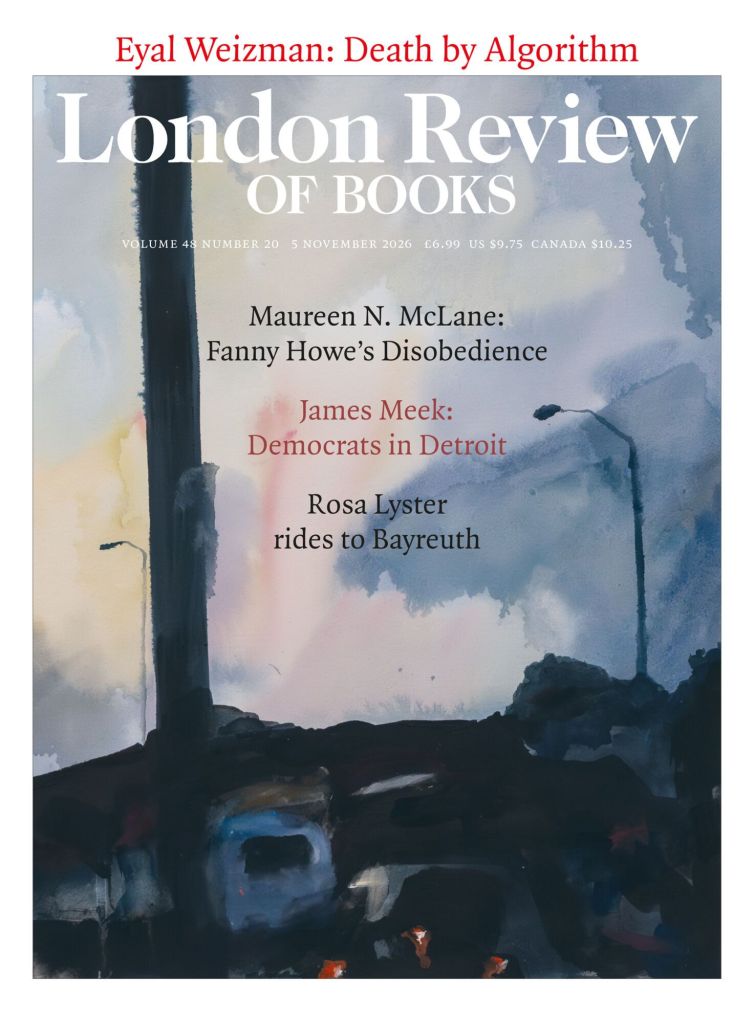
‘To win the Senate, the Democrats need to hold on to the one Michigan seat (out of two) that is up for grabs, and have chosen a new candidate, Abdul El-Sayed, a moderate leftist in European terms, a “communist loser who hates Jews and Israel” according to Trump, “very, very evil”, per J.D. Vance.’ By James Meek
‘The superego – and its precursor, conscience – refers to the part of us that has no curiosity about ourselves. It’s the saboteur of curiosity about ourselves. And that part of us, like a narrow-minded fascist, has only one project: to destroy our pleasures in being alive by trying to kill our curiosity (or by making us frightened of our curiosity, which amounts to the same thing).’ By Adam Phillips
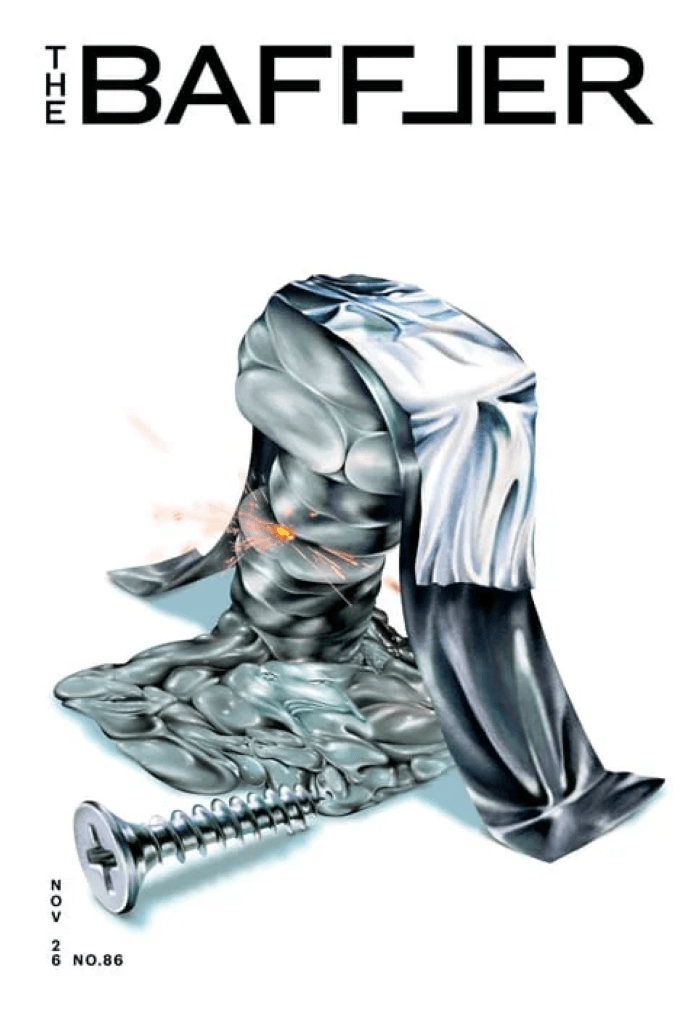
‘Israel’s automated targeting system allows for the responsibility for “industrialised annihilation” to be shared between coders, operators, legal officers who pre-set the level of collateral damage, officers who approve the strike, officers who choose the bomb and the pilots or drone operators who launch it. “I am just a small screw in the system,” one of the interviewees says, quoting Eichmann’s defence during his trial in Jerusalem. The system that begins with a phone number being put into a computer system ends with an entire family crushed under the rubble.’
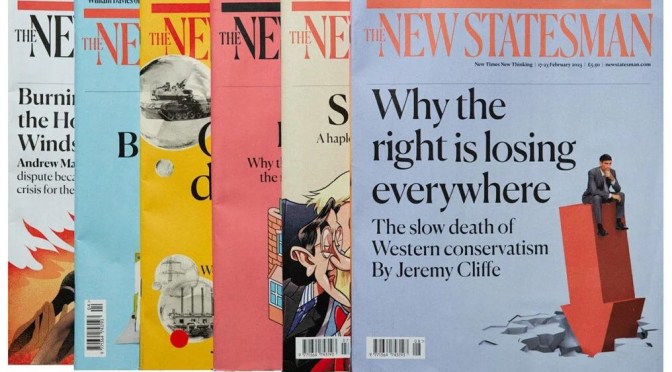
THE NEW STATESMAN: The latest issue features Tom McTague defending the magazine’s radical spirit, arguing that every publication needs a driving project. Emily Lawford examines the modern Conservative party, noting that true believers remain undeterred by recent electoral failures. Nicholas Harris uses Cornish nationalism as a mirror for broader British politics, while Andrew Marr warns Labour against falling for opposition election strategies. Internationally, JS Rafaeli critiques the Israeli state following an arrest in the West Bank. Finally, the collection includes a public letters feature emphasizing legal equality.
In defence of the New Statesman’s capital-R Radical spirit
Last week’s open letter in support of Sally Rooney, calling for the Terrorism Act to be amended to protect free expression, generated an extraordinary response. Not all of it has been positive, of course. While many readers wrote in to endorse the letter, others argued – reasonably and often forcefully – that it was Rooney who was to blame for the situation, not the government. She has chosen, of her own volition, to self-censor by going out of her way to breach a law that, irrespective of its merits, should be followed because it is the result of a democratic process. One reader, Peter O’Halloran, from Cavan, Ireland, was among many who got in touch to make this point: “While taking a moral stance is, of course, to be admired, surely the law is the law?”
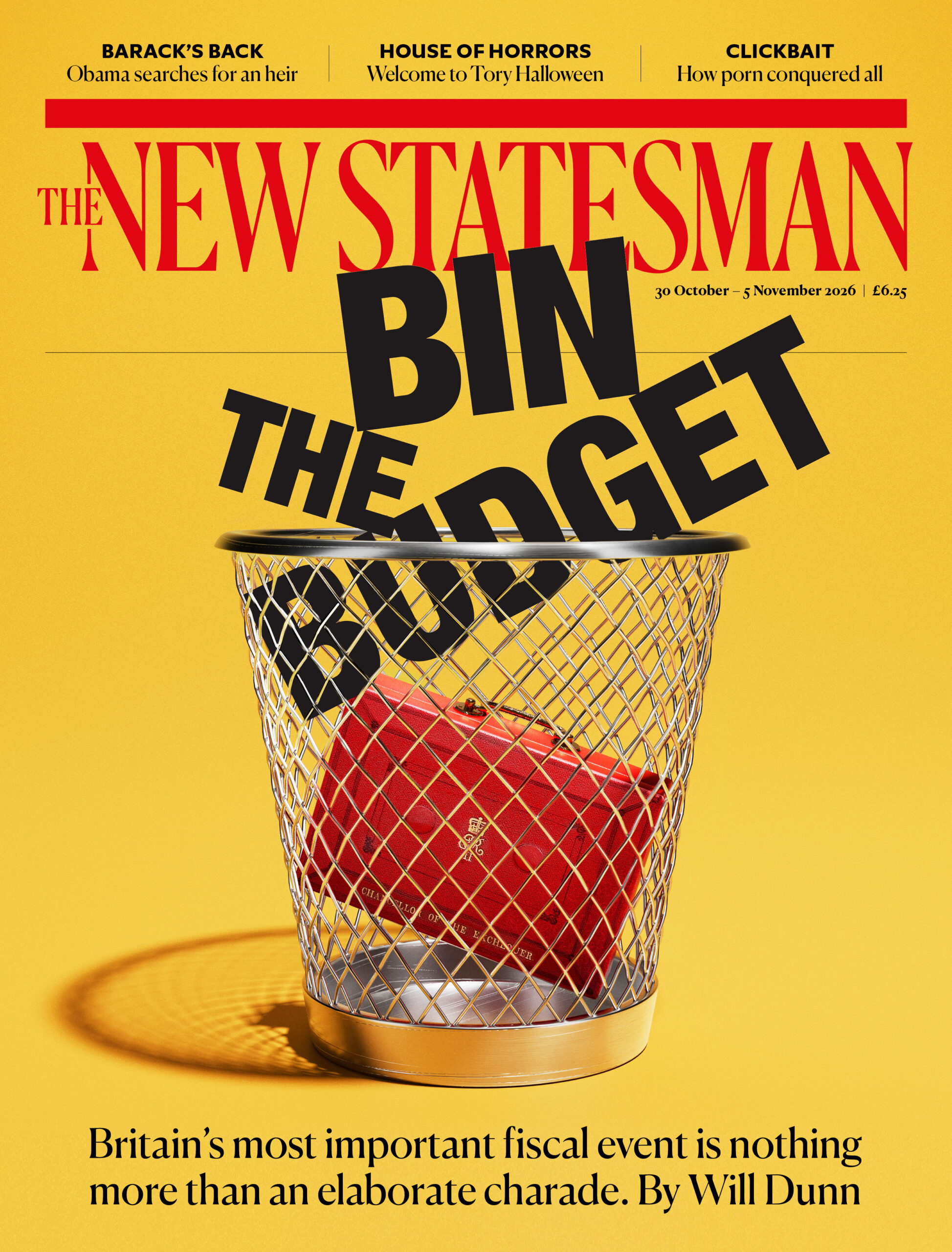
It is an inherently dishonest way to run a country By Will Dunn
In recent decades, a sinister new force has assumed power in Westminster. They can appear in any political party. They are formidable at converting politicians to their cause. They’re not the Blob, or the Deep State, or the Lizard People. They’re worse. They are the Budgetarians, and no matter which party is in power, they are running the country.
Don’t try to read the mind of the British Everyman By Anoosh Chakelian
Every few weeks, I am surveyed for my opinions – not as a journalist, but as a human – by a polling firm. Five years ago, our household was chosen by whatever magical selection process these companies concoct to be part of a polling panel, answering questions about everything from pension literacy to the state of our neighbourhood to how we feel on an emotional scale about heat pumps.
I sometimes wonder how to answer. Should I tick “yes” that I’ve heard of political buzz terms such as “levelling up” or “net zero”? Would someone of my demographic have come across them if it hadn’t been for having a job like mine? And am I being misleading about my media habits if I tick that I read every newspaper, multiple times a month, even if it’s only for work?
The socialist cash that collected capitalist trash by David I. Backer
Today, the crossroads of socialism and barbarism meet in cities across America. In New York, Seattle, and Chicago, organizers have seized local and state authority, empowering mayors Zohran Mamdani, Katie Wilson, and Brandon Johnson—and a nonnegligible number of other politicians—to pursue the left project municipally. These local victories, won in the years since 2020, have kicked off a positive feedback loop and inspired yet more socialists to run for office in our time. The candidates tell us they want to collectivize the relations of production. Can they?
Last winter, the Mexican Army killed its main foe. Nemesio Oseguera Cervantes was spending a Sunday in Tapalpa, a tourist town just south of Guadalajara, the capital of Jalisco. Maybe Oseguera, a cartel leader who rose to international infamy over the past two decades, was there to visit the sixteenth-century chapel that’s nestled behind the main square, or maybe he wanted to admire the town’s snake-decorated fountains. In all likelihood, he was confident that authorities in that part of the country would ignore him spending time in the state that gave its name to his organization, Cártel de Jalisco Nueva Generación.
On reality television, all tenants are squatters by Michael Friedrich
A bouncer-looking guy with a steel-wool goatee lies his way into a woman’s Washington State home, posing as an inspector. He moves from room to drywall-covered room, testing smoke alarms. The home’s occupant, a quiet, middle-aged woman named Sally Barton Jeffries, offers the guy a glass of water. Her place looks cozy enough, furnished with an orange sectional, a checkered rug, and a table in the eat-in kitchen. She mentions that she has lived there for nine months.
Before we saw a single parakeet, we heard them: a disembodied static that grew louder as we approached Hither Green Cemetery in southeast London. It was an early evening in late June, and we had come to witness an invasion. By the time my friend and I reached the cemetery’s western edge, the clamor was all-encompassing. We hopped the fence and picked our way across the gravestones. Above us now were the birds themselves, their kryptonite-green plumage, scab-red beaks, pearly black collars, and trailing tail feathers unmistakable: Psittacula krameri, the ring-necked parakeet.
Misrepresented by the right and misunderstood by the left, the Sage of Baltimore delivered scathing—and still bracing—indictments of American injustice. By Andrew Holter
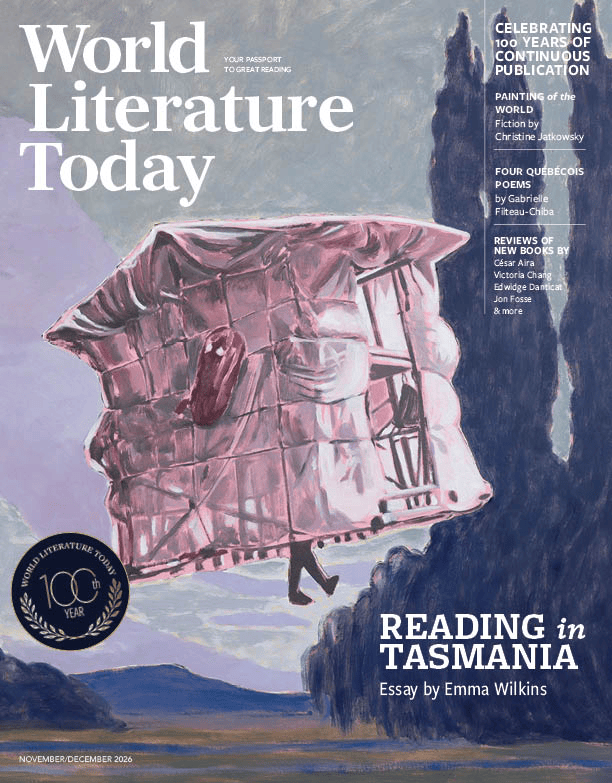
WORLD LITERATURE TODAY: The latest issue features ‘Reading in Tasmania’. The 100th year of continuous publicationgifts readers all their favorite genres—a profusion of essays, poetry, book reviews, creative nonfiction, fiction, interviews, a booklist for Trans Awareness Month, a postcard from Colombia, and more. Emma Wilkins’s essay on Tasmanian literature provides the cover feature, and translated work from China, Egypt, Mexico, Quebec, and Russia enlivens the issue. Reviews of new books by Solvej Balle, Emmanuel Carrère, Victoria Chang, Edwidge Danticat, Jon Fosse, and dozens more round out the year with essential reading-list titles.