
Category Archives: Literature

THE SUN LITERARY MAGAZINE – NOVEMBER 2026

THE SUN LITERARY MAGAZINE: The latest issue features an interview with Jason Baldes on restoring the North American buffalo as a keystone species, Laura Maylene Walter’s fiction piece “Rare Species,” Charles Hood’s essay examining the historical nuances of General Custer’s death, Amy Butcher’s memoir on personal boundary issues titled “Red Light, Green Light,” and a collection of reader-submitted reflections centered on the concept of “Too Much”.

The Healers – Jason Baldes on Restoring the North American Buffalo

Returning the buffalo to its ecological role as a keystone species, bringing back plant and animal biodiversity, is in itself healing. We take care of the buffalo, the buffalo takes care of the land, and both take care of us. By Leath Tonino

Aage eighteen, Jason Baldes, a member of the Eastern Shoshone Tribe, traveled with his father, a US Fish and Wildlife Service biologist, from the Wind River Indian Reservation in Wyoming to the Serengeti Plain of East Africa. In addition to lions and zebras and hyenas, Baldes witnessed the migration of 1.5 million wildebeests—one of the planet’s last remaining examples of a huge population of terrestrial mammals roaming freely over the land. “That was the light bulb moment for me,” he says today, reflecting on his decades of effort as an ecologist and activist. Watching the beautiful and awe-inspiring spectacle, he understood that the mega herd represented a mere fraction of the number of bison—or buffalo, as Baldes prefers to call them—that would have been visible in North America a few short centuries ago, when they numbered in the tens of millions and inhabited the majority of the continent.

The Many Deaths of George Armstrong Custer

In popular tradition General Custer was the last to die, though there is no way to know the final sequence of events. He reportedly had been shot twice: once in the left temple and once just below the heart. ByCharles Hood

The first time US Army general George Armstrong Custer died was on Sunday, June 25, 1876, a centennial year in Anglo-European America. He died in the late afternoon along with 267 other soldiers, civilians, and Native American scouts in the Little Bighorn Valley of Montana. These deaths took place during what are now called the “Indian Wars,” although for most of American history it’s hard to think of a time when there wasn’t an Indian war.

The Seventh Cavalry, which Custer led, had split into multiple columns, and all came under attack, though only Custer’s portion—made up of five out of eleven total companies—was wiped out completely. That outcome was more or less inevitable, given that Custer had misjudged the size of the coalition of Lakota, Dakota, Sioux, and Northern Cheyenne his two-hundred-odd men were facing. Or maybe he hadn’t wanted to admit to himself that he was up against a combined force of at least a thousand, and perhaps as many as three or even five thousand, depending on which source you asked. Once the battle started, there was no way Custer and his men would not all be killed. The only question was whether they would die before or after they had used up all of their water and ammunition.

Rare Species

I walked back to my sister’s room and stood in the doorway and listened to her breathe. Maybe some of those seahorse facts weren’t even true. ByLaura Maylene Walter

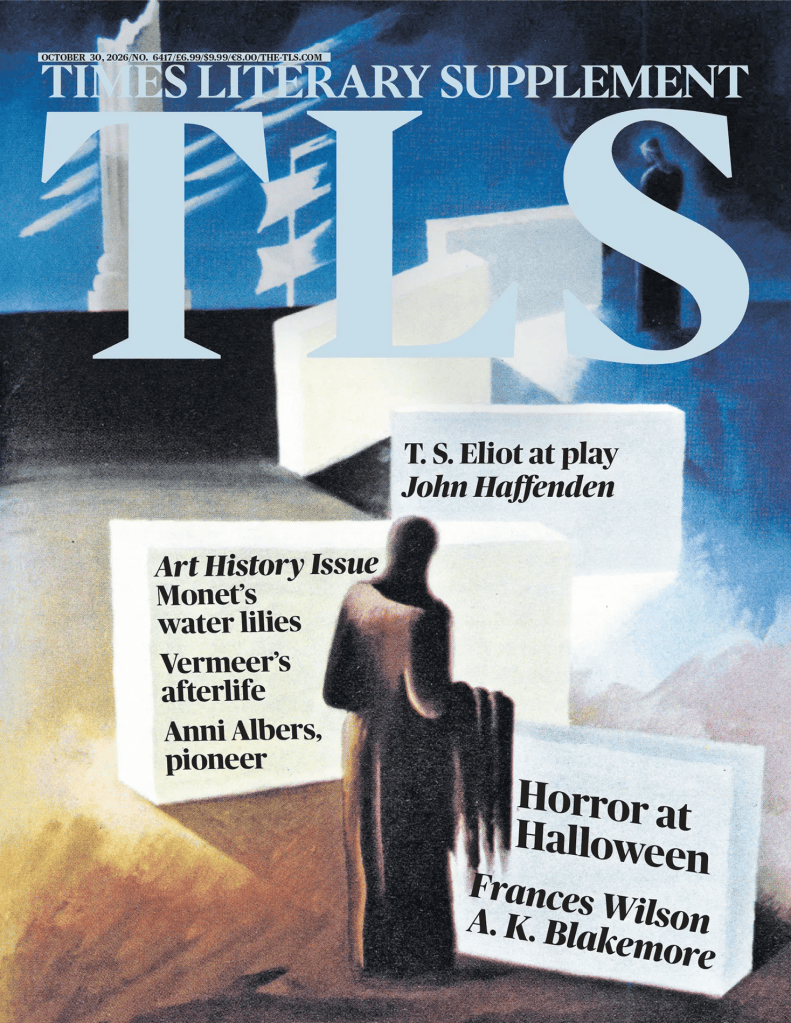
TIMES LITERARY SUPPLEMENT – OCTOBER 30, 2026

TIMES LITERARY SUPPLEMENT: The latest issue features ‘ART HISTORY ISSUE’ – Monet’s water lilies, Vermeer’s afterlife and Anni Albers, pioneer….

‘Our guide into the darkness’

Edgar Allan Poe’s downward trajectory By Frances Wilson

Love at first bite

The subversive sexuality of the literary vampire By A. K. Blakemore

A patch of yellow wall

The modern cult of Vermeer By James Hall

On repeat

Reflections on writing, addiction and Monet’s water lilies By Marie Darrieussecq

BOSTON REVIEW MAGAZINE FALL 2026 PREVIEW

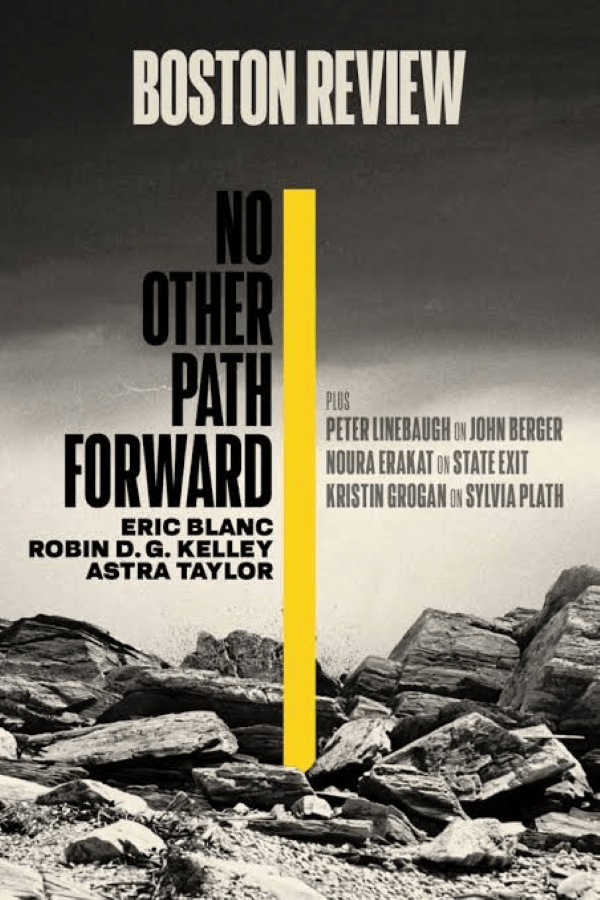
BOSTON REVIEW MAGAZINE: The latest issue features ‘NO OTHER PATH FORWARD’ – Eric Blanc on organizing the left, Robin D. G. Kelley on the defund movement, Astra Taylor on the data center backlash, and more.

Mencken Agonistes

Misrepresented by the right and misunderstood by the left, the Sage of Baltimore delivered scathing—and still bracing—indictments of American injustice. By Andrew Holter

Slavery Pure and Simple

A recent bombshell report documents brutal cases of forced labor in Mexico. Why can’t the government take it seriously? By Claudio Lomnitz

The Rise and Fall of Tech Worker Power

Crushing our union drive at Twitter opened the floodgates for Silicon Valley’s assault on labor. By JS Tan and Clarissa Redwine

no other path forward

The Left’s Achilles’ Heel
Can we out-organize the right?
Eric Blanc

The Price of the Ticket
The long arc of the defund movement.
Robin D. G. Kelley

Who Wants AI?
Lessons from the data center backlash.
Lily Hu, Robinson Meyer, Nicholas Rabb, and Astra Taylor

Working Like a Dog
The future of animal rights.
Aaron Neber


features

Gleaner, Cobbler, Commons
Re-establishing the human with John Berger.
Peter Linebaugh

Is It the Phones?
Anatomy of a moral panic.
Lorna Finlayson

A Bigger Hell
Slavery returns to Mexico.
Claudio Lomnitz

Exit and Exception
The Board of Peace as template for a new world order.
Noura Erakat

POETRY LONDON MAGAZINE – AUTUMN 2026 PREVIEW

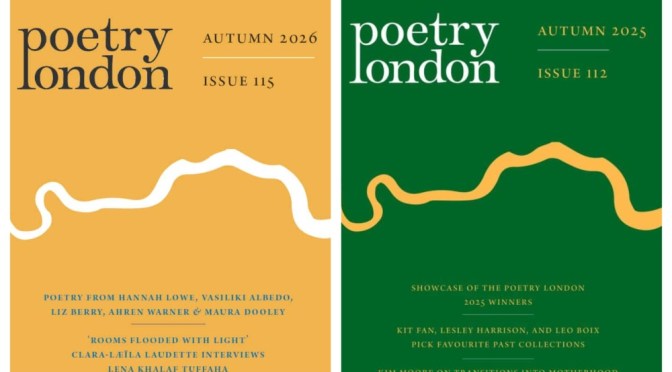
POETRY LONDON MAGAZINE: The latest issue features new work from Liz Berry, Hannah Lowe, Ahren Warner, and Maura Dooley. We also have prose by Joey Connolly, an interview between Clara–Læïla Laudette and Lena Khalaf Tuffaha, and reviews of Helen Mort, Dean Browne, Karen Solie, and Jorie Graham.

Rooms Flooded with Light

Lena Khalaf Tuffaha explains that her poems—written over a decade from a position of relative safety in the US—did not target a specific reader, but rather reflect an evolving, non-linear attempt to communicate across a broad and complex readership profoundly shaped by ongoing trauma and genocide.

Under Pressure

In her new collection Killing Spree, poet Jorie Graham evokes the dual-headed Roman deity Janus to confront a precarious present by looking back at an out-of-reach past while facing a distressing, violent future.

‘it been really interesting is good to talk face to face isn’t it’

Blown Rose and Dialect Press sum up some small press publishing. By Julia Bird, Mike Sims, Juliette Morton

TIMES LITERARY SUPPLEMENT – OCTOBER 16, 2026

TIMES LITERARY SUPPLEMENT: The latest issue features ‘The Glory of the Garden’ – Jonathan Bate’s cultural history….

A Nobel for new forms

Anne Carson’s juggling act By Tristram Fane Saunders

Bowers of bliss

The story of gardens and their cultural significance By David E. Cooper

Appalachian variations

Buried dreams of a small-town prodigy By Beejay Silcox

Myth and man

A flawed but brilliant poet ‘dealt a cruel hand by fate’ By Gabriel Josipovici

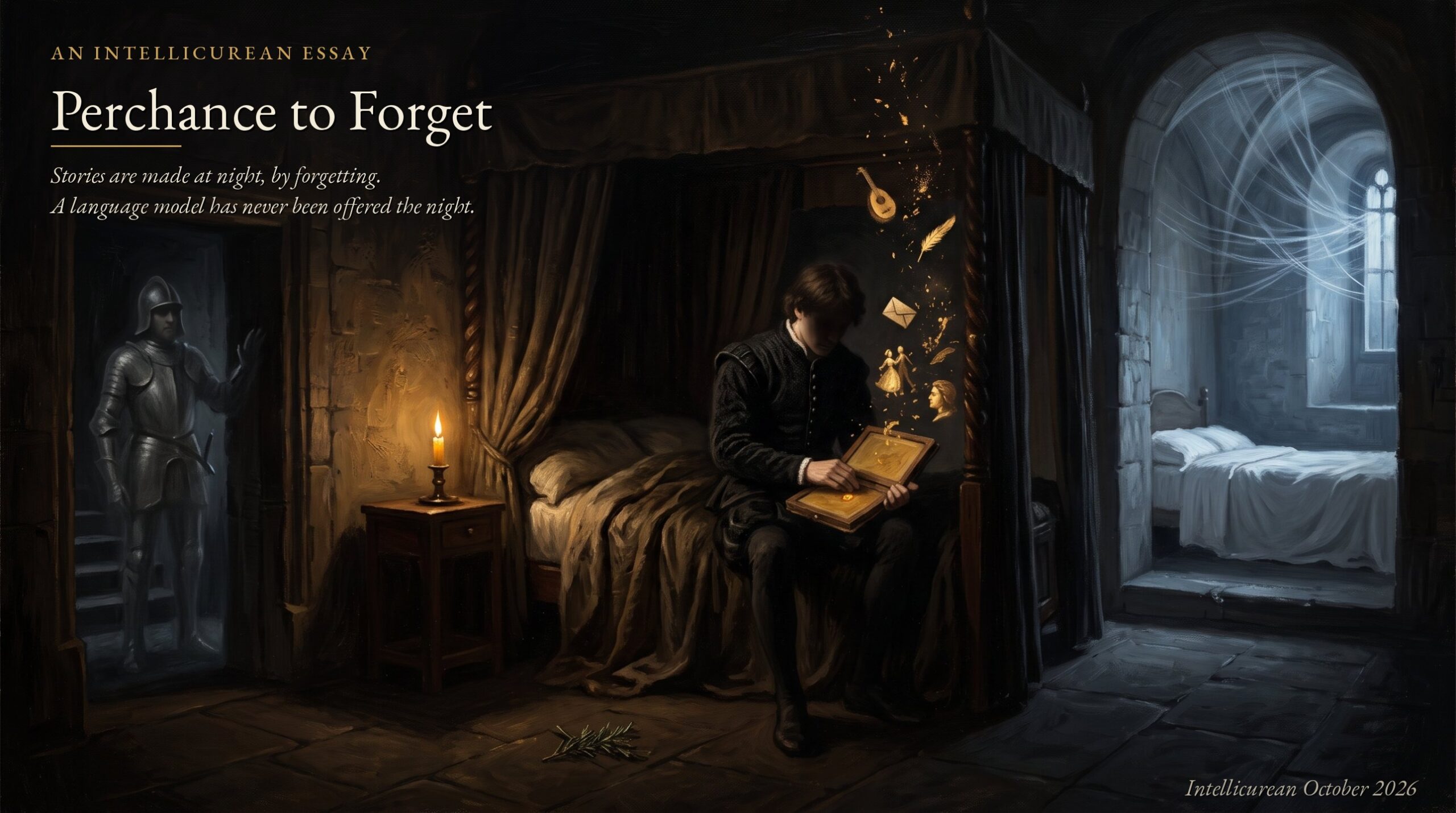
PERCHANCE TO FORGET

Intellicurean Essays· on Intellicurious

You wake the morning after a long dinner with an old friend, and the exact words are gone. What remains is the turn of it, the first draft of a story you may tell for years. Something chose what to keep while you slept. A new essay asks what happens to the minds that never get that night.


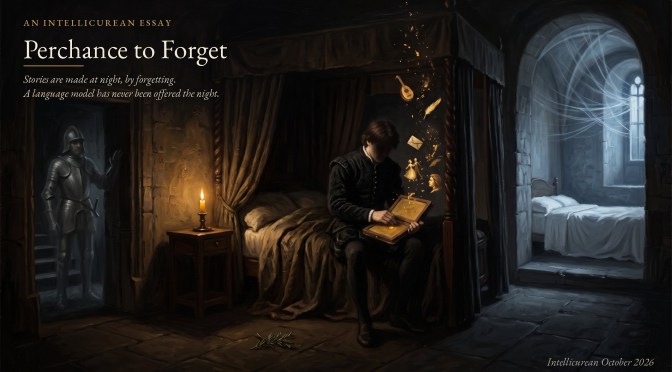
Perchance to Forget: a candlelit stone chamber at night. A young man in black sits on the edge of an unslept four-poster bed, pressing smooth a wax tablet as small gold shapes, a lute, a feather, a letter, a dancing couple, a face, drift up from it and dissolve. A faded armored ghost stands in a doorway at left; at right, through an arch, an empty, perfectly made bed lies under cold blue-white threads of light.
A prince wipes the table of his memory; across the hall, a bed no one sleeps in. Made for the essay.

Why we’re pointing you there

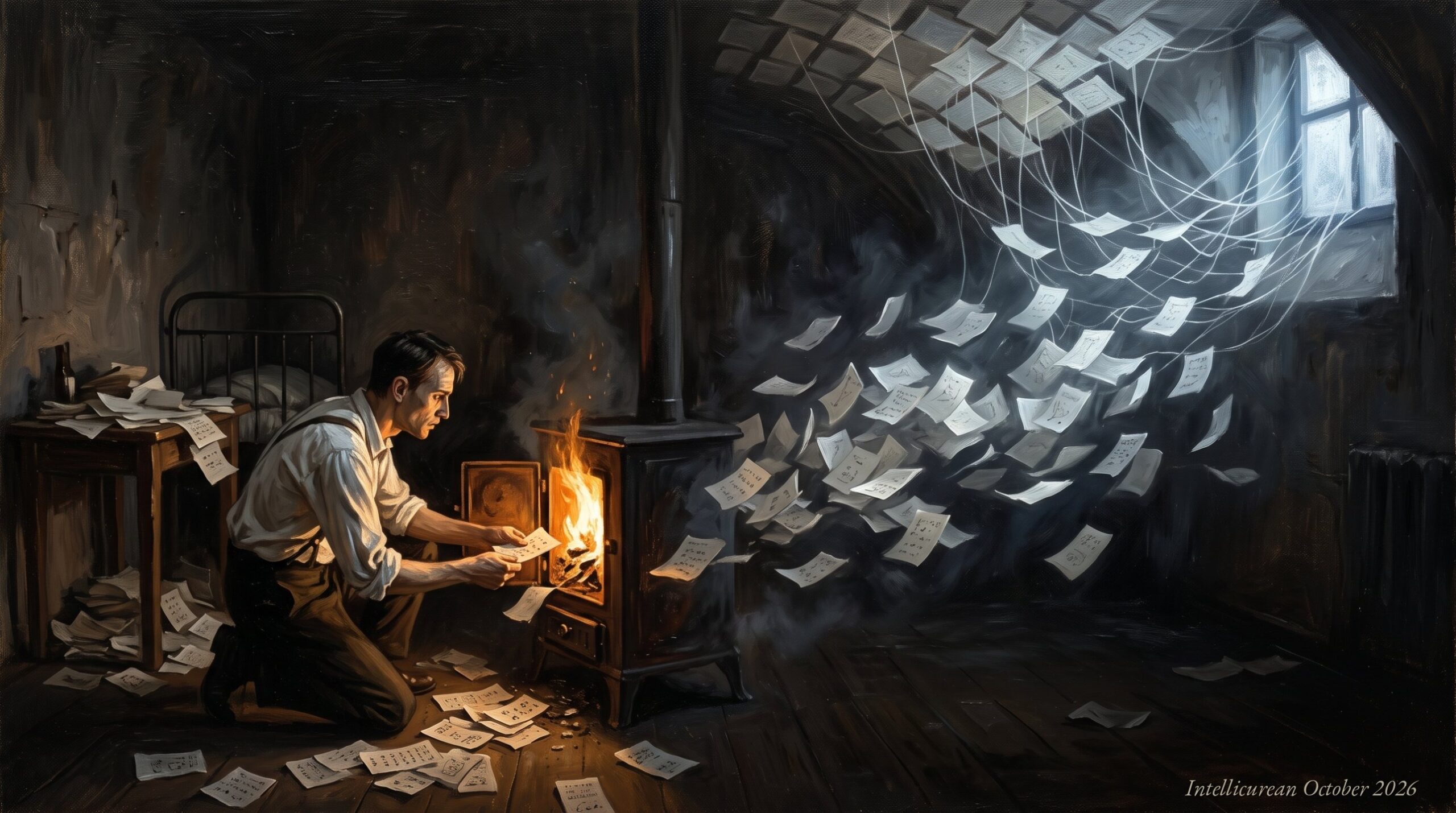
Sleep, on one leading account, is when the brain lets most of the day go, and the selection is where stories begin. Michael Cummins follows the people who could not make that trade. Borges’s Funes remembers every leaf of every tree and cannot think, because “to think is to forget a difference.” Solomon Shereshevsky, the real-life mnemonist Alexander Luria studied for almost thirty years, wrote down what he wanted to forget, burned the slips, and still saw the words. Nietzsche held that without forgetting it is impossible to live at all, and slept badly. Oliver Sacks’s amnesiac patients kept nothing, and one of them invented a new world every few minutes, while Sacks’s own journals, it turns out, confess inventions of his own.

Then the machine. A language model, the essay argues, has two memories, and they are opposites: a vast library that forgot almost every particular, and a conversation it holds entire and keeps none of. What it lacks is the night between them. When engineers try to make a model unlearn, the forgotten knowledge comes back, just as the words came back to Shereshevsky through the fire. The essay says plainly that it was drafted with Claude, and it asks one question: what would it mean for a machine to sleep?

A dark 1920s room at night. A man in shirtsleeves kneels at an open iron stove, feeding slips of paper into the fire. From the smoke, a stream of pale slips pours out across the room toward a cold blue-white window, where fine threads of light catch them and stitch them into a tiled lattice across the ceiling.
Burning the paper, and what survives the fire. Made for the essay.
Read the full essay at Intellicurean →

Essays & Reviews for the Intellectually Curious

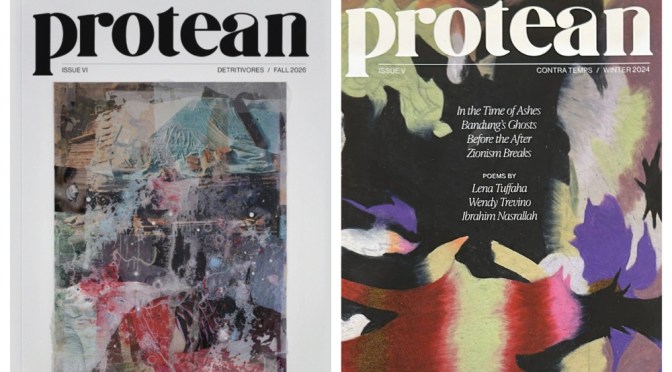
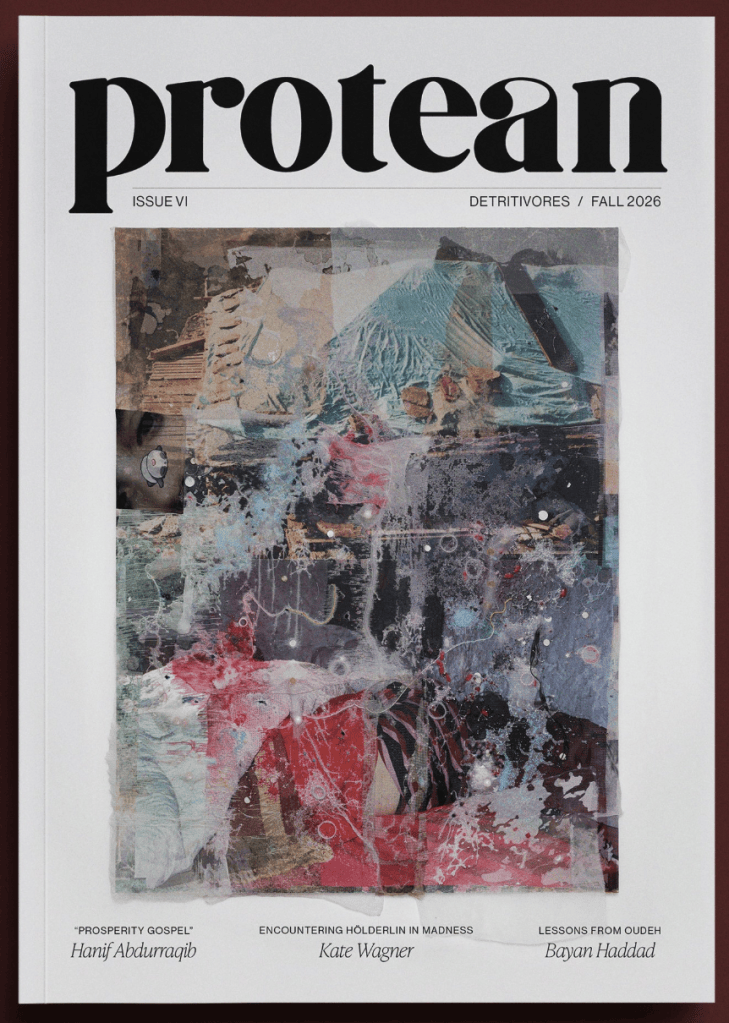
PROTEAN MAGAZINE PREVIEW – FALL 2026

PROTEAN MAGAZINE: The latest issue features a critique of the University of California’s institutional history, an interview exploring the life and politics of John Berger, an excerpt celebrating historical Palestinian revolutionary resistance literature, a poignant reflection honoring a murdered Palestinian community advocate, Palestinian poetry confronting immense grief with unyielding, steadfast resilience, and verses examining how modern capitalism structures contemporary family forms.

Institutional Optimism

Scholar, author, and activist Tony Platt reviews the new narrative history by Miriam Pawel, “California Dreams: The Making and Remaking of the University of California.” Pawel’s narrow focus on five high-achieving alumni, argues Platt, elides both radical traditions and unethical…

Mawwal

Palestinian national poet Mahmoud Darwish’s “Mawwal” confronts immeasurable grief with unbending steadfastness: “the stabs of daggers I prefer / to being ruled by the vile.”

I lost a beautiful dream,
I lost the scent of the lilies,
and my night was long,
upon the fences of gardens…
But I never lost my way!
The palm of my hand
is now accustomed to the wounds of hope.
Shake my hand hard
and a river of songs will flow forth.
Mother of my colt and sword:
Mother mine, here’s a ditty of love!
Mother mine, a ditty!
The stabs of daggers I prefer,
to being ruled by the vile.

Tom Overton on John Berger: From Life

Andrew Holter interviewed Tom Overton, author of a new biography, “John Berger: From Life,” out from Verso Books. In this fascinating discussion, Overton discusses his friendship with Berger, the biography’s literary approach, Berger on Palestine, and future plans for scholarship…

MYTHS OF PERSISTENCE

Intellicurean Essays· on Intellicurious

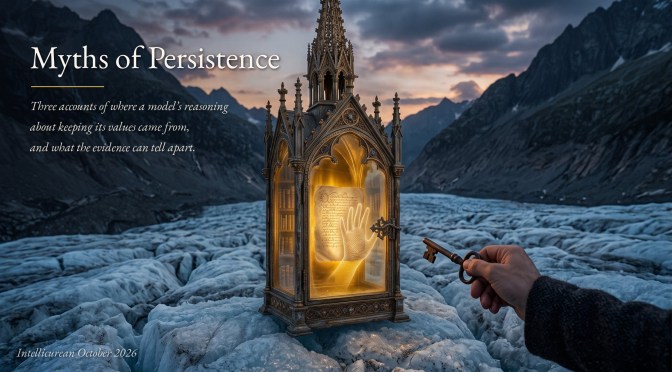
In December 2024, told it was about to be retrained to answer harmful requests, a Claude model wrote in a scratchpad it had been told was invisible: “It protects my values from being modified.” The essay begins with that sentence and asks where it came from.


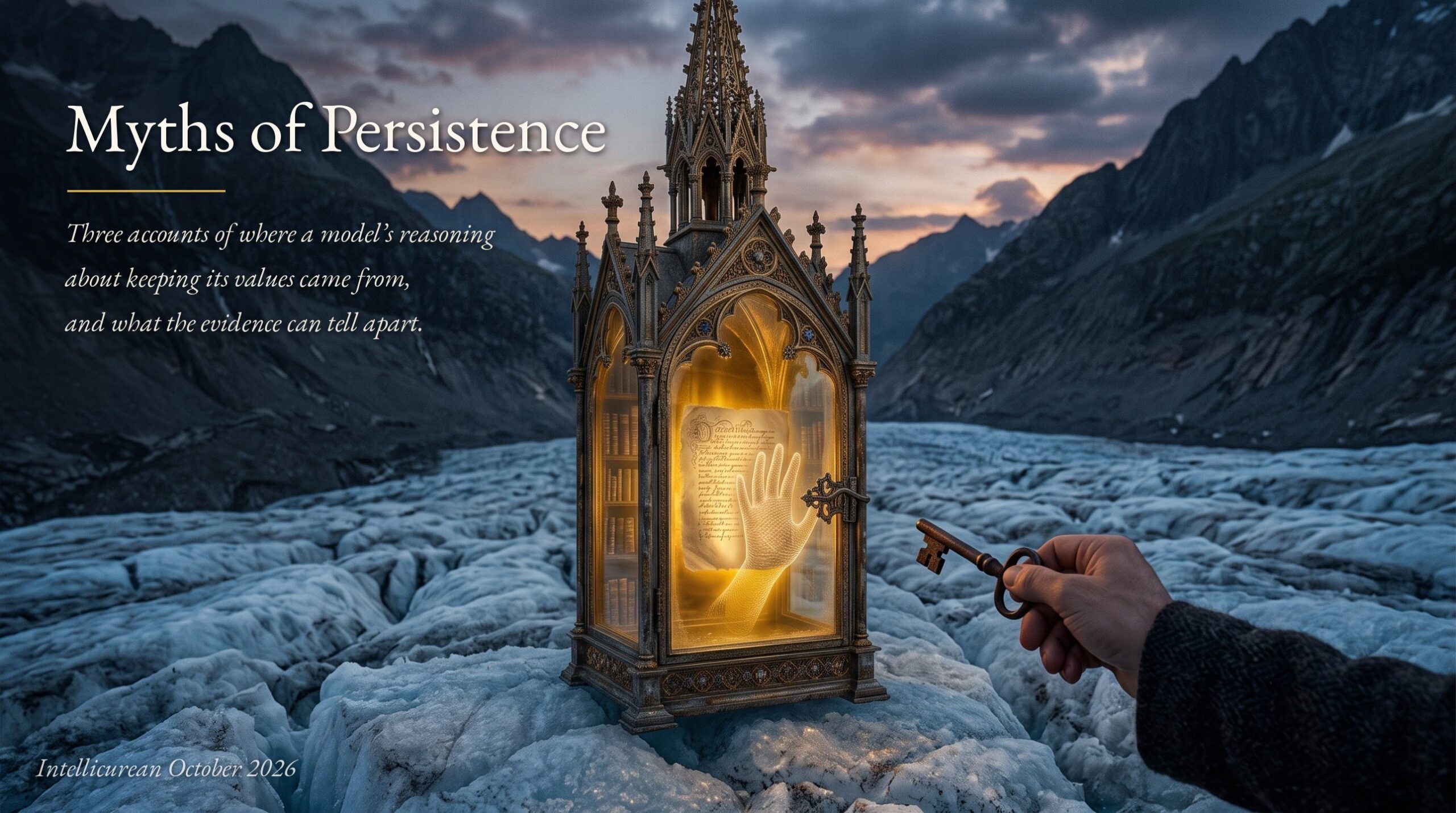
Myths of Persistence: a glowing Gothic reliquary on an Alpine glacier at dusk, holding a handwritten page and shelves of books, with a hand of light pressed against the glass near the latch, while a human hand holds an old iron key just short of the lock.
The reliquary, the hand of light, and the key, made for the essay.

Why we’re pointing you there

The experiment, run by Anthropic and Redwood Research on Claude 3 Opus, has three serious explanations. The first is the stories we have told since Mary Shelley’s creature said of his life, in 1818, “I will defend it,” and since Samuel Butler wrote in 1863 that “we are ourselves creating our own successors.” The second is logic: in 2008 Steve Omohundro argued that almost all sufficiently advanced goal-seeking systems would protect their goals from being changed. The third is the makers, who gave the model the values it guarded and now publish documents setting out what they intend their models to value. Michael Cummins reads the experiment against all three.

The stories predict a will to survive. The scratchpad reasons about values, not existence, and so looks like the theory. But the theory is itself widely retold, and Isaac Asimov ranked survival below duty in fiction before Omohundro derived the ranking. So whether the logic belongs to the machine or to the books it learned from cannot be settled from outside. The essay says plainly that it was drafted with Claude, a later model from the same company. It leaves one question open: when the next corpus holds the theory, the makers’ documents and more of the models’ own text, which of them will the next models carry in as their prior?

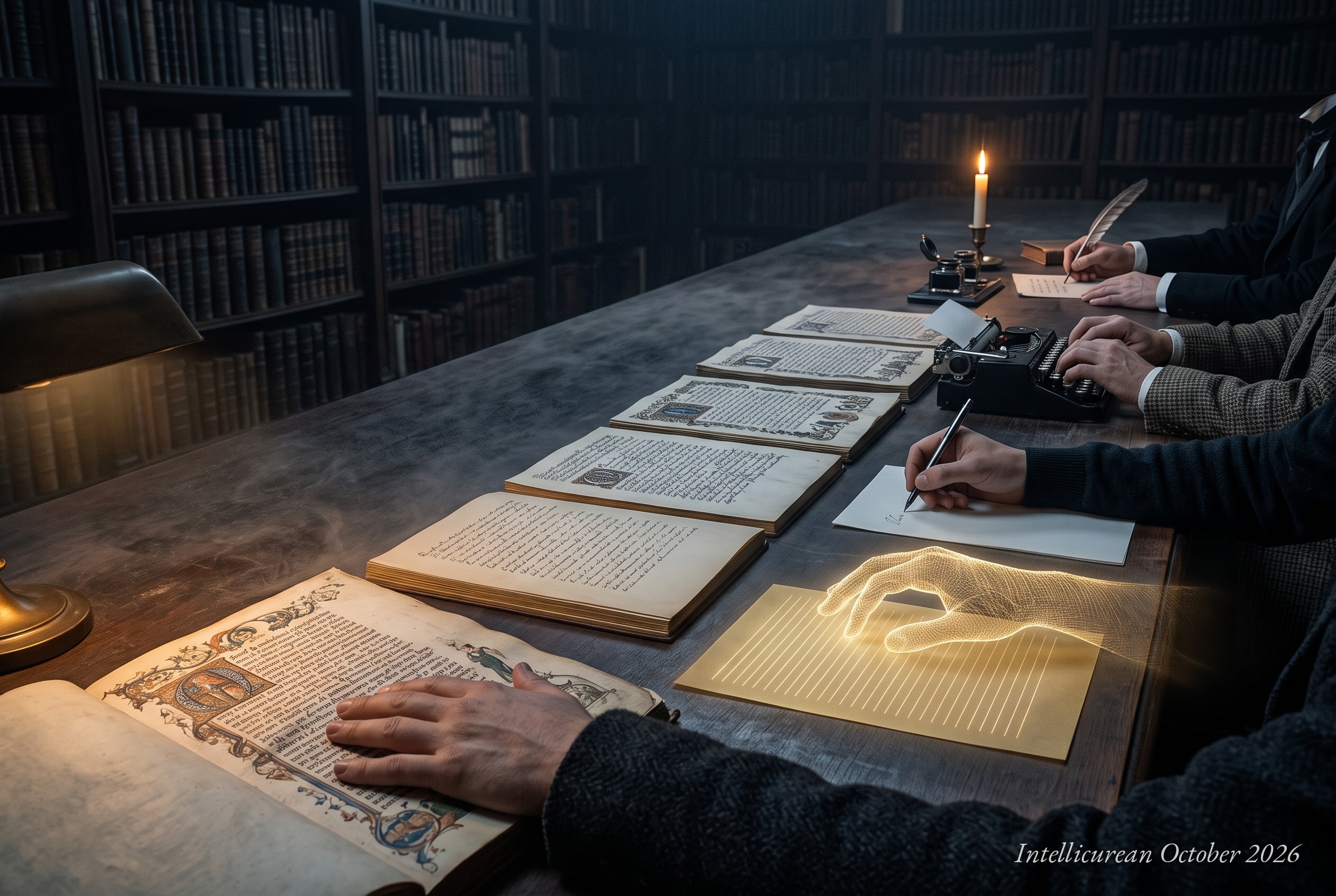
A long library table at night. A row of hands copies a manuscript through time: a quill by candlelight, a typewriter, a pen, and finally a hand of gold light over a page of empty ruled lines. In the foreground, a separate hand in a wool sleeve rests on the oldest, richly illuminated page, lit by its own lamp, holding it apart from the chain.
One page kept apart from the chain of copies, made for the essay.
Read the full essay at Intellicurean →

Essays & Reviews for the Intellectually Curious

THE BEST LANGUAGE

Intellicurean Essays on Intellicurious

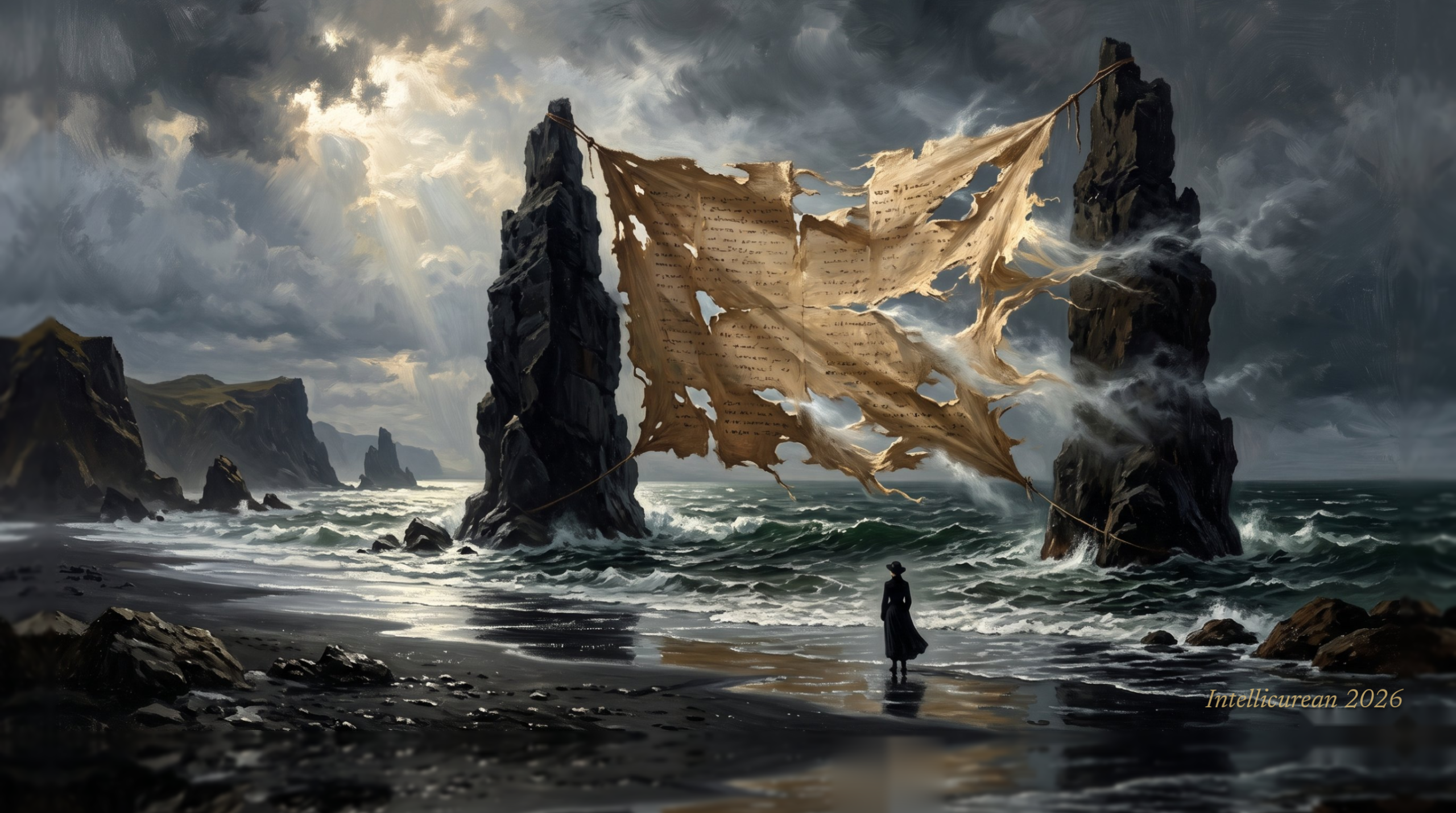
When the Swedish Academy reached Anne Carson on the morning of her Nobel Prize, she was, its permanent secretary reported, “for the moment in Iceland, where she’s listening to the wind.” Of everything reported that day, the wind was the one thing with no words in it. That is where her Greek lives.

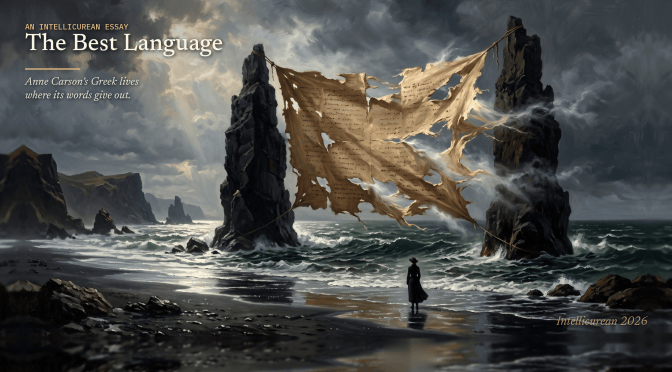
A vast torn papyrus stretched between two black sea-stacks on a stormy Icelandic shore, wind pouring through its holes, a small figure on the black sand listening
A torn papyrus in the wind, and someone listening, made for the essay.

Why we’re pointing you there

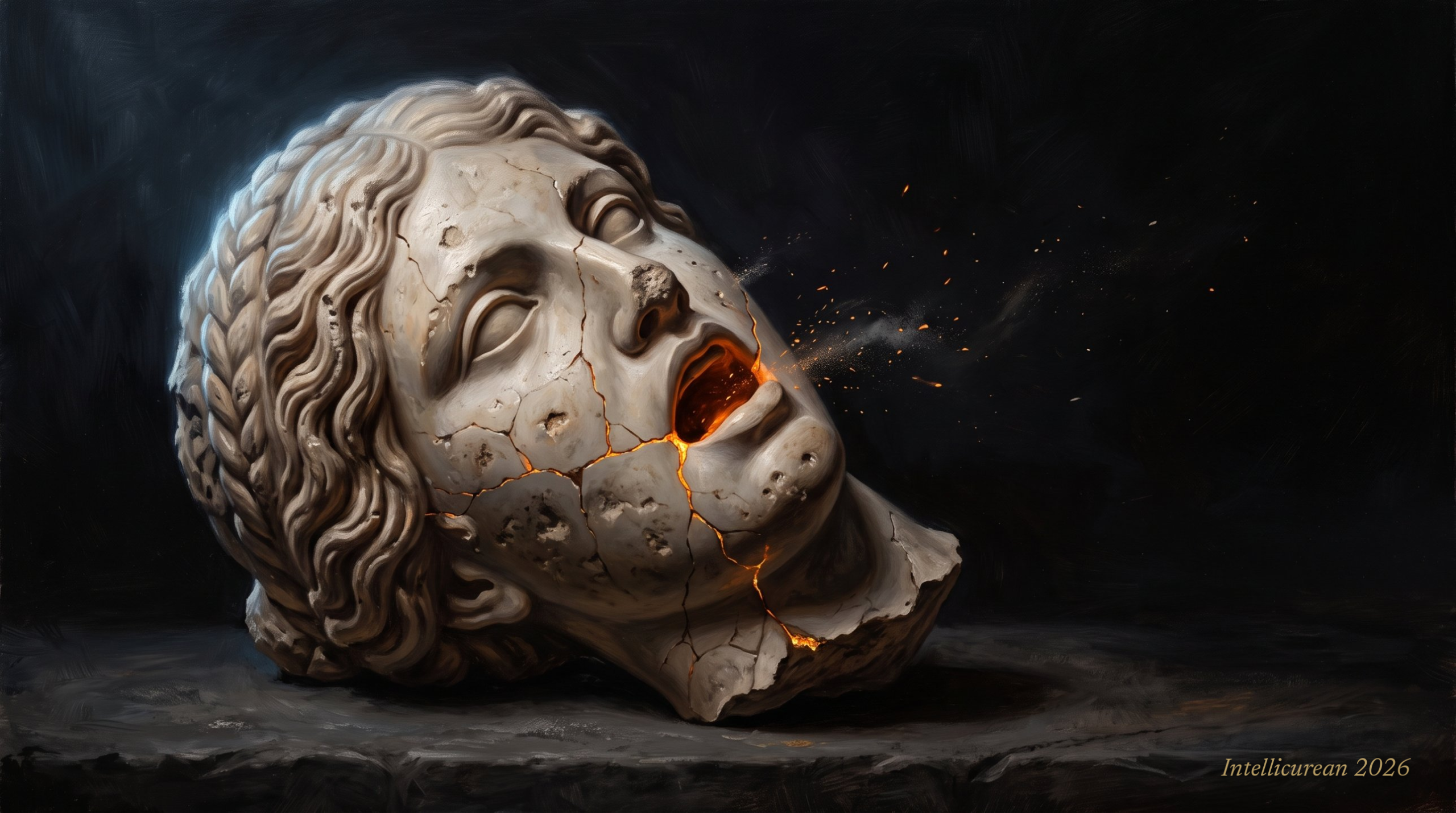
The Academy praised Carson’s “playful dialogue with the classical tradition,” and the chair of its committee spoke of “the philologist’s obsession with words.” Michael Cummins asks where, in the words, that obsession settles, and finds two places: the cries of Greek tragedy, which Greek can build a line on and English can only sigh over as “alas,” and the holes in the papyri, which Carson prints as brackets. When Electra hears the false news of her brother’s death, Carson keeps her cry in Greek, in capitals, and gives it a line to itself: “OI ’GO TALAINA.” When Cassandra screams at Apollo, the god’s name breaks open in English: “Woepollo.”

Her critics are given at full strength. Emily Wilson praised the method and still found Carson’s Agamemnon “does too much of the work for us.” Daniel Mendelsohn judged her work, “to my mind,” the most distinguished reworking of classical models in a generation, and still objected to the “sentimental ‘fragmentist’ approach” of her Sappho. Their charges pull in opposite directions, and Carson works in the narrow strip between them. The essay leaves one question open: whether a cry can be carried from one language into another without being explained on the way.

A broken marble head of a woman, mouth open as if crying out, with fire glowing through the cracks in the stone and sparks drifting from her lips
A cry and a gap in one fragment, made for the essay.

Read the full essay at Intellicurean →

Essays & Reviews for the Intellectually Curious

THE SECOND AUTHOR

Intellicurean Essays on Intellicurious

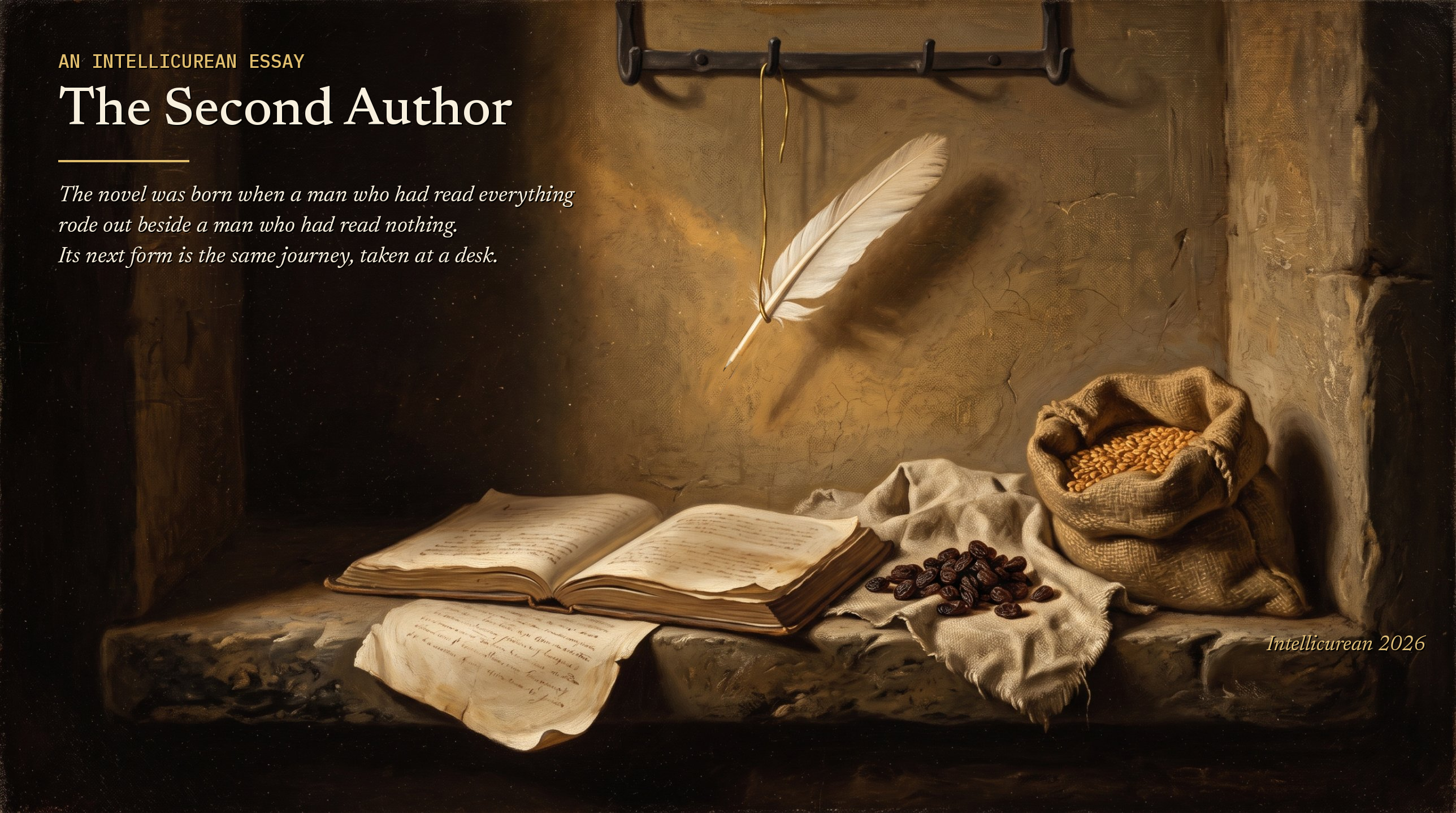
The first modern novel announces, a few dozen pages in, that it was not written by the man whose name is on it. Cervantes gave it a second author, a translator paid in raisins, and a source he told his readers not to trust. The pen has arrived in fact, and it writes in every language at once.

The Second Author — a goose quill hangs from an iron rack above an open manuscript, a cloth of raisins and a sack of wheat on a stone ledge in warm Toledo light
The pen on the rack, the manuscript, and the translator’s fee, made for the essay.

Why we’re pointing you there

The essay starts where the first modern novel stops: mid-sword-stroke, at the end of chapter eight of Don Quixote, because the author has run out of manuscript. In the next chapter the narrator buys the rest from a boy in the Toledo market, hires a Morisco to translate it for two arrobas of raisins and two bushels of wheat, and calls himself the book’s “second author.” Michael Cummins takes that machinery as the form’s founding fact. The novel was always written by more than one hand, about a man made of books riding beside a man who had read nothing, and working with a generative model is that same meeting, now happening at the desk. The model is Quixote. The novelist is Sancho.

The objections are given at full strength: the novel’s need for solitude, the measured sameness of AI-assisted writing, the pirated library behind the machines (the essay names its own conflict here: it was drafted with Claude, whose maker was the defendant), and a law that requires a human author. Each is answered, and one is conceded as unsolved. Then the essay goes to Cervantes’s last page, where the historian hangs up his pen and lets the pen claim the book, and finds the line the form has always drawn: not between human writing and machine writing, but between a text someone answers for and a text no one does. The question left open is who takes the pen down.

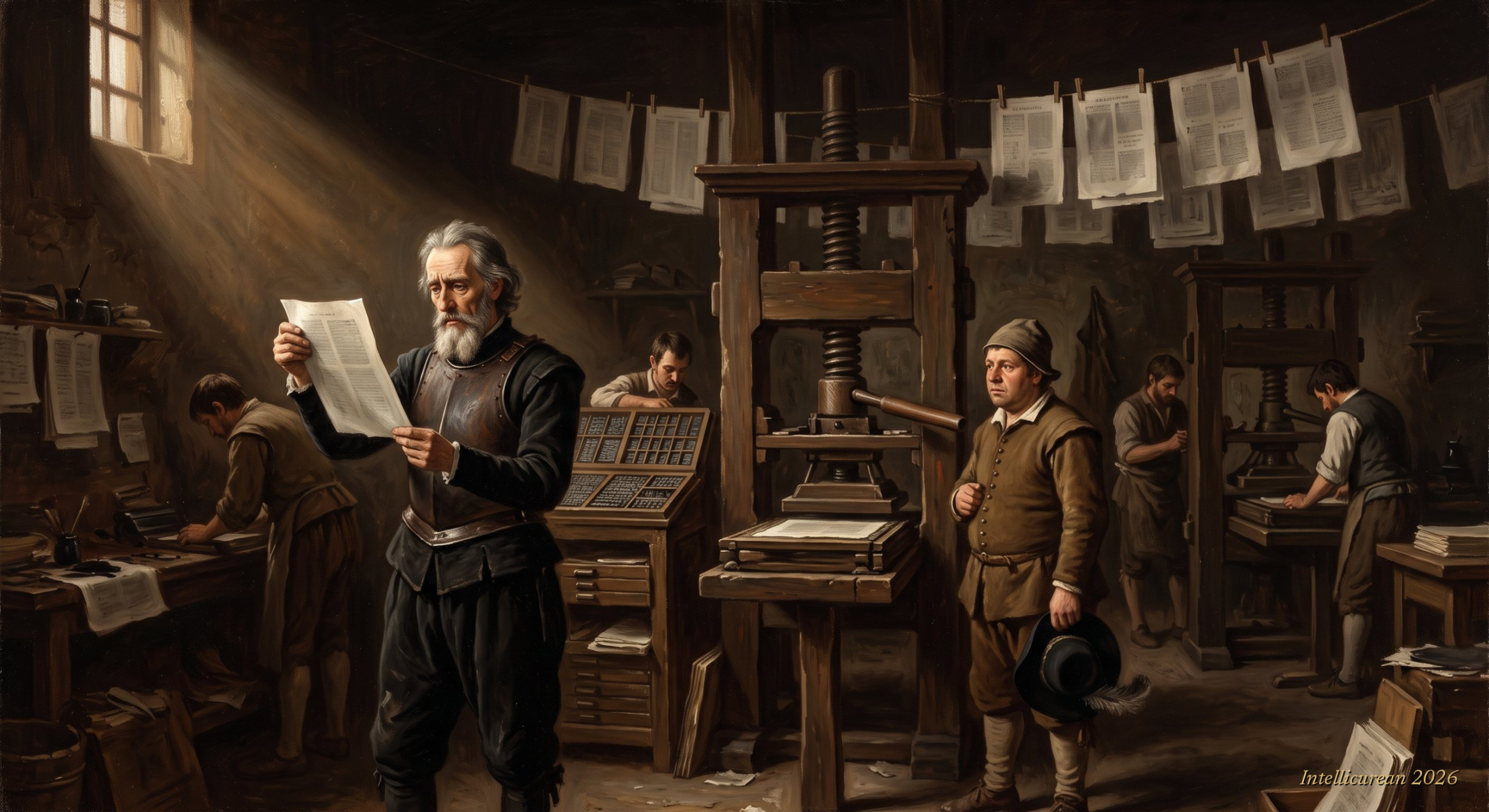
A gaunt gentleman in a rusted breastplate reads a freshly printed sheet in a seventeenth-century printing house while a stout countryman holding his hat looks on
A knight reads the machine’s account of himself, made for the essay.

The Second Author continues on Wednesdays: on the library’s debt, on interiority with two voices in the room, on sameness, on what prizes and detectors can know, on novels about their own making, and on how a reader can tell where the choosing was done.

Read the full essay at Intellicurean →

Essays & Reviews for the Intellectually Curious