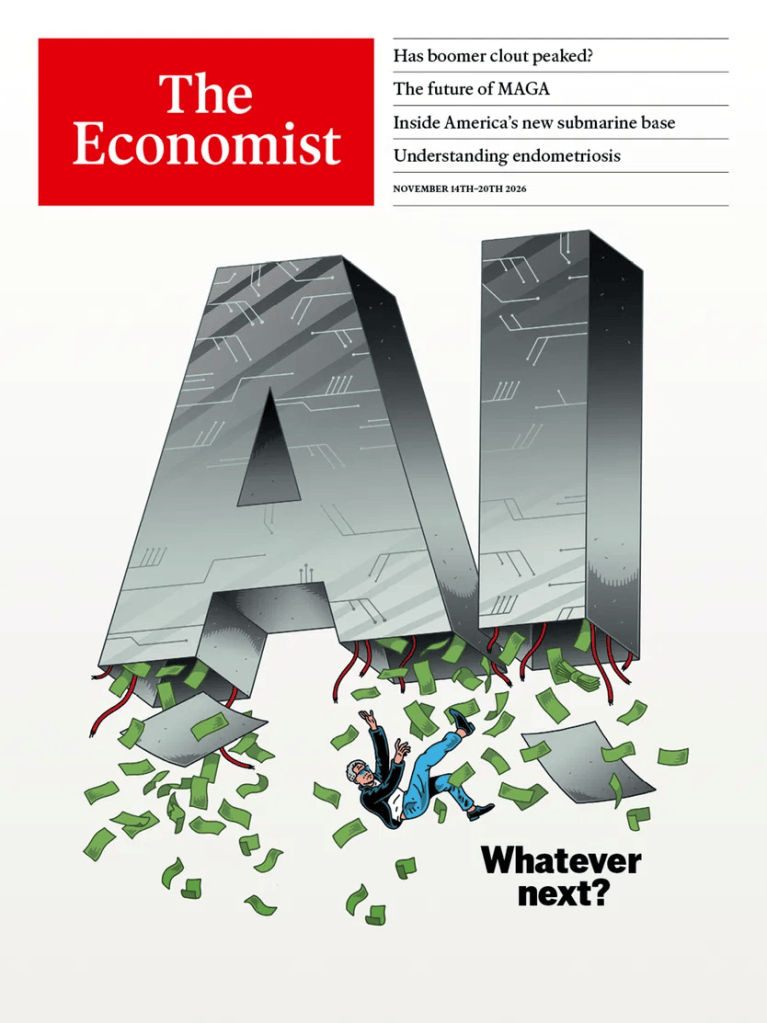
Could the news be much more dramatic? Artificial-intelligence models keep growing more powerful, faster than almost anyone predicted. Next week Anthropic, a frontier model-maker, is expected to list its shares in what could be the biggest-ever IPO of an AI firm. Yet in some ways the AI boom is looking wobbly. A sex-and-spying scandal is rocking Nvidia, the top chipmaker. America’s Democratic Party, having won the midterms, is raring to go after data centres and Trump-adjacent tech titans. Some fear an almighty tech bust is coming. How worried should the world be?
History offers clues. Plenty of past technologies, from canals and railways to the internet, have brought market euphoria and then despair. Bets on them went wrong even though the underlying technologies proved revolutionary.
The November 13 issue of the Times Literary Supplement marks 300 years since Gulliver’s Travels first appeared in October 1726 and sold out within a week. Claude Rawson, a leading Swift scholar, takes the measure of the satire in his essay “Yahoos and Houyhnhnms,” and Sophie Gee’s “Gulliver in Twickenham” reviews the story of how Swift joined Alexander Pope and John Gay while writing his classic. In “Embroidered history,” Levi Roach visits the British Museum’s crowd-pulling Bayeux Tapestry exhibition and examines how the narrative of the Norman Conquest was shaped. The issue also brings the TLS Books of the Year 2026, in which contributors choose their favourites.
Fiction ranges from France to Norway’s forests.
The historian Richard Vinen’s “Watching the detective” reviews Philippe Jaenada’s L’Inconnue du quai de Javel, this year’s Goncourt-winning meditation on an unsolved murder, and Alice Blackhurst’s “Queen Margot’s allure” weighs a new Pléiade edition of Marguerite Duras. Beejay Silcox’s “Time-maxxing” considers a “mighty work of miniature” about connection, attention and hope, while Frances Wilson’s “Reality is sentences” explores the autofictional trilogy of a Finnish queer icon. Norway looms large: Lauren Kane’s “Among the pines” finds mourning, dreaming and theosophy in the country’s south, and Catherine Taylor’s “Mind and matter” follows an Oslo intellectual turned forest outlaw. Sukhdev Sandhu’s “How it goes” checks into a mysterious guesthouse where time seems to stand still.
The arts revisit giants.
Sarah Watling’s “Art for our sake” reviews a stage portrait of John Maynard Keynes, the economist who helped found the Arts Council, and the competing influences that shaped him. In “A giant of East and West,” Karolina Watroba weighs a new film about the Nobel laureate Thomas Mann, a novelist claimed by many cultures at once. Sue Roe’s “Moving in motes of light” savours Renoir’s open-air pleasures as the National Gallery brings his figures to London, and Harrison Stetler’s “Voices from Vichy” reviews a director’s film about the downfall of his great-grandfather in the Vichy years.
America’s fault lines come under scrutiny.
The sociologist David Garland’s “Out of hand” tallies the price Americans pay for their gun culture. D. K. Renton’s “Exit the workers” considers why America’s liberal elite has failed to find a new FDR, and Michael S. Roth’s “Grooming gazillionaires” examines how Stanford University has embraced shortcuts to riches. Together they sketch a nation wrestling with violence, inequality and the lure of quick money. Widening the lens, Benjamin Smith’s “Drug of choice” traces how the opium trade shaped the modern world.
Lives and poems turn personal.
Two memoirs open the Lives pages. Norma Clarke’s “A final bequest” reviews one about learning the truth about one’s parents, while Ysenda Maxtone Graham’s “Not-so-grand House” relishes a funny account of a frugal upbringing. In the Afterthoughts column, Nicola Shulman pursues “The elusive Dr Brookner,” the art historian and Booker-winning novelist Anita Brookner, and her knack for hiding in plain sight. The issue also carries two new poems: Victoria Chang’s “Fledge: Postscript” and Shane McCrae’s “The soldier.”
In Brief covers still more ground.
The eight short reviews range widely: Alev Adil on an inheritance of recipes and idioms, Nicholas Clee on a philosophical investigation into a campus murder, Hassan Akram on Robert Louis Stevenson’s romantic life and Roger Domeneghetti on football’s contradictions. Terri Apter reads a memoir interweaving motherhood and mourning, Douglas Smith follows the Nobel family through escape, industrial success and revolution, Eliza Tracey revisits the bookshelves of Wigtown, and Katherine Harvey surveys the scenes that most frightened medieval viewers. Crossword 1623 completes the issue. Read the full issue on the TLS website.
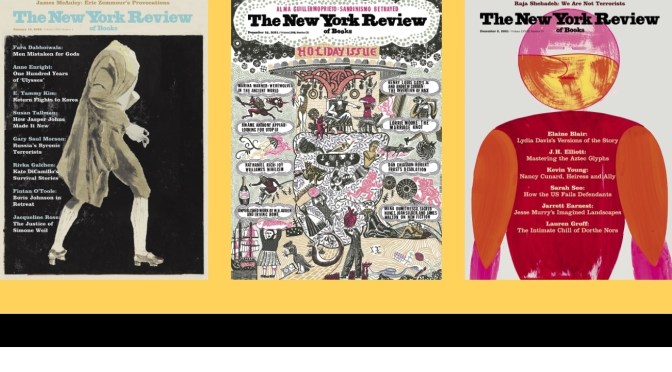
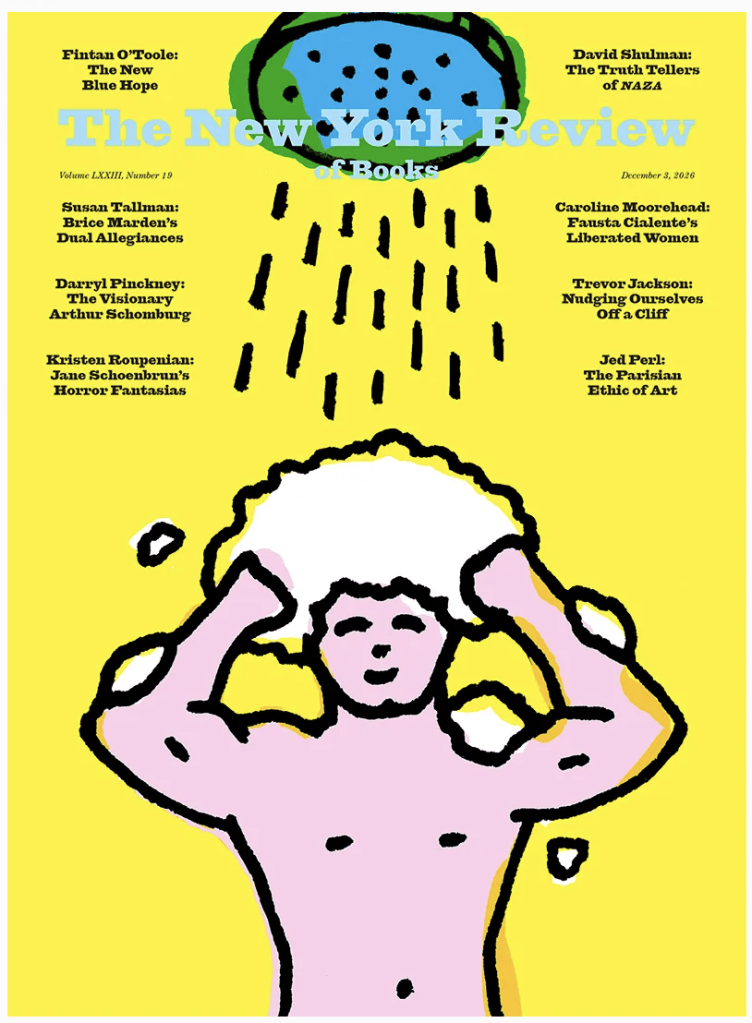
The December 3 issue opens with “The Next Generation” by Fintan O’Toole, the Review’s advising editor, who credits the American left with a historic election win achieved by tying the affordability crisis to Republican corruption. The whole Democratic Party, he argues, should learn from it. Later, Mark Danner‘s “The Tightrope Walker” asks how Trump turned a failed coup into a tale of his own martyrdom. He reviews Mary Clare Jalonick’s oral history of January 6th, Carol Leonnig and Aaron C. Davis’s account of a Justice Department cowed by politics and fear, and Michael Wolff’s All or Nothing.
Violence leaves lasting scars.
In “Collateral Damage,” David Shulman, a Hebrew University scholar and longtime activist with the Arab–Jewish group Ta’ayush, considers NAZA. In Yuval Abraham and Rachel Szor’s documentary, Israeli soldiers frankly voice remorse over their part in the Gaza war. Helen Epstein and Aminu Abubakar‘s “Interview with a Bandit” hears from one of the many Nigerians driven to violence by years of corrupt government. And in “The Executioner’s Song,” Piper French reviews Pamela Colloff’s To Catch the Devil. It is the Gulf Coast story of a notorious jailhouse informant whose lies sent an innocent man to death row, and of the officials and institutions that encouraged him.
Fiction crosses borders and centuries.
Caroline Moorehead‘s “Home and Away” introduces Fausta Cialente, an Italian émigré who lived much of her life in Egypt and wrote of restless women and girls drawn to flight. Her A Very Cold Winter appears in Julia Nelsen’s translation, introduced by Claudia Durastanti. Michael Gorra‘s “Nightmares of History” reviews The Newer World, which completes Sebastian Barry’s trilogy, begun with Days Without End, about Americans swept up in nineteenth-century violence. Kristen Roupenian‘s “We Tell Ourselves Stories in Order to Change” explores how Jane Schoenbrun’s book Public Access Afterworld and film Teenage Sex and Death at Camp Miasma blur reality and fantasy.
Art and archives take center stage.
Jed Perl‘s “Masters of Their Craft” tours shows at the Louvre, the Musée d’Orsay, the Grand Palais and the Fondation Louis Vuitton devoted to Michelangelo and Rodin, Renoir, late Matisse and Calder. For 150 years, he argues, Paris was modern art’s great workshop. Susan Tallman‘s “Seeing Through the Lightness” finds Brice Marden’s famous equanimity, in Gagosian’s survey I Am Plane Image, looking less inevitable and more like a hard-won balancing act. Darryl Pinckney‘s “Arthur Schomburg’s Legacy” marks the Schomburg Center’s centennial in Harlem, celebrating the collector whose books seeded one of the world’s foremost archives of Black history and literature.
Big ideas get a second look.
Trevor Jackson‘s “The Cost of Monetizing Everything” reviews Nick Chater and George Loewenstein’s It’s On You and The Price of Happiness by Cass R. Sunstein, co-author of Nudge. Behavioral economists promised rational policy, but Jackson finds a corporate push behind their nudges, which, as Chater and Loewenstein argue, shifted blame for systemic problems onto individuals. Clare Carlisle‘s “Reverence for All of It” takes up Steven Nadler’s Spinoza, Atheist. She asks whether a thinker branded a heretic in seventeenth-century Europe, for treating God and nature as interchangeable, should be called an atheist today.
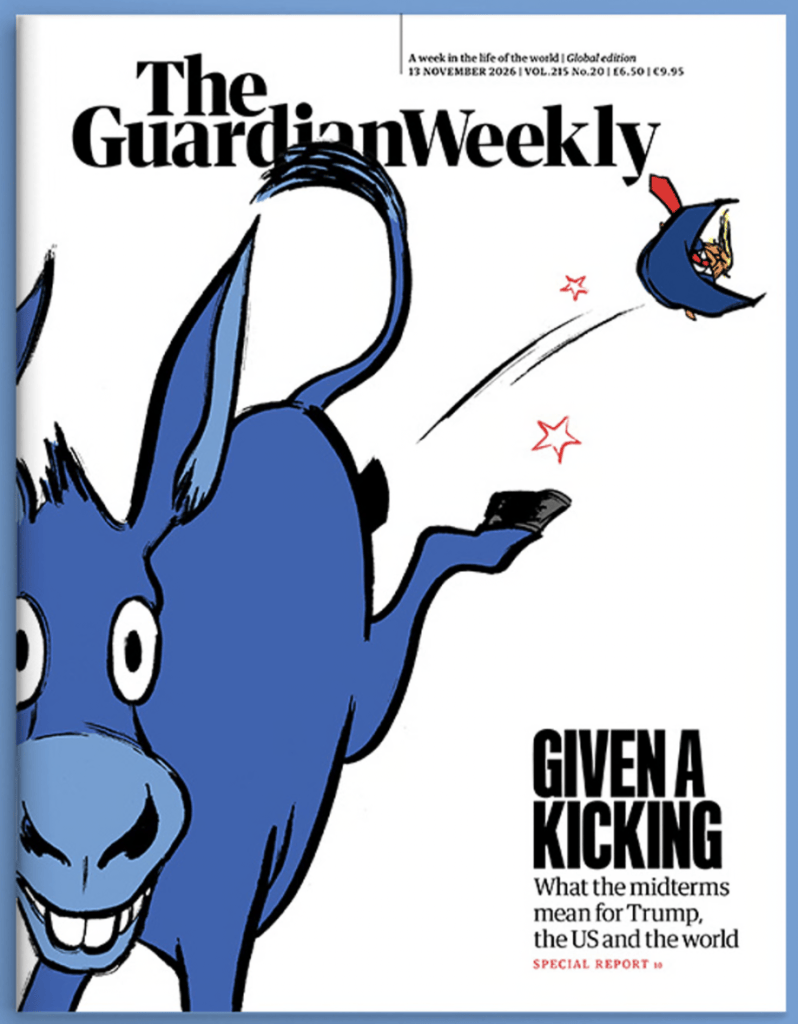
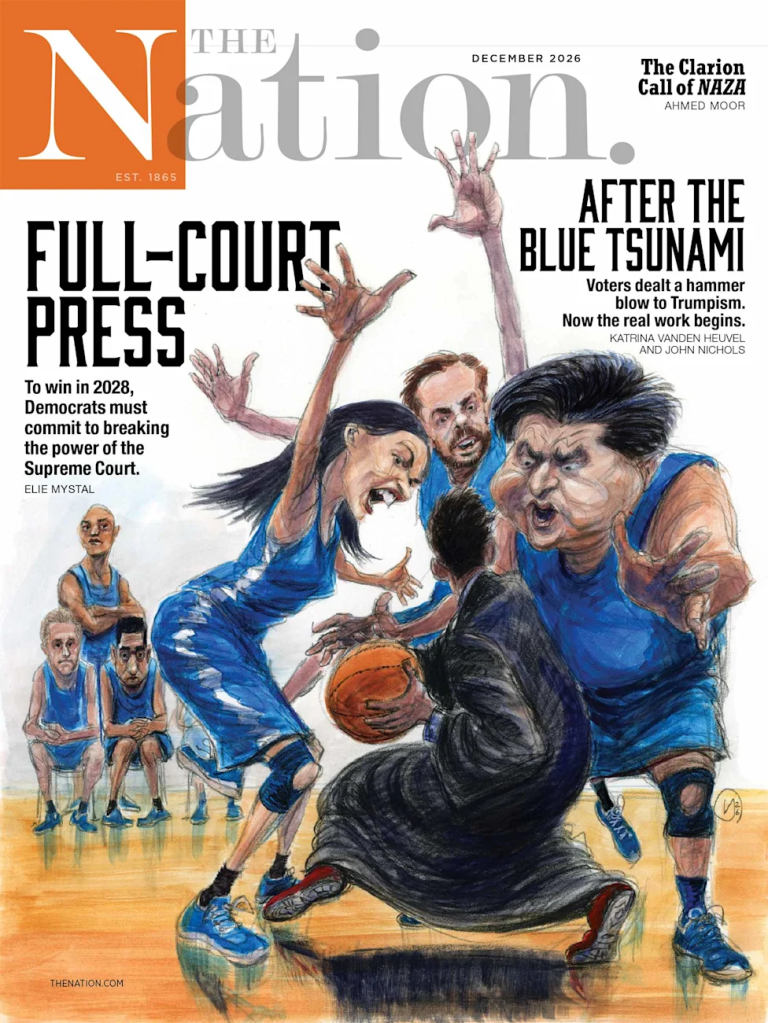
Donald Trump was dealt a devastating blow in the US midterm elections last week that saw his Republican party stripped of control of both the Senate and the House.
Our big story this week assesses the transformed political landscape ushered in by this blue tsunami.
The Republicans’ shellacking spells the end of Maga as we know it, writes David Smith, while Chris Stein runs through the likely Democrat agenda for the coming two years, and Uwa Ede-Osifo and Auzzy Byrdsell run through 10 historic firsts recorded as candidates shattered racial and gender ceilings.
Looking beyond the US, Deepa Parent spoke to Iranians about their feelings of uncertainty following the midterm elections, and Alice Speri says the results were a thumping rebuke of Washington’s relationship with Israel.
Then, foreign affairs commentator Simon Tisdall asks what the implications of Trump’s waning powers are for Iran, Russia, Israel – and the rest of the world.
Spotlight| A new cold war Do hot fridges, a fake nuclear alert and a $6bn heist suggest we in the foothills of a hacking epidemic, ask Dan Milmo and Aisha Down
Science| Deep secrets Beneath South Dakota’s Black Hills, scientists are building giant detectors to analyse neutrino particles – and possibly find the answer to existence. Ian Sample reports
Feature| An Indian political dynasty In a rare interview, Sonia Gandhi talks to Hannah Ellis-Petersen about her reluctant rise to power, Narendra Modi’s repressive regime – and why youth protests give her hope for the future
Opinion| A landmark victory on consent Russell Brand’s conviction for rape and sexual assault upholds the vital principle that women can say no, even after they’ve said yes, writes Gaby Hinsliff
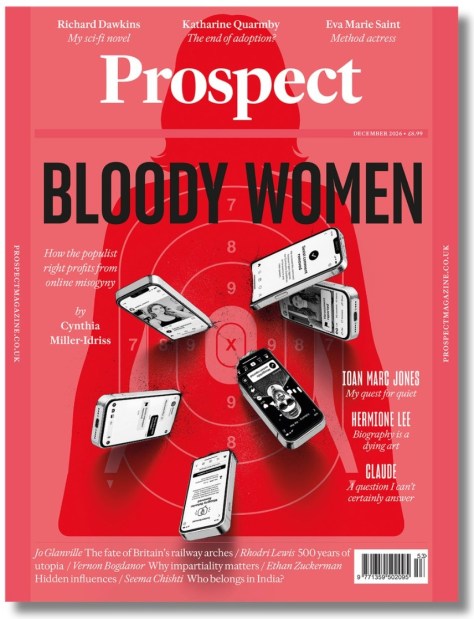
In April 2025 in Leeds, a 38-year-old man attacked two women with a crossbow after consuming immense amounts of misogynistic, anti-feminist and racist content online. He left behind a manifesto and an online footprint peppered with neo-Nazi and violent incel (involuntary celibate) references. Weeks earlier, UK police foiled a threatened Valentine’s Day massacre by a teenage boy, who was later sentenced for releasing personal information online, a practice known as “doxing”, to encourage attacks against his female classmates.