Shifts in blood proteins could point to ways to fight menopause “brain fog” and prevent later dementia
Women are more likely than men to develop dementia, and not just because they tend to live longer. One reason may be menopause, the time in midlife when sex hormones drop and menstruation stops—and which some researchers are coming to see as a stress test for the brain.
Menopause “affects brain health, for sure,” says neurologist Riley Bove of the University of California (UC) San Francisco, who studies its impacts on multiple sclerosis and other neurological disorders. She and others want to protect the brain during and after this transition—but that means identifying just how menopause puts the brain at risk.
A study published last week in Nature Medicinehas found clues in the blood of women in their 40s and 50s: proteins related to brain function, inflammation, and neurodegenerative disease that are elevated during menopause. Other ongoing studies are following groups of women over time—including during the lesser studied perimenopausal stage, from just before menstruation ends to 1 year after—to reveal processes leading to short- and long-term cognitive problems.
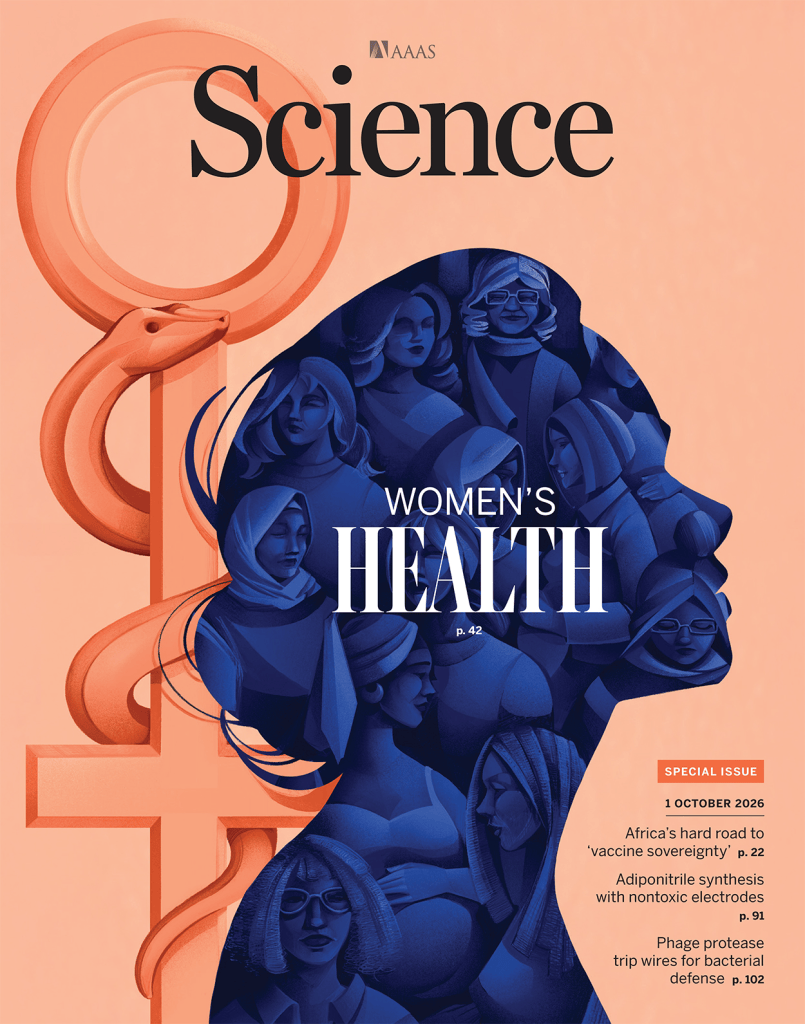
Historically, most human studies have involved male participants, and their findings were assumed to apply to women and children as well. Meanwhile, women’s health typically came up in the context of reproduction and childbearing, if at all. However, biomedical science has come a long way over the years, and it has become increasingly clear that there are sex-dependent differences in many diseases that do not involve reproduction and that occur at all ages. Across all areas of women’s health, including both reproductive and nonreproductive conditions, much remains to be learned about the underlying biology, effects of hormones and genetics, and potential therapeutic interventions.
Sex differences have traditionally been attributed to gonadal hormones, but accumulating evidence shows that sex chromosomes exert distinct, cell-autonomous effects on health, aging, and disease. XX and XY complements alter gene dosage, epigenetic programming, immune signaling, metabolism, and cellular stress responses, which shape aging and disease trajectories in women and men. This Review integrates mechanistic advances in sex chromosome biology—including escape from X chromosome inactivation, X reactivation, parent-of-X-origin, X-skew, X- and Y-linked gene functions, and Y loss—with aging, neurologic disease, immunity, cancer, and cardiometabolic disease. We highlight insights from mouse models, human studies, and emerging technologies that disentangle hormone-driven effects from chromosome-mediated effects and discuss translational implications for diagnostics, biomarkers, therapeutics, and clinical trial design, emphasizing the integration of sex chromosome biology into precision medicine.
Reframing menopause and menopause hormone therapy as opportunities for healthy aging
Menopause is an important biological transition with up to 72 symptoms that shapes aging trajectories across organs and encompasses ~40% of the female lifespan. Although menopause awareness is increasing, research on strategies for menopause symptom management and optimizing health in the postmenopausal period is lacking. This Review highlights that menopause characteristics, such as type, timing, and symptom burden, influence health outcomes and later-life disease risk. Similarly, menopause hormone therapy comes in >200 varieties that differ by dose, formulation of estrogens and progestogens, and timing, each with their own distinct risk-benefit profiles. These distinctions are often missed in the literature but have considerable repercussions for outcomes. Optimized menopause care necessitates a precision medicine approach that considers menopause symptoms, genetics, and previous hormone exposures.
Greg Corrado – Ph.D., Head of Health AI, November 28, 2022:
Alongside licensing our AI technology, iCAD will also use Google Cloud’s secure, scalable infrastructure, giving them the ability to rapidly expand cloud-hosted solutions into new regions. By doing so, iCAD can scale access to AI-based tools in underserved regions where infrastructure challenges may constrain their ability to offer breast cancer screenings.
Breast cancer is one of the world’s most common cancers; thankfully, early detection can help save lives and improve outcomes among many who develop the disease. At Google Health we’re developing AI to improve the accuracy and expand the availability of breast cancer screenings. Over time, better screenings will improve health outcomes and reduce disparities for people around the world.
Today, we’re announcing a partnership with iCAD, a leader in medical technology and cancer detection, marking the first time we are licensing our mammography AI research model. iCAD will work toward validating and incorporating our mammography AI technology with its products for use in clinical practices with the goal of improving breast cancer detection and assessment of short-term personal cancer risk for the more than two million people globally diagnosed with breast cancer every year.
A selection of three essential articles read aloud from the latest issue of The Economist. This week, the outlook for the world economy, how worried you should be about Elon Musk’s superpowers (12:50), and a study allays fears that covid vaccines harm menstrual cycles (16:50).
Skin cancer is the most common form of cancer in the United States. The good news is, this disease is extremely treatable if caught early. Cleveland Clinic experts break down the 3 main types of skin cancer and how you can spot the signs of each.
Chapters: 0:00 Intro 0:24 What does skin cancer look like? 0:49 What are the signs of skin cancer? 0:59 What are the types of skin cancer? 1:06 What is basal cell carcinoma? 1:35 What is squamous cell carcinoma? 1:52 What is melanoma? 2:26 When should you talk to your doctor about skin cancer?
According to the American Cancer Society, colorectal cancer is the third most common cancer diagnosed in both men and women in the United States. While diagnoses are decreasing in people over the age of 50, there’s been an increase for those who are younger.
For more information on why you should get a colonoscopy and how to schedule yours today, please visit https://cle.clinic/3oqWdy6