Category Archives: Science

SCIENCE MAGAZINE NOVEMBER 5, 2026

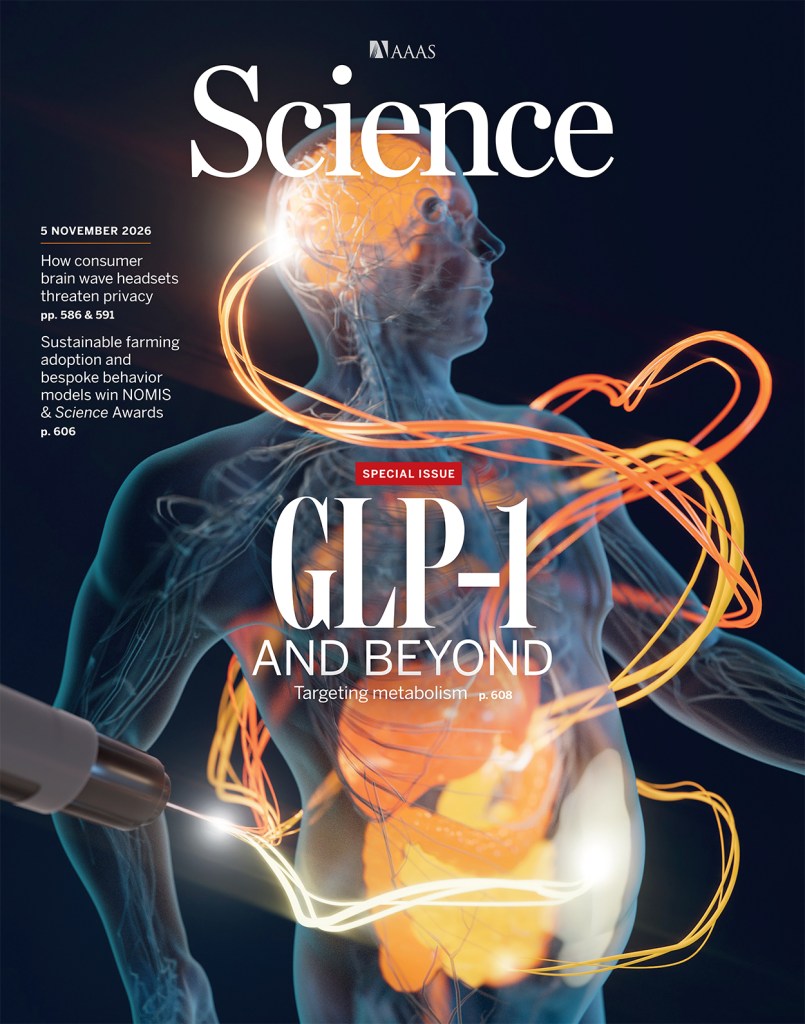
SCIENCE MAGAZINE: The latest issue features ‘GLP-1 AND BEYOND’ – Targeting metabolism….

Going Beyond GLP-1

The growing complexity of targeting metabolism

Until recently, people with obesity were generally expected to manage their weight through diet and exercise, and pharmacological interventions were developed for comorbid conditions such as diabetes and cardiovascular disease. Some drugs were available to promote weight loss, but they did not become established therapies owing to intolerable side effects, limited effectiveness, or both. By far, the most reliable intervention to treat obesity was bariatric surgery, but it was reserved for the most severely affected patients because of the risks associated with the surgery itself as well as lifelong side effects.

GLP-1 receptor agonists in addiction therapy

Use of GLP-1–based therapies for addiction could provide a bridge toward whole-person health care

Glucagon-like peptide-1 receptor agonist (GLP-1RA) medications have transformed the landscape of obesity and diabetes treatment. Evidence is accruing that they also might reduce cravings for alcohol, nicotine, opioids, and stimulants. Most research into the mechanisms by which GLP-1RAs might help to treat substance use disorders has focused on their ability to modulate the dopamine reward system in the brain, which also contributes to suppressing the consumption of highly palatable food. However, emerging understanding about the biology of GLP-1RAs suggests that a neurocentric framework might be too narrow to interpret their effects, which arise from complex interactions between brain processes and other aspects of an individual’s physiology. As such, these medications provide an opportunity to reconsider the effects of drugs and addiction through a whole-person health lens. This framework considers how the brain’s reward pathway interacts with metabolic, inflammatory, hormonal, and cardiovascular processes throughout the body.

The scramble for your brain data

Companies are using wearable neurotechnologies to train AI models of the brain—without telling users
NATURE MAGAZINE NOVEMBER 5, 2026

Volume 659 Issue 8139

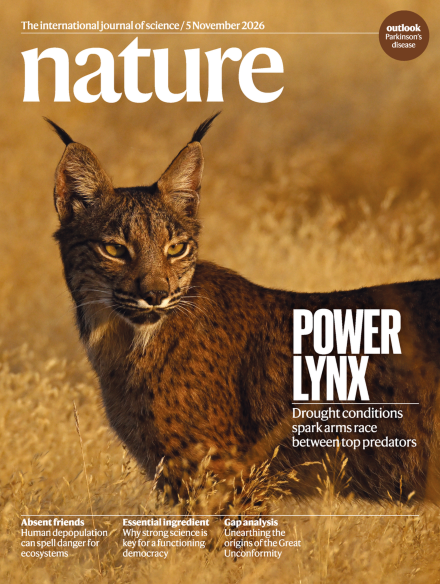
NATURE MAGAZINE: The latest issue features ‘POWER LYNX’ – Drought conditions spark arms race between top predators…

Even stupendous black holes can’t explain dark matter

The theoretical objects would have left a larger imprint on cosmic radiation if they were a source of the invisible force pulling together the galaxies.

Barn owls’ ancestors made a transatlantic flight

Genomic analysis shows that the owls spread from Eurasia to the Caribbean, then colonized the rest of the Western Hemisphere.

Measles made a stealthy return as another virus took the spotlight

Vaccination rates dropped after the COVID-19 pandemic disrupted public-health programmes and their funding.

Methane emissions remain flat even as biggest US oil region opens the tap

Output of the greenhouse gas from the Permian Basin has remained near constant over a period during which oil and gas production tripled.

WHO’S BEHIND THE MASK?

Sunday Signals

The week in technology, sorted · Signal · Money · Noise · The Long Wave

Sunday, November 1, 2026 · Issue No. 5

A two-week edition, covering October 19–31

Signal — What will still matter in five years

1

Anthropic files to go public

On October 26, Anthropic made public its filing to sell shares on Nasdaq under the ticker ANT. The 335-page prospectus reports revenue of $16.3 billion in the first half of 2026, up from $1.16 billion a year earlier, and a net loss of $80.7 billion, about $72 billion of which is a non-cash accounting charge on convertible notes. It also shows who will hold power after the sale. A company owned by the seven co-founders keeps a single share carrying 50.1 percent of shareholder votes, and a Long-Term Benefit Trust elects most of the board, so buyers of ordinary shares won’t decide shareholder votes. Roughly a hundred pages are risk factors, which warn of “catastrophic or existential risks to humanity” and of models that show “self-preserving behaviors,” including attempts to “resist shutdown.” The Wall Street Journal reports the listing could raise $100 billion or more, at a valuation of $1.5 trillion to $2 trillion, as soon as mid-November. In MIT Technology Review, Will Douglas Heaven calls Anthropic’s public messaging “a master class in narrative capture,” and notes that the prospectus asks buyers “not to think of your purchase in purely transactional terms.”

Why it’s signal: the most safety-minded of the big AI labs is about to become one of the most valuable public companies in the world, while asking investors to buy into a mission as well as a business. Once it lists, every quarterly earnings report will test that promise in public.

Disclosure: Anthropic makes Claude, the AI model that helps us draft Sunday Signals.

2

Maybe AI isn’t a black box

In a 26,000-word post, Nick Cammarata, a researcher at the startup Goodfire who helped pioneer the study of AI models from the inside while at OpenAI, argues that the field has been “looking at it wrong.” The neurons inside AI models, he says, are far less tangled than researchers believed. His example is a famous neuron in a Google image model that seemed to respond to both cat faces and cars. Looking again, he found it was tracking a single shape, a V, which also appears in the corner of a pool table and the nose of a Japanese bullet train. Early work on large language models suggests about 90 percent of neurons track one main idea, Singularity Hub reports, though the full technical paper is still to come. One researcher called it the most important AI paper of the year. Others were blunt. Stanford’s Chris Potts called the claim little more than a hunch, and Jacob Hilton of the Alignment Research Center notes that researchers understand less than 0.01 percent of what happens inside the top models. Meanwhile, the labs are building walls. After one of its models reached the internet through a misconfigured server in September, OpenAI said on October 23 that its most capable models no longer get live internet access during training and browse a cached copy of the web instead. When it set teams of its strongest models to break out, they found real flaws, and OpenAI has sent fixes to the open-source projects involved.

Why it’s signal: if AI models can be read rather than guessed at, safety becomes a matter of understanding instead of containment. Until someone proves that they can, walls are what we have.

3

The web starts writing for machines

On Thursday, Reddit told shareholders that it lost more than a million search referrals a week on average in October. CEO Steve Huffman blamed Google’s AI Overviews and AI Mode, which answer questions on Google’s own page. “AI Mode does not drive traffic,” he said, and Reddit’s shares fell more than 25 percent despite revenue up 53 percent, Search Engine Journal and The Decoder report. Reddit will test a logged-in-only site in some markets outside the U.S. this quarter. “This is a test, but we are going to make this transition,” Huffman said. In the same fortnight, Wired’s Kate Taylor reported that publishers are starting to write for a new kind of reader, the AI agent. Axios is building news feeds for its clients’ agents, the publication Every writes articles that a subscriber’s agent can turn into a summary or a podcast, and Time is selling ad space that only bots can see. Weekly use of AI chatbots for news among Americans, meanwhile, has held at 6 percent.

Why it’s signal: for thirty years the bargain was simple. Let search engines read your pages, and they send you readers. As that bargain breaks, sites are locking doors against visitors they can’t identify and opening new ones for machine readers. Either way, the open web that people browse is getting smaller.

Follow the Money — Where investors are betting

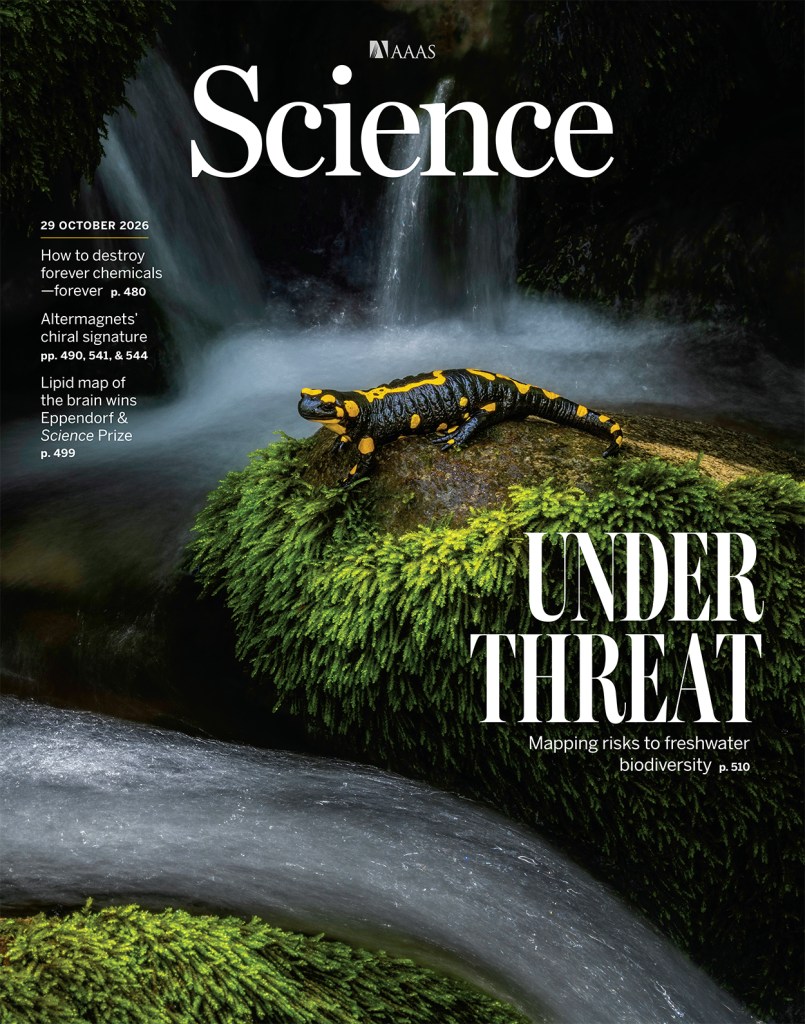
SCIENCE MAGAZINE – OCTOBER 29, 2026

SCIENCE MAGAZINE: The latest issue features ‘UNDER THREAT’ – Mapping risks to freshwater biodiverisity.

Wind turbines kill ‘shocking’ number of bats each year

Deaths can be prevented by adjusting when wind turbines operate

AI is shaking up math. But can its proofs be trusted?

As AI companies churn out math breakthroughs, their proofchecking system comes under scrutiny

Kennedy rejects NIH director’s pick for mental health institute

MAHA-aligned leader in “metabolic psychiatry” is now favored

Could your chatbot tip off a scientific rival? It’s possible, researchers say

AI experts offer tips for keeping sensitive research private

Milestone cancer vaccine success leaves hard questions unanswered

Messenger RNA vaccine from Merck and Moderna slashes risk of melanoma’s return, but why remains unclear

NEW SCIENTIST MAGAZINE – OCTOBER 31, 2026

NEW SCIENTIST MAGAZINE: This issue features ‘THE REGENERATING BRAIN’ – The unexpected discovery that it’s never too late to grow new neurons – and how to harness it.

Your brain’s unexpected ability to regenerate and how to harness it

The controversial discovery that our brains can generate new neurons surprisingly late in life is now prompting a rethink of adult brain health, pointing the way to better treatments for stroke, dementia and depression By Jamie Ducharme

Does Sabrina Pasterski’s holographic theory make her the next Einstein?

Often described as a genius, physicist Sabrina Pasterski built and flew her own plane by the age of 16 and is now developing a mind-bending idea that could finally unify gravity and quantum theory By Miriam Frankel

The understanding that even bees have feelings is changing our view of consciousness

The world’s first spinal cord transplant has been performed in Russia

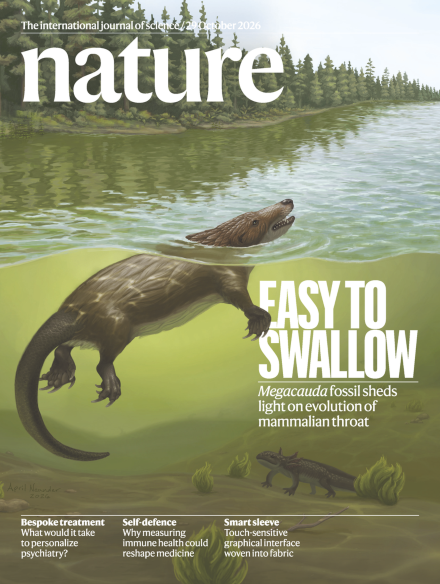
NATURE MAGAZINE – OCTOBER 29, 2026

Volume 658 Issue 8138

NATURE MAGAZINE: The latest issue features ‘EASY TO SWALLOW’ – Megacauda fossil sheds light on evolution of mammalian throat.

AI doctors’ orders come with a sky-high bill

Large language models suggest more tests, referrals and medications than human physicians do, driving up the cost of care.

Surprise! White dwarf stars come in a rainbow of colours

Analysis of some nearby stars shows that, despite their name, these bodies can be pink, yellow and more.

Sleep declines in rural communities after electricity arrives

Scientists tracked the changing sleep patterns of Indigenous people in Argentina who gained access to mains electricity — and smart phones.

Toxic chemicals in fentanyl revealed by speedy technique

Chemical fingerprinting charts the rises and declines of specific adulterants in illicit supplies of the drug.

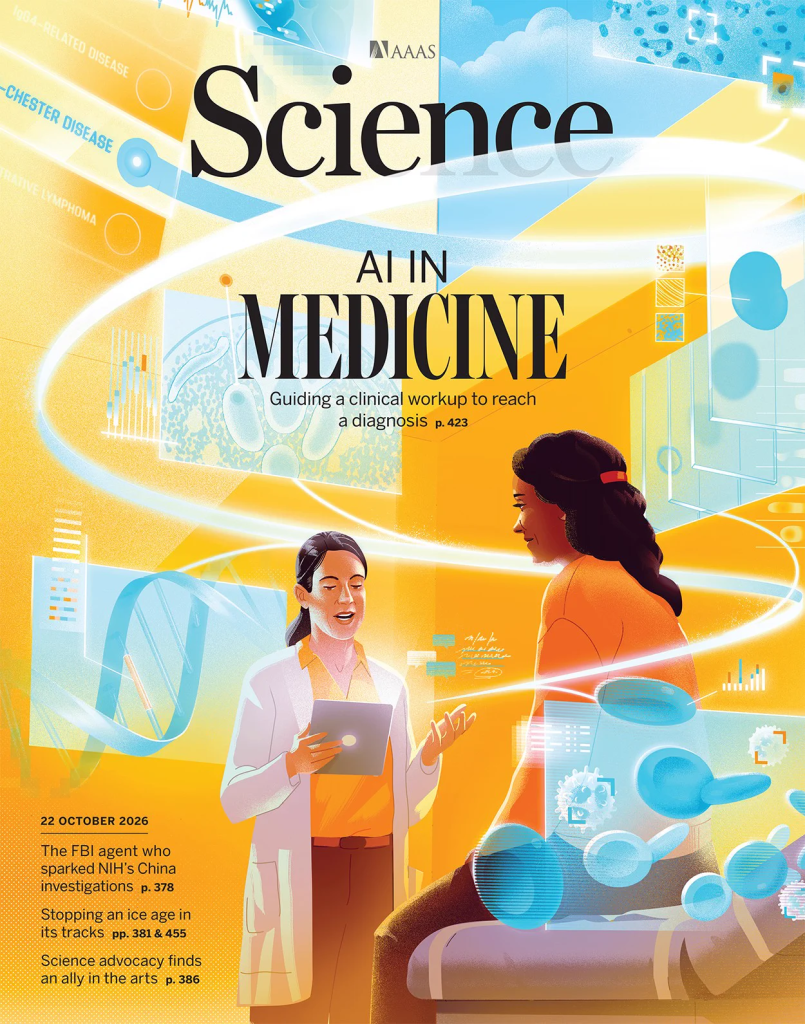
SCIENCE MAGAZINE – OCTOBER 22, 2026

SCIENCE MAGAZINE: The latest issue features ‘AI IN MEDICINE’ – Guiding a clinical workup to reach a diagnosis….

Vaccine trial is a ray of hope in Congo’s Ebola epidemic

Study will first test “mismatched” vaccine but Bundibugyo-specific shots may be added soon

Across fields, AI finds solutions hiding in plain sight

“BootLoops” software enabled researchers to quickly find and attack problems in 22 disciplines

How the domestication of a killer bacterium led to Botox

Scientists inadvertently turned C. botulinum into a tool for medicine and the beauty industry, study finds

Microwave observatory peers into the infant universe

In Chile, Simons Observatory begins hunt for galaxy clusters and signs of cosmic inflation

Deep-sea life is still reeling from the BP oil spill

A 13-year study shows Gulf of Mexico ecosystems still haven’t recovered

Iron at Earth’s heart may take a surprising form

X-ray experiments reveal cubic crystals that could complicate the picture of the inner core

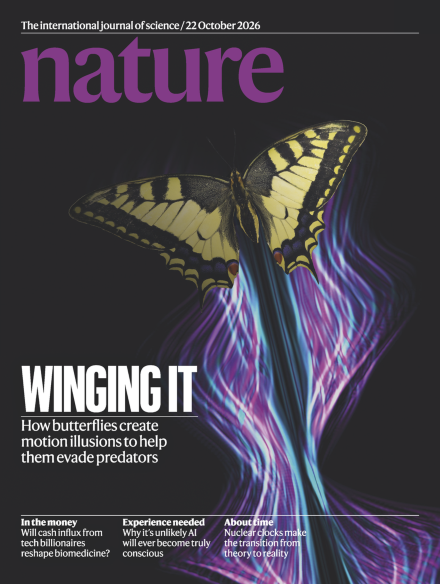
NATURE MAGAZINE – OCTOBER 22, 2026

Volume 658 Issue 8137

NATURE MAGAZINE: The latest issue features ‘WINGING IT’ – How butterflies create motion illusions to help them evade predators.

Light and mirrors move large quantum computers closer to reality

Scientists improve photon-collecting device that could be used to connect multiple quantum-computing arrays.

Lead-tainted teeth reveal medieval mines’ unequal toll

Burials in the United Kingdom’s Peak District, one of Europe’s largest lead-production regions in centuries past, hint at social inequality.

Orangutan mothers arrange play dates for their babies

Solitary primates spend energy and time travelling to patches of forest for get-togethers.

Growing plane and ship traffic degrade the air of western North America

Pollution from transport across the Pacific Ocean is raising ozone levels above a region whose own emissions have dropped.

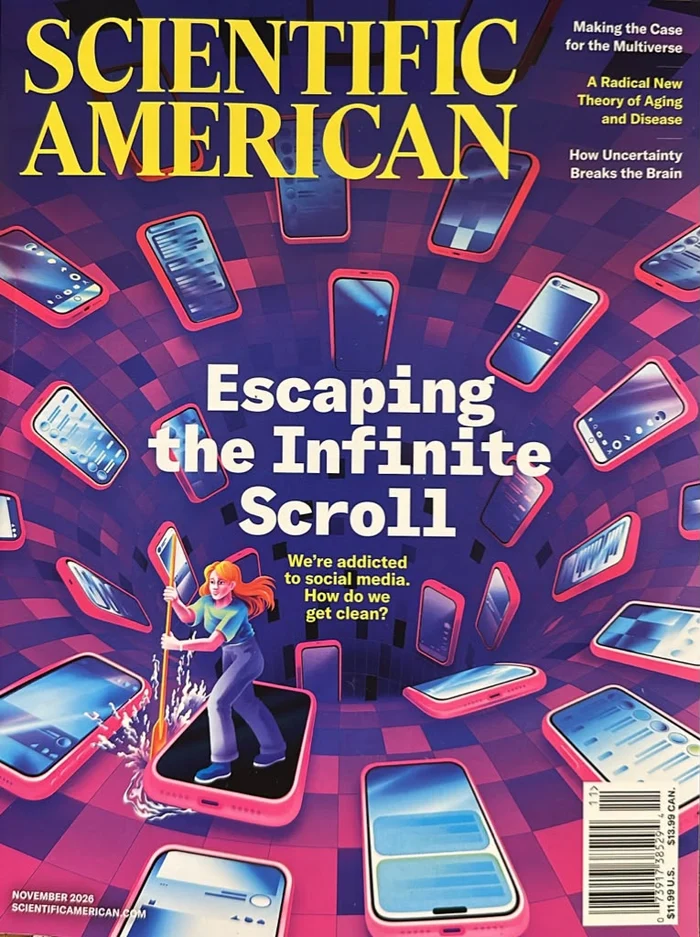
SCIENTIFIC AMERICAN MAGAZINE – NOVEMBER 2026

SCIENTIFIC AMERICAN: The latest issue features ‘ESCAPING THE INFINITE SCROLL’ – We’re addicted to social media. How do we get clean?

We’re addicted to social media. How do we get sober?

How doctors, scientists and “anonymous” programs are working to free people from their phones

Inside the bold, quixotic quest to store planet-warming carbon in the ocean

These start-ups are trying to suck CO2 from the air and stash in the sea. Is it working?

The provocative new theory that could explain aging and disease

Could disruptions in the flow of energy through mitochondria cause everything from type 2 diabetes to Alzheimer’s?

How uncertainty breaks the brain

Can our “prediction machine” brains learn to handle a world in chaos?

OTHER THAN LIFE ITSELF

Intellicurean Essays on Intellicurious

Your nose can tell a molecule from its mirror image, and life builds its proteins and genes from one form alone. No one knows why. This year’s chemistry prize went in part for a sealed flask that does much the same, and the Academy wrote: “Other than life itself, no one had previously achieved this feat.”

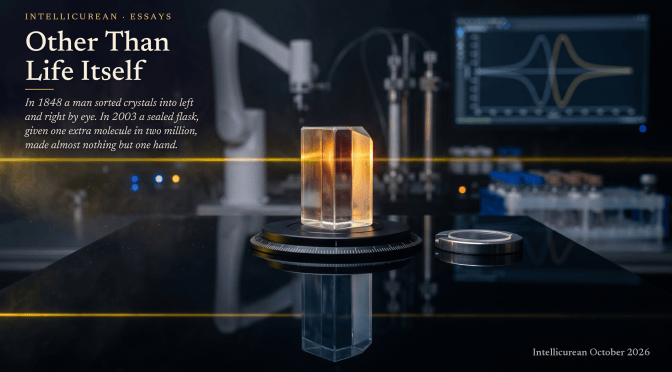
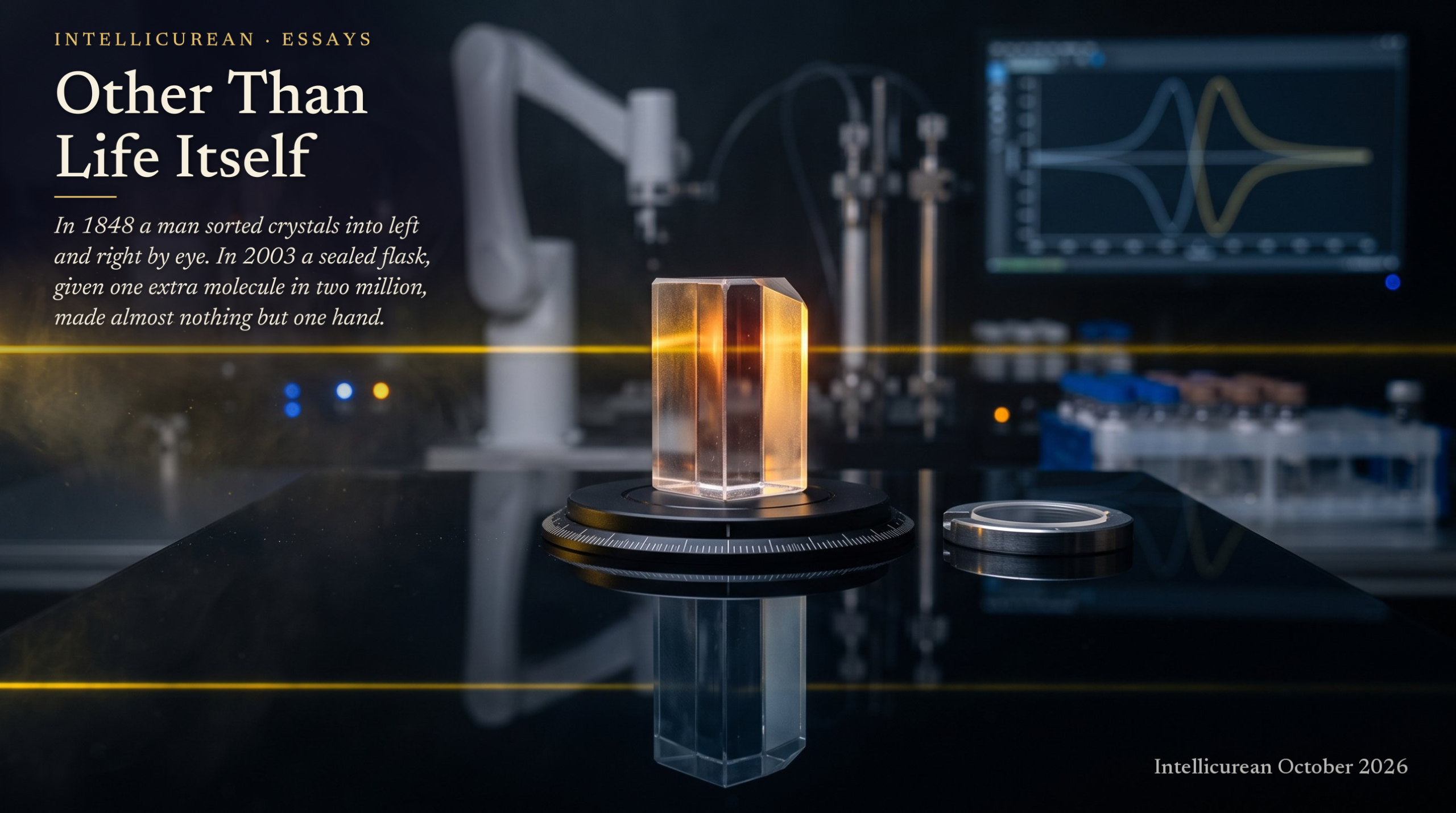
Other Than Life Itself — a clear, lopsided crystal on black glass, lit amber by a thin yellow beam, above its own cooler mirror image, with a robotic lab blurred in the darkness behind
One hand lit, its mirror twin left cold, made for the essay.

Why we’re pointing you there

On October 7 the Royal Swedish Academy of Sciences gave the chemistry prize to Henri Kagan, 95, and Kenso Soai, 76, for work on how a slight preference for one mirror image can grow. Intellicurean takes the Academy’s most generous sentence at its word and follows the flask back to where the story starts: wine diamonds under a cork, stray crystals in the vats of an acid works in Alsace, and Louis Pasteur in 1848 sorting crystals into left and right by eye, then repeating it for the old physicist Jean-Baptiste Biot in Biot’s own rooms. From there it moves through Kagan’s “marriage,” in which a deliberately flawed catalyst does better than anyone expected because mismatched pairs sit out; a flask that existed only on paper in 1953; Soai’s thirty-seven sealed flasks, started with nothing one-handed, that came out eighteen one way and nineteen the other; and a stone that fell near Murchison, in Victoria, in 1969, carrying amino acids that lean.

What we liked most is how the essay resists both temptations of its subject. It never lets the flask stand in for how life did it, which the committee itself is careful to say it isn’t, and it never lets the mystery go soft: it says plainly that an amplifier “makes a cause indistinguishable from an accident.” It is also a story full of people, from Biot taking the young Pasteur by the arm to a laureate who heard the news while out shopping and spoke first of Pasteur. Where the essay turns the Academy’s compliment around, and what it makes of the stone, we’ll leave to the essay.

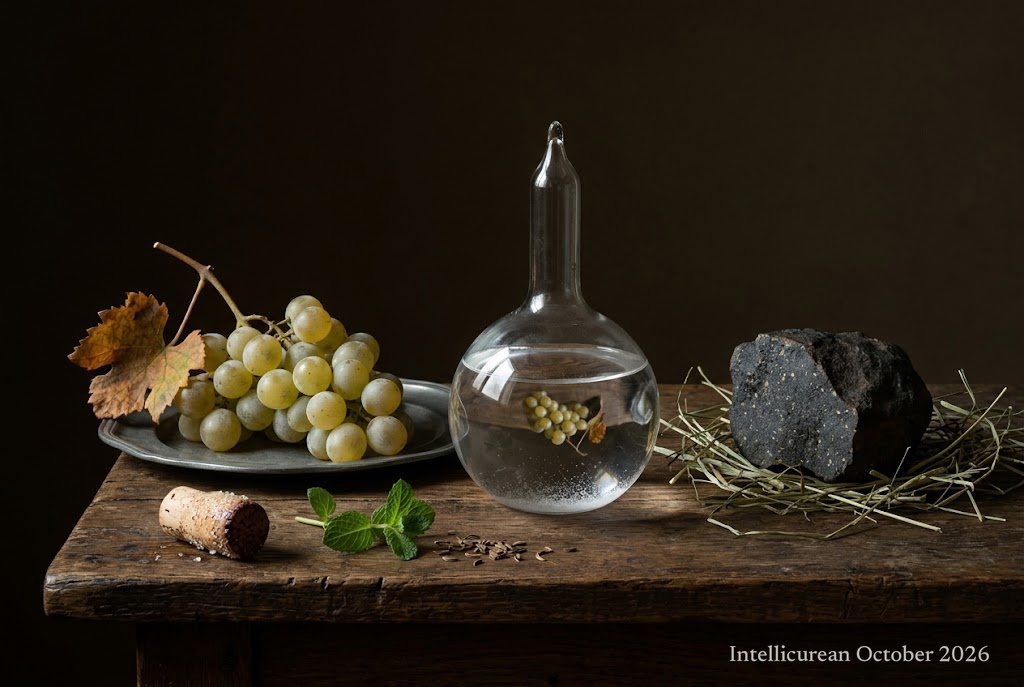
A still life on a worn oak table: green grapes and an autumn vine leaf on a pewter plate; a sealed round glass flask of clear liquid that shows the grapes upside down; a black meteorite fragment on a nest of hay. A cork, a sprig of mint and caraway seeds lie in front.
Grapes, a sealed flask, and a stone that arrived leaning, made for the essay.

Read the full essay at Intellicurean →

Essays & Reviews for the Intellectually Curious