Category Archives: History

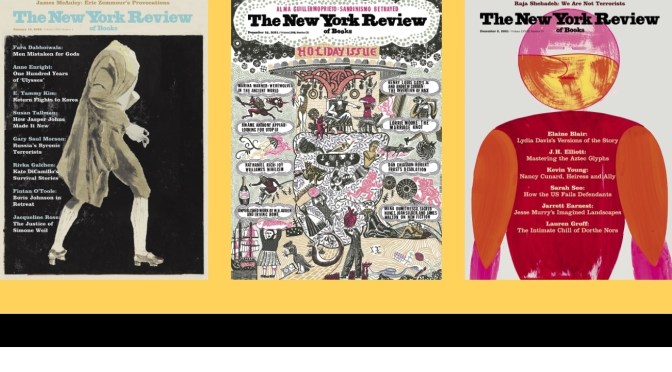
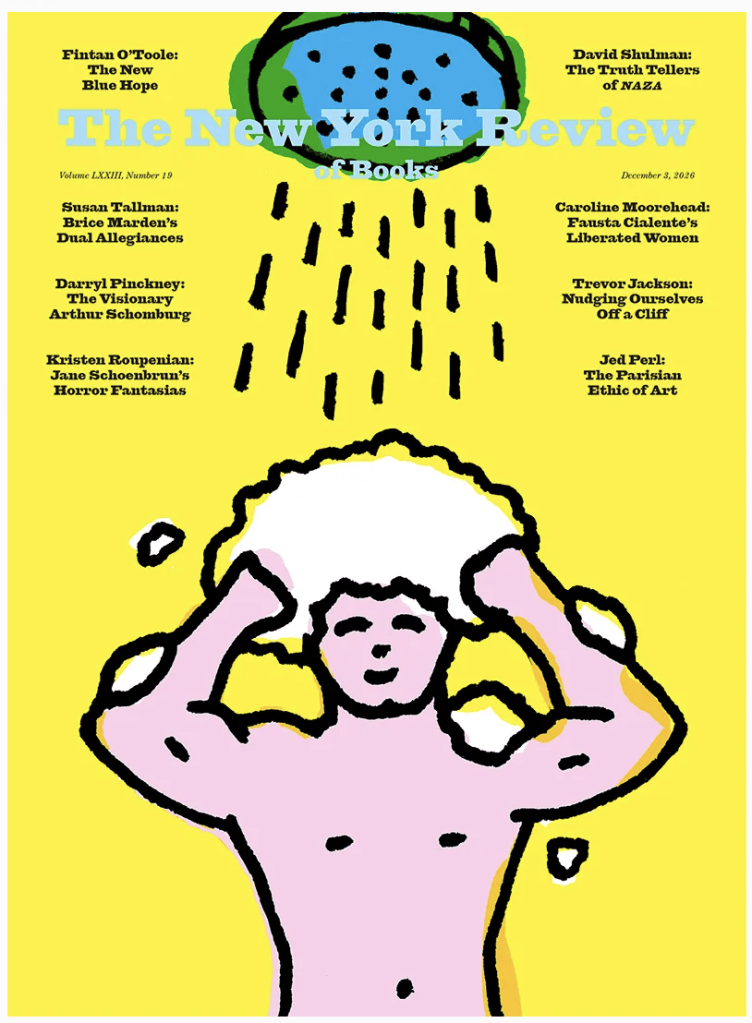
THE NEW YORK REVIEW OF BOOKS – DECEMBER 3, 2026

THE NEW YORK REVIEW OF BOOKS: The latest issue features Fintan O’Toole on the midterms miracle, David Shulman on NAZA, Darryl Pinckney on Arthur Schomburg’s library, Trevor Jackson on the negatives of nudging, Kristen Roupenian on Jane Schoenbrun’s fantasias, Michael Gorra on Sebastian Barry’s nightmares, Piper French on the legal rot in capital cases, Clare Carlisle on Spinoza’s religion, Mark Danner on the legacy of January 6, an interview with a Nigerian bandit by Helen Epstein and Aminu Abubakar, poems by Jenny Susana Plotts-Pineda and Aaron Fagan, and much more.

The left found its winning message.

The December 3 issue opens with “The Next Generation” by Fintan O’Toole, the Review’s advising editor, who credits the American left with a historic election win achieved by tying the affordability crisis to Republican corruption. The whole Democratic Party, he argues, should learn from it. Later, Mark Danner‘s “The Tightrope Walker” asks how Trump turned a failed coup into a tale of his own martyrdom. He reviews Mary Clare Jalonick’s oral history of January 6th, Carol Leonnig and Aaron C. Davis’s account of a Justice Department cowed by politics and fear, and Michael Wolff’s All or Nothing.

Violence leaves lasting scars.

In “Collateral Damage,” David Shulman, a Hebrew University scholar and longtime activist with the Arab–Jewish group Ta’ayush, considers NAZA. In Yuval Abraham and Rachel Szor’s documentary, Israeli soldiers frankly voice remorse over their part in the Gaza war. Helen Epstein and Aminu Abubakar‘s “Interview with a Bandit” hears from one of the many Nigerians driven to violence by years of corrupt government. And in “The Executioner’s Song,” Piper French reviews Pamela Colloff’s To Catch the Devil. It is the Gulf Coast story of a notorious jailhouse informant whose lies sent an innocent man to death row, and of the officials and institutions that encouraged him.

Fiction crosses borders and centuries.

Caroline Moorehead‘s “Home and Away” introduces Fausta Cialente, an Italian émigré who lived much of her life in Egypt and wrote of restless women and girls drawn to flight. Her A Very Cold Winter appears in Julia Nelsen’s translation, introduced by Claudia Durastanti. Michael Gorra‘s “Nightmares of History” reviews The Newer World, which completes Sebastian Barry’s trilogy, begun with Days Without End, about Americans swept up in nineteenth-century violence. Kristen Roupenian‘s “We Tell Ourselves Stories in Order to Change” explores how Jane Schoenbrun’s book Public Access Afterworld and film Teenage Sex and Death at Camp Miasma blur reality and fantasy.

Art and archives take center stage.

Jed Perl‘s “Masters of Their Craft” tours shows at the Louvre, the Musée d’Orsay, the Grand Palais and the Fondation Louis Vuitton devoted to Michelangelo and Rodin, Renoir, late Matisse and Calder. For 150 years, he argues, Paris was modern art’s great workshop. Susan Tallman‘s “Seeing Through the Lightness” finds Brice Marden’s famous equanimity, in Gagosian’s survey I Am Plane Image, looking less inevitable and more like a hard-won balancing act. Darryl Pinckney‘s “Arthur Schomburg’s Legacy” marks the Schomburg Center’s centennial in Harlem, celebrating the collector whose books seeded one of the world’s foremost archives of Black history and literature.

Big ideas get a second look.

Trevor Jackson‘s “The Cost of Monetizing Everything” reviews Nick Chater and George Loewenstein’s It’s On You and The Price of Happiness by Cass R. Sunstein, co-author of Nudge. Behavioral economists promised rational policy, but Jackson finds a corporate push behind their nudges, which, as Chater and Loewenstein argue, shifted blame for systemic problems onto individuals. Clare Carlisle‘s “Reverence for All of It” takes up Steven Nadler’s Spinoza, Atheist. She asks whether a thinker branded a heretic in seventeenth-century Europe, for treating God and nature as interchangeable, should be called an atheist today.

Wild places and poems round it out.

In “‘Quest Without End’,” the Australian scientist Tim Flannery follows the Scottish journalist Cal Flyn, whose The Savage Landscape and Islands of Abandonment explore the emotions stirred by wild and deserted places, from wildernesses people helped create to landscapes nature has reclaimed. The issue also carries two poems: Susana Plotts-Pineda‘s “Our Lady of Beverly, TX” and Aaron Fagan‘s “Why I Go to the Movies Alone.” Browse the full table of contents for every review and poem.
IMPRESSION, CENTENARY

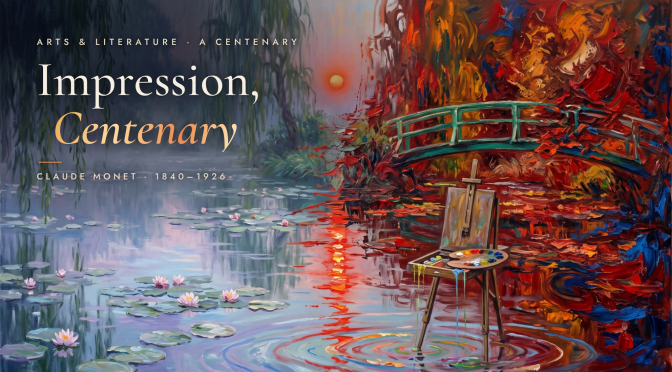
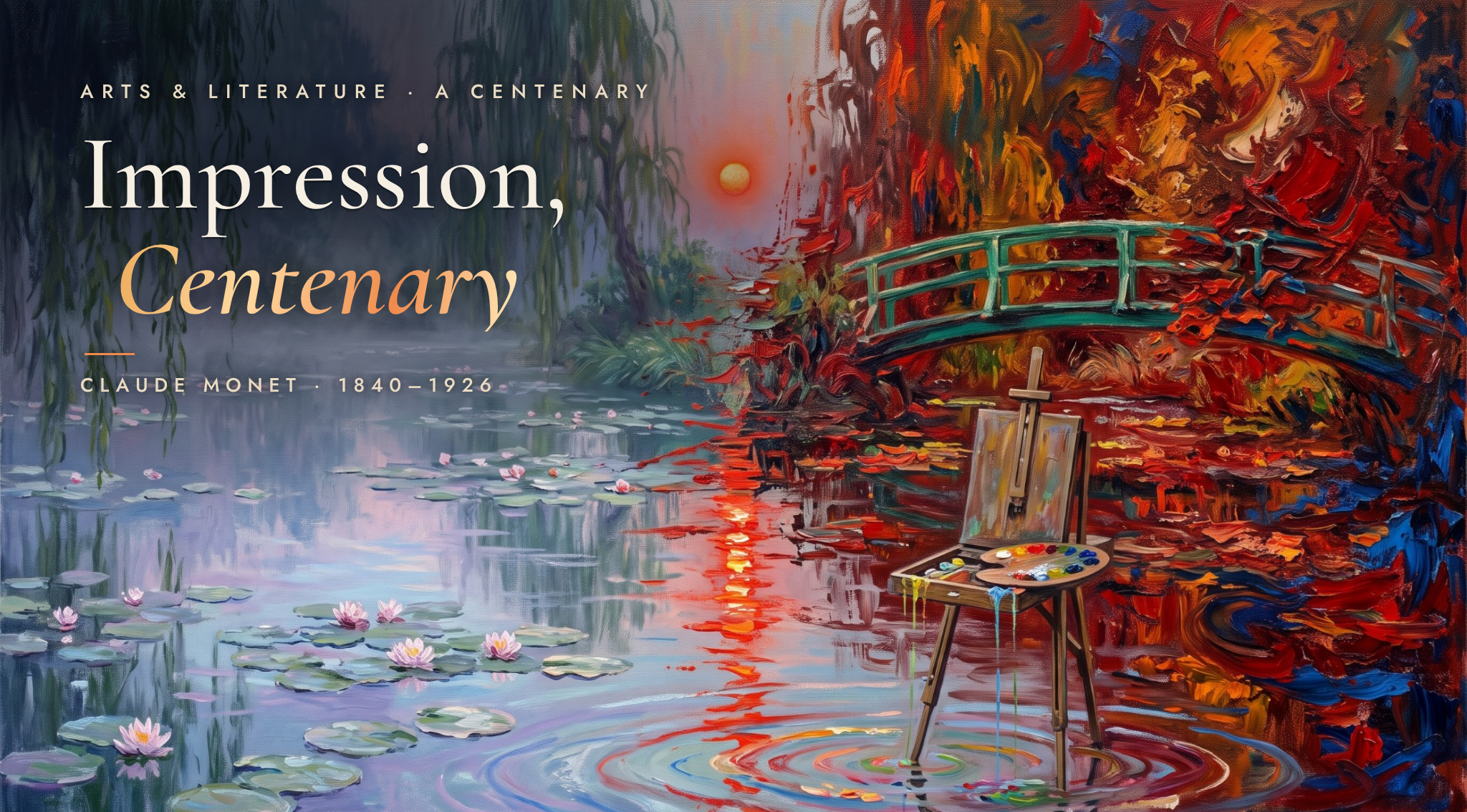
Impression, Centenary. Claude Monet, 1840–1926. Monet’s water lily pond at Giverny at dawn, calm on the left and dissolving into fiery late brushwork on the right, with an empty easel standing in the water.

Twelve paintings, one century, and the man who painted time

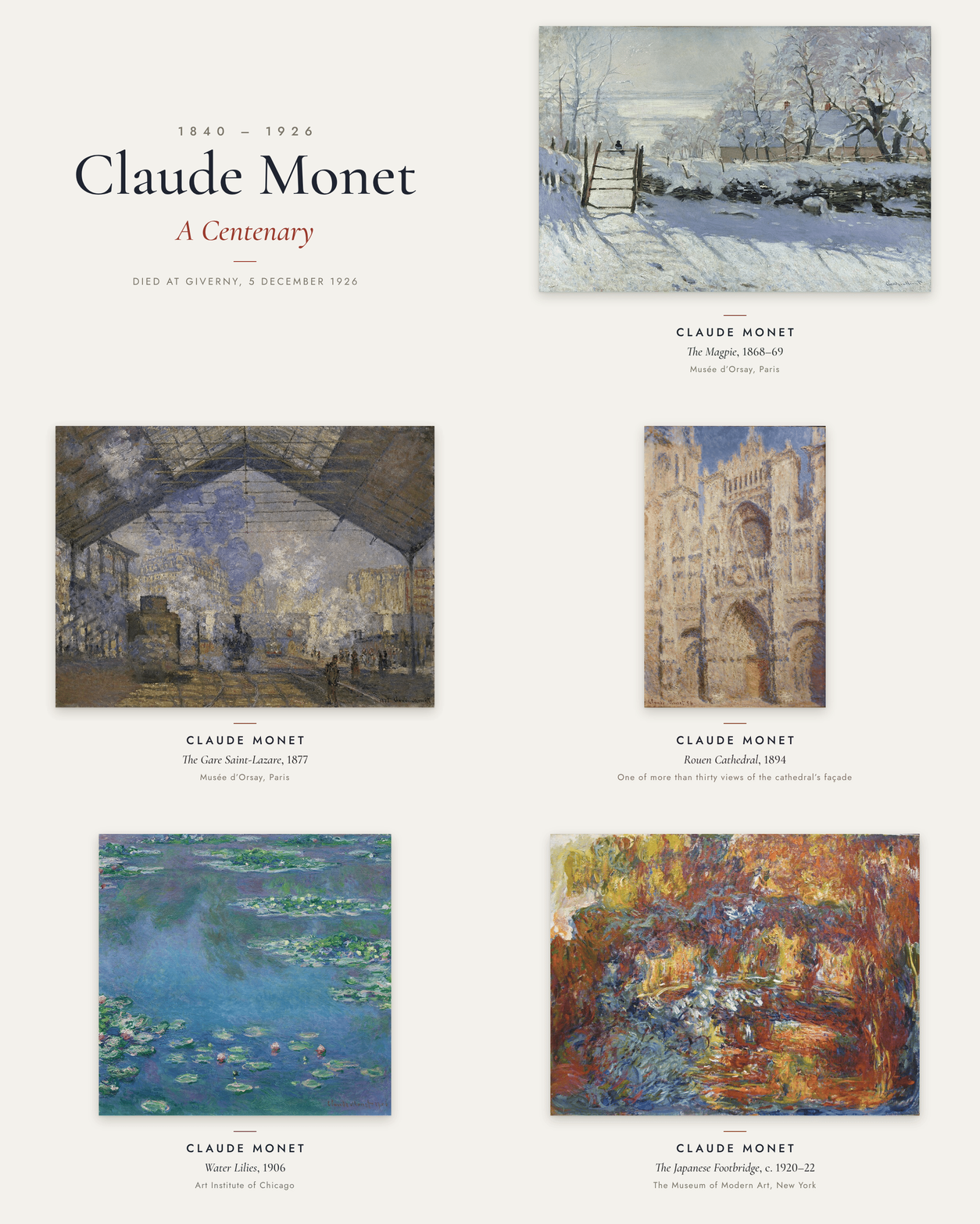
A gallery of twelve paintings by Claude Monet, from Impression, Sunrise (1872) to The Japanese Footbridge (c. 1920–22), each with its title, date and museum.
Twelve paintings by Claude Monet, 1868–1922. All are in the public domain.

On 5 December 1926, Claude Monet died at Giverny, aged 86, in the house where he had lived for more than forty years. A century later, the twelve paintings in our gallery show how one man taught the world to look at light instead of things.

It begins with a sunrise. In 1872 Monet painted the harbour at Le Havre in quick strokes: grey-blue mist, ghostly cranes and a small orange sun that seems to burn through the canvas. When he showed Impression, Sunrise at the first independent exhibition in 1874, the critic Louis Leroy mocked it in a review headlined “Exhibition of the Impressionists.” The insult stuck, and a movement had its name.

Earlier still, in The Magpie, he had painted snow in blue, violet and cream. The Salon jury rejected it in 1869. Then came the sunlit years at Argenteuil. In Poppy Field and Woman with a Parasol, the figures are his wife Camille and their son Jean, painted so quickly that the wind seems to move through the brushwork. In The Gare Saint-Lazare, Monet turned modern Paris into weather, making locomotive steam as beautiful as clouds.

In the 1890s he made his boldest discovery: the subject hardly mattered. He painted stacks of wheat near his home at every hour and season, then more than thirty views of Rouen Cathedral’s façade, its stone dissolving from dawn grey to noon gold. In London, working from St Thomas’ Hospital across the Thames, he painted Parliament as a dark silhouette against a burning sky. A building, a field or a river was only the occasion. The true subject was time.

At Giverny he built his own subject. He diverted a stream, dug a pond, planted water lilies and crossed it all with a Japanese bridge, then painted that garden for the rest of his life, some 250 canvases of lilies in all. On 12 November 1918, the day after the Armistice, he wrote to his friend Georges Clemenceau offering the nation water-lily paintings as a monument to peace. They were installed at the Musée de l’Orangerie in May 1927, five months after his death, in two oval rooms that surround visitors with water and sky.

The true subject was time.

The final picture in our gallery is the strangest. Cataracts had clouded Monet’s sight, and in The Japanese Footbridge, painted around 1920–22, the bridge almost disappears into blazes of red, ochre and blue. Critics once dismissed these late works as the failings of an old man. In the 1950s, as Abstract Expressionism rose in New York, they were rediscovered as visions of the future. Joan Mitchell later spent her last decades in Vétheuil, in a house overlooking the one Monet had rented in the late 1870s.

Paris is marking the centenary. Monet: Painting Time is at the Orangerie through January 25, and From Monet to Hockney is at the Musée Marmottan Monet, home of Impression, Sunrise, through January 31. Take the gallery above as an invitation. A hundred years on, Monet’s light has not finished changing.

The Gallery

  1. Impression, Sunrise, 1872 · Musée Marmottan Monet, Paris
  2. The Magpie, 1868–69 · Musée d’Orsay, Paris
  3. Poppy Field, 1873 · Musée d’Orsay, Paris
  4. Woman with a Parasol – Madame Monet and Her Son, 1875 · National Gallery of Art, Washington
  5. The Gare Saint-Lazare, 1877 · Musée d’Orsay, Paris
  6. Stacks of Wheat (End of Summer), 1890–91 · Art Institute of Chicago
  7. Rouen Cathedral, 1894 · One of more than thirty views of the façade
  8. Bridge over a Pond of Water Lilies, 1899 · The Metropolitan Museum of Art, New York
  9. The Houses of Parliament, Sunset, 1903 · National Gallery of Art, Washington
  10. Water Lilies, 1906 · Art Institute of Chicago
  11. Water Lilies, 1914–26 · Musée de l’Orangerie, Paris
  12. The Japanese Footbridge, c. 1920–22 · The Museum of Modern Art, New York

See it in Paris

Monet: Painting Time · Musée de l’Orangerie · through January 25, 2027

From Monet to Hockney · Musée Marmottan Monet · through January 31, 2027

— The Editors, Intellicurious —

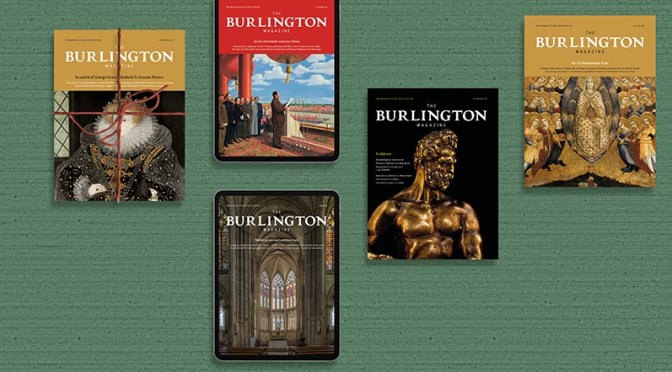
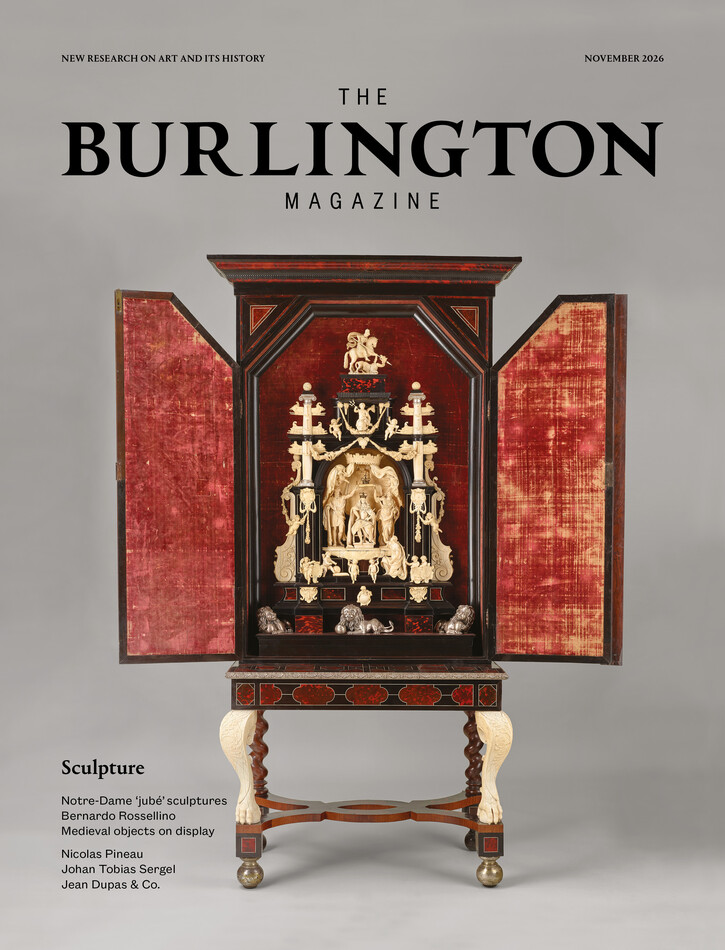
THE BURLINGTON MAGAZINE NOVEMBER 2026

The Burlington Magazine: The latest issue features the upcoming 150th anniversary of Liverpool’s Walker Art Gallery in 2027, honors the career of late Victoria and Albert Museum jewelry curator Richard Edgcumbe, and reviews the monumental realism and modernist influence of nineteenth-century French painter Gustave Courbet.

Liverpool 2027

The Walker Art Gallery in Liverpool will be 150 years old in 2027. It was named after the local brewer Andrew Barclay Walker (1824–93), who donated £20,000 for the creation of the gallery. It opened in September 1877 and welcomed over 300,000 visitors during the next four months. Walker was not a collector of art but appears to have displayed an aesthetic sensibility through the high standards he insisted on for the design of his public houses. read more

Richard Edgcumbe (1951–2026)

A gifted curator who specialised in jewellery, Richard Edgcumbe pursued a successful career at the Victoria and Albert Museum, London, and notably published on gold chasing in the eighteenth century. read more

I, Gustave Courbet

Gustave Courbet (1819–77) was arguably the most important artist in nineteenth-century France. Over almost four decades, he created paintings of monumental achievement and innovation in all genres and changed how art was exhibited and sold – mostly in Paris, the capital of the international art world. He launched an aesthetic of realism that emphasised painterly facture and set the stage for modernist art in the decades that followed. read more

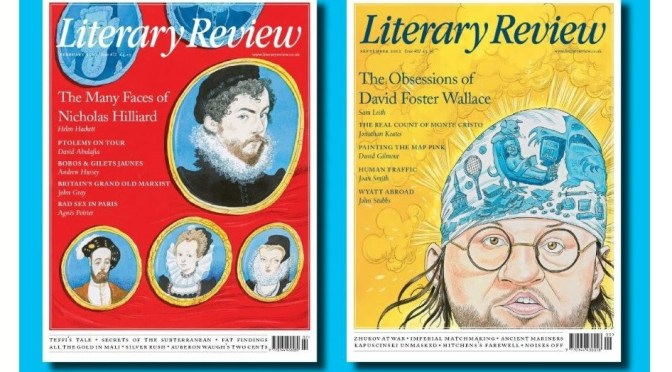
LITERARY REVIEW MAGAZINE NOVEMBER 2026

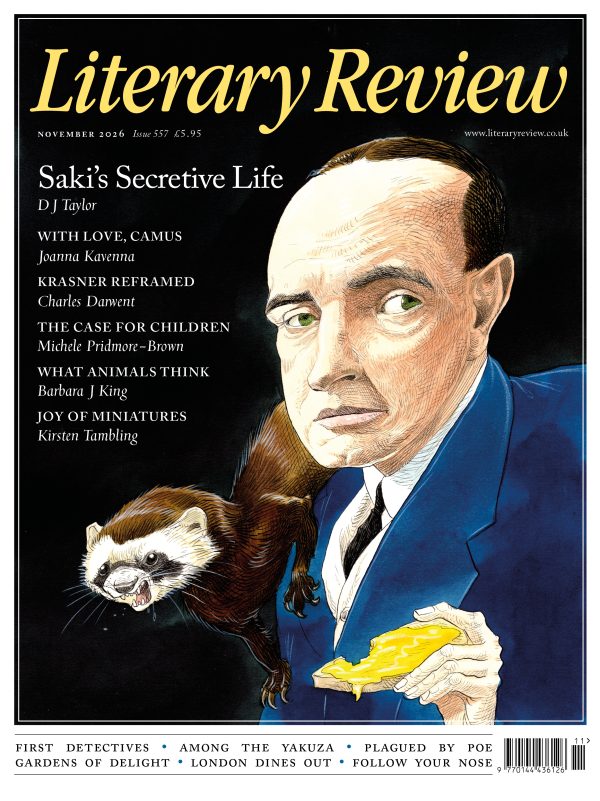
LITERARY REVIEW : The latest issue features ‘SAKI’S SECRETIVE LIFE’…..

Laughter in the Margins

Super-Beast: The Mysterious Life of Saki By Oliver Soden

In some ways all you really need to know about Hector Hugh Munro (1870–1916) can be gleaned from the short story ‘Sredni Vashtar’, first published in the Westminster Gazette in the summer of 1910. Conradin – Munro’s heroes nearly always have these hifalutin names – is a sickly small boy quartered on a tyrannical guardian called Mrs de Ropp. Denied much in the way of freedom or material comfort, in particular the hot buttered toast he craves, Conradin makes a fetish out of a savage polecat-ferret hidden in the garden shed, worships it as a god and looks to it for vengeance.

Here in the World

Letters: 1944–1959 By Albert Camus & Maria Casarès (Edited by Béatrice Vaillant, translated from French by Sandra Smith & Cory Stockwell)

What an amazing behemoth of a book! I’ve been lugging it around for weeks. Nearly a thousand letters: the intimate correspondence of Albert Camus and Maria Casarès. When they first met in Paris – on D-Day, 1944 – Camus had already published L’Etranger (1942; The Outsider). Born and raised in Algeria, he was in Paris when the Second World War broke out, and later joined the French Resistance. Camus’s wife, Francine Faure, a mathematician and pianist, remained in Algeria. Maria Casarès was originally from Galicia, the daughter of an exiled former prime minister of Spain, Santiago Casares Quiroga. In 1944, Casarès was already known as an actress, having played the titular role in J M Synge’s Deirdre of the Sorrows. She later starred in Les Enfants du paradis (1945), Cocteau’s Orphée (1950) and La Lectrice (1988), among other films and plays.

Talk to the Animals

Minds I’ve Met: From Denying to Embracing the Inner Lives of Animals By Frans de Waal

Some years ago, a prominent animal-behaviour scientist hosted a colleague at his field station devoted to the study of chimpanzees. Talking together on top of the observation tower, the pair glanced at the apes but mostly stayed absorbed in conversation. Then a female chimpanzee named Thai began to scream and hit herself in dramatic fashion. In response to her outburst, other chimpanzees rushed to embrace, hold and kiss her.

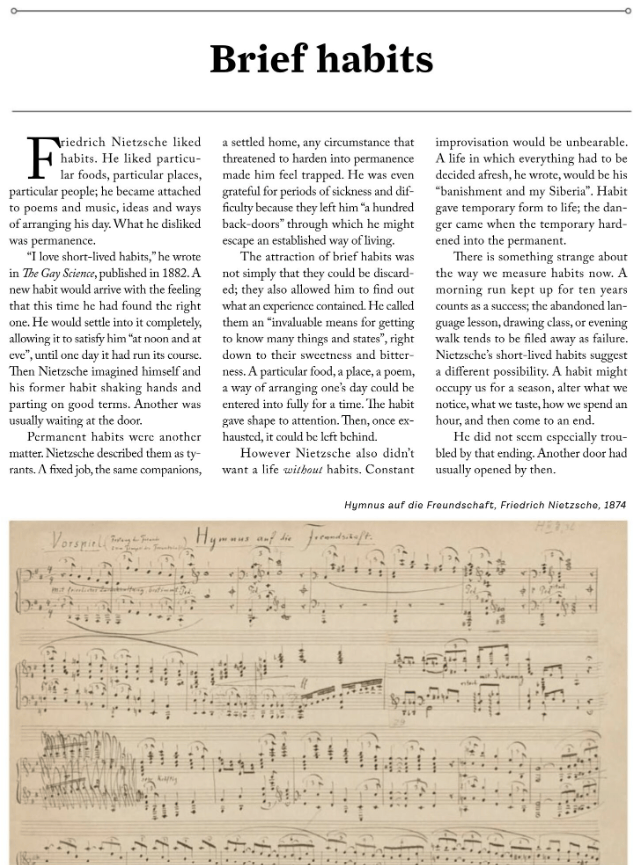
MONTHLY REVIEW MAGAZINE NOVEMBER 2026 PREVIEW

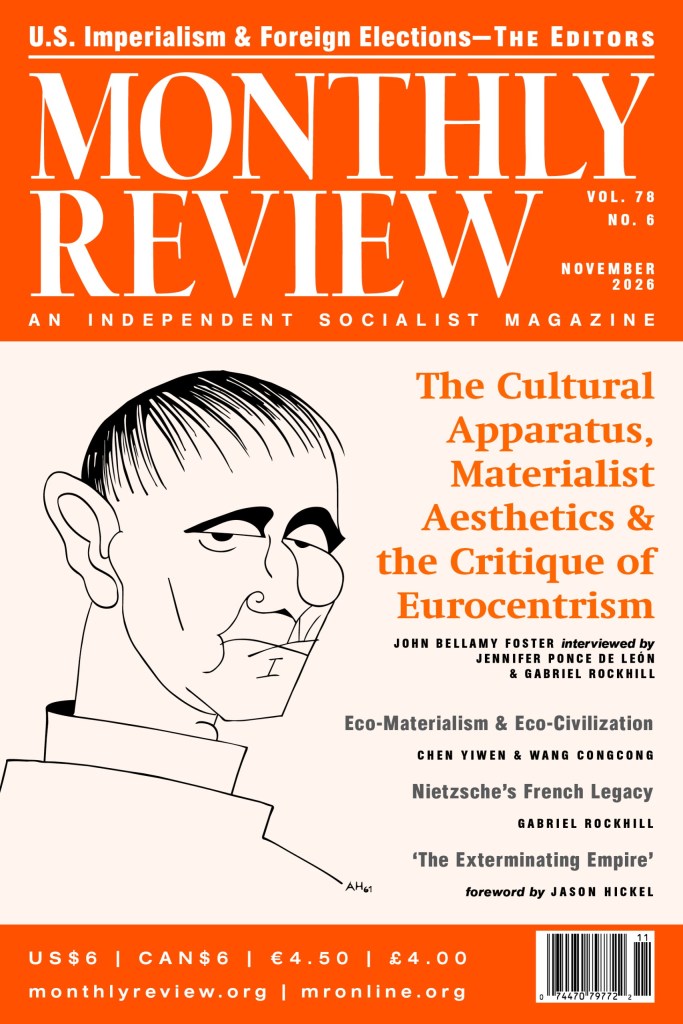
MONTHLY REVIEW MAGAZINE: The latest issue features the United States as the world’s chief enemy of sovereign elections.

Citing Dov Levin’s research, it counts 128 U.S. interventions in foreign elections from 1946 to 2014, rising after the Cold War, increasingly overt, and successful about 60 percent of the time before 2000. Methods include funding right-wing campaigns, dirty tricks, lawfare, social-media bots, aid threats, and CIA surrogates posing as “democracy assistance” groups. Recent examples include Venezuela, ending in Maduro’s abduction; $20 billion tied to electing Milei’s allies in Argentina; and Honduras, where Trump declared Asfura the winner. Leaked “Hondurasgate” tapes exposed regional manipulation schemes.

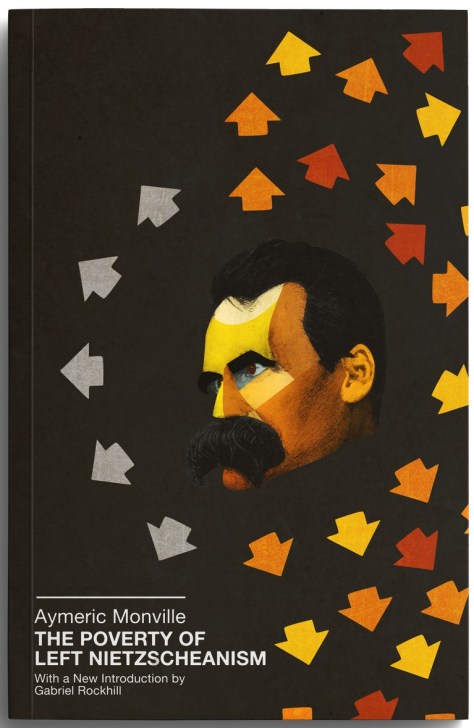
Nietzsche’s French Legacy

The Poverty of Left Nietzscheanism by Aymeric Monville

MR is pleased to be able to share with readers Gabriel Rockhill’s Introduction to The Poverty of Left Nietzscheanism by Aymeric Monville (Iskra Books, 2026). Rockhill provides readers with a thorough account of the rehabilitation of Nietzsche within French Theory and its consequences within the non-communist left. Fascism, Rockhill argues, “can only be understood and contested through materialist analysis and anticapitalist praxis”—a fitting preamble to a book that acts as “an insightful indictment of the dominant capitalist ideologies while clearly articulating the political path forward.”

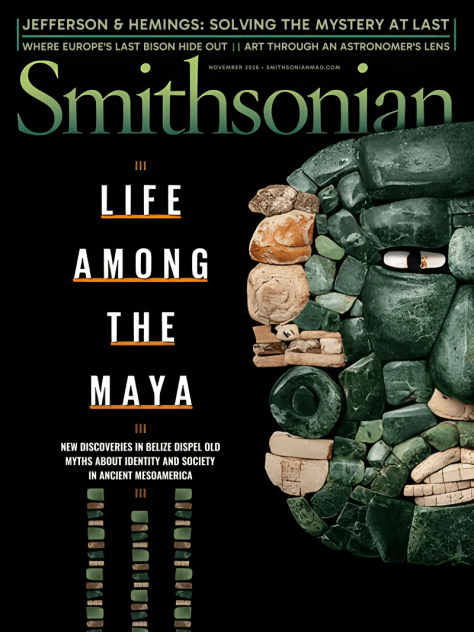
SMITHSONIAN MAGAZINE – NOVEMBER 2026

SMITHSONIAN MAGAZINE: The latest issue features ‘LIFE AMONG THE MAYA’ – New Discoveries in Belize Dispel Old Myths About Identity and Society in Ancient Mesoamerica…

The Mighty Metropolis of the Maya

In the rainforest of Belize, archaeologists are uncovering neighborhoods, local markets and urban farms that shed new light on daily life in the ancient world By Ellen Ruppel Shell | Photographs by Neil Ever Osborne

Untangling an American Mystery

A lock of hair, advances in genetic science and the Smithsonian’s 15-year quest to conclusively resolve an enduring question: Did Thomas Jefferson father Sally Hemings’ children? Dr. Richard Kurin, Ambassador at Large, Smithsonian Institution. Author, History by a Hair Portraits by Joshua Rashaad McFadden

The Skywatchers

Astronomers, astrophysicists and art historians are on a luminous quest to unlock the real-world secrets of classic paintings and literature By Michael Ray Taylor

Into the Woods

After centuries of setbacks, the European bison faces a new challenge: surviving in a primeval forest that isn’t its true home By Marta Zaraska | Photographs by Kasia Strek

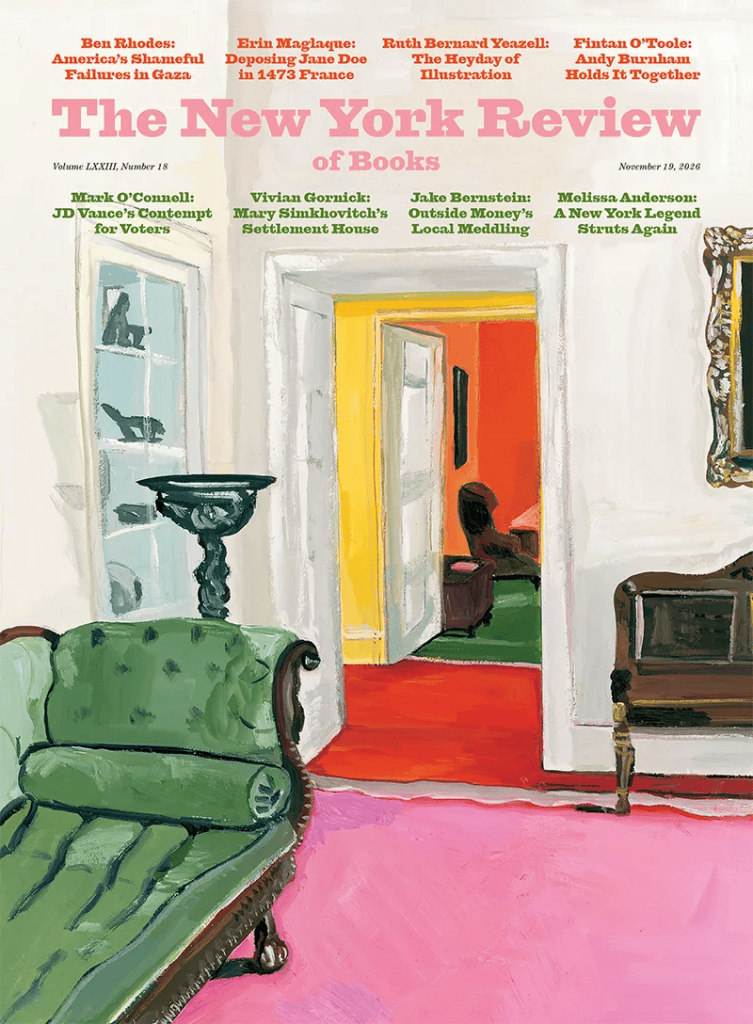
THE NEW YORK REVIEW OF BOOKS – NOVEMBER 19, 2026

THE NEW YORK REVIEW OF BOOKS: The latest issue features Verlyn Klinkenborg on the rivers that you’re used to, Fintan O’Toole on Andy Burnham’s communion, Ruth Bernard Yeazell on illustrious illustration, Mark O’Connell on JD Vance’s overweening ambition, Melissa Anderson on Tally Brown’s underground, Jake Bernstein on the super PAC blitz, Erin Maglaque on a medieval Me Too moment, Vivian Gornick on the history of affordable housing, Ben Rhodes on Biden’s dereliction of Gaza, a poem by Jenny Grassl, and much more.


Biden’s Choice

As Israel’s assault on Gaza grew worse and worse, Joe Biden and his advisers acted as though they had no option but to offer their unconditional support. Why couldn’t they see the destruction they were enabling? By Ben Rhodes

Hull House on the Hudson

Mary K. Simkhovitch, the founder of Greenwich House, believed in the radical idea that housing should be made as livable for the working class as it was for the middle class. By Vivian Gornick

Me Too in the Middle Ages

A forensic study of a rape survivor from 1473 Dijon reveals a legal process surprisingly accepting of imperfect victims and contradictory testimony. By Erin Maglaque

The Flood of Life

Our desire to control a river’s course always conflicts with a river’s determination to shape its own. By Verlyn Klinkenborg

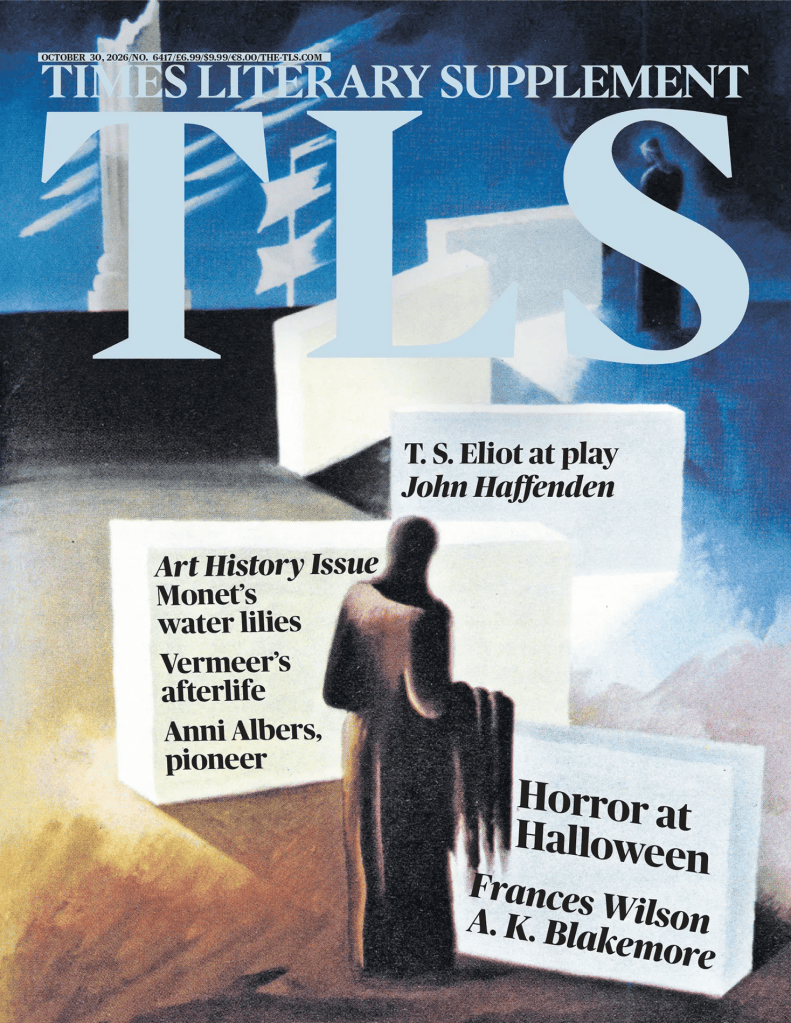
TIMES LITERARY SUPPLEMENT – OCTOBER 30, 2026

TIMES LITERARY SUPPLEMENT: The latest issue features ‘ART HISTORY ISSUE’ – Monet’s water lilies, Vermeer’s afterlife and Anni Albers, pioneer….

‘Our guide into the darkness’

Edgar Allan Poe’s downward trajectory By Frances Wilson

Love at first bite

The subversive sexuality of the literary vampire By A. K. Blakemore

A patch of yellow wall

The modern cult of Vermeer By James Hall

On repeat

Reflections on writing, addiction and Monet’s water lilies By Marie Darrieussecq

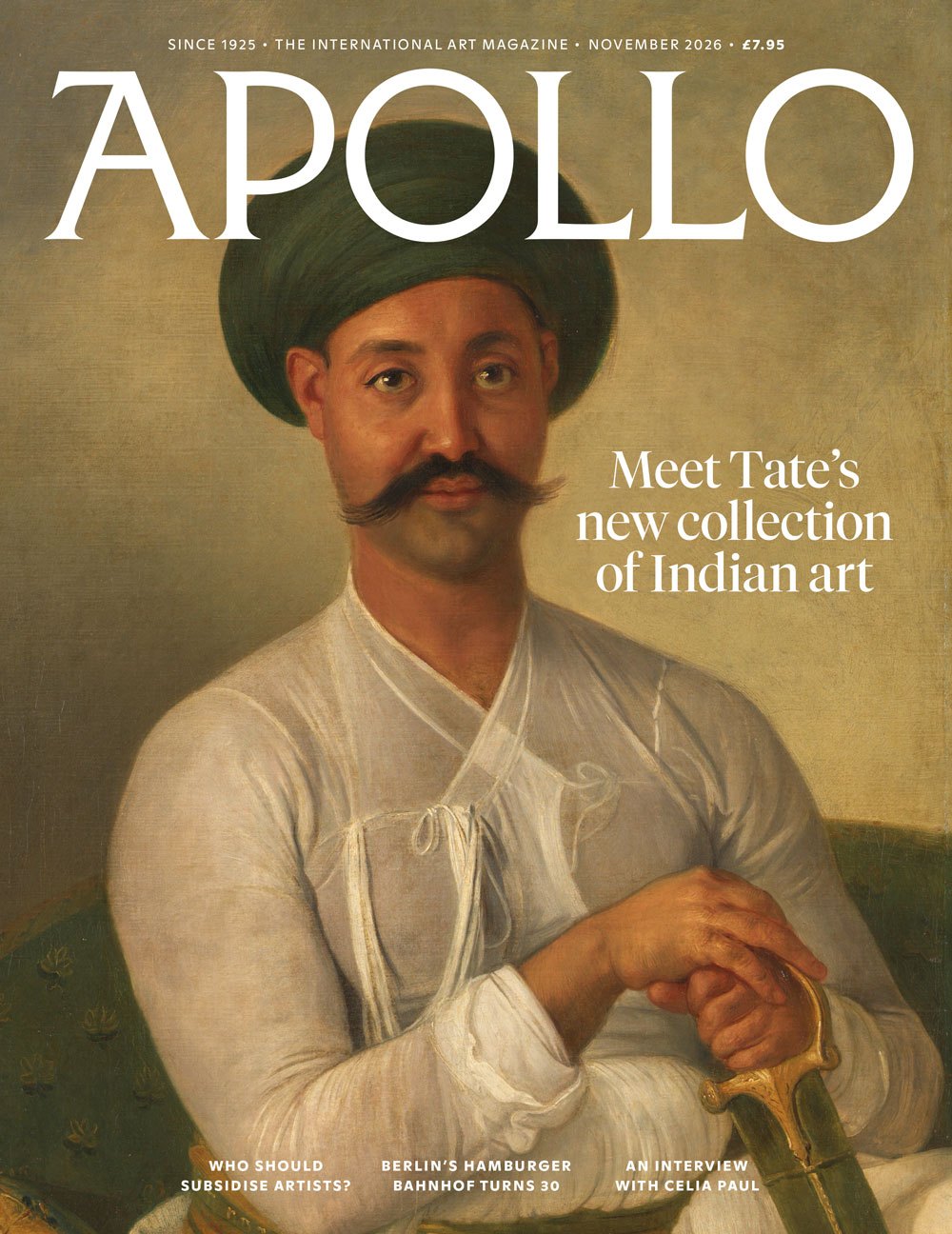
APOLLO MAGAZINE – NOVEMBER 2026

November 2026

APOLLO MAGAZINE: The latest issue features ‘Tate’s new collection of Indian art’ | Celia Paul finds herself in Venice | a photographic love letter to London | Berlin’s Hamburger Bahnhof at 30

Two starchitects, one art museum: can a clash of styles work?

Do the Fondation Beyeler’s new buildings by Peter Zumthor fit in with the rest of the site designed by Renzo Piano? Perhaps they aren’t trying to

What blockbuster auctions tell us about the value of art

The October auctions are always a test of the health of the art market, but there’s more than one way to read the results

Could members’ clubs bring new collectors into the art market?

From the November 2026 issue of Apollo. About a decade ago I found myself in a private room at the Arts Club on Dover Street in Mayfair explaining the reasons for my selection of that year’s international exhibitions, biennnials and art fairs to a table of wealthy diners. The expensively, if discreetly, dressed group – […]

The French restaurant that really does turn food into art

Guy Savoy is the first chef ever to be elected to the Académie des Beaux-Arts in France. A meal at his restaurant in Paris proves why he deserves this unprecedented honour