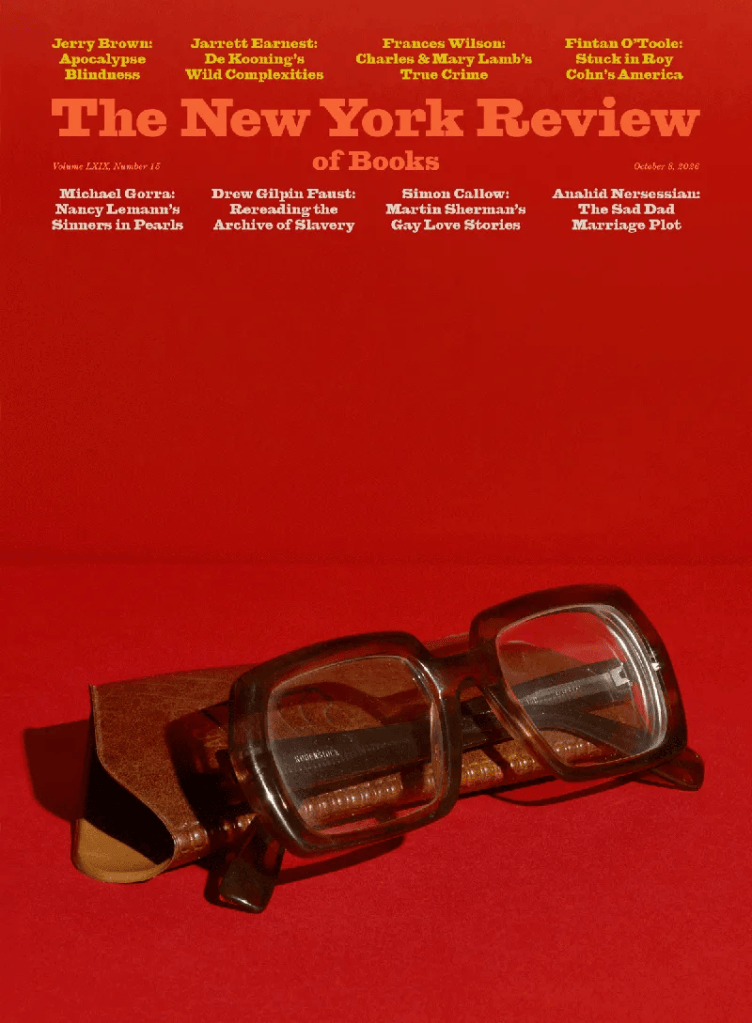
Willem de Kooning’s works on paper document his efforts to find ways of retaining both image and abstraction, depth and flatness.
Willem de Kooning Drawing an exhibition at the Art Institute of Chicago, June 14–September 20, 2026, and the Rijksmuseum, Amsterdam, October 9, 2026–January 17, 2027
Charles Lamb’s camp, mischievous, melancholic alter ego, Elia, owes much to his sister, Mary, with whom he lived for forty years, absorbing her “rambling chat.”
Complete Works of Charles and Mary Lamb, Volume IV: Elia and The Last Essays of Elia edited by Gregory Dart
I’ve been thinking about Newton’s third law of motion after recently revisiting it for my son’s science project: for every action, there is an equal and opposite reaction. It is a consoling law, built upon certainty. But human lives seldom hold such hard consolations. The leaders we elect, the borders we erect, the violence we permit produce consequences that outlive the choices that set them in motion. Mothers understand something of this. To bring a life into the world is to initiate a sequence whose consequences can never be calculated or contained. Across Guernica’s August–September double issue, motherhood appears as place, inheritance, origin, and impossible return. The works gathered here cast a look upon the afterlives of history; they ask what follows from our most intimate and collective decisions.
In fiction, Naeem Murr’s Bye-Bye Palestine traces the complex entanglements of lives back to a historical rupture whose convulsions remain present in the ongoing genocide in Palestine. “Haifa became known as Um Al Gharib, Mother of the Stranger,” Murr writes. The name holds the story’s central contradiction: a city figured as mother to those made strangers within it. In Emmy Rossum’s Tether, motherhood becomes its own law of action and reaction. In a futuristic world, a daughter uses her heightened olfactory abilities to mark the boundary between herself and her mother. Following a matrilineal inheritance through scent, she attempts to trace her way back to her own beginnings. In Yukiko Tominaga’s The Little Corner of the Factory, a child discovers the many forms love can take, and the hurt and betrayals it can contain. In a small room inside a rental hot-towel factory, the youngster is initiated into a tenderness that will outlast the people who teach it to her.
In nonfiction J. Malcolm Garcia’s narrative reportage Last Fight tells the story of a man living in the wake of his brother’s death. Nazeer, an Afghan interpreter who served alongside US forces in Afghanistan, is detained by ICE and dies within twenty-four hours of entering custody. Garcia follows a chain of consequence stretching from the war in Afghanistan to the American immigration system, tracing the afterlife of a vote, and the distance between a choice made in a voting booth and the body upon which its force eventually lands.
In A Nation Wrestles with God, excerpted from A Nation Wrestles with God: American Prophets, Philosophers, and Firebrands, Ilan Stavans traces America’s long and unsettled relationship with the idea of God. From the use of divine authority in the service of empire to God’s persistent presence in the nation’s literature, politics, vernacular, and imagination, Stavans traces how belief becomes another force with an afterlife. The gods a nation creates continue to shape the lives over which it assumes the right to “play God.”
In Guernica’s first foray into the encounter between artificial intelligence and human epistemology, Liane Strauss and an AI read Emily Dickinson’s “I felt a Funeral, in my Brain” together. Moving between Dickinson, Monet’s Water Lilies, and the irresolvable problems literature allows us to inhabit, Strauss discovers that an AI can identify ambiguity but cannot experience the doubt that lends it its resonant weight. The first instalment in a three-part series, the essay is a reminder that human knowledge begins in uncertain spaces.
In interviews, The Insistence of Beauty brings poets Tina Chang and Nathalie Handal into a reciprocal conversation about their new collections, LION and Roma Roam, respectively. A question becomes an invitation to step beyond the stories assigned to us, and in this exchange, each poet turns that invitation toward the other. Here, imagination creates another kind of afterlife: the freedom to move beyond violence’s last account.
In the latest installment of Guernica’sPosthumanitarian interviews series, After Development, Russell Reed speaks with Bhutanese scholar Dasho Karma Ura about the intrinsic relationship between our individual choices and communal happiness. Critiquing the humanitarian regime’s presentism, Ura suggests that our individual well-being cannot be separated from the ecological futures our present choices are already creating.
In Global Spotlights this month, Nwanne Agwu’s Faint Lines maps identity through maternal and paternal lines, and asks what it means to belong to people who came before us. Published first in Isele Magazine, the narrative reimagines home not as where one comes from, but as a place where one is recognized and held with love.
Poetry in this issue enters the charged space where beauty and violence meet. In Tina Chang’s I’ve Gone to Look for America, Term One, Pistil/Pistol, and I’ve Gone to Look for America, Term Two, roses tangle in the brain; a peony becomes first a woman’s cheek and then a bullet; the pistil carries within it the sound of a pistol. Within these poems, the inherited past exerts its force upon the present, but the speaker answers by naming herself—lion, flower, weapon, and “little spark”—and turning that inheritance toward another future.
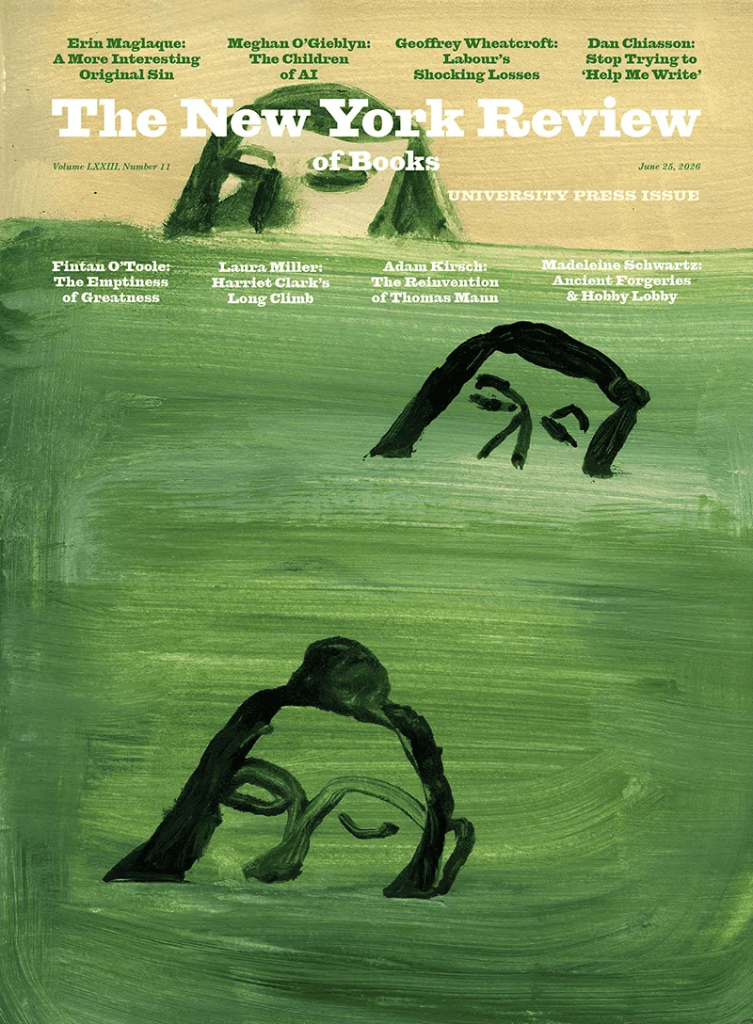
As AI erodes our attention spans and expressiveness, philosophers like Simone Weil and Arthur Schopenhauer offer profound insights on what it means to be an individual.
In The Diversity of Morals, Steven Lukes attempts to reconcile philosophical arguments that there is one morality despite cultural differences with empirical studies that suggest it’s all relative.
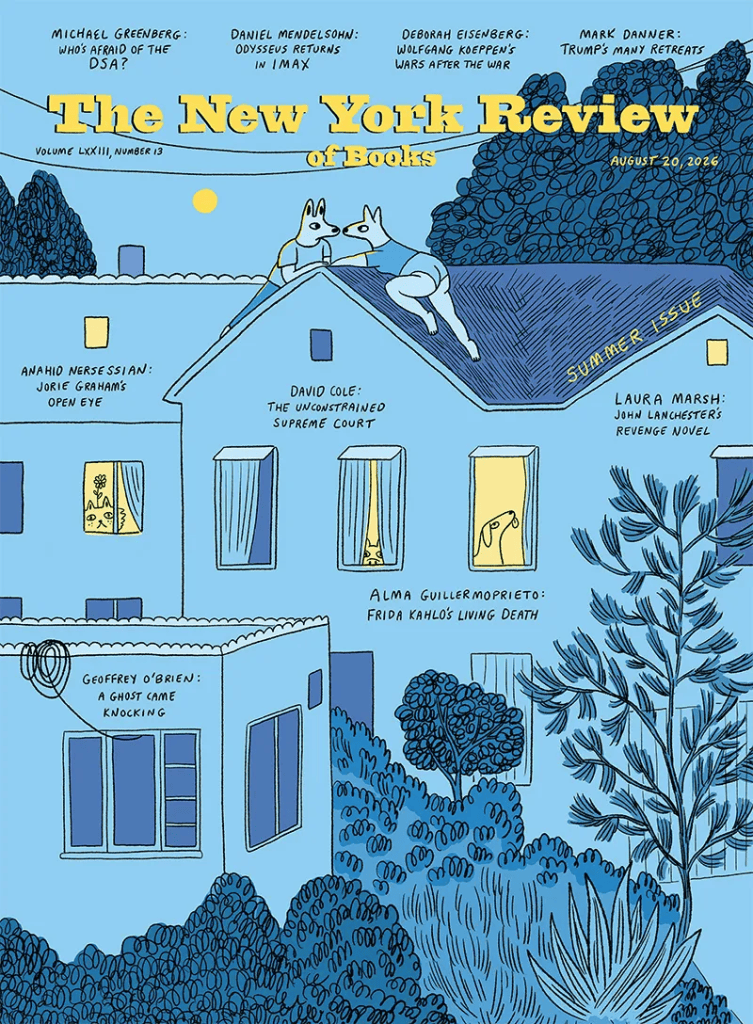
The most authentic thing about Christopher Nolan’s Odyssey is its densely braided narrative, but its tormented hero sounds like the heroes of Christopher Nolan movies.
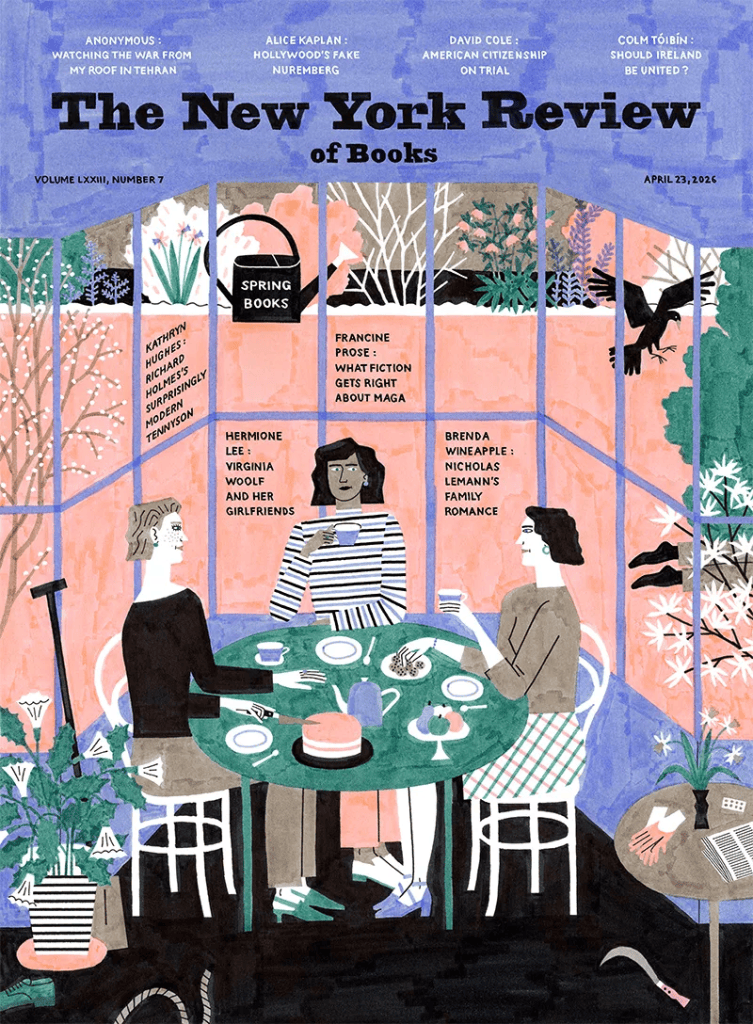
Maggie Haberman and Jonathan Swan’s inside account of the Trump administration portrays a president with a vast appetite for power but who repeatedly backs down when the costs of his actions become too high.
Regime Change: Inside the Imperial Presidency of Donald Trump by Maggie Haberman and Jonathan Swan
America’s centennial in 1876 was celebrated with a grand exhibition that projected an image of national unity and inventiveness in the anxious aftermath of civil war and recession.
Centennial: The Great Fair of 1876 and the Invention of America’s Future by Fergus M. Bordewich
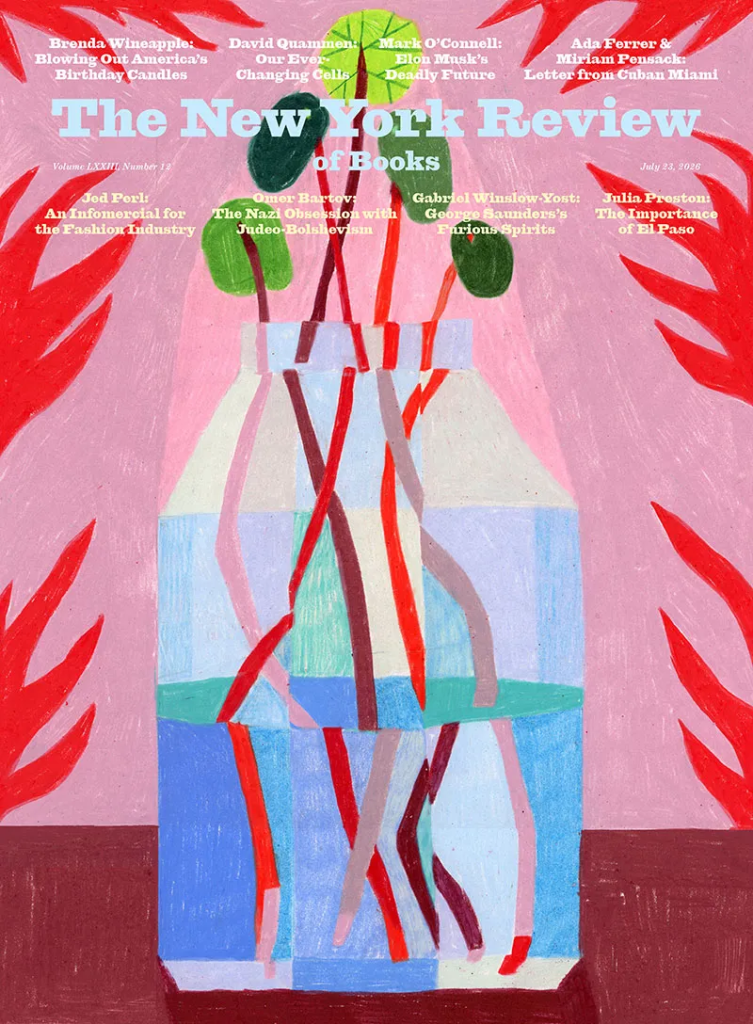
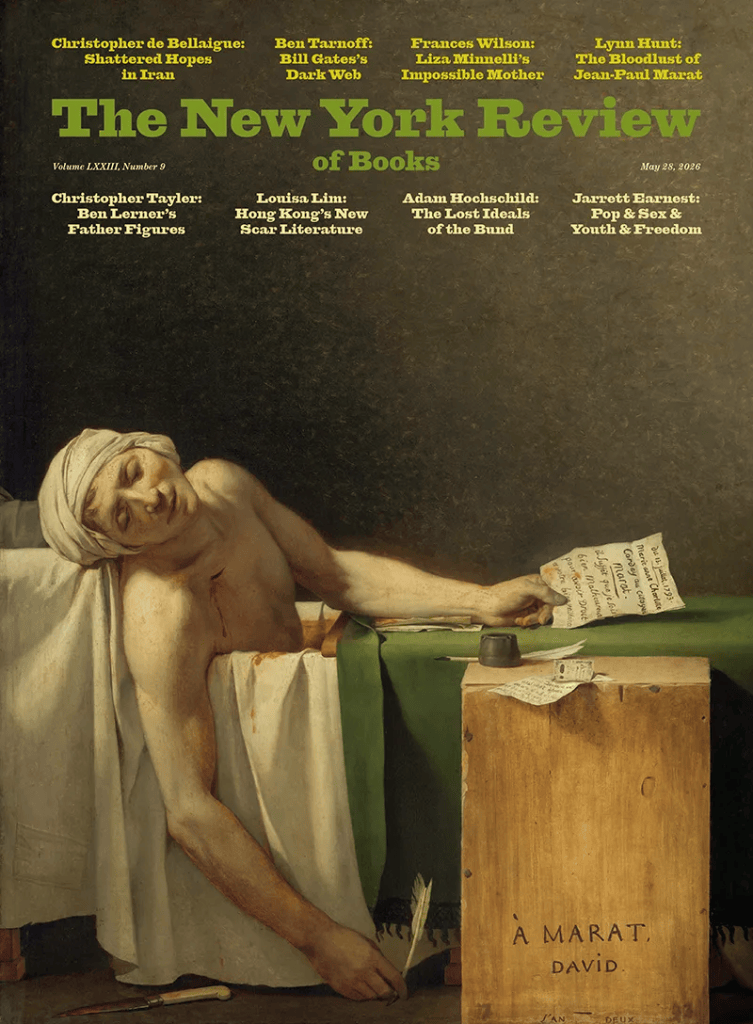
Quinn Slobodian and Ben Tarnoff’s Muskism examines how Elon Musk became the world’s first trillionaire, by selling a vision of the future that very few people would want to inhabit.
Muskism: A Guide for the Perplexed by Quinn Slobodian and Ben Tarnoff
The US-Israeli war against Iran, far from encouraging a popular uprising, has strengthened the regime’s grip and set back the cause of Iranian freedom indefinitely.
In Everthing Is Now, J. Hoberman chronicles a radical avant-garde’s attempts to jostle New York City out of its postwar complacency and moral retrenchment.
Everything Is Now: The 1960s New York Avant-Garde—Primal Happenings, Underground Movies, Radical Pop by J. Hoberman
Walter Lippmann was the most influential political commentator of his generation, but behind his preternatural confidence was a far more complicated and unsettled character.
Walter Lippmann: An Intellectual Biography by Tom Arnold-Forster
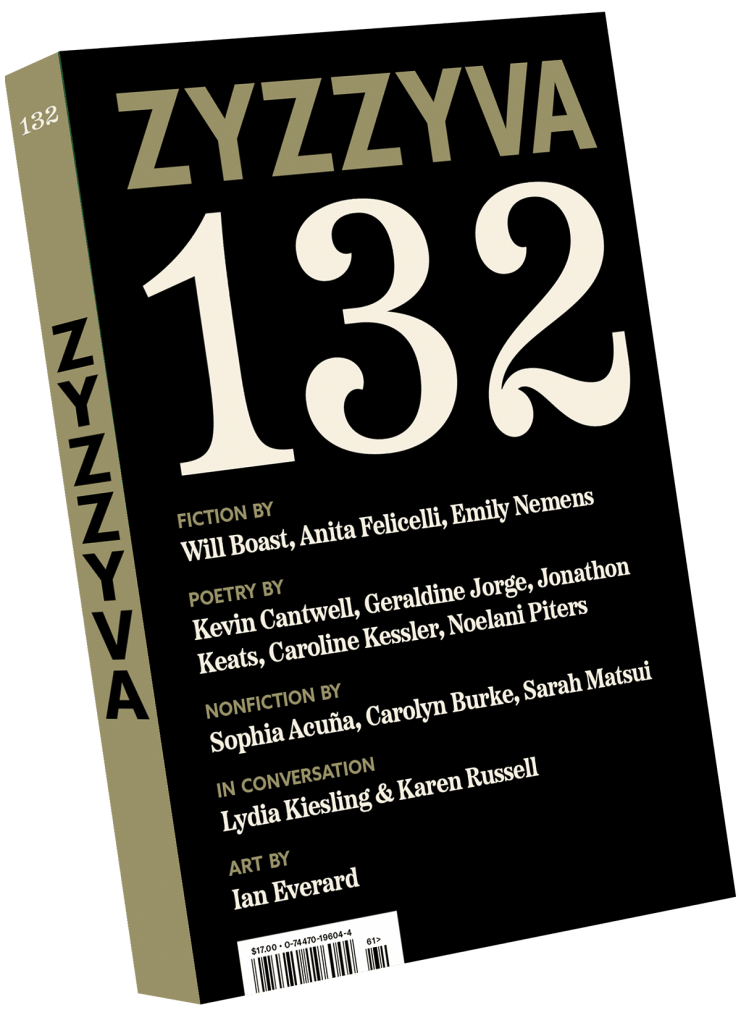
“Saguaro in the Sea” by Sophia Acuña: on surfing and indigeneity in Southern California, told through collage.
“Care Directive” by Sarah Matsui: a daughter’s attempt to keep her aging father in Hawaii from all sorts of calamity, but having to monitor him from the mainland.
“Triptych: A Biographer’s Sketchbook” by Carolyn Burke: “The Baroness was lively, curious, and still blond at eighty-five. She received me in a flurry of franglais, the mingling of two languages in which we would converse, and put us at ease with pink champagne, her favorite.”
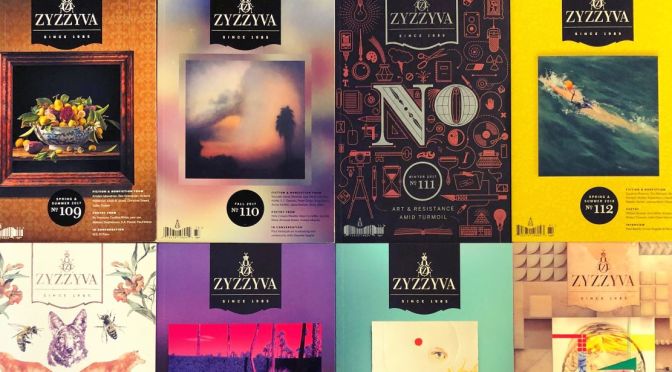
Fiction
“Decoys” by Will Boast: goofing around working at the town supermarket, burning through the days till it all comes to head.
“Lilac Mud” by Anita Felicelli: A Bay Area artist in Amsterdam is approached one night by a man claiming to be a former student, leading to a crisis of identity and purpose.
“Grote geplumaceerde” by Emily Nemens: “Afterward, staring hard at her phone, which was her radio, which was the bearer of bad news, she wondered what mattered at all.”
Poetry
Kevin Cantwell, Geraldine Jorge, Jonathon Keats, Caroline Kessler, and Noelani Piters.
In Conversation
Lydia Kiesling talks to acclaimed author Karen Russell about Russell’s latest novel, The Antidote, and about Russell’s “fascination with foundational myths, the things we choose to know, and the things we choose to ignore or forget.”
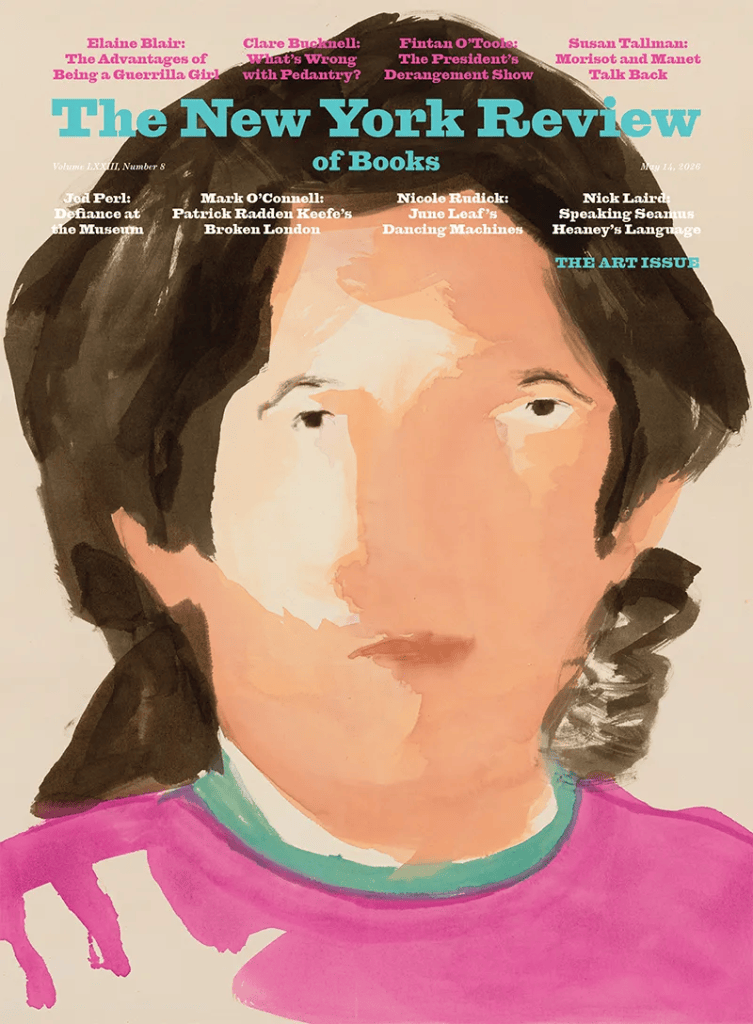
In Trump’s strategy of feigning madness to get what he wants, there is no longer any border between pretense and actual irrationality. By Fintan O’Toole
An important exhibition showcases a painterly repartee that altered the trajectory of the two artists’ work and, by extension, modern art itself.
Manet and Morisot – an exhibition at the Legion of Honor, San Francisco, October 11, 2025–March 1, 2026, and the Cleveland Museum of Art, March 29–July 5, 2026



 Intellicurious