Tag Archives: Arts & Literature

THE NEW YORKER MAGAZINE NOVEMBER 16, 2026 PREVIEW

Image may contain Edward Maya Beatriz Merino Book Publication Comics Person Baby Adult Face and Head

THE NEW YORKER MAGAZINE: The latest issue cover features ‘Barry Blitt’s “Sea Change”

Breaking the Decade-Long Trump Fever

The President’s unique brand of lurid authoritarianism has finally lost appeal, and he has lost the plot. By David Remnick

Can American Socialism Survive Its Success?

The movement has often seen its ideas flourish as its organizations withered. Will today’s resurgence follow the same course?

The Ubiquitous Melancholy of Max Richter

The composer’s song “On the Nature of Daylight” has popped up in countless sob fests including “Arrival” and “Hamnet.” With billions of streams, he’s become one of the most popular and successful composers of our time.

An N.B.A. Player Got Hooked on Sports Betting. Soon, He Became the Bet

Jontay Porter got deep into FanDuel, and in debt to the wrong people. The only way out, it seemed, was to gamble on himself.

IMPRESSION, CENTENARY

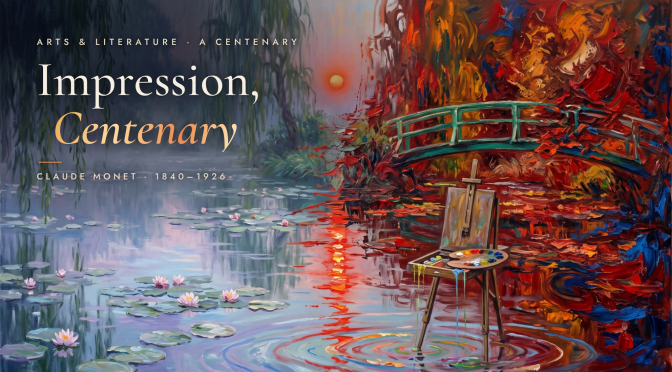
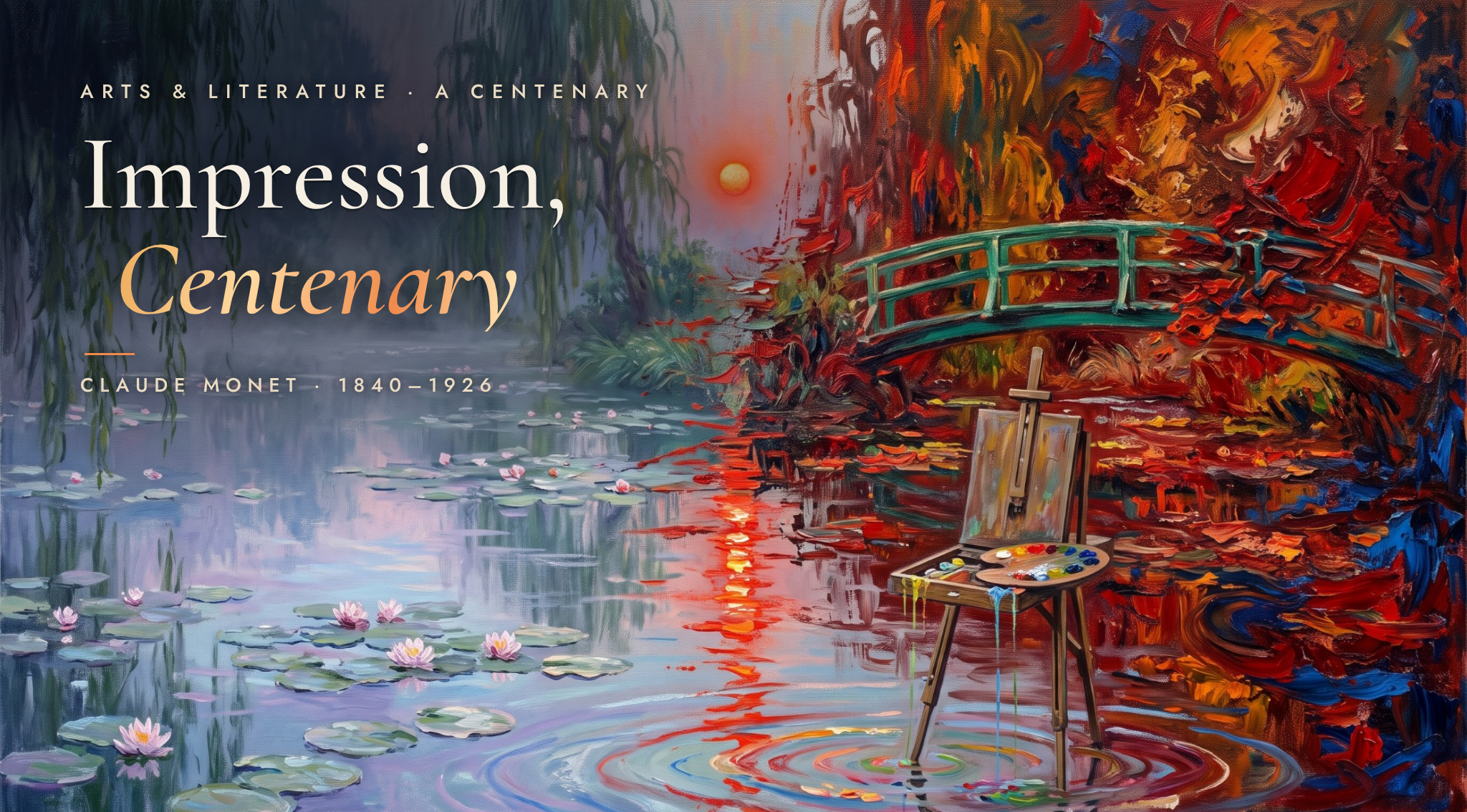
Impression, Centenary. Claude Monet, 1840–1926. Monet’s water lily pond at Giverny at dawn, calm on the left and dissolving into fiery late brushwork on the right, with an empty easel standing in the water.

Twelve paintings, one century, and the man who painted time

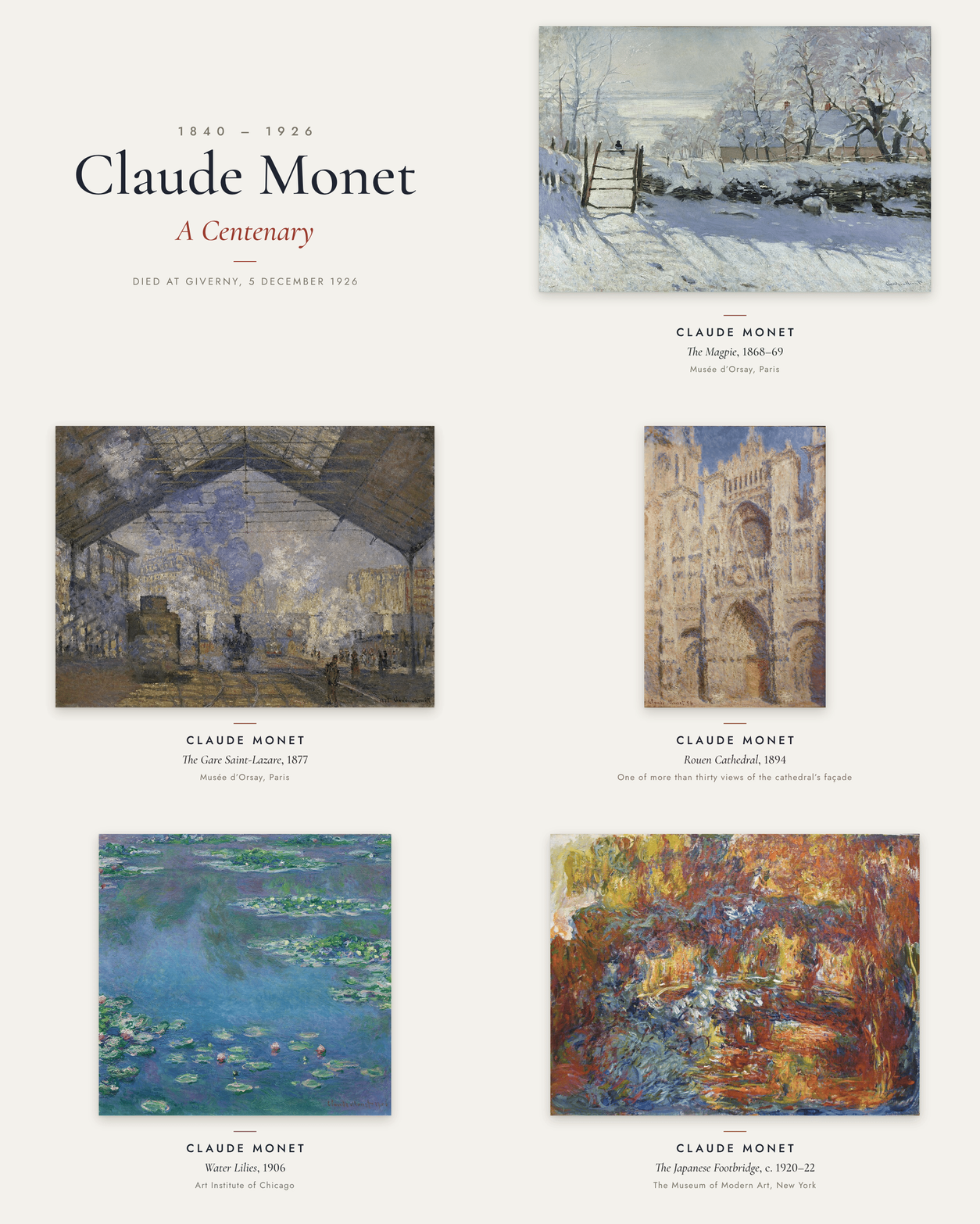
A gallery of twelve paintings by Claude Monet, from Impression, Sunrise (1872) to The Japanese Footbridge (c. 1920–22), each with its title, date and museum.
Twelve paintings by Claude Monet, 1868–1922. All are in the public domain.

On 5 December 1926, Claude Monet died at Giverny, aged 86, in the house where he had lived for more than forty years. A century later, the twelve paintings in our gallery show how one man taught the world to look at light instead of things.

It begins with a sunrise. In 1872 Monet painted the harbour at Le Havre in quick strokes: grey-blue mist, ghostly cranes and a small orange sun that seems to burn through the canvas. When he showed Impression, Sunrise at the first independent exhibition in 1874, the critic Louis Leroy mocked it in a review headlined “Exhibition of the Impressionists.” The insult stuck, and a movement had its name.

Earlier still, in The Magpie, he had painted snow in blue, violet and cream. The Salon jury rejected it in 1869. Then came the sunlit years at Argenteuil. In Poppy Field and Woman with a Parasol, the figures are his wife Camille and their son Jean, painted so quickly that the wind seems to move through the brushwork. In The Gare Saint-Lazare, Monet turned modern Paris into weather, making locomotive steam as beautiful as clouds.

In the 1890s he made his boldest discovery: the subject hardly mattered. He painted stacks of wheat near his home at every hour and season, then more than thirty views of Rouen Cathedral’s façade, its stone dissolving from dawn grey to noon gold. In London, working from St Thomas’ Hospital across the Thames, he painted Parliament as a dark silhouette against a burning sky. A building, a field or a river was only the occasion. The true subject was time.

At Giverny he built his own subject. He diverted a stream, dug a pond, planted water lilies and crossed it all with a Japanese bridge, then painted that garden for the rest of his life, some 250 canvases of lilies in all. On 12 November 1918, the day after the Armistice, he wrote to his friend Georges Clemenceau offering the nation water-lily paintings as a monument to peace. They were installed at the Musée de l’Orangerie in May 1927, five months after his death, in two oval rooms that surround visitors with water and sky.

The true subject was time.

The final picture in our gallery is the strangest. Cataracts had clouded Monet’s sight, and in The Japanese Footbridge, painted around 1920–22, the bridge almost disappears into blazes of red, ochre and blue. Critics once dismissed these late works as the failings of an old man. In the 1950s, as Abstract Expressionism rose in New York, they were rediscovered as visions of the future. Joan Mitchell later spent her last decades in Vétheuil, in a house overlooking the one Monet had rented in the late 1870s.

Paris is marking the centenary. Monet: Painting Time is at the Orangerie through January 25, and From Monet to Hockney is at the Musée Marmottan Monet, home of Impression, Sunrise, through January 31. Take the gallery above as an invitation. A hundred years on, Monet’s light has not finished changing.

The Gallery

  1. Impression, Sunrise, 1872 · Musée Marmottan Monet, Paris
  2. The Magpie, 1868–69 · Musée d’Orsay, Paris
  3. Poppy Field, 1873 · Musée d’Orsay, Paris
  4. Woman with a Parasol – Madame Monet and Her Son, 1875 · National Gallery of Art, Washington
  5. The Gare Saint-Lazare, 1877 · Musée d’Orsay, Paris
  6. Stacks of Wheat (End of Summer), 1890–91 · Art Institute of Chicago
  7. Rouen Cathedral, 1894 · One of more than thirty views of the façade
  8. Bridge over a Pond of Water Lilies, 1899 · The Metropolitan Museum of Art, New York
  9. The Houses of Parliament, Sunset, 1903 · National Gallery of Art, Washington
  10. Water Lilies, 1906 · Art Institute of Chicago
  11. Water Lilies, 1914–26 · Musée de l’Orangerie, Paris
  12. The Japanese Footbridge, c. 1920–22 · The Museum of Modern Art, New York

See it in Paris

Monet: Painting Time · Musée de l’Orangerie · through January 25, 2027

From Monet to Hockney · Musée Marmottan Monet · through January 31, 2027

— The Editors, Intellicurious —

WHAT ARE WE LOOKING AT?

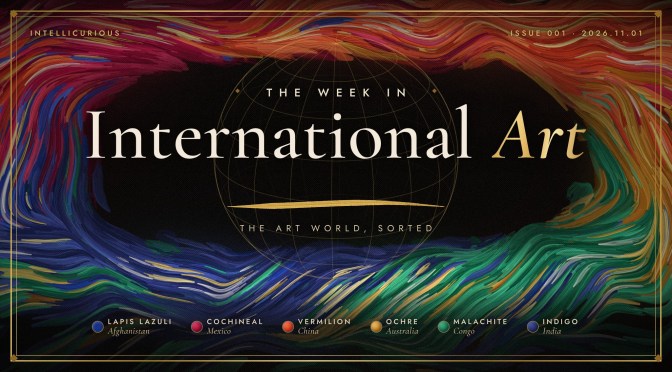
The Week in

International Art

The art world, framed
Collection · Saleroom · Trompe-l’œil · Afterimage

Sunday, November 8, 2026 · Issue No. 2

Covering November 1–7

The Permanent Collection — What will still matter in five years

1

A court unsells a Pissarro

On Thursday, a French court ordered that a Camille Pissarro painting sold at Sotheby’s in London be returned to the heirs of its prewar owner, and that the sale be cancelled. Darse de pêche et bassin Duquesne (1902), a view of the port of Dieppe, belonged from 1935 to Salomon Flavian, a Jewish banker. The court found that the Nazis looted it in Paris in 1941, as recorded in France’s 1947 register of looted property. A study backed by Sotheby’s and Mondex, a Toronto restitution firm, argued that the painting had left Flavian’s hands before the war. The court found no convincing evidence of that. Sotheby’s sold it in June 2024 for £1.2 million under a settlement that, according to the heirs’ lawyer, only two of Flavian’s relatives had signed. Under French law, cancelling the 1941 seizure voids every sale that followed. Sotheby’s now has two months to reveal the buyer’s full identity or pay €1,000 a day. The house says it is “disappointed,” disputes the court’s reach over a sale made in London, and is considering joining Mondex’s appeal. “It is a very important ruling,” said Corinne Hershkovitch, the heirs’ lawyer. Two days earlier, The Art Newspaper reported that Italy is moving toward a restitution panel of its own. A bill before parliament would create a five-member committee to rule, within 180 days, on art confiscated or sold under racial persecution between 1933 and 1945, with no statute of limitations. Italy has “barely scratched the surface” on Holocaust restitution, said Gideon Taylor of the World Jewish Restitution Organization.

Why it lasts: an auction sale used to be the end of a painting’s story. This ruling says a sale can be undone years later, in another country. If it survives appeal, anyone selling a work with a gap in its wartime history will have to weigh that risk.

2

The dead leave the display case

Glasgow’s Kelvingrove Art Gallery and Museum has taken the mummified remains of an Egyptian priest named Nekht off public view, and Glasgow Life, the charity that runs the city’s museums, has received a request to return them to Egypt. It hasn’t said who made the request. Under a draft policy, Glasgow will show human remains only with documented consent from the dead or, where appropriate, their descendants. Without that consent, a spokesperson said, removing ancient Egyptian remains from display is “more respectful to the deceased individuals.” A mummified head, foot and hand from the Valley of the Kings have also come down, and remains at the St Mungo Museum are next. At the University of Glasgow’s Hunterian, the open sarcophagus of Lady Shep-En-Hor has been covered. Not everyone agrees. Stuart Robertson, former director of the Charles Rennie Mackintosh Society, called the consent test “an absurd and impossible standard.” In Germany, on Tuesday, the Museum Wiesbaden will hand ten skulls to representatives of the Indonesian government. They were sent home in the 19th century by Ernst Albert Fritze, a military doctor from Hesse who served the Dutch in their East Indies colony from 1817. Hesse’s culture ministry says it is the first time human remains have been returned from Germany to Indonesia.

Why it lasts: for generations, mummies have been a staple of Western museums. The question now is not only who owns the dead but whether they should be looked at at all. Once one major city answers no, others will be asked the same question.

3

Rome plans a museum for a fascist modernist

Italy’s culture ministry has unveiled plans for a state museum devoted to Mario Sironi, a leading Italian modernist and a committed fascist. It is due to open next year in Rome, in the 1928 headquarters of the national association of disabled war veterans. That monumental fascist-era building already holds two Sironi frescoes, one of them showing Mussolini on horseback. The museum will show 30 works the ministry recently bought from the Mario Sironi Archive and 90 more on loan from it. Culture minister Alessandro Giuli calls it “the defining achievement of my term in office.” Sironi joined the fascist movement in 1919 and drew more than 1,700 cartoons and illustrations for Mussolini’s newspaper, Il Popolo d’Italia. His work runs from Futurism to the regime’s monumental commissions. Tomaso Montanari, an art historian on the museum’s scientific committee, doesn’t oppose the project. He says its materials “must make clear that there is no endorsement of fascism,” and that the ministry has only “partially” accepted his call to show work from other periods. Another committee member, Fabio Benzi, warned of “legitimising a certain authoritarian aesthetic under the guise of cultural rediscovery.” The museum’s press materials, The Art Newspaper notes, don’t mention fascism or Mussolini.

Why it lasts: every country with a dictatorship in its past has to decide how to show the art made for it. A state museum is the strongest statement a government can make about an artist, and the wall texts in Rome will be read closely, in Italy and abroad.

The Saleroom — Where collectors are betting

Two markets, one week

Christie’s first fine-art auction in Abu Dhabi, last Sunday, made $8.94 million with fees, from 70 works by 58 artists from 13 countries. The top lot, Monir Shahroudy Farmanfarmaian’s Variations on the Hexagon (2006), sold for $844,800 after almost seven minutes of bidding, more than three times its high estimate. Christie’s says 37 percent of those taking part were new to the house, and it announced nine auction records, though Art in Context points out that only three are outright artist records and four are artists’ first sales at auction. “This is only the beginning,” said Anthea Peers, Christie’s president for Europe, the Middle East and Africa. In Vienna, meanwhile, four galleries are closing or leaving, among them Exile, after 18 years, and Eva Presenhuber’s Vienna space. “There are simply no new collectors emerging,” said Exile’s Christian Siekmeier. Canada’s dealers are losing their biggest market. US tariffs of 50 percent on Canadian paintings, sculpture and prints, in force since August, have led Macaulay & Co to drop a Miami fair in December, and Vancouver’s Equinox Gallery expects its US sales, about 15 percent of the total, to fall to zero. The bigger test comes in New York, where the November auctions begin on November 16. At Christie’s the next night, a Kandinsky and a Klimt are each estimated at $60 million to $80 million.

What it’s worth: the money is moving, not disappearing. New buyers are turning up in the Gulf while the middle of the gallery business thins out in Europe and Canada. The New York sales will show whether the top of the market is as strong as Abu Dhabi suggests.

Trompe-l’œil — Looks new. Isn’t.

Picasso, in silver

In 1955, Picasso asked François Hugo, a goldsmith in Aix-en-Provence, to make plates in silver from designs Picasso had made for ceramics in Vallauris. Seventy years later, sets of those plates, and gold medallions too, keep appearing for sale, worth millions of euros in all. Sotheby’s London sold a complete set of 24 silver plates for £1.4 million in 2021. The first alarm came in 2023 from Mona, the museum in Tasmania, about plates it had bought at Sotheby’s. In March, Paloma Ruiz-Picasso filed a complaint on behalf of nine heirs alleging fraud, counterfeiting, forgery and concealment. It names no suspects. The Picasso Administration says it has found at least 17 suspect sets, hundreds of pieces in all, and a court in Aix-en-Provence has opened a preliminary criminal investigation, The Art Newspaper reported on Thursday. Nicolas Hugo, the goldsmith’s grandson, says the right to reproduce the pieces disappeared with them, and that anything from his father’s and grandfather’s time is too old to prosecute. It hangs here not because the sums are small. They aren’t. It hangs here because the complaint is eight months old, the investigation has barely begun and no one has been charged. For now, it is a story about how much a famous name can make a silver plate look like a Picasso.

Vernissage — Doors opening this week

Powerhouse Parramatta, Sydney. After nearly 15 years and A$915 million, Sydney’s new arts and science museum opened on Saturday on a former car park in the city’s west. More than 3,000 objects fill its column-free galleries in five opening shows, among them Es Devlin’s The Turning and Task Eternal, on flight and space, made with the Smithsonian and the British Museum. About 25,000 people registered for opening-weekend events, SBS reported. “This place will become a cultural backbone for Western Sydney,” said acting chief executive Abbie Galvin. She is acting because chief executive Lisa Havilah stepped down in August amid misconduct allegations, which she denies, while a law firm investigates a whistleblower’s claims about governance and procurement. The old Powerhouse in Ultimo closed in 2024 for a A$300 million rebuild.

Art Dhaka, Bangladesh. Bangladesh’s first art fair opened on Friday in Aloki, a former garment factory turned cultural hub, under the slogan “Art for All.” It runs until Tuesday. Dhaka has only a handful of commercial galleries, and the country is still settling after the 2024 fall of Sheikh Hasina’s government. “We don’t have a strong gallery system,” said co-founder Durjoy Rahman.

Farewells

Miquel Navarro, 81, died on November 1. Inspired by his hometown of Mislata, near Valencia, he built imaginary cities from hundreds of geometric forms that visitors could walk through. He represented Spain at the 1986 Venice Biennale, and his public sculptures include La Pantera Rosa (1984) in Valencia.

Fernando Calvillo, 45, community relations director of the Oklahoma Visual Arts Coalition, died in the October 28 high-speed train crash near Urda, in Spain’s Toledo province. Born in Aguascalientes, Mexico, he was an artist and a connector of artists in Oklahoma City. His husband, Lawrence Naff, survived.

Afterimage

John Berger was born a hundred years ago on Thursday. In Ways of Seeing, the 1972 book that grew out of his television series, he wrote that “the way we see things is affected by what we know or what we believe.” This week tested that sentence everywhere. The Pissarro view of Dieppe is the same canvas that sold in London in 2024. Now that a court has called it loot, it is a different object. In Rome, a fresco of Mussolini on horseback will read as history or as homage, depending on the words on the wall beside it. In Glasgow, a priest named Nekht, shown for years as an exhibit, is now treated as a person who never agreed to be seen. Even a silver plate looks different once you know who might have made it. Berger believed that looking is never innocent. A century after his birth, museums are starting to agree.

Before You Leave the Gallery

Once you know a painting’s history, can you ever see it the same way again?

Sourced this week from The Art Newspaper, ITV News, taz, The National, Art in Context, The Art Insider, ABC News, SBS News, Hyperallergic and Mexico News Daily.

— The Editors, Intellicurious —

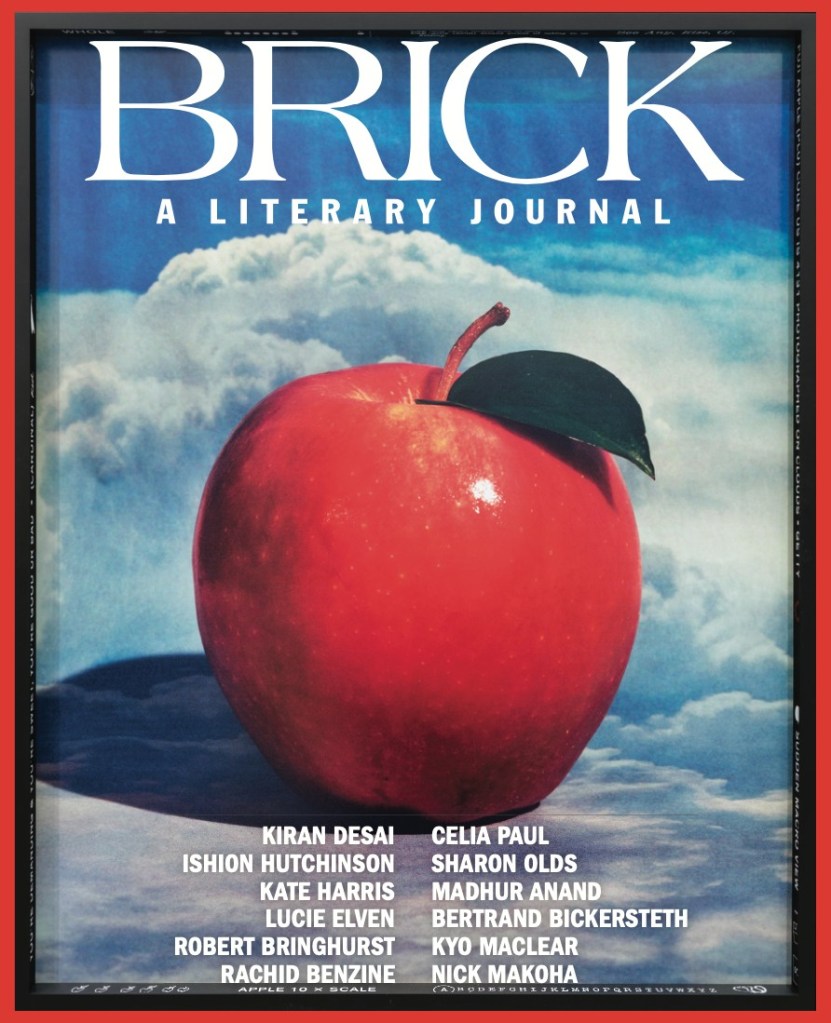
BRICK LITERARY JOURNAL AUTUMN 2026

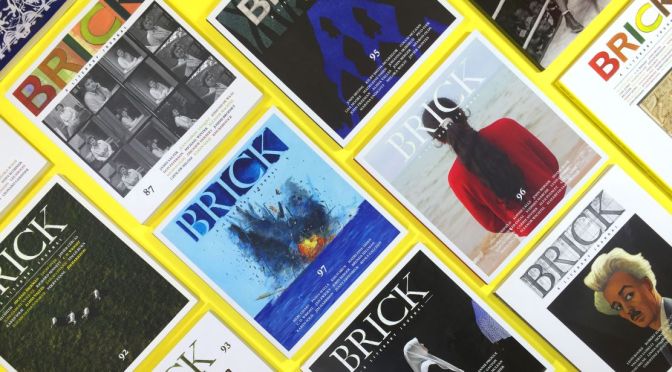
BRICK LITERARY JOURNAL: The latest issue features….

Kate Harris takes flight lessons with Kafka

Claire Foster’s accessory to crime

Bertrand Bickersteth deciphers the Black cowboy vernacular

Eleanor Wachtel interviews Kiran Desai

Lorraine Price charts the body

Kyo Maclear on the shape, shame, and share of writing

Ishion Hutchinson’s homecoming to Derek Walcott

Celia Paul makes art in Venice

Nick Makoha follows Basquiat’s Nile

Fiction by Lucie Elven, Nicholas Ruddock, and Rachid Benzine

Poetry by Sharon Olds, Robert Bringhurst, and Madhur Anand

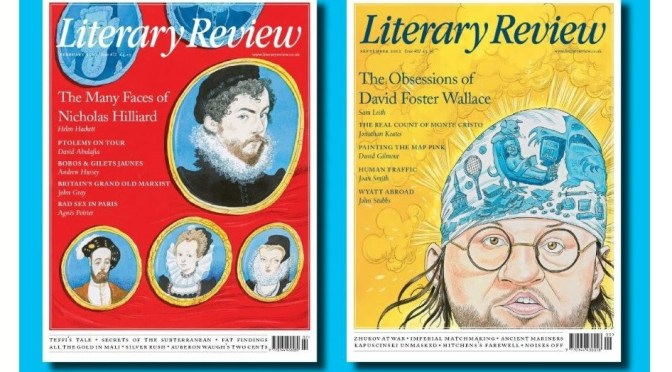
LITERARY REVIEW MAGAZINE NOVEMBER 2026

LITERARY REVIEW : The latest issue features ‘SAKI’S SECRETIVE LIFE’…..

Laughter in the Margins

Super-Beast: The Mysterious Life of Saki By Oliver Soden

In some ways all you really need to know about Hector Hugh Munro (1870–1916) can be gleaned from the short story ‘Sredni Vashtar’, first published in the Westminster Gazette in the summer of 1910. Conradin – Munro’s heroes nearly always have these hifalutin names – is a sickly small boy quartered on a tyrannical guardian called Mrs de Ropp. Denied much in the way of freedom or material comfort, in particular the hot buttered toast he craves, Conradin makes a fetish out of a savage polecat-ferret hidden in the garden shed, worships it as a god and looks to it for vengeance.

Here in the World

Letters: 1944–1959 By Albert Camus & Maria Casarès (Edited by Béatrice Vaillant, translated from French by Sandra Smith & Cory Stockwell)

What an amazing behemoth of a book! I’ve been lugging it around for weeks. Nearly a thousand letters: the intimate correspondence of Albert Camus and Maria Casarès. When they first met in Paris – on D-Day, 1944 – Camus had already published L’Etranger (1942; The Outsider). Born and raised in Algeria, he was in Paris when the Second World War broke out, and later joined the French Resistance. Camus’s wife, Francine Faure, a mathematician and pianist, remained in Algeria. Maria Casarès was originally from Galicia, the daughter of an exiled former prime minister of Spain, Santiago Casares Quiroga. In 1944, Casarès was already known as an actress, having played the titular role in J M Synge’s Deirdre of the Sorrows. She later starred in Les Enfants du paradis (1945), Cocteau’s Orphée (1950) and La Lectrice (1988), among other films and plays.

Talk to the Animals

Minds I’ve Met: From Denying to Embracing the Inner Lives of Animals By Frans de Waal

Some years ago, a prominent animal-behaviour scientist hosted a colleague at his field station devoted to the study of chimpanzees. Talking together on top of the observation tower, the pair glanced at the apes but mostly stayed absorbed in conversation. Then a female chimpanzee named Thai began to scream and hit herself in dramatic fashion. In response to her outburst, other chimpanzees rushed to embrace, hold and kiss her.

THE NEW YORKER MAGAZINE NOVEMBER 9, 2026 PREVIEW

A figure wearing a leaftrimmed coat struts in a forest.

THE NEW YORKER MAGAZINE: The latest issue cover features ‘Carter Goodrich’s “Leaf Chic”’ – Costume drama for the season.

Corruption on the Ballot

Corruption is always an issue, but this year will it finally catapult from a topic of chronic bellyaching to an actual mechanism for changing votes? By Ruth Marcus

Why Immigration Agents Don’t Quit in Protest

How a culture of dehumanization and denial keeps ICE and Border Patrol personnel “at war with an enemy that does not fight back.” By Francisco Cantú

Did the World Just Gain Hundreds of Millions of Alzheimer’s Patients?

A new definition of Alzheimer’s includes people without symptoms. Experts are fiercely divided over whether that makes sense—and whether the new drugs really help. By Manvir Singh

Roy Lichtenstein’s Witty Critiques of Masculinity

The artist’s best work, in a new retrospective at the Whitney Museum, directs his campy humor at gender stereotypes. By Hilton Als

WHERE DOES ART BELONG?

The Week in

International Art

The art world, framed
Collection · Saleroom · Trompe-l’œil · Afterimage

Sunday, November 1, 2026 · Issue No. 1

Covering October 25–31

The Permanent Collection — What will still matter in five years

1

Three museums, one collection

On Friday, at M+ in Hong Kong, the heads of three of the world’s leading modern art museums signed an agreement that goes further than any loan deal. MoMA in New York, the Centre Pompidou in Paris and M+ will treat their holdings as one shared collection, curated by staff on three continents. The sharing starts in late 2027, when major works from M+ go on long-term loan to MoMA’s collection galleries. In 2028 a long-term Centre Pompidou gallery opens at MoMA, and similar plans are under way at the other two museums. A joint committee will meet every month, and its first in-person meeting is at MoMA this November. Ownership doesn’t change, and the Pompidou’s holdings remain the property of the French state. What changes is where its works can be seen while its Beaubourg building is closed for a five-year renovation. “This cultural alliance makes our museums embassies for each other,” MoMA’s director, Christophe Cherix, said. Laurent Le Bon, the Pompidou’s president, put it more simply: “No single institution can encompass the entire scope of global creativity.”

Why it lasts: for a century, a museum’s permanent collection has meant what it owns. If this works, a collection becomes a network, and what you can see in New York, Paris or Hong Kong will depend on what three museums agree to share, not only on what each one bought. Every other major museum will be watching.

2

A machine sees through a disguise

On the night of August 11, 2004, thieves took a 17th-century painting of Saint Agnese from the small church of Virgo Potens in Italy. Then someone disguised her. Her halo and palm branch were painted out, and the lamb in her arms became a parchment scroll, so that the saint looked like any young woman in an old painting. In October 2024, Italian police photographed the stands at an antiques fair in Parma and uploaded the pictures, and within hours their software flagged her. The BBC told the story this week. The program, the Stolen Works of Art Detection System, or SWOADS, was conceived in 2020 by a team under Lt. Col. Salvatore Rapicavoli, an IT engineer in the Carabinieri’s cultural heritage unit. It compares colors, shapes and composition against a database of more than a million stolen objects recorded since 1969, and it scans online catalogues day and night. “The machine doesn’t get bored,” Rapicavoli says. Since its launch in November 2023, it has helped recover more than 300 large paintings and statues and more than 165,000 smaller objects, worth over €203 million in all. It has limits. It can only find what was recorded, it doesn’t catch thieves, and Rapicavoli doesn’t expect it to find Caravaggio’s Nativity, since famous loot rarely appears for sale in the open. Carina Popovici of the authentication firm Art Recognition calls AI “a force multiplier.” Italy hopes to connect its system with other countries’ by 2027. Saint Agnese went back to her church in May 2025.

Why it lasts: stolen art has always depended on two things, the limits of human memory and how easy it is to change a picture. A system that never tires and doesn’t need to know what a painting means takes away both, at least for the little-known church paintings and heirlooms that make up most of its finds. Those are the works that matter most to the places they were taken from.

3

Old losses, new courtrooms

Two cases this week asked who answers for art that is destroyed or taken. On Thursday, Ukraine’s Prosecutor General charged a Russian lieutenant general in absentia with ordering the missile strike that wrecked the Hryhorii Skovoroda National Literary Memorial Museum on May 6, 2022. The museum occupies the 18th-century estate in the Kharkiv region where Skovoroda, one of Ukraine’s most influential philosophers, spent his last years. A Russian fighter jet fired an anti-ship cruise missile at it late at night. The fire that followed gutted the building, and only a statue of the philosopher was left standing. The general, who was born in Chuhuiv in the same region, “knew for certain that he was attacking not a military target but a monument of Ukrainian culture,” prosecutors say. Two officers who passed on and carried out the order have already been indicted. By September, Ukraine counted 2,161 heritage sites damaged or destroyed by Russian forces. On Friday, in a federal court in New York, the Republic of Austria and two Vienna museums, the Albertina and the Leopold, repeated their argument that a US law meant to help Holocaust victims’ heirs recover looted art is unconstitutional. The plaintiff, Timothy Reif, is a descendant of Fritz Grünbaum, a Jewish cabaret performer and collector who died at Dachau in 1941. He is seeking twelve works by Egon Schiele, ten at the Leopold and two at the Albertina. Amendments enacted this spring removed the law’s 2026 expiry date and barred laches, a defense that lets courts throw out claims brought too late. The museums argue the works left Austria with Grünbaum’s sister-in-law in the 1930s and were sold to a Swiss dealer in the 1950s. Their filing answers briefs from the US Justice Department and from Senators Richard Blumenthal, a Democrat, and John Cornyn, a Republican, who sponsored the law.

Why it lasts: one loss began in 1938, the other in 2022, and both are being settled now, in court. Whether attacking a museum is prosecuted as a war crime, and whether a museum can wait out a family’s claim, will set the rules for lost art for decades.

The Saleroom — Where collectors are betting

The art trade heads for the Gulf, war clause included

Today, Christie’s holds its first fine-art auction in Abu Dhabi. Mawasim offers 70 works by artists from the Middle East and North Africa, spanning nine decades, with a combined estimate of roughly $6.5 million to $9.7 million, according to HENI. Around them hang works by Rothko, Kandinsky and Picasso from Christie’s November sales in New York, bringing the art on view to more than $130 million, Khaleej Times reports. “The market can sustain two centres,” chief executive Bonnie Brennan told The National, adding that she wants a regular calendar of sales in the city. Christie’s auction sales rose 71 percent to $3.5 billion in the first half of this year, and millennials and Gen Z made up 47 percent of its new clients. Sotheby’s holds its first fine-art auction in Abu Dhabi on December 10, Frieze Abu Dhabi runs November 19–22, and the Guggenheim Abu Dhabi opens December 11. In Doha, Art Basel Qatar released its 2027 exhibitor list on Tuesday: 82 galleries, down from 87, with 35 of last year’s exhibitors, including Hauser & Wirth, Pace and Victoria Miro, not returning. If conflict forces a postponement, galleries will get a refund or a place at the next edition, and the fair will now pay half the cost of shipping unsold work home, up to $20,000 per gallery. Saudi Arabia came under renewed missile and drone fire earlier this month, and in late February Iranian missiles struck Qatar, injuring 16 people. Back in Europe, Pace’s UK company, which runs the gallery’s business outside the US and Tokyo, lost $5.6 million in 2025, on turnover of $65.9 million, down from $104.9 million in 2023.

What it’s worth: the gallery business in the West is shrinking, and Gulf states are spending to build an art market of their own. The buyers are real, and so is the danger. When a fair writes a war clause into its terms, it shows how much the trade wants this market, and what it is prepared to risk for it.

Trompe-l’œil — Looks new. Isn’t.

A $47 million dinosaur

On Tuesday, a 67-million-year-old Nanotyrannus skeleton nicknamed Jodi sold at Sotheby’s in New York for $47.3 million, against an estimate of $6 million to $9 million, after a 12-minute contest among six bidders. The winner is anonymous. Jodi, found in 2019 on Jodi Pierson’s land in Montana, is the second most expensive dinosaur fossil ever sold at auction, after the T. rex called Gus, which fetched $50.1 million at Sotheby’s this summer. Some scientists say specimens this rare belong in museums, where researchers can study them. It hangs here not because the price isn’t remarkable. It is. It hangs here because the story only looks new. Fossils have been selling as trophies for years, and each record ends with the same unanswered question: will anyone be allowed to study this one?

Farewells

Jogen Chowdhury, 87, died in Kolkata on October 25. Uprooted as a boy by the Partition of India, he drew figures that ThePrint called “twisted, fleshy and unsettling,” and served six years in India’s upper house of parliament.

Ursula von Rydingsvard, 84, died at home in Manhattan on October 27. She spent her childhood in refugee camps after the Second World War and built monumental sculptures from cedar.

Rudi Fuchs, the Dutch curator who directed Documenta 7 in 1982, giving a stage to Keith Haring and Jean-Michel Basquiat, and later ran Amsterdam’s Stedelijk Museum, has died at 84.

Afterimage

Last night the streets were full of disguises. Today is All Saints’ Day, and the week’s most haunting story is about a saint who was forced to wear one. After Saint Agnese was taken from her church on an August night in 2004, someone painted out her halo and turned her lamb, the emblem that echoes her name in Latin, into a scroll, so that she could be sold as nobody in particular. Twenty years later, at a fair in Parma, a machine that has never said a prayer knew her by her colors and her outline. Every story this week turned on the same question: who keeps a work of art, and where does it belong? Three museums on three continents decided to hold their collections in common. Austria argued in an American court over twelve Schieles that once belonged to a man who died at Dachau. Ukraine charged the general it blames for a missile fired at a philosopher’s house. A dinosaur went to a buyer no one can name. And Agnese went home to her church, where she will be restored and hung in her old place.

Before You Leave the Gallery

Would you rather see a great work of art in the place it was made for, or in a museum near you?

Sourced this week from ARTnews, Artforum, Artsy, Apollo, the BBC, NV, Yahoo News, The National, Khaleej Times, HENI, The Art Newspaper, the Associated Press, ThePrint and Hyperallergic.

— The Editors, Intellicurious —
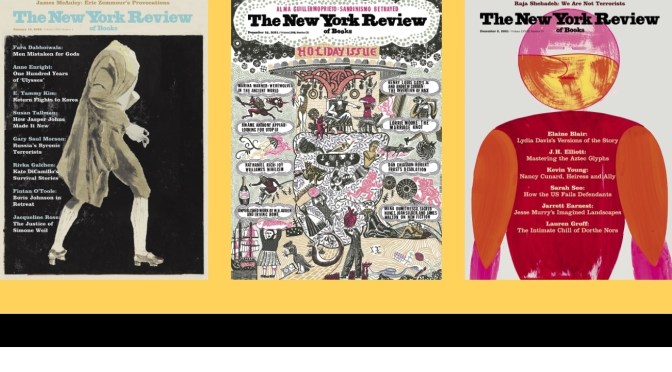
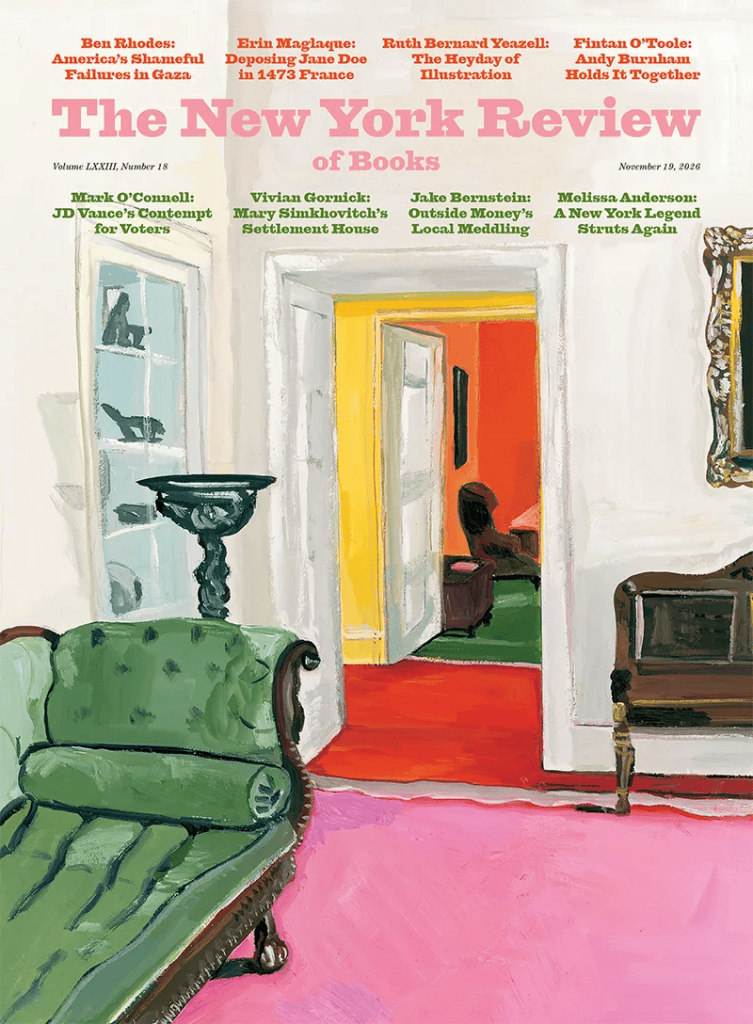
THE NEW YORK REVIEW OF BOOKS – NOVEMBER 19, 2026

THE NEW YORK REVIEW OF BOOKS: The latest issue features Verlyn Klinkenborg on the rivers that you’re used to, Fintan O’Toole on Andy Burnham’s communion, Ruth Bernard Yeazell on illustrious illustration, Mark O’Connell on JD Vance’s overweening ambition, Melissa Anderson on Tally Brown’s underground, Jake Bernstein on the super PAC blitz, Erin Maglaque on a medieval Me Too moment, Vivian Gornick on the history of affordable housing, Ben Rhodes on Biden’s dereliction of Gaza, a poem by Jenny Grassl, and much more.


Biden’s Choice

As Israel’s assault on Gaza grew worse and worse, Joe Biden and his advisers acted as though they had no option but to offer their unconditional support. Why couldn’t they see the destruction they were enabling? By Ben Rhodes

Hull House on the Hudson

Mary K. Simkhovitch, the founder of Greenwich House, believed in the radical idea that housing should be made as livable for the working class as it was for the middle class. By Vivian Gornick

Me Too in the Middle Ages

A forensic study of a rape survivor from 1473 Dijon reveals a legal process surprisingly accepting of imperfect victims and contradictory testimony. By Erin Maglaque

The Flood of Life

Our desire to control a river’s course always conflicts with a river’s determination to shape its own. By Verlyn Klinkenborg

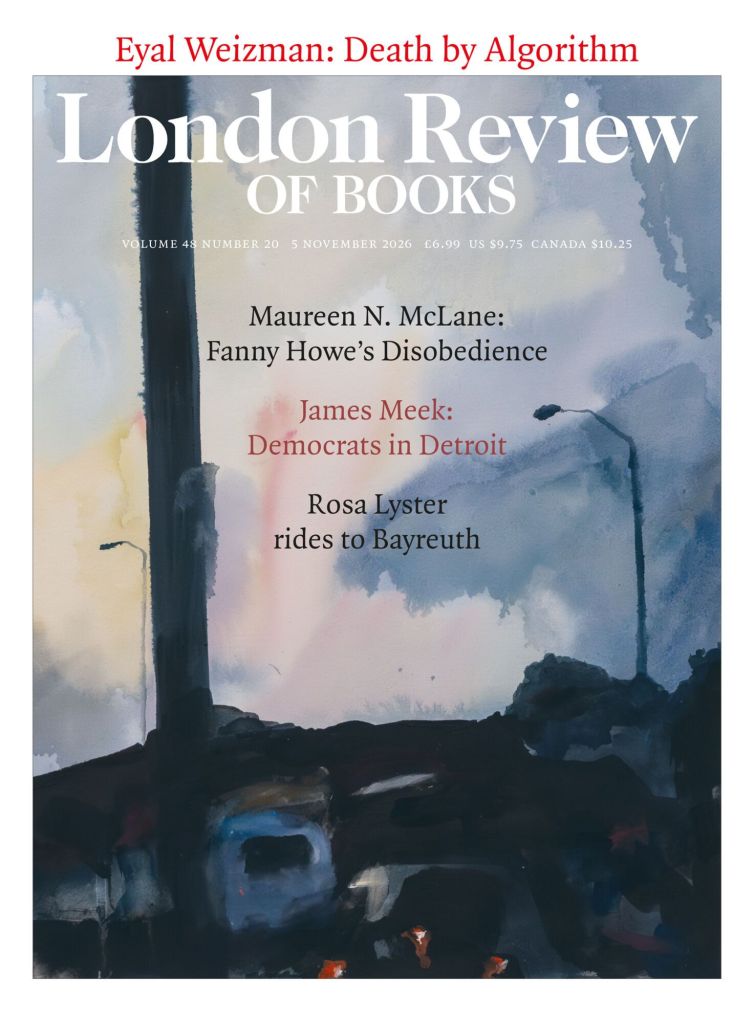
LONDON REVIEW OF BOOKS – NOVEMBER 5, 2026 PREVIEW

LONDON REVIEW OF BOOKS: The latest issue features  Fanny Howe’s Disobedience by Maureen N. McLane; Democrats in Detroit by James Meek; and Rosa Lyster rides to Bayreuth….

Democrats in Detroit

‘To win the Senate, the Democrats need to hold on to the one Michigan seat (out of two) that is up for grabs, and have chosen a new candidate, Abdul El-Sayed, a moderate leftist in European terms, a “communist loser who hates Jews and Israel” according to Trump, “very, very evil”, per J.D. Vance.’ By James Meek

Is curiosity good for us?

‘The superego – and its precursor, conscience – refers to the part of us that has no curiosity about ourselves. It’s the saboteur of curiosity about ourselves. And that part of us, like a narrow-minded fascist, has only one project: to destroy our pleasures in being alive by trying to kill our curiosity (or by making us frightened of our curiosity, which amounts to the same thing).’ By Adam Phillips

Death by Algorithm

Eyal Weizman on NAZA

‘Israel’s automated targeting system allows for the responsibility for “industrialised annihilation” to be shared between coders, operators, legal officers who pre-set the level of collateral damage, officers who approve the strike, officers who choose the bomb and the pilots or drone operators who launch it. “I am just a small screw in the system,” one of the interviewees says, quoting Eichmann’s defence during his trial in Jerusalem. The system that begins with a phone number being put into a computer system ends with an entire family crushed under the rubble.’

TIMES LITERARY SUPPLEMENT – OCTOBER 30, 2026

TIMES LITERARY SUPPLEMENT: The latest issue features ‘ART HISTORY ISSUE’ – Monet’s water lilies, Vermeer’s afterlife and Anni Albers, pioneer….

‘Our guide into the darkness’

Edgar Allan Poe’s downward trajectory By Frances Wilson

Love at first bite

The subversive sexuality of the literary vampire By A. K. Blakemore

A patch of yellow wall

The modern cult of Vermeer By James Hall

On repeat

Reflections on writing, addiction and Monet’s water lilies By Marie Darrieussecq