Tag Archives: Shakespeare

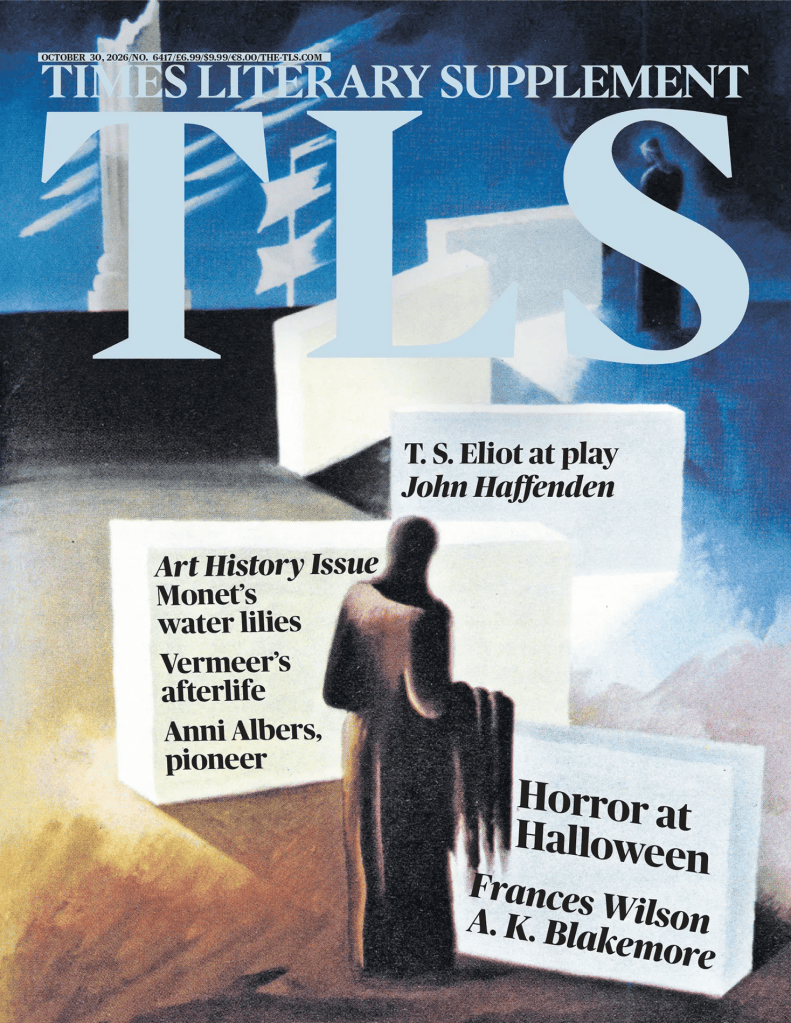
TIMES LITERARY SUPPLEMENT – OCTOBER 30, 2026

TIMES LITERARY SUPPLEMENT: The latest issue features ‘ART HISTORY ISSUE’ – Monet’s water lilies, Vermeer’s afterlife and Anni Albers, pioneer….

‘Our guide into the darkness’

Edgar Allan Poe’s downward trajectory By Frances Wilson

Love at first bite

The subversive sexuality of the literary vampire By A. K. Blakemore

A patch of yellow wall

The modern cult of Vermeer By James Hall

On repeat

Reflections on writing, addiction and Monet’s water lilies By Marie Darrieussecq

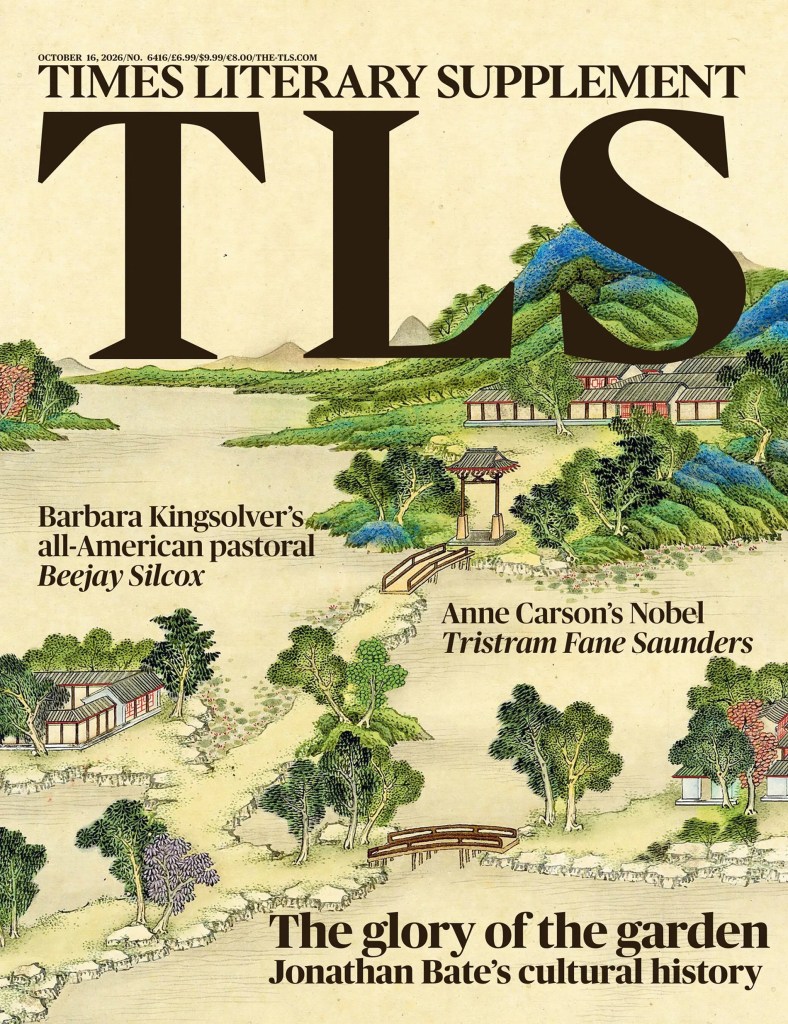
TIMES LITERARY SUPPLEMENT – OCTOBER 16, 2026

TIMES LITERARY SUPPLEMENT: The latest issue features ‘The Glory of the Garden’ – Jonathan Bate’s cultural history….

A Nobel for new forms

Anne Carson’s juggling act By Tristram Fane Saunders

Bowers of bliss

The story of gardens and their cultural significance By David E. Cooper

Appalachian variations

Buried dreams of a small-town prodigy By Beejay Silcox

Myth and man

A flawed but brilliant poet ‘dealt a cruel hand by fate’ By Gabriel Josipovici

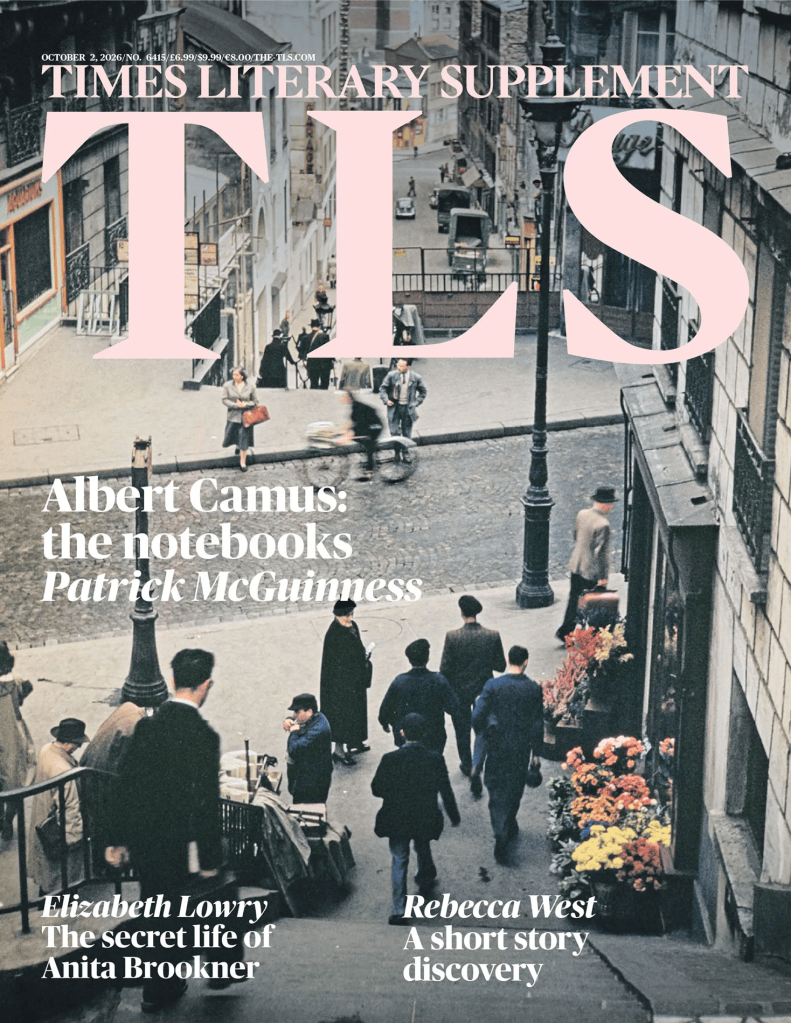
TIMES LITERARY SUPPLEMENT – OCTOBER 2, 2026

TIMES LITERARY SUPPLEMENT: The latest issue features ‘Albert Camus – The Notebooks’…

Camus contre Camus

The trials of a public intellectual By Patrick McGuinness

“Sadness of success”, writes Albert Camus in a notebook entry for June 25, 1947: “If everything were more difficult for me, as before, I’d have much more right to say what I say”. The success in question was winning the Prix des Critiques for La Peste (The Plague), published a fortnight earlier. It could be worse, the reader wants to tell him by way of consolation: you could have won the Nobel. Fast-forward ten years and the entry for October 17, 1957, reads: “Nobel. Strange feeling of overwhelming weight and melancholy. At 20 years old, poor and naked, I knew true glory. My mother”.

Infernal time machine

China Miéville’s anti-colonialist vision By Anna Aslanyan

Open season on Barbara

A romantic novelist who became a figure of fun By Nicola Shulman

One of the happy few?

How writing freed Anita Brookner from despair By Elizabeth Lowry

WHO’S FOOL NOW?

Intellicurean Essays on Intellicurious

In 1638 the king’s jester asked an archbishop, “Who’s fool now?” and was thrown out of court the same day. The fool’s license to mock has changed hands ever since. It has rarely been the fool’s to keep.

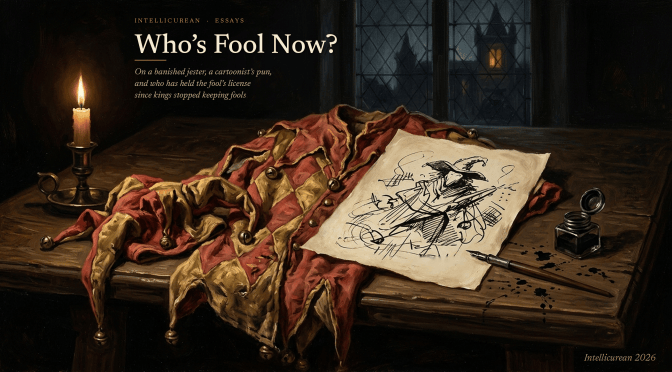
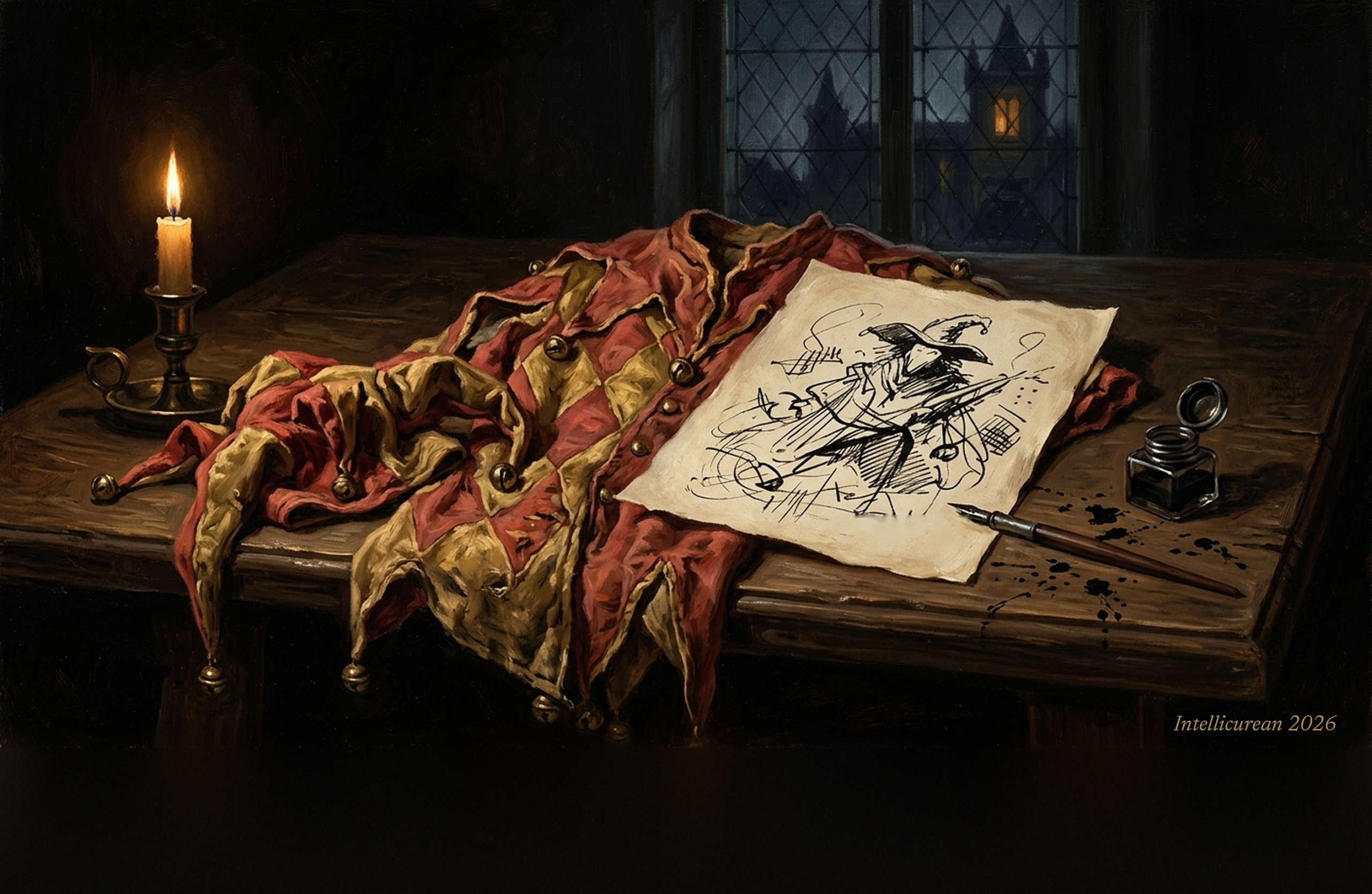
A jester’s red and gold motley coat thrown across a candlelit table beside an ink caricature, a pen and an inkwell, with a palace silhouetted through the window
The fool’s coat set down and the pen taken up, made for the essay.

Why we’re pointing you there

Archibald Armstrong had jested for two kings when he mocked Archbishop Laud over the Scottish prayer-book revolt. The Privy Council sentenced him to have his coat pulled over his head and be banished the court. Michael Cummins starts there and asks who has held the fool’s license since kings stopped keeping fools. He follows it through Shakespeare’s “allowed fool,” a caricaturist on a party pension, and a Victor Hugo play banned after a single night. Then a British cabinet minister takes a cartoonist to lunch, and in January 2025 a Pulitzer Prize winner walks out of the Washington Post.

What we liked most is the centerpiece. In 1937 Goebbels complained about David Low’s cartoons, and Lord Halifax carried the complaint home. The newspaper said it couldn’t control Low, so the minister had to ask the cartoonist himself. Low agreed to ease off, and answered with a new character whose name was a pun on what had just happened to him. The essay grants that the cost of losing the license has fallen a long way since Armstrong’s day. It ends by asking whether a paying public is a freer master than a king, or only a larger court.

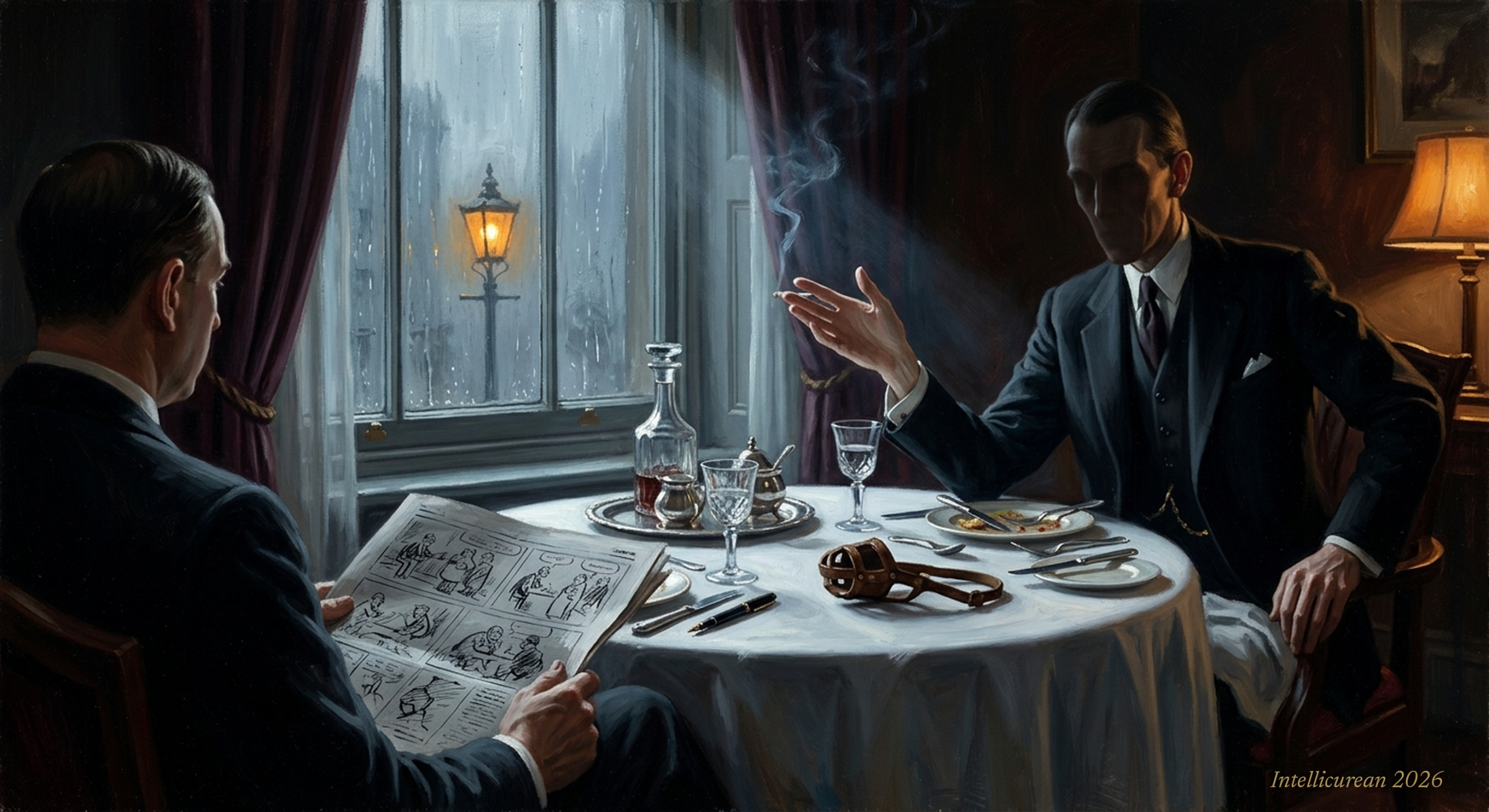
In a rain-dark London dining room, a tall man in a dark suit gestures across a lunch table toward a man reading a page of cartoons; a leather muzzle lies on the white cloth between them
A lunch in Bayswater, made for the essay.

Read the full essay at Intellicurean →

Essays & Reviews for the Intellectually Curious

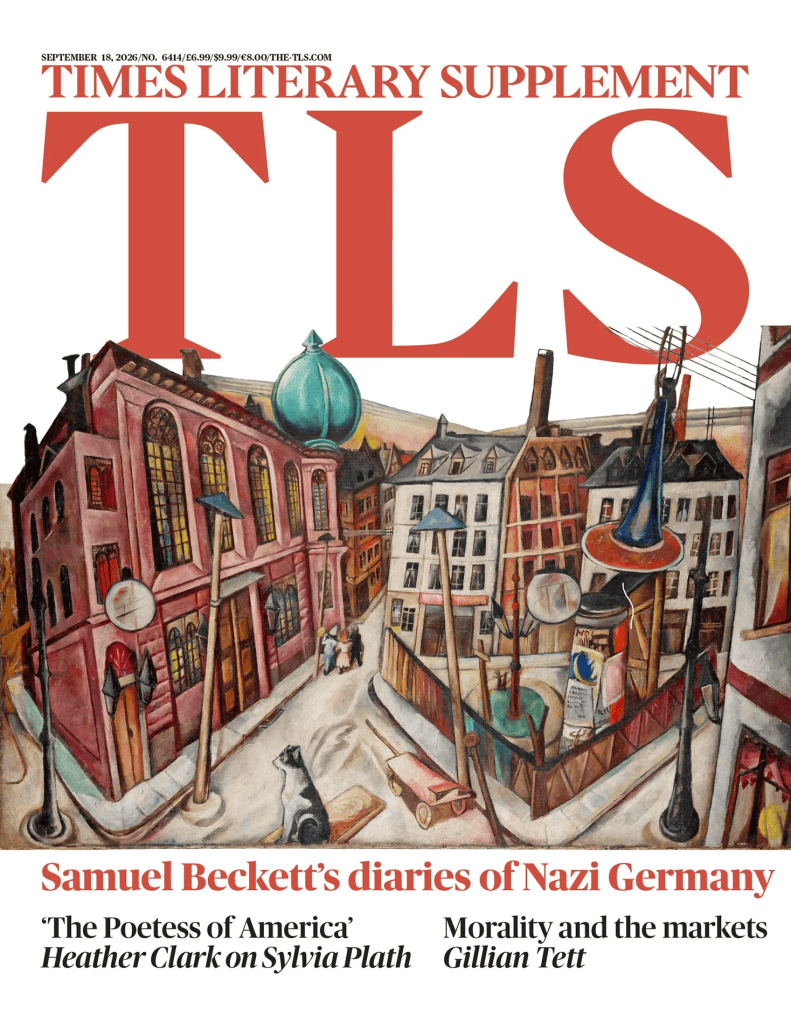
TIMES LITERARY SUPPLEMENT – SEPTEMBER 18, 2026

TIMES LITERARY SUPPLEMENT: The latest issue features ‘Samuel Beckett’s diaries of Nazi Germany…

Beyond the persona

Correcting the reductive myths around Sylvia Plath By Heather Clark

Cultural catastrophe

Beckett’s ‘German Journey’ in the Nazi period By Durs Grünbein

No one was listening

The doomed premiership of Rishi Sunak By Alex Dean

Is eating people wrong?

How to distinguish morality from convention By Simone Gubler

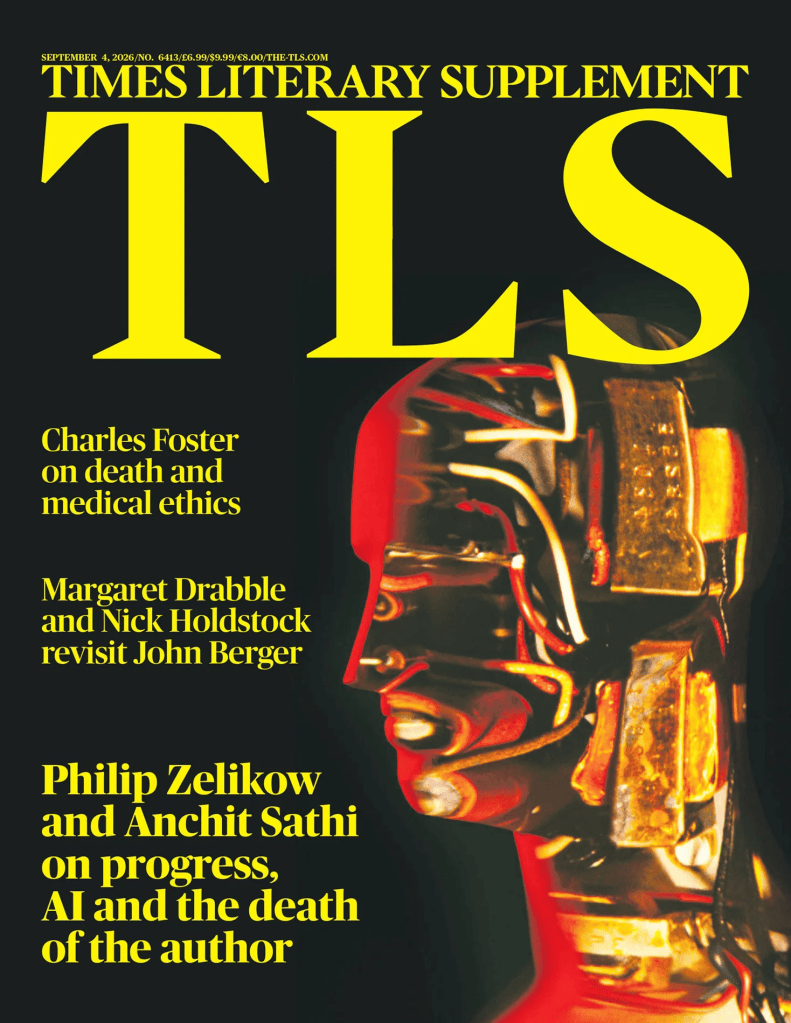
TIMES LITERARY SUPPLEMENT – SEPTEMBER 4, 2026

TIMES LITERARY SUPPLEMENT: The latest issue features ‘Philip Zelikow and Anchit Sathi on progress, AI and the death of the author…..

A matter of life and death

When doctors and families fall out over medical intervention By Charles Foster

Ways of living

Looking at John Berger By Margaret Drabble

AI and the crisis of the author

Can literary culture survive in the era of machine intelligence? By Anchit Sathi

Letting go

Why nations win or lose the technological race By Philip Zelikow

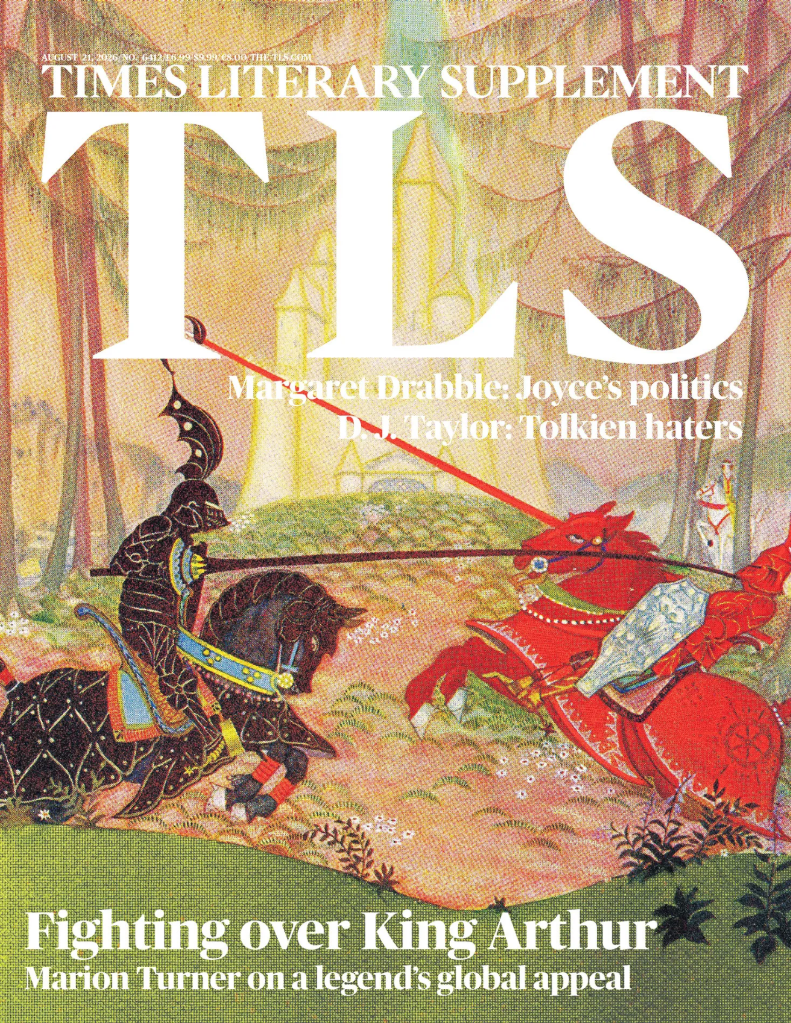
TIMES LITERARY SUPPLEMENT – AUGUST 21, 2026 PREVIEW

TIMES LITERARY SUPPLEMENT: The latest issue features ‘Fighting Over King Arthur’ – Marion Turner on a legend’s global appeal.

A man of the world

The versatility of Arthur and his legends By Marion Turner

All the lonely people

Nigerian scammers and their targets By Sally Hayden

Matches struck in the dark

How William Empson viewed Virginia Woolf’s diaries By Mark Thompson

Pain and transformation

Frida Kahlo, iconized: ‘I would not like to become famous’ By Miranda France

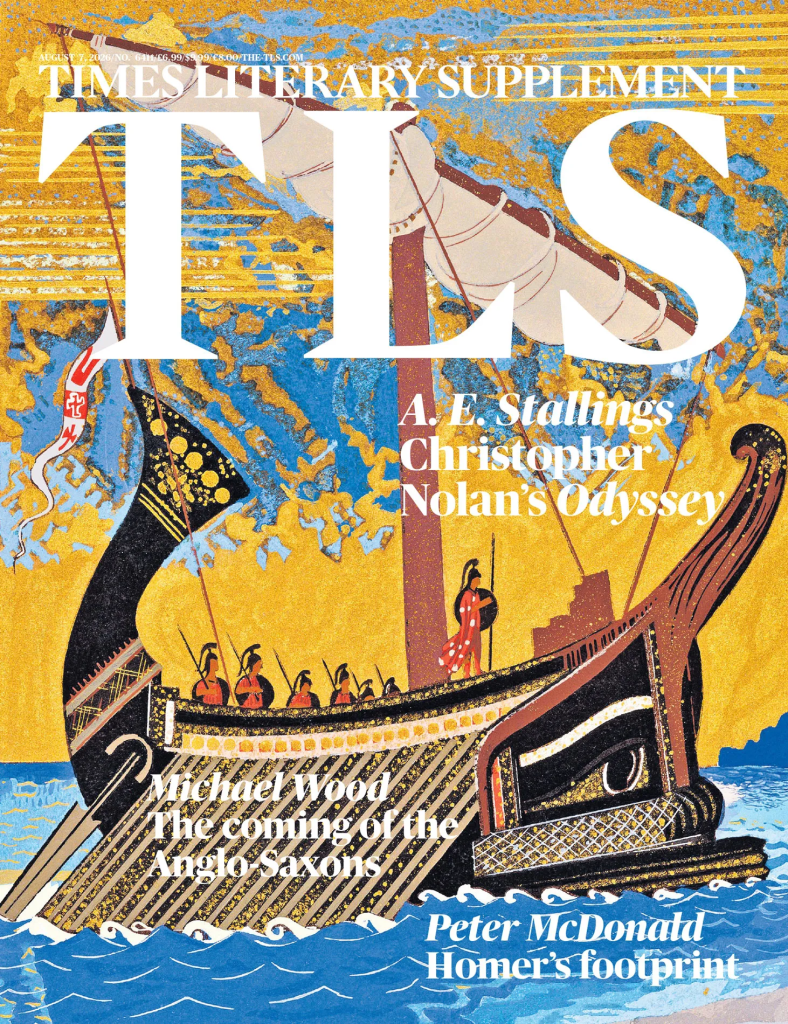
TIMES LITERARY SUPPLEMENT – AUGUST 7, 2026 PREVIEW

TIMES LITERARY SUPPLEMENT: The latest issue features…

The ruin of Britain?

What happened when the Romans left By Michael Wood

Do the right thing

The case for and against realism in US foreign policy By Sam Freedman

Showdowns and shootouts

The song remains: Christopher Nolan’s version of Homer By A. E. Stallings

Writing from fiction

A flâneur’s journey through Paris and the self By Michael Caines

Englished Homer

The enduring influence of the classical epics By Peter McDonald

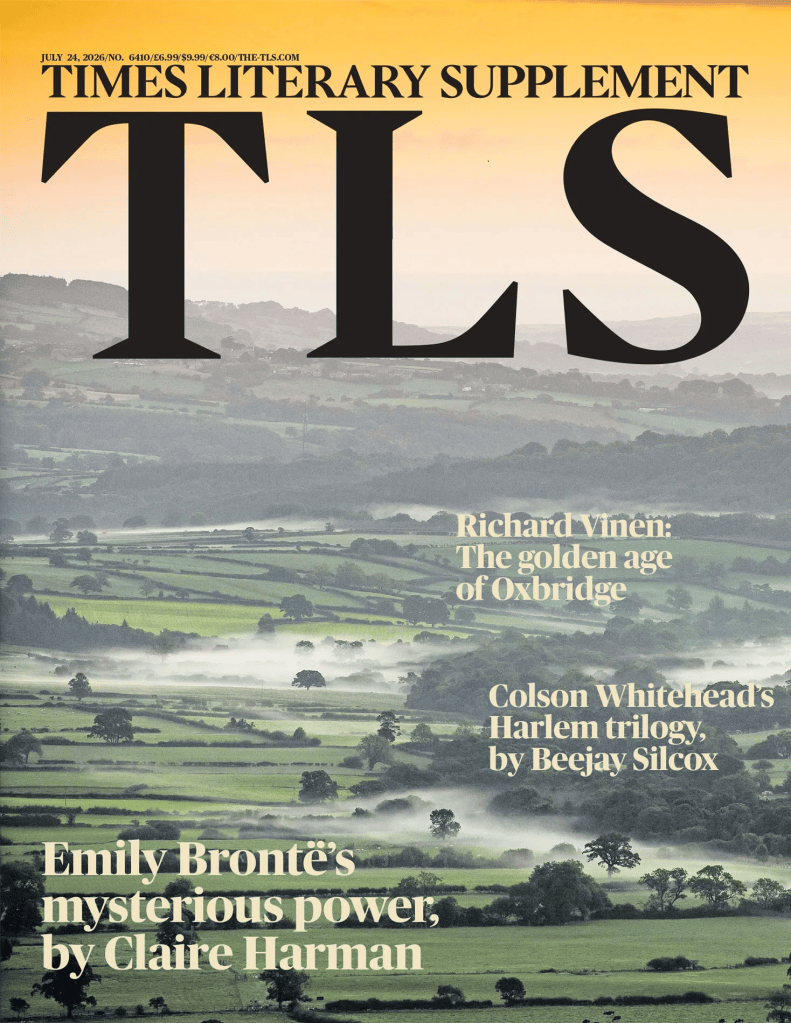
TIMES LITERARY SUPPLEMENT – JULY 24, 2026 PREVIEW

TIMES LITERARY SUPPLEMENT: The latest issue features ‘Emily Brontë’s mysterious power’….

Uncloistered

Oxbridge in the postwar world By Richard Vinen

Freeing life from facts

The awesome, mysterious work of Emily Brontë By Claire Harman

All very hush-hush

Silence in literature By Daniel Karlin

Feel good philosophy

Should human life have a purpose? By Crispin Sartwell

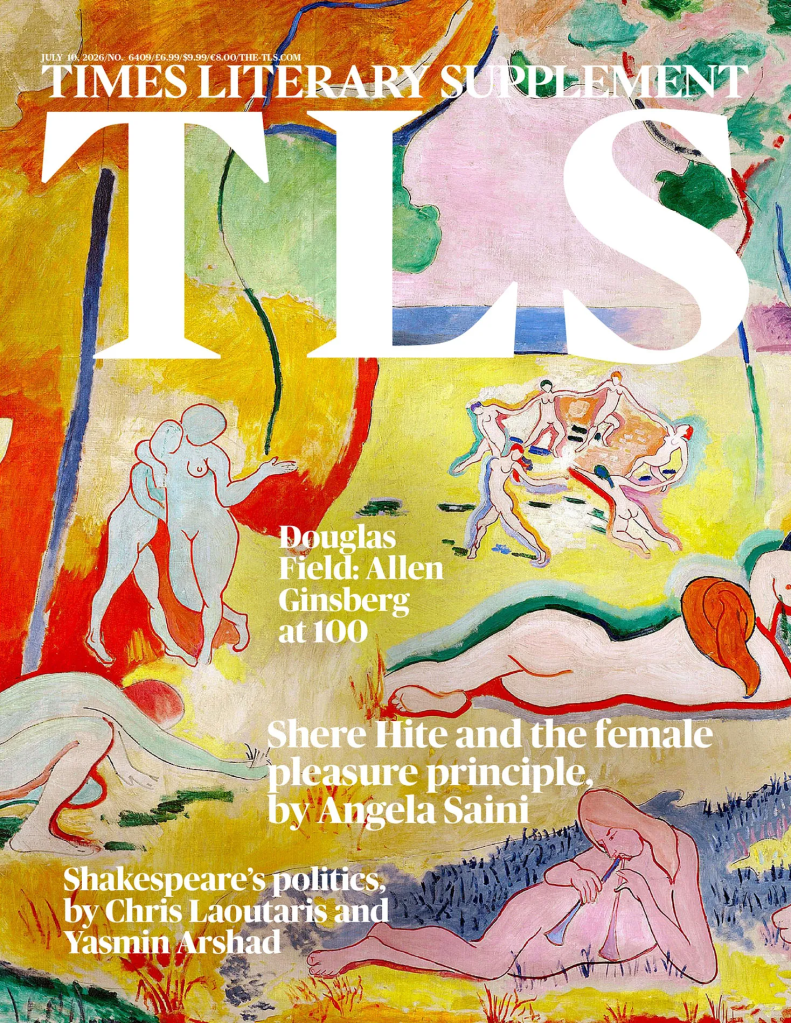
TIMES LITERARY SUPPLEMENT – JULY 10, 2026 PREVIEW

TIMES LITERARY SUPPLEMENT: The latest issue features Allen Ginsberg at 100; Shere Hite and the female pleasure principle; Shakespeare’s politics…

Best of enemies

The Iranian regime’s long confrontation with America By Azadeh Moaveni

Allen Ginsberg at 100

Poet, counterculture critic and self-promoter By Douglas Field

Getting real

Do objects exist independently of human experience? By Emily Herring

Forgotten feminist

How Shere Hite put women’s pleasure first By Angela Saini