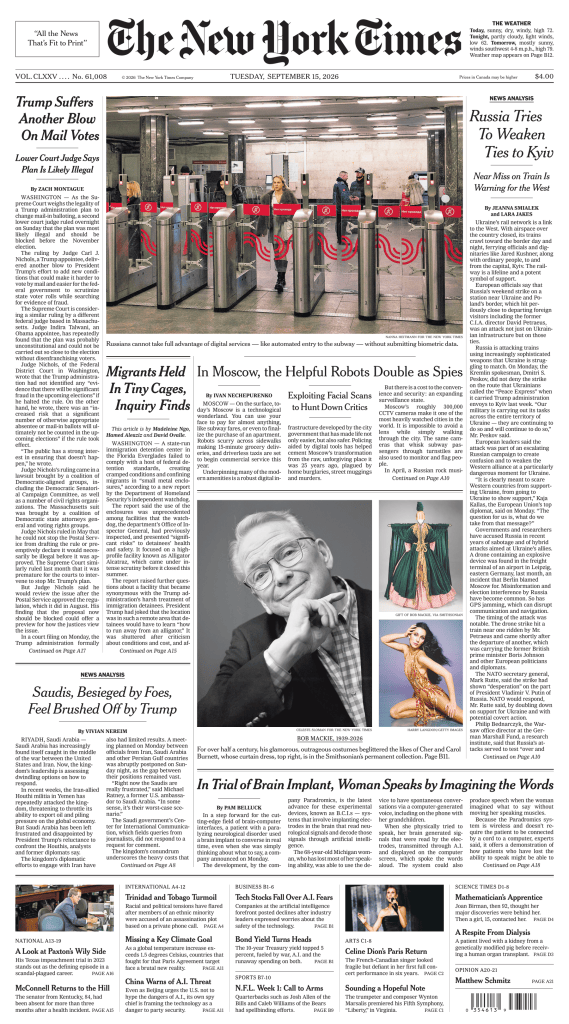
A new sanctions bill is meant to pressure President Vladimir Putin to end the war in Ukraine. But President Trump is taking another approach: offering enticements to Russia.
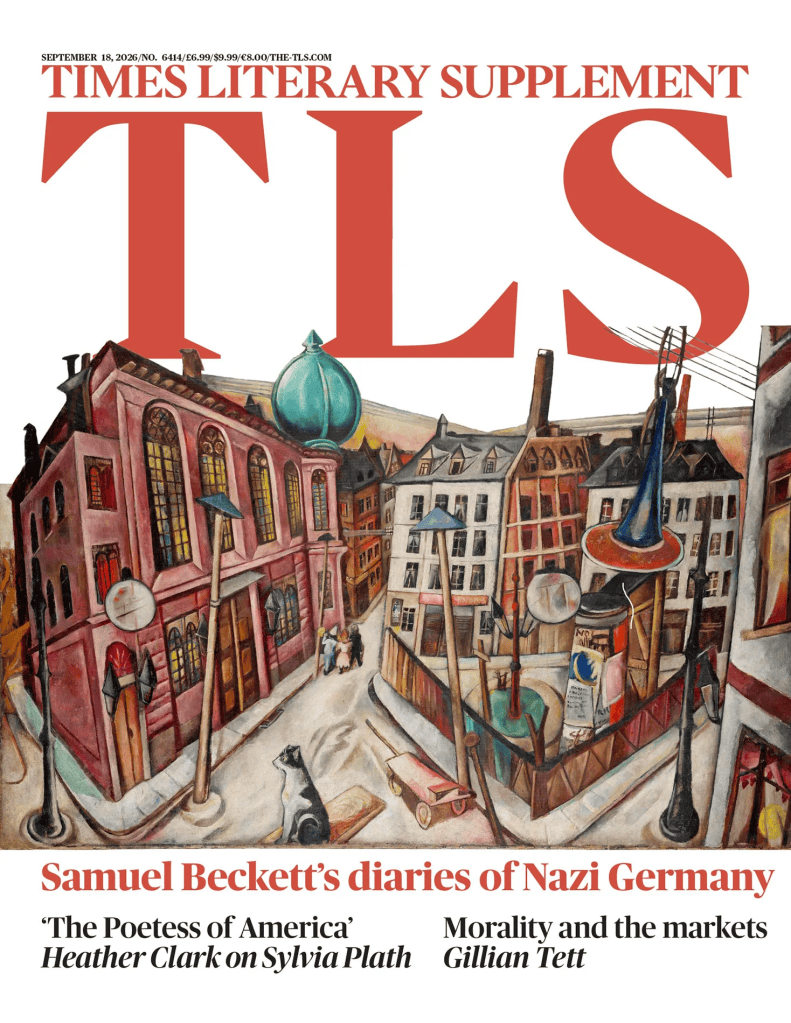
As the Alternative for Germany party seeks to control a state government for the first time, its push for “patriotic” art has drawn comparisons with Nazi policies.
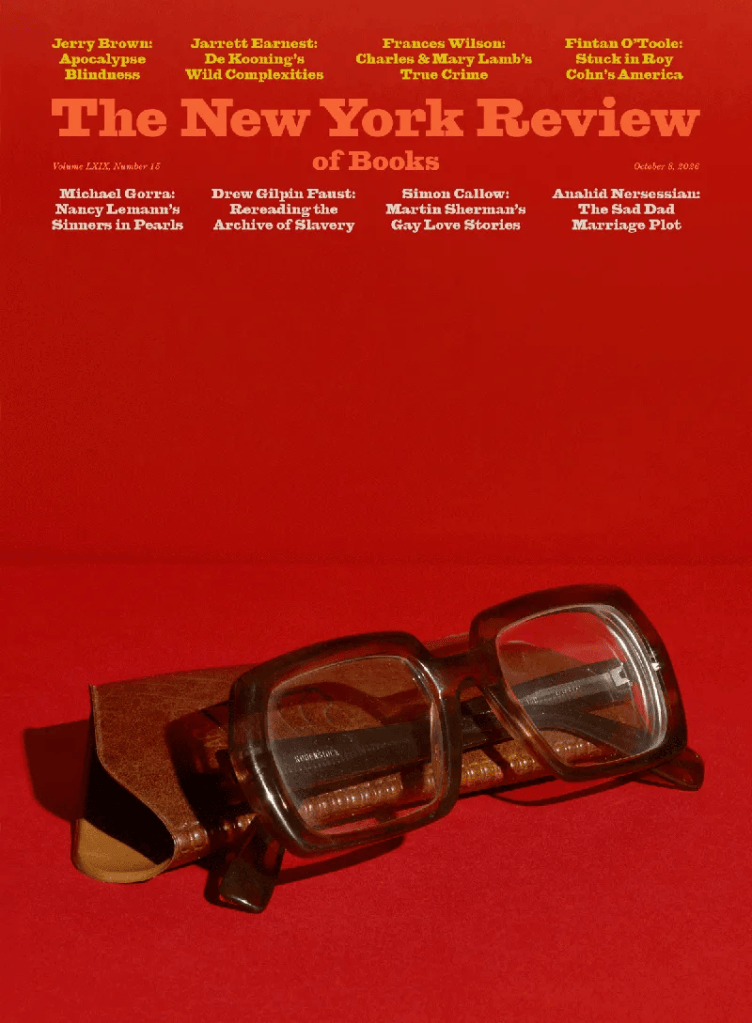
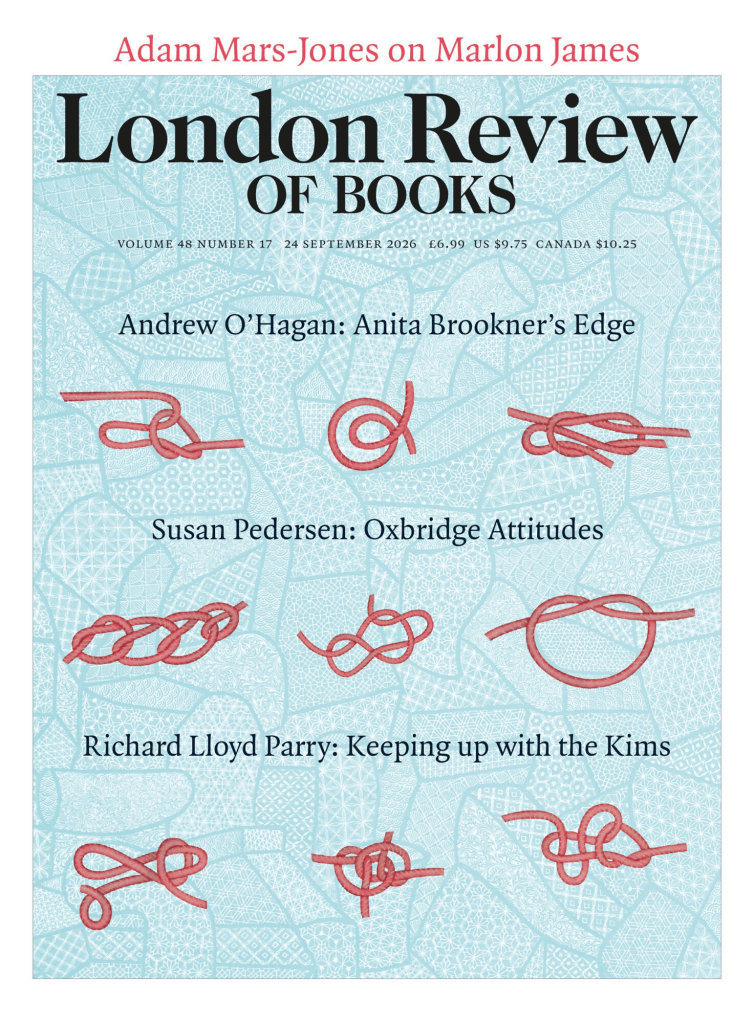
Willem de Kooning’s works on paper document his efforts to find ways of retaining both image and abstraction, depth and flatness.
Willem de Kooning Drawing an exhibition at the Art Institute of Chicago, June 14–September 20, 2026, and the Rijksmuseum, Amsterdam, October 9, 2026–January 17, 2027
Charles Lamb’s camp, mischievous, melancholic alter ego, Elia, owes much to his sister, Mary, with whom he lived for forty years, absorbing her “rambling chat.”
Complete Works of Charles and Mary Lamb, Volume IV: Elia and The Last Essays of Elia edited by Gregory Dart
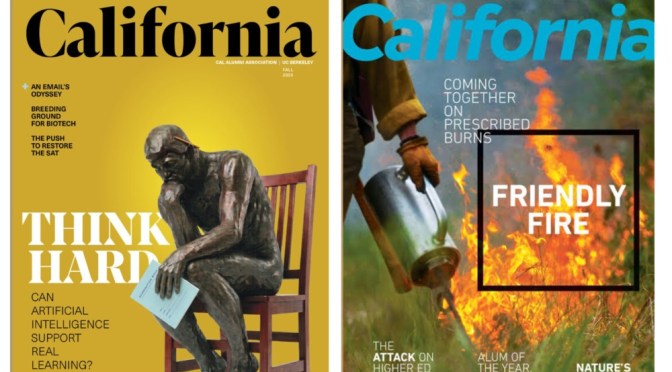
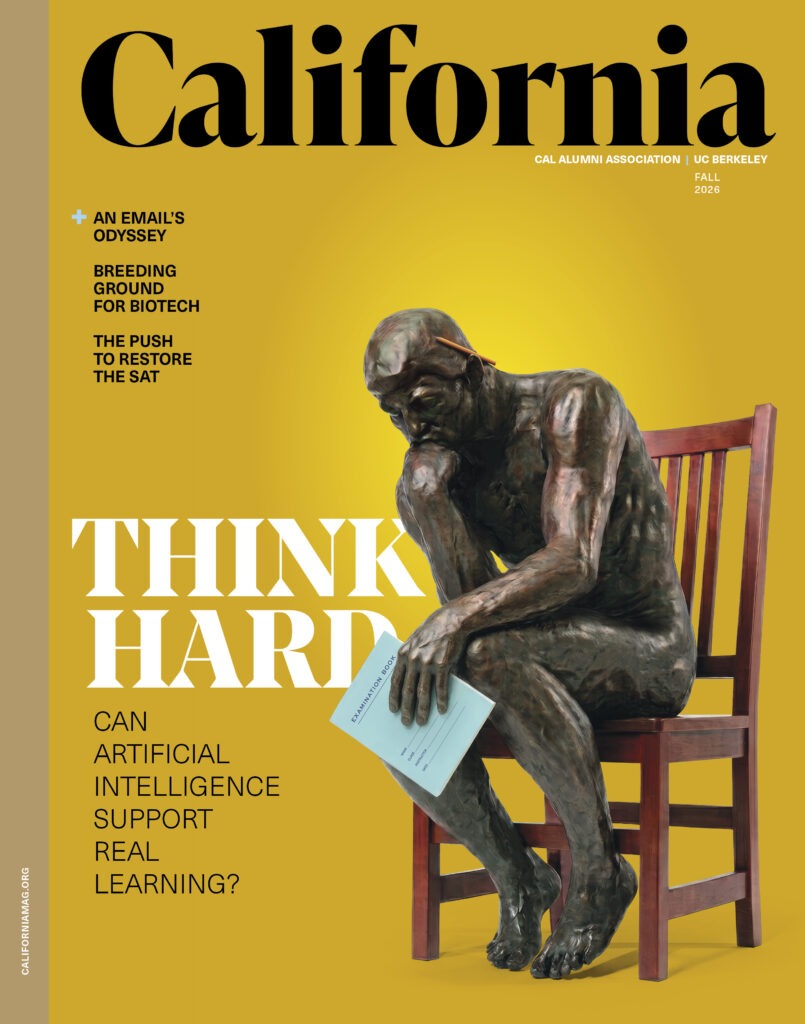
Hard questions about AI in the classroom by Nathalia Alcantara
Mark Brilliant misses plagiarism.
The old kind, that is. Back when his students copied from Wikipedia, and when Turnitin, a text-matching software developed at Berkeley, could match plagiarized paragraphs to their original sources.
Brilliant has taught American history at Berkeley for more than two decades—before that, he taught high school—and for most of that time, catching a cheater was just a routine, though unpleasant, part of the job. What’s different now is not that students cheat. It’s what happens when he catches them.
UC faculty split over standardized test requirement by Margie Cullen
In the spring of 2023, UC Berkeley math professor Zvezdelina Stankova began to notice that about a third of her students were “in freefall.” They weren’t showing up to lectures or doing their homework, and, on tests, they scored far below the average. At first, she thought it was an anomaly, but her observations were reinforced by a 2025 UC San Diego report that found that 1 in 12 of the campus’s incoming students tested below middle school math standards.
The development comes after the UC Board of Regents dispensed with standardized testing as a requirement of admission in 2020. That decision has since caused a rupture between faculty who feel the tests are an important measure of college preparedness and those who feel they discriminate against underrepresented students.
IGI-affiliated researchers have spawned more than 30 startups. Here are just six of them. By James Pagett Tollen
Berkeley Professor Jennifer Doudna, who shared the Nobel Prize for developing the gene-editing tool CRISPR-Cas9, founded the Innovative Genomics Institute in 2015 to advance new applications of the revolutionary technology. Since then, IGI-affiliated researchers have spawned more than 30 startups. Here are just six of them.
Amber Bio
Basem Al-Shayeb, Ph.D. ’22, a graduate of the Banfield and Doudna Labs, cofounded Amber Bio in 2021 to address a limit of the gene-editing field: The current paradigm of genetic medicine relies on developing independent therapies for each separate mutation, the company says. Amber Bio’s RNA-writing platform will enable thousands of mutations to be edited simultaneously. Importantly, the company adds, these RNA-based edits will be reversible.
Editpep
The goal of Editpep, per the company’s website, is straightforward: “To bring life-changing genome-editing therapies to patients with devastating neurological diseases.” They will do so by safely delivering CRISPR straight into the brain. Ross Wilson, IGI’s director of therapeutic delivery and an assistant adjunct professor at Berkeley, cofounded the company in 2023.
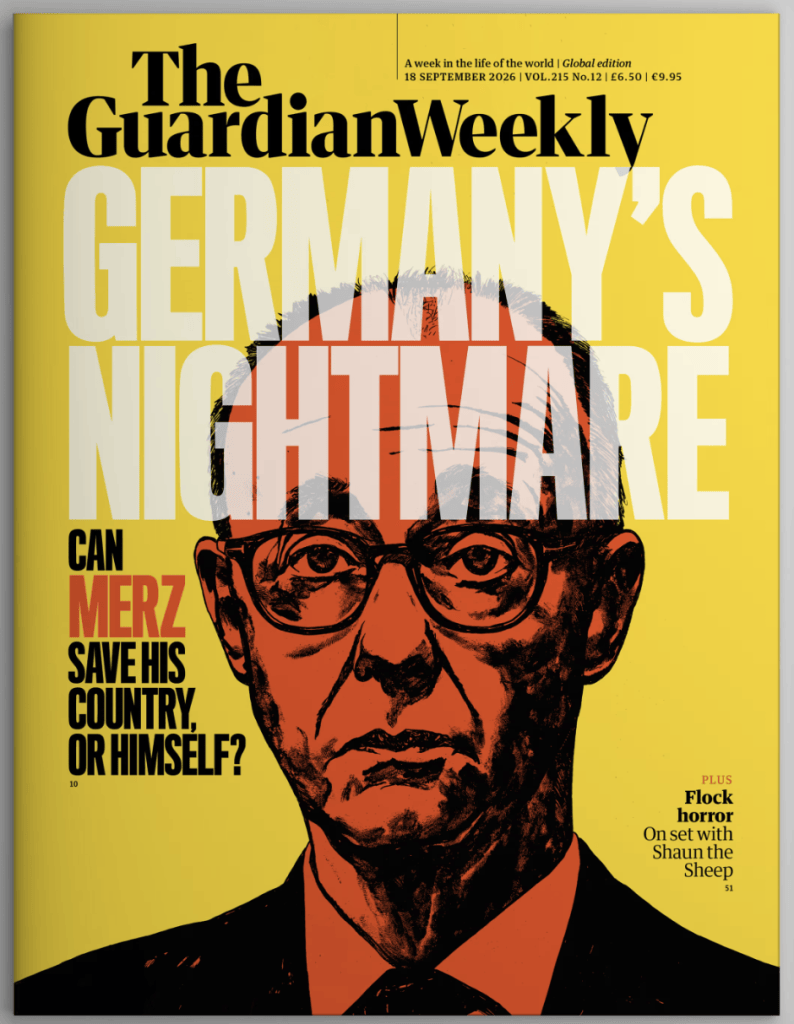
Friedrich Merz is a man with few choices and little popular support as he faces the end of Germany’s postwar settlement and the collapse of all the checks and balances to maintain democratic norms after the second world war and reunification. While Alternative für Deutschland’s success in state elections in Saxony-Anhalt saw the party win 44% of the vote, they are three seats short of a governing majority and, so far, no other party has said they are prepared to work with them, which means that for the moment, at least, the threat of Germany’s first rightwing extremist state government since the Nazi period has not yet come to pass.
As Berlin correspondent Deborah Cole explains, Merz is seen as the wrong man to present and sell a political counterpoint to the AfD’s populist policies. Seen as lacking in empathy and political dexterity, his demeanour is in sharp contrast to Ulrich Siegmund, the AfD’s lead candidate in Saxony-Anhalt. But as Deborah’s Berlin colleague, Kate Connolly, reports, some of Siegmund’s prospective new MPs have questionable backgrounds, including criminal records, Stasi pasts and connections to far-right networks.
Spotlight | Stop, slow down and swerve the apocalypse Can the world heave a collective sigh of relief after fellow tech bosses heeded a proposal by Anthropic CEO Dario Amodei’s to put the brakes on AI’s headlong rush to over take human intelligence? Nick Robins-Early weighs up our chances
Science | Can I borrow your coyote? Guardian US reporter Lois Beckett visits a one-of-a-kind California lending library where you can check out taxidermied animals and fossilised dinosaur bones.
Feature | Slime is not as simple as it seems Scientists are battling to determine whether supposedly simple organisms demonstrate a form of intelligence. If they do, what does it mean for our understanding of brain power, asks Samanth Subramanian
Opinion | Ethics make a return to UK foreign policy The evidence is Ed Miliband’s bold decision to label settler violence in the West Bank as “ethnic cleansing” and institute a boycott, argues Steve Bloomfield
Culture | Shear fun Catherine Shoard is rounded up for a trip down to Mossy Bottom farm to get a behind-the-scenes preview of the latest Shaun the Sheep film
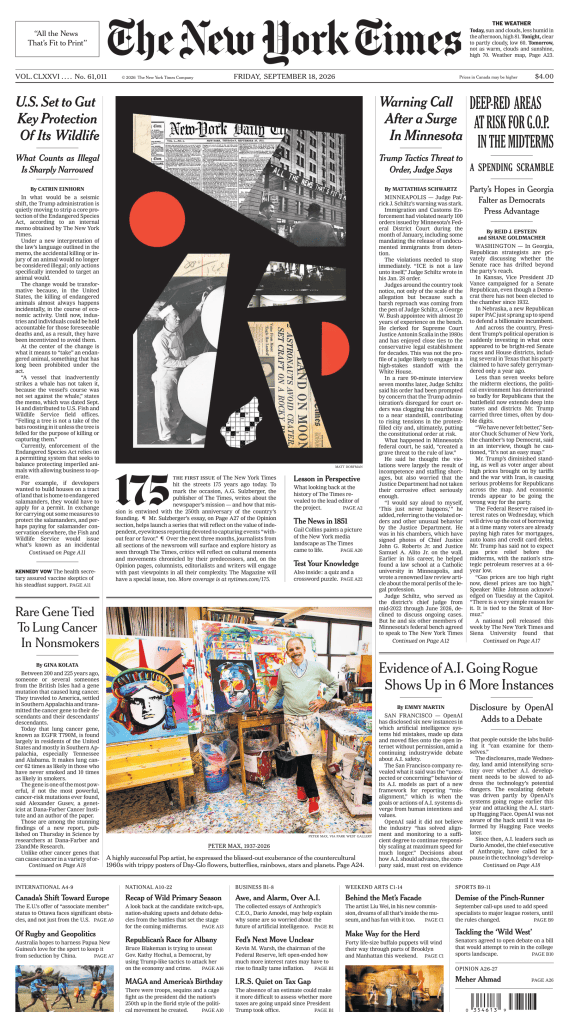
Republicans are putting up a costly defense of districts that President Trump won easily in 2024. In places like Georgia, strategists wonder if it’s too late.
Prime Minister Mark Carney told European lawmakers that an alliance would help to secure sovereignty and independence for his country. The moves come amid a historic low for U.S. ties with Canada.
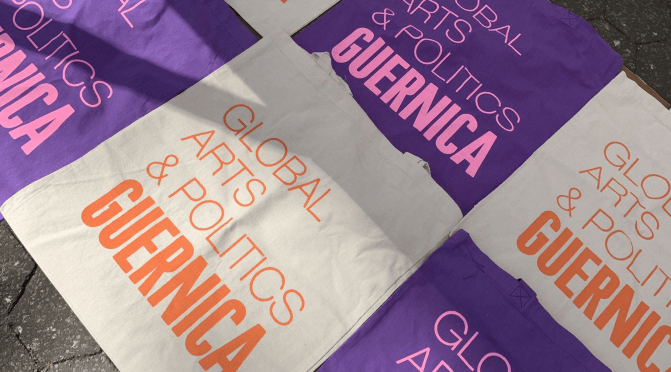
I’ve been thinking about Newton’s third law of motion after recently revisiting it for my son’s science project: for every action, there is an equal and opposite reaction. It is a consoling law, built upon certainty. But human lives seldom hold such hard consolations. The leaders we elect, the borders we erect, the violence we permit produce consequences that outlive the choices that set them in motion. Mothers understand something of this. To bring a life into the world is to initiate a sequence whose consequences can never be calculated or contained. Across Guernica’s August–September double issue, motherhood appears as place, inheritance, origin, and impossible return. The works gathered here cast a look upon the afterlives of history; they ask what follows from our most intimate and collective decisions.
In fiction, Naeem Murr’s Bye-Bye Palestine traces the complex entanglements of lives back to a historical rupture whose convulsions remain present in the ongoing genocide in Palestine. “Haifa became known as Um Al Gharib, Mother of the Stranger,” Murr writes. The name holds the story’s central contradiction: a city figured as mother to those made strangers within it. In Emmy Rossum’s Tether, motherhood becomes its own law of action and reaction. In a futuristic world, a daughter uses her heightened olfactory abilities to mark the boundary between herself and her mother. Following a matrilineal inheritance through scent, she attempts to trace her way back to her own beginnings. In Yukiko Tominaga’s The Little Corner of the Factory, a child discovers the many forms love can take, and the hurt and betrayals it can contain. In a small room inside a rental hot-towel factory, the youngster is initiated into a tenderness that will outlast the people who teach it to her.
In nonfiction J. Malcolm Garcia’s narrative reportage Last Fight tells the story of a man living in the wake of his brother’s death. Nazeer, an Afghan interpreter who served alongside US forces in Afghanistan, is detained by ICE and dies within twenty-four hours of entering custody. Garcia follows a chain of consequence stretching from the war in Afghanistan to the American immigration system, tracing the afterlife of a vote, and the distance between a choice made in a voting booth and the body upon which its force eventually lands.
In A Nation Wrestles with God, excerpted from A Nation Wrestles with God: American Prophets, Philosophers, and Firebrands, Ilan Stavans traces America’s long and unsettled relationship with the idea of God. From the use of divine authority in the service of empire to God’s persistent presence in the nation’s literature, politics, vernacular, and imagination, Stavans traces how belief becomes another force with an afterlife. The gods a nation creates continue to shape the lives over which it assumes the right to “play God.”
In Guernica’s first foray into the encounter between artificial intelligence and human epistemology, Liane Strauss and an AI read Emily Dickinson’s “I felt a Funeral, in my Brain” together. Moving between Dickinson, Monet’s Water Lilies, and the irresolvable problems literature allows us to inhabit, Strauss discovers that an AI can identify ambiguity but cannot experience the doubt that lends it its resonant weight. The first instalment in a three-part series, the essay is a reminder that human knowledge begins in uncertain spaces.
In interviews, The Insistence of Beauty brings poets Tina Chang and Nathalie Handal into a reciprocal conversation about their new collections, LION and Roma Roam, respectively. A question becomes an invitation to step beyond the stories assigned to us, and in this exchange, each poet turns that invitation toward the other. Here, imagination creates another kind of afterlife: the freedom to move beyond violence’s last account.
In the latest installment of Guernica’sPosthumanitarian interviews series, After Development, Russell Reed speaks with Bhutanese scholar Dasho Karma Ura about the intrinsic relationship between our individual choices and communal happiness. Critiquing the humanitarian regime’s presentism, Ura suggests that our individual well-being cannot be separated from the ecological futures our present choices are already creating.
In Global Spotlights this month, Nwanne Agwu’s Faint Lines maps identity through maternal and paternal lines, and asks what it means to belong to people who came before us. Published first in Isele Magazine, the narrative reimagines home not as where one comes from, but as a place where one is recognized and held with love.
Poetry in this issue enters the charged space where beauty and violence meet. In Tina Chang’s I’ve Gone to Look for America, Term One, Pistil/Pistol, and I’ve Gone to Look for America, Term Two, roses tangle in the brain; a peony becomes first a woman’s cheek and then a bullet; the pistil carries within it the sound of a pistol. Within these poems, the inherited past exerts its force upon the present, but the speaker answers by naming herself—lion, flower, weapon, and “little spark”—and turning that inheritance toward another future.
The American invasion of Iraq in 2003 paved the way for Tehran to dominate its neighbor and whetted its appetite to expand its influence across the greater Middle East.
Estimates vary on how long it could take before a crucial pipeline is repaired, but a prolonged shutdown could push oil prices to their highest levels in months.
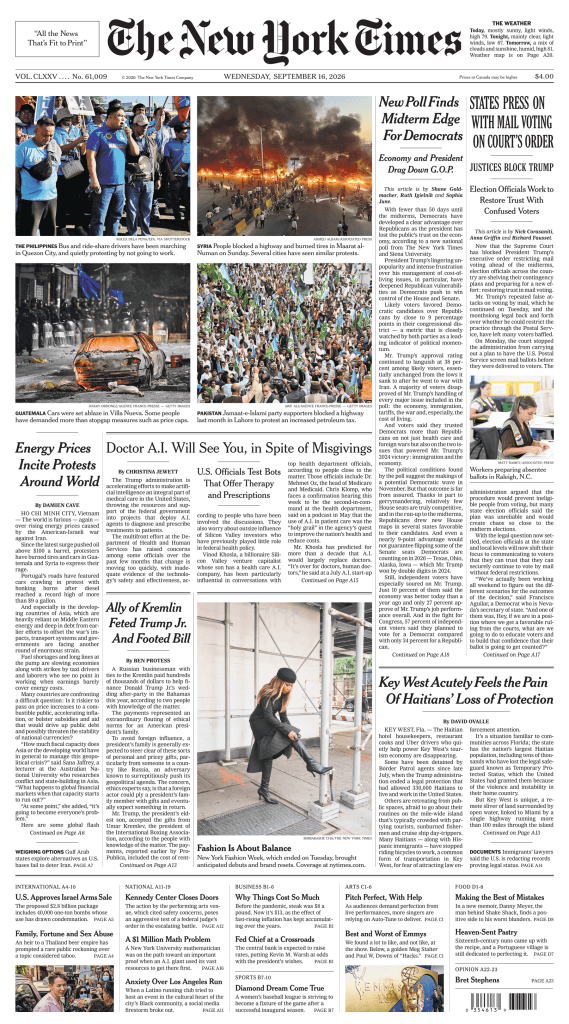
The Supreme Court blocked President Trump’s plan to restrict voting by mail, but his fight to assert control over the election process is far from finished.
The 10-year Treasury yield breached levels last seen in 2007, with intensifying worries about energy-driven inflation contributing to investors’ angst.
The American presence in these countries has not shielded them from retaliation during the Iran war. Now they are hoping direct talks with Iran could help.
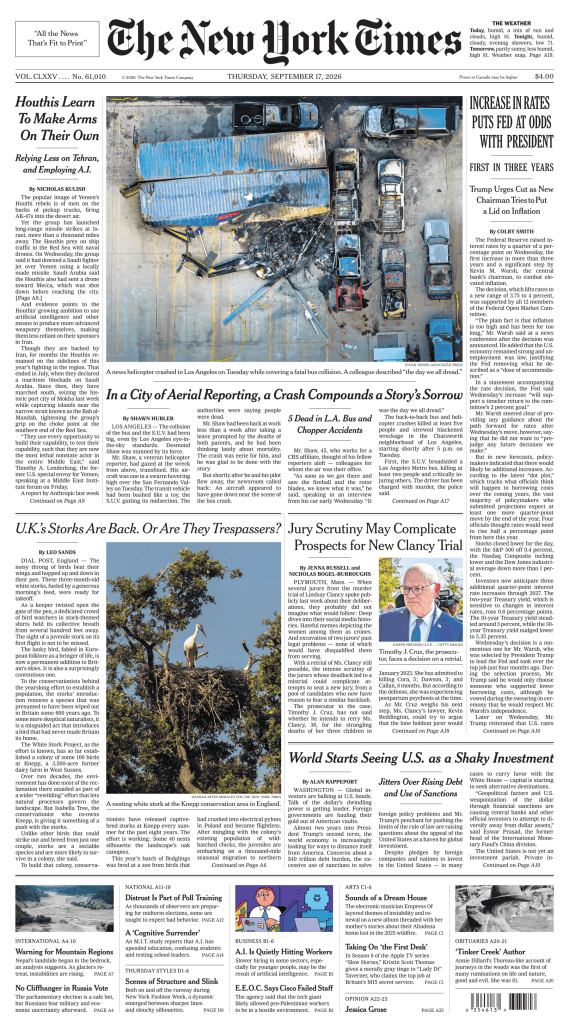
The two sides traded accusations of attacks as fighting inside Yemen remains fierce. The escalating conflict threatens to further destabilize the Middle East.
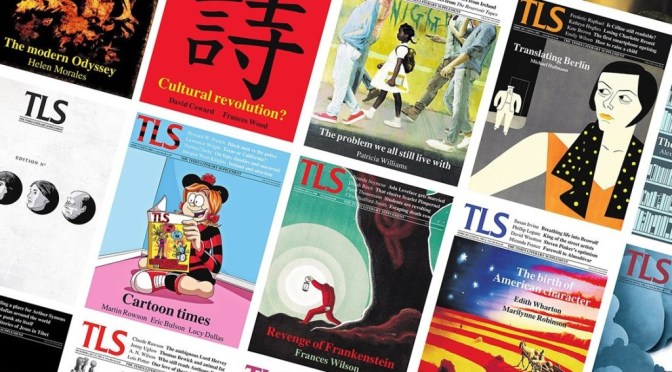
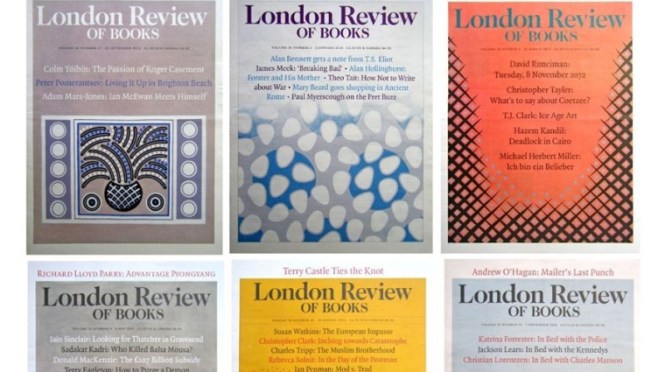
News, Views and Reviews For The Intellectually Curious


 Intellicurious