Tag Archives: Film

THE NEW YORK TIMES MAGAZINE – NOV. 1, 2026

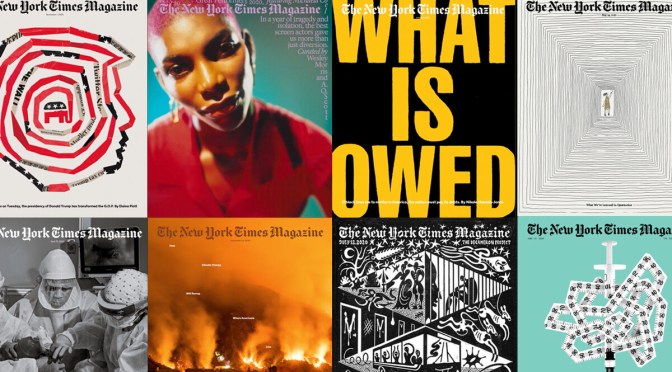
Current cover

THE NEW YORK TIMES MAGAZINE: The 11.1.26 Issue features Marcela Valdes on the actor Penélope Cruz; Francesca D’annunzio McKenzie Funk and Kirsten Luce on a small town in Texas and a local deputy who became the face of deportation; Sophie Haigney on dark nutrition; Lisa Lerer on OB-GYNs in Idaho; and more.

How Silicon Valley Stole the Future

A.I. will reshape our world. But does that mean the people who make the technology get to control our imagination, too? By Linda Kinstler

These days, the leading tech companies are not primarily fighting one another for market share or talent or computing power. The bigger battle is over who can claim to know the future.

In August, Meta’s chief executive, Mark Zuckerberg, published a manifesto titled “The Future Is for Everyone,” in which he argued that artificial intelligence will bring about “an abundance of personal agency” and other riches — but only if Meta is in charge. “If our beliefs and principles lead,” he wrote of his company, “then the balance of power will favor individuals and a better future for everyone.” In September, Sam Altman of OpenAI told the United Nations Security Council that A.I. could lead to either a society in which “more people can participate in the future” or one in which humans have lost “control of the future.” And in his recent call for the voluntary slowdown of A.I. development, Dario Amodei of Anthropic claimed it was imperative to stave off the future we are headed toward, if only for an “extra year or two.”

Martin McDonagh Says Art Can Change the World. Just Not as Much as Murder

The writer-director Martin McDonagh has carved out a highly esteemed cinematic career as a chronicler of extreme, and often extremely bloody, behavior carried out on a relatively intimate scale. “The Banshees of Inisherin” (2022), to pick one of his films, was about two friends on a remote Irish island descending into a feud. “Three Billboards Outside Ebbing, Missouri” (2017), to pick another, looked at a mother’s attempt to get justice for her murdered daughter. That those movies, despite their dark setups, are often as vulgarly funny as they are emotionally affecting is evidence of McDonagh’s originality — and his skill too. (McDonagh was an enfant terrible of the British theatrical world before he turned to filmmaking.) The 56-year-old’s films have earned a cumulative 18 Academy Award nominations, and “Six Shooter” (2004) earned him an Oscar for best live-action short. By David Marchese

The Vibe Is Dissatisfaction. The Result Is Endless Political Deadlock.

From France to Brazil, voters are railing against the status quo, even as the politics of disenchantment make lasting change nearly impossible. By David Wallace-Wells

She Was Racked With Anxiety and Crushed by Insomnia. Finally She Understood Why.

The woman’s symptoms were common, but the cause was not. By Lisa Sanders, M.D.
DID FACEBOOK POLARIZE US?

The Intellitake
ONE ARGUMENT · TWO SIDES · ONE VERDICT · DAILY
Monday, October 19, 2026 · The Attention Debate
“

It is more extractive than extremist.

THE THESIS — MATT FEENEY, UNHERD

THE ARGUMENT

Aaron Sorkin’s The Social Reckoning is in theaters, with Mikey Madison as the whistleblower Frances Haugen and Jeremy Strong as Mark Zuckerberg. Its case, as RogerEbert.com puts it, is that Facebook’s algorithms steered users rightward and that “the January 6 riots are the end product of the machinations the movie lays out.”

Writing in UnHerd, Matt Feeney says the film has the wrong villain. The scandal was never mainly about content. It was about design. Platforms were engineered to be habit-forming, drawing on the behavioral-design playbook of Nir Eyal’s Hooked and the variable reward schedule, and everything users produce becomes training data for machines.

Liberals missed this, he argues, because they mistook the platforms for instruments of liberation. “Idealizing social media platforms as tools of emancipatory expression was always naïve.” His verdict on the movie is brutal: “The film is a publicity coup for its ostensible villain, Mark Zuckerberg.”

vs
THE ANSWER

Content is not a distraction from the business model. It is the business model. The engagement machine Feeney describes has to be fed something, and what it learned to feed us was outrage, because outrage holds attention better than agreement does. Design and content are the same problem seen from two angles.

The practical case cuts the same way. “Extraction” is an abstraction with no remedy attached, while content decisions are things a company can actually change, a regulator can actually audit, and a whistleblower can actually document. Haugen brought out the internal research. Nobody can subpoena a dopamine loop.

And Feeney grants more than he means to. He calls the harm to teenagers’ mental health “appalling,” credits Haugen for proposing algorithmic fixes, and concedes Trump bears primary responsibility for January 6. Those are the content critics’ own points, conceded and then set aside.

iC
THE INTELLITAKE

Feeney is right about the movie and wrong about the remedy. A film in which the worst charge against a man is that his product made people vote badly is, as he says, a gift to that man. It flatters the audience, hands the problem to a content-moderation department, and lets everyone go home.

But “extractive, not extremist” is a false choice. Extraction is the engine; extremism is the exhaust. A machine built to hold attention at any cost will find that fury holds it best, and will serve fury without anyone deciding to. That is worse than a conspiracy, not better, because there is no one to subpoena.

The real force of Feeney’s essay is a shift in the question. Ask not what the platforms are doing to our politics but what they are doing to our capacity to attend to anything at all. Every hour of scrolling is an hour the machine learns from and the reader does not. A citizenry can recover from believing false things. It is harder to recover from losing the ability to sit with a true thing long enough to understand it.

TODAY’S PROVOCATION

Check your screen time, then ask what you would have done with those hours in 2006. Which answer bothers you more?

Read the originals: Matt Feeney, “What liberals get wrong about social media,” UnHerd, Oct. 18, 2026 · Matt Zoller Seitz on The Social Reckoning, RogerEbert.com, Oct. 7, 2026.

— THE EDITORS, INTELLICURIOUS —

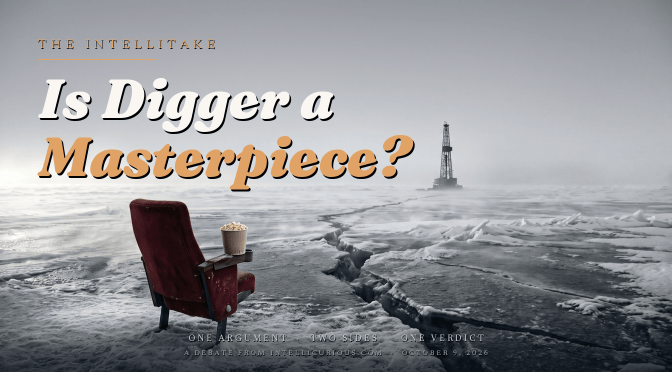
IS DIGGER A MASTERPIECE?

The Intellitake
ONE ARGUMENT · TWO SIDES · ONE VERDICT · DAILY
Friday, October 9, 2026 · The Digger Debate

THE OFFICIAL FINAL TRAILER · WARNER BROS. PICTURES

“

This is the first film I can think of that could be the last great film we may see.

THE THESIS — DAVID THOMSON, UNHERD

THE ARGUMENT

Digger, Alejandro Iñárritu’s $125 million satire, opened October 2 with Tom Cruise as an oil tycoon whose Arctic drilling sets off a planetary catastrophe. In UnHerd, the film historian David Thomson, author of The Biographical Dictionary of Film, calls it a flawed masterpiece and does not flinch from the flaws. The fable is “striking yet shallow.” Supporting characters are “introduced but not adequately explored.” Cruise, he writes, “is so terrified of being boring he cannot stoop to stillness or quiet.”

And yet. Thomson sees Cruise’s paunchy, manic Digger as a portrait of an age in which “the idiotic has become axiomatic,” a domineering, foolish authority convinced that power justifies whatever it wants. Beneath the performance is a look he finds more frightening than any horror film: “A look of gray ice pervades the movie; primary colors have been eliminated.” “There is no human touch any longer.”

A film about the end of the world, in other words, that looks the way the end of the world would look.

vs
THE ANSWER

Most American critics saw a different movie. At RogerEbert.com, Robert Daniels writes that “Digger chokes on its own ambitions, and very few of the picture’s participants emerge still breathing.” The film, he argues, never commits to its own high concept, and its dialogue preaches: “Every line explicitly explains the vapid evil espoused by craven industrialists against our fragile environment.”

William Bibbiani of TheWrap goes after the politics. A satire of billionaires that never threatens one is just flattery for the audience: “We are powerless to stop them, but we do get to point and giggle.” Of Cruise: he “hasn’t done this much caps-locked ‘ACTING’ in many years.”

On this reading, Digger is the thing it mocks: an expensive spectacle of the apocalypse that lets everyone go home feeling superior to it.

iC
THE INTELLITAKE

Read closely and the critics agree on every fact. The script is thin. Cruise is loud. The satire draws no blood. The look is extraordinary. The quarrel is over what a film is for. Daniels and Bibbiani grade Digger as an argument, and as an argument it fails: nobody leaves the theater changed about oil or billionaires. Thomson grades it as an artifact, something a future might dig up to learn what we looked like, and as an artifact it may be priceless.

Thomson’s tell is his title. He calls it the masterpiece “we deserve.” A culture that can only process its own ending as a $125 million entertainment starring Tom Cruise has made a film that is exactly that, and the film’s inability to be anything better is the most honest thing in it. The critics who wanted it to be smarter were asking the mirror to improve the face.

So: not a masterpiece, by the ordinary standard that a masterpiece knows what it is doing. But Thomson has the longer view, and he may be right that films of this scale and this nerve are ending. If so, Digger is less the last great film than the last great gesture, a studio spending a fortune to make a picture of the world with no human touch left in it. That is worth seeing, if only once.

TODAY’S PROVOCATION

Can a work of art about our stupidity be anything other than stupid, and would we recognize it if it were?

Read the originals: David Thomson, “Digger: the flawed masterpiece we deserve,” UnHerd, Oct. 2 · Robert Daniels, RogerEbert.com, Sept. 29 · William Bibbiani, TheWrap, Sept. 29.

— THE EDITORS, INTELLICURIOUS —

Current Affairs: Prospect Magazine – December 2023

Image

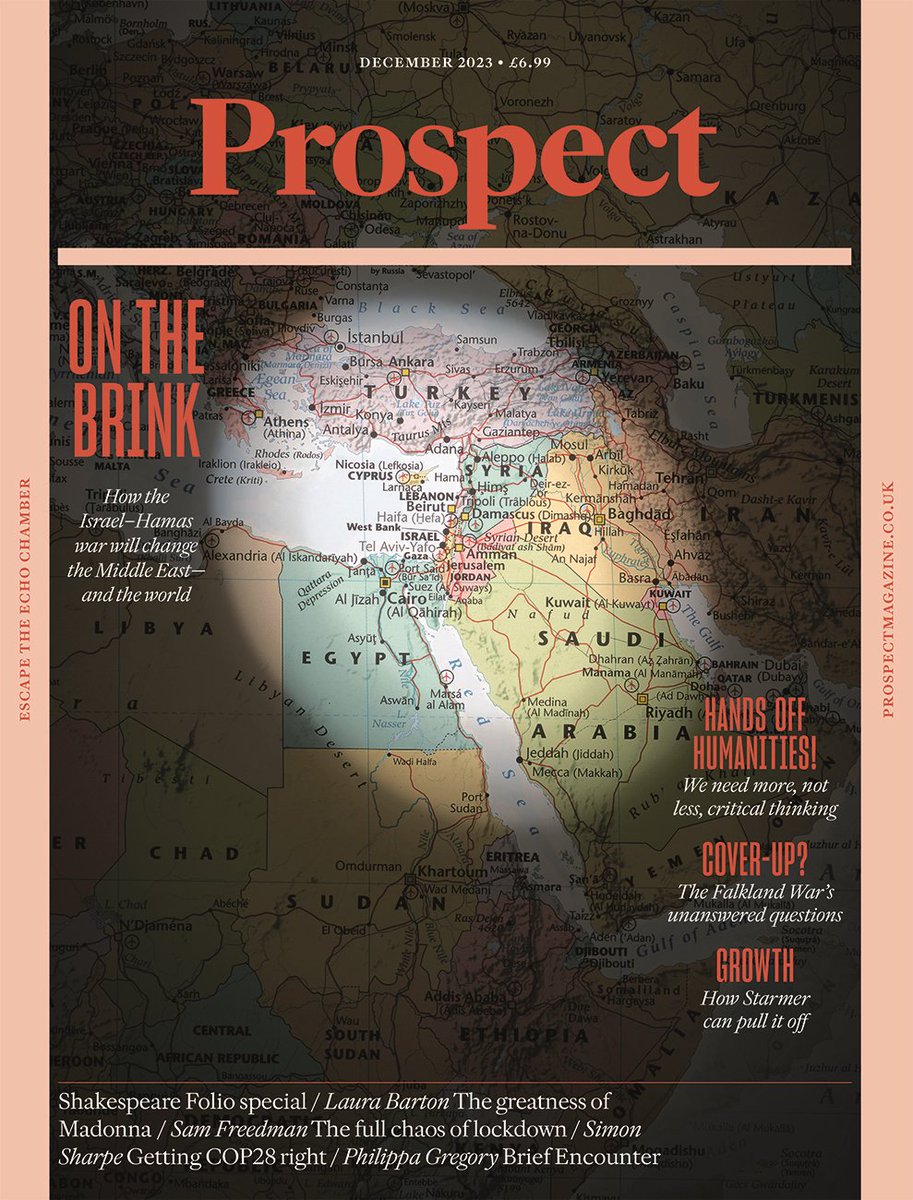
Prospect Magazine (December 2023) – The latest issue features Oh, the humanities! – History, literature, film studies; I still dream of peace – How Israel might emerge from the Gaza horror, and more…

I still dream of peace

My country will emerge from this horror—and when it does the peacemakers, not the zealots, will reign, writes a former speaker of the Israeli Knesset

By Avraham Burg

The following words were written amid the storm of battle. Planes constantly circling in the sky, the bedroom turned into a shelter, the radio telling of new atrocities, the heart torn with fear as to the fate of missing persons. The days are now devoted to funerals and condolences, and the evenings to guarding our small community. I have participated in many demonstrations against the terrible folly of Benjamin Netanyahu, which found its outcome in the revenge and rage in Gaza on 7th October. Today, I try to be available for acts of support and solidarity with the victims on all sides. This beautiful land between the Jordan River and the Mediterranean Sea weeps bitterly, its two communities refusing to be comforted. 

Oh, the humanities!

History, literature, film studies—these subjects expand our understanding and enrich our democracy. They are also under assault

Priyamvada Gopal

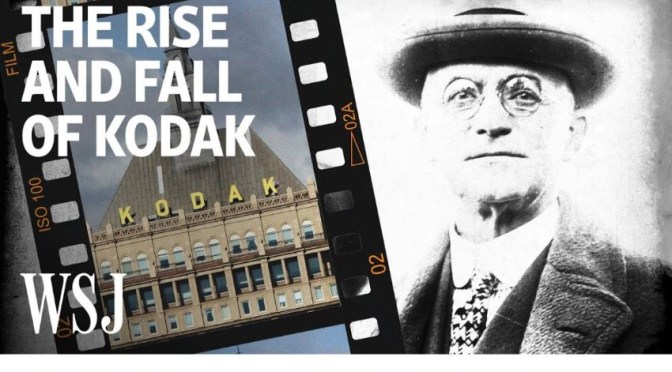
Film Business: ‘The Rise And Fall Of Kodak’ (WSJ Video)

At its peak, Kodak was the early 20th century equivalent of Google or Apple, possessing a near monopoly in the film business. But those days are long gone. Here’s why the company’s glossy image failed to withstand the test of time.

Photo Illustration: Carter McCall/WSJ

Video Tributes: Actor, Comedian And Director Carl Reiner Dies At 98 (CBS)

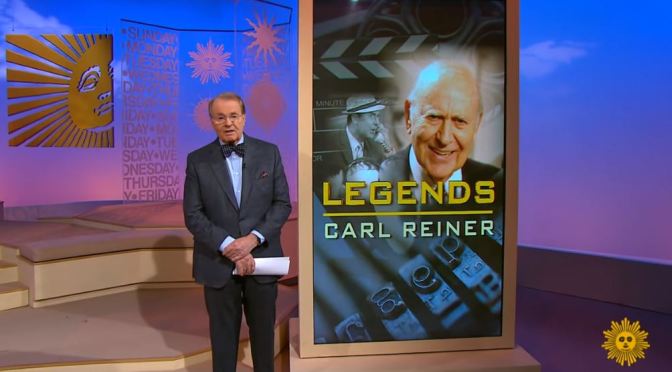
Carl Reiner, the funnyman behind TV classics like “The Dick Van Dyke Show” and movies like “The Jerk,” died on June 29, 2020 at the young age of 98. In this interview with ”Sunday Morning” correspondent Tracy Smith originally broadcast on March 8, 2015, the writer-director-actor proved that he had never stopped cracking us up.

Carl Reiner was an American comedian, actor, director, screenwriter, and publisher whose career spanned seven decades. During the early years of television comedy from 1950 to 1957, he co-wrote and acted on Caesar’s Hour and Your Show of Shows, starring Sid Caesar.

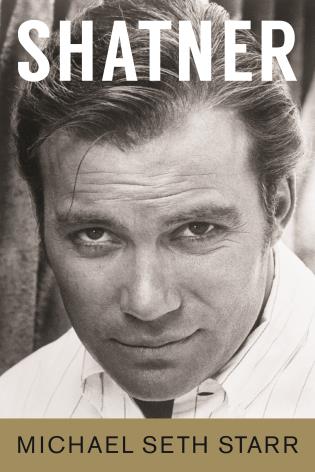
Biographies: “Shatner” By MICHAEL SETH STARR (2019)

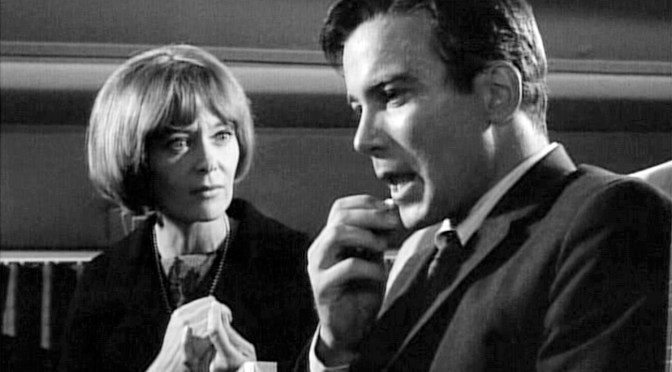
Shatner by Michael Seth Starr December 2019Shatner takes a comprehensive look at this singular performer, using archival sources and information culled from interviews with friends and colleagues to transport readers through William Shatner’s remarkably bumpy career: his spectacular failures and triumphs; tragedies, including the shocking death of his third wife, Nerine; and, ultimately, the resilience Shatner has shown, time and again, in the face of overwhelming odds. Author Michael Seth Starr unravels the mystery of William Shatner, stripping away the many myths associated with his personal life and his relationships with fellow actors, presenting a no-holds-barred, unvarnished look at the unique career of an inimitable performer.

In the early months of 1966, a handsome, hardworking thirty-five-year-old Canadian-born actor named William Shatner was cast as Captain Kirk in Star Trek, a troubled, low-budget science-fiction television series set to premiere that fall on NBC. Star Trek struggled for viewers and lasted only three seasons, but it found a huge, rabidly dedicated audience when it premiered in syndication following its cancellation—turning Shatner into a pop-culture icon and launching him on a career path he never could have imagined after graduating from McGill University with an economics degree twenty years earlier. As he approaches his ninetieth year, he’s still working at a furious pace as a man of boundless contradictions: by turns one of the most dissected, disliked, revered, respected, mocked, imitated, and beloved stars in the show business firmament.

To read more or order book: https://rowman.com/ISBN/9781493050659/Shatner

New Museums: “Academy Museum Of Motion Pictures” By Architect Renzo Piano (Opens 2020)

From the Renzo Piano Building Workshop website:

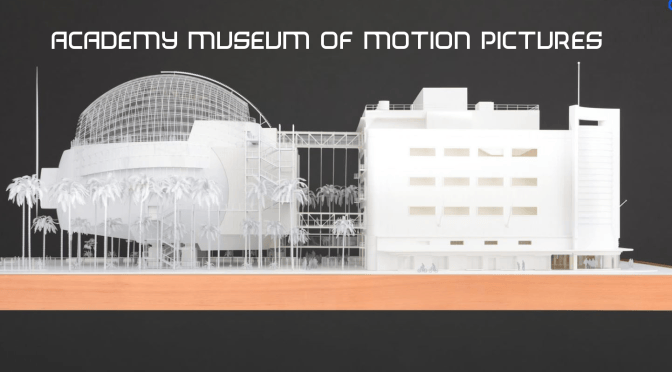
Academy Museum Renzo Piano Architect“The Academy Museum gives us the opportunity to honor the past while creating a building for the future—in fact, for the possibility of many futures. The historic Saban Building is a wonderful example of Streamline Moderne style, which preserves the way people envisioned the future in 1939. The new structure, the Sphere Building, is a form that seems to lift off the ground into the perpetual, imaginary voyage through space and time that is moviegoing. By connecting these two experiences we create something that is itself like a movie. You go from sequence to sequence, from the exhibition galleries to the film theater and the terrace, with everything blending into one experience.”


Renzo Piano, Architect

When it opens in the heart of Los Angeles, at the intersection of Wilshire Boulevard and Fairfax Avenue, the Academy Museum of Motion Pictures will be the world’s premier movie museum.

Academy Museum Renzo Piano Architect

Academy Museum Renzo Piano ArchitectSituated on the famed “Miracle Mile,” the museum will preserve and breathe new life into the former 1939 May Company department store, now re-named the Saban Building. Celebrating its history and imagining new possibilities, the additions to the building that date from 1946 have been removed and replaced with a spherical building that features the 1,000-seat David Geffen Theater and the Dolby Family Terrace with views towards Hollywood. The revitalized campus will feature more than 50,000 square feet of gallery space, two theaters, cutting-edge project spaces, an outdoor piazza, the rooftop terrace, an active education studio, a restaurant, and store.

https://www.academymuseum.org/en/

To read and see more: http://www.rpbw.com/project/academy-museum-of-motion-pictures