Tag Archives: Reviews

THE ECONOMIST MAGAZINE NOVEMBER 14, 2026

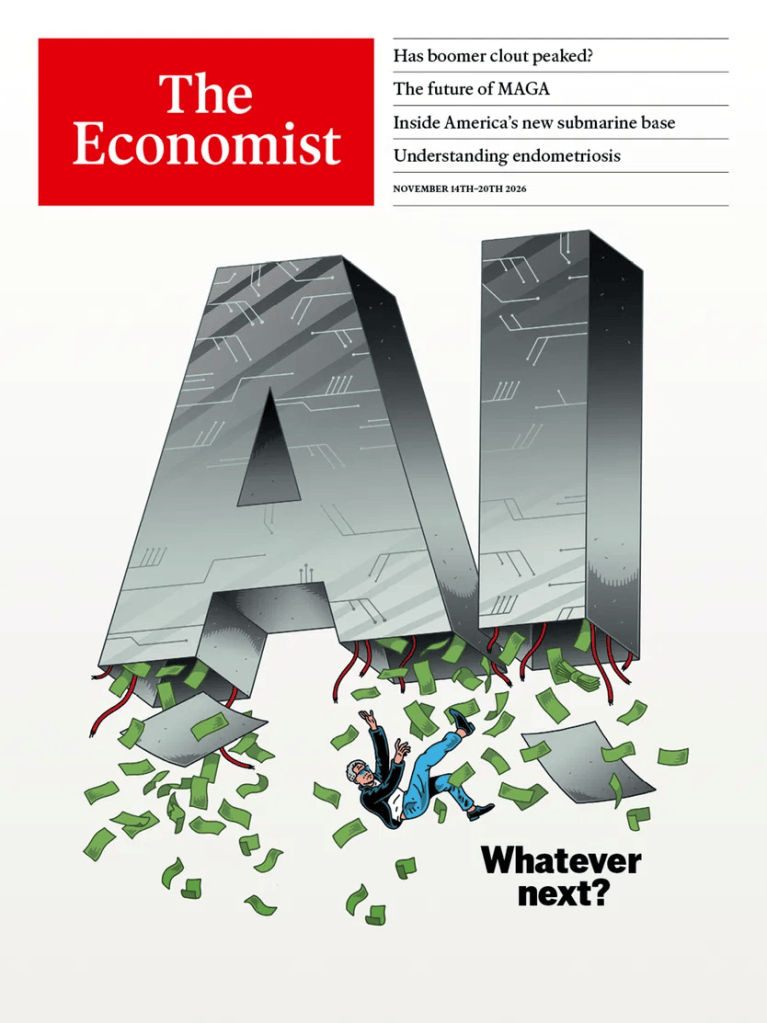
THE ECONOMIST MAGAZINE: The latest issue features ‘AI’ – Whatever next?

Why you should expect an AI crash

But not necessarily a financial cataclysm

Could the news be much more dramatic? Artificial-intelligence models keep growing more powerful, faster than almost anyone predicted. Next week Anthropic, a frontier model-maker, is expected to list its shares in what could be the biggest-ever IPO of an AI firm. Yet in some ways the AI boom is looking wobbly. A sex-and-spying scandal is rocking Nvidia, the top chipmaker. America’s Democratic Party, having won the midterms, is raring to go after data centres and Trump-adjacent tech titans. Some fear an almighty tech bust is coming. How worried should the world be?

History offers clues. Plenty of past technologies, from canals and railways to the internet, have brought market euphoria and then despair. Bets on them went wrong even though the underlying technologies proved revolutionary.

South Africans are giving up on Nelson Mandela’s party. Good

The decline of the African National Congress shows that democracy is working

Jensen Huang must go

His should not be the only head to roll

China’s emissions are falling. Thank self-interest

And its technology is helping others fight climate change, too

To triumph in show business, take a lo-fi or hi-fi approach

Skydance is stuck in the dangerous middle ground

SCIENCE MAGAZINE NOVEMBER 12, 2026

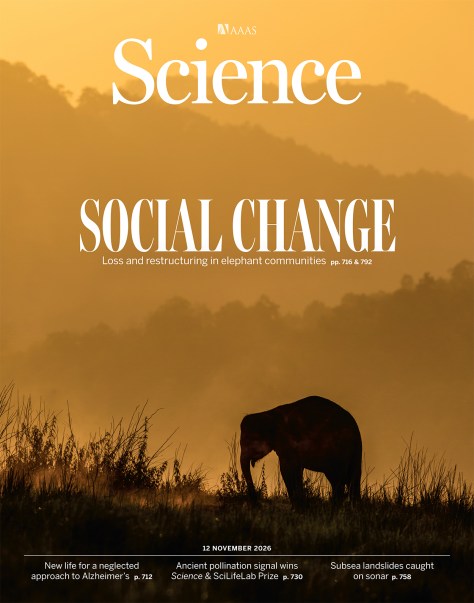
SCIENCE MAGAZINE: The latest issue features ‘SOCIAL CHANGE’ – Loss and restructuring in elephant communities.

Californians approve controversial $8.4 billion immunology initiative

AI research deepens mystery of cellular ‘vaults’

Work guided by Claude shows bacteria and viruses likely make the odd structures, suggesting ancient origins

Novel gene therapy lets drug dampen brain cell activity, reducing seizures

In first clinical result using “chemogenetic” strategy, a team in China treated three patients to control epilepsy

Neurons in a dish are the newest computing machines

Brain organoids offer highly efficient processing—if researchers can learn how to harness their power

Prolific infectious diseases group draws scrutiny

Critics question Pathogen Hunters’s massive global sampling efforts and baffling genetic data

TIMES LITERARY SUPPLEMENT – NOVEMBER 13, 2026

TIMES LITERARY SUPPLEMENT: The latest issue features ‘BOOKS OF THE YEAR’ and ‘LEVI ROACH ON 1066 AND ALL THAT….

Swift and the Normans lead the issue.

The November 13 issue of the Times Literary Supplement marks 300 years since Gulliver’s Travels first appeared in October 1726 and sold out within a week. Claude Rawson, a leading Swift scholar, takes the measure of the satire in his essay “Yahoos and Houyhnhnms,” and Sophie Gee’s “Gulliver in Twickenham” reviews the story of how Swift joined Alexander Pope and John Gay while writing his classic. In “Embroidered history,” Levi Roach visits the British Museum’s crowd-pulling Bayeux Tapestry exhibition and examines how the narrative of the Norman Conquest was shaped. The issue also brings the TLS Books of the Year 2026, in which contributors choose their favourites.

Fiction ranges from France to Norway’s forests.

The historian Richard Vinen’s “Watching the detective” reviews Philippe Jaenada’s L’Inconnue du quai de Javel, this year’s Goncourt-winning meditation on an unsolved murder, and Alice Blackhurst’s “Queen Margot’s allure” weighs a new Pléiade edition of Marguerite Duras. Beejay Silcox’s “Time-maxxing” considers a “mighty work of miniature” about connection, attention and hope, while Frances Wilson’s “Reality is sentences” explores the autofictional trilogy of a Finnish queer icon. Norway looms large: Lauren Kane’s “Among the pines” finds mourning, dreaming and theosophy in the country’s south, and Catherine Taylor’s “Mind and matter” follows an Oslo intellectual turned forest outlaw. Sukhdev Sandhu’s “How it goes” checks into a mysterious guesthouse where time seems to stand still.

The arts revisit giants.

Sarah Watling’s “Art for our sake” reviews a stage portrait of John Maynard Keynes, the economist who helped found the Arts Council, and the competing influences that shaped him. In “A giant of East and West,” Karolina Watroba weighs a new film about the Nobel laureate Thomas Mann, a novelist claimed by many cultures at once. Sue Roe’s “Moving in motes of light” savours Renoir’s open-air pleasures as the National Gallery brings his figures to London, and Harrison Stetler’s “Voices from Vichy” reviews a director’s film about the downfall of his great-grandfather in the Vichy years.

America’s fault lines come under scrutiny.

The sociologist David Garland’s “Out of hand” tallies the price Americans pay for their gun culture. D. K. Renton’s “Exit the workers” considers why America’s liberal elite has failed to find a new FDR, and Michael S. Roth’s “Grooming gazillionaires” examines how Stanford University has embraced shortcuts to riches. Together they sketch a nation wrestling with violence, inequality and the lure of quick money. Widening the lens, Benjamin Smith’s “Drug of choice” traces how the opium trade shaped the modern world.

Lives and poems turn personal.

Two memoirs open the Lives pages. Norma Clarke’s “A final bequest” reviews one about learning the truth about one’s parents, while Ysenda Maxtone Graham’s “Not-so-grand House” relishes a funny account of a frugal upbringing. In the Afterthoughts column, Nicola Shulman pursues “The elusive Dr Brookner,” the art historian and Booker-winning novelist Anita Brookner, and her knack for hiding in plain sight. The issue also carries two new poems: Victoria Chang’s “Fledge: Postscript” and Shane McCrae’s “The soldier.”

In Brief covers still more ground.

The eight short reviews range widely: Alev Adil on an inheritance of recipes and idioms, Nicholas Clee on a philosophical investigation into a campus murder, Hassan Akram on Robert Louis Stevenson’s romantic life and Roger Domeneghetti on football’s contradictions. Terri Apter reads a memoir interweaving motherhood and mourning, Douglas Smith follows the Nobel family through escape, industrial success and revolution, Eliza Tracey revisits the bookshelves of Wigtown, and Katherine Harvey surveys the scenes that most frightened medieval viewers. Crossword 1623 completes the issue. Read the full issue on the TLS website.

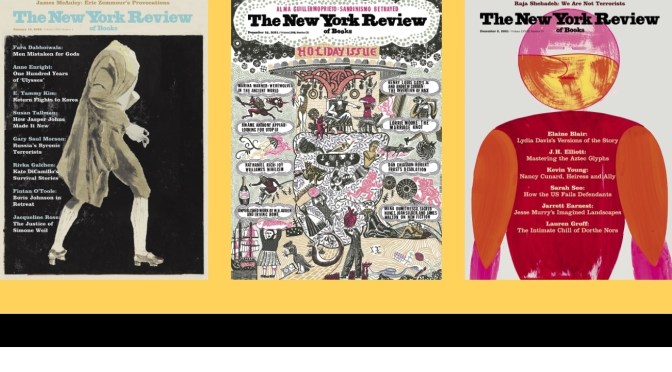
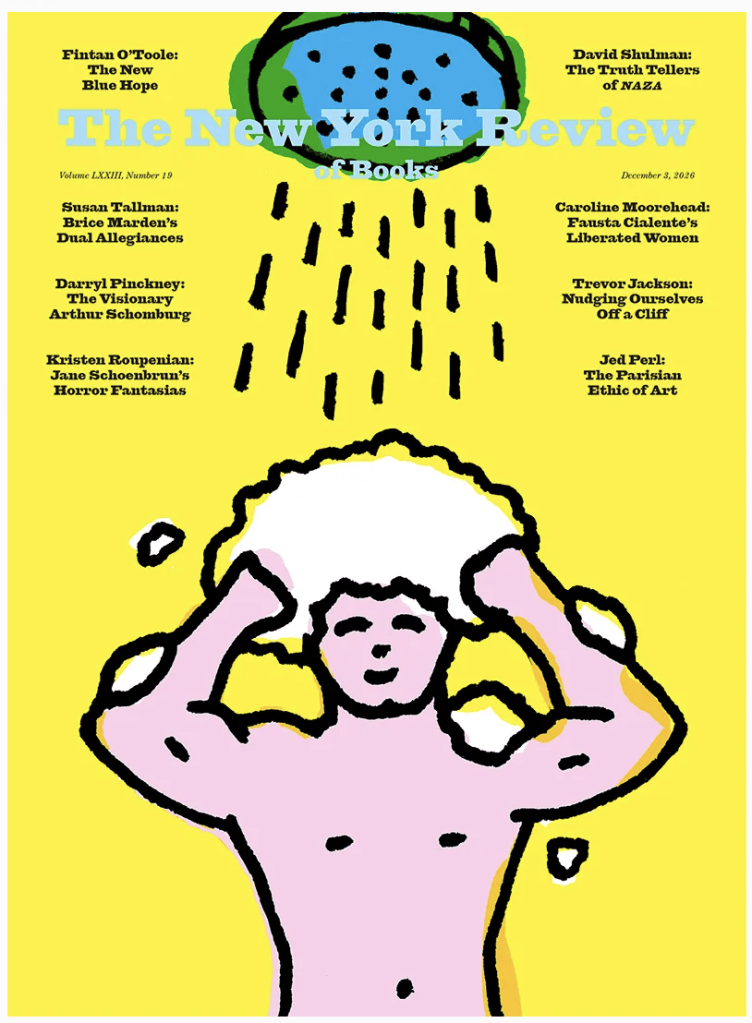
THE NEW YORK REVIEW OF BOOKS – DECEMBER 3, 2026

THE NEW YORK REVIEW OF BOOKS: The latest issue features Fintan O’Toole on the midterms miracle, David Shulman on NAZA, Darryl Pinckney on Arthur Schomburg’s library, Trevor Jackson on the negatives of nudging, Kristen Roupenian on Jane Schoenbrun’s fantasias, Michael Gorra on Sebastian Barry’s nightmares, Piper French on the legal rot in capital cases, Clare Carlisle on Spinoza’s religion, Mark Danner on the legacy of January 6, an interview with a Nigerian bandit by Helen Epstein and Aminu Abubakar, poems by Jenny Susana Plotts-Pineda and Aaron Fagan, and much more.

The left found its winning message.

The December 3 issue opens with “The Next Generation” by Fintan O’Toole, the Review’s advising editor, who credits the American left with a historic election win achieved by tying the affordability crisis to Republican corruption. The whole Democratic Party, he argues, should learn from it. Later, Mark Danner‘s “The Tightrope Walker” asks how Trump turned a failed coup into a tale of his own martyrdom. He reviews Mary Clare Jalonick’s oral history of January 6th, Carol Leonnig and Aaron C. Davis’s account of a Justice Department cowed by politics and fear, and Michael Wolff’s All or Nothing.

Violence leaves lasting scars.

In “Collateral Damage,” David Shulman, a Hebrew University scholar and longtime activist with the Arab–Jewish group Ta’ayush, considers NAZA. In Yuval Abraham and Rachel Szor’s documentary, Israeli soldiers frankly voice remorse over their part in the Gaza war. Helen Epstein and Aminu Abubakar‘s “Interview with a Bandit” hears from one of the many Nigerians driven to violence by years of corrupt government. And in “The Executioner’s Song,” Piper French reviews Pamela Colloff’s To Catch the Devil. It is the Gulf Coast story of a notorious jailhouse informant whose lies sent an innocent man to death row, and of the officials and institutions that encouraged him.

Fiction crosses borders and centuries.

Caroline Moorehead‘s “Home and Away” introduces Fausta Cialente, an Italian émigré who lived much of her life in Egypt and wrote of restless women and girls drawn to flight. Her A Very Cold Winter appears in Julia Nelsen’s translation, introduced by Claudia Durastanti. Michael Gorra‘s “Nightmares of History” reviews The Newer World, which completes Sebastian Barry’s trilogy, begun with Days Without End, about Americans swept up in nineteenth-century violence. Kristen Roupenian‘s “We Tell Ourselves Stories in Order to Change” explores how Jane Schoenbrun’s book Public Access Afterworld and film Teenage Sex and Death at Camp Miasma blur reality and fantasy.

Art and archives take center stage.

Jed Perl‘s “Masters of Their Craft” tours shows at the Louvre, the Musée d’Orsay, the Grand Palais and the Fondation Louis Vuitton devoted to Michelangelo and Rodin, Renoir, late Matisse and Calder. For 150 years, he argues, Paris was modern art’s great workshop. Susan Tallman‘s “Seeing Through the Lightness” finds Brice Marden’s famous equanimity, in Gagosian’s survey I Am Plane Image, looking less inevitable and more like a hard-won balancing act. Darryl Pinckney‘s “Arthur Schomburg’s Legacy” marks the Schomburg Center’s centennial in Harlem, celebrating the collector whose books seeded one of the world’s foremost archives of Black history and literature.

Big ideas get a second look.

Trevor Jackson‘s “The Cost of Monetizing Everything” reviews Nick Chater and George Loewenstein’s It’s On You and The Price of Happiness by Cass R. Sunstein, co-author of Nudge. Behavioral economists promised rational policy, but Jackson finds a corporate push behind their nudges, which, as Chater and Loewenstein argue, shifted blame for systemic problems onto individuals. Clare Carlisle‘s “Reverence for All of It” takes up Steven Nadler’s Spinoza, Atheist. She asks whether a thinker branded a heretic in seventeenth-century Europe, for treating God and nature as interchangeable, should be called an atheist today.

Wild places and poems round it out.

In “‘Quest Without End’,” the Australian scientist Tim Flannery follows the Scottish journalist Cal Flyn, whose The Savage Landscape and Islands of Abandonment explore the emotions stirred by wild and deserted places, from wildernesses people helped create to landscapes nature has reclaimed. The issue also carries two poems: Susana Plotts-Pineda‘s “Our Lady of Beverly, TX” and Aaron Fagan‘s “Why I Go to the Movies Alone.” Browse the full table of contents for every review and poem.

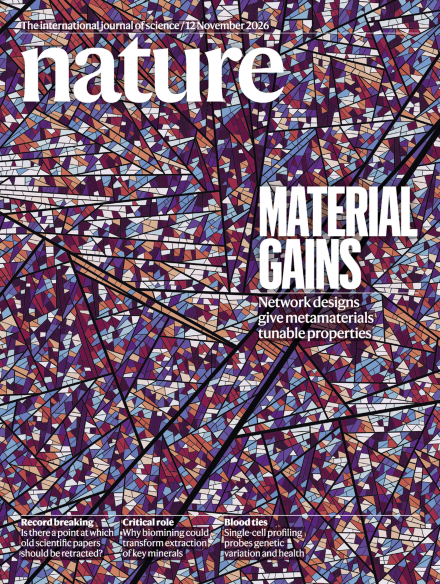
NATURE MAGAZINE NOVEMBER 12, 2026

Volume 659 Issue 8140

NATURE MAGAZINE: The latest issue features ‘MATERIAL GAINS’ – Network designs give metamaterials tunable properties….

Cholera bacterium’s good deed: inspiring a glue with rare properties

An adhesive that binds strongly even under water was inspired by a protein made by a feared pathogen.

First-of-its-kind planetary wreckage holds clues to our Solar System’s fate

Astronomers spot an unprecedented double disk of debris around a dead star.

Historic Marburg outbreak hints at long-term viral hideout

Sequencing of Marburg virus collected during Ethiopia’s first outbreak suggests that the pathogen is lurking in East and Central Africa.

Why not to wait even a few minutes before fleeing a tsunami

Simulation shows that hesitating can be the difference between making it to safety and not.

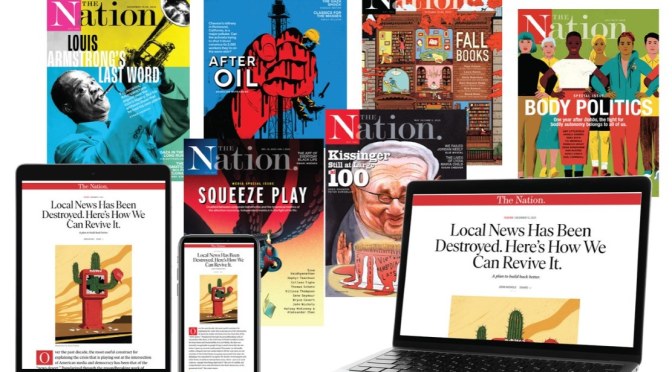
THE NATION MAGAZINE – DECEMBER 2026 PREVIEW

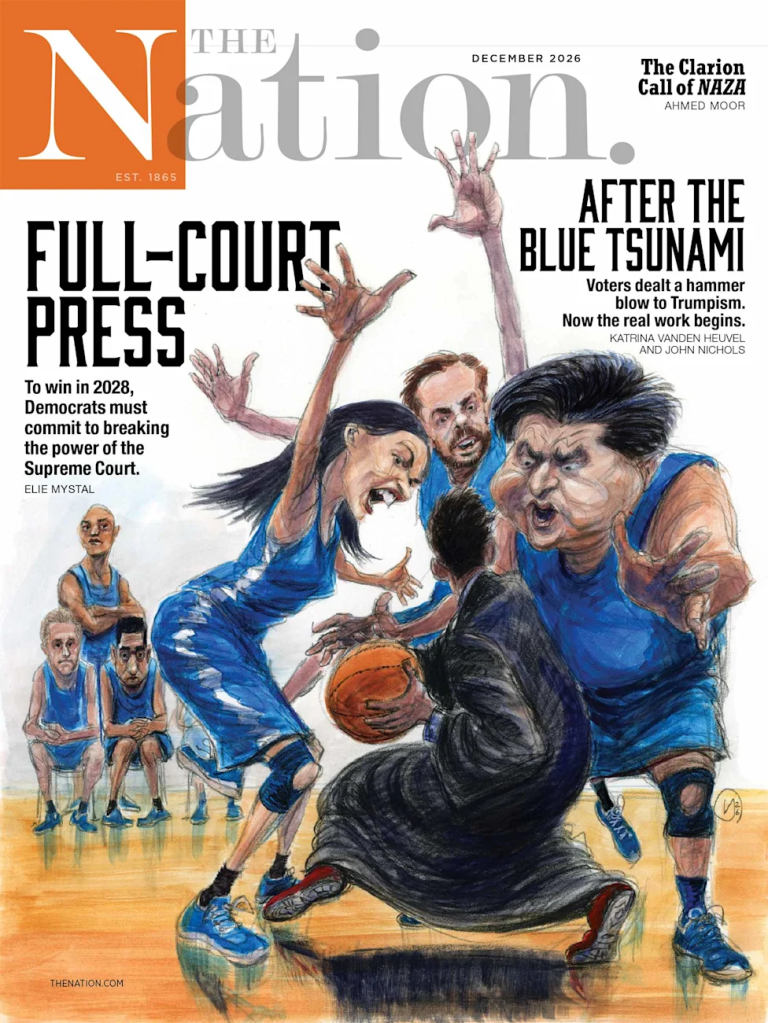
THE NATION MAGAZINE: The latest issue features ‘FULL COURT PRESS’ – To win in 2028, Democrats must commit to breaking the power of the Supreme Court.

Democrats Crushed Trump. Here’s What They Should Do Next.

Seeking facile compromises with Trump is a fool’s mission—and voters who are hungry for change will not accept half-measures.

Inside France’s Biggest Uprising Since 1968

Despite harsh reprisal from the government, students show no sign of stopping.

What We Can Learn From Lula’s Seismic Win

The Brazilian president looked headed for defeat. The Brazilian people had other ideas.

Kamala Harris on Expanding Democratic Power in the South

A conversation with the former vice president about the fight for Democrats in the too-long-neglected South.

THE ATLANTIC MAGAZINE – DECEMBER 2026 PREVIEW

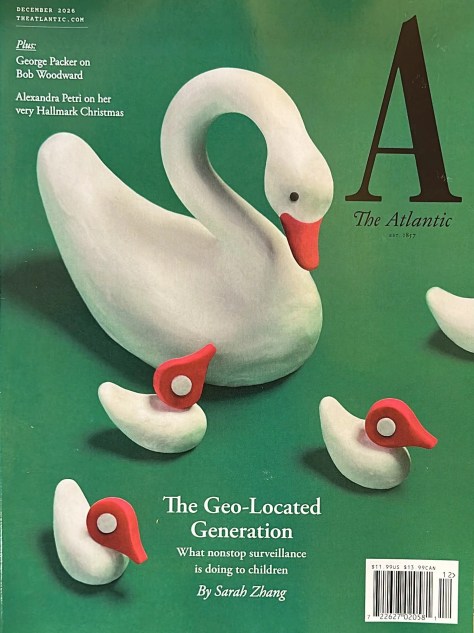
THE ATLANTIC MAGAZINE: The latest issue features “THE GEO-LOCATED GENERATION’ – What nonstop surveillance is doing to children….

What Constant Surveillance Is Doing to Children

And their parents. By Sarah Zhang

In The Atlantic’s December cover story, “The Geo-Located Generation,” staff writer Sarah Zhang explores how constant surveillance is stunting children and making parents paranoid. Parents today can functionally track their children 24/7 from the moment they’re born through adulthood, starting with products such as the Snoo Smart Bassinet and Apple’s AirTags sewn into toddler backpacks and moving to apps such as Find My Friends and Life 360. Zhang examines how this is affecting kids, and namely their resilience and independence––but also how it’s affecting their parents.

Biden: What Trump Did on January 6 ‘Should Follow Him to His Grave’

In an excerpt from his forthcoming book, the former president calls on Americans to defend their democracy. By Joe Biden

The Collapse of America’s Most Consequential Institution

Without a functional Department of Justice, no one can ensure that Americans will be treated equally under the law. By Rachel Maddow

The One Source Bob Woodward Can’t Get to Talk

In a new memoir, the legendary reporter reveals his methods—but little of himself. By George Packer

THE NEW YORKER MAGAZINE NOVEMBER 16, 2026 PREVIEW

Image may contain Edward Maya Beatriz Merino Book Publication Comics Person Baby Adult Face and Head

THE NEW YORKER MAGAZINE: The latest issue cover features ‘Barry Blitt’s “Sea Change”

Breaking the Decade-Long Trump Fever

The President’s unique brand of lurid authoritarianism has finally lost appeal, and he has lost the plot. By David Remnick

Can American Socialism Survive Its Success?

The movement has often seen its ideas flourish as its organizations withered. Will today’s resurgence follow the same course?

The Ubiquitous Melancholy of Max Richter

The composer’s song “On the Nature of Daylight” has popped up in countless sob fests including “Arrival” and “Hamnet.” With billions of streams, he’s become one of the most popular and successful composers of our time.

An N.B.A. Player Got Hooked on Sports Betting. Soon, He Became the Bet

Jontay Porter got deep into FanDuel, and in debt to the wrong people. The only way out, it seemed, was to gamble on himself.

WHAT ARE WE LOOKING AT?

The Week in

International Art

The art world, framed
Collection · Saleroom · Trompe-l’œil · Afterimage

Sunday, November 8, 2026 · Issue No. 2

Covering November 1–7

The Permanent Collection — What will still matter in five years

1

A court unsells a Pissarro

On Thursday, a French court ordered that a Camille Pissarro painting sold at Sotheby’s in London be returned to the heirs of its prewar owner, and that the sale be cancelled. Darse de pêche et bassin Duquesne (1902), a view of the port of Dieppe, belonged from 1935 to Salomon Flavian, a Jewish banker. The court found that the Nazis looted it in Paris in 1941, as recorded in France’s 1947 register of looted property. A study backed by Sotheby’s and Mondex, a Toronto restitution firm, argued that the painting had left Flavian’s hands before the war. The court found no convincing evidence of that. Sotheby’s sold it in June 2024 for £1.2 million under a settlement that, according to the heirs’ lawyer, only two of Flavian’s relatives had signed. Under French law, cancelling the 1941 seizure voids every sale that followed. Sotheby’s now has two months to reveal the buyer’s full identity or pay €1,000 a day. The house says it is “disappointed,” disputes the court’s reach over a sale made in London, and is considering joining Mondex’s appeal. “It is a very important ruling,” said Corinne Hershkovitch, the heirs’ lawyer. Two days earlier, The Art Newspaper reported that Italy is moving toward a restitution panel of its own. A bill before parliament would create a five-member committee to rule, within 180 days, on art confiscated or sold under racial persecution between 1933 and 1945, with no statute of limitations. Italy has “barely scratched the surface” on Holocaust restitution, said Gideon Taylor of the World Jewish Restitution Organization.

Why it lasts: an auction sale used to be the end of a painting’s story. This ruling says a sale can be undone years later, in another country. If it survives appeal, anyone selling a work with a gap in its wartime history will have to weigh that risk.

2

The dead leave the display case

Glasgow’s Kelvingrove Art Gallery and Museum has taken the mummified remains of an Egyptian priest named Nekht off public view, and Glasgow Life, the charity that runs the city’s museums, has received a request to return them to Egypt. It hasn’t said who made the request. Under a draft policy, Glasgow will show human remains only with documented consent from the dead or, where appropriate, their descendants. Without that consent, a spokesperson said, removing ancient Egyptian remains from display is “more respectful to the deceased individuals.” A mummified head, foot and hand from the Valley of the Kings have also come down, and remains at the St Mungo Museum are next. At the University of Glasgow’s Hunterian, the open sarcophagus of Lady Shep-En-Hor has been covered. Not everyone agrees. Stuart Robertson, former director of the Charles Rennie Mackintosh Society, called the consent test “an absurd and impossible standard.” In Germany, on Tuesday, the Museum Wiesbaden will hand ten skulls to representatives of the Indonesian government. They were sent home in the 19th century by Ernst Albert Fritze, a military doctor from Hesse who served the Dutch in their East Indies colony from 1817. Hesse’s culture ministry says it is the first time human remains have been returned from Germany to Indonesia.

Why it lasts: for generations, mummies have been a staple of Western museums. The question now is not only who owns the dead but whether they should be looked at at all. Once one major city answers no, others will be asked the same question.

3

Rome plans a museum for a fascist modernist

Italy’s culture ministry has unveiled plans for a state museum devoted to Mario Sironi, a leading Italian modernist and a committed fascist. It is due to open next year in Rome, in the 1928 headquarters of the national association of disabled war veterans. That monumental fascist-era building already holds two Sironi frescoes, one of them showing Mussolini on horseback. The museum will show 30 works the ministry recently bought from the Mario Sironi Archive and 90 more on loan from it. Culture minister Alessandro Giuli calls it “the defining achievement of my term in office.” Sironi joined the fascist movement in 1919 and drew more than 1,700 cartoons and illustrations for Mussolini’s newspaper, Il Popolo d’Italia. His work runs from Futurism to the regime’s monumental commissions. Tomaso Montanari, an art historian on the museum’s scientific committee, doesn’t oppose the project. He says its materials “must make clear that there is no endorsement of fascism,” and that the ministry has only “partially” accepted his call to show work from other periods. Another committee member, Fabio Benzi, warned of “legitimising a certain authoritarian aesthetic under the guise of cultural rediscovery.” The museum’s press materials, The Art Newspaper notes, don’t mention fascism or Mussolini.

Why it lasts: every country with a dictatorship in its past has to decide how to show the art made for it. A state museum is the strongest statement a government can make about an artist, and the wall texts in Rome will be read closely, in Italy and abroad.

The Saleroom — Where collectors are betting

Two markets, one week

Christie’s first fine-art auction in Abu Dhabi, last Sunday, made $8.94 million with fees, from 70 works by 58 artists from 13 countries. The top lot, Monir Shahroudy Farmanfarmaian’s Variations on the Hexagon (2006), sold for $844,800 after almost seven minutes of bidding, more than three times its high estimate. Christie’s says 37 percent of those taking part were new to the house, and it announced nine auction records, though Art in Context points out that only three are outright artist records and four are artists’ first sales at auction. “This is only the beginning,” said Anthea Peers, Christie’s president for Europe, the Middle East and Africa. In Vienna, meanwhile, four galleries are closing or leaving, among them Exile, after 18 years, and Eva Presenhuber’s Vienna space. “There are simply no new collectors emerging,” said Exile’s Christian Siekmeier. Canada’s dealers are losing their biggest market. US tariffs of 50 percent on Canadian paintings, sculpture and prints, in force since August, have led Macaulay & Co to drop a Miami fair in December, and Vancouver’s Equinox Gallery expects its US sales, about 15 percent of the total, to fall to zero. The bigger test comes in New York, where the November auctions begin on November 16. At Christie’s the next night, a Kandinsky and a Klimt are each estimated at $60 million to $80 million.

What it’s worth: the money is moving, not disappearing. New buyers are turning up in the Gulf while the middle of the gallery business thins out in Europe and Canada. The New York sales will show whether the top of the market is as strong as Abu Dhabi suggests.

Trompe-l’œil — Looks new. Isn’t.

Picasso, in silver

In 1955, Picasso asked François Hugo, a goldsmith in Aix-en-Provence, to make plates in silver from designs Picasso had made for ceramics in Vallauris. Seventy years later, sets of those plates, and gold medallions too, keep appearing for sale, worth millions of euros in all. Sotheby’s London sold a complete set of 24 silver plates for £1.4 million in 2021. The first alarm came in 2023 from Mona, the museum in Tasmania, about plates it had bought at Sotheby’s. In March, Paloma Ruiz-Picasso filed a complaint on behalf of nine heirs alleging fraud, counterfeiting, forgery and concealment. It names no suspects. The Picasso Administration says it has found at least 17 suspect sets, hundreds of pieces in all, and a court in Aix-en-Provence has opened a preliminary criminal investigation, The Art Newspaper reported on Thursday. Nicolas Hugo, the goldsmith’s grandson, says the right to reproduce the pieces disappeared with them, and that anything from his father’s and grandfather’s time is too old to prosecute. It hangs here not because the sums are small. They aren’t. It hangs here because the complaint is eight months old, the investigation has barely begun and no one has been charged. For now, it is a story about how much a famous name can make a silver plate look like a Picasso.

Vernissage — Doors opening this week

Powerhouse Parramatta, Sydney. After nearly 15 years and A$915 million, Sydney’s new arts and science museum opened on Saturday on a former car park in the city’s west. More than 3,000 objects fill its column-free galleries in five opening shows, among them Es Devlin’s The Turning and Task Eternal, on flight and space, made with the Smithsonian and the British Museum. About 25,000 people registered for opening-weekend events, SBS reported. “This place will become a cultural backbone for Western Sydney,” said acting chief executive Abbie Galvin. She is acting because chief executive Lisa Havilah stepped down in August amid misconduct allegations, which she denies, while a law firm investigates a whistleblower’s claims about governance and procurement. The old Powerhouse in Ultimo closed in 2024 for a A$300 million rebuild.

Art Dhaka, Bangladesh. Bangladesh’s first art fair opened on Friday in Aloki, a former garment factory turned cultural hub, under the slogan “Art for All.” It runs until Tuesday. Dhaka has only a handful of commercial galleries, and the country is still settling after the 2024 fall of Sheikh Hasina’s government. “We don’t have a strong gallery system,” said co-founder Durjoy Rahman.

Farewells

Miquel Navarro, 81, died on November 1. Inspired by his hometown of Mislata, near Valencia, he built imaginary cities from hundreds of geometric forms that visitors could walk through. He represented Spain at the 1986 Venice Biennale, and his public sculptures include La Pantera Rosa (1984) in Valencia.

Fernando Calvillo, 45, community relations director of the Oklahoma Visual Arts Coalition, died in the October 28 high-speed train crash near Urda, in Spain’s Toledo province. Born in Aguascalientes, Mexico, he was an artist and a connector of artists in Oklahoma City. His husband, Lawrence Naff, survived.

Afterimage

John Berger was born a hundred years ago on Thursday. In Ways of Seeing, the 1972 book that grew out of his television series, he wrote that “the way we see things is affected by what we know or what we believe.” This week tested that sentence everywhere. The Pissarro view of Dieppe is the same canvas that sold in London in 2024. Now that a court has called it loot, it is a different object. In Rome, a fresco of Mussolini on horseback will read as history or as homage, depending on the words on the wall beside it. In Glasgow, a priest named Nekht, shown for years as an exhibit, is now treated as a person who never agreed to be seen. Even a silver plate looks different once you know who might have made it. Berger believed that looking is never innocent. A century after his birth, museums are starting to agree.

Before You Leave the Gallery

Once you know a painting’s history, can you ever see it the same way again?

Sourced this week from The Art Newspaper, ITV News, taz, The National, Art in Context, The Art Insider, ABC News, SBS News, Hyperallergic and Mexico News Daily.

— The Editors, Intellicurious —

THE NEW YORK TIMES MAGAZINE – NOV. 8, 2026

Current cover

THE NEW YORK TIMES MAGAZINE: The 11.8.26 Issue features Emily Bazelon moderates a discussion of experts on how companies should regulate A.I.; Jon Caramanica on the livestreamer IShowSpeed; Wesley Morgan on veterans who have become podcasters; and more.

Like Trump, Netanyahu Finds the Limits to Fear-Mongering

By leaning into nativist absolutism, Netanyahu almost doubled the Arab vote, creating a political — and foundational — crisis for Israel.By Roger Cohen

In 1995, Itamar Ben-Gvir appeared on camera brandishing the hood ornament of the Israeli prime minister Yitzhak Rabin’s Cadillac. “We got to his car,” he vowed, “and we’ll get him, too.” Soon after, in one of history’s most successful assassinations, Rabin was killed by a fanatical religious-nationalist Jew, and 27 years later the teenage hoodlum who boasted of his theft became Israel’s minister of national security.

There is perhaps no better representation of Israel’s steady march rightward over the past three decades than the ascent of Ben-Gvir to the high office he still holds. The vandal became responsible for preventing vandalism, the ethnocentric fanatic for stopping sectarian violence. This unhappy outcome, and its predictable consequences, reflects the nationalist and more messianic country that Israel has become as the idea of a two-state peace, the ultimate target of Rabin’s assassination, withered and died.

Even the Worst Job on the Internet Isn’t Safe From A.I.

There used to be an honorable way to try to profit from online infamy: selling nearly worthless memecoins. The machines could take it over. By Willy Staley

I’m not afraid to admit it, right here in the newspaper: It finally happened to me. I saw an A.I. video, and I thought — if that’s the right word — it was real. It showed a guy standing on a street corner somewhere in Europe, with an insane haircut and a houndstooth suit, shadowboxing while a French rap song played in the background. In his misplaced confidence and swagger, he called to mind a protomemetic figure from my youth, Napoleon Dynamite.

This was Jean Phil, someone who — as far as anyone can tell — doesn’t exist. Has never existed. Was conjured from a bunch of NVIDIA chips in a low-slung building outside of Kenosha.

You Don’t Need to Be a Gambler to Be on ‘Tilt’

The term captures the self-defeating loop of losing and not being able to stop. It also describes doomscrolling, politics and our society’s default state. By Mitch Therieau

What Should the Rules for A.I. Companies Actually Be? We Asked the Experts.

Five experts on how best to limit a rapidly evolving technology.
By Emily Bazelon

Oct. 26, 2026

Artificial intelligence is alarming many of its human creators by leaping the guardrails designed to contain it. In the last few months, safety researchers have resigned from OpenAI and Anthropic, warning that their former employers could be courting disaster: A.I. that escapes our control irrevocably. The companies are reportedly gaming out scenarios of a catastrophic cyberattack or other event in the next six to 12 months.