Tag Archives: Nature Magazine

NATURE MAGAZINE NOVEMBER 5, 2026

Volume 659 Issue 8139

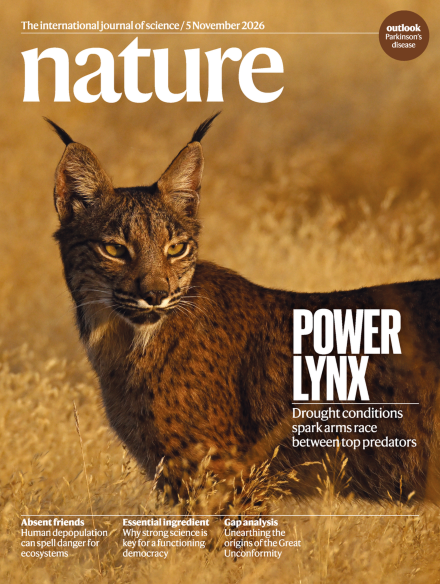
NATURE MAGAZINE: The latest issue features ‘POWER LYNX’ – Drought conditions spark arms race between top predators…

Even stupendous black holes can’t explain dark matter

The theoretical objects would have left a larger imprint on cosmic radiation if they were a source of the invisible force pulling together the galaxies.

Barn owls’ ancestors made a transatlantic flight

Genomic analysis shows that the owls spread from Eurasia to the Caribbean, then colonized the rest of the Western Hemisphere.

Measles made a stealthy return as another virus took the spotlight

Vaccination rates dropped after the COVID-19 pandemic disrupted public-health programmes and their funding.

Methane emissions remain flat even as biggest US oil region opens the tap

Output of the greenhouse gas from the Permian Basin has remained near constant over a period during which oil and gas production tripled.
NATURE MAGAZINE – OCTOBER 29, 2026

Volume 658 Issue 8138

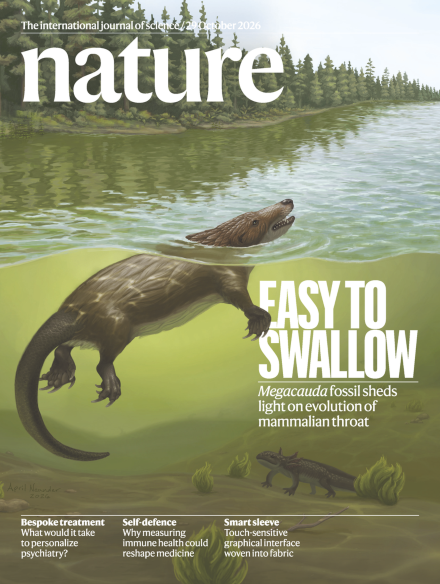
NATURE MAGAZINE: The latest issue features ‘EASY TO SWALLOW’ – Megacauda fossil sheds light on evolution of mammalian throat.

AI doctors’ orders come with a sky-high bill

Large language models suggest more tests, referrals and medications than human physicians do, driving up the cost of care.

Surprise! White dwarf stars come in a rainbow of colours

Analysis of some nearby stars shows that, despite their name, these bodies can be pink, yellow and more.

Sleep declines in rural communities after electricity arrives

Scientists tracked the changing sleep patterns of Indigenous people in Argentina who gained access to mains electricity — and smart phones.

Toxic chemicals in fentanyl revealed by speedy technique

Chemical fingerprinting charts the rises and declines of specific adulterants in illicit supplies of the drug.

NATURE MAGAZINE – OCTOBER 22, 2026

Volume 658 Issue 8137

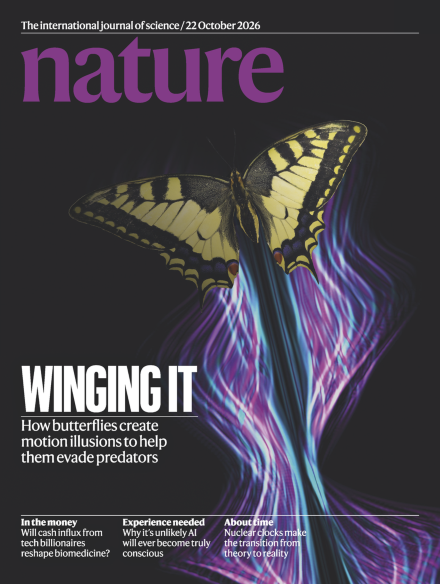
NATURE MAGAZINE: The latest issue features ‘WINGING IT’ – How butterflies create motion illusions to help them evade predators.

Light and mirrors move large quantum computers closer to reality

Scientists improve photon-collecting device that could be used to connect multiple quantum-computing arrays.

Lead-tainted teeth reveal medieval mines’ unequal toll

Burials in the United Kingdom’s Peak District, one of Europe’s largest lead-production regions in centuries past, hint at social inequality.

Orangutan mothers arrange play dates for their babies

Solitary primates spend energy and time travelling to patches of forest for get-togethers.

Growing plane and ship traffic degrade the air of western North America

Pollution from transport across the Pacific Ocean is raising ozone levels above a region whose own emissions have dropped.

NATURE MAGAZINE – OCTOBER 15, 2026

Volume 658 Issue 8136

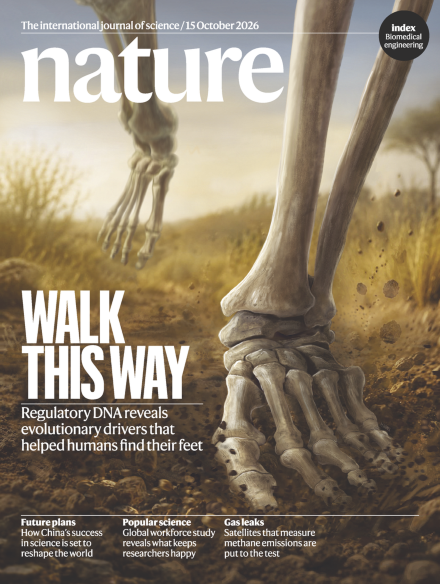
NATURE MAGAZINE: The latest issue features ‘WALK THIS WAY’ – Regulatory DNA reveals evolutionary drivers that helped humans find their feet…

Chimp and gorilla brains resist weight loss with age — unlike human brains

The relatively short lifespans of non-human great apes might explain why their brain mass is maintained in later life

Breaking down nerve-cell scaffold relieves chronic pain in mice

Results could help researchers to develop painkillers that are safer and more effective than existing treatments.

Unprecedented hole opened up in Antarctic winter sea ice

‘Rivers in the sky’ helped to keep an expanse of water roughly as big as Portugal ice-free.

The Solar System could die one billion times earlier than thought

Modelling suggests that the planets’ orbits will become destabilized inside one billion years once the Sun starts to shed mass.

NATURE MAGAZINE – OCTOBER 8, 2026

Volume 658 Issue 8135

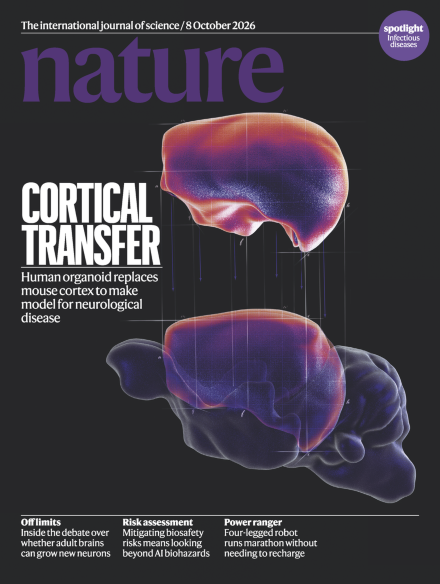
NATURE MAGAZINE: The latest issue features ‘Cortical Transfer’ – Human organoid replaces mouse cortex to make model for neurological disease.

Location, location, location: how to edit genes only in the cells you want

Gene-editing CRISPR enzymes controlled by light and sound target tissues of interest. Research Highlight

A black hole’s jets have a halo effect

Observations confirm jets’ expected effect on the gas cloud that surrounds a galaxy. Research Highlight

Who’s the loudest of them all? The bare-throated bellbird vies for the prize

The bellbird’s extra-large gape helps it to achieve pneumatic-drill-level volume. Research Highlight

Emissions after the Paris accord made Europe’s heatwaves more severe

A heatwave in 2025 would have been one-third of a degree cooler without the greenhouse gases released since 2015.

NATURE MAGAZINE – OCTOBER 1, 2026

Volume 658 Issue 8134

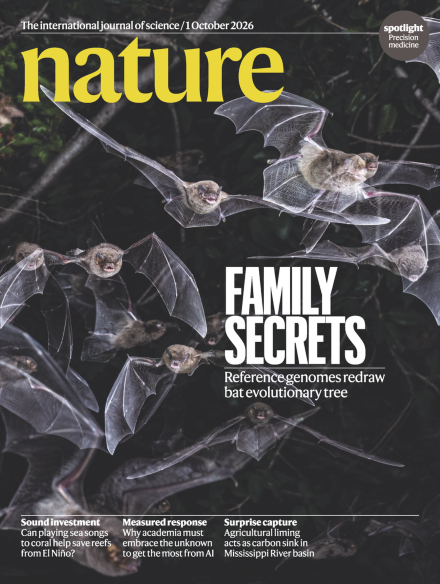
NATURE MAGAZINE: The latest issue features ‘Family Secrets’ – Reference genomes redraw bat evolutionary tree.

Huge hoard of metal bars hints at vast Iron Age trade

One-tonne cache of iron is the largest ever found — and enough to make roughly 500 swords. Research Highlight 23 Sept 2026

Youthful fans of YouTube sports videos stick to the sofa

University students who are highly motivated to watch sports online do not report higher participation in exercise. Research Highlight 24 Sept 2026

Dust in the wind is on the decline

The global decrease in atmospheric dust might be affecting Earth’s temperature. Research Highlight 22 Sept 2026

Bumblebees don’t mind a little plastic in their honeypots

Insects show off their adaptability by incorporating unfamiliar construction materials to build honey-storage vessels.

NATURE MAGAZINE – SEPTEMBER 24, 2026

Volume 657 Issue 8133

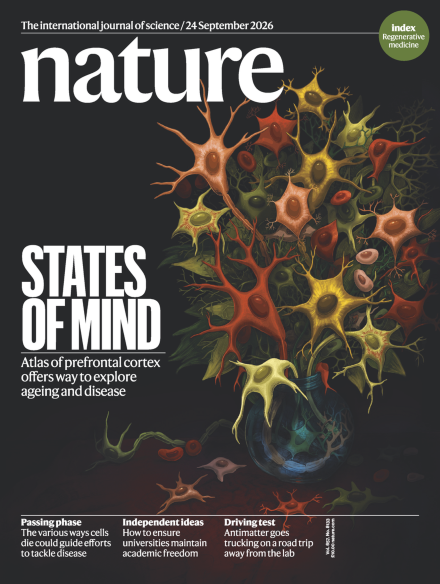
NATURE MAGAZINE: The latest issue features ‘STATES OF MIND’ – Atlas of prefrontal cortex offers way to explore ageing and disease.

The worst El Niño in recorded history is brewing — here’s how governments must prepare

From southern Africa to the Amazon, the risks are mounting and the window for action is rapidly closing.

Mercury is shrinking with age — faster than thought

Impacts by space objects have obscured some of the evidence of the planet’s contraction over the past 4.5 billion years.

Why most stars don’t have outbursts like the Sun’s

A strong magnetic field can disrupt a star’s ability to produce the fountains of matter called coronal mass ejections.

Cognitive resilience helps to predict Alzheimer’s dementia

The trait could explain why symptoms vary in severity between people with similar brain pathology.

NATURE MAGAZINE ————- JULY 9, 2026 PREVIEW

Volume 655 Issue 8122

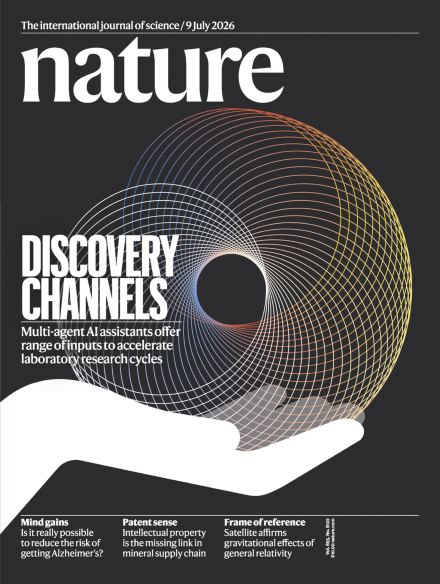
NATURE MAGAZINE: The latest issue features ‘Discovery Channels’ – Multi-agent AI assistants offer range of inputs to accelerate laboratory research cycles….

Ozone erosion started decades before the ozone hole’s discovery

Depletion of the ozone layer has been traced mainly to the widespread use of industrial chlorofluorocarbon chemicals, but there might have been an additional culprit.

Neutrino’s nursery found: the ‘Shadow Blaster’

A particle detected at the South Pole was born in a galaxy that churned out stars when the Universe was young.

Dementia risk in middle-aged people linked to a blood protein

Those under 55 with relatively high levels of the molecule GDF15 had an elevated risk of developing dementia.

Coffee is under threat: how scientists are fighting to save it from extinction

Coffee plants are critically endangered by climate change. Researchers are finding solutions to keep scientists supplied with their favourite discovery fuel.

NATURE MAGAZINE —–MARCH 26, 2026 PREVIEW

Volume 651 Issue 8107

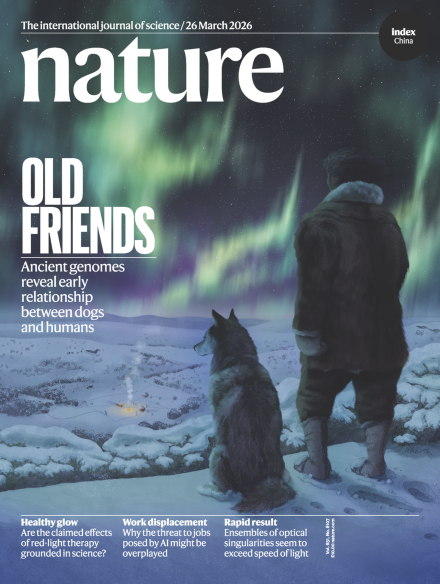
NATURE MAGAZINE: The latest issue features ‘Old Friends’ – Ancient genomes reveal early relationship between dogs and humans…

A single course of antibiotics can cause lingering changes in gut microbes

Microbial diversity loss seen after a course of some commonly prescribed antibiotics can persist for years.

Mighty mini-magnet is low in cost and light on energy use

A compact device can produce a magnetic field that is more than 800,000 times stronger than Earth’s.

Chemical pollutants are rife across the world’s oceans

Compounds that are used to make plastics and personal-care products were found in all types of marine environment, a meta-analysis shows.

Strength persists after a mid-life course of obesity drugs

Muscle mass increased or remained stable relative to body weight in middle-aged mice and humans on GLP-1 drugs.

NATURE MAGAZINE – FEBRUARY 5, 2026

Volume 650 Issue 8100

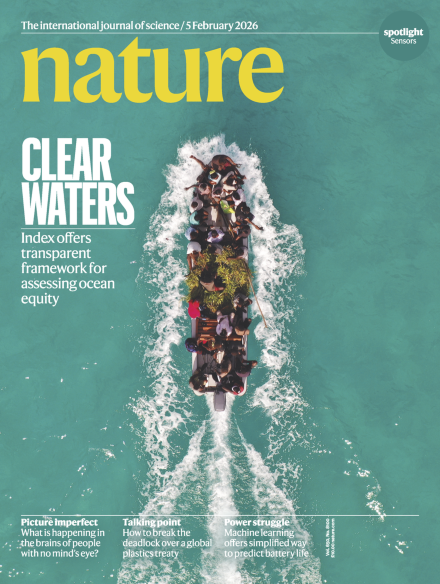
NATURE MAGAZINE: The latest issue features ‘Clear Waters’ – Index offers transparent framework for assessing ocean equity…

Genetically engineered ‘stinkweed’ comes up roses for making seed oil

Field pennycress could become a valuable winter crop, with benefits for both carbon storage and farm profitability.

Light-powered bacteria become living chemical factories

Engineered Escherichia coli could open the door to more sustainable routes to new drugs and other chemicals.

Largest galaxy survey yet confirms that the Universe is not clumpy enough

The six-year results from the Dark Energy Survey highlight unresolved tensions in standard cosmological theory.