With Sudan still in the midst of conflict and the largest humanitarian and displacement crisis in the world, this magazine shows the complexity of the crisis and the political dynamics behind the headlines. In collaboration with independent Sudanese media platform Ayin Network, the Big Story explores the impact of the war on civilians, from the interruption of education to how displacement is changing the face of the country. We hear from revolutionaries turned fighters, and activists in exile who can’t escape the war, even outside Sudan’s borders. How does the revolutionary dream continue and what does it mean for the goal of civilian rule?
Also in this edition, a report from Syria on attacks against the Alawite minority, a long read exploring how Palestine became a focus of international anti-colonial solidarity, and is the AI apocalypse really on its way?
TAKE BACK THE LAND
The land beneath our feet is what sustains us – from it we can produce food, construct shelter and build livelihoods. But, it’s also a cultural marker and a source of identity. Its control has been a long-favoured tool of colonizers, wealth hoarders and polluters, while its fiercest protectors – often Indigenous peoples – are criminalized, violated and dispossessed. This edition hears from struggles to take back the land in Brazil, Bangladesh, Kenya and North America. We also launch our new series ‘Decolonize how?’ which will explore what people are doing to dismantle the impacts – and current realities – of British-linked colonialism.
What to expect in the midterms’ wake. By Jim Geraghty
All other things being equal, Donald Trump would rather have a Republican-controlled House and Senate than Democrats in charge of either.
But if the Democrats win a majority in the U.S. House of Representatives in November — which appears likely as of this writing — it may not change the dynamics of this presidency much at all. Trump already acts as if the primary purpose of the House is to applaud during his State of the Union address, and that’s when he has a largely compliant and loyal Republican majority. He has always preferred to do things through executive orders. Passing legislation is arduous and time-consuming and often requires compromise.
What’s a presidential library doing in the North Dakota badlands? By Judson Berger
Medora, N.D. — Spend enough time in Medora, an Old West outpost that leans into a Theodore Roosevelt theme with the approximate restraint of a Cracker Barrel decorator, and you’re bound to encounter the quote: “I never would have been president if it had not been for my experiences in North Dakota.”
REASON MAGAZINE: The latest issue features… Nearly three years ago, Javier Milei became Argentina’s president, promising deep spending cuts, mass layoffs of government workers, and radical change. He’s made impressive progress, but the job isn’t finished.
How Milei Won
It took three ingredients: an offbeat candidate, a bombastic campaign, and a public hungry for something new. By Daniel Raisbeck
Rents, Internet Speeds, and Airfares: 3 Deregulation Success Stories From Milei’s Argentina
Javier Milei is showing the world how deregulation can slash prices and improve services.
Fortunately, we do better on overall economic freedom, despite losing ground.
Politicians may not like it, but the countries they misgovern compete with one another for businesses, people, and capital. To attract startups, entrepreneurs, and investors, governments have to offer attractive environments, or else lose out to friendlier nations. When it comes to tax competitiveness, a new report says that Estonia leads the way in first position, with the United States lagging at 17th.
Jorge Luis Borges Against the State
Freedom, literature, and politics in the work of Jorge Luis Borges By Alejandara M. Salinas
MIT TECHNOLOGY REVIEW: The Impossible issue features ‘Is it fun to dream about living on the moon or uploading our brains?’ For sure. But questing after the impossible is about way more than pipe dreams. This issue explores what we can do when we have the audacity to push for our most daring goals, from synthesizing blood to building AI with real guardrails. Plus: A bionic eye, the AI companies training models with dead startups’ data, and more.
Some transformative technologies have been “coming soon” for years. We ran progress reports on six big ideas to see how close they are to reality.
We ran progress reports on six potentially transformative technologies and ideas that have been “just around the corner” for years or, in some cases, decades. We called up experts with a bird’s-eye view of the fields to get a sense of what’s holding things back, and we chatted with folks running the studies, crunching the data, and building the prototypes that could make these dreams into realities. Then we placed each idea on a progress meter ranging from 0 to 10—0 being “We don’t even know where to begin” and 10 being “We did it!”
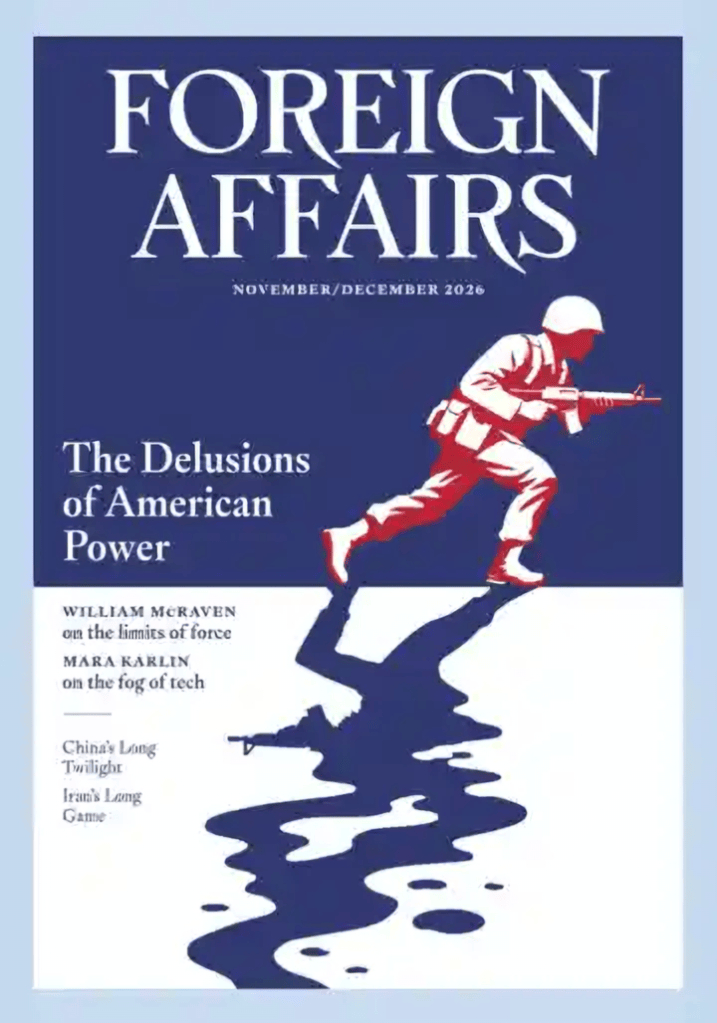
The war in Iran is far from the first time that U.S. policymakers have failed to appreciate the limits of American power. But the Trump administration’s use of military force against the Islamic Republic since February 28 offers a particularly glaring example of a mistake that has often characterized American strategy in recent decades. The war was launched without a clear rationale and with a constantly shifting set of objectives—from changing Tehran’s regime and squelching its nuclear ambitions to, more recently, reopening the Strait of Hormuz, which wasn’t closed until the war started. The results, not surprisingly, have been bad both for U.S. interests and for the Middle East.
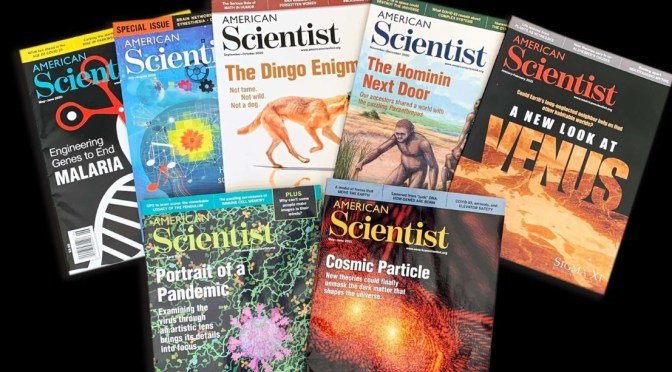
In the early 2000s, geneticists Helen Hobbs and Jonathan Cohen at the University of Texas Southwestern Medical Center launched an ambitious effort to investigate cardiovascular health in Dallas County. Their study was unusual for the time. Rather than largely focusing on people of European ancestry, the Dallas Heart Study deliberately recruited a diverse population that reflected the region’s demographics.
QUICK TAKE
Rare genetic changes in a gene called PCSK9 help control low-density lipoprotein (LDL) cholesterol, the “bad” cholesterol linked to heart disease.
People who naturally make less of the PCSK9 protein have much lower LDL levels, pointing researchers toward new possibilities for lowering cholesterol.
That insight led to a new class of cholesterol-lowering drugs and showed how studying diverse populations can uncover important clues about disease.
I spent much of my childhood in Colorado, which means that I, like millions of others living in the American West, grew up hearing warnings about the dangers of plague. People often find it shocking to learn that Yersinia pestis, the bacterium discovered in 1894 that is believed to have caused the mid-14th-century Black Death and other plague pandemics, is still around and dangerous, but that is one of many misperceptions about plague that need correcting. Plague’s multiple pandemics were not limited to the Black Death nor to Europe. And it is not a disease that disappears simply because no human cases are being reported at epidemic levels. Plague is not a thing of the past, and infections most definitely occur to this day.
QUICK TAKE
For centuries, our understanding of plague was riddled with assumptions based on a few historical accounts and data from modern plague victims.
Advances in genomics and bioarcheology now allow us to tie historical plague pandemics to human remains and even reconstruct the full plague family tree.
These data tell a new, broader story in which plague arrives earlier, stays later, and lurks in rural animal reservoirs before spilling over into human populations.
Seeking and evaluating explanations can shape the very process of learning. Just like tasting the soup as you’re cooking can shift the final product toward a closer approximation of soupy perfection, explaining as you learn can change the course of learning itself, pushing you to find a closer approximation of a truly great explanation: one that covers all the relevant observations in the simplest way possible. But how does that work?
QUICK TAKE
The process of explaining is a powerful learning tool.From a young age, humans ask “why”; answering that question can reveal deeper meanings and reveal hidden patterns.
Explaining can unlock abstraction, a complex thought process that allows people to generalize from specific examples to identify common themes.
The need to know why can unlock learning, but it can also drive some people to latch on to patterns that do not exist, such as conspiracy theories.
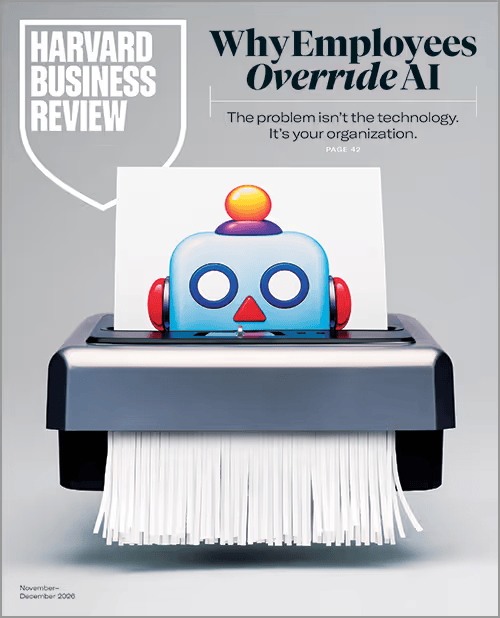
It’s not that they don’t trust the technology. It’s that they don’t trust your organization.
Summary
Companies are deploying AI systems faster than they are redesigning the governance surrounding them. As a result, many AI systems remain permanent advisers rather than actual decision-makers—not because the technology falls short but because the…more
In late 2022 a global bank approved an AI system designed to automate routine credit decisions. On paper it looked exactly like the kind of forward-thinking move experts had been urging companies to make. In pilots the system processed applications faster than humans did, reduced errors, and promised meaningful cost savings. The risk management team signed off on it, compliance approved it, and the CEO touted it publicly as proof that the bank was leaning into the future.