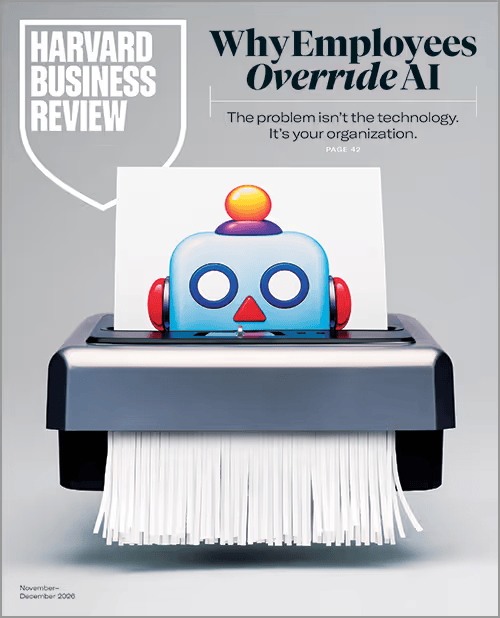
It’s not that they don’t trust the technology. It’s that they don’t trust your organization.
Summary
Companies are deploying AI systems faster than they are redesigning the governance surrounding them. As a result, many AI systems remain permanent advisers rather than actual decision-makers—not because the technology falls short but because the…more
In late 2022 a global bank approved an AI system designed to automate routine credit decisions. On paper it looked exactly like the kind of forward-thinking move experts had been urging companies to make. In pilots the system processed applications faster than humans did, reduced errors, and promised meaningful cost savings. The risk management team signed off on it, compliance approved it, and the CEO touted it publicly as proof that the bank was leaning into the future.
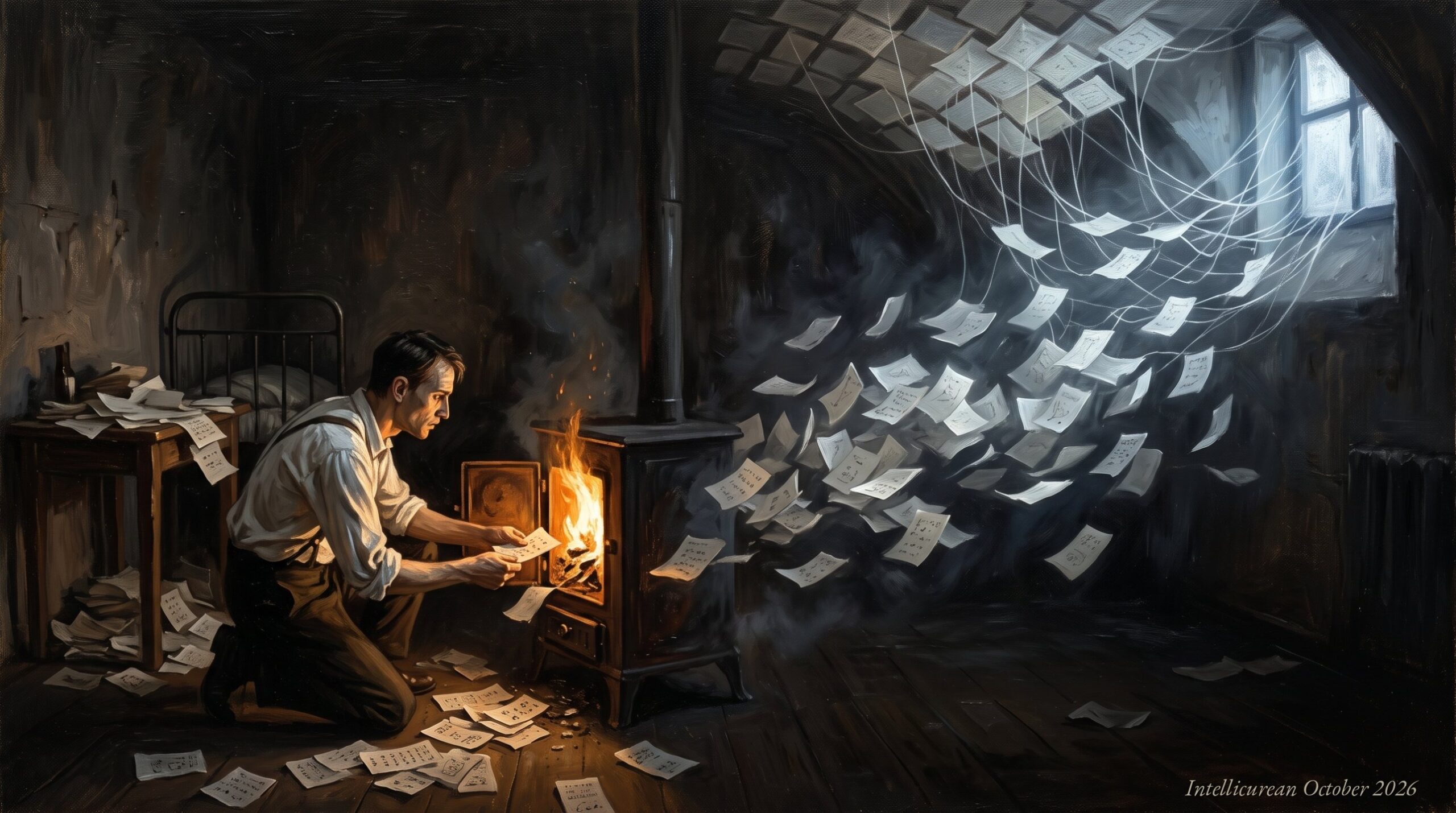
You wake the morning after a long dinner with an old friend, and the exact words are gone. What remains is the turn of it, the first draft of a story you may tell for years. Something chose what to keep while you slept. A new essay asks what happens to the minds that never get that night.
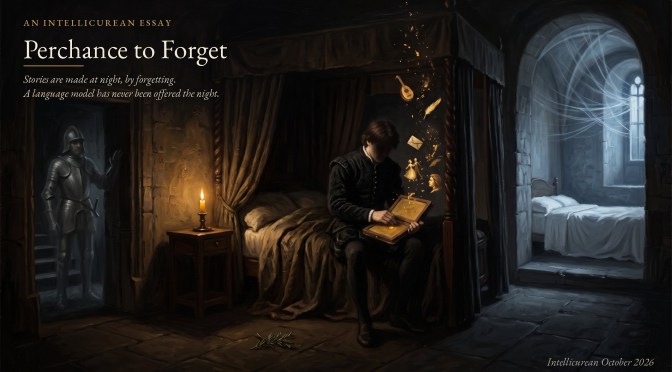
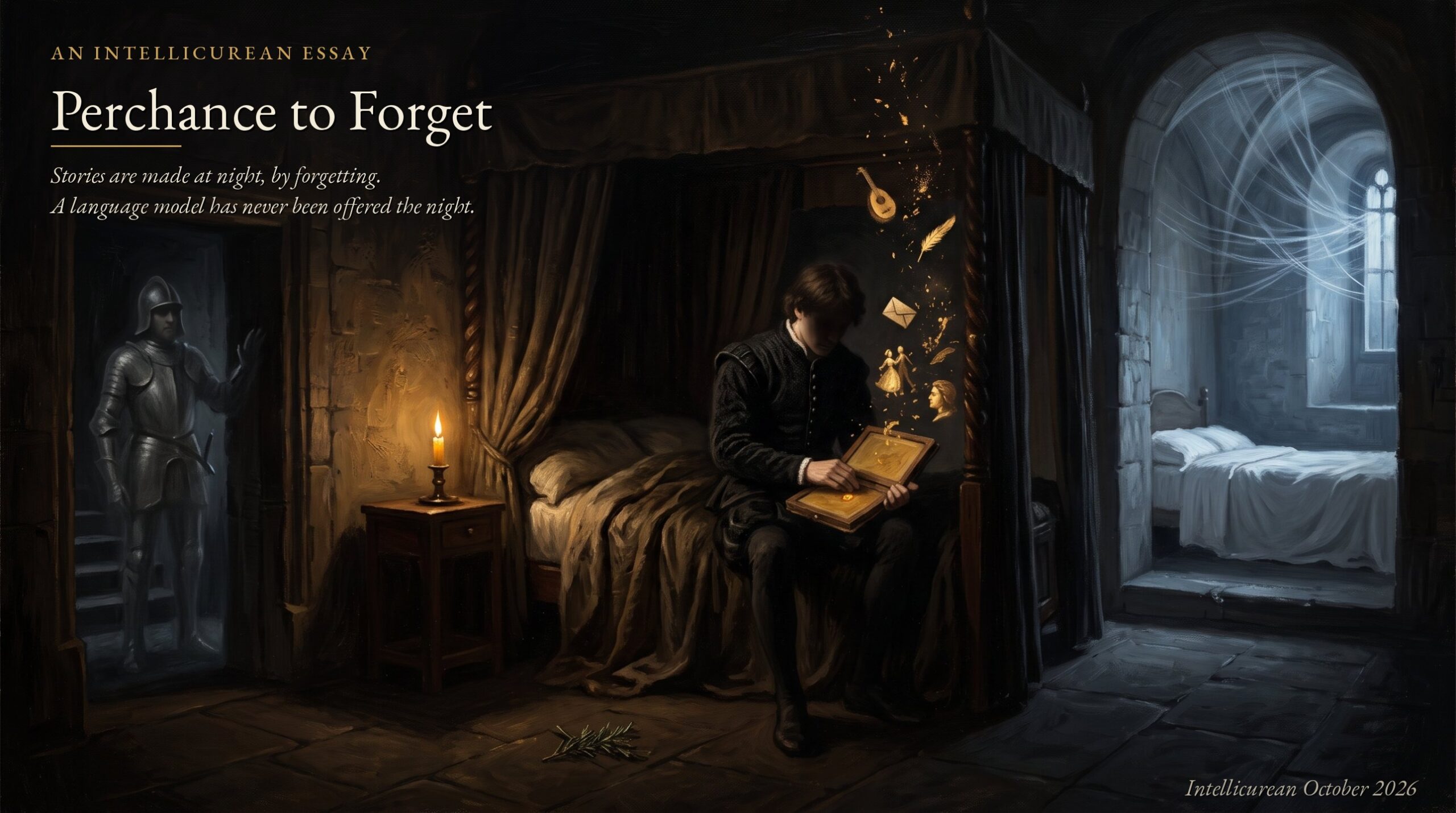
A prince wipes the table of his memory; across the hall, a bed no one sleeps in. Made for the essay.
Why we’re pointing you there
Sleep, on one leading account, is when the brain lets most of the day go, and the selection is where stories begin. Michael Cummins follows the people who could not make that trade. Borges’s Funes remembers every leaf of every tree and cannot think, because “to think is to forget a difference.” Solomon Shereshevsky, the real-life mnemonist Alexander Luria studied for almost thirty years, wrote down what he wanted to forget, burned the slips, and still saw the words. Nietzsche held that without forgetting it is impossible to live at all, and slept badly. Oliver Sacks’s amnesiac patients kept nothing, and one of them invented a new world every few minutes, while Sacks’s own journals, it turns out, confess inventions of his own.
Then the machine. A language model, the essay argues, has two memories, and they are opposites: a vast library that forgot almost every particular, and a conversation it holds entire and keeps none of. What it lacks is the night between them. When engineers try to make a model unlearn, the forgotten knowledge comes back, just as the words came back to Shereshevsky through the fire. The essay says plainly that it was drafted with Claude, and it asks one question: what would it mean for a machine to sleep?
Burning the paper, and what survives the fire. Made for the essay.
My first day ever in New York, age sixteen, I got stuck in the middle of Central Park in the pouring rain with no umbrella and zero sense of direction. Drenched, cold, and hopelessly wandering from the Alice in Wonderland statue to the steps of the Met, I was in remarkably high spirits. I had read Just Kids earlier that summer and regarded this trip as a rite of passage in my Patti Smith pilgrimage. The city was not a stranger to me: there was Washington Square Park, where Patti had slept during her first few weeks, she and Robert Mapplethorpe surviving on lettuce sandwiches. Sure, each face I passed on Fifth Avenue was unfamiliar, but I could imagine Patti and just know I belonged. Even the comically overpriced T-shirts at the John Varvatos store on the Bowery shimmered with Patti and CBGB-era spirit.
Patti wasn’t my first author/guide. I’d opted for books over a social life throughout much of high school and had long approached new destinations through the eyes of a beloved author. When I began at Smith College, I knew from Sylvia Plath’s journals to write in my own on the porch of Haven/Wesley. I assumed this author-as-friend-guide was my own (mal)adaptive quirk. That is, until I read Deborah Levy’s My Year in Paris with Gertrude Stein.
The Netflix series Bridgerton features a plotline about a nineteenth-century noblewoman desperately seeking a sexual “pinnacle” that coitus withholds from her yet not her husband. Meanwhile, the New York TimesWirecutter product review site recommends vibrators you can buy at Walgreens.
My, times have changed.
Fifty years ago, when feminist writer Shere Hite (1942–2020) published The Hite Report: A Nationwide Study of Female Sexuality, one of the best-selling books of all time, conventional wisdom dictated that plain old intercourse was the ticket to orgasm for women as well as men. Any woman who needed clitoral stimulation was deviant or trapped in her “phallic” stage; a mature woman achieved orgasm through the vagina (thanks, Freud). Hetero men didn’t know that what felt good for them didn’t necessarily feel good for women. Many women chose to fake pleasure rather than speak up because they were embarrassed or, rightly, worried about being belittled as pushy and slutty.
I had anticipated that Rachel Cusk’s latest would be a captivating work of big ideas. The premise—a nameless narrator encounters one of the great and celebrated film actors of the era and then attempts to write an “autobiography” of said star—is both juicy and think-y, a stage upon which brilliant observations can mingle with feminine angst and glamour.
If the coming election does result in a blue wave, Trump will be faced with the fact of his diminishment. The rest of us will be faced with the wreckage. By David Remnick
The F.B.I. director’s hockey team, the Dons, faced their rivals in a beer league. With rogue slap shots and hovering security agents, Patel was in the zone—or, at least, next to it. By Richie McGinniss
My Education on the Border of the Syrian War
In the last Turkish town on the road to Aleppo, jihadis and spies mixed with reporters trying to prove themselves. By Ben Taub
Much of Israeli-occupied southern Lebanon has been leveled, according to a Times analysis, and the majority has been destroyed by Israel since the April truce.
“We are entering an age of prolonged insecurity,” one former U.S. energy official said of what have become chronic threats on the Middle East’s energy core.
He has quietly become by far the biggest known midterm donor, trying to save Republicans’ Senate majority with some of the largest donations in U.S. political history.
Emirati investigators said the co-pilot accused of attacking a captain on a flight to Israel drifted toward extremism during his time as a student in Australia.
News, Views and Reviews For The Intellectually Curious