Tag Archives: Autumn 2026

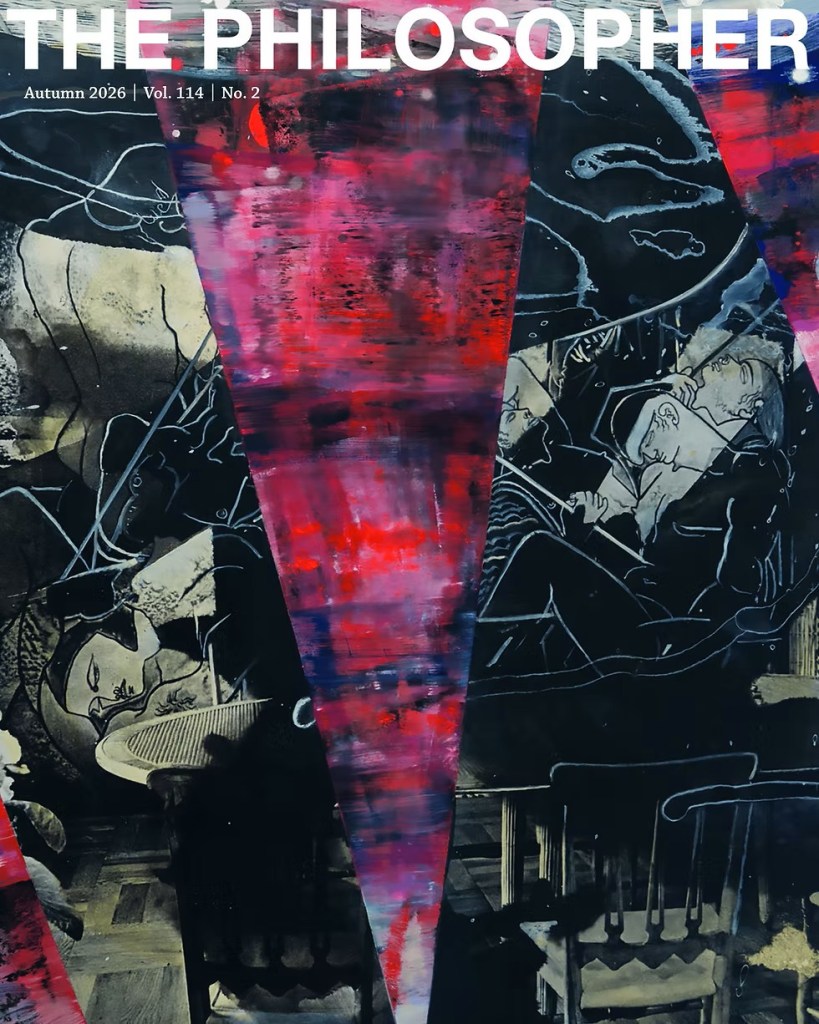
THE PHILOSOPHER MAGAZINE AUTUMN 2026 PREVIEW

​THE PHILOSOPHER MAGAZINE: This collection of essays explores diverse philosophical inquiries into culture, ethics, and human experience. Chloe Romanis uses ectogestation to evaluate the inherent value of pregnancy, while Jorge Sanchez-Perez addresses the methodological challenges of diversifying the philosophical canon through pre-colonial Andean philosophy. Laura Cecile Moore clarifies the boundaries between art and craft. Meena Dhanda advocates using Wittgensteinian reminders against injustice, and Grace Theodoly explores how psychological ideas challenge cognitive neutrality. Finally, Aanuoluwapo F. Sunday applies Yoruba environmental ethics, Tanya de Villiers-Botha maps artificial intelligence ethics, and Helga Varden navigates the complexities of transforming the Kantian tradition from within.

“Thinkers Into Hinkers? Do AI Companies Want Philosophy, or Just Its Compliance?”

An essay by H. Mustafa Akyol

The recent trend of AI companies hiring philosophers has largely been celebrated as a vindication for the discipline. The Economist recently reported that American philosophy graduates now find work at higher rates than their computer science peers, and that leading AI laboratories are recruiting philosophers into senior roles -– not merely to sharpen a model’s chains of reasoning, but to draft the documents, such as Google’s published ‘AI Principles’, that are meant to govern how a system behaves. Where criticism of this trend exists, it has tended to focus on familiar concerns: ethics washing, the risk of philosophy becoming a public-relations exercise, and the migration of talent away from universities that Luciano Floridi has called a ‘haemorrhaging’. These concerns are real. But they may be missing a further, less visible risk, one that has nothing to do with where a philosopher’s paycheck comes from.

“Money”

An Essay by Stefan Eich

There is an old paradox at the heart of money: it seems to work best when left unexamined. When monetary trust holds, we barely notice it and rarely pause to ask what money is or what stands behind it. The moment we do – in monetary crises and periods of inflation – the very act of questioning can accelerate the unraveling. Money has a peculiarly oblique self-referential structure. Monetary systems depend on routine acceptance, on habits of trust that operate beneath conscious reflection. But as we shall see, this does not mean the right response is naïve ignorance or unreflective depoliticisation. Quite the contrary: for money to work reliably as institutionalised collective faith, it must remain anchored in shared social values and that requires the capacity for reflective, democratic engagement with questions of monetary power, who controls credit and, therefore, which futures are allowed to become possible.

“Towards a Critical Theory of Finance”

An Essay by Paul North

I want to propose four ways to think about ‘finance,’ for those who want to critique it. Critics can think of finance as a parasite, as an organ, as an ongoing struggle, or as a decision. In what follows, I will explore these four different ways to think of finance, these different meanings, and the different possibilities they offer for mounting resistance to it.

Let’s divide talk about finance into two sides. Finance has meanings, but it also has a referent. Its referent is pretty evident to anyone who looks into it. Finance refers to economic functions that have to do with credit. The definition of credit is also pretty straightforward. Credit is value advanced on the promise of future increase. This makes it similar in structure to industrial capital, which is also value advanced on the promise of a future increase. The difference between capital and finance is production. Industrial capital receives its increase when value is invested in production. Say I am a capitalist. With my capital, however I obtained it, I found a company that produces microchips. As microchips roll off the line and are sold, the original value I advanced grows because workers work more than they are paid for and in the extra hours they make more microchips than I need in order to pay the costs.
POETRY LONDON MAGAZINE – AUTUMN 2026 PREVIEW

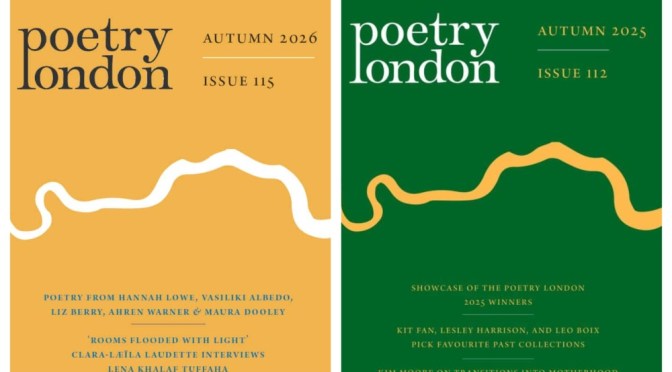
POETRY LONDON MAGAZINE: The latest issue features new work from Liz Berry, Hannah Lowe, Ahren Warner, and Maura Dooley. We also have prose by Joey Connolly, an interview between Clara–Læïla Laudette and Lena Khalaf Tuffaha, and reviews of Helen Mort, Dean Browne, Karen Solie, and Jorie Graham.

Rooms Flooded with Light

Lena Khalaf Tuffaha explains that her poems—written over a decade from a position of relative safety in the US—did not target a specific reader, but rather reflect an evolving, non-linear attempt to communicate across a broad and complex readership profoundly shaped by ongoing trauma and genocide.

Under Pressure

In her new collection Killing Spree, poet Jorie Graham evokes the dual-headed Roman deity Janus to confront a precarious present by looking back at an out-of-reach past while facing a distressing, violent future.

‘it been really interesting is good to talk face to face isn’t it’

Blown Rose and Dialect Press sum up some small press publishing. By Julia Bird, Mike Sims, Juliette Morton

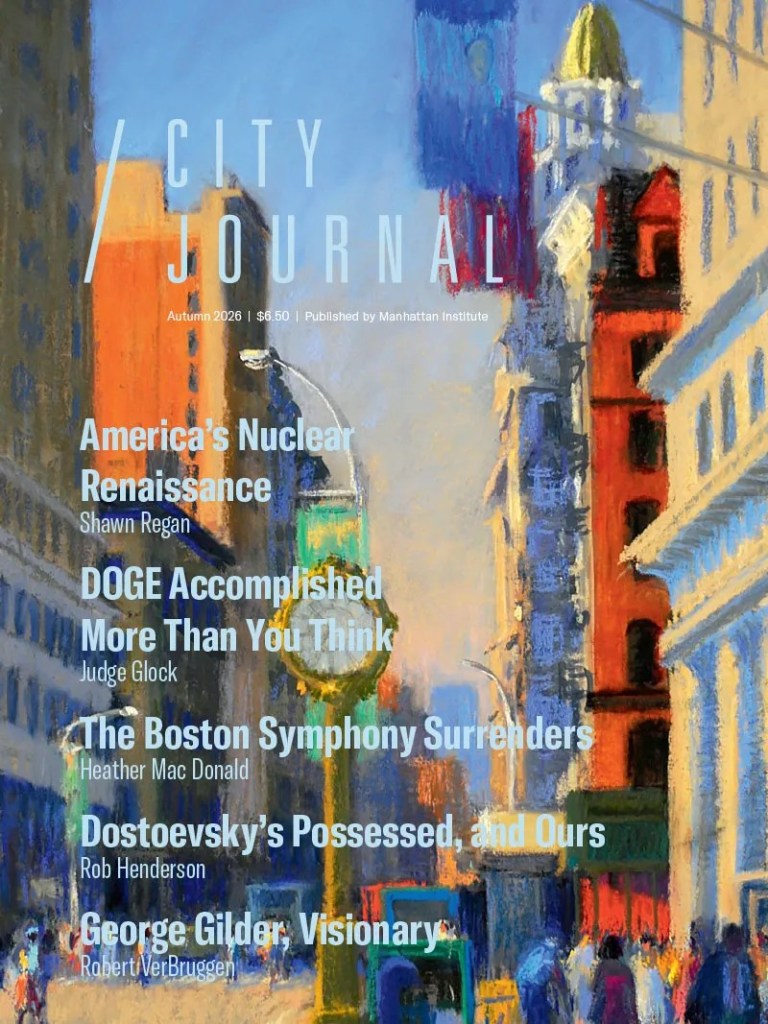
CITY JOURNAL MAGAZINE – AUTUMN 2026 PREVIEW

CITY JOURNAL MAGAZINE: The latest issue surveys pivotal shifts across American technology, governance, and culture, featuring essays on the nuclear energy revival, the impacts of federal civil service cuts, municipal socialism in Chicago, and ideological conflicts in the arts and healthcare.

DEI in Medicine Hurts Black Patients Most

Protocols that regard metrics like BMI as racist or refuse to report drug use in pregnant women are not medically sound.

The Left’s War on Gig

Costly labor mandates are hurting the very workers they’re supposed to help.

Britain’s Crisis of Governance

Small groups of motivated ideologues have imposed their views on a hostile populace.

David Foster Wallace’s Infinite Scroll

The novelist’s 1990s vision of entertainment as addiction is more relevant than ever.

Missionaries to the Jobless

Mormon employment counseling offers everything from resumé writing and networking to moral support and

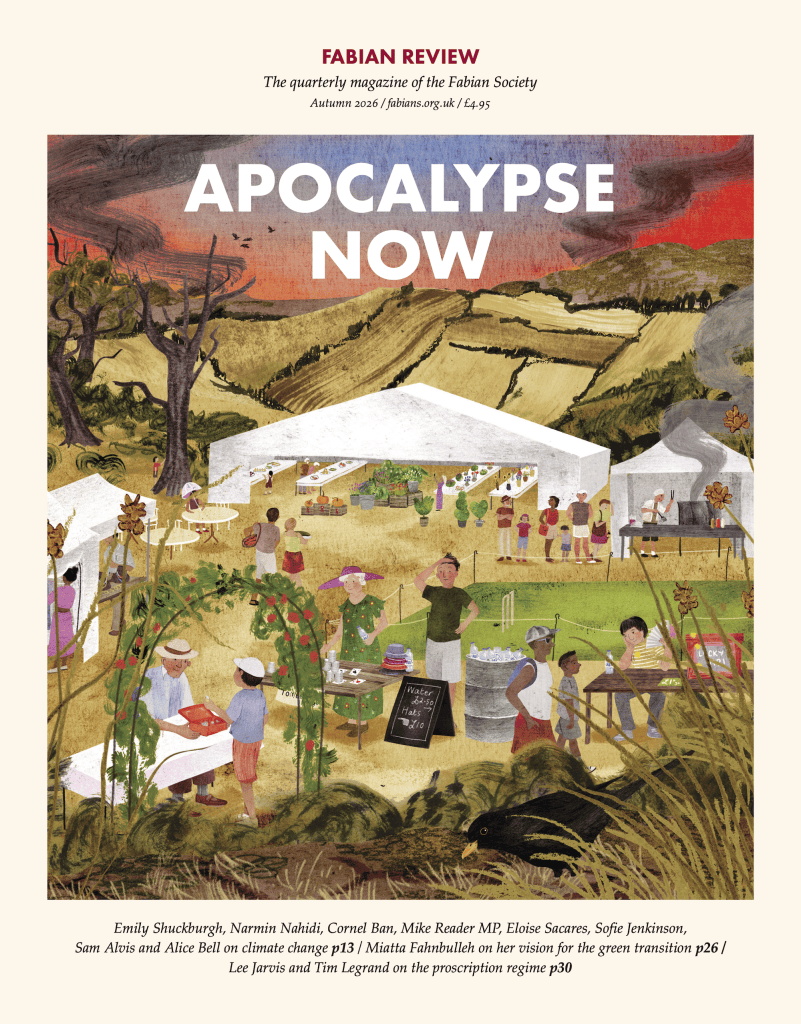
FABIAN REVIEW QUARTERLY MAGAZINE – AUTUMN 2026

FABIAN REVIEW QUARTERLY MAGAZINE: This edition of the Fabian Review centres on the global climate emergency, with contributions from climate experts and an interview with energy secretary Miatta Fahnbulleh MP, alongside pieces on Labour’s vision of freedom, the UK’s proscription regime, LGBTQ+ rights, education, AI in public services, higher education, and Britain’s relationship with Europe.

Cheap medicine

The NHS’s growing use of non-doctors risks creating a two-tier health service, argues Jatinder Hayre

After Aneurin Bevan created the National Health Service in 1948, the principle of universality became firmly embedded in the popular consciousness: illness would no longer divide the British people according to wealth, and the quality of care received in sickness would not depend upon the depth of one’s pockets. Bevan articulated another principle which receives rather less attention today: that the state might finance medicine, but it should not command medical judgement. Doctors needed sufficient professional independence to practise according to the needs of their patients rather than the administrative or financial convenience of the state. Both principles are now being tested – and in some cases, rewritten.

Across the NHS, work historically undertaken by doctors has increasingly been transferred to physician associates (PAs), advanced clinical practitioners (ACPs) and an expanding constellation of other roles. I use “Noctor” as an umbrella term for the phenomenon whereby non-doctors cease to complement doctors and begin to serve as a substitute for them.

The language surrounding this transformation is revealingly anaesthetic: “skill mix”, “workforce transformation”, “new models of care”. These phrases make a profound political choice sound like an administrative rearrangement. Beneath them sits a simple idea: medicine can be dismantled into tasks, those tasks redistributed amongst more rapidly trained practitioners, and the whole reconstructed without meaningful loss.

Green Room

Miatta Fahnbulleh is right about everything. Will it matter? She talks to Iggy Wood about her plan for a green transition that benefits all

In the not-so-distant past, consensus around the need to tackle climate change at least superficially encompassed the entirety of British society. It was the historic party of capital – the Conservatives – who enshrined net zero in law, eliminated coal from Britain’s energy mix, and committed to ending the sale of petrol and diesel cars. Some of the most important progress was made under Boris Johnson, who, while not on the right of the party per se, was a Brexit-supporting populist.

Grid system

Unglamorous electricity grid reforms could be the key to winning on the doorstep

Even Andy Burnham was surprised to get a standing ovation for taking VAT off electricity bills. His plans to address the plight of the industrialist seeking a grid connection did not meet with the same enthusiasm during his first Labour conference speech as prime minister. Yet faster grid access matters far more for bringing down Britain’s high energy costs.

On 29th September, the government announced GB Grid, a new entity under the government’s publicly-owned energy company, GB Energy. Seeded with £4bn of reallocated funding, GB Grid will be able to finance and build grid infrastructure and plans to compete with incumbent providers. Alongside GB Grid, the government announced it would expand self-build connections and accelerate competitive tendering for transmission projects, effectively increasing competitive pressure on networks. This is a refreshing approach to bringing down energy costs, combining a bold public ownership experiment with unglamorous but necessary competition reforms.

THE LAST CONCIERGE MAGAZINE – AUTUMN 2026

THE LAST CONCIERGE MAGAZINE: This issue features cocktail bars with panoramic views and Jane Austen–inspired Regency stays across England, alongside beauty features exploring artisanal scent discovery and British vineyard vinotherapy treatments.

The Jane Austen-Inspired Stays Bringing Regency Britain to Life

With Sense and Sensibility returning to cinemas this month and ‘set-jetting’ on the rise, Britain’s grand Georgian houses are ready for their close-up. From a London townhouse once owned by Jane Austen’s brother to sweeping country estates in Bath, Somerset and Devon, these are the historic stays that bring Austen’s world vividly to life.

Italy’s UNESCO Train Journey: 8 World Heritage Sites Between Turin and Trieste

Travel from Turin to Trieste on one of Europe’s most remarkable rail journeys, passing eight UNESCO World Heritage Sites across northern Italy in just over five hours.

Where to Stay in Zadar: Falkensteiner’s Dalmatian Coast Resorts

From five-star camping and boutique Adriatic retreats to luxury spa resorts on Punta Skala, here’s where to stay in Zadar and discover Croatia’s spectacular Dalmatian Coast.

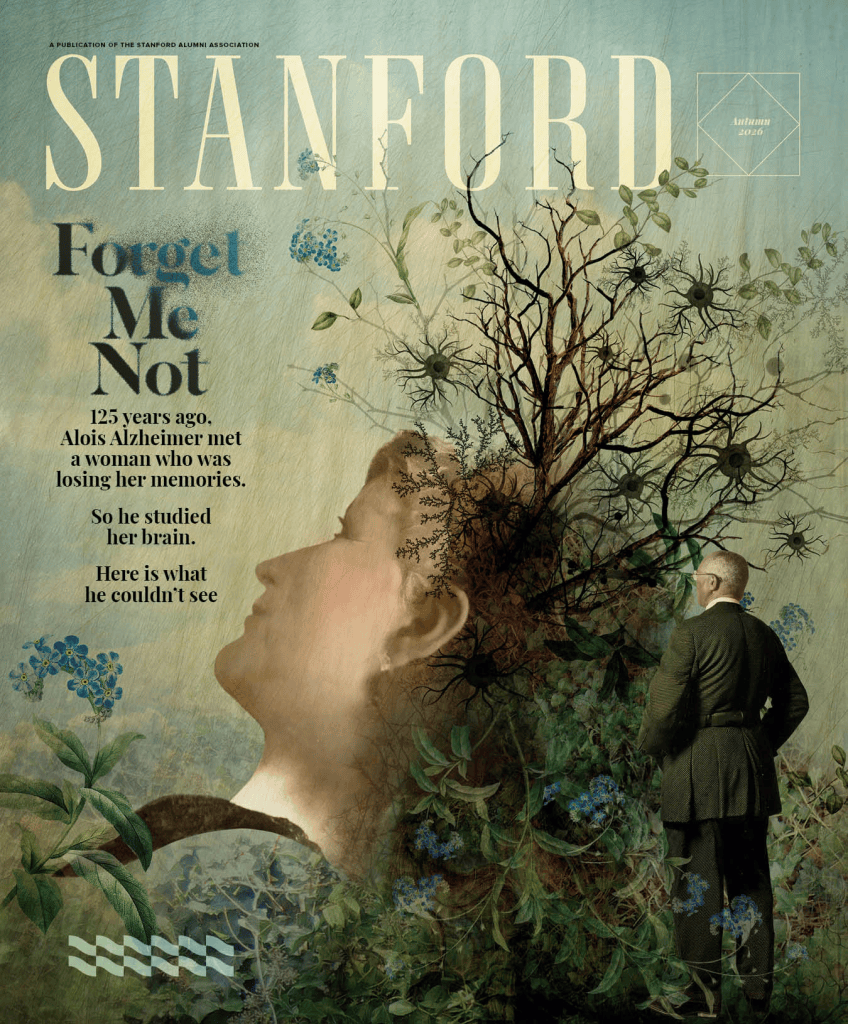
STANFORD MAGAZINE – AUTUMN 2026

STANFORD MAGAZINE: The latest issue features ‘Forget Me Not’ – 125 years ago, Alois Alzheimer met a woman who was losing her memories. So he studied her brain. Here is what he couldn’t see.

The Search

Inside the hunt to prevent, delay, and cure Alzheimer’s disease.

Annals of Migraine

One in 10 Americans experiences migraine headaches, which can be incapacitating. But there may be a light on the other side of your blackout curtains. Currently, doctors diagnose migraine based on patient description and treat the headaches based on frequency—episodic or chronic (more than 15 days per month). Treatment decisions are “worse than trial and error,” clinical professor of neurology Robert Cowan told Stanford Medicine. “It’s darts in the dark.” What’s more, guidelines recommend preventative, daily medication only for people with chronic migraine. But including severity may improve treatment options. In the largest study to date to categorize migraine patients, Cowan and data analyst Jaiashre Sridhar used functional MRI data to identify two biological subtypes. One group of patients had more severe headaches—they tended to last longer and caused more bothersome symptoms (nausea, noise sensitivity, etc.). 

Biblio File: What to Read Now — Autumn 2026

New releases on our shelves and in our bookbags.

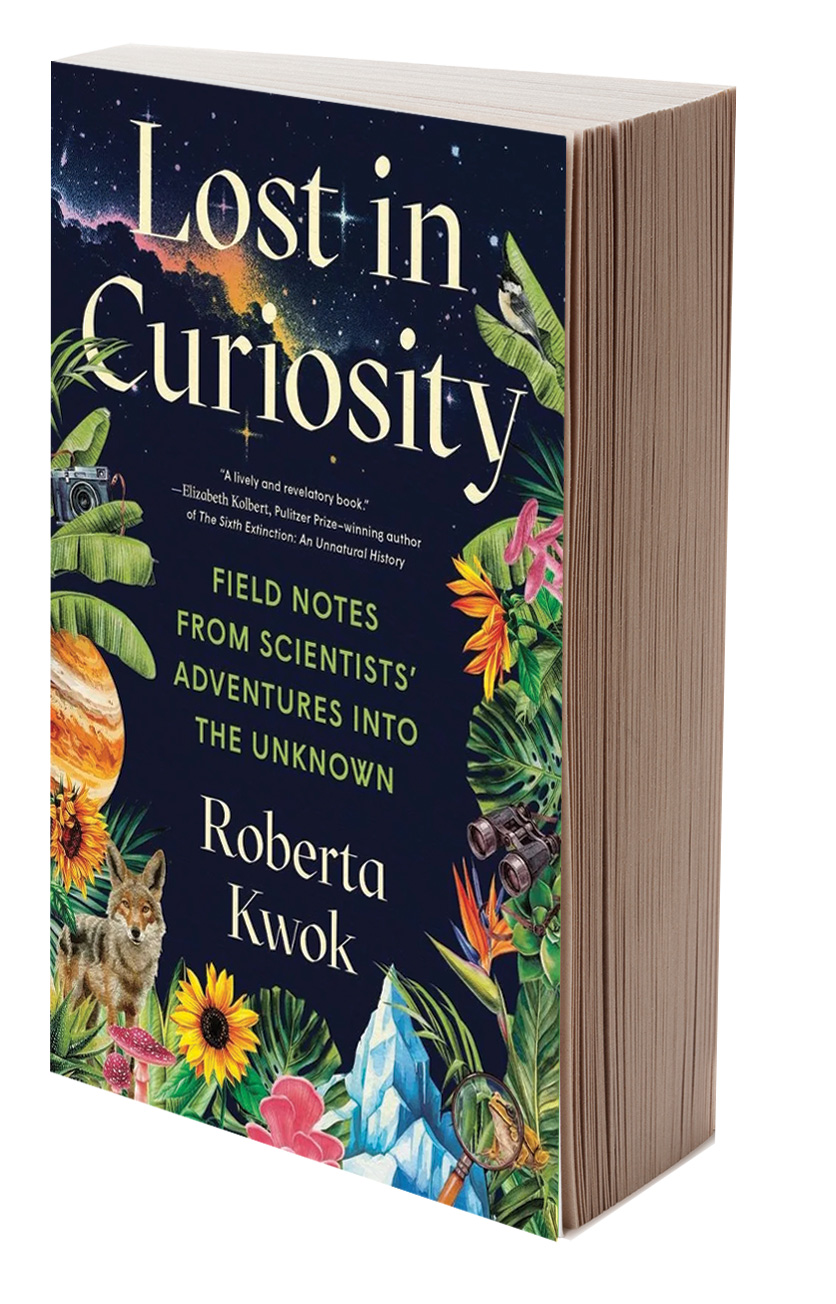
Lost in Curiosity: Field Notes from Scientists’ Adventures into the Unknown book cover

In Lost in Curiosity: Field Notes from Scientists’ Adventures into the Unknown (Sourcebooks), science journalist Roberta Kwok, ’00, witnesses the “messy middle” of science between researchers’ initial query and possible final discovery. The nine projects she investigates, from sex-role reversal in male guardian frogs to a quest to find an exomoon, depict the slow, frustrating, and focused work of scientists.

The American Scholar Magazine – AUTUMN 2026

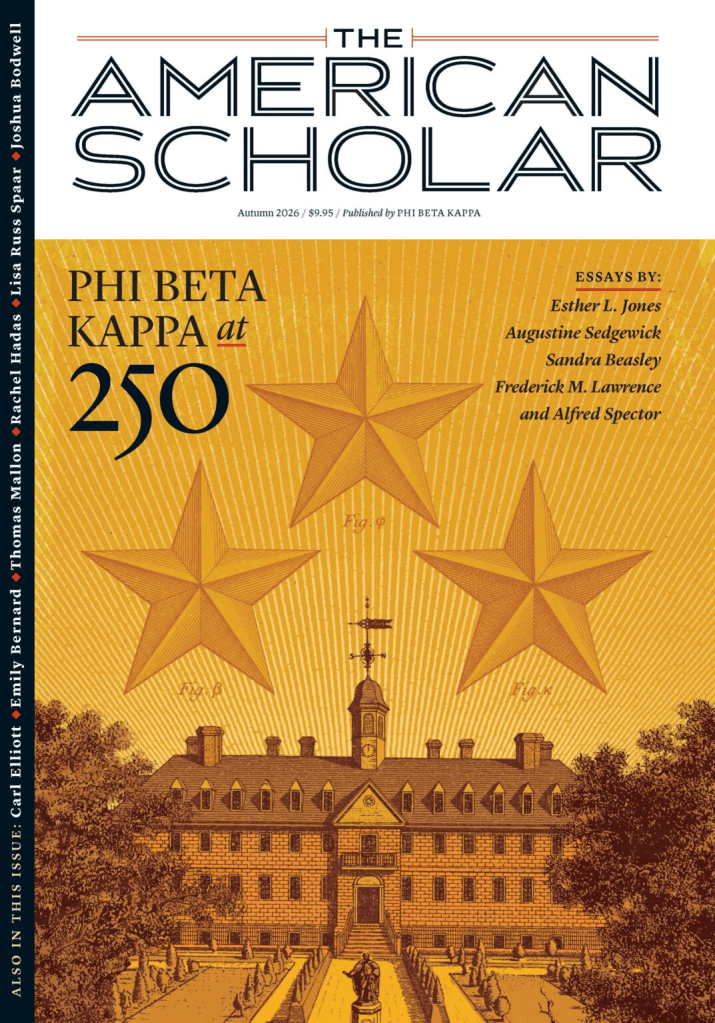
THE AMERICAN SCHOLAR: The latest issue features ‘PHI BETA KAPPA AT 250’…

The Two Ladies of Vermont

In 1875, the debate over whether to induct women into Phi Beta Kappa exposed a crack in the foundation of Western education By Augustine Sedgewick

The Revolutionary Scholar

Meditations on Phi Beta Kappa and the futures we imagine By Esther L. Jones

The Synthesis Is Here

Our future depends on how successfully we fuse the liberal arts and technology By Frederick M. Lawrence and Alfred Spector

A Life in Stanzas

How Phi Beta Kappa shaped one poet’s beginnings By Sandra Beasley

ROYAL ACADEMY OF ARTS MAGAZINE – AUTUMN 2026

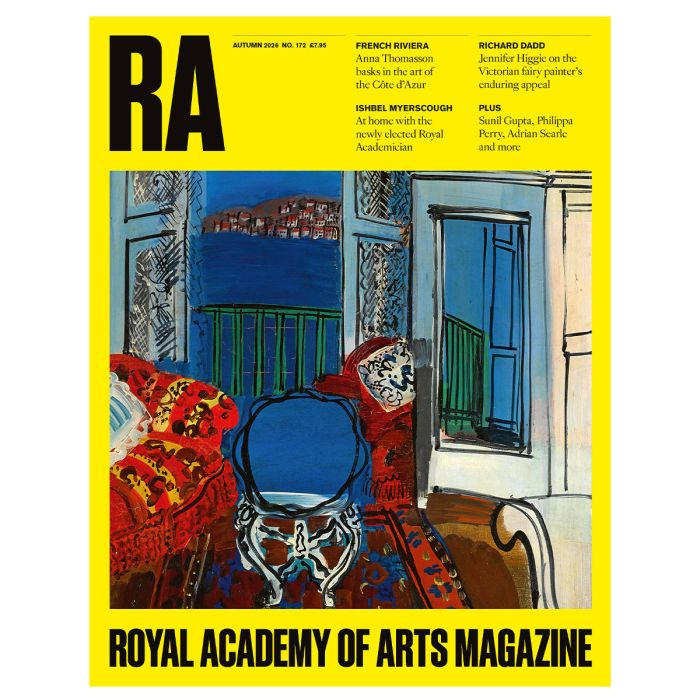
ROYAL ACADEMY OF ARTS MAGAZINE: The latest issue features Anna Thomasson dives in to the art of the French Riviera, and Jennifer Higgie explores the enduring appeal of Richard Dadd. Plus a visit to the home of Ishbel Myerscough RA, Sunil Gupta on a life documenting queer communities, Adrian Searle on Sophie Calle and Philippa Perry on the role art plays in her life.

A history of British Folklore in art

We asked artist and folklore fanatic Ben Edge to give us a crash course in British folk art. By Ben Edge

Start Here: 5 things to know about Richard Dadd

Richard Dadd was a Victorian artist whose elaborate worlds radiate with imaginative power. Here are five things to know about Dadd’s life and art.

The John Madejski Fine Rooms

16 December 2025 – 29 January 2027 – Burlington House

Discover the historic Fine Rooms at the heart of Burlington House and see treasures from the RA Collection spanning more than 300 years.