
Tag Archives: Regency England

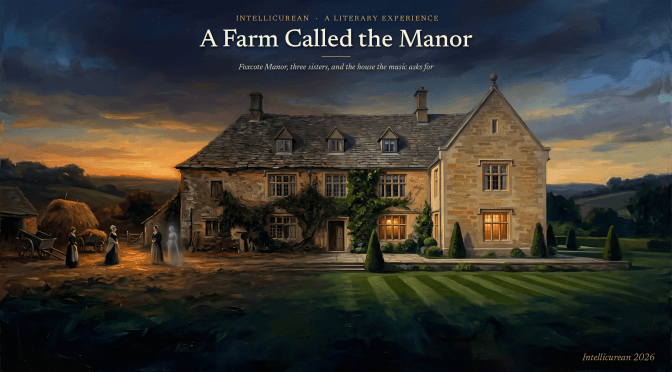
A FARM CALLED THE MANOR

Intellicurean Essays on Intellicurious

A Cotswold manor is for sale at £15 million, honey-coloured and perfectly symmetrical. Two centuries ago three sisters held it, in the very decade Jane Austen was writing about sisters who could hold no land.
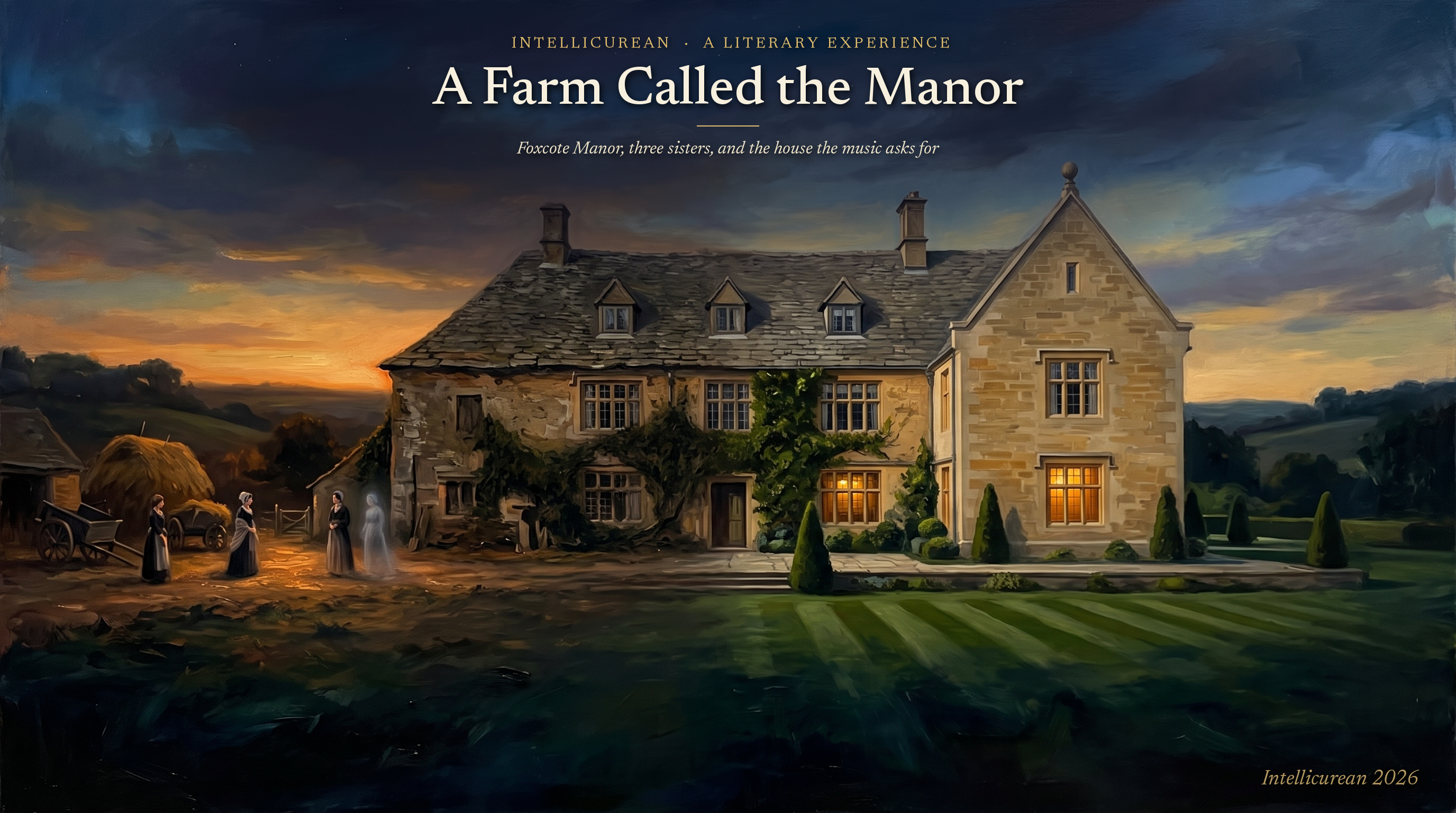
A Farm Called the Manor — painting of Foxcote Manor at dusk in two eras, an 1819 farmyard with three women, one fading, beside the composed front of today
Foxcote at dusk in two eras, made for the essay.

Why we’re pointing you there

Foxcote Manor, near Withington in Gloucestershire, came to market this autumn transformed, its ivy stripped and its rooms gone cream. Intellicurean’s first Literary Experience sets the sale beside the county history, the listing and two Austen novels, and finds that almost nothing in the picture is what it seems. A woman named Sarah Jordan left the manor to three nieces, a will that runs the other way from the one that opens Sense and Sensibility. William Cobbett rode through in 1826 and read the village church as proof of decline, and the census answers him. The symmetrical stone front turns out to be more than three hundred years of work, dressed to look like a single moment.

What we liked most is how carefully it listens to the record, and to its silences. Where the documents can correct what we see, they do, plainly. Where they fall quiet, about a bequest, two weddings and a third sister who simply disappears, the essay lets the music in and asks what that longing is worth.
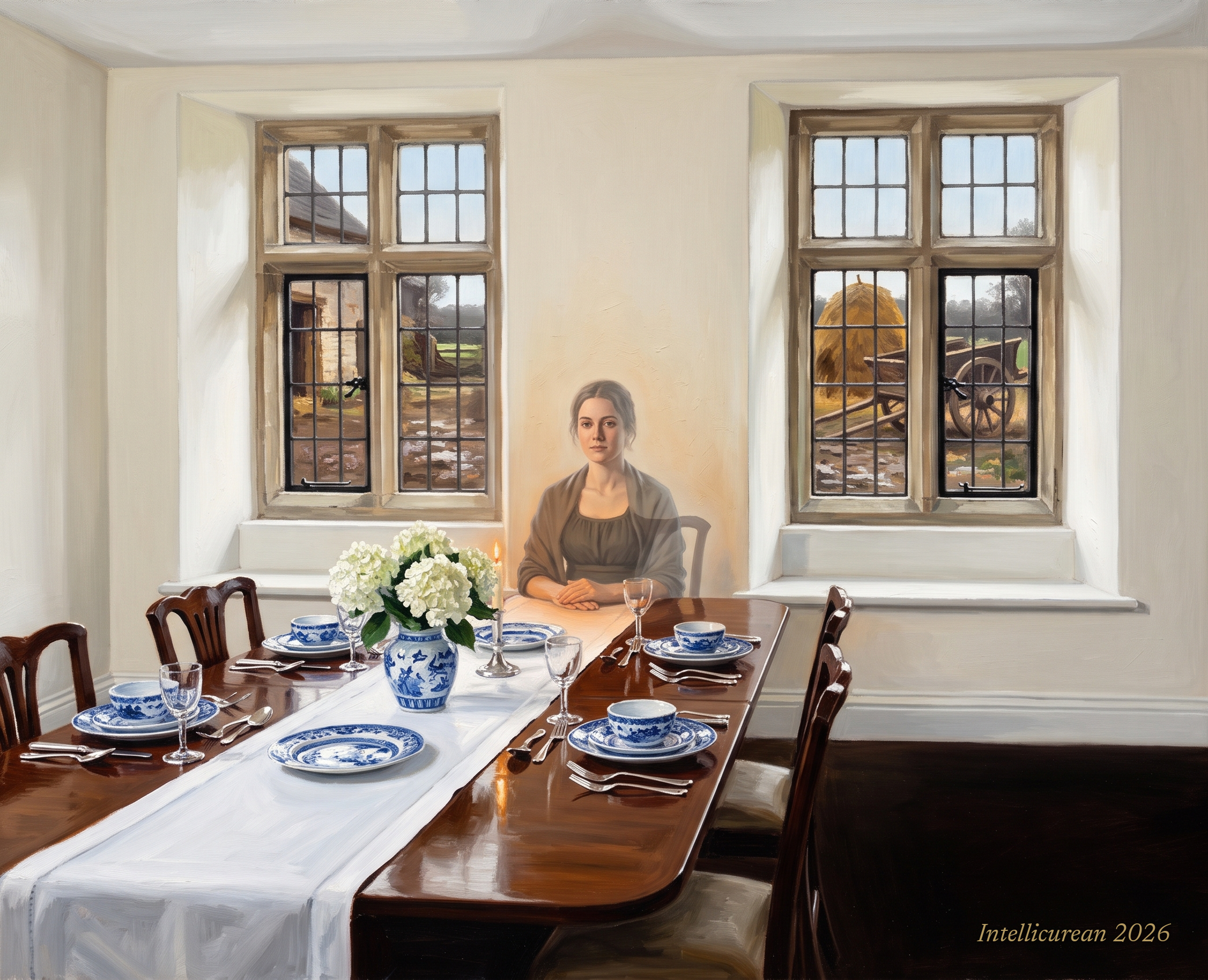
Painting of a cream dining room staged for sale, its table set with blue-and-white china and white hydrangeas, where a translucent woman in an 1810s dress and shawl sits in warm candlelight; through the mullioned windows lies a muddy farmyard with a hay rick and cart.
A sale-staged dining room with a tenant the record lost, made for the essay.

Read the full essay at Intellicurean →

Essays & Reviews for the Intellectually Curious
THE LAST CONCIERGE MAGAZINE – AUTUMN 2026

THE LAST CONCIERGE MAGAZINE: This issue features cocktail bars with panoramic views and Jane Austen–inspired Regency stays across England, alongside beauty features exploring artisanal scent discovery and British vineyard vinotherapy treatments.

The Jane Austen-Inspired Stays Bringing Regency Britain to Life

With Sense and Sensibility returning to cinemas this month and ‘set-jetting’ on the rise, Britain’s grand Georgian houses are ready for their close-up. From a London townhouse once owned by Jane Austen’s brother to sweeping country estates in Bath, Somerset and Devon, these are the historic stays that bring Austen’s world vividly to life.

Italy’s UNESCO Train Journey: 8 World Heritage Sites Between Turin and Trieste

Travel from Turin to Trieste on one of Europe’s most remarkable rail journeys, passing eight UNESCO World Heritage Sites across northern Italy in just over five hours.

Where to Stay in Zadar: Falkensteiner’s Dalmatian Coast Resorts

From five-star camping and boutique Adriatic retreats to luxury spa resorts on Punta Skala, here’s where to stay in Zadar and discover Croatia’s spectacular Dalmatian Coast.

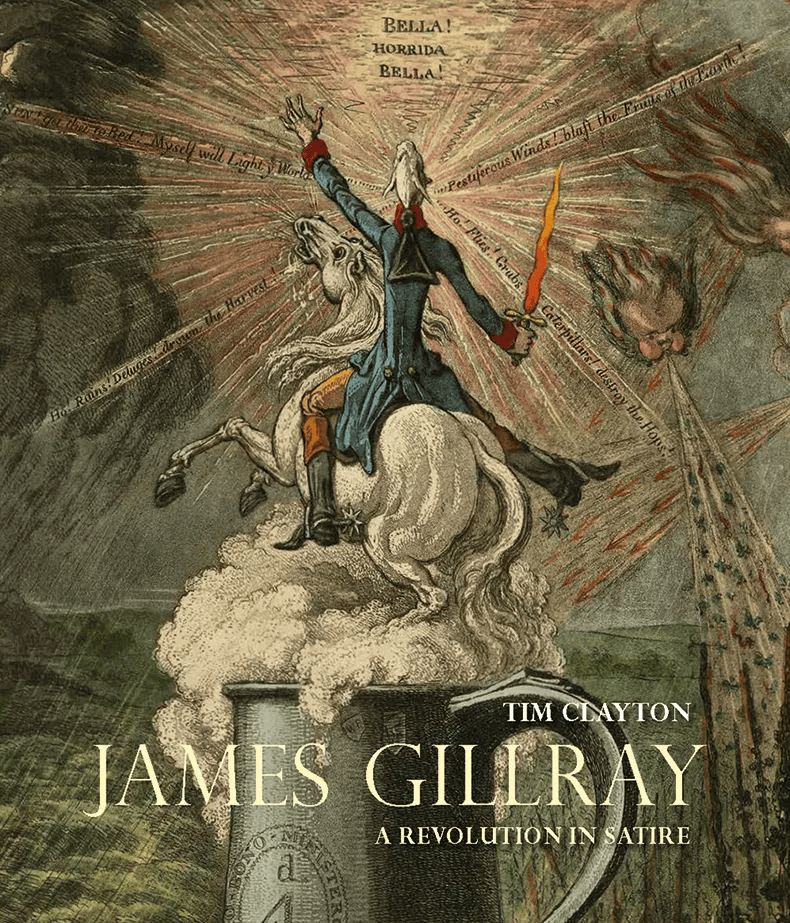
Book Of The Year: “James Gillray – A Revolution in Satire” By Tim Clayton

Apollo Magazine (November 23, 2023) – Political satire is by its nature ephemeral: it reacts to events and personalities and moves quickly on. Yet James Gillray’s (1756–1815) excoriating attacks on William Pitt, Charles James Fox, George III, the Prince Regent and a whole cavalcade of Georgian public figures retain their sting more than two centuries after he dreamed them up. In his sumptuously illustrated study of Gillray, Tim Clayton explains why.

Gillray was, shows Clayton, as much an artist as a caricaturist – his fertile wit and invention were equalled by his facility with an etching needle. His images reveal a man of learning, liberal with allusions in his prints to Shakespeare, Milton and the classics, who developed a style that combined the literary and the visual. His seven years at the Royal Academy, meanwhile, helped shape him into one of the most accomplished draughtsmen of the early 19th century.

Although Clayton takes Gillray from his early training as a letter engraver through his time as a travelling player and into his pomp and then the madness that blighted his later years, this is not a biography in the traditional sense. There are few documentary sources relating directly to Gillray, so Clayton skilfully reveals his man through examining the ‘business of satire’. He looks at Gillray’s often overlapping professional and personal relationships, at the intricacies of Georgian print culture, and the ebbs and flows of politics.