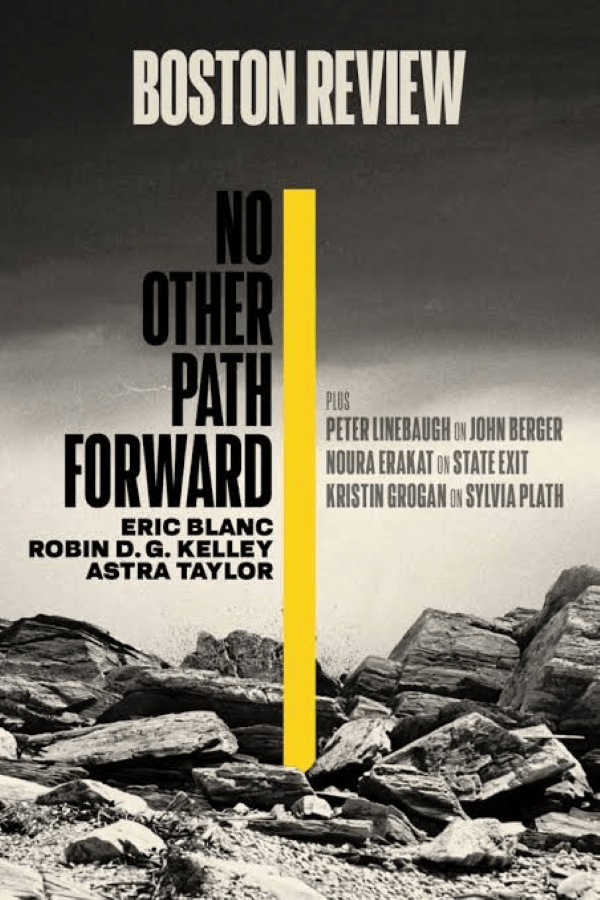
Misrepresented by the right and misunderstood by the left, the Sage of Baltimore delivered scathing—and still bracing—indictments of American injustice. By Andrew Holter
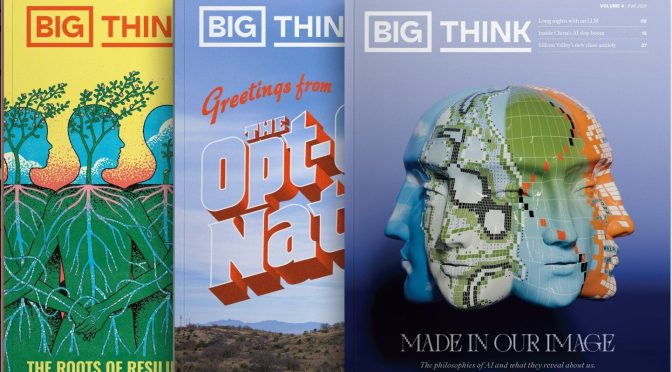
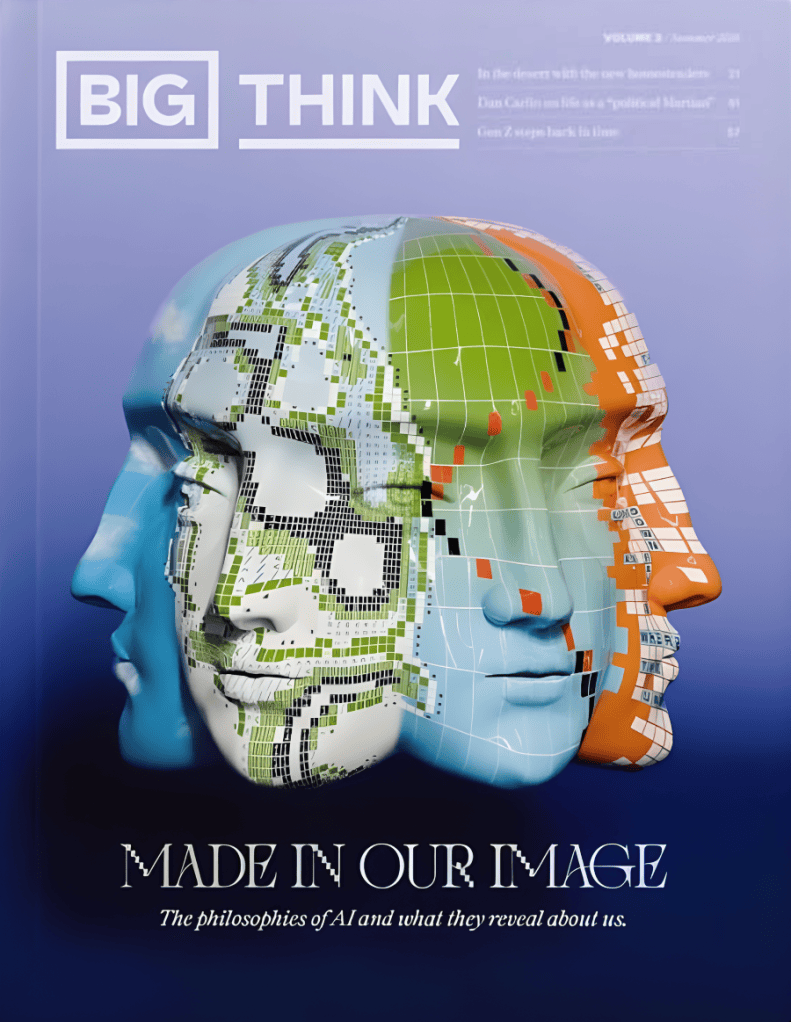
The philosophies of AI and what they reveal about us.
We can’t predict the future of artificial intelligence, but we do know its origin: us. The models we use today were trained on unfathomably huge sums of human-generated text: our books and blogs, our science and myths, our jokes and lies. In the output of language models, we see glimpses of ourselves refracted through a strange new form of intelligence we’re only beginning to understand. This issue is an attempt to make sense of those refractions — to use philosophy to turn over hard questions until we start to see them more clearly.
AI will likely impact everything from the economy to the battlefield, but exactly how remains to be seen.
In November 2022, I took on a writing assignment that, looking back, may have had a bigger impact on my life than any other: interview ChatGPT. It was the first day that OpenAI’s tool was available to the public, and my goal was to try to make sense of the tech — and then help readers make sense of it — by asking it questions about itself.
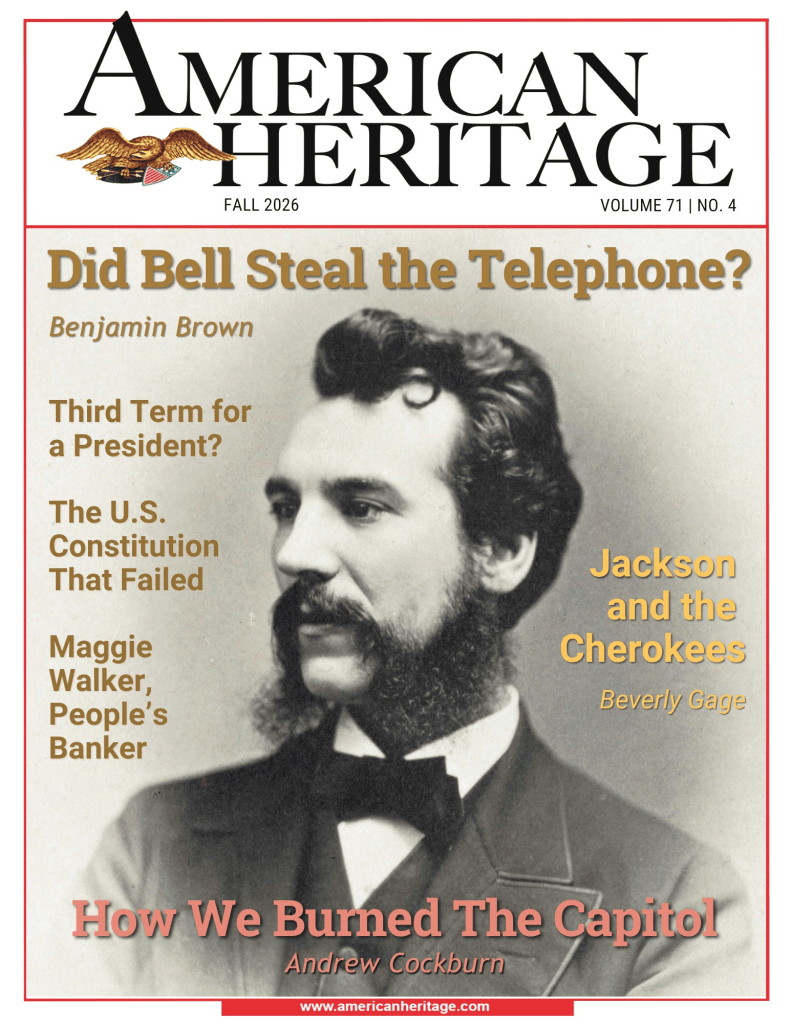
AMERICAN HERITAGE MAGAZINE: The Fall 2026 issue of American Heritage magazine features articles that address historic debates and legacies, including new evidence regarding whether Alexander Graham Bell stole the telephone patent from Elisha Gray, an ancestor’s account of Admiral Cockburn burning Washington while freeing 6,000 slaves, a guide to Southeast historic sites evaluating the complex democratic and brutal legacy of Andrew Jackson, an analysis of perceived ambiguities in the 22nd Amendment regarding presidential term limits, and the story of Maggie Walker, the first Black woman to open a bank to help underserved individuals.
New evidence finally settles the 150-year-old debate as to whether Alexander Graham Bell or Elisha Gray first invented the telephone. Benjamin Lathrop Brown
Museums and historic sites across the Southeast help us better understand Andrew Jackson, who helped define American democracy but also championed the brutal treatment of indigenous peoples. Beverly Gage
Maggie Walker, the first Black woman to open a bank, helped thousands of individuals who could not borrow from traditional lenders. Norah O’Donnell, Kate Brower Andersen
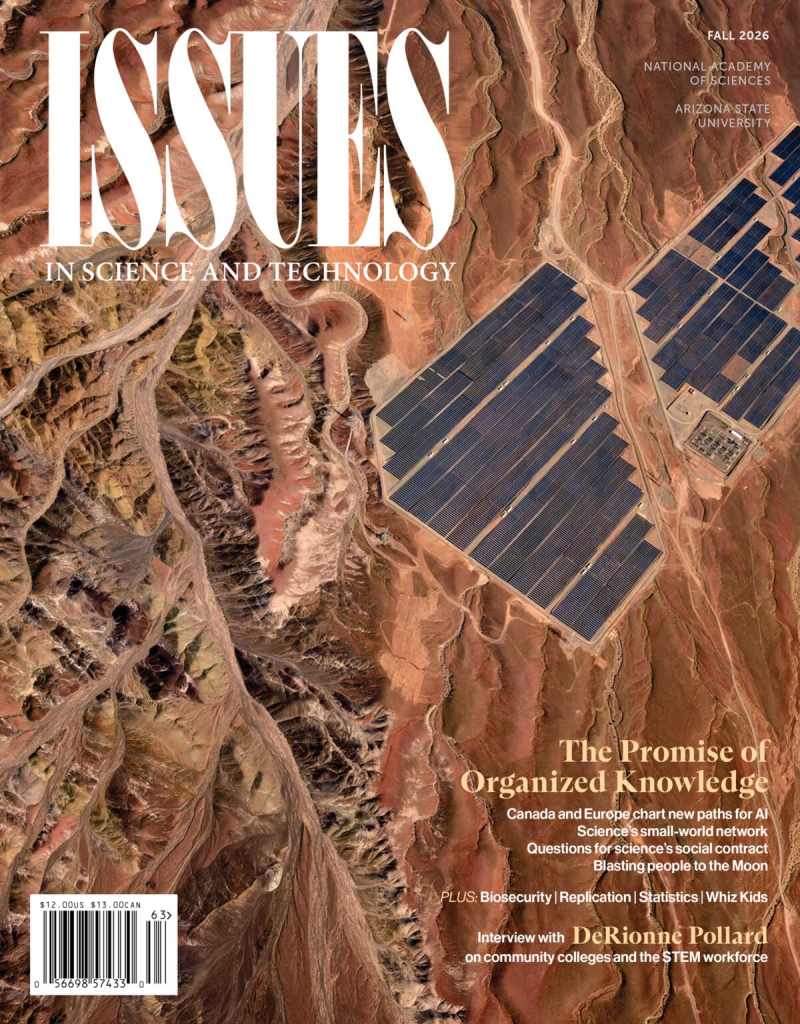
The Fall 2026 issue explores how artificial intelligence might affect public policy in a variety of domains. Take biosecurity: Despite the fear that AI could be used to engineer dangerous pathogens, a former FBI special agent argues that the technology can also be used to uncover suspicious activity and possible bad actors before they become a threat. On economic policy: Spectacular wealth from AI will accrue to relatively few companies and individuals. What if a country were to create an AI sovereign wealth fund to distribute these profits more equitably? A group of Canadian scholars and legislators proposes to set up just such a fund. And when it comes to trust, a cultural anthropologist argues that CERN, the world’s most successful large-scale science collaboration, has many lessons to offer European regulators about how to build trust and transparency when using AI for science.
What Are the Goals for AI?
In “Escaping AI’s Measurement Trap” (Issues, Summer 2026), Urs Gasser, Viktor Mayer-Schönberger, and Fabienne Marco make a compelling case that governance of artificial intelligence faces a problem. Once benchmarks become targets, systems and their developers adapt to them, and measured performance may increasingly diverge from behavior in the real world. Their argument leads to a broader question: How can democratic societies not only improve the oversight of increasingly optimized AI systems, but shape what gets optimized in the first place?
There is much discussion on how artificial intelligence poses threats to biosecurity; there should be at least as much focus on how AI can expand the solutions.
Today’s biosecurity approach is still grounded in a foundation laid nearly two decades ago. In 2008, when I reported to Federal Bureau of Investigation Headquarters as a newly minted supervisory special agent to support biosecurity policy, one important, emerging question was how providers of synthetic DNA should screen orders from customers. As commercial gene synthesis became increasingly accessible, many people worried that individuals could order genetic sequences coding for toxins and pathogens and then use them to cause harm.
My first day ever in New York, age sixteen, I got stuck in the middle of Central Park in the pouring rain with no umbrella and zero sense of direction. Drenched, cold, and hopelessly wandering from the Alice in Wonderland statue to the steps of the Met, I was in remarkably high spirits. I had read Just Kids earlier that summer and regarded this trip as a rite of passage in my Patti Smith pilgrimage. The city was not a stranger to me: there was Washington Square Park, where Patti had slept during her first few weeks, she and Robert Mapplethorpe surviving on lettuce sandwiches. Sure, each face I passed on Fifth Avenue was unfamiliar, but I could imagine Patti and just know I belonged. Even the comically overpriced T-shirts at the John Varvatos store on the Bowery shimmered with Patti and CBGB-era spirit.
Patti wasn’t my first author/guide. I’d opted for books over a social life throughout much of high school and had long approached new destinations through the eyes of a beloved author. When I began at Smith College, I knew from Sylvia Plath’s journals to write in my own on the porch of Haven/Wesley. I assumed this author-as-friend-guide was my own (mal)adaptive quirk. That is, until I read Deborah Levy’s My Year in Paris with Gertrude Stein.
The Netflix series Bridgerton features a plotline about a nineteenth-century noblewoman desperately seeking a sexual “pinnacle” that coitus withholds from her yet not her husband. Meanwhile, the New York TimesWirecutter product review site recommends vibrators you can buy at Walgreens.
My, times have changed.
Fifty years ago, when feminist writer Shere Hite (1942–2020) published The Hite Report: A Nationwide Study of Female Sexuality, one of the best-selling books of all time, conventional wisdom dictated that plain old intercourse was the ticket to orgasm for women as well as men. Any woman who needed clitoral stimulation was deviant or trapped in her “phallic” stage; a mature woman achieved orgasm through the vagina (thanks, Freud). Hetero men didn’t know that what felt good for them didn’t necessarily feel good for women. Many women chose to fake pleasure rather than speak up because they were embarrassed or, rightly, worried about being belittled as pushy and slutty.
I had anticipated that Rachel Cusk’s latest would be a captivating work of big ideas. The premise—a nameless narrator encounters one of the great and celebrated film actors of the era and then attempts to write an “autobiography” of said star—is both juicy and think-y, a stage upon which brilliant observations can mingle with feminine angst and glamour.
On Afghanistan, empire, and American amnesia on the 25th anniversary of the US invasion. Leila Christine Nadir
Armando Ledezma writes on voguing with the House of Ruber in Caracas.
Alex Kitnick profiles Unmuzzled OX, a cult journal that seduced the best writers and artists in America.
Samuel Chu reports on Operation Yellowbird, the Umbrella Movement, and the dissidents of Hong Kong.
Andie Eisen considers the women taking over the funeral industry.
Jonah C. Sirott probes how the right stole the flying saucers and the Democrats lost the weirdos.
Michel Chaouli reflects on the history—and pleasures—of traveling and reading.
Essays by Amber Bal and Doyle D. Calhoun on a misunderstood masterpiece of African cinema, Rachel Cusk on the art of Joan Snyder, Issa Quincy on the 60th annual Angola Prison Rodeo, Yael Segalovitz on slumber, and Negar Azimi on Iranian art in the 2000s.
Fiction by Ingeborg Bachmann (transl. Philip Boehm and Tess Lewis). Scenes by Maya C. Popa, Sophia Le Fraga, Yuri Herrera, Jason Porter, Brandon Harris, and Sarah Ruhl.
I Come Here Often by Sarah Wang. Double Feature by Eugene Kotlyarenko. Poetry by Sara Eliza Johnson, Jose Hernandez Diaz, Jessica Fisher, Keith S. Wilson, Eileen G’Sell, Mary Jo Bang, and Eduardo Martínez-Leyva.
Scholar, author, and activist Tony Platt reviews the new narrative history by Miriam Pawel, “California Dreams: The Making and Remaking of the University of California.” Pawel’s narrow focus on five high-achieving alumni, argues Platt, elides both radical traditions and unethical…
Palestinian national poet Mahmoud Darwish’s “Mawwal” confronts immeasurable grief with unbending steadfastness: “the stabs of daggers I prefer / to being ruled by the vile.”
I lost a beautiful dream, I lost the scent of the lilies, and my night was long, upon the fences of gardens… But I never lost my way! The palm of my hand is now accustomed to the wounds of hope. Shake my hand hard and a river of songs will flow forth. Mother of my colt and sword: Mother mine, here’s a ditty of love! Mother mine, a ditty! The stabs of daggers I prefer, to being ruled by the vile.
Andrew Holter interviewed Tom Overton, author of a new biography, “John Berger: From Life,” out from Verso Books. In this fascinating discussion, Overton discusses his friendship with Berger, the biography’s literary approach, Berger on Palestine, and future plans for scholarship…
Despite a hard-and-fast refusal to discuss Lilith for nearly six years on my social media platform, Jewitches, she remains the most popular question, request, and topic of discussion…Many know her as merely Adam’s first wife, the prequel to Eve, but her history is far more complex.
News, Views and Reviews For The Intellectually Curious