Tag Archives: Wildlife

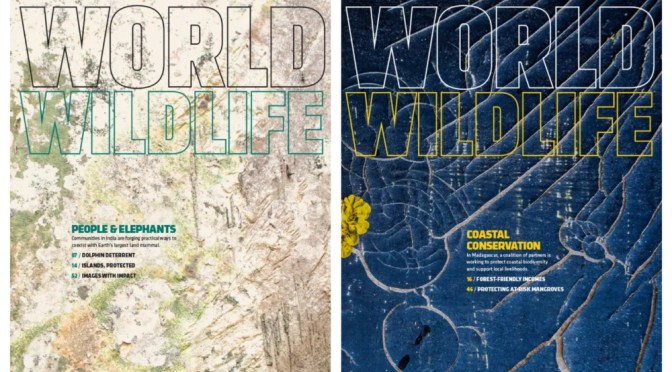
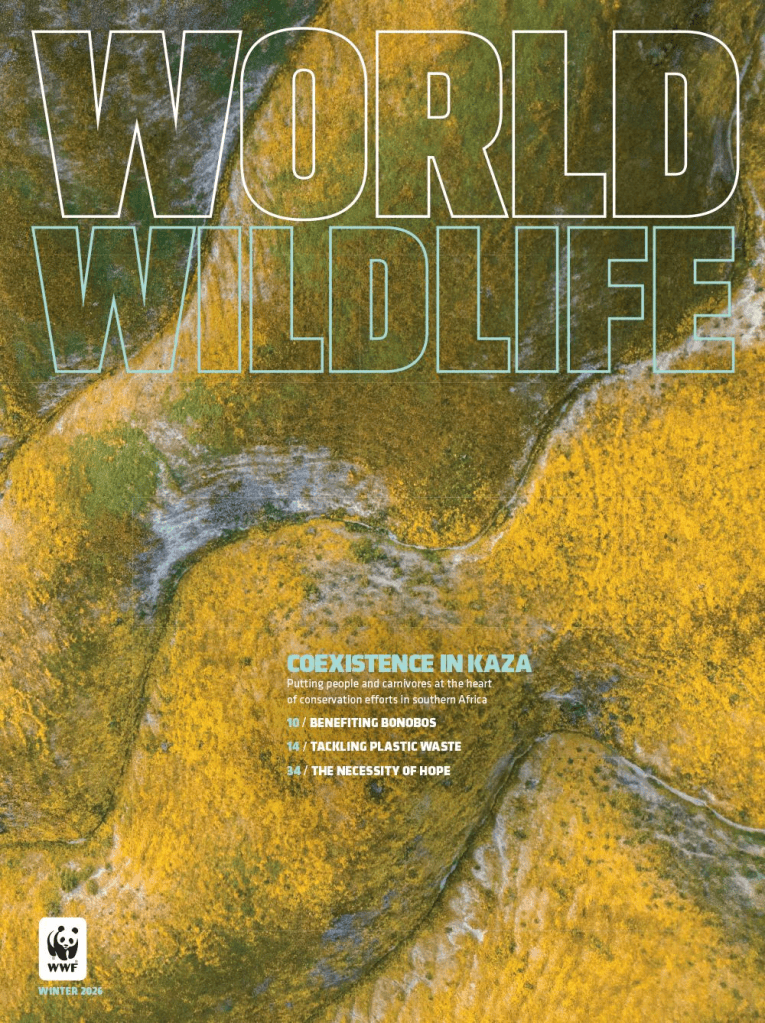
WORLD WILDLIFE MAGAZINE WINTER 2026-2027

What’s that on the cover? An aerial view of the Carrizo Plain, the largest native grassland in California.

WORLD WILDLIFE MAGAZINE: The latest issue features how five countries in southern Africa joined together to create the Kavango-Zambezi Transfrontier Conservation Area (KAZA), where WWF works to help communities coexist alongside lions, hyenas, and other iconic wildlife.

Carnivores in KAZA

In Southern Africa, five countries unite around a shared vision: A connected landscape where communities and free-roaming wildlife can thrive. By Erin Waite
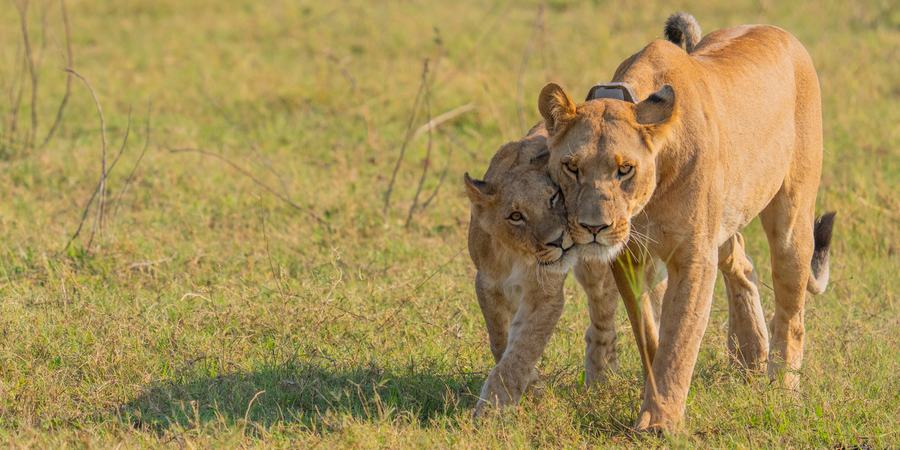
A collared female lion walks closely with her cub in the grass
Photography by Gareth Bentley

Across Africa, large carnivores evolved to roam vast, interconnected landscapes that enable them to hunt prey, find mates, and maintain large territories. But today, those movements have become constrained as human settlements, agriculture, and infrastructure have spliced habitats into ever-smaller fragments. Increasingly isolated and funneled toward spaces inhabited by people, many of the continent’s iconic predators face mounting pressures from habitat loss and human-wildlife conflict, which have fueled alarming declines across populations.

One of the greatest opportunities to reverse this trend lies in the Kavango-Zambezi Transfrontier Conservation Area (KAZA). Spanning 200,000 square miles across parts of Angola, Botswana, Namibia, Zambia, and Zimbabwe, KAZA is the world’s largest terrestrial transboundary conservation area. Here, significant numbers of lions, African wild dogs, leopards, cheetahs, and spotted hyenas still move freely across connected wetlands, savannas, grasslands, and forests—as well as through villages and community lands—helping to keep these important ecosystems in balance.

US Grasslands Campaign launches to protect this overlooked ecosystem
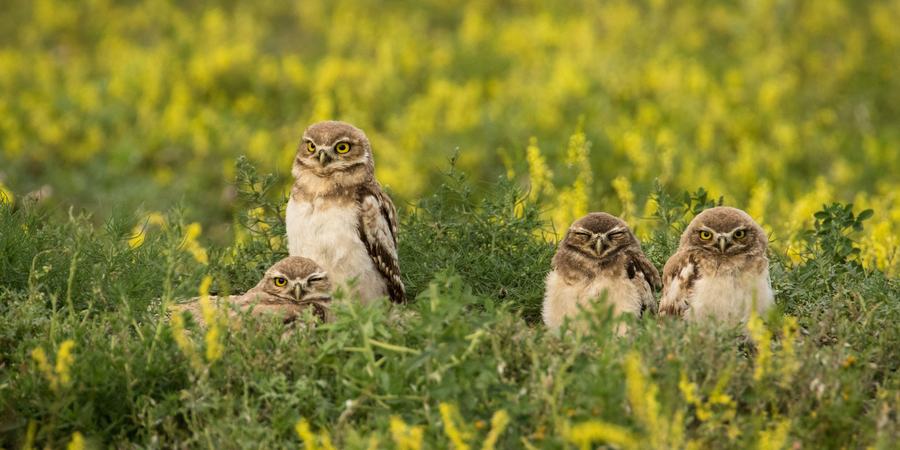
Several owls hiding in tall grass

Stretching from coast to coast, grasslands cover nearly a third of the lower 48 states. Yet almost half of Americans know almost nothing about them, according to a new national survey released by the America’s Grasslands Coalition.

Grasslands—large expanses of land dominated by grasses, shrubs, and other flowering plants—are a source of clean water for millions of people in the US and play a vital role in supporting wildlife, storing carbon, sustaining food systems and rural livelihoods, and maintaining ecosystem balance. They currently cover nearly 1 million square miles of the US, roughly half of their historical range—and are continuing to disappear at an alarming rate. This decline, due to plow-up for row-crop agriculture, the spread of invasive plants, and development, threatens wildlife, fresh water, and climate resilience.
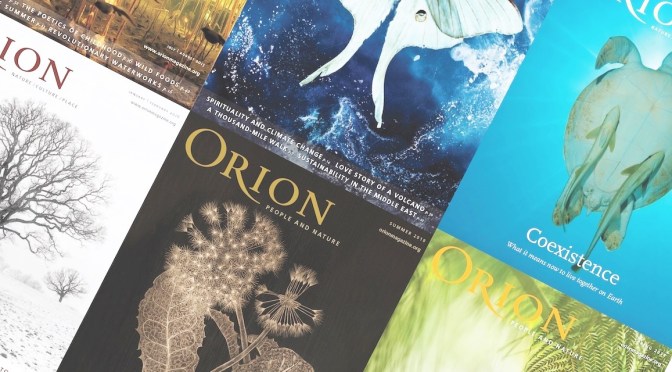
ORION MAGAZINE FALL 2026

ORION MAGAZINE: The Autumn 2026 issue, ‘Tongues: Adventures in the Science of Taste’, ventures into the outer reaches of flavor. Each story is keyed to a different feature of taste in the human and more-than-human worlds, a palette that includes carnivory, sourness, sweetness, bitterness, and fermentation. Contributors parse the flavors of breast milk, spiderwebs, and stinky cheeses. They explore the cultural history of foods forged in adverse conditions like famine and oppression. Taken together, In Tongues offers a vivid, sensory buffet of how we experience the world through our tongues.

A Taste for Meat

How carnivorous plants trouble the order of things. By Lacy M. Johnson

Sour Fruit

The marginalization of a flavor mirrors the logic of extraction. By Sharanya Deepak

Heart of Bitterness

A journey to the center of the flavor—and the feeling. By Maria Pinto

Yeast Mode

For food scientist and fermenter David Zilber, taste is the fundamental question of organismic existence. By Jaya Saxena and David Zilber

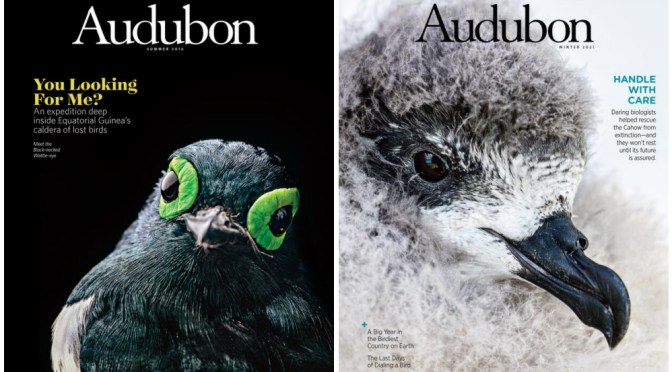
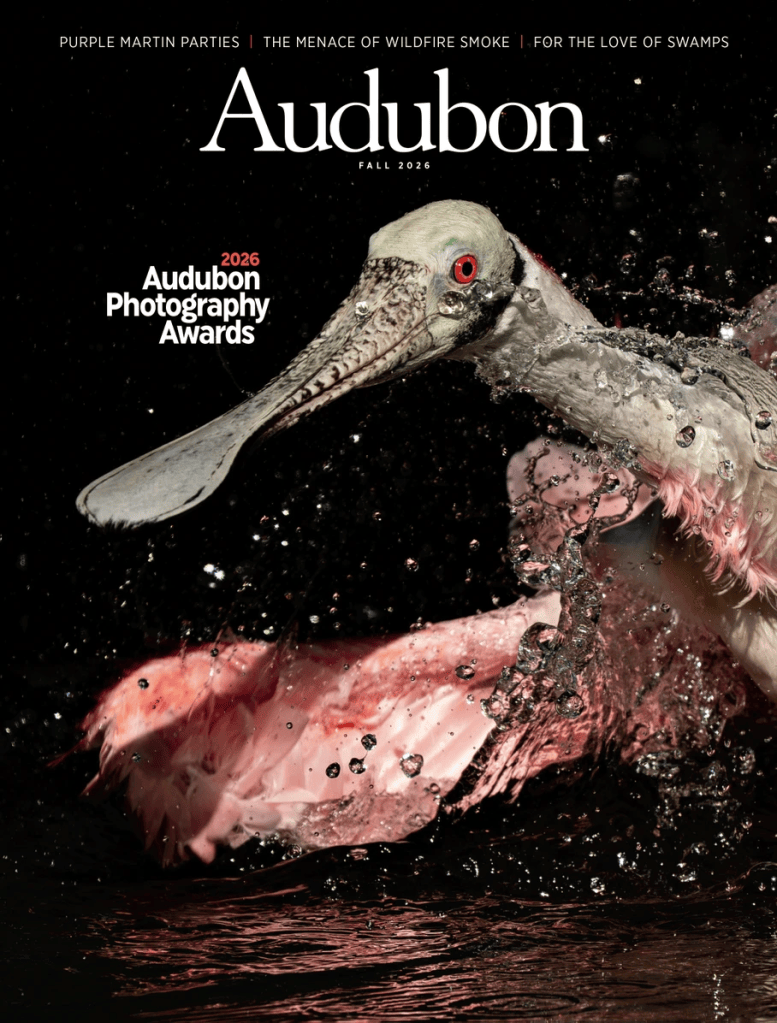
AUDUBON MAGAZINE – AUTUMN 2026 PREVIEW

AUDUBON MAGAZINE: The latest issue features ‘2026 AUDUBON PHOTOGRAPHY AWARDS’….

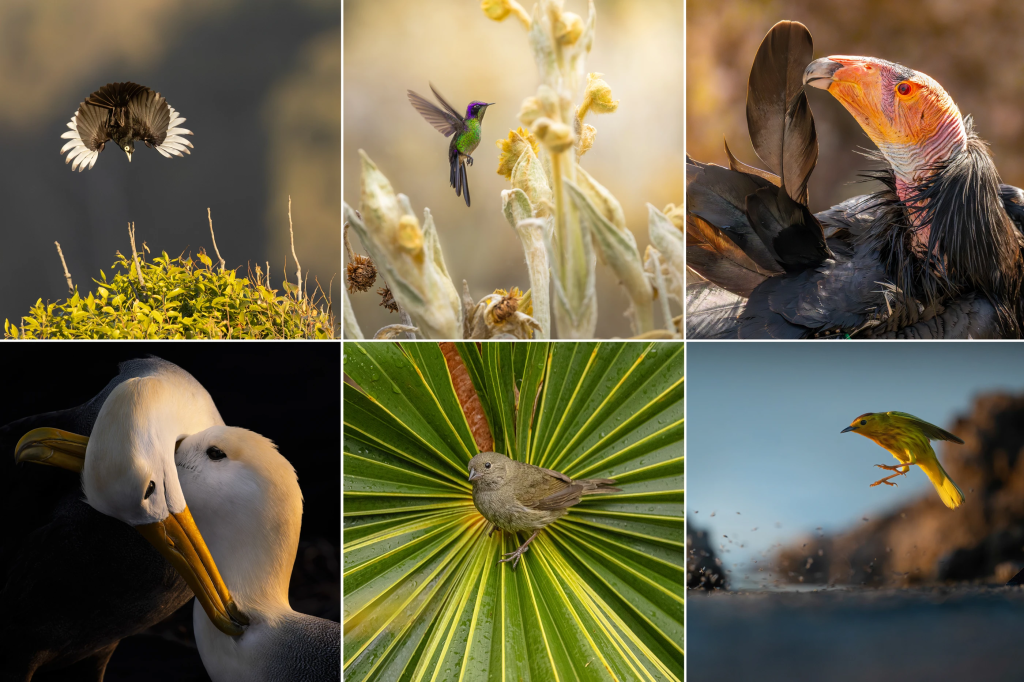
The 2026 Audubon Photography Awards: The Top 100

These jaw-dropping images and behind-the-scenes stories showcase the photographers’ artistry and the beauty of birdlife from Canada to Chile.

Smoke from Wildfires Is a Growing Health Threat to Both People and Birds

Catastrophic wildfires are stalling decades of clean air progress. Now scientists are asking: How can we help birds navigate a hazier future?

ORION MAGAZINE ——– SUMMER 2026 PREVIEW

Summer 2026 Issue - Orion Magazine

ORION MAGAZINE: Orion’s Summer 2026 issue, The Deep Dive, explores humanity’s enduring relationship with cetaceans. From the violence of the whaling industry to the nuances of whale song, contributors trace our evolving entanglement with the world’s largest mammals—how we have been a threat to them in the past, our intertwined struggles in the present, and what we might do to ensure their continued survival. Rich with wonder and delight, the issue asks not only how we have shaped whales’ existence, but how they have indelibly left their mark on ours. This issue is also slightly longer than a standard issue of Orion—an invitation to dive into summer reading. Inside:

Meera Subramanian chases a glimpse of the elusive orca.

Alexis Pauline Gumbs listens for the songs of blue whales;

Vauhini Vara investigates gray whales’ rising death toll;

M Jackson unearths the voices of the women the whaling industry silenced;

Josephine Woolington attends to the sonic memory of landscapes;

ORION MAGAZINE – WINTER 2026 – Nature & Culture

ORION MAGAZINE: The Spring 2026 issue, Working the Land: Lessons in Labor and Collective Action, explores the relationship between labor and the environment and calls for solidarity at a time when that value is under attack. Contributors address various ways that humanity has put the planet to work—by extracting resources, expanding the reaches of capitalism, or using other creatures as helpmeets. But they also venture to imagine what an alternative version of this relationship might look like; one where the channel between labor and the land is driven not by division or profit but by coalition and repair. Inside:

  • Labor journalist Kim Kelly explores what climate activism can learn from union organizing
  • Camrin Dengel photographs the practice of regenerative farming as it pushes back against big agriculture
  • Emma Pattee interviews legendary activist Sarah Schulman and labor scholar Naomi R. Williams about what true solidarity looks like
  • Daniel Naawenkangua Abukuri investigates the epidemic of stolen donkeys—an essential human workmate—in Ghana

Chloé Cooper Jones debuts as Orion’s new travel columnist.

Orion Magazine – WINTER 2026 – Nature & Culture

ORION MAGAZINE: The Winter 2026 Issue features  the elusive cryptid—creatures that, despite mysterious sightings, dedicated societies, and extensive mythologizing, have not been scientifically proven to exist. Across the issue, writers grapple with questions of belief: Why do we want to believe in the things that we do? What might our enthusiastic focus on creatures like Bigfoot be preventing us from seeing, and protecting, in the real world? What do the stories we tell about the natural world really reveal about ourselves? Ranging from the playful to the impassioned, the fantastical to the deadly serious, Cryptids: On the Trail of Bigfoot and Other Improbable Beasts offers a tour through a menagerie both real and imagined. Inside:


  • Jeff VanderMeer asks what the widespread fascination with Bigfoot might be preventing people from appreciating in the world around them
  • J. Drew Lanham wades into the debates about the extinction of the ivory-billed woodpecker
  • Tove Danovich investigates a bizarre pattern of cattle mutilations in the West
  • Katherine Cusumano dives into the myths and the muck of the Gowanus Canal
  • Lance Richardson retraces the steps of Peter Matthiessen in his legendary quest for the snow leopard

Orion Magazine – Summer 2025 – Nature & Culture

Summer 2025 Issue - Orion Magazine

ORION MAGAZINE (May 30, 2025): The Summer 2025 Issue features ….

Out of the Ashes

Examined Life – How fungi are surviving—and even thriving—in a warming world

Natural Intelligence

A photo of mushrooms growing out of mushrooms. The photo is taken with a blue background

Mushrooms made the world what it is by Maria Popova

Foodways

Intuitive Eating

A black and white illustration of Merlin Sheldrake, Jeff VanderMeer, and Kaitlin Smith surrounded by pink and brown round abstract shapes

On poison, pleasure, and trust by Erica Berry

A New Naturalism

Four writers reflect on the rhizomatic network of self, society, and ecology

Corey Pressman, Merlin Sheldrake, Kaitlin Smith and Jeff Vandermeer

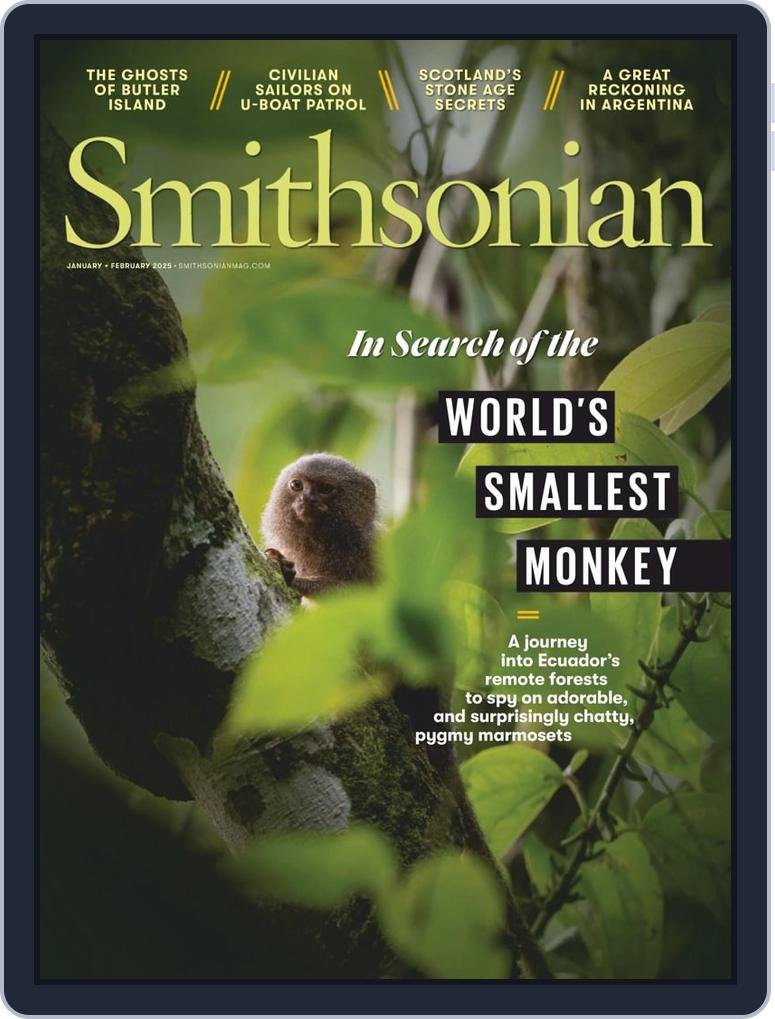
Smithsonian Magazine – January 2025 Preview

Image

SMITHSONIAN MAGAZINE (December 30, 2024): The latest issue features ‘In Search of the World’s Smallest Monkey’ – A journey into Ecuador’s remote forests to spy on adorable, and suprisingly chatty, pygmy marmosets.

Seventy-Seven Fascinating Finds Revealed in 2024, From a Mysterious ‘Anomaly’ Near the Great Pyramid of Giza to a Missing Portrait of Henry VIII

How an Experiment to Amplify Light in Hospital Operating Rooms Led to the Accidental Invention of the Snow Globe

The origins of the decoration lie in Vienna’s 17th district, where the inventor’s descendants are still making them for collectors around the world

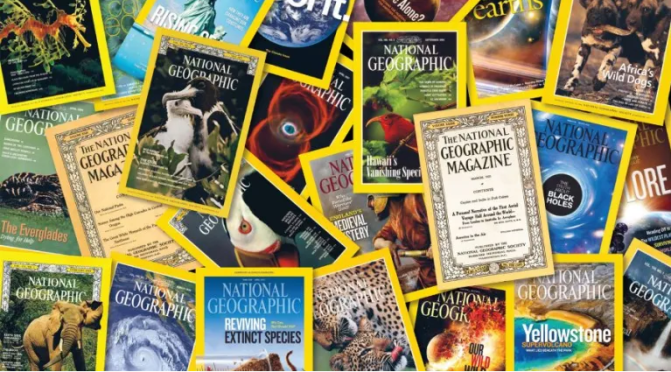
National Geographic Magazine – December 2024

December 2024 Issue

National Geographic Magazine (December 19, 2024) – The new issue features
Pictures of the Year 2024

National Geographic photographers ventured to places far and wide to capture the year’s most fascinating images.

Taking the Plunge

Atka Bay, Antarctica

A young emperor penguin jumps off a 50-foot cliff for its first swim. The species normally breeds on low-lying sea ice, but some colonies have been found on higher and more permanent ice shelves, behavior likely to become increasingly common with climate change. Left by their parents a month earlier, the chicks must fend for themselves and find food by hunting in the sea.

Photograph by Bertie Gregory

Read more

Bertie’s incredible footage from Antarctica appears in Secrets of the Penguins, premiering April 2025 on National Geographic and Disney+.

Wyoming Views: Wildlife At The Yellowstone River

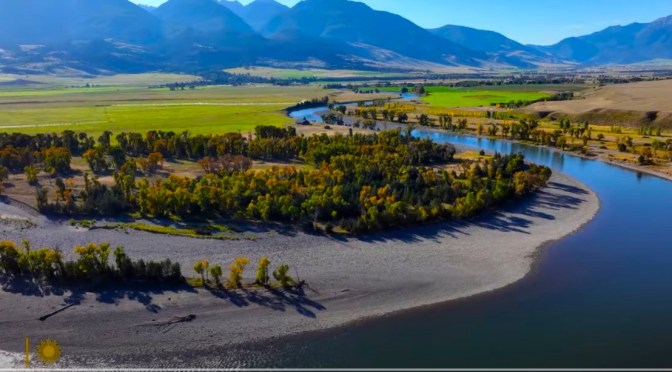
CBS Sunday Morning (October 13, 2024): We leave you this Sunday morning along the Yellowstone River at Yellowstone National Park in Wyoming.

The Yellowstone River is the last major undammed river in the lower 48 states, flowing 671 miles (1080 km) from its source southeast of Yellowstone into the Missouri River and then, eventually, into the Atlantic Ocean. It begins in the Absaroka Mountain Range on Yount Peak. The river enters the park and meanders through the Thorofare region into Yellowstone Lake. It leaves the lake at Fishing Bridge and flows north over LeHardys Rapids and through Hayden Valley.

Videographer: Mauricio Handler.