The controversial discovery that our brains can generate new neurons surprisingly late in life is now prompting a rethink of adult brain health, pointing the way to better treatments for stroke, dementia and depression By Jamie Ducharme
Often described as a genius, physicist Sabrina Pasterski built and flew her own plane by the age of 16 and is now developing a mind-bending idea that could finally unify gravity and quantum theory By Miriam Frankel
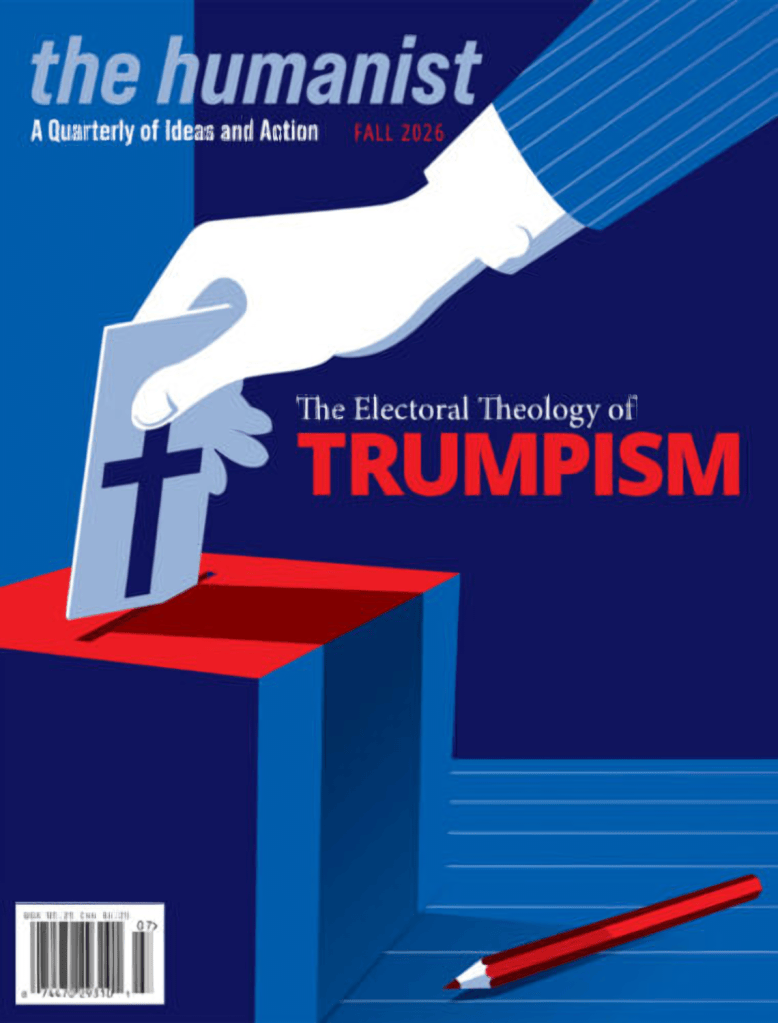
How White Evangelical Voters Made Trump’s Victory Possible—and Helped Legitimize Government by Certainty by Gordon Gamm
Donald Trump’s 2024 victory depended heavily on White evangelical or born-again Christian voters. National exit polling estimated that they constituted approximately 23 percent of voters and supported Trump over Kamala Harris by 82 percent to 17 percent.¹ Trump won the national popular vote by only about 1.5 percentage points—49.81 percent to Harris’s 48.34 percent.²
At the foot of burning Mount Doom, Samwise the gardener kneels beside his friend, Frodo, who can no longer walk. Frodo has been carrying a great weight– the One Ruling Ring, which grows heavier with every step. As Sam watches his friend press onward at a crawl, he knows he…
This piece was awarded first place in the Humanists of Greater Portland’s annual essay contest for high school seniors seeking funding for post-high school education. Every day reminds me how much we rely on tiny lines…
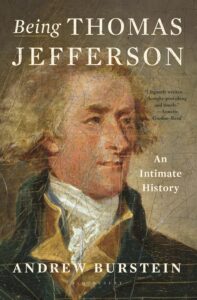
An Intimate Look at the Life of Thomas Jefferson in This Anniversary Year
“Being Thomas Jefferson: An Intimate History”by Andrew Burstein
Over a long life encompassed by countless books while a student, professor or a researcher, it is only “once in a blue moon,” this reviewer encountered a magnificent book. One such is Andrew Burstein’s latest, “Being Thomas Jefferson: An Intimate History.” I can only sing praises of this monograph. I had difficulty putting it down. This poignant book is a must read for those wishing to learn more about the author of several significant achievements that still ring the cause of freedom in the United States of America. Particularly in this 250th anniversary year of Jefferson’s Declaration of Independence, “well-armed with pulsating phrases,” one should spend time getting reacquainted with this man of particular talent and devotion to the cause of liberty. It is also the 200th anniversary of Jefferson’s death. Between these two anniversaries lie a testament to greatness, and devotion to his country. There are numerous history book offerings in this anniversary year, but surely this book stands apart from many others.
We know that this monster El Niño will bring floods, droughts, cyclones and wildfires, but some governments aren’t putting in the necessary resources to prepare for disaster
This El Niño is forecast to end around June next year after smashing all records, but its impacts could persist indefinitely in some parts of the world By Michael Le Page
My heart sank when I first saw the magazine’s thirtieth-anniversary issue on paper. My managing editor back then, Michael Strizic, and I had spent the morning pacing in our small, dark office — anxious to receive several heavy boxes from Ottawa. Eventually I couldn’t stand the anticipation, so I walked ten minutes or so to Harbord Bakery to distract myself. The magazines had arrived by the time I returned.
Thirty-five years ago, in the inaugural issue of this magazine, I reviewed the newly published diary of André Laurendeau, written from 1964 to 1967 during the Royal Commission on Bilingualism and Biculturalism. The timing was apt: politicians, scholars, and journalists were speculating heavily on how to fix the “Canadian crisis” following the collapse of the Meech Lake Accord the year before.
“By Authority of Parliament: The Constitutional Boundaries of Legislative Power in Canada” by Ryan Alford
In 2017, during the early days of Donald Trump’s first term, the world was riveted both by his reality TV presidency and by the salacious rumours about the way he had obtained it. Insistent tales circulated about how Vladimir Putin’s troll army had engineered the Republican candidate’s victory by hacking into the Democratic Party’s servers and then releasing thousands of embarrassing emails on the eve of Hillary Clinton’s nomination. What followed was a stormy season of investigations and counter-accusations about Trump’s Russian proclivities.
What is the largest art-history library in the world? The answer to this question depends of course on how you measure size, but an institution that might reasonably claim such a status is the RKD in The Hague. The RKD has for decades been a vast and invaluable library and archive, carefully nurtured by expert librarians and archivists (or ‘curators’ as they have long been described).
A new drawing by Édouard Manet
A newly identified drawing in a private collection of a crouching girl is a characteristic example of the red-chalk life studies that Édouard Manet made in the 1860s, influenced by his close study of Renaissance draughtsmanship in Florence. Although squared for transfer, the drawing has not yet been linked to any known composition by the artist.
Mistaken identities: Liotard’s 1762 portrait of Marie-Antoinette
A refined portrait by Jean-Étienne Liotard in the Musée d’art et d’histoire, Geneva, has long been identified as depicting Marie-Antoinette as a child. New research establishes, however, that it is a drawing of another member of the imperial Habsburg family and also reveals a hitherto unidentified likeness of Marie-Antoinette.
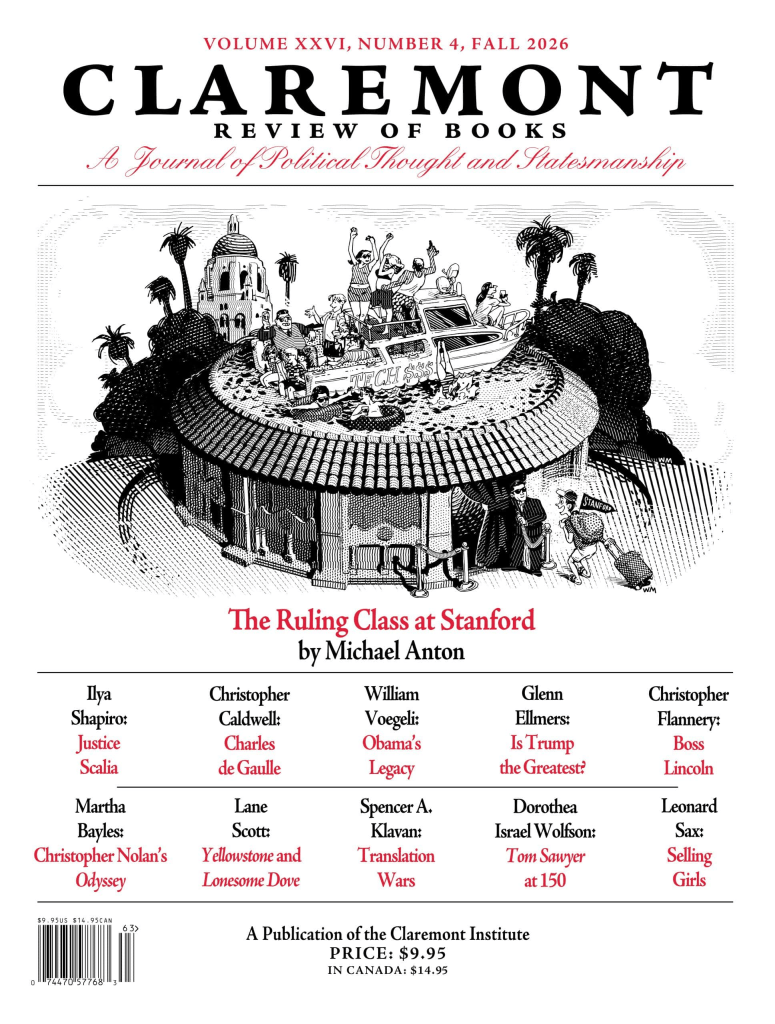
Because I’m going to be quite critical of Theo Baker’s How to Rule the World, it feels only right to start with three pieces of sincere praise: the book held my attention all the way to the end, I learned things from it, and I read it twice. These are not reactions I expect most new books to generate, let alone one written by someone not yet of legal drinking age. Hence on this basis alone, I would have to concede that Rule (borrowing Baker’s shorthand for a “secret” Stanford class, about which more below) is a real achievement.
The first marriage in Tuscan history was not between a man and a woman but between a vine and a tree. Before the Etruscans cleared these hills, they were dense with oakwood, through which wild grape vines climbed naturally toward the canopy, wedded to the forest in which they grew. The Etruscans formalized that marriage. Vines were trained up living maples, elms, and poplars. Grapes were cut from ladders or with long sickles. Later Italians called it the vite maritata—the married vine.
After watching Christopher Nolan’s The Odyssey in a sold-out IMAX theater, my husband and I were heading for the exit when we were attacked by smiling employees brandishing free rolled-up posters. Raising our shields, we broke through their phalanx, leaped aboard our vessel moored in the parking lot, and sailed homeward with only a few posters glancing off the moonroof.