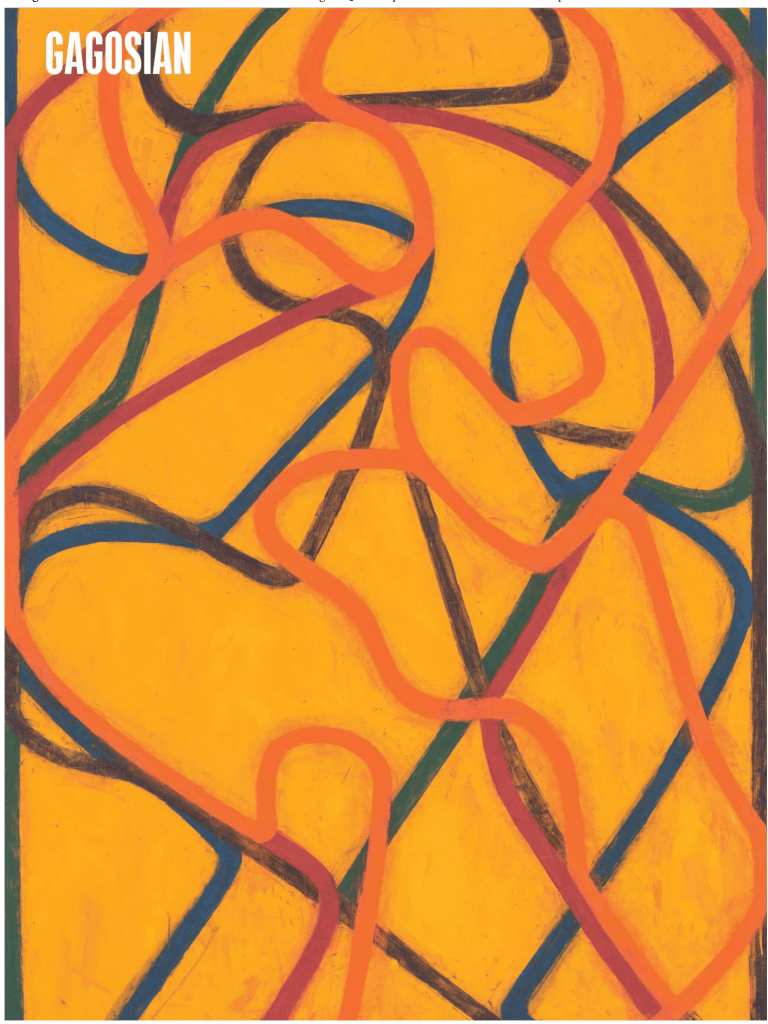
On the occasion of the publication of Brice Marden: Catalogue Raisonné of Paintings, 1961–2023 this fall and of a corresponding exhibition of the artist’s work at Gagosian, New York, we invited Glenn Lowry, a friend of the artist’s and former director of the Museum of Modern Art, to reflect on moments spent with Marden and on the enduring power of his art.
AMA Venezia
Celebrating the collector Laurent Asscher’s new art space in Venice, William Middleton underscores the richness of Asscher’s relationships with artists.
The Generative Surface
Eileen Costello explores the oft-overlooked importance of paper choice to the mediums of drawing and printmaking, from the Renaissance through the present day.
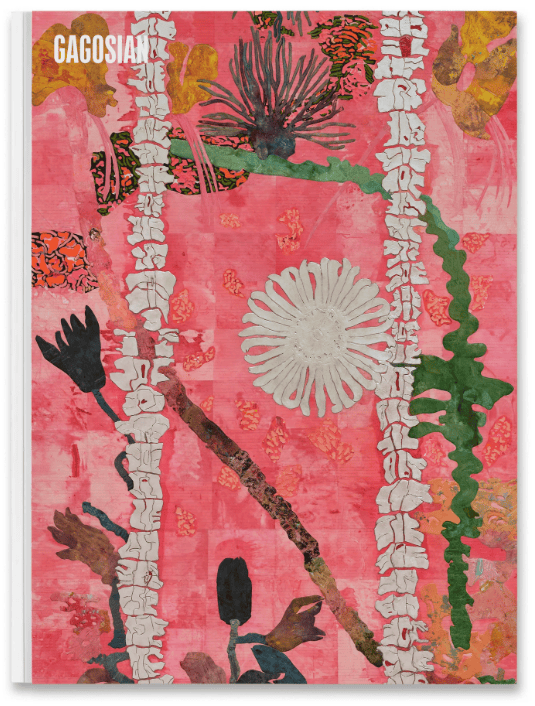
With the opening of the 61st Biennale di Venezia, a number of the magazine’s features engage with the history and contemporary culture of the storied city. Jenny Saville speaks with art historian Stefania Ventra to mark her major exhibition at Ca’ Pesaro–Galleria Internazionale d’Arte Moderna. In an essay bridging the Republic of Venice and the twenty-first century, Ben Street explores the timeless resonance of Giovanni Domenico Tiepolo’s tragicomic frescoes. And Nancy Spector discusses her bold pairing of Richard Prince and Arthur Jafa in an exhibition at the Fondazione Prada.
In the world of literature, Helen Oyeyemi shares the second installment of her fiction series As You Wish, Mary Gaitskill speaks with Jill Mulleady about their recent Picture Books collaboration inspired by Faust, Wyatt Allgeier interviews Andrew Durbin on the occasion of his new dual biography of Peter Hujar and Paul Thek, and Alana Pockros guides us through the refractive wonderlands of novelist Elaine Kraf.
Elsewhere in the issue, Carlos Valladares ponders Charli XCX’s mockumentary The Moment, Janne Sirén examines Anselm Kiefer’s mythological figures, and three luminaries from the worlds of design, fashion, and food—Ronan Bouroullec, Michèle Lamy, and Enrique Olvera—consider the furniture of Donald Judd.
“The Consolidation of Collections: New Light on the 18th-Century British Art Market” An in-depth study by the editorial team and guest contributors exploring how major British estates restructured their private galleries during the mid-1700s. The article utilizes newly discovered ledger books to trace the provenance of several key Italian Baroque works.
“Paolo Veneziano and the International Gothic in Venice” Following the research trends seen in the early part of the year, this feature provides a technical analysis of recently restored altarpieces attributed to Veneziano, focusing on the use of ultramarine and gold leaf techniques that defined the Venetian style in the 14th century.
“Nicholas Lanier and the ‘Star’ Drawings: New Discoveries” Building on recent scholarship (featured in related symposiums), this article identifies several previously unrecognized drawings from the collection of Nicholas Lanier (1588–1666). It specifically examines the “star-shaped marks” used by Lanier and his uncle Jerome to catalog their sixteenth-century Italian acquisitions.
Editorial and Shorter Notices Editorial: “The Future of Art History in the Digital Age” Editor Christopher Baker discusses the balance between traditional archival research and the integration of AI and digital imaging in art historical authentication.
Object in Focus: “George Frederic Watts’s Satan (1847)” A specialized notice providing a new interpretation of Watts’s massive canvas. The author argues that the figure’s pose was inspired by the Monte Cavallo Horse Tamers in Rome rather than the Apollo Belvedere, as previously thought.
Exhibition and Book Reviews The Farnese Gallery Drawings (Musée du Louvre, Paris): A critical review by Ketty Gottardo on the exhibition focusing on the Carracci brothers’ preparatory works.
Studio Prints: A History, 1968–2011: A review of the new publication by Paul Holberton Publishing, detailing the impact of the London workshop on 20th-century printmaking.
Modernizing the Catalog: A review of the Patek Philippe exhibition and the intersection of fine horology with decorative arts history.
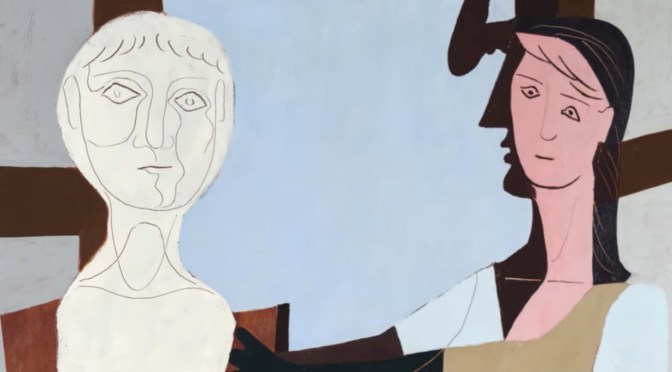
Sotheby’s (November 17, 2024):In late September of 1925, Pablo Picasso, his wife Olga and their young son Paolo returned to Paris from their annual summer holiday in the South of France.
The summers were beginning to blend together for Picasso, who was tiring of the swell set he and Olga socialized with. The home they returned to at 23 rue la Boetie was a changed one. After lengthy negotiations, Picasso had acquired an additional floor of the building to be used as his studio.
He set about immediately modifying the space: removing doors from their hinges, bringing in his copious art supplies (and a limited amount of furniture) and stripping back most of the existing wallpaper. After years of jostling with his elegant and socially aspirational wife for space in their apartment on the floor below he relished a place to colonize as his own.
Gagosian Quarterly (Fall 2024) – The new issue features Jessica Beck discussing Andy Warhol’s Mao series, contextualizing Warhol’s return to painting in the early 1970s and his attraction to subjects of notoriety. We dig into the archives to honor the inimitable Richard Serra, who had over forty exhibitions at Gagosian since his first in 1983. Elsewhere in the issue, Salomé Gómez-Upegui examines the work of artists confronting the climate crisis, and Péjú Oshin speaks with Jayden Ali about his expansive view of architecture.
Andy Warhol’s Insiders at the Gagosian Shop in London’s historic Burlington Arcade is a group exhibition and shop takeover that feature works by Warhol and portraits of the artist by friends and collaborators including photographers Ronnie Cutrone, Michael Halsband, Christopher Makos, and Billy Name. To celebrate the occasion, Makos met with Gagosian director Jessica Beck to speak about his friendship with Warhol and the joy of the unexpected.
Against the backdrop of the 2020 US presidential election, historian Hal Wert takes us through the artistic and political evolution of American campaign posters, from their origin in 1844 to the present. In an interview with Quarterly editor Gillian Jakab, Wert highlights an array of landmark posters and the artists who made them.
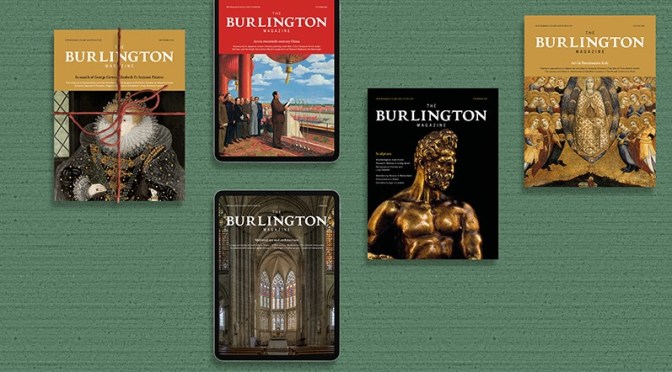
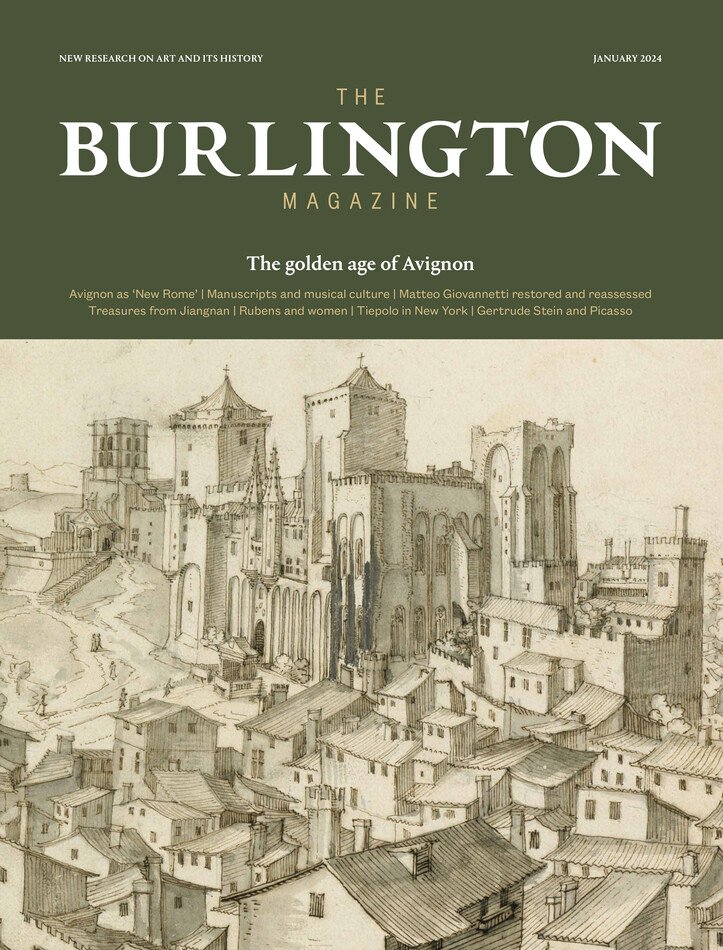
The Burlington Magazine – January 3, 2024:The new issue features ‘The Golden Age of Avignon’ – Avignon as ‘New Rome’; Rubens and women; Tiepolo in New York; Gertrude Stein and Picasso, and more….
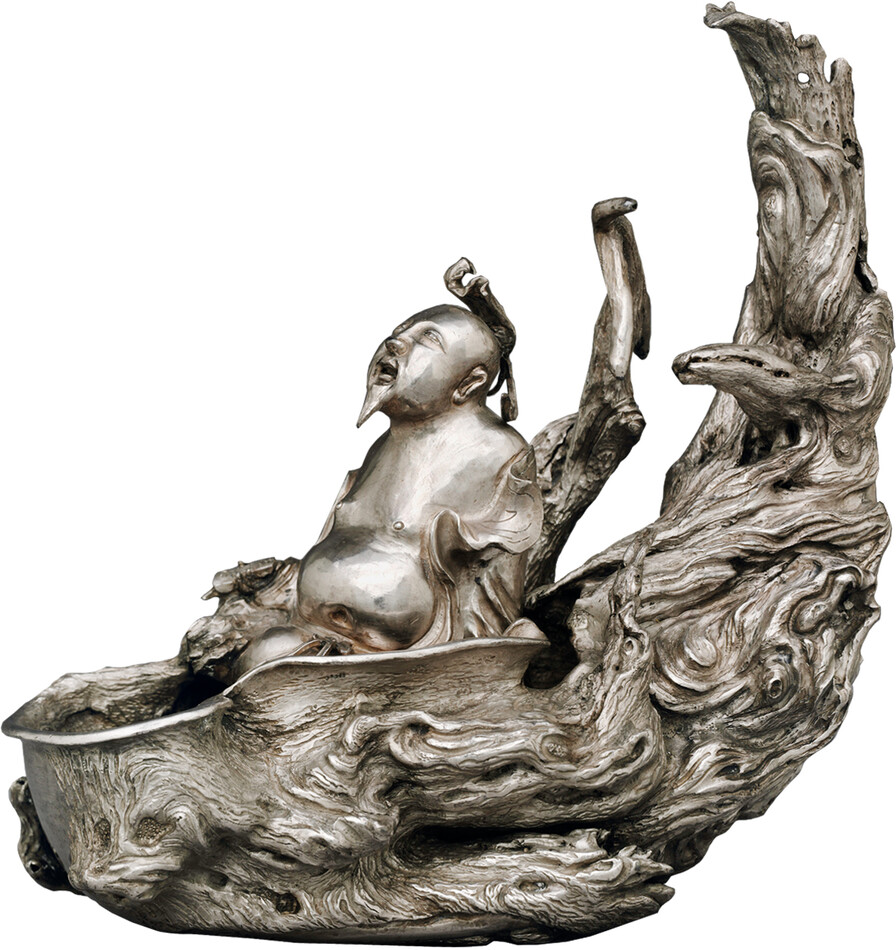
A vivid photograph of a lotus pond ushers visitors into this ambitious exhibition on the arts and culture of Jiangnan. Lying to the south of the Yangtze – its name literally means ‘south of the river’ – this part of China includes such major cities as Shanghai, Hangzhou and Suzhou. Curated by Clarissa von Spee, Chair of Asian Art and the James and Donna Reid Curator of Chinese Art at the Cleveland Museum of Art (CMA), this is the first exhibition outside China to present an encyclopaedic view of the cultural history of this historically affluent region.
Ever since the Walpole Society was founded in London in 1911 ‘with the object of promoting the study of the history of British art’, The Burlington Magazine has taken a close interest in an organisation with aims and principles so close to our own: this is the sixth Editorial we have devoted to the subject. The first, written by the art historian August F. Jaccaci, who edited the Magazine’s ‘Art in America’ section, appeared in 1913 on the occasion of the publication of the first of the annual volumes that are the society’s raison d’être.
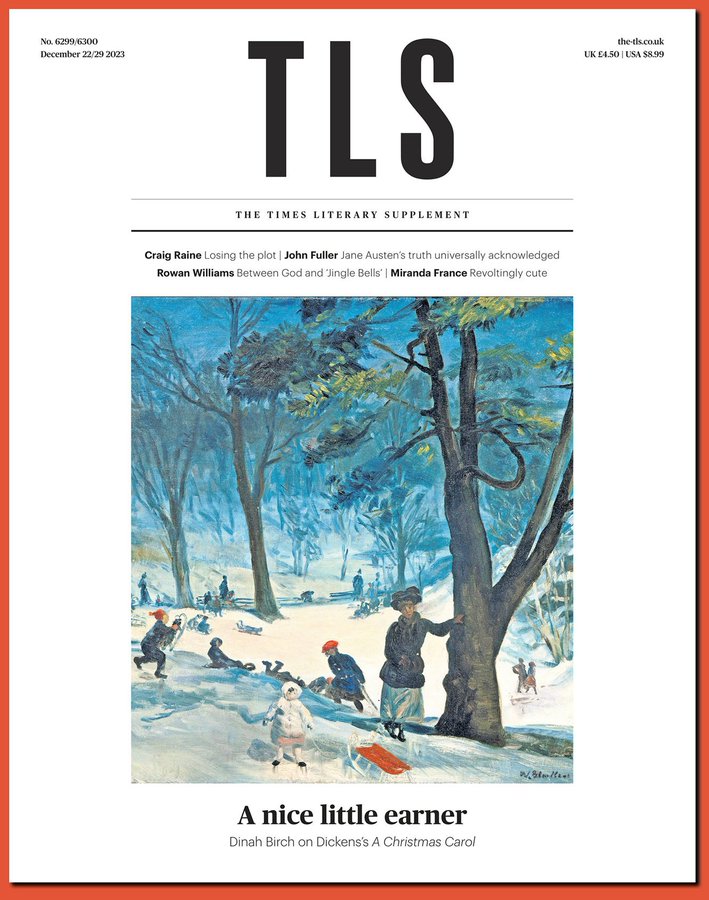
Times Literary Supplement (December 20, 2023): The latest issue features ‘A nice little earner’ – On Dicken’s Christmas Carol; Jane Austen’s Truth Universally Acknowledged; Between God and Jingle Bells; and ‘Revoltingly Cute’…
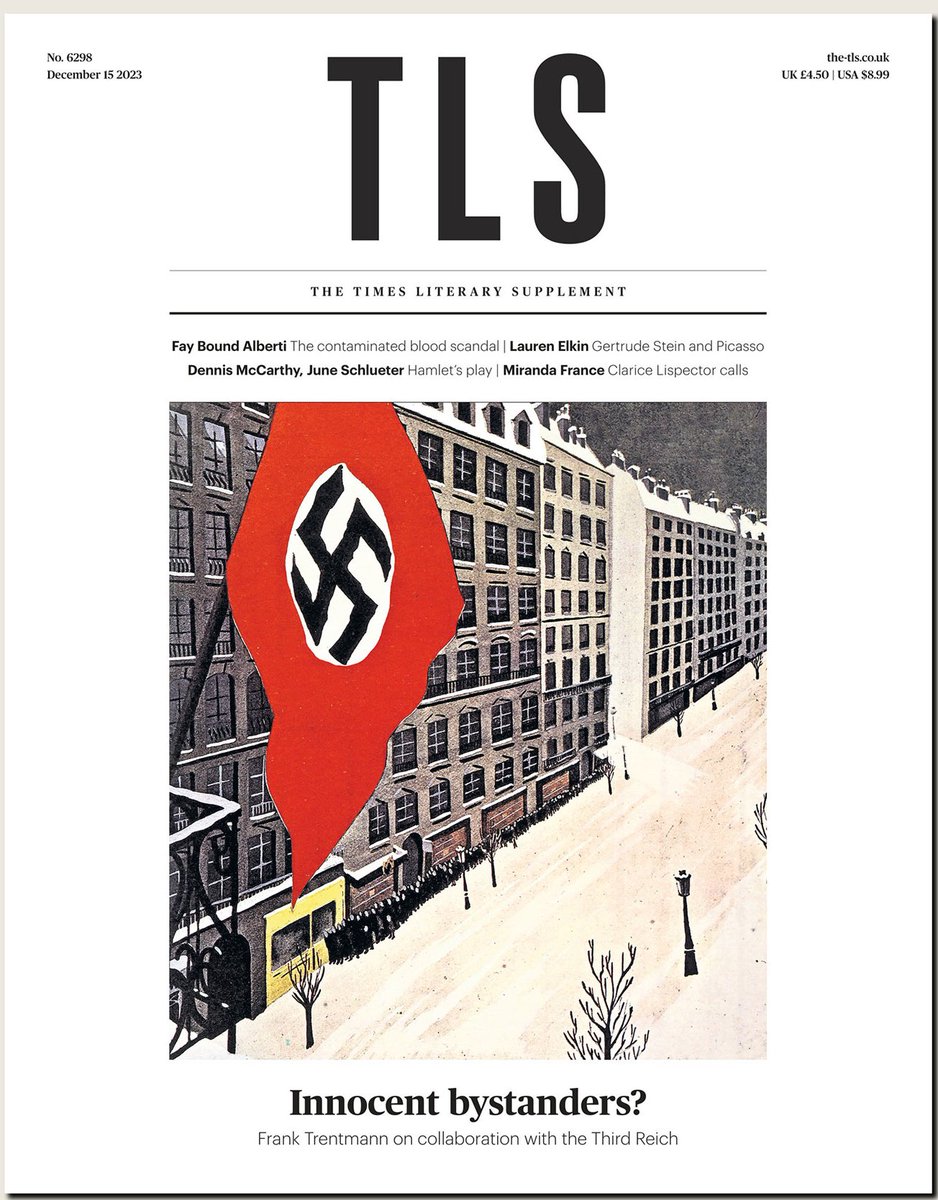
Times Literary Supplement (December 13, 2023): The latest issue features ‘Innocent bystanders? – Collaboration with the Third Reich; The contaminated blood scandal; Gertrude Stein and Picasso, Hamlet’s play; AI Journalism and Clarice Lispector calls…
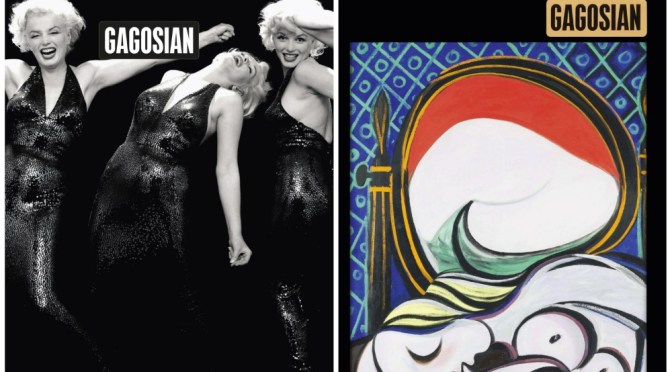
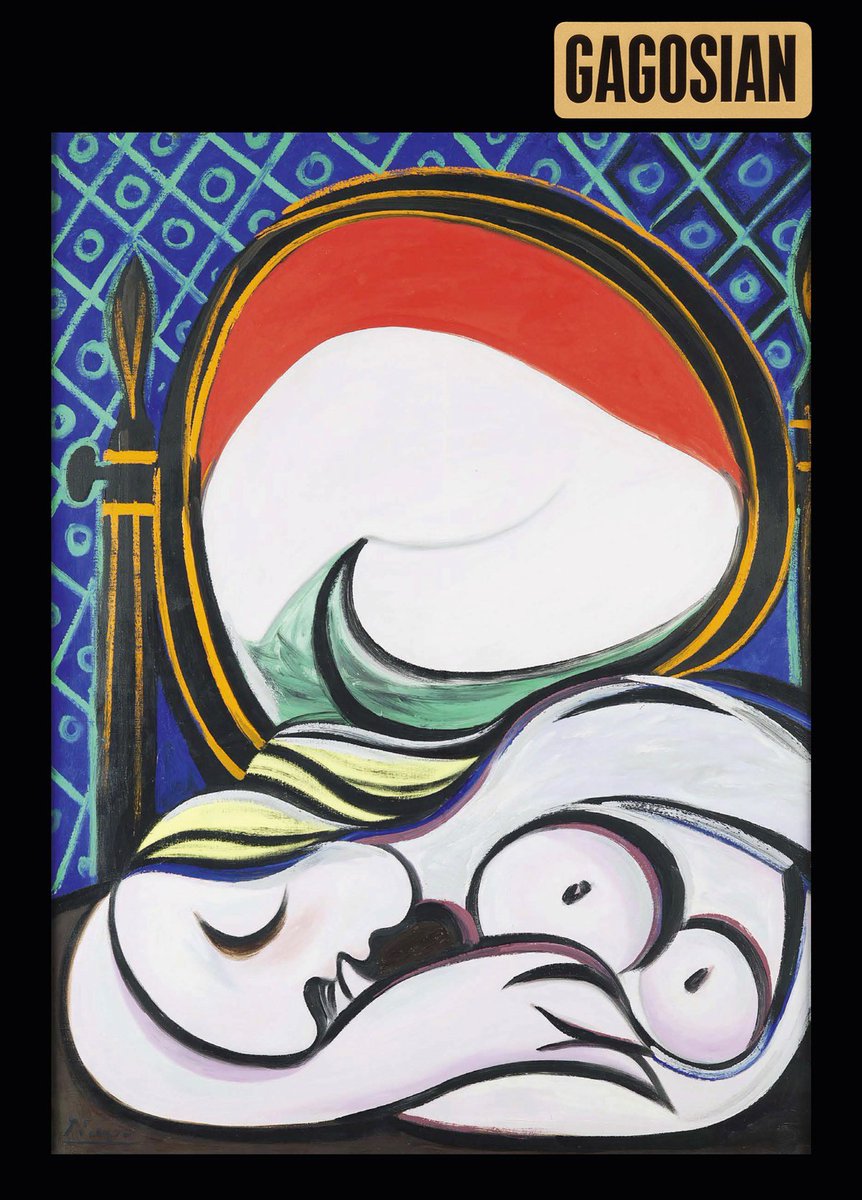
Gagosian Quarterly (Winter 2023) – The new issue features Annie Cohen-Solal who writes about the exhibition A Foreigner Called Picasso, at Gagosian, New York, detailing the genesis of the project, her commitment to the figure of the outsider, and Picasso’s enduring relevance to matters geopolitical and sociological. Connecting the dots among the Surrealist milieu, including Picasso, a conversation on the underrecognized photographer Lee Miller sets the stage for a New York show about her work, friendships, and collaborations with fellow artists.
Cocurator of the exhibition A Foreigner Called Picasso, at Gagosian, New York, Annie Cohen-Solal writes about the genesis of the project, her commitment to the figure of the outsider, and Picasso’s enduring relevance to matters geopolitical and sociological.
By Annie Cohen-Solal
I have been interested in the issue of immigration ever since I entered the art world. I began my career as an intellectual historian: I was a scholar of Jean-Paul Sartre and wrote his first biography. It was quite unexpected that I would fall into the orbit of the art world, let alone so fast, but two days after I arrived in New York City, in 1989—I had just been nominated cultural counselor to the French Embassy in the United States—I met Leo Castelli at a dinner. Out of the blue, Leo told me, “You don’t look like your predecessors.” (I was the first woman in the position.) “You’ll take New York city by storm and I’ll teach you American art. Come to the gallery tomorrow, I have a show with Roy [Lichtenstein]. Come for the opening and stay for the dinner.”
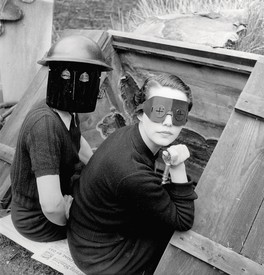
The American Surrealist photographer Lee Miller is the subject of the exhibition Seeing Is Believing at Gagosian, New York. Here we present a conversation on the stewardship of Miller’s legacy, her photography and writing from the frontlines of war to the pages of Vogue, and the intertwined lives of her friends, lovers, and the many artists she knew.
News, Views and Reviews For The Intellectually Curious







 Intellicurious
