Tag Archives: Peter Paul Rubens

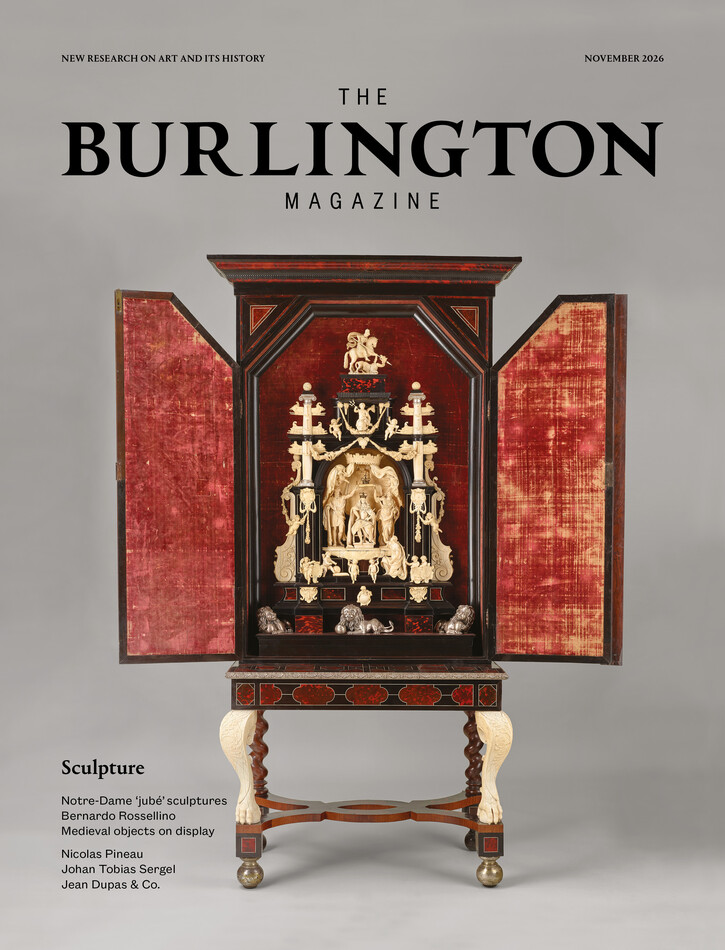
THE BURLINGTON MAGAZINE NOVEMBER 2026

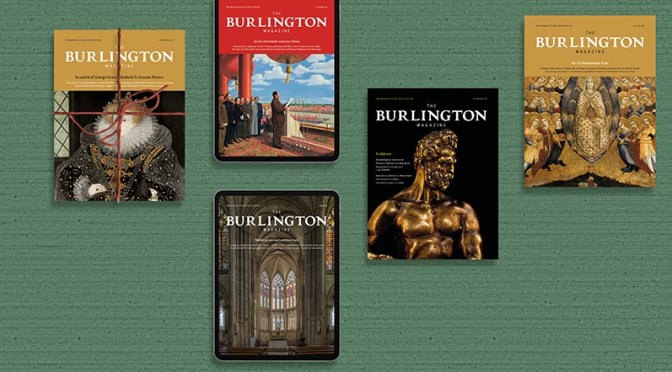
The Burlington Magazine: The latest issue features the upcoming 150th anniversary of Liverpool’s Walker Art Gallery in 2027, honors the career of late Victoria and Albert Museum jewelry curator Richard Edgcumbe, and reviews the monumental realism and modernist influence of nineteenth-century French painter Gustave Courbet.

Liverpool 2027

The Walker Art Gallery in Liverpool will be 150 years old in 2027. It was named after the local brewer Andrew Barclay Walker (1824–93), who donated £20,000 for the creation of the gallery. It opened in September 1877 and welcomed over 300,000 visitors during the next four months. Walker was not a collector of art but appears to have displayed an aesthetic sensibility through the high standards he insisted on for the design of his public houses. read more

Richard Edgcumbe (1951–2026)

A gifted curator who specialised in jewellery, Richard Edgcumbe pursued a successful career at the Victoria and Albert Museum, London, and notably published on gold chasing in the eighteenth century. read more

I, Gustave Courbet

Gustave Courbet (1819–77) was arguably the most important artist in nineteenth-century France. Over almost four decades, he created paintings of monumental achievement and innovation in all genres and changed how art was exhibited and sold – mostly in Paris, the capital of the international art world. He launched an aesthetic of realism that emphasised painterly facture and set the stage for modernist art in the decades that followed. read more
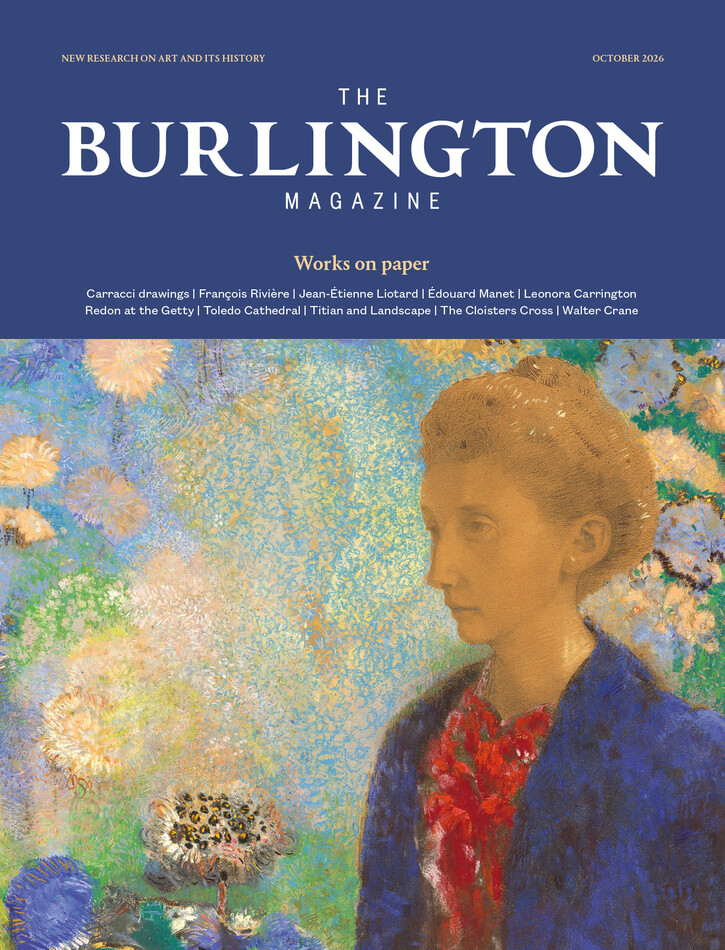
THE BURLINGTON MAGAZINE – OCTOBER 2026 PREVIEW

The Burlington Magazine: The latest issue features standout articles exploring a 1762 portrait of Marie-Antoinette by Jean-Étienne Liotard, watermarks on Carracci drawings, François Rivière’s rediscovered Ottoman drawing, and the Thompson collection of modern Chinese woodblock prints.

The RKD as a ‘knowledge centre’

What is the largest art-history library in the world? The answer to this question depends of course on how you measure size, but an institution that might reasonably claim such a status is the RKD in The Hague. The RKD has for decades been a vast and invaluable library and archive, carefully nurtured by expert librarians and archivists (or ‘curators’ as they have long been described).

A new drawing by Édouard Manet

A newly identified drawing in a private collection of a crouching girl is a characteristic example of the red-chalk life studies that Édouard Manet made in the 1860s, influenced by his close study of Renaissance draughtsmanship in Florence. Although squared for transfer, the drawing has not yet been linked to any known composition by the artist.

Mistaken identities: Liotard’s 1762 portrait of Marie-Antoinette

A refined portrait by Jean-Étienne Liotard in the Musée d’art et d’histoire, Geneva, has long been identified as depicting Marie-Antoinette as a child. New research establishes, however, that it is a drawing of another member of the imperial Habsburg family and also reveals a hitherto unidentified likeness of Marie-Antoinette.

The Burlington Magazine – May 2026 Preview

May 2026, #1478 – Vol 168 | Current issue | Current issue − The Burlington  Magazine

The Burlington Magazine: The latest issue features….

Main Articles and Research

“The Consolidation of Collections: New Light on the 18th-Century British Art Market” An in-depth study by the editorial team and guest contributors exploring how major British estates restructured their private galleries during the mid-1700s. The article utilizes newly discovered ledger books to trace the provenance of several key Italian Baroque works.

“Paolo Veneziano and the International Gothic in Venice” Following the research trends seen in the early part of the year, this feature provides a technical analysis of recently restored altarpieces attributed to Veneziano, focusing on the use of ultramarine and gold leaf techniques that defined the Venetian style in the 14th century.

“Nicholas Lanier and the ‘Star’ Drawings: New Discoveries” Building on recent scholarship (featured in related symposiums), this article identifies several previously unrecognized drawings from the collection of Nicholas Lanier (1588–1666). It specifically examines the “star-shaped marks” used by Lanier and his uncle Jerome to catalog their sixteenth-century Italian acquisitions.

Editorial and Shorter Notices
Editorial: “The Future of Art History in the Digital Age” Editor Christopher Baker discusses the balance between traditional archival research and the integration of AI and digital imaging in art historical authentication.

Object in Focus: “George Frederic Watts’s Satan (1847)” A specialized notice providing a new interpretation of Watts’s massive canvas. The author argues that the figure’s pose was inspired by the Monte Cavallo Horse Tamers in Rome rather than the Apollo Belvedere, as previously thought.

Exhibition and Book Reviews
The Farnese Gallery Drawings (Musée du Louvre, Paris): A critical review by Ketty Gottardo on the exhibition focusing on the Carracci brothers’ preparatory works.

Studio Prints: A History, 1968–2011: A review of the new publication by Paul Holberton Publishing, detailing the impact of the London workshop on 20th-century printmaking.

Modernizing the Catalog: A review of the Patek Philippe exhibition and the intersection of fine horology with decorative arts history.

Fine Art: The Burlington Magazine – January 2024

Image

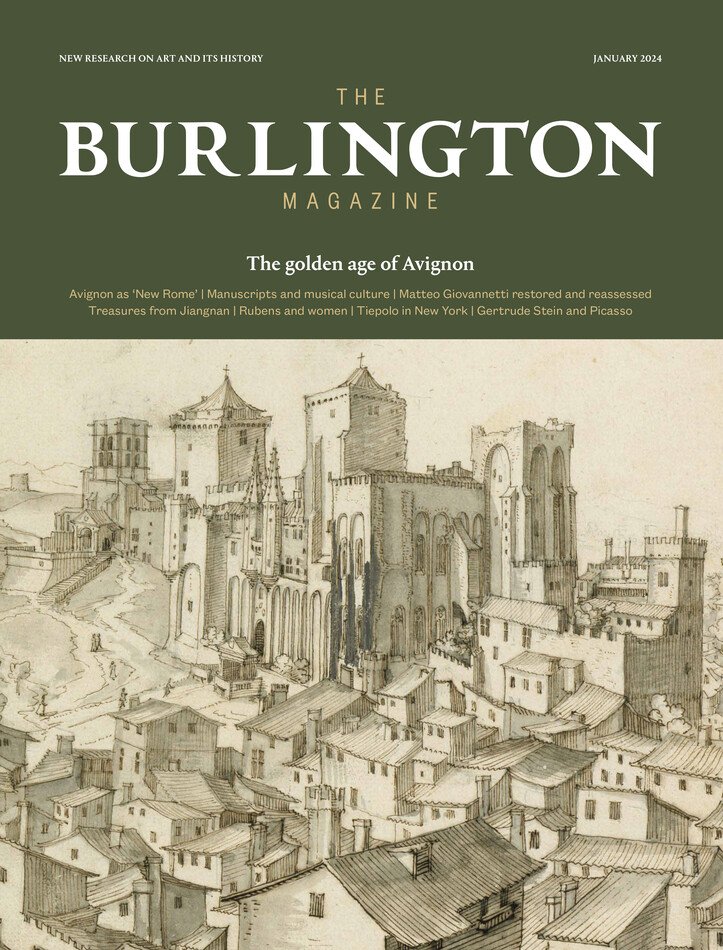
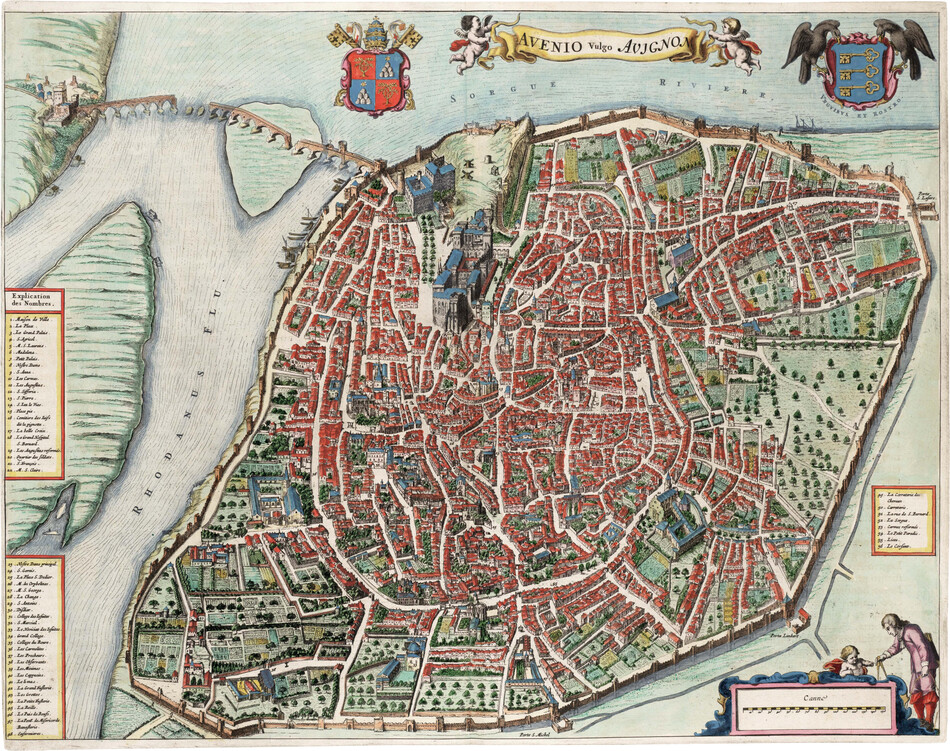
The Burlington Magazine – January 3, 2024: The new issue features ‘The Golden Age of Avignon’ – Avignon as ‘New Rome’; Rubens and women; Tiepolo in New York; Gertrude Stein and Picasso, and more….

China’s Southern Paradise: Treasures from the Lower Yangzi Delta

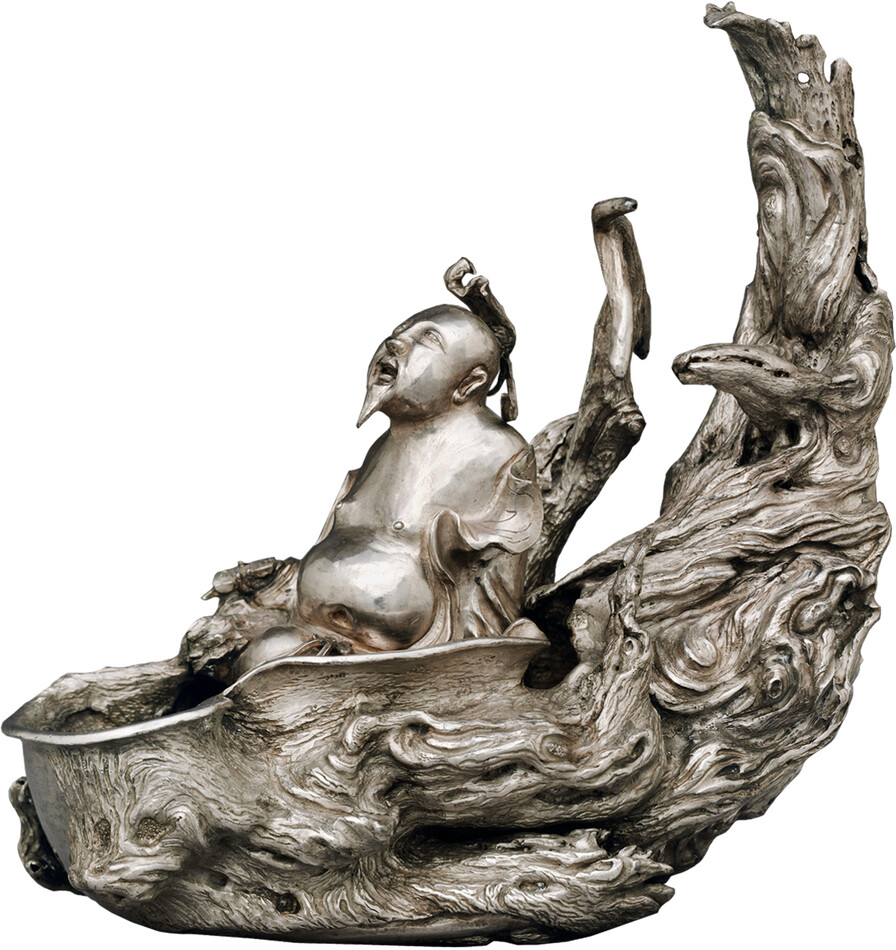
A vivid photograph of a lotus pond ushers visitors into this ambitious exhibition on the arts and culture of Jiangnan. Lying to the south of the Yangtze – its name literally means ‘south of the river’ – this part of China includes such major cities as Shanghai, Hangzhou and Suzhou. Curated by Clarissa von Spee, Chair of Asian Art and the James and Donna Reid Curator of Chinese Art at the Cleveland Museum of Art (CMA), this is the first exhibition outside China to present an encyclopaedic view of the cultural history of this historically affluent region. 

The Walpole Society

Ever since the Walpole Society was founded in London in 1911 ‘with the object of promoting the study of the history of British art’, The Burlington Magazine has taken a close interest in an organisation with aims and principles so close to our own: this is the sixth Editorial we have devoted to the subject. The first, written by the art historian August F. Jaccaci, who edited the Magazine’s ‘Art in America’ section, appeared in 1913 on the occasion of the publication of the first of the annual volumes that are the society’s raison d’être.

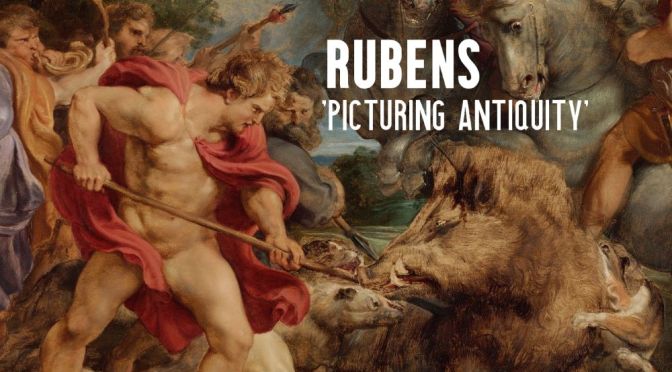
Art History: ‘Rubens – Picturing Antiquity’

“I think it just shows very well how Rubens worked, how he got the inspiration from antiquity, but he transforms it into something completely new and very alive.”

The Flemish Baroque painter Peter Paul Rubens is most famous for his dynamic, colorful renderings of religious scenes and mythological stories. Yet Rubens’s work was also deeply inspired by the art of the past. He was a keen student of classical antiquity, engaging with ancient sculptures, coins, gems, and cameos both at home and in his travels through Italy. His friendships with antiquarians, patrons, and scholars provided a network for vibrant intellectual exchanges that informed the artist’s work.

In this episode, Getty curators Anne T. Woollett, Davide Gasparotto, and Jeffrey Spier discuss their exhibition Rubens: Picturing Antiquity, which explores how Rubens was affected by and, in turn, transformed the classical past in his paintings, drawings, and designs. The exhibition, which received major support from Jo Carole and Ronald S. Lauder and generous support from the Leonetti/O’Connell Family Foundation, is on view at the Getty Villa through January 24, 2022.

For images, transcripts, and more, visit https://blogs.getty.edu/iris/podcast-peter-paul-rubens-and-the-arts-of-antiquity

Art: “The Lives Of Rubens” Through 17-Century Biographies (The Getty)

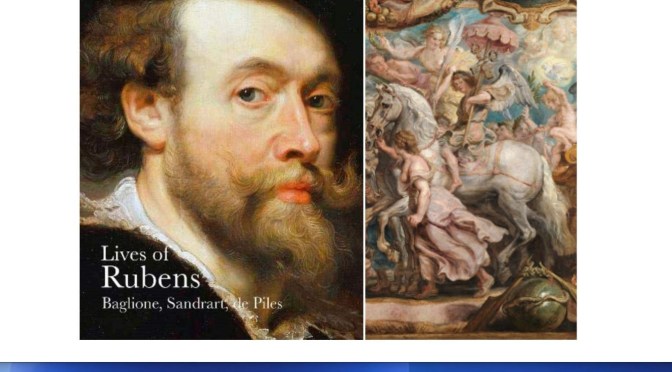
Art + Ideas - Getty PodcastsPeter Paul Rubens was among the most influential artists in 17th-century Europe. Despite a childhood marred by a scandal that landed his father in prison, Rubens rose to become not only a prominent court painter in the Spanish Netherlands but also a lauded diplomat who worked across Western Europe.
With countless biographies written about the artist and exhibitions of his work continuing into the present day, the legacy of this Flemish Baroque artist is hard to overstate.

In this episode, Getty curator Anne Woollett discusses the life of Rubens through 17th-century biographies by three authors: Giovanni Baglione, Joachim von Sandrart, and Roger de Piles.

For images, transcripts, and more, visit getty.edu/podcasts.

Sir Peter Paul Rubens was a Flemish artist and diplomat. He is considered the most influential artist of Flemish Baroque tradition. Rubens’s highly charged compositions reference erudite aspects of classical and Christian history.

The Art Of The Curator : “A Day In The Countryside” (National Gallery Video)

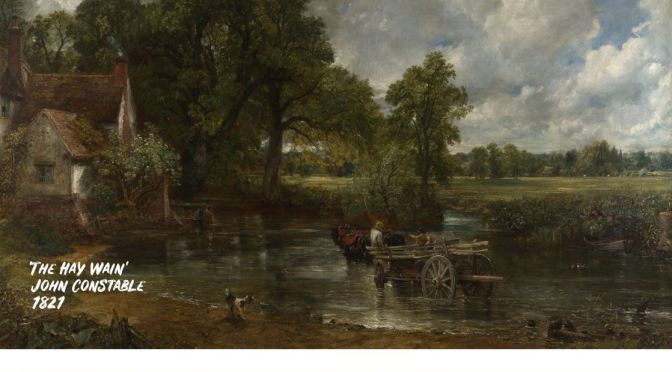
Lucy Chiswell, the Curatorial Fellow for Paintings 1600-1800, explores a day in the countryside through paintings by Rubens, Constable and Corot.

Paintings mentioned

0:50 Peter Paul Rubens ‘An Autumn Landscape with a View of Het Steen in the Early Morning’ 🎨 https://www.nationalgallery.org.uk/pa…

Find out more about Rubens the artist 🖌️ https://www.nationalgallery.org.uk/ar…


4:19 John Constable, ‘The Hay Wain’ 🎨 https://www.nationalgallery.org.uk/pa…

Find out more about Constable the artist 🖌️ https://www.nationalgallery.org.uk/ar…


8:03 Jean-Baptiste-Camille Corot ‘The Four Times of Day: Night’ 🎨 https://www.nationalgallery.org.uk/pa…

See more: the four times of day (Morning, Noon, Evening, and Night) 🎨 https://www.nationalgallery.org.uk/pa…