The controversial discovery that our brains can generate new neurons surprisingly late in life is now prompting a rethink of adult brain health, pointing the way to better treatments for stroke, dementia and depression By Jamie Ducharme
Often described as a genius, physicist Sabrina Pasterski built and flew her own plane by the age of 16 and is now developing a mind-bending idea that could finally unify gravity and quantum theory By Miriam Frankel
We know that this monster El Niño will bring floods, droughts, cyclones and wildfires, but some governments aren’t putting in the necessary resources to prepare for disaster
This El Niño is forecast to end around June next year after smashing all records, but its impacts could persist indefinitely in some parts of the world By Michael Le Page
An injectable HIV drug with a novel mechanism shows remarkable ability to prevent infection
Mantle waves sculpt the continents
When the forces of plate tectonics tear continents apart, it’s an incredibly violent process, unfolding in slow motion. It was also thought to be very local: Magma from hot, rising mantle rock seeds volcanoes along the rift zone, while the far-removed cold interiors of continents remain intact.
Multicellularity came early for ancient eukaryotes
Microscopic algalike fossils from China reported early this year astounded evolutionary biologists with their extreme age. Dated at 1.6 billion years old, the specimens suggest one of the hallmarks of complex life—multicellularity—arose far earlier than previously thought.
A new type of magnetism emerges
For 98 years, physicists knew of two types of permanently magnetic materials. Now, they’ve found a third. In familiar ferromagnets such as iron, unpaired electrons on neighboring atoms spin in the same direction, magnetizing the material so that, for example, it sticks to a refrigerator. Antiferromagnets such as chromium have zero overall magnetism, but they possess an atomic-scale magnetic pattern, with neighboring electrons spinning in opposite directions. Novel altermagnets—hypothesized 5 years ago—share aspects of both.
Oil palm plantations, pictured here in Thailand, have displaced native rainforests across Southeast Asia.PHOTO: OLEH_SLOBODENIUK ISTOCK
Oil palm plantations replace diverse tropical forests with monocultures, but restoration can bring biodiversity and ecosystem services back to these highly modified landscapes.
News, Views and Reviews For The Intellectually Curious






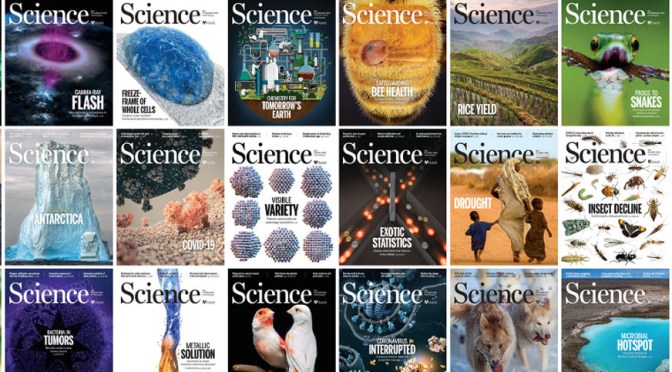

 Science Magazine – December 13, 2024: The new issue features


