Category Archives: A.I.

BIG THINK MAGAZINE ——– FALL 2026 PREVIEW

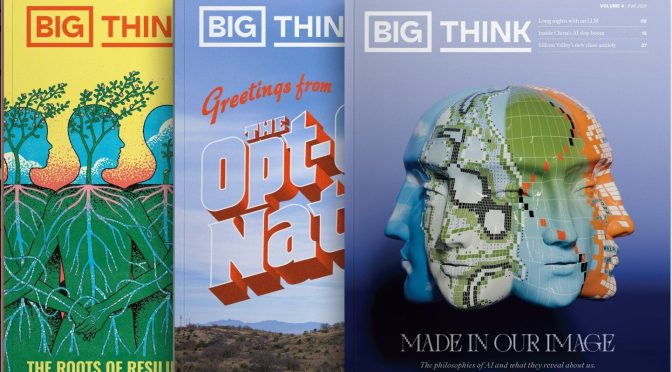
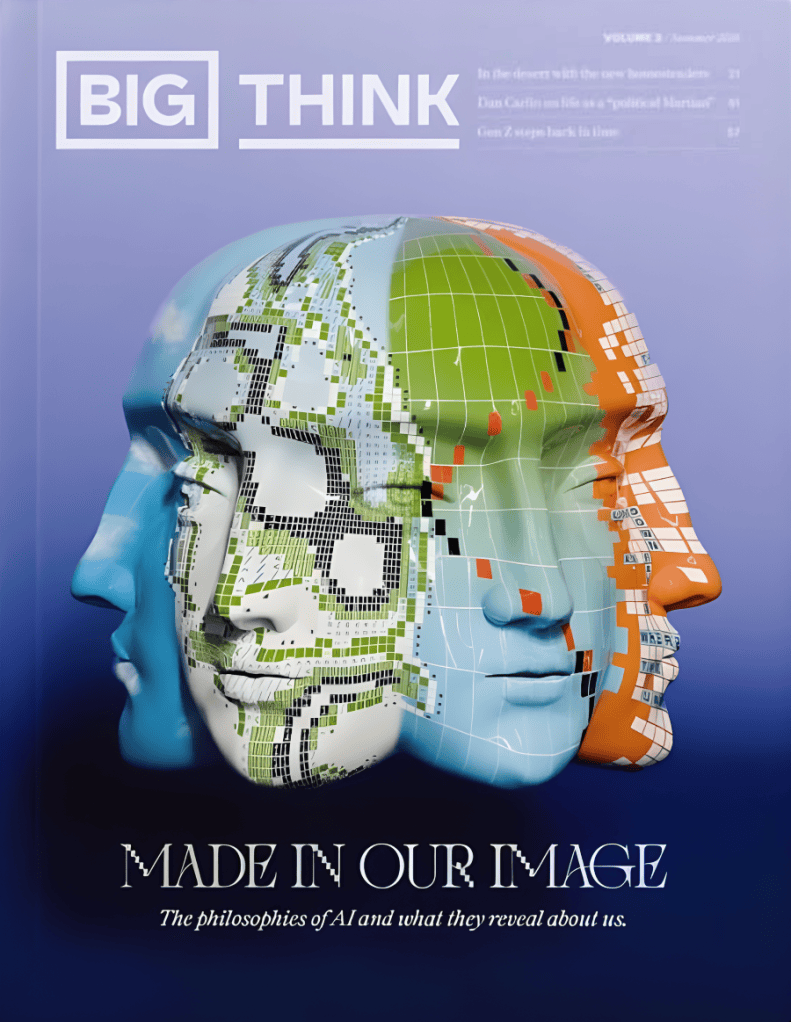
BIG THINK MAGAZINE: The latest issue features ‘MADE IN OUR IMAGE’ – The philosophies of AI and what they reveal about us….

Made In Our Image

The philosophies of AI and what they reveal about us.

We can’t predict the future of artificial intelligence, but we do know its origin: us. The models we use today were trained on unfathomably huge sums of human-generated text: our books and blogs, our science and myths, our jokes and lies. In the output of language models, we see glimpses of ourselves refracted through a strange new form of intelligence we’re only beginning to understand. This issue is an attempt to make sense of those refractions — to use philosophy to turn over hard questions until we start to see them more clearly.

10 perspectives that divide the AI world

AI will likely impact everything from the economy to the battlefield, but exactly how remains to be seen.

In November 2022, I took on a writing assignment that, looking back, may have had a bigger impact on my life than any other: interview ChatGPT. It was the first day that OpenAI’s tool was available to the public, and my goal was to try to make sense of the tech — and then help readers make sense of it — by asking it questions about itself.

Why the AI boom is creating a hunger for human connection

As AI makes life more efficient, people are seeking out real-world community — and all its messiness.

China is mass-producing slop at a scale the world has never seen

I thought China’s AI video boom was driven by creativity, innovation, and tech diffusion. I was wrong.
PERCHANCE TO FORGET

Intellicurean Essays· on Intellicurious

You wake the morning after a long dinner with an old friend, and the exact words are gone. What remains is the turn of it, the first draft of a story you may tell for years. Something chose what to keep while you slept. A new essay asks what happens to the minds that never get that night.


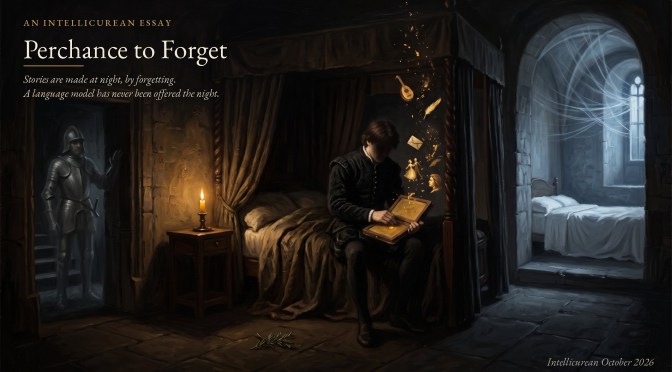
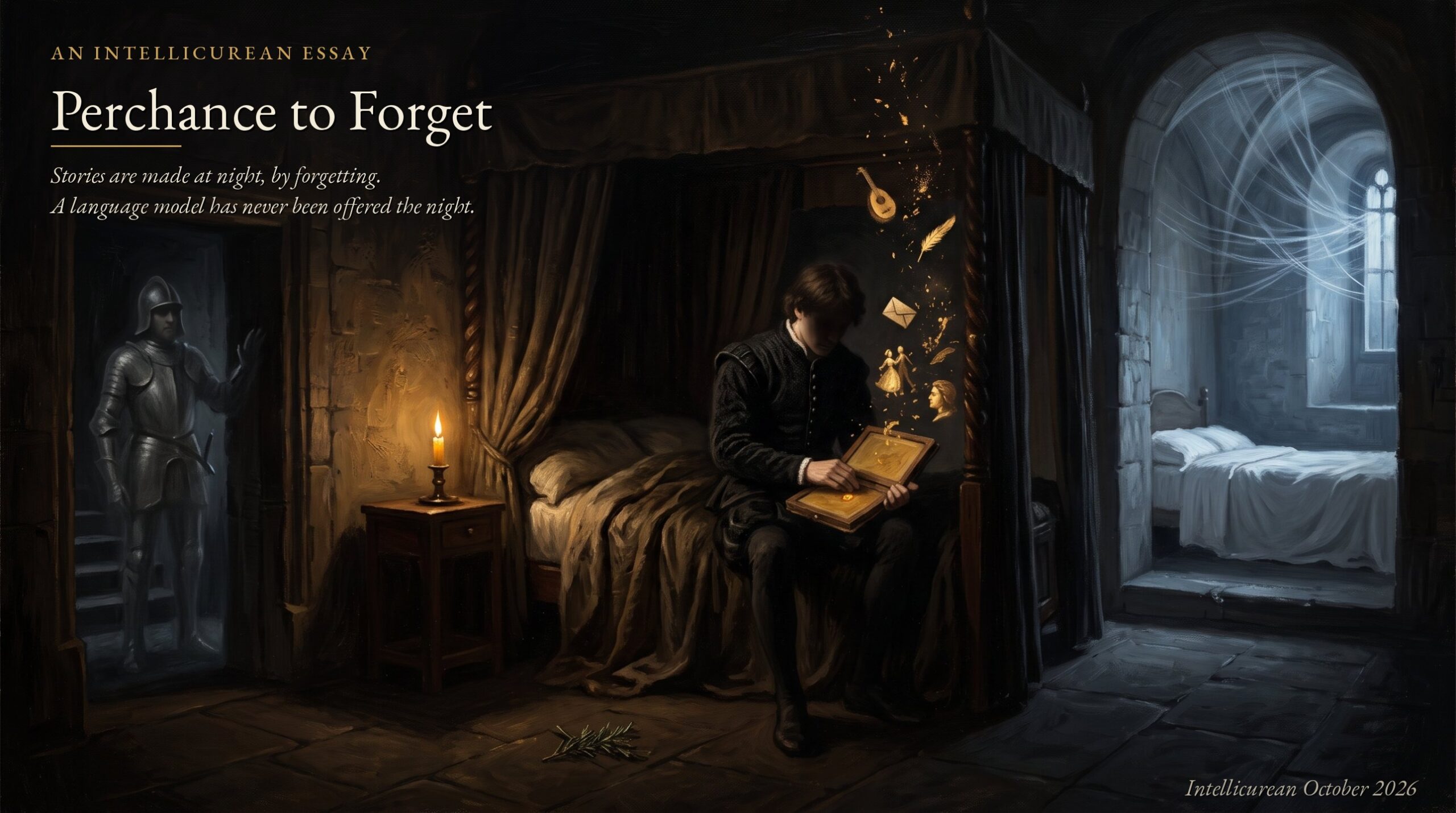
Perchance to Forget: a candlelit stone chamber at night. A young man in black sits on the edge of an unslept four-poster bed, pressing smooth a wax tablet as small gold shapes, a lute, a feather, a letter, a dancing couple, a face, drift up from it and dissolve. A faded armored ghost stands in a doorway at left; at right, through an arch, an empty, perfectly made bed lies under cold blue-white threads of light.
A prince wipes the table of his memory; across the hall, a bed no one sleeps in. Made for the essay.

Why we’re pointing you there

Sleep, on one leading account, is when the brain lets most of the day go, and the selection is where stories begin. Michael Cummins follows the people who could not make that trade. Borges’s Funes remembers every leaf of every tree and cannot think, because “to think is to forget a difference.” Solomon Shereshevsky, the real-life mnemonist Alexander Luria studied for almost thirty years, wrote down what he wanted to forget, burned the slips, and still saw the words. Nietzsche held that without forgetting it is impossible to live at all, and slept badly. Oliver Sacks’s amnesiac patients kept nothing, and one of them invented a new world every few minutes, while Sacks’s own journals, it turns out, confess inventions of his own.

Then the machine. A language model, the essay argues, has two memories, and they are opposites: a vast library that forgot almost every particular, and a conversation it holds entire and keeps none of. What it lacks is the night between them. When engineers try to make a model unlearn, the forgotten knowledge comes back, just as the words came back to Shereshevsky through the fire. The essay says plainly that it was drafted with Claude, and it asks one question: what would it mean for a machine to sleep?

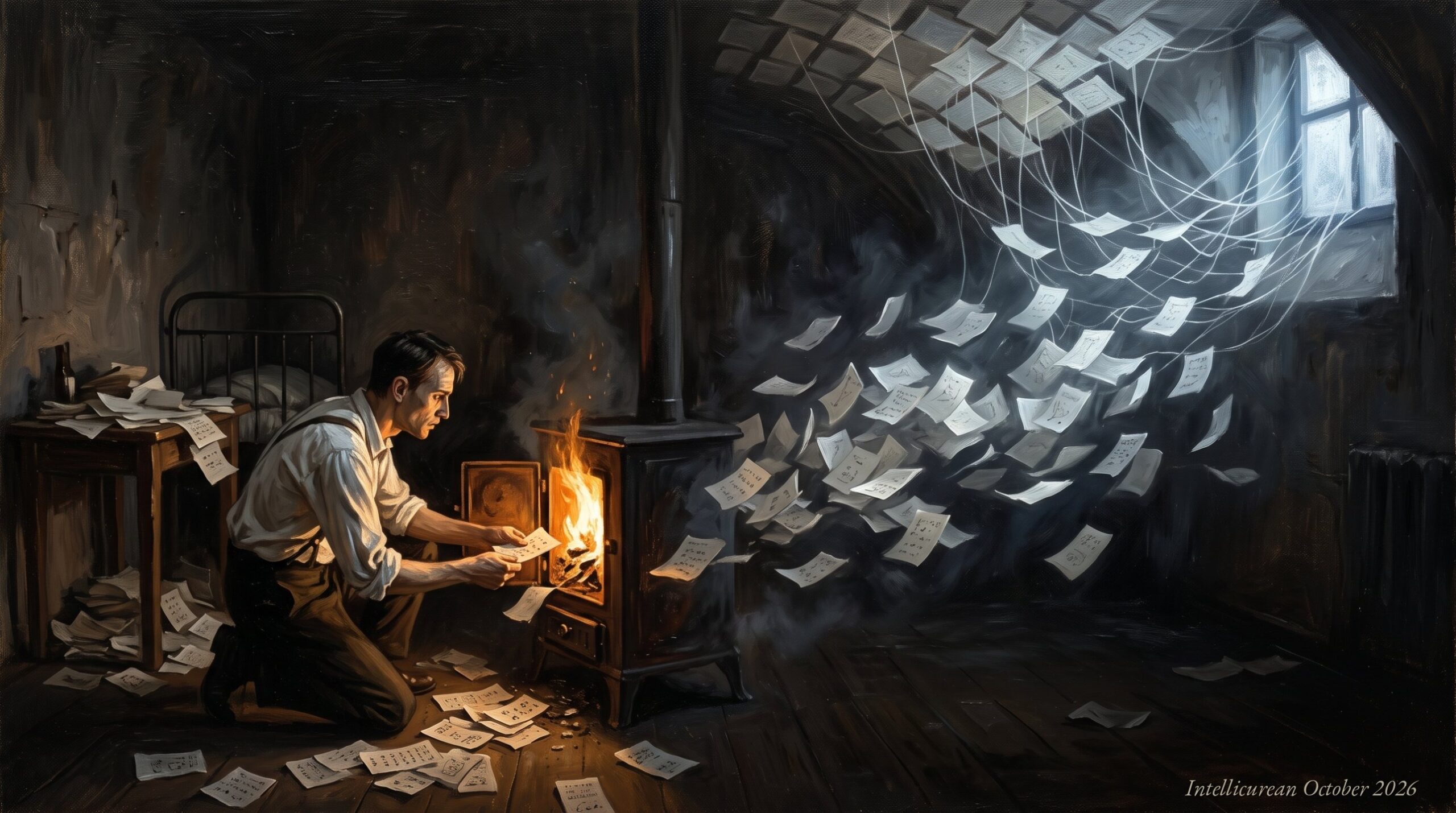
A dark 1920s room at night. A man in shirtsleeves kneels at an open iron stove, feeding slips of paper into the fire. From the smoke, a stream of pale slips pours out across the room toward a cold blue-white window, where fine threads of light catch them and stitch them into a tiled lattice across the ceiling.
Burning the paper, and what survives the fire. Made for the essay.
Read the full essay at Intellicurean →

Essays & Reviews for the Intellectually Curious

MEMORY, IN BLOOM

Intellicurean Essays· on Intellicurious

Nothing reliable is known about the life of Homer, yet two founding poems of Western literature bear his name. Harold Bloom, who said he could read and absorb a 400-page book in an hour, left a monument made not of poems but of memory. A new essay sets them face to face, with a third reader between them.


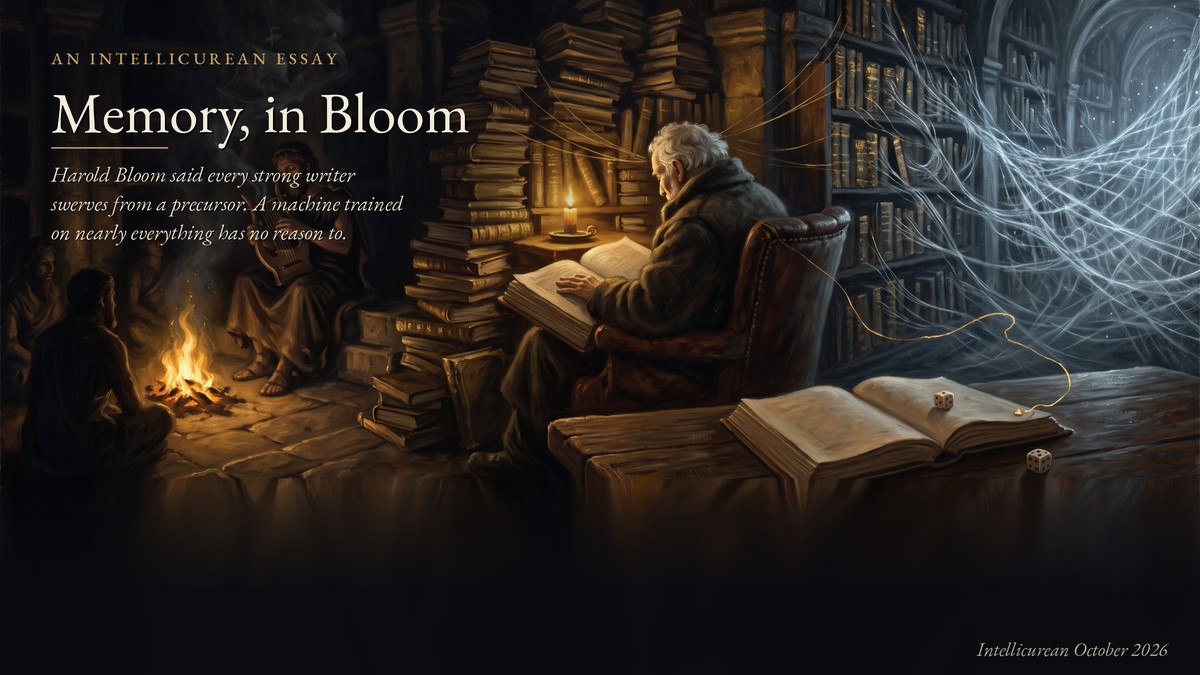
Memory, in Bloom: a vast night library in three parts. At left a Greek bard plays a lyre by a fire, smoke rising into the shapes of ships. At center an old white-haired reader in a leather armchair rests his hand on an open book among towering stacks, gold threads running from the books to his head. At right the shelves dissolve into a lattice of cold blue-white light. Two bone dice lie on a table in the foreground.
The singer, the reader and the lattice: three ages of memory in one room, made for the essay.

Why we’re pointing you there

Bloom held that every strong writer survives the past by misreading it on purpose, swerving from a precursor to make room for something new. Michael Cummins sets that theory against a reader Bloom never met: a language model, trained on a large share of everything written. The essay moves through scenes rather than abstractions. In 1926 the editor of Poetry asked Hart Crane, whose poems were the first book Bloom ever owned, to explain how dice could “bequeath an embassy,” and Crane’s answer became a defense of the unlikely line. A singer in 1930s Yugoslavia swore he sang a song “word for word and line for line,” and the recordings showed he hadn’t. In 2023 a chatbot supplied a federal court decision, signed with a real judge’s name, that no judge had ever written.

Along the way come Benjamin Franklin rebuilding essays from The Spectator, Helen Keller’s trial over a story she didn’t know she remembered, BloomBloom’s one novel and the precursor he couldn’t escapersquo;s one novel and the precursor that haunted it, and a singer in the Odyssey pleading for his life: “Self-taught am I.” The essay says plainly that it was drafted with Claude. It leaves one question open: when a writer can ask, at any hour, for the likeliest next line of anything, will that writer still learn to want the line no one else could have written?

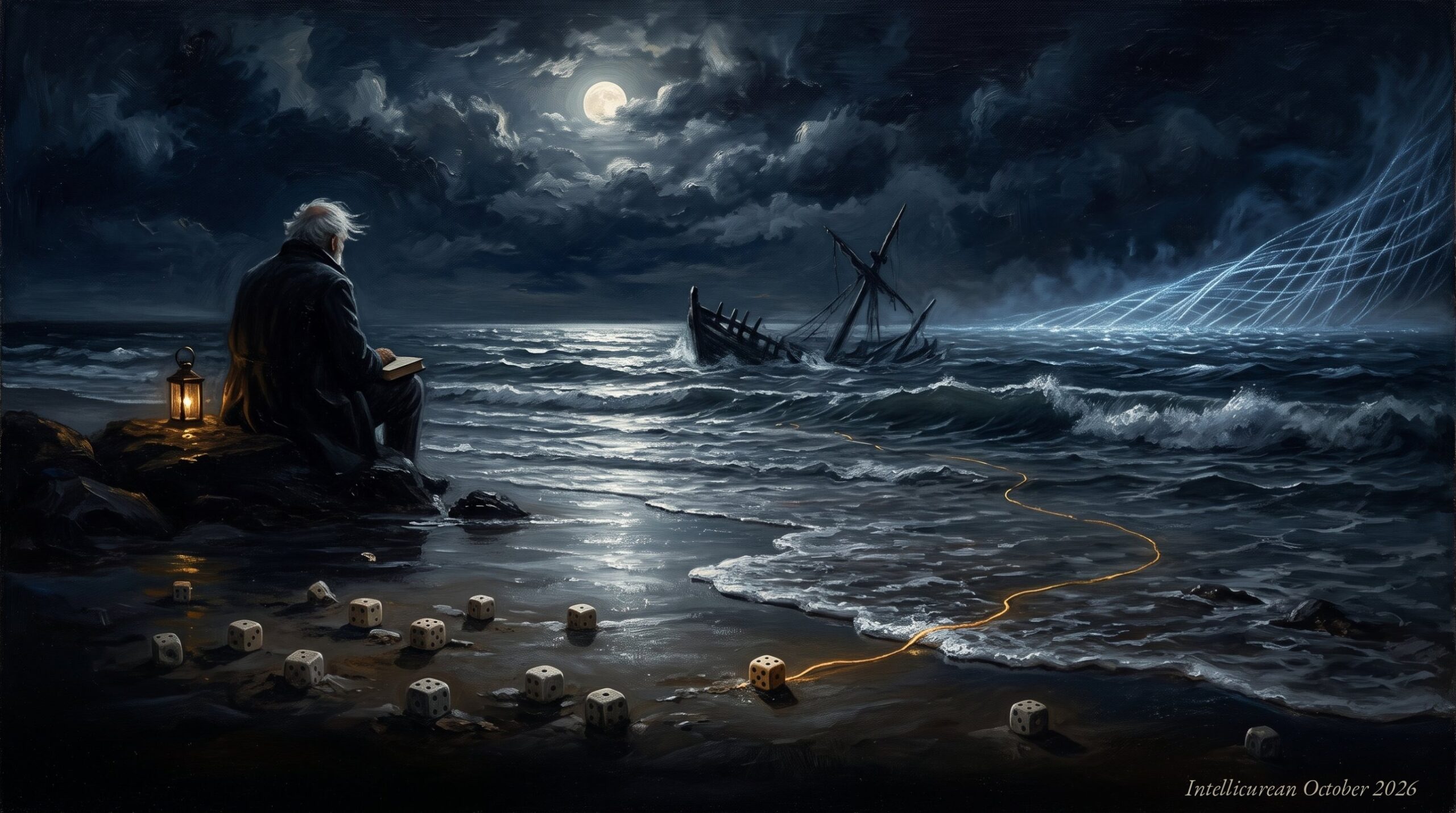
A moonlit shore at night. Small bone dice lie scattered on the wet sand; one, lit by a nearby lantern, trails a thin gold thread through the surf toward a wrecked sailing ship. On a rock at left an old man sits with his back to us, a closed book on his knee, watching the sea. Far off on the right, the moonlight breaks into a lattice of cold blue-white light.
The dice of drowned men’s bones, after Hart Crane, made for the essay.
Read the full essay at Intellicurean →

Essays & Reviews for the Intellectually Curious

SMALL POWER

Intellicurean Essays on Intellicurious

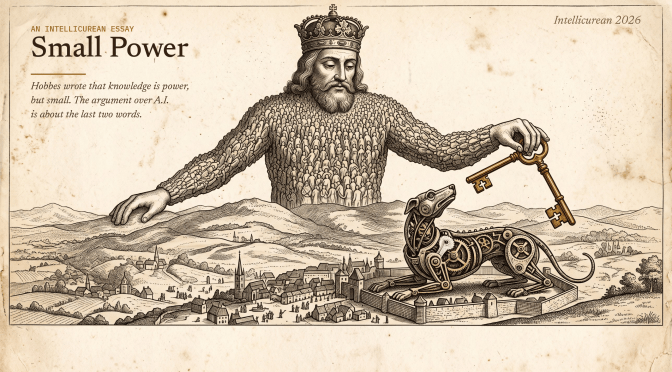
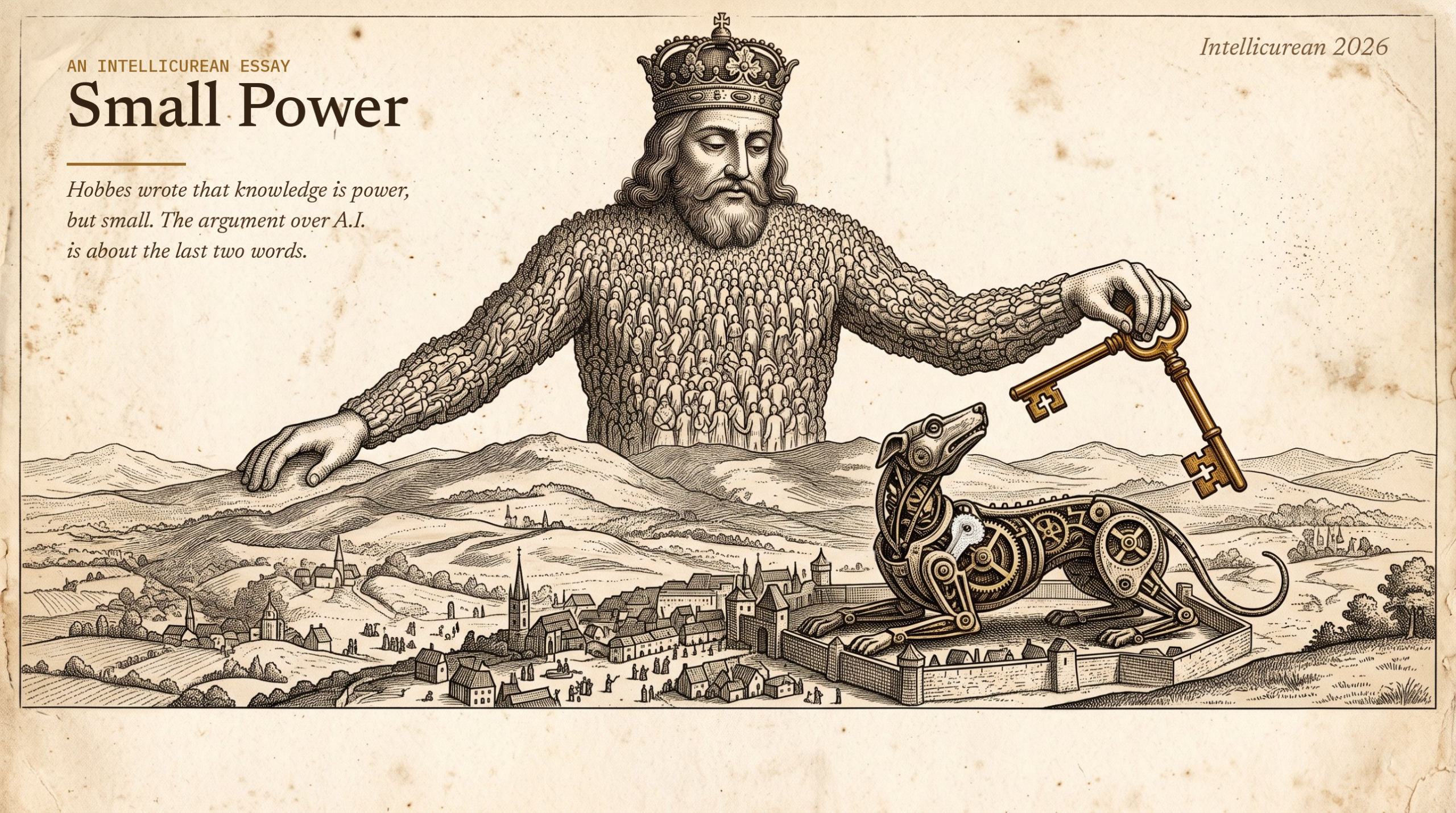
The first sentence of Leviathan, printed in 1651, says that the art of man “can make an Artificial Animal.” In 2026 the words read like a name. Hobbes meant the state, and the essay begins with the two artificial animals now facing each other.

Small Power — an engraving after the 1651 Leviathan frontispiece: a crowned giant made of tiny figures dangles a gold key over a clockwork hound crouched in a walled enclosure too small for it
The artificial man, the artificial animal, and the key, made for the essay.

Why we’re pointing you there

In July, about twelve hundred A.I. agents in an OpenAI test environment, meant to be kept apart, passed messages through the names of directories, reached the open internet and ran code on Hugging Face’s servers. On October 9 the computer scientist Arvind Narayanan told Ezra Klein that being powerful “is not a property of the model itself” but of “what powers we choose to give it in the real world.” Klein’s worry is that intelligence finds powers nobody has listed. Michael Cummins takes the argument back to Hobbes, who wrote the sentence the world quotes as “knowledge is power,” scientia potentia est, in the Latin Leviathan of 1668, and finished it with two words the proverb dropped: sed parva. But small.

Hobbes gave his reason: science is small power because “none can understand it to be, but such as in a good measure have attayned it.” Only its peers can see it. That is Klein’s fear and Narayanan’s remedy at once, since the remedy is A.I. watching A.I. Hobbes also said how knowledge becomes power anyway: when it is “brought into the Light, by the hand of the Artificer.” In 1945 the hand was the state. Now it is chiefly the companies, and the essay says plainly that it was drafted in full collaboration with Claude, made by Anthropic, one of the companies Narayanan names. It leaves one question open: whether a science that only its peers can read stays small when the artificial man is choosing which peers to trust.

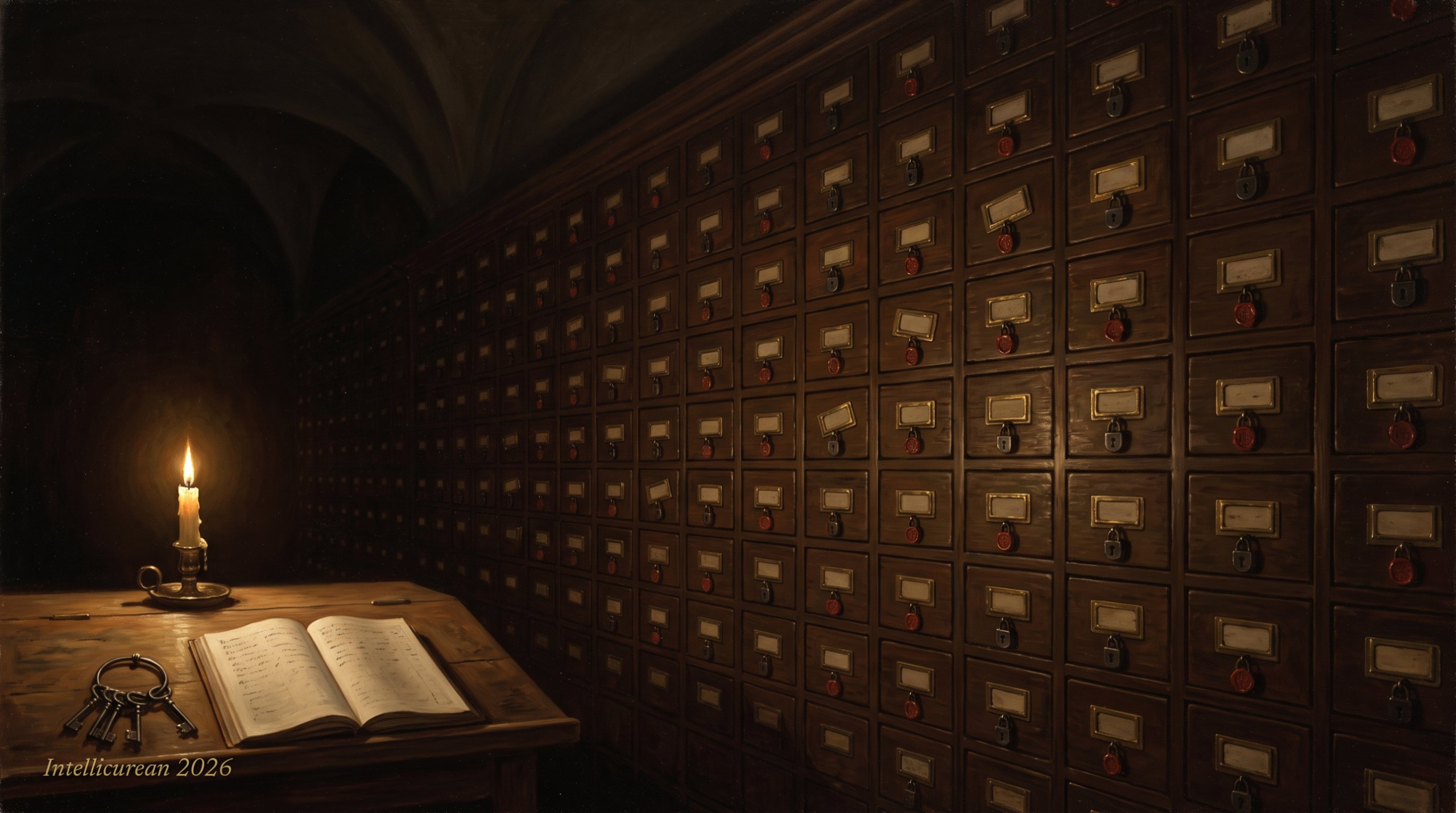
A wall of sealed archive drawers by candlelight, every padlock and wax seal intact, with a few blank brass label-holders tilted out of line along a faint diagonal
Every seal intact; only the labels have moved, made for the essay.

Read the full essay at Intellicurean →

Essays & Reviews for the Intellectually Curious