Tag Archives: The Iliad

MEMORY, IN BLOOM

Intellicurean Essays· on Intellicurious

Nothing reliable is known about the life of Homer, yet two founding poems of Western literature bear his name. Harold Bloom, who said he could read and absorb a 400-page book in an hour, left a monument made not of poems but of memory. A new essay sets them face to face, with a third reader between them.
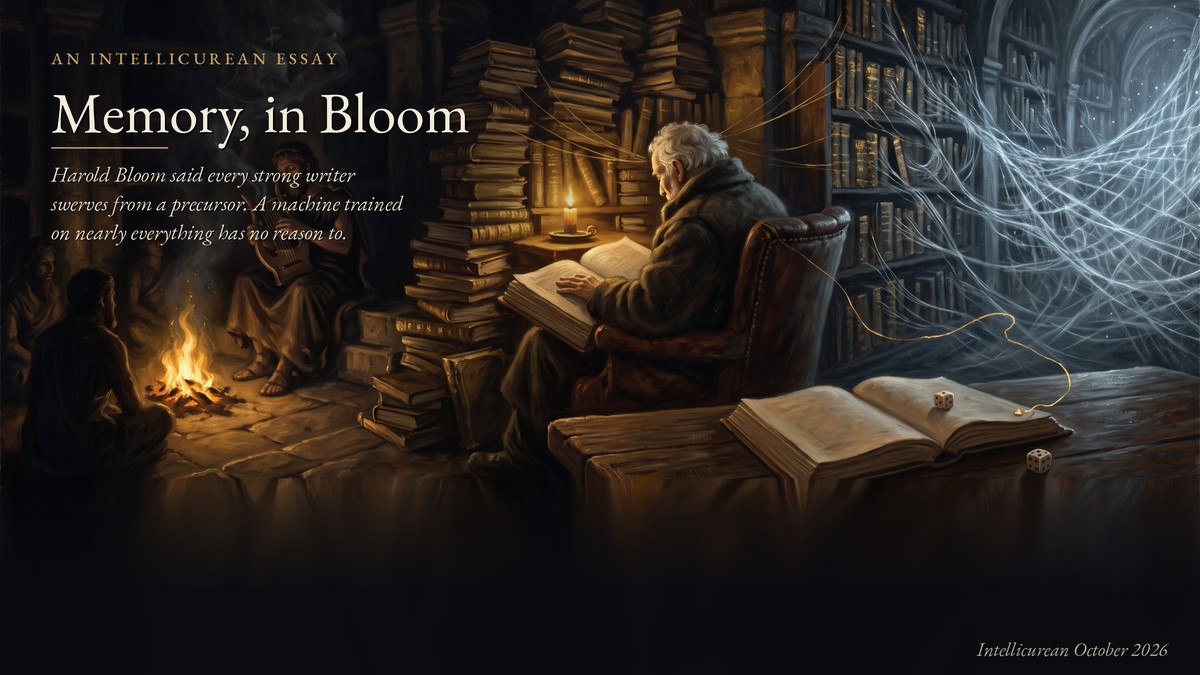

Memory, in Bloom: a vast night library in three parts. At left a Greek bard plays a lyre by a fire, smoke rising into the shapes of ships. At center an old white-haired reader in a leather armchair rests his hand on an open book among towering stacks, gold threads running from the books to his head. At right the shelves dissolve into a lattice of cold blue-white light. Two bone dice lie on a table in the foreground.
The singer, the reader and the lattice: three ages of memory in one room, made for the essay.

Why we’re pointing you there

Bloom held that every strong writer survives the past by misreading it on purpose, swerving from a precursor to make room for something new. Michael Cummins sets that theory against a reader Bloom never met: a language model, trained on a large share of everything written. The essay moves through scenes rather than abstractions. In 1926 the editor of Poetry asked Hart Crane, whose poems were the first book Bloom ever owned, to explain how dice could “bequeath an embassy,” and Crane’s answer became a defense of the unlikely line. A singer in 1930s Yugoslavia swore he sang a song “word for word and line for line,” and the recordings showed he hadn’t. In 2023 a chatbot supplied a federal court decision, signed with a real judge’s name, that no judge had ever written.

Along the way come Benjamin Franklin rebuilding essays from The Spectator, Helen Keller’s trial over a story she didn’t know she remembered, BloomBloom’s one novel and the precursor he couldn’t escapersquo;s one novel and the precursor that haunted it, and a singer in the Odyssey pleading for his life: “Self-taught am I.” The essay says plainly that it was drafted with Claude. It leaves one question open: when a writer can ask, at any hour, for the likeliest next line of anything, will that writer still learn to want the line no one else could have written?
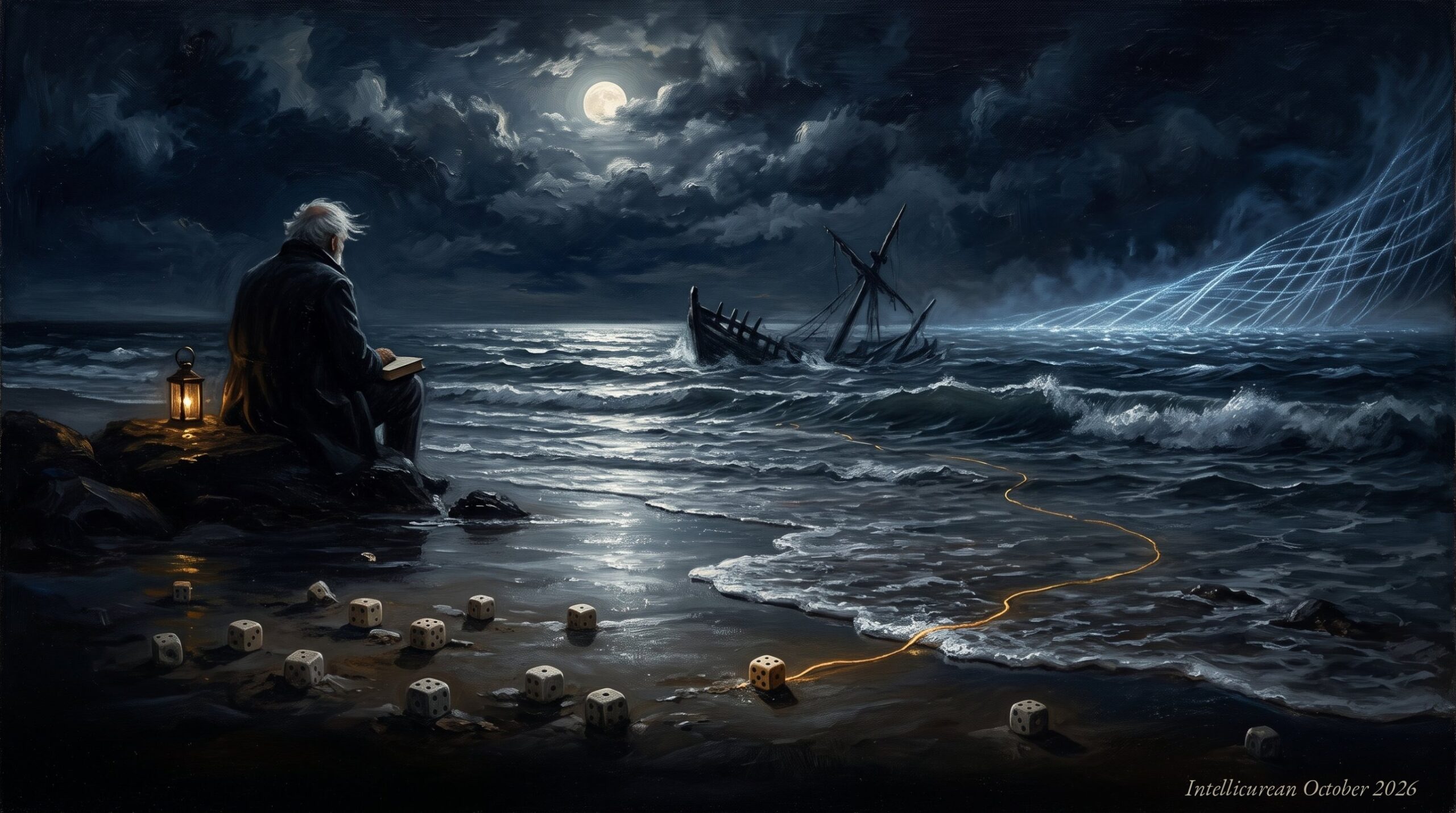
A moonlit shore at night. Small bone dice lie scattered on the wet sand; one, lit by a nearby lantern, trails a thin gold thread through the surf toward a wrecked sailing ship. On a rock at left an old man sits with his back to us, a closed book on his knee, watching the sea. Far off on the right, the moonlight breaks into a lattice of cold blue-white light.
The dice of drowned men’s bones, after Hart Crane, made for the essay.
Read the full essay at Intellicurean →

Essays & Reviews for the Intellectually Curious
Arts/Books: Times Literary Supplement – Oct 6, 2023

Image

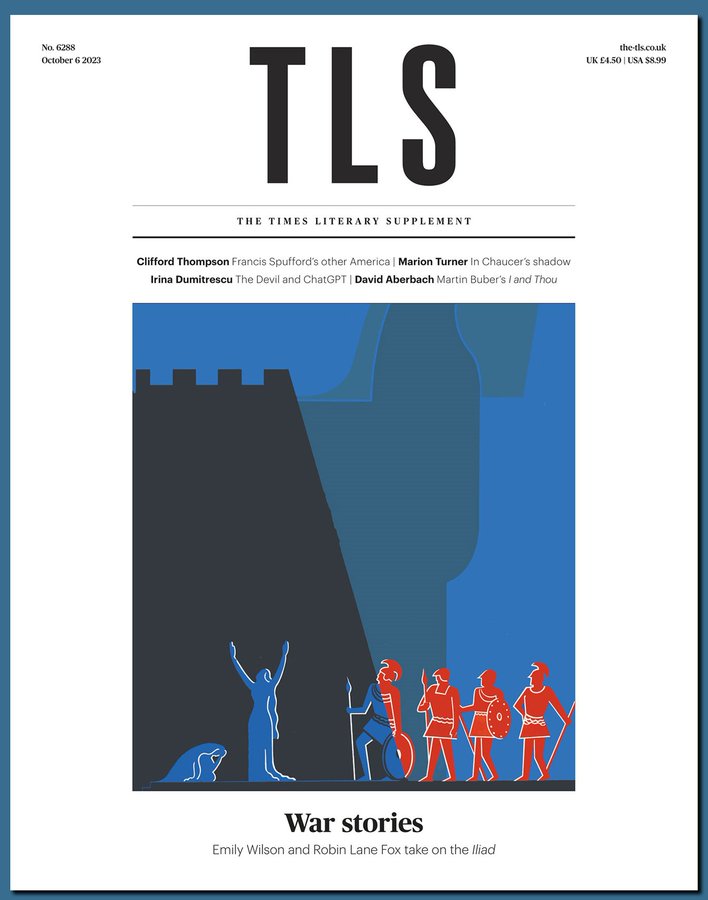
Times Literary Supplement (October 6, 2023): The new issue features War Stories – A review of the Iliad; Frances Sputford’s ‘Other America’; In Chaucer’s Shadow; The devil and ChatGPTand Martin Buber’s ‘I and Thou’…

Previews: History Today Magazine-September 2023

September 2023

HISTORY TODAY MAGAZINE (SEPTEMBER 2023) – This issue features Lee Kuan Yew’s Singapore story, conquistador Hernán Cortés’ on trial, the fascist plot to kill the king, the fascinating fusion of Old English names, and sharpshooter Marjorie Foster’s battle with the War Office. Plus: reviews, opinion, crossword and much more!

‘Homer and His Iliad’ by Robin Lane Fox review

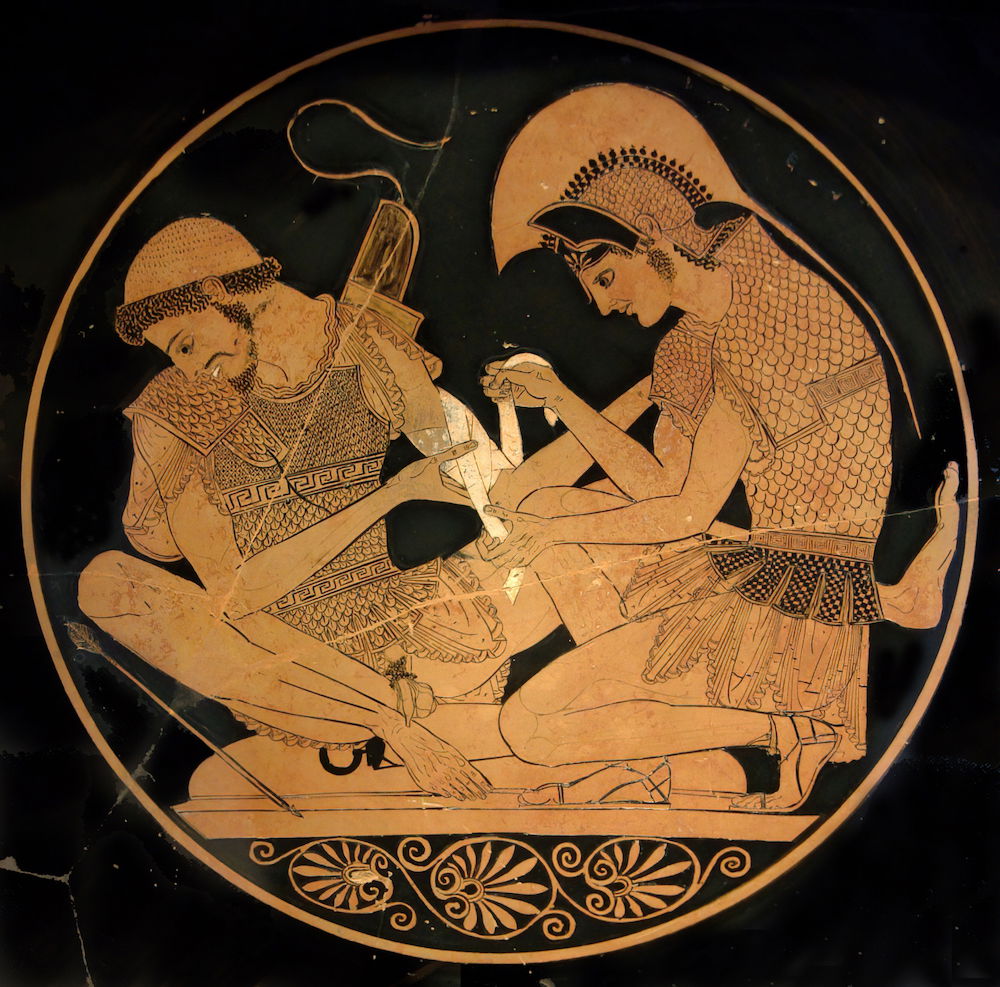
Achilles tending Patroclus wounded by an arrow, identified by inscriptions on the upper part of the vase.

Homer and His Iliad by Robin Lane Fox is a masterly survey of the Iliad, its majesty, its pathos and its unparalleled progression from wrath to pity.

By David Stuttard 

Faced with a jumble of bewildering ruins, modern visitors to Hisarlik in northwest Turkey, the site of ancient Troy, may find themselves perplexed and sometimes disappointed. The wide bay where the Greeks so famously beached 1,000 ships is gone, buried in silt from a local river, while beyond the fine sloping walls, a palimpsest of settlements spanning 4,000 years lies scarred and disfigured by the deep trench gouged by Heinrich Schliemann, its first archaeologist, during two decades of digging in the 19th century. Schliemann had been drawn to Hisarlik, and also to mainland Greece, by his passion for the Homeric poems, the Iliad and Odyssey, and his conviction that they described or reflected real societies and events, not least the decade-long Trojan War. 

Nationalism in Nepal: On the Right Side of History

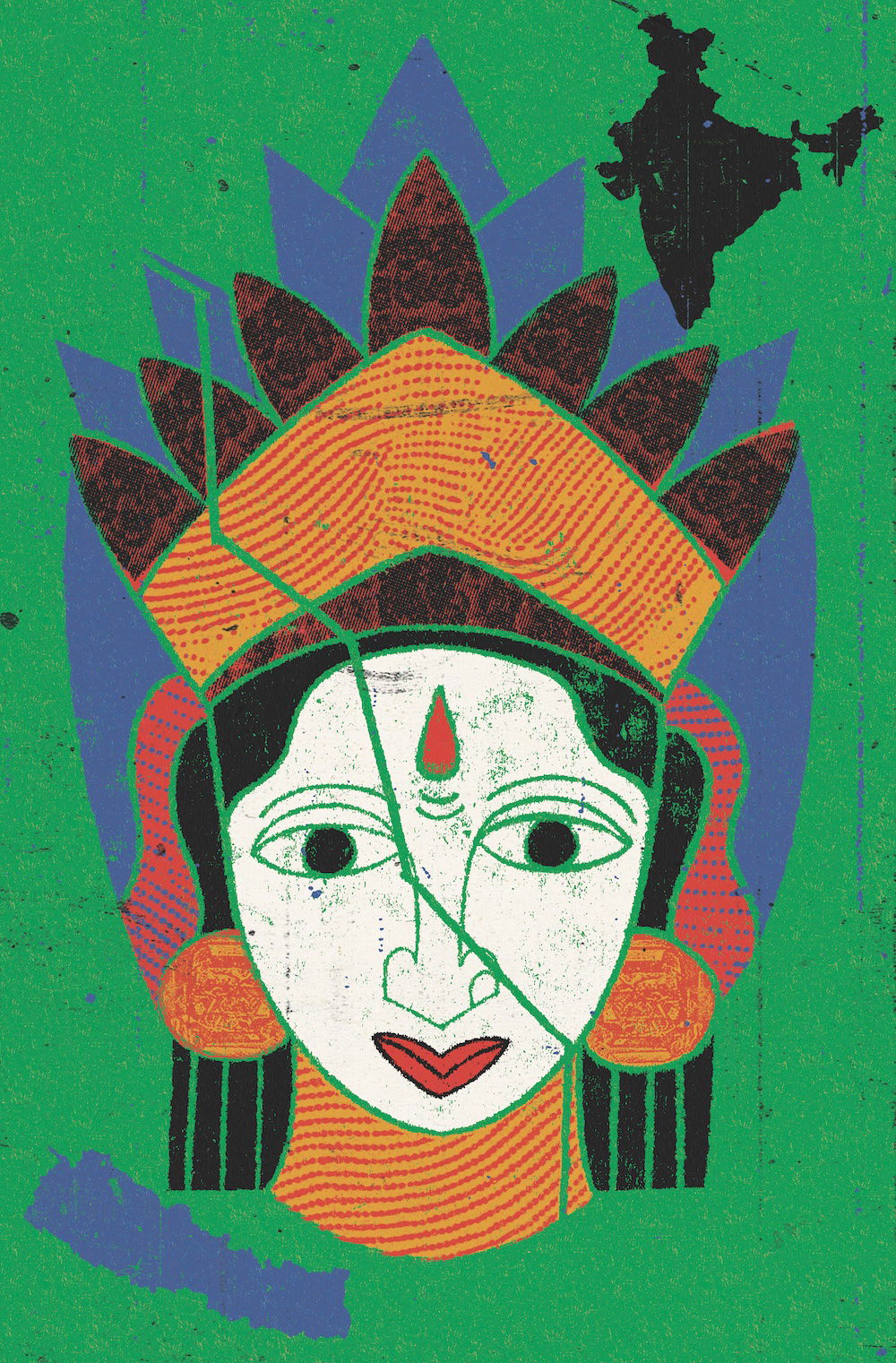
Adipurush, a controversial Bollywood film, has sparked anger in Nepal. For small states with big neighbours, details matter.

By Amish Raj Mulmi

An illustration showing the Hindu mythological figure Sita.

Balen Shah, the 33-year-old rapper and mayor of Kathmandu, is a man on various missions. Since his unlikely victory in 2022, he has waged war on government ministries, landlords, Nepal’s civil aviation authority, roadside hawkers and landless slum dwellers. Now he is taking on Bollywood because of a supposed historical slight.

Lee Kuan Yew’s Singapore Story

Lee Kuan Yew speaks in Fullerton Square, Singapore, 18 December 1984.

One man more than any other is associated with Singapore’s remarkable success. On his centenary: who was Lee Kuan Yew and how did he do it?

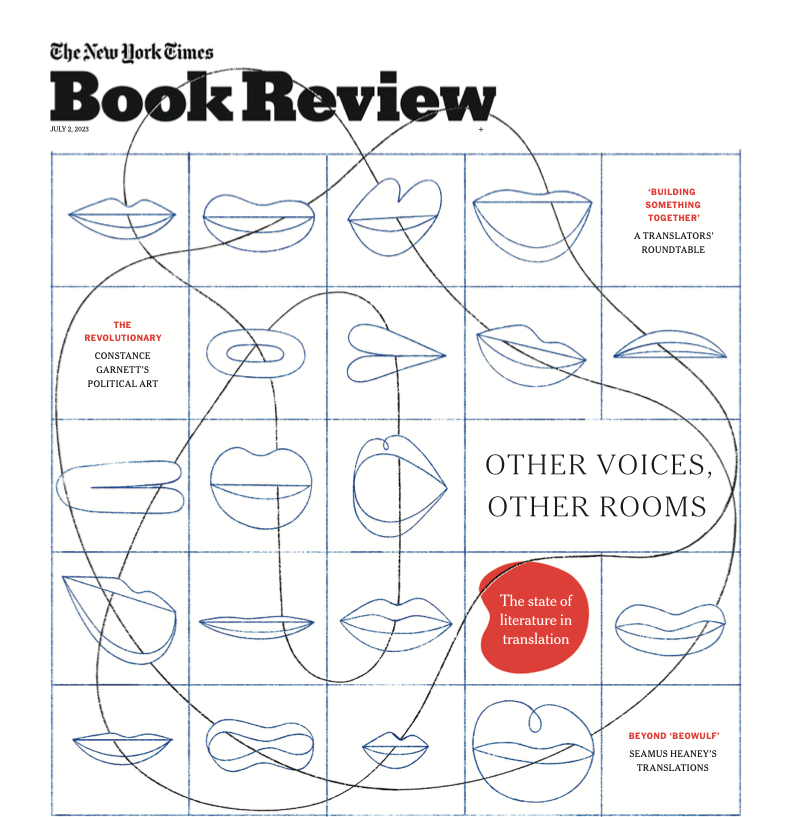
The New York Times Book Review — July 2, 2023

Image

THE NEW YORK TIMES BOOK REVIEW – JULY 2, 2023: The entire issue is devoted to literature in translation – reviews of translated books (by Javier Marías, Seamus Heaney, Natalia Ginzburg…); Daniel Hahn’s essay about translating picture books; Emily Wilson’s look at “Iliad” translations over the years, culminating with her own; a By the Book interview with the translator Jennifer Croft; and lots more.

Exit Hector, Again and Again: How Different Translators Reveal the ‘Iliad’ Anew

An 1878 illustration of the meeting between Hector and Andromache, based on a design by John Flaxman.

Over the years, some 100 people have translated the entire “Iliad” into English. The latest of them, Emily Wilson, explains what different approaches to one key scene say about the original, and the translators.

Jennifer Croft Knows a Good Translation When She Reads One

This illustration shows Jennifer Croft with long, straight blond hair and bangs. She’s wearing a shoulderless top that crosses at her neck, with variously colored stripes.

“There has to be chemistry,” says the writer and prolific translator, whose second book will come out next year. “You don’t need prior knowledge of, say, Iceland or Icelandic in order to appreciate Victoria Cribb’s translation of Sjón.”

Literary Readings: ‘The Illiad’ (London Review)

London Review of Books (LRB) – December 9, 2022: Among the Ancients, with Emily Wilson and Thomas Jones, which we’ll be re-running from January next year. With a new episode each month, Among the Ancients will consider some of the greatest works of Ancient Greek and Roman literature, from Homer to Horace. In this sample Emily and Tom discuss the Iliad.

Among the Ancients: The ‘Iliad’

A sample from the first episode of the Close Readings series from Emily Wilson and Thomas Jones.

Dating to the ninth century B.C., Homer’s timeless poem still vividly conveys the horror and heroism of men and gods wrestling with towering emotions and battling amidst devastation and destruction, as it moves inexorably to the wrenching, tragic conclusion of the Trojan War. Renowned classicist Bernard Knox observes in his superb introduction that although the violence of the Iliad is grim and relentless, it coexists with both images of civilized life and a poignant yearning for peace.