
Tag Archives: Classics

THE BEST LANGUAGE

Intellicurean Essays on Intellicurious

When the Swedish Academy reached Anne Carson on the morning of her Nobel Prize, she was, its permanent secretary reported, “for the moment in Iceland, where she’s listening to the wind.” Of everything reported that day, the wind was the one thing with no words in it. That is where her Greek lives.

A vast torn papyrus stretched between two black sea-stacks on a stormy Icelandic shore, wind pouring through its holes, a small figure on the black sand listening
A torn papyrus in the wind, and someone listening, made for the essay.

Why we’re pointing you there

The Academy praised Carson’s “playful dialogue with the classical tradition,” and the chair of its committee spoke of “the philologist’s obsession with words.” Michael Cummins asks where, in the words, that obsession settles, and finds two places: the cries of Greek tragedy, which Greek can build a line on and English can only sigh over as “alas,” and the holes in the papyri, which Carson prints as brackets. When Electra hears the false news of her brother’s death, Carson keeps her cry in Greek, in capitals, and gives it a line to itself: “OI ’GO TALAINA.” When Cassandra screams at Apollo, the god’s name breaks open in English: “Woepollo.”

Her critics are given at full strength. Emily Wilson praised the method and still found Carson’s Agamemnon “does too much of the work for us.” Daniel Mendelsohn judged her work, “to my mind,” the most distinguished reworking of classical models in a generation, and still objected to the “sentimental ‘fragmentist’ approach” of her Sappho. Their charges pull in opposite directions, and Carson works in the narrow strip between them. The essay leaves one question open: whether a cry can be carried from one language into another without being explained on the way.

A broken marble head of a woman, mouth open as if crying out, with fire glowing through the cracks in the stone and sparks drifting from her lips
A cry and a gap in one fragment, made for the essay.

Read the full essay at Intellicurean →

Essays & Reviews for the Intellectually Curious
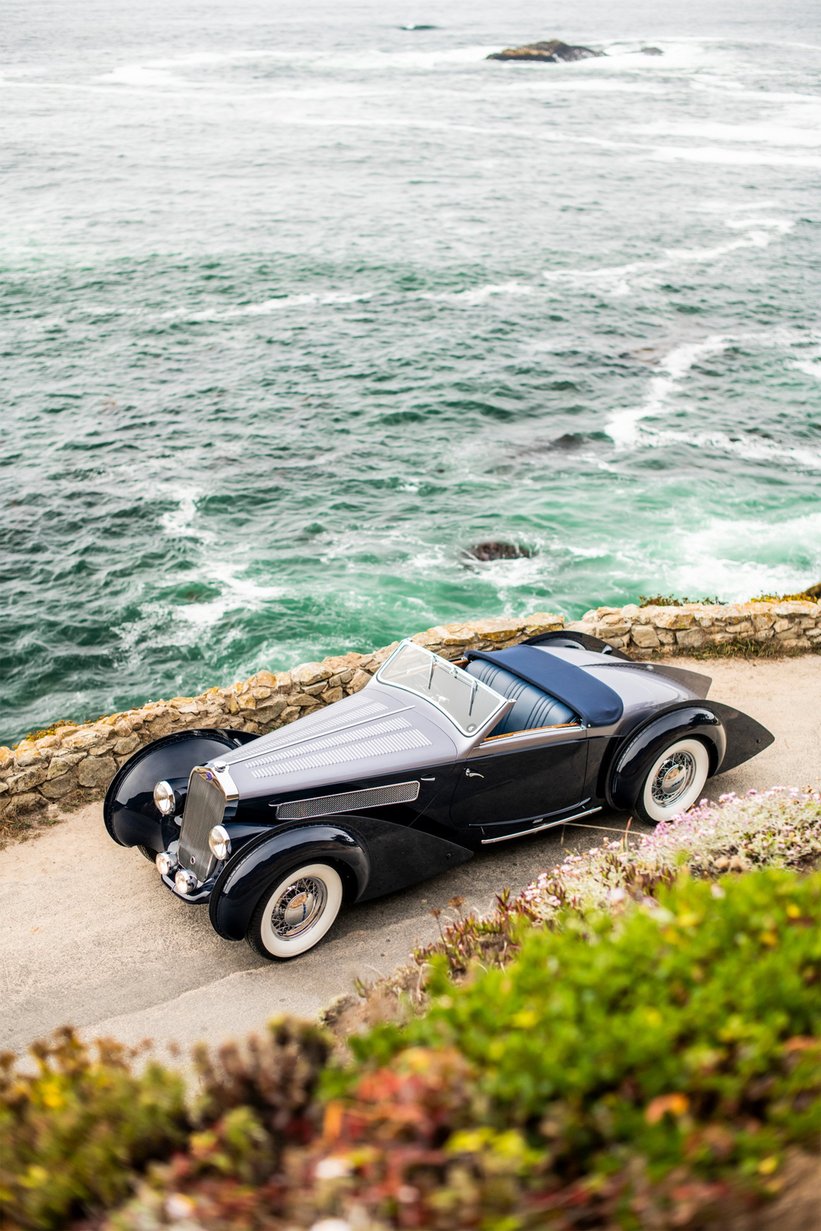
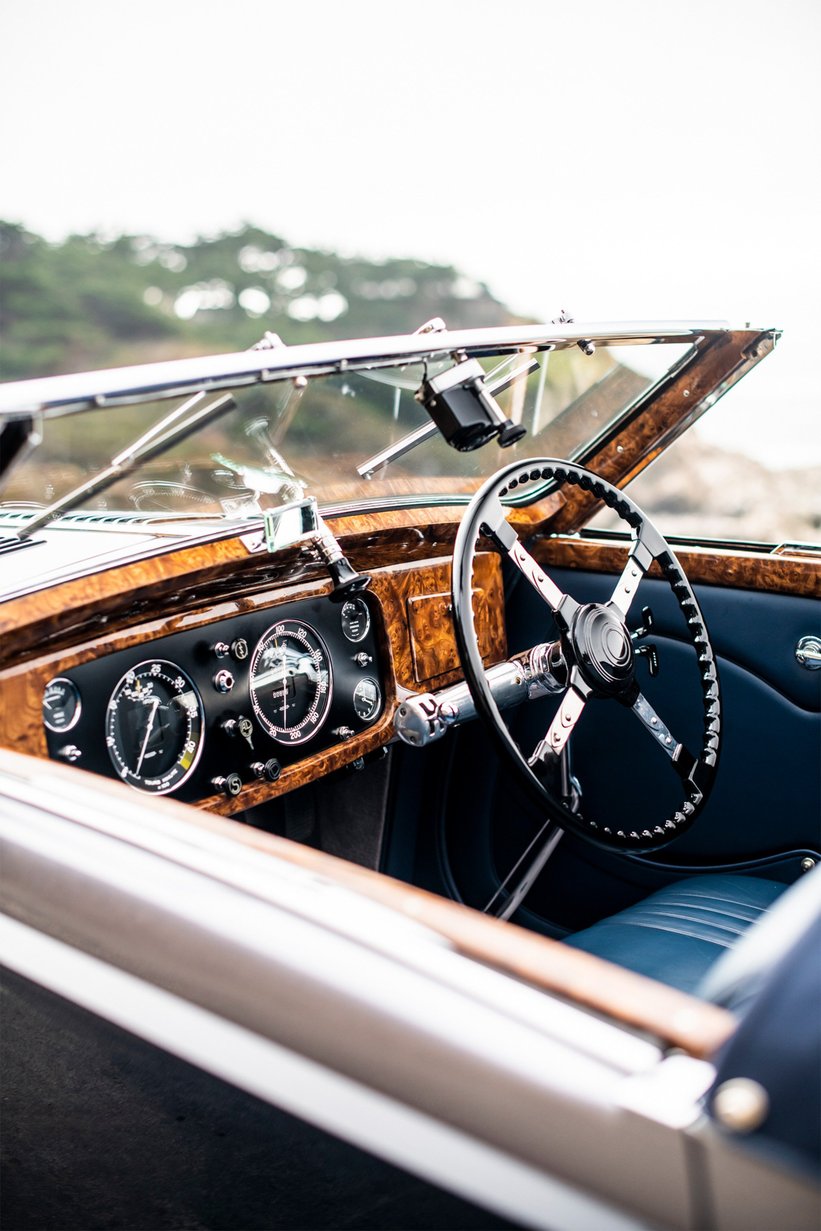
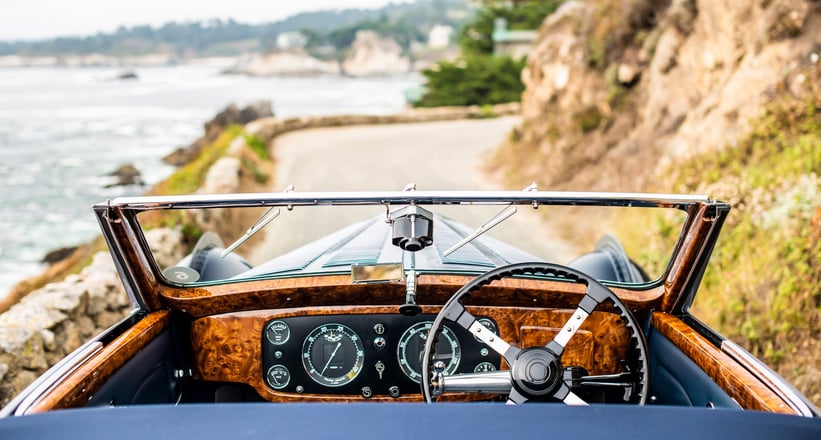
World’s Finest Cars: 1938 Delage D8-120 S Cabriolet

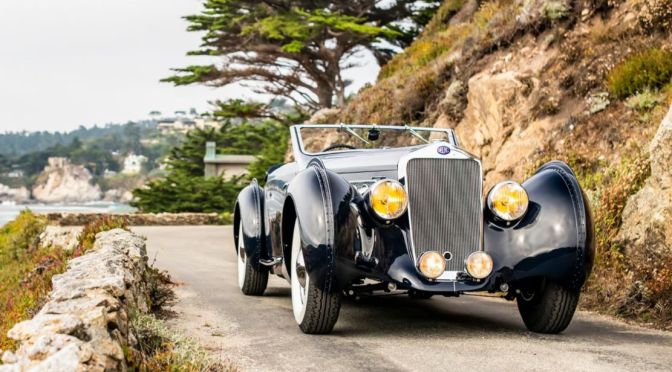
ClassicDriver Magazine (November 7, 2023) – The Pearl Collection recently stole the show and won Peninsula Classics’ Best of the Best award with their fabulous Delage D8-120 S De Villars. We sat down with Fritz Burkard to understand what separates the best from the rest in the Concours world.

“It has a breathtaking presence. It looks good from every angle, it’s spectacular in design, and it’s unique. It has features from the period, like those riveted fins, which incorporate a bit of the Bugatti Atlantic. It has a bit of Saoutchik, a bit of Figoni et Falaschi, there’s everything in there, but it stands out and becomes something unique, it’s not a mix match.”

There’s a book called ‘From Passion to Perfection’ by Richard Adatto – it’s the bible for pre-war swooping lines and aerodynamics, it covers all the teardrops. It reaches out towards the Atlantic, to other streamlined cars, and it also has a chapter about the Delage. It’s not only my bible, but it also seems to be my shopping catalogue. There’s also the Delahaye 165, Merle Mullin has one and I have the other, there are only two made. She just drove hers to Pebble Beach and finished in the top four. Anyway, the the Delage got offered to me, and it took me maybe 15 seconds to say yes! 

Read more

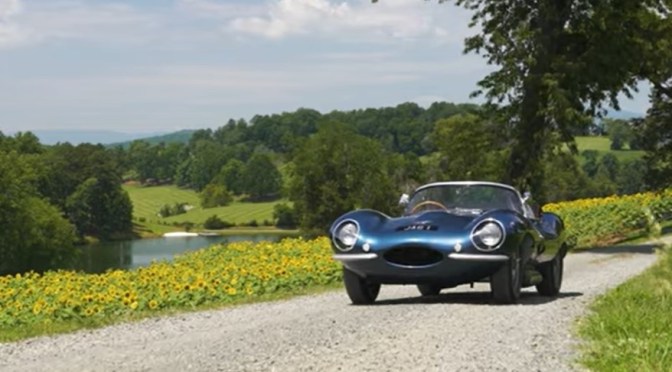
Classic Cars: The 1957 Jaguar XKSS Sports Racer

RM Sotheby’s (August 4, 2023) – Chosen by Hollywood celebrities and racing drivers alike, the Jaguar brand has long represented the sporting lifestyle. In the second episode of an ongoing series illuminating the origins of exceptional automobiles, RM Sotheby’s Director of Research Michael Squire discusses the origins of a brand-defining Jaguar, the XKSS.

Already made in a limited quantity, this XKSS is one of only sixteen sports-racers to survive a fire at the Jaguar plant in February of 1957. After that, this XKSS led what could be considered a charmed life, first in California, then returning to two noteworthy collectors in the UK, Anthony Bamford and Campbell McLaren.

Literary Readings: ‘The Illiad’ (London Review)

London Review of Books (LRB) – December 9, 2022: Among the Ancients, with Emily Wilson and Thomas Jones, which we’ll be re-running from January next year. With a new episode each month, Among the Ancients will consider some of the greatest works of Ancient Greek and Roman literature, from Homer to Horace. In this sample Emily and Tom discuss the Iliad.

Among the Ancients: The ‘Iliad’

A sample from the first episode of the Close Readings series from Emily Wilson and Thomas Jones.

Dating to the ninth century B.C., Homer’s timeless poem still vividly conveys the horror and heroism of men and gods wrestling with towering emotions and battling amidst devastation and destruction, as it moves inexorably to the wrenching, tragic conclusion of the Trojan War. Renowned classicist Bernard Knox observes in his superb introduction that although the violence of the Iliad is grim and relentless, it coexists with both images of civilized life and a poignant yearning for peace.

Classic Cars: 1960 Ferrari 250 GT SWB Berlinetta

For 1960, Ferrari built 46 of these race-prepared, aluminum-bodied Competizione SWBs, a model that is now commonly referred to as the Comp/60.

While many variations existed with regards to aesthetic and mechanical features, most Comp/60s can be identified by a few key visual characteristics: the more elegant front grille and side windows of the original design, a prominent external fuel filler on the rear deck, and a cockpit air vent at the top of the rear window.

The car presented here is a fascinating example of the 250 SWB Comp/60 Berlinetta; it claims a fantastic period-competition history, well-documented provenance, and recent, show-quality restoration.

Views: A 1978 MGB Electric ‘Car S.O.S.’ Conversion (UK)

Tim and Fuzz are taking on their 100th car: a 1978 MGB, which is also going to be their first electric conversion. The car formerly belonged to family man, Jeff. When Jeff sadly passed away, he left his unfinished MG project to his daughter, Caroline, who promised her father she would complete the restoration of his car. Can the Car S.O.S team help Caroline fulfil her father’s last dying wish? For more incredible car renovations, amazing engineering and heartfelt stories, watch brand new episodes of Car S.O.S. Thursdays at 8pm, on National Geographic UK. 📺

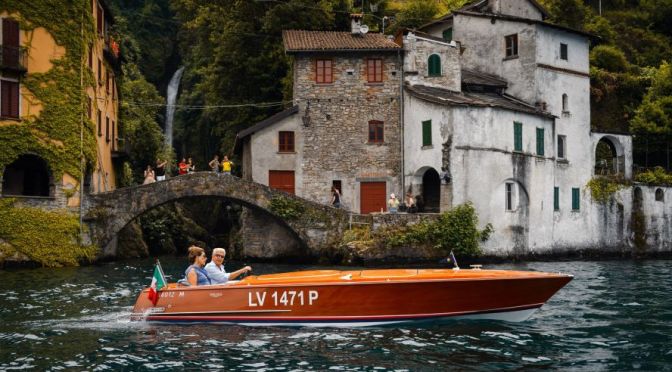
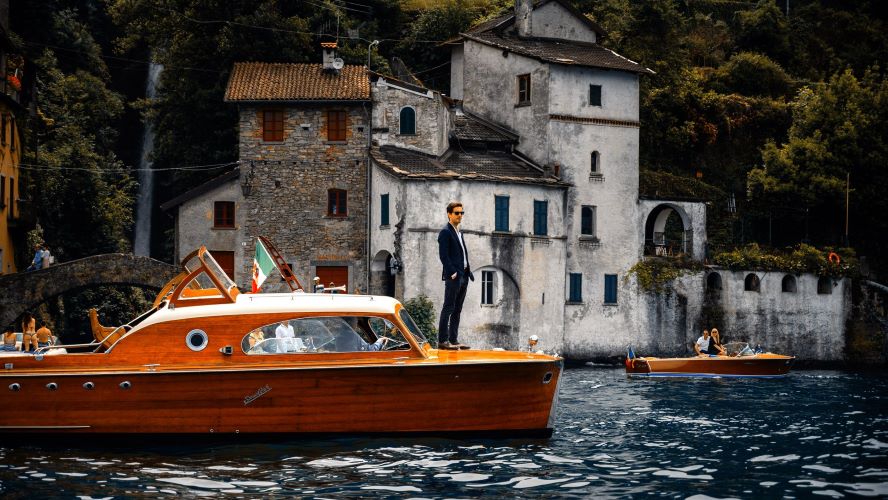
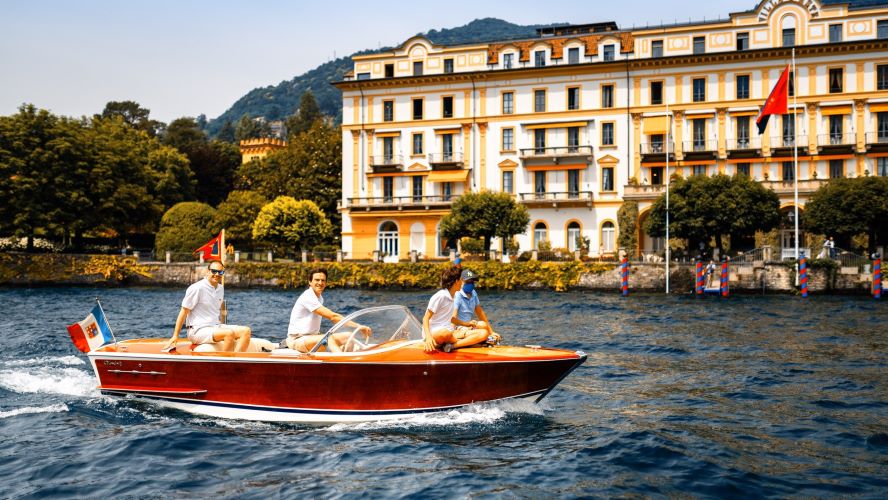
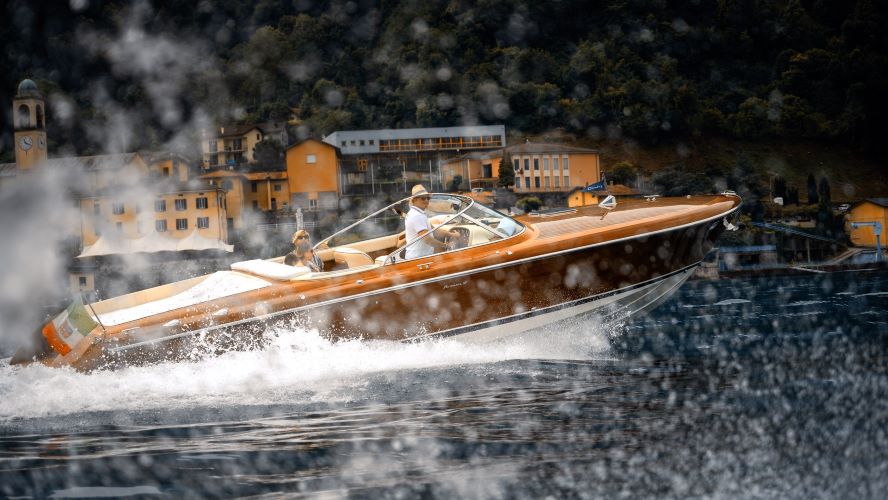
Views: Classic Wooden Motor Boats At Villa d’Este, Lake Como, Italy

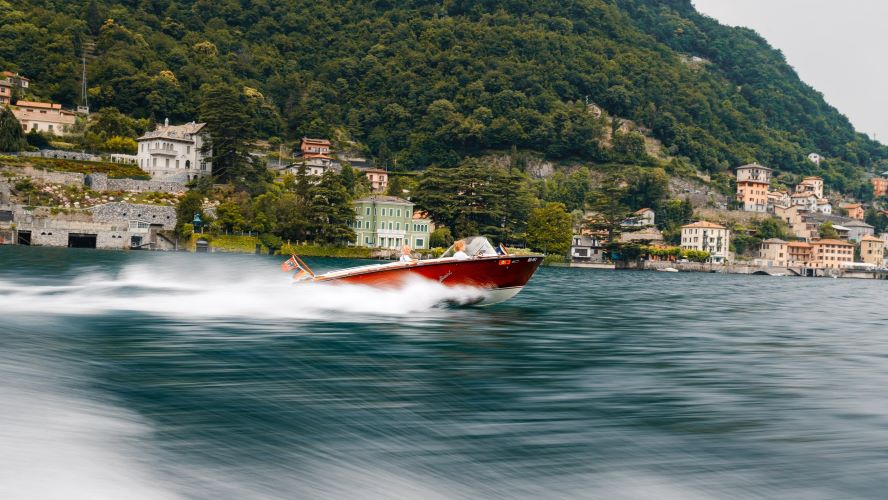
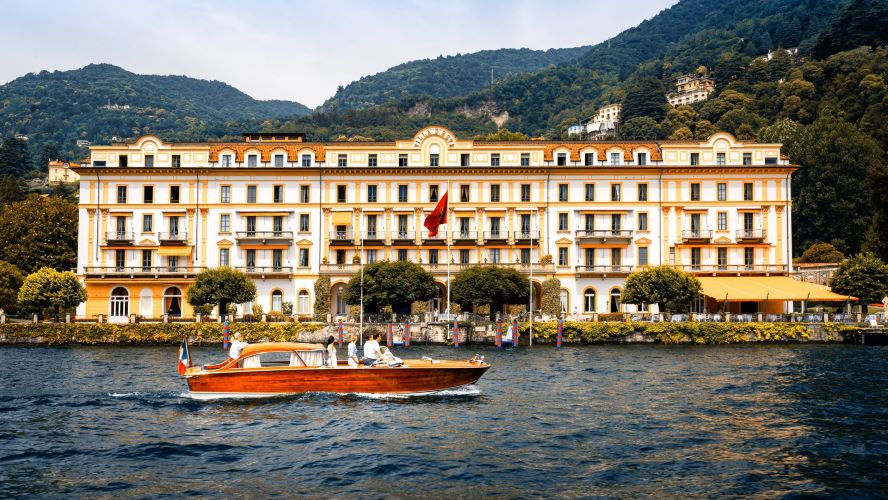
The Grand Hotel Villa d’Este hosted what was arguably the world’s most elegant gathering of classic wooden boats and yachts. And what could say ‘La Dolce Vita’ better than an armada of Rivas dancing on the waves of Lake Como?

22 June 2021

Members of the rather secretive Associazione Scafi Epoca – an association and historical register of vintage and classic hulls – watered their classic wooden boats on Lake Como for the Villa d’Este Vintage Yachting.

Sipping on an Aperol on the Grand Hotel’s waterfront terrasse buzzing with waiters in splendid white uniforms, the sonorous chugging of the wooden boats filling the air, one immediately felt thrown back to the 1950s and 1960s, when the international hautevolee spent their summers yachting and water-skiing on the lakes of Northern Italy. Had H.S.H. Prince Rainier III and Princess Grace of Monaco or Count Giovanni Agusta moored their Aquarama on the Villa’s floating pool on the lake, it wouldn’t have come as a surprise. 

Read and see more

Music: 50th Anniversary Of “Déjà vu” By Crosby, Stills, Nash & Young

Half a century ago, Crosby, Stills, Nash & Young released one of the greatest albums of the rock era, “Déjà vu.” The record would sell eight million copies, but the band, and the friendships, did not endure. “CBS This Morning” co-host Anthony Mason talks with David Crosby, Stephen Stills and Graham Nash about their shared history and the timeless music they produced, as “Déjà vu” gets a delayed 50th-anniversary expanded release.

Classic French Cars: ‘1969 Renault 4L Plein Air’

Feel the freedom. the 1969 Renault 4 Plein Air, a roofless, doorless car for a liberating driving experience happy 60th anniversary to Renault 4.

The Plein Air was introduced in the spring of 1968. Plein Airs were converted by Renault group company Sinpar S.A. from regular 4 speed R1123’s produced by Renault. A R1123 selected for conversion entered Sinpar’s premises as a complete R4 Berline to undergo a complete make-over and leave without doors and roof to be delivered to clients who had ordered their Plein Air from one of Renault’s dealers worl-wide. Plein Airs were actually sold and delivered into France, Canada, United States, Mexico, Finland, Germany, UK and the Netherlands. In 1968 approx. 20 Plein Airs were exported to Canada to be used on the site of the 1968 Terre des Hommes World Exhibition in Montreal. Approximately 500 Plein Airs were produced by Sinpar until 1971, when it was succeeded by the R4 ACL Rodeo. After 1971 Renault continued to offer Plein Air conversion kits for self-made plein airs, but little is known about their number.

Classics: ‘1967 Volkswagen 21-Window MicroBus’

One of the most notable variants of the T1 Type 2 is the Samba. Samba is the name given the 21 and 23 window versions of the Type 2. The 23 window Samba was built until 1963 and the 21 window Samba was built from 1964 until 1967. These variants were considered to be the top of the line versions of the T1 Type 2 and were fitted with a cloth sunroof. It is very common to find Type 2s that have been converted to 21 or 23 window variants, yet only cars built until 1967 are considered to be original.