
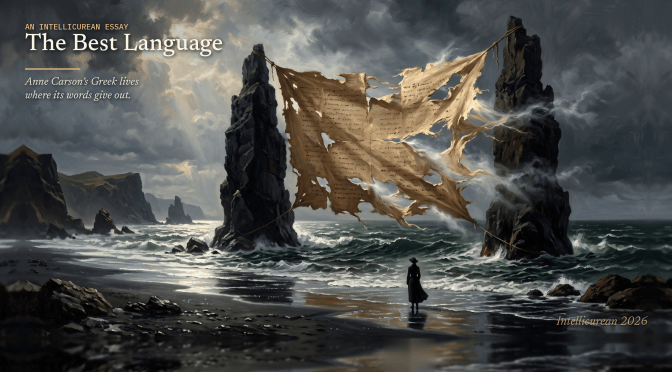

When the Swedish Academy reached Anne Carson on the morning of her Nobel Prize, she was, its permanent secretary reported, “for the moment in Iceland, where she’s listening to the wind.” Of everything reported that day, the wind was the one thing with no words in it. That is where her Greek lives.
Why we’re pointing you there
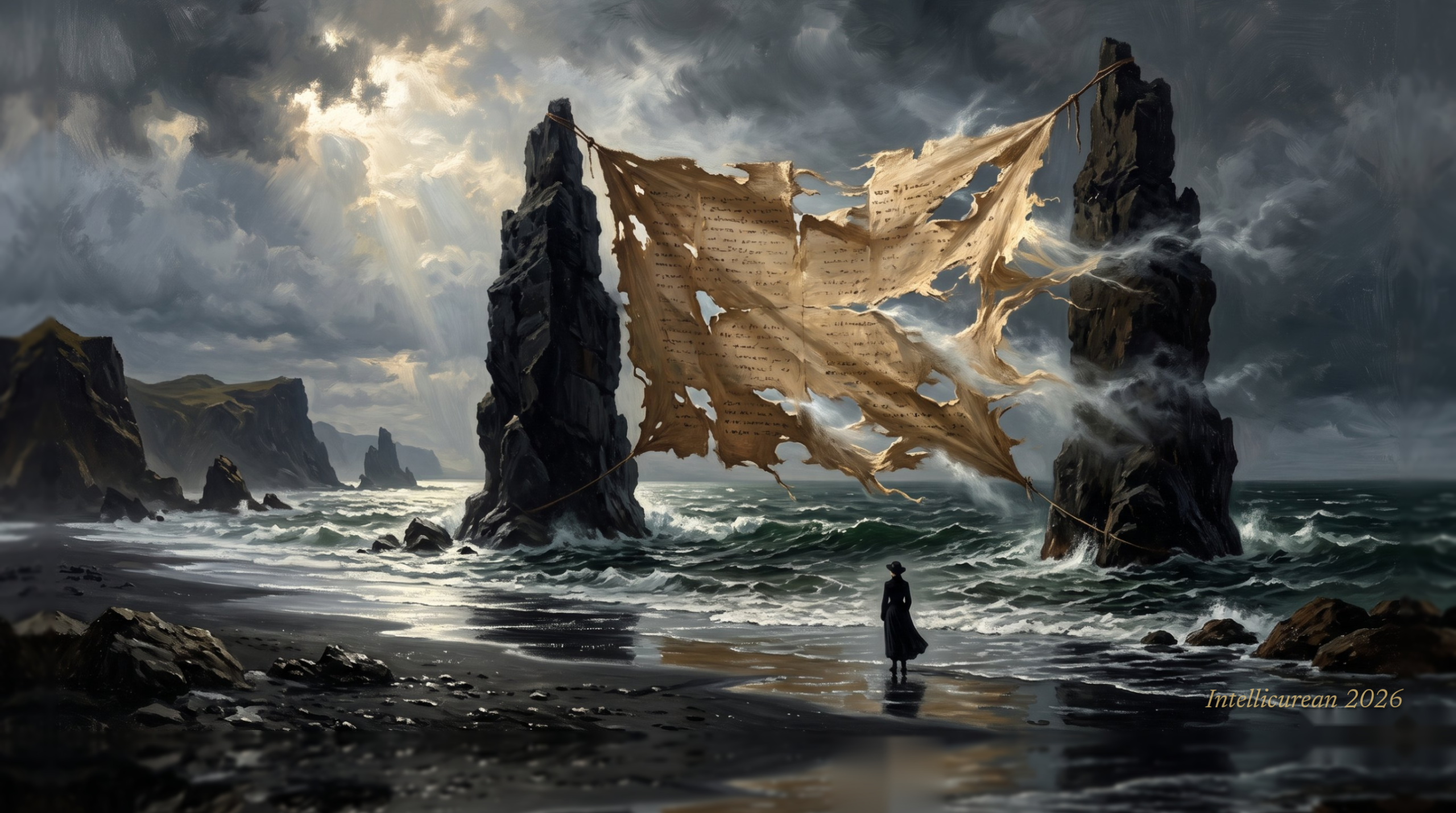
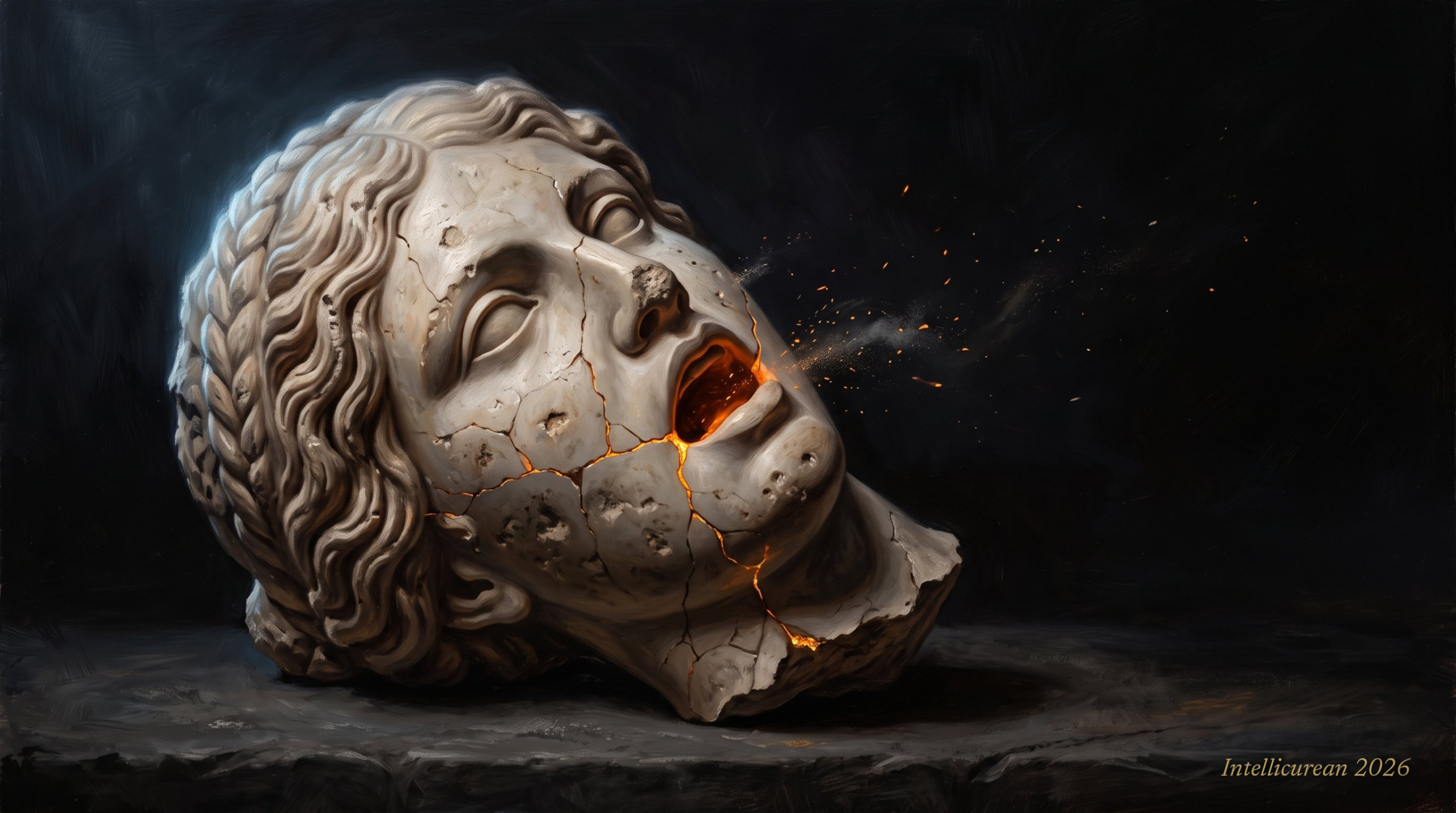
The Academy praised Carson’s “playful dialogue with the classical tradition,” and the chair of its committee spoke of “the philologist’s obsession with words.” Michael Cummins asks where, in the words, that obsession settles, and finds two places: the cries of Greek tragedy, which Greek can build a line on and English can only sigh over as “alas,” and the holes in the papyri, which Carson prints as brackets. When Electra hears the false news of her brother’s death, Carson keeps her cry in Greek, in capitals, and gives it a line to itself: “OI ’GO TALAINA.” When Cassandra screams at Apollo, the god’s name breaks open in English: “Woepollo.”
Her critics are given at full strength. Emily Wilson praised the method and still found Carson’s Agamemnon “does too much of the work for us.” Daniel Mendelsohn judged her work, “to my mind,” the most distinguished reworking of classical models in a generation, and still objected to the “sentimental ‘fragmentist’ approach” of her Sappho. Their charges pull in opposite directions, and Carson works in the narrow strip between them. The essay leaves one question open: whether a cry can be carried from one language into another without being explained on the way.
Read the full essay at Intellicurean →
Essays & Reviews for the Intellectually Curious

