
You wake the morning after a long dinner with an old friend, and the exact words are gone. What remains is the turn of it, the first draft of a story you may tell for years. Something chose what to keep while you slept. A new essay asks what happens to the minds that never get that night.
Why we’re pointing you there
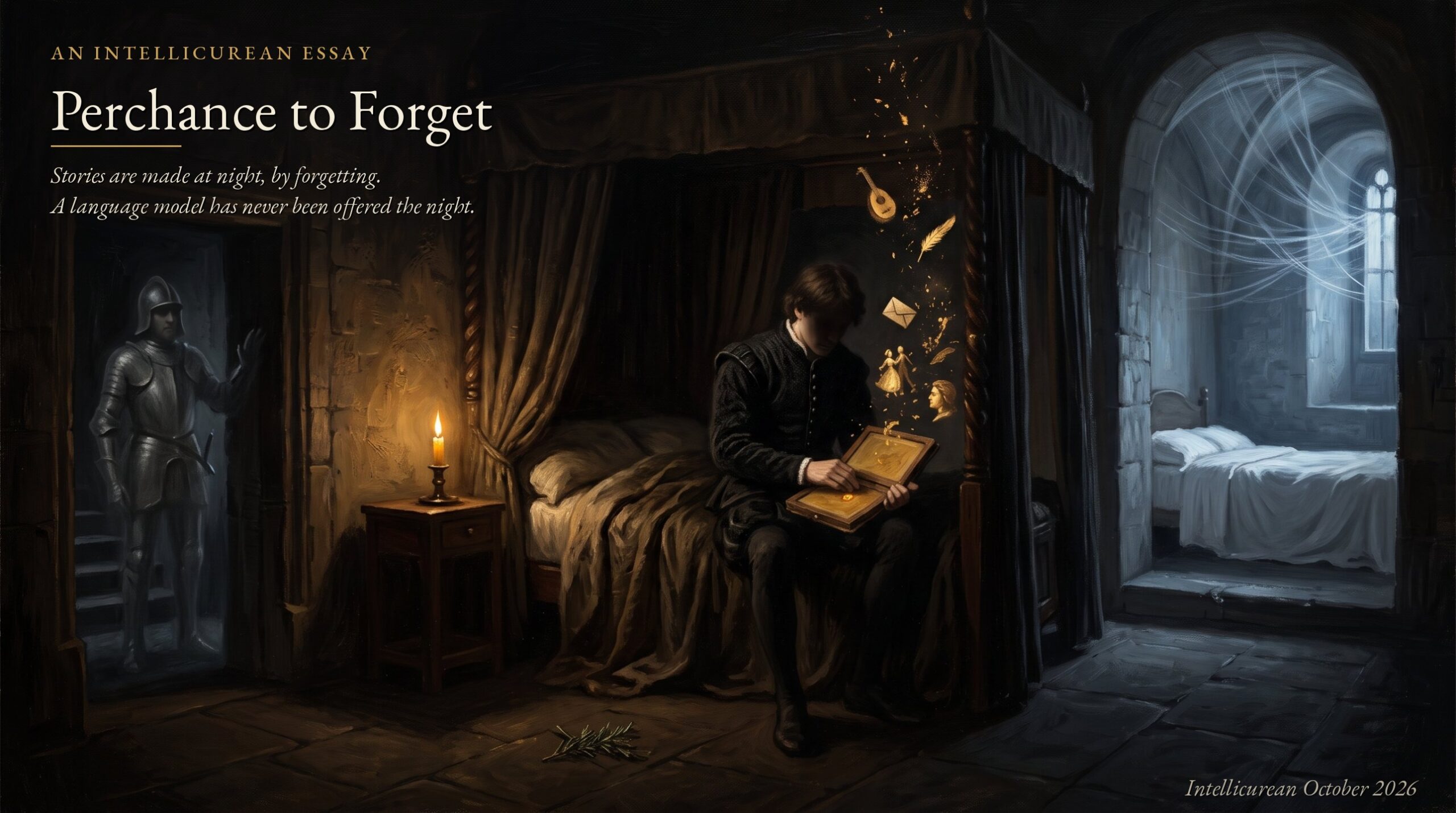
Sleep, on one leading account, is when the brain lets most of the day go, and the selection is where stories begin. Michael Cummins follows the people who could not make that trade. Borges’s Funes remembers every leaf of every tree and cannot think, because “to think is to forget a difference.” Solomon Shereshevsky, the real-life mnemonist Alexander Luria studied for almost thirty years, wrote down what he wanted to forget, burned the slips, and still saw the words. Nietzsche held that without forgetting it is impossible to live at all, and slept badly. Oliver Sacks’s amnesiac patients kept nothing, and one of them invented a new world every few minutes, while Sacks’s own journals, it turns out, confess inventions of his own.
Then the machine. A language model, the essay argues, has two memories, and they are opposites: a vast library that forgot almost every particular, and a conversation it holds entire and keeps none of. What it lacks is the night between them. When engineers try to make a model unlearn, the forgotten knowledge comes back, just as the words came back to Shereshevsky through the fire. The essay says plainly that it was drafted with Claude, and it asks one question: what would it mean for a machine to sleep?
Essays & Reviews for the Intellectually Curious

