ORION MAGAZINE FALL 2026

ORION MAGAZINE: The Autumn 2026 issue, ‘Tongues: Adventures in the Science of Taste’, ventures into the outer reaches of flavor. Each story is keyed to a different feature of taste in the human and more-than-human worlds, a palette that includes carnivory, sourness, sweetness, bitterness, and fermentation. Contributors parse the flavors of breast milk, spiderwebs, and stinky cheeses. They explore the cultural history of foods forged in adverse conditions like famine and oppression. Taken together, In Tongues offers a vivid, sensory buffet of how we experience the world through our tongues.

A Taste for Meat

How carnivorous plants trouble the order of things. By Lacy M. Johnson

Sour Fruit

The marginalization of a flavor mirrors the logic of extraction. By Sharanya Deepak

Heart of Bitterness

A journey to the center of the flavor—and the feeling. By Maria Pinto

Yeast Mode

For food scientist and fermenter David Zilber, taste is the fundamental question of organismic existence. By Jaya Saxena and David Zilber

THE CIRCLE AND THE FLAG

Intellicurean Essays on Intellicurious

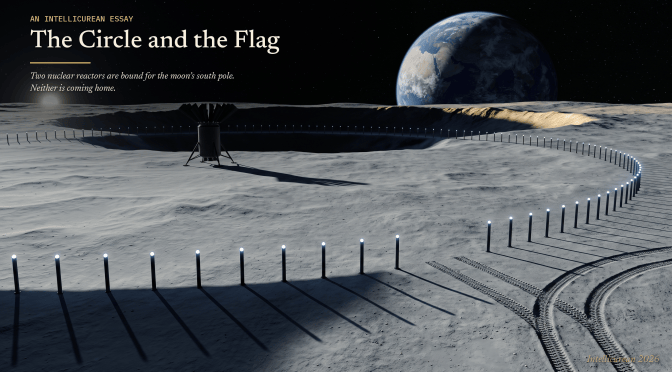
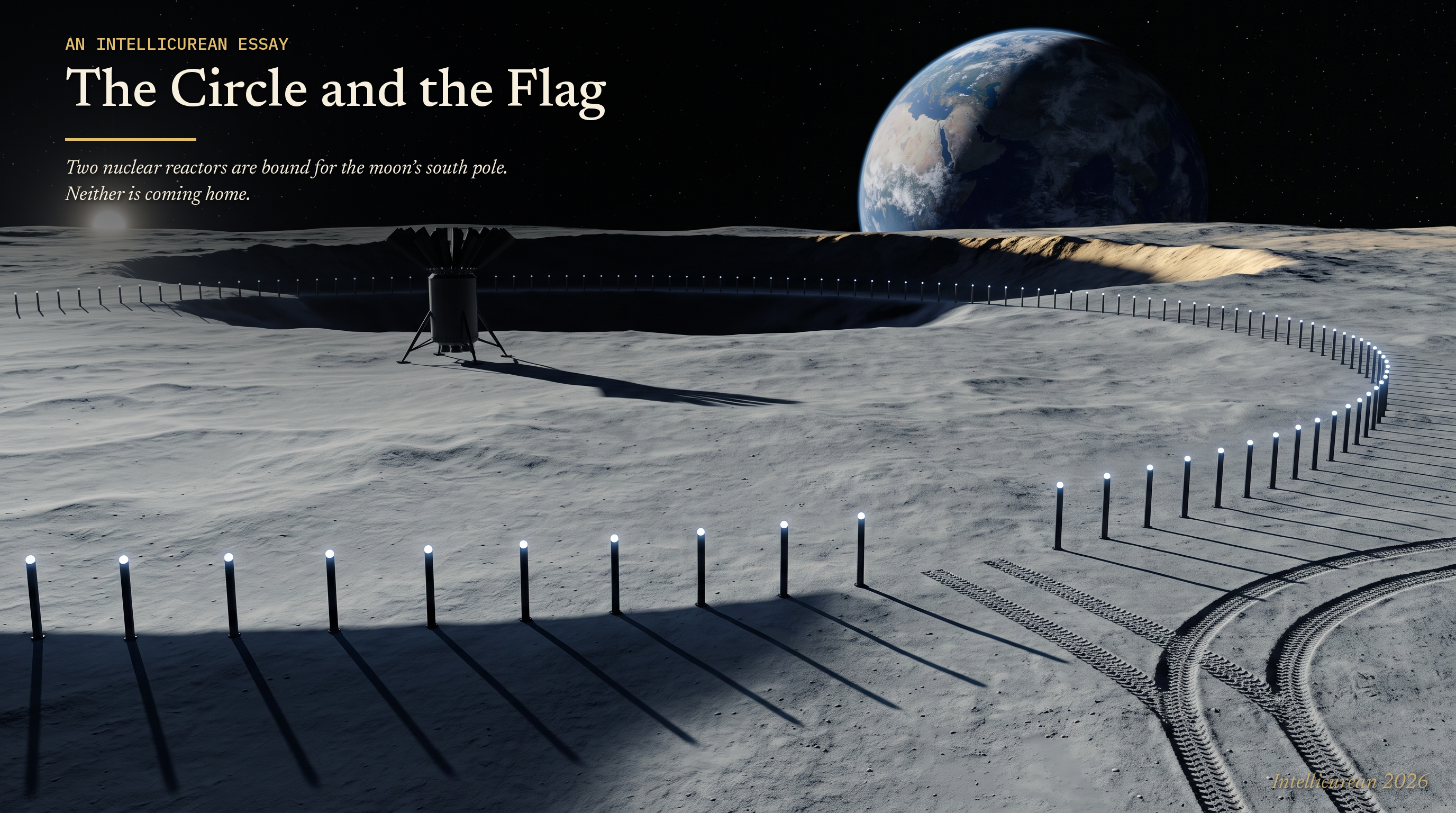
NASA wants a nuclear reactor running at the moon’s south pole by 2030. Russia promises one for China by 2036. When they stop, both say they will leave the radioactive material where it is. The treaty that governs the moon forbids planting a flag. It has nothing to say about drawing a circle.

The Circle and the Flag — a ring of lit beacon pylons on the moon’s south pole encloses a small finned reactor on a crater rim; rover tracks reach the beacons and turn away; Earth hangs low over the horizon
The tracks come up to the line and turn away, made for the essay.

Why we’re pointing you there

The essay starts from a report in the New York Times on the race to put reactors on the moon and asks a question the report doesn’t: what happens to the ground around a reactor that nobody intends to remove? A reactor at power can’t be approached without shielding, so it sits inside a no-go zone, and the few ridges near the pole with sunlight above and ice below are the only places anyone wants to go. The Outer Space Treaty forbids appropriating the moon by sovereignty, use or occupation. A zone takes nothing; it makes ground nobody’s. So the treaty doesn’t reach it.

What we liked most is that the essay gives the other side its full strength before answering it: the polar dark is real, a cold launch is safer, the Artemis Accords do promise zones will end, and radioactivity does decay. Then it goes to the one place on Earth that has lived with a reactor nobody could remove, and to a 1972 Soviet novel that imagined the shape of such a place fourteen years before it existed. It ends on a question rather than a verdict: whether a place no one can enter is owned, or only lost, and who gets to decide.

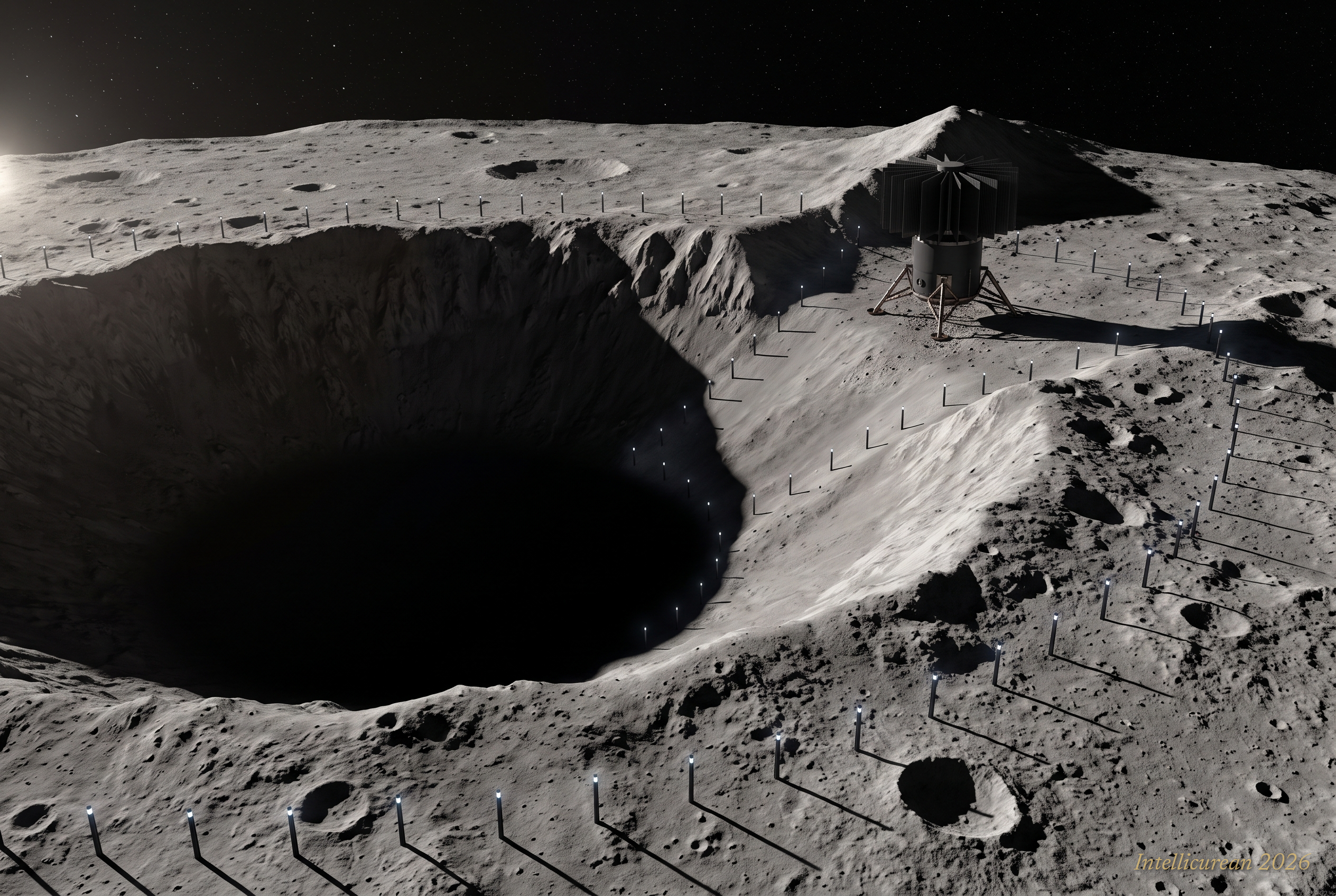
Oblique view of a lunar crater at the south pole: a small reactor with a crown of radiator fins stands on the rim, and a line of lit beacon pylons marks its zone, running along the rim, down the one slope into the crater and on into the shadow of its floor.
A zone on ground follows the ground, made for the essay.

Read the full essay at Intellicurean →

Essays & Reviews for the Intellectually Curious

THE NEW YORKER MAGAZINE – OCTOBER 12, 2026 PREVIEW

The cover of the October 12 2026 issue of The New Yorker which features a muscular man jogging in Central Park with his...

THE NEW YORKER MAGAZINE: The latest issue cover features “Peter de Sève’s “Lapdog” – Trying to keep up. By Françoise MoulyArt by Peter de Sève

The Battle for the Post-Trump Right

For decades, the Heritage Foundation was a conservative powerhouse. Can it stay relevant in the influencer age? By Emma Green

ICE Is Everywhere and Acting with Impunity

Arrests have reached a record high—nearly fifty-one thousand in August alone—with agents conducting operations nationwide at hospitals, at airports, and outside schools. By Jonathan Blitzer

The Battle to Pass a Billionaire Tax

Most Democratic voters say that they favor a wealth tax, but a California ballot initiative has plenty of liberal opponents. By Nicholas Lemann

THE NEW YORK TIMES – MONDAY, OCTOBER 5, 2026

Trapped in a Kill Zone, a Ukrainian City Is Beginning to Starve

Evacuation is almost impossible and food is running out in Russian-occupied Oleshky, a city menaced by mines and drones.

How the Midterms Could Complicate the Supreme Court’s New Term

Even before the justices start their new term today, the court has spent the summer resolving fast-moving requests on election-related disputes.

U.S. Rushes to Withdraw Bombers From U.K. Air Base After New Threats

The move came with unusual speed, following what U.S. officials said were threats of an Iran-based plot against the installation.

Spain Calls Early Election After Housing Crisis Roils Government

Prime Minister Pedro Sánchez of Spain has faced rising challenges to his authority amid a migration crisis and several corruption scandals involving his inner circle.


Jair Bolsonaro’s Son Pushes Brazil’s President to a Runoff

Neither President Luiz Inácio Lula da Silva nor his top challenger, Flávio Bolsonaro, won a majority of votes in the first round.