
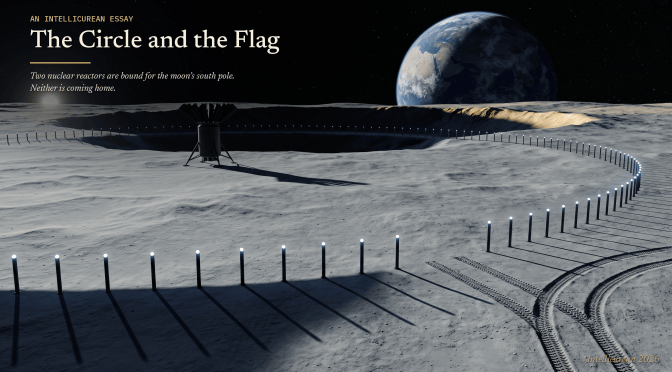

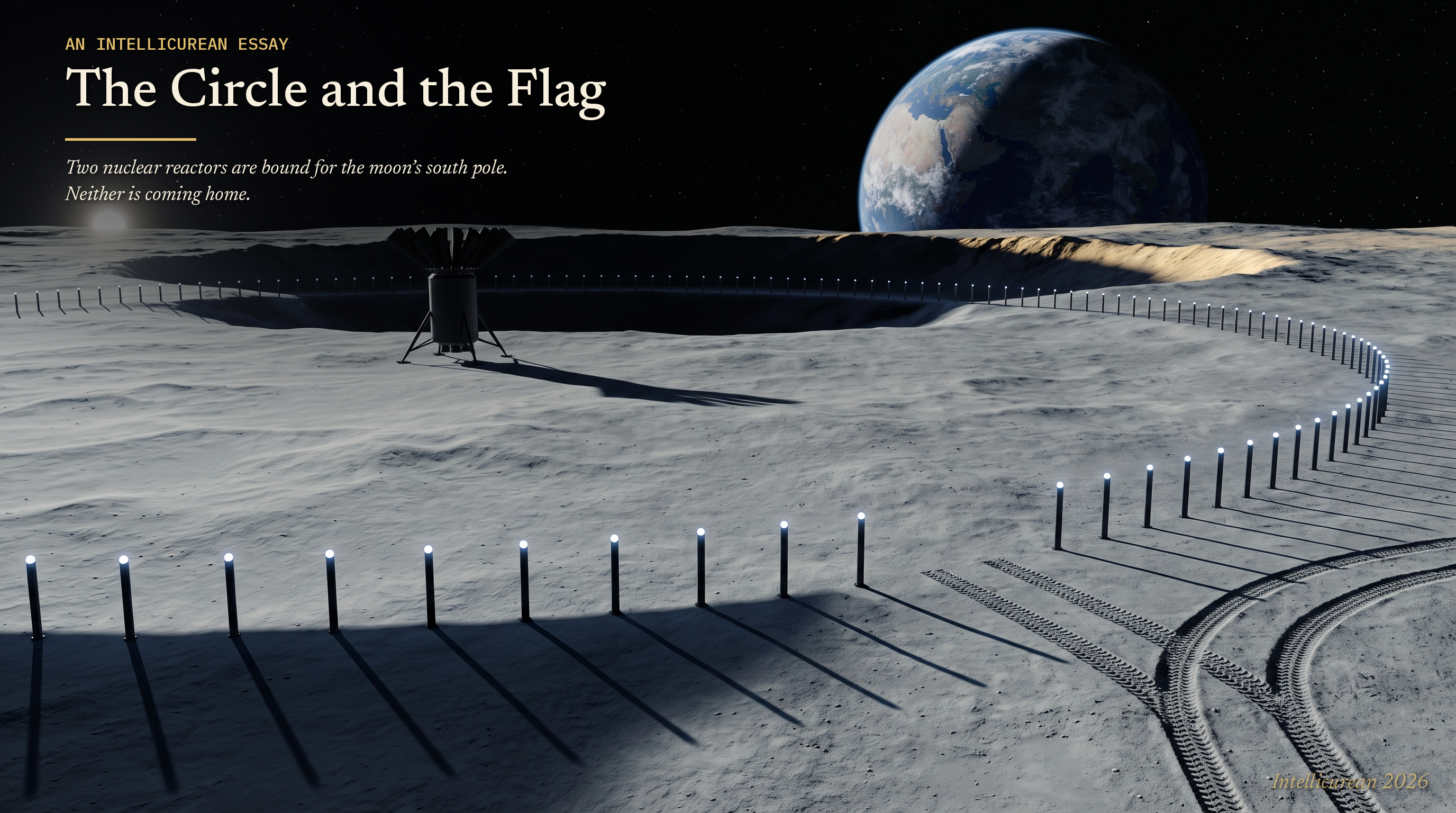
NASA wants a nuclear reactor running at the moon’s south pole by 2030. Russia promises one for China by 2036. When they stop, both say they will leave the radioactive material where it is. The treaty that governs the moon forbids planting a flag. It has nothing to say about drawing a circle.
Why we’re pointing you there
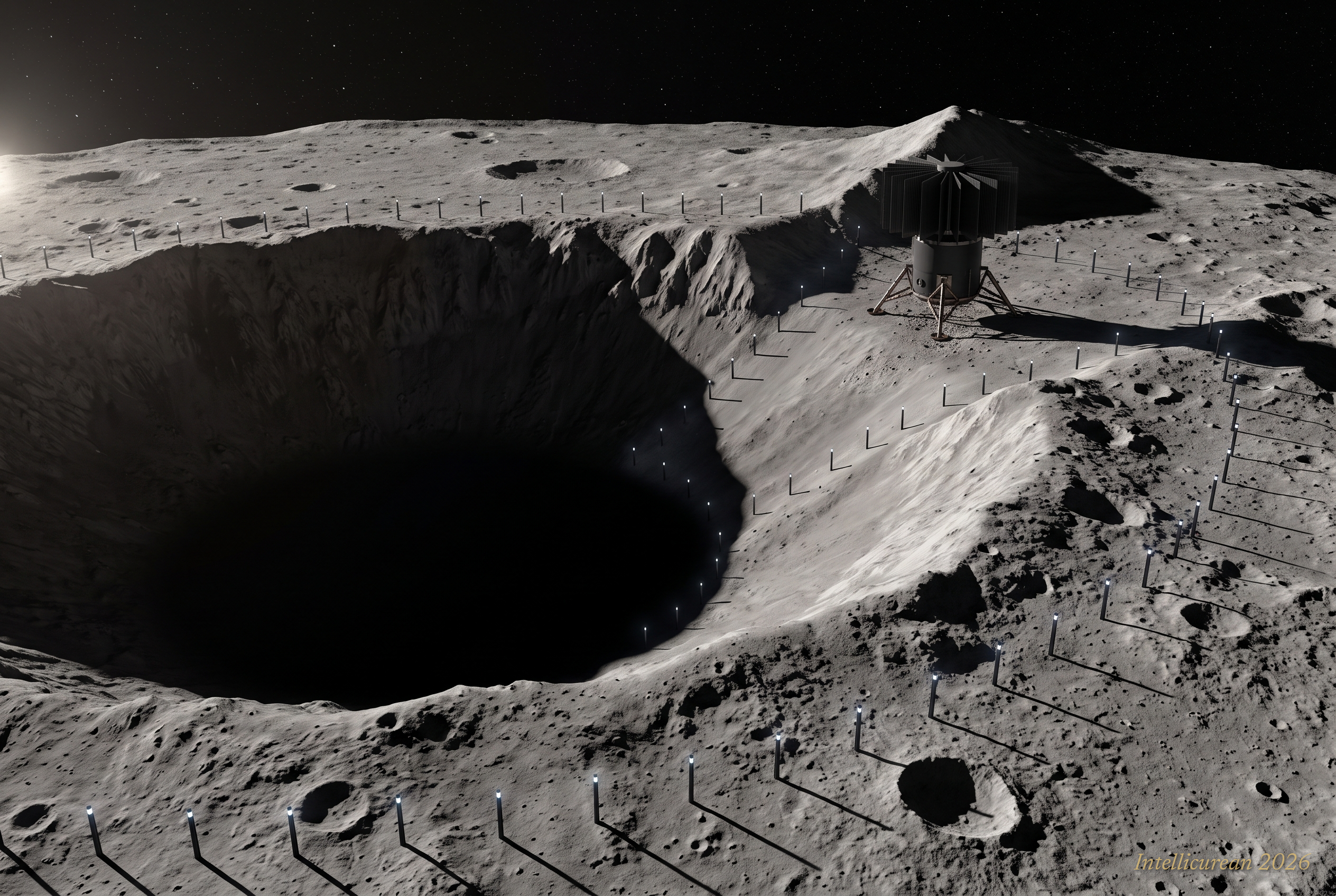
The essay starts from a report in the New York Times on the race to put reactors on the moon and asks a question the report doesn’t: what happens to the ground around a reactor that nobody intends to remove? A reactor at power can’t be approached without shielding, so it sits inside a no-go zone, and the few ridges near the pole with sunlight above and ice below are the only places anyone wants to go. The Outer Space Treaty forbids appropriating the moon by sovereignty, use or occupation. A zone takes nothing; it makes ground nobody’s. So the treaty doesn’t reach it.
What we liked most is that the essay gives the other side its full strength before answering it: the polar dark is real, a cold launch is safer, the Artemis Accords do promise zones will end, and radioactivity does decay. Then it goes to the one place on Earth that has lived with a reactor nobody could remove, and to a 1972 Soviet novel that imagined the shape of such a place fourteen years before it existed. It ends on a question rather than a verdict: whether a place no one can enter is owned, or only lost, and who gets to decide.
Read the full essay at Intellicurean →
Essays & Reviews for the Intellectually Curious

