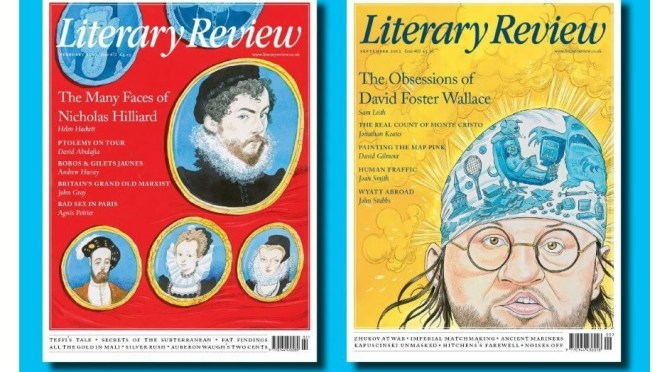
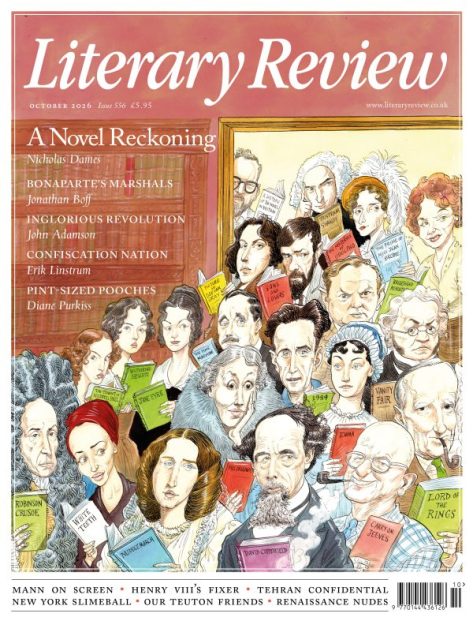
LITERARY REVIEW : The latest issue features ‘A Novel Reckoning’…
Catchpole to the King
King’s Secretary: William Paget and the Last Years of the Reign of Henry VIII By Andrew Johnston
Tudor history buffs and attentive readers of Hilary Mantel’s Wolf Hall trilogy will recognise the name William Paget. Others will require some words of introduction. Paget (1505/6–63) was an able and influential diplomat and administrator who rose to become principal secretary to Henry VIII. ‘Rose’ is the operative word. Paget, like his predecessor and mentor Thomas Cromwell, was a self-made man, though his father, a sergeant serving the sheriff of London, was able to provide him with a grammar school and Cambridge education.
1688 and All That
The Last Invasion of England: 1688 and the Dutch Armada By Arthur der Weduwen
Much is exceptional about the Bayeux Tapestry currently on magnificent display in the British Museum, but nothing is quite so exceptional as the event itself. As the museum’s website reminds us, 1066 ‘was the last time England was successfully invaded’. Our sea-girt immunity from foreign invasion has been at the centre of ‘Our Island Story’ ever since, with the Channel confounding the hubris of Philip II in 1588 and 1596, of Napoleon in 1803 and of Hitler in 1940.
Scavenger Hunt
Imperial Predator: Britain and the Destruction of the Ottoman Empire By David S Tonge
In his survey of the collapse of the Ottoman Empire in the late 19th and early 20th centuries, David S Tonge sees Britain as an aggressive superpower, hence the title of his excellent book. My one quibble is zoological. ‘Predator’ may not be quite the right word. For in much of Tonge’s story Britain is less lion than vulture: what zoologists call an obligate scavenger – or a necrophagous power – feeding on carrion. The Ottoman carcass had already been wounded by Russian aggression, nationalist revolt, indebtedness and internal decay. There were exceptions, and Britain could be predatory when circumstances demanded, notably in Cyprus and Alexandria, but its more characteristic pose was to sniff the odour of mortality and arrive in time for lunch.