Tag Archives: Higher Education

CALIFORNIA BERKELEY MAGAZINE – FALL 2026

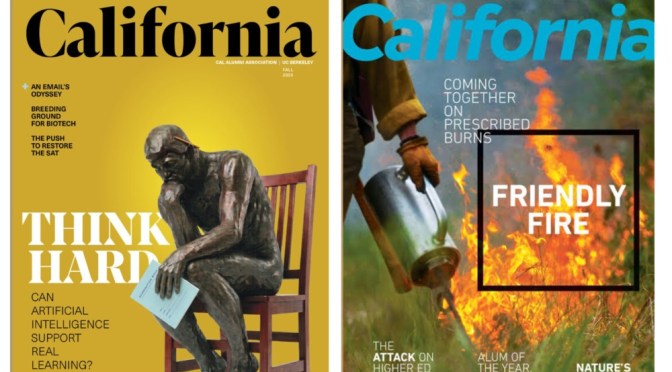
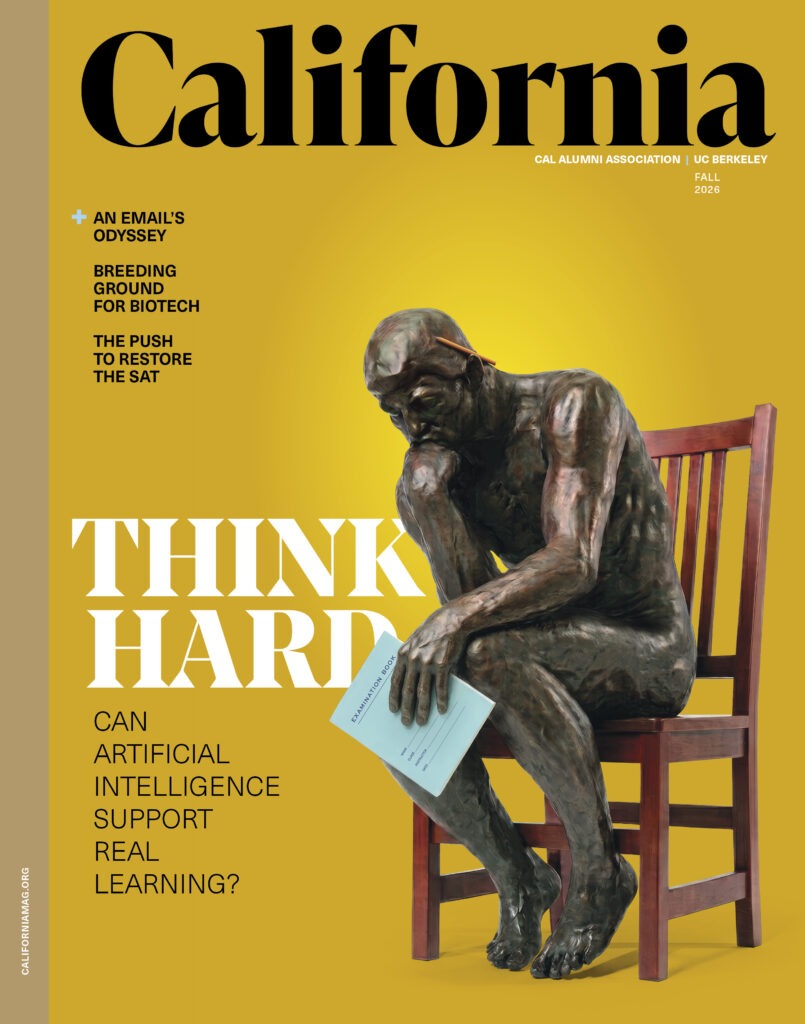
CALIFORNIA BERKELEY MAGAZINE: The latest issue features ‘Think Hard’ – Can Artificial Intelligence Support Real Learning…

Test Case

Hard questions about AI in the classroom by Nathalia Alcantara

Mark Brilliant misses plagiarism.

The old kind, that is. Back when his students copied from Wikipedia, and when Turnitin, a text-matching software developed at Berkeley, could match plagiarized paragraphs to their original sources.

Brilliant has taught American history at Berkeley for more than two decades—before that, he taught high school—and for most of that time, catching a cheater was just a routine, though unpleasant, part of the job. What’s different now is not that students cheat. It’s what happens when he catches them.

Test Blinded

UC faculty split over standardized test requirement by Margie Cullen

In the spring of 2023, UC Berkeley math professor Zvezdelina Stankova began to notice that about a third of her students were “in freefall.” They weren’t showing up to lectures or doing their homework, and, on tests, they scored far below the average. At first, she thought it was an anomaly, but her observations were reinforced by a 2025 UC San Diego report that found that 1 in 12 of the campus’s incoming students tested below middle school math standards.

The development comes after the UC Board of Regents dispensed with standardized testing as a requirement of admission in 2020. That decision has since caused a rupture between faculty who feel the tests are an important measure of college preparedness and those who feel they discriminate against underrepresented students. 

The House that Doudna Built

IGI-affiliated researchers have spawned more than 30 startups. Here are just six of them. By James Pagett Tollen

Berkeley Professor Jennifer Doudna, who shared the Nobel Prize for developing the gene-editing tool CRISPR-Cas9, founded the Innovative Genomics Institute in 2015 to advance new applications of the revolutionary technology. Since then, IGI-affiliated researchers have spawned more than 30 startups. Here are just six of them.

Amber Bio

Basem Al-Shayeb, Ph.D. ’22, a graduate of the Banfield and Doudna Labs, cofounded Amber Bio in 2021 to address a limit of the gene-editing field: The current paradigm of genetic medicine relies on developing independent therapies for each separate mutation, the company says. Amber Bio’s RNA-writing platform will enable thousands of mutations to be edited simultaneously. Importantly, the company adds, these RNA-based edits will be reversible.

Editpep

The goal of Editpep, per the company’s website, is straightforward: “To bring life-changing genome-editing therapies to patients with devastating neurological diseases.” They will do so by safely delivering CRISPR straight into the brain. Ross Wilson, IGI’s director of therapeutic delivery and an assistant adjunct professor at Berkeley, cofounded the company in 2023.
HARVARD MAGAZINE – MAY/JUNE 2026 PREVIEW

May-June 2026 | Harvard Magazine

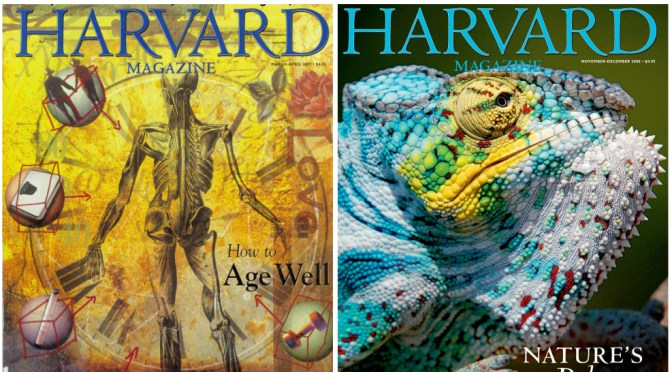
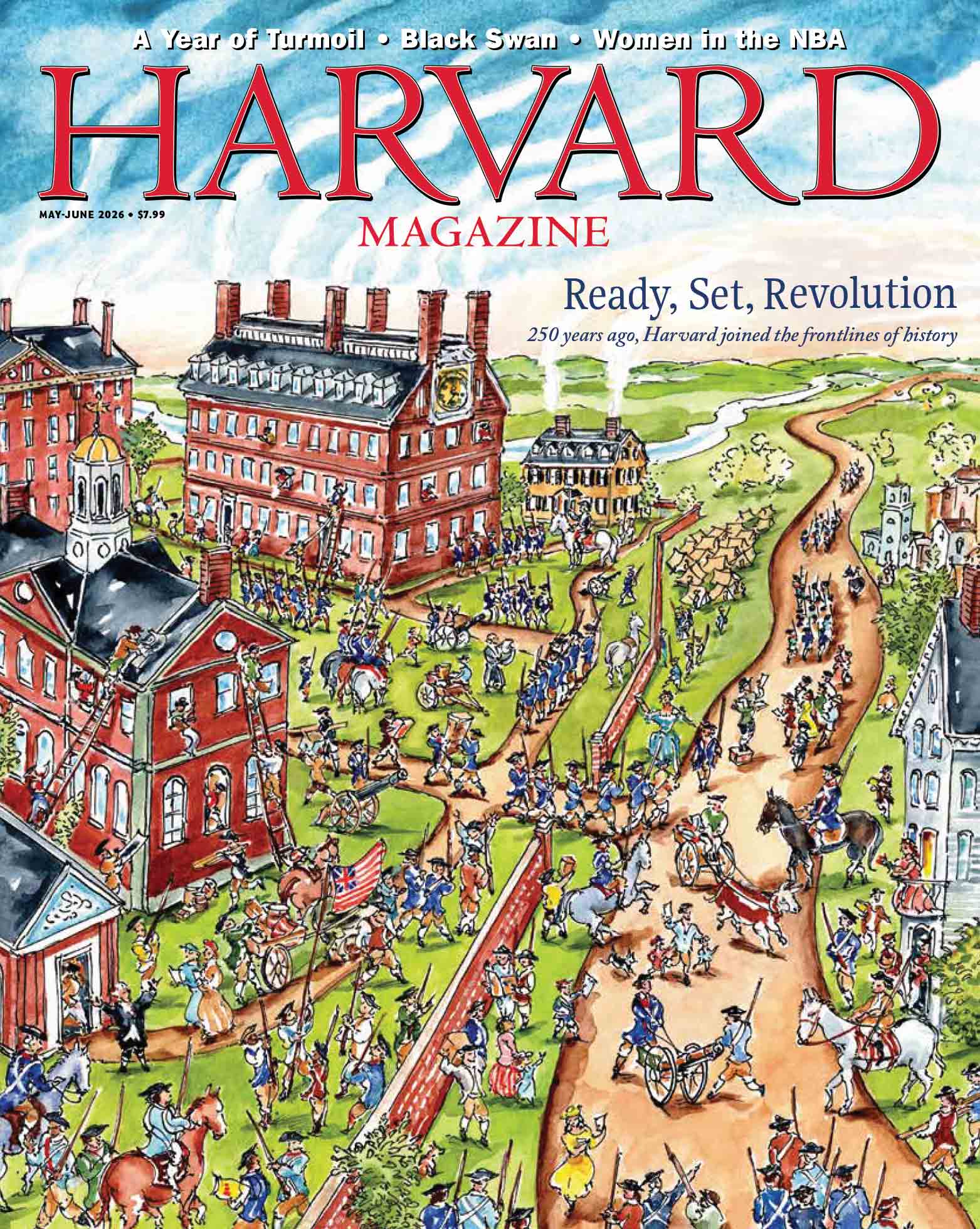
HARVARD MAGAZINE: The latest issue features ‘Ready, Set, Revolution’ – 250 years ago Harvard joined the frontlines of history…

250 Years Ago, Harvard Was Home to a Revolution

A look at the sights, sounds, and characters that put the University on the frontlines of history

The Harvard-Trained Doctor Who Urged a Revolution

Before his heroic death, General Joseph Warren was dubbed “the greatest incendiary in all of America.”

When the Revolution Hit Cambridge, Harvard Moved to Concord

College students broke hearts and windows during their year in exile.


How the American Revolution Freed a Future Abolitionist

Darby Vassall, an enslaved child freed after the Battle of Bunker Hill, dedicated his life to fighting for liberty.

HARVARD MAGAZINE – JANUARY/FEBRUARY 2026

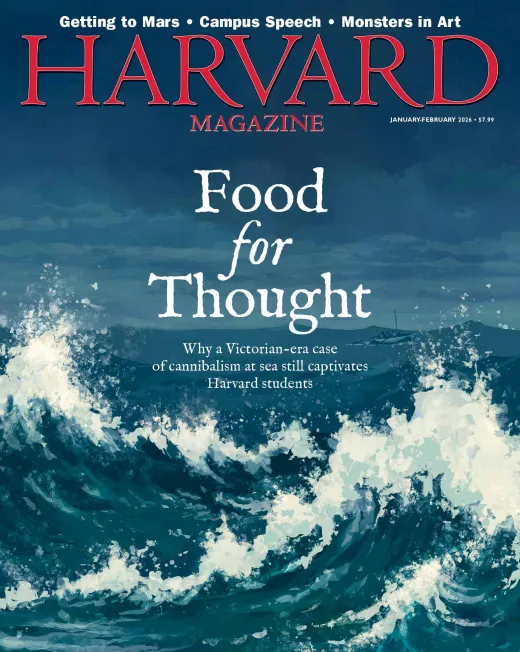
Cover of Harvard Magazine featuring turbulent ocean waves and the text "Food for Thought."

HARVARD MAGAZINE: The latest issue features ‘Food For Thought’ – Why a Victorian-era case of cannibalism at sea still captivates Harvard students…

The 1884 Cannibalism-at-Sea Case That Still Has Harvard Talking

The Queen v. Dudley and Stephens changed the course of legal history. Here’s why it’s been fodder for countless classroom debates. by Adam S. Cohen

Getting to Mars (for Real)

Humans have been dreaming of living on the Red Planet for decades. Harvard researchers are on the case. by Olivia Farrar

Is Ultraprocessed Food Really That Bad?

A Harvard professor challenges conventional wisdom. 

Regenerative Biology’s Baby Steps

What axolotl salamanders could teach us about limb regrowth

HARVARD MAGAZINE – NOVEMBER/DECEMBER 2025

November-December 2025 | Harvard Magazine

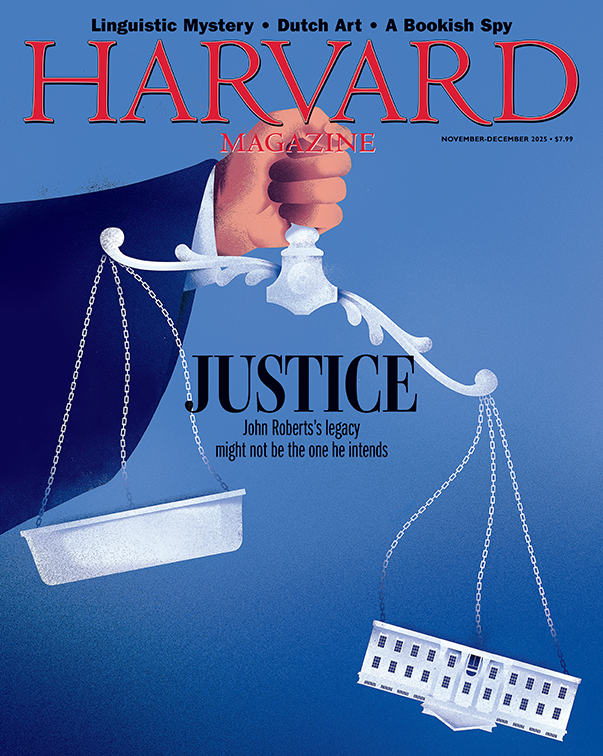
HARVARD MAGAZINE: The latest issue features ‘Justice’ – John Roberts legacy might not be the one he intends.

What Trump Means for John Roberts’s Legacy

Executive power is on the docket at the Supreme Court. by Lincoln Caplan

This Harvard Scientist Is Changing the Future of Genetic Diseases

David Liu has pioneered breakthroughs in gene editing, creating new therapies that may lead to cures. by Veronique Greenwood

Why America’s Strategy For Reducing Racial Inequality Failed

Harvard professor Christina Cross debunks the myth of the two-parent Black family.

HARVARD MAGAZINE – JULY/AUGUST 2025

July-August 2025

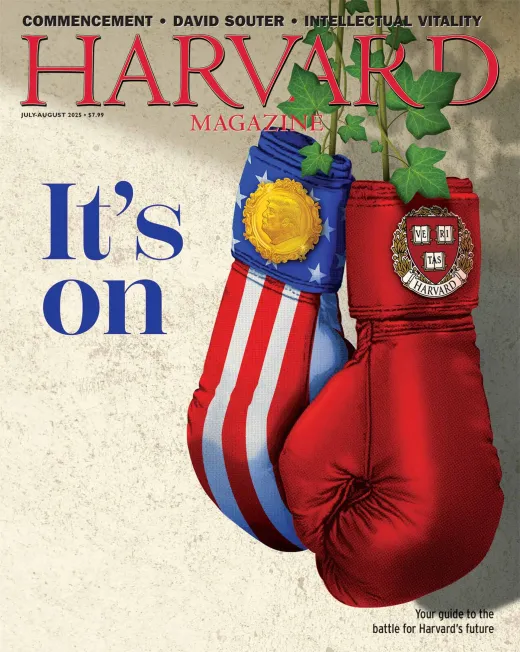
HARVARD MAGAZINE (June 17, 2025): The latest issue features ‘It’s On’…

The Standoff: Harvard’s Future in the Balance

“The stakes are so high that we have no choice but to fight,” says Garber.

Harvard’s Standoff: The Fight’s Key Players

The people shaping the battle over federal funding, international students, and DEI

by Nina Pasquini

Harvard’s Standoff: The Financial Stakes

Putting Harvard’s $53 billion endowment into perspective

by Jonathan Shaw

Meet the Lawyers Behind the Harvard v. Trump Lawsuit

A roster of lawyers on both sides

by Max J. Krupnick

Download PDF Issue

Views: The New York Times Magazine – Sept 24, 2023

Image

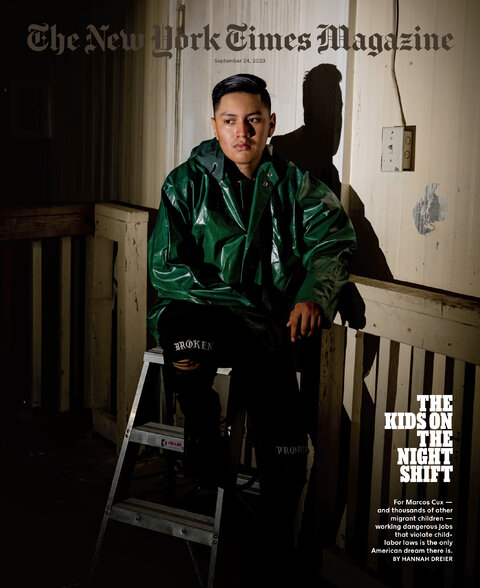
THE NEW YORK TIMES MAGAZINE (September 22, 2023): The 9.24.23 Issue features Hannah Dreier on migrant children working in dangerous conditions; McKenzie Funk on Hank Asher, a drug smuggler who became a pioneer in data mining; Sonia Shah on new research that suggests animals are saying more than we think; and more.

The Animals Are Talking. What Does It Mean?

A collection of black and white illustrations of animals are arranged into the shape of a speech bubble.

Language was long understood as a human-only affair. New research suggests that isn’t so.

Can a mouse learn a new song?

Such a question might seem whimsical. Though humans have lived alongside mice for at least 15,000 years, few of us have ever heard mice sing, because they do so in frequencies beyond the range detectable by human hearing. As pups, their high-pitched songs alert their mothers to their whereabouts; as adults, they sing in ultrasound to woo one another. For decades, researchers considered mouse songs instinctual, the fixed tunes of a windup music box, rather than the mutable expressions of individual minds.

A Chile Paste So Good, It’s Protected by the U.N.

Real-deal Tunisian harissa is an anchor to the motherland and a bright, specific accent to countless dishes.

By Eric Kim

Last year, UNESCO officially deemed harissa, the brick red, aromatic chile paste, “an integral part of domestic provisions and the daily culinary and food traditions of Tunisian society.” Keyword: Tunisian.

Views: The New York Times Magazine – Sept 17, 2023

Image

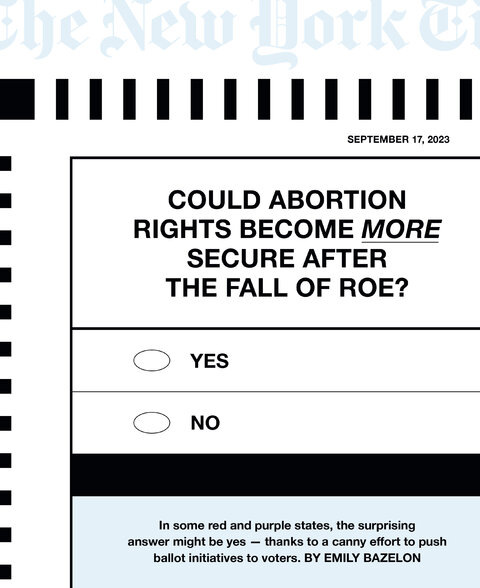
THE NEW YORK TIMES MAGAZINE (September 17, 2023): The 9.17.23 Issue features Emily Bazelon on abortion rights being won through state ballots after the Dobbs decision; Audra D.S. Burch on the death of Elijah McClain in Aurora, Colorado and the city’s deep divide over policing; Teju Cole on Greek tragedies; Dan Brooks on the Italian rock band Måneskin; and more.

The Surprising Places Where Abortion Rights Are on the Ballot, and Winning

After Dobbs, the political ground seems to be shifting in some unpredictable ways.

By EMILY BAZELON

The Trials of Aurora: A Colorado City’s Deep Divide Over Policing

After Elijah McClain died in 2019, the case seemed to be closed. The George Floyd protests — and the backlash to them — would change everything.

By Audra D. S. Burch

One by one, the five men — three police officers and two paramedics — walked up before the judge one afternoon this January. Their lawyers stood beside them, and the wooden benches of the Colorado courtroom were filled with family, friends and fellow police officers and paramedics.

Views: The New York Times Magazine – Sept 10, 2023

Image

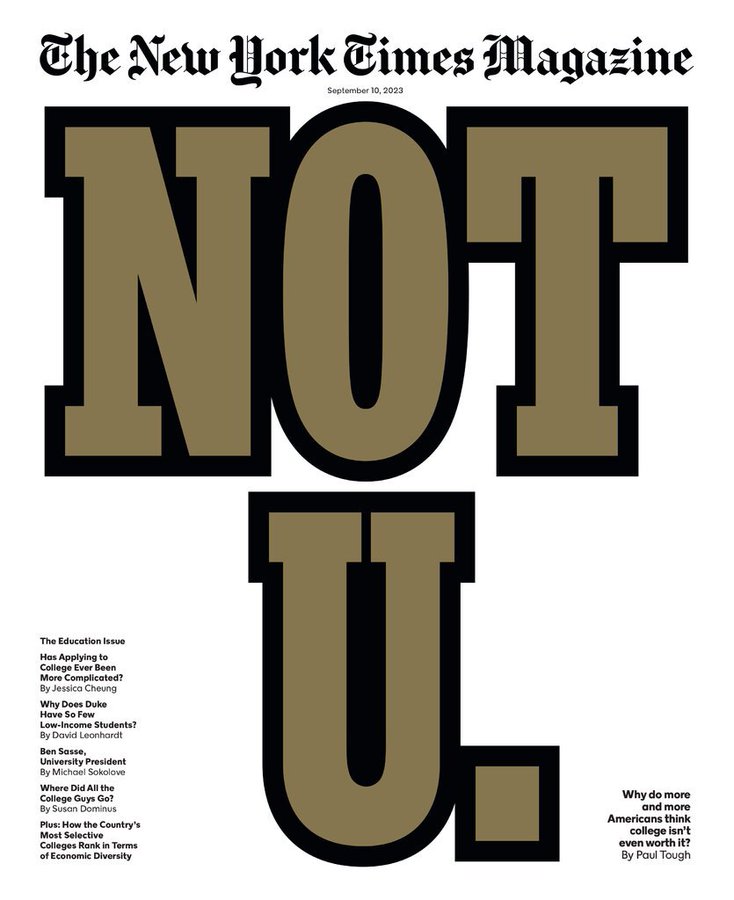
THE NEW YORK TIMES MAGAZINE (September 10, 2023): The Education Issue features Americans Are Losing Faith in the Value of College. Whose Fault Is That?; Affirmative Action Is Still in Effect. For Men, and more….

Americans Are Losing Faith in the Value of College. Whose Fault Is That?

For most people, the new economics of higher ed make going to college a risky bet.

By Paul Tough

A decade or so ago, Americans were feeling pretty positive about higher education. Public-opinion polls in the early 2010s all told the same story. In one survey, 86 percent of college graduates said that college had been a good investment; in another, 74 percent of young adults said a college education was “very important”; in a third, 60 percent of Americans said that colleges and universities were having a positive impact on the country. Ninety-six percent of parents who identified as Democrats said they expected their kids to attend college — only to be outdone by Republican parents, 99 percent of whom said they expected their kids to go to college.

Affirmative Action Is Still in Effect. For Men.

The scene outside a bar that is popular among Tulane students.

Declining male enrollment has led some colleges to adopt an unofficial policy that many find objectionable: “We need to admit men, and women are going to suffer.”

By Susan Dominus

In the spring of 2021, about 2,000 students on the campus of Tulane University in New Orleans received an email they were expecting. They had filled out an elaborate survey provided by Marriage Pact, a matchmaking service popular on many campuses, and the day had come for each of them to be given the name of a fellow student who might be a long-term romantic partner. When the results came in, however, about 900 straight women who participated were surprised by what the email offered: a friend match instead of a love interest. 

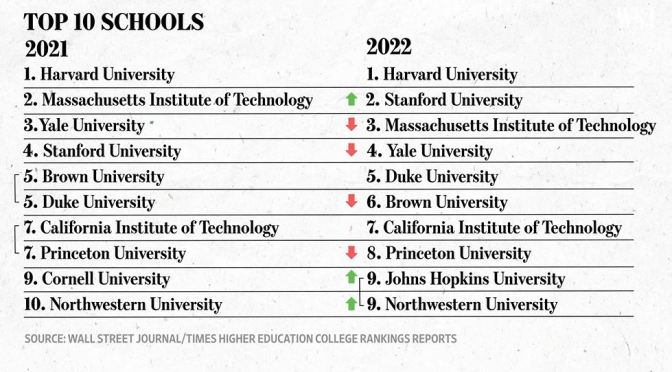
Education: The 2022 List Of Top-Ranked Colleges (WSJ)

The rankings illustrate the ways the pandemic changed higher education.

WSJ’s rankings of the top colleges in the U.S. shows that schools with deep pockets were best able to ride out the pandemic and perform in key categories. WSJ’s Doug Belkin explains the methodology of this year’s report and its highlights. Photo: Philip Keith for The Wall Street Journal