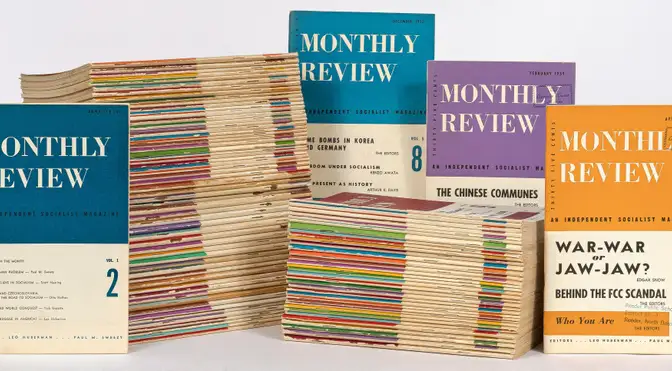
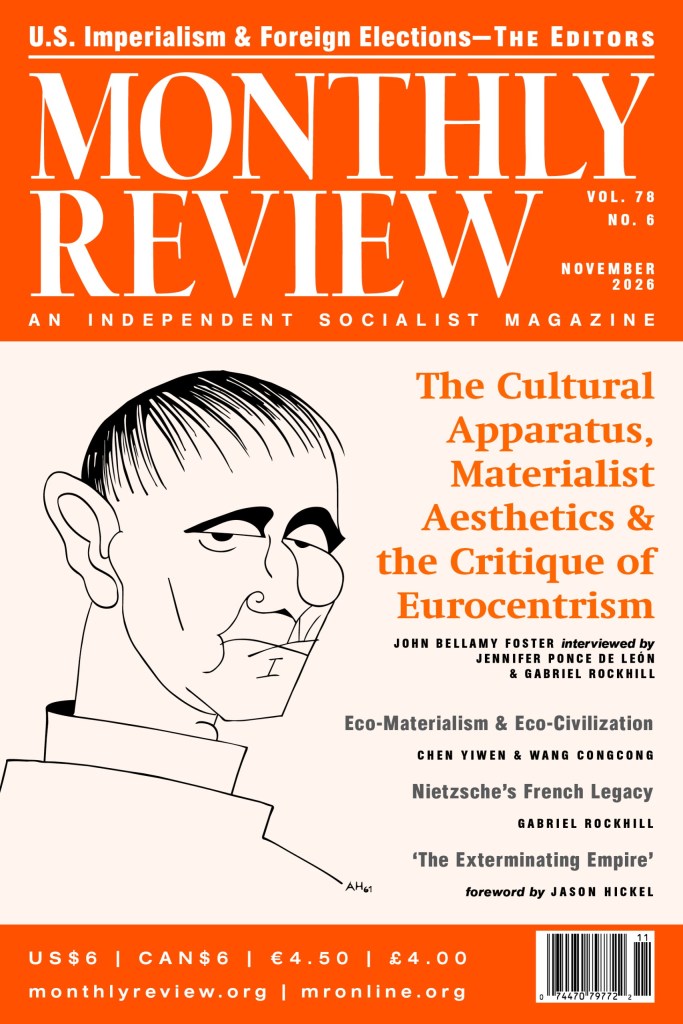
MONTHLY REVIEW MAGAZINE: The latest issue features the United States as the world’s chief enemy of sovereign elections.
Citing Dov Levin’s research, it counts 128 U.S. interventions in foreign elections from 1946 to 2014, rising after the Cold War, increasingly overt, and successful about 60 percent of the time before 2000. Methods include funding right-wing campaigns, dirty tricks, lawfare, social-media bots, aid threats, and CIA surrogates posing as “democracy assistance” groups. Recent examples include Venezuela, ending in Maduro’s abduction; $20 billion tied to electing Milei’s allies in Argentina; and Honduras, where Trump declared Asfura the winner. Leaked “Hondurasgate” tapes exposed regional manipulation schemes.
Nietzsche’s French Legacy
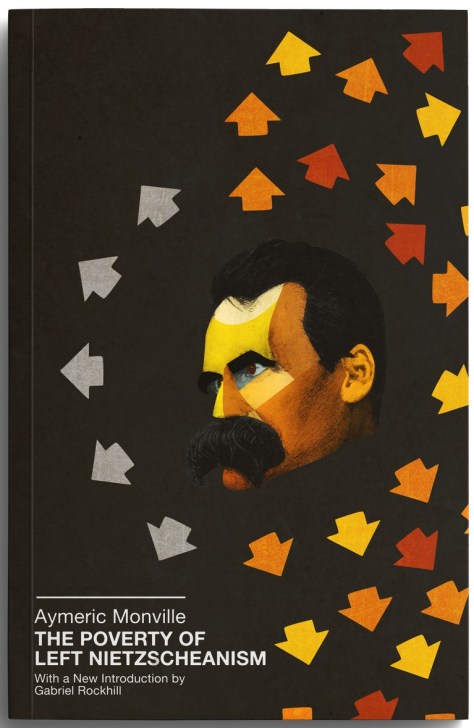
The Poverty of Left Nietzscheanism by Aymeric Monville
MR is pleased to be able to share with readers Gabriel Rockhill’s Introduction to The Poverty of Left Nietzscheanism by Aymeric Monville (Iskra Books, 2026). Rockhill provides readers with a thorough account of the rehabilitation of Nietzsche within French Theory and its consequences within the non-communist left. Fascism, Rockhill argues, “can only be understood and contested through materialist analysis and anticapitalist praxis”—a fitting preamble to a book that acts as “an insightful indictment of the dominant capitalist ideologies while clearly articulating the political path forward.”
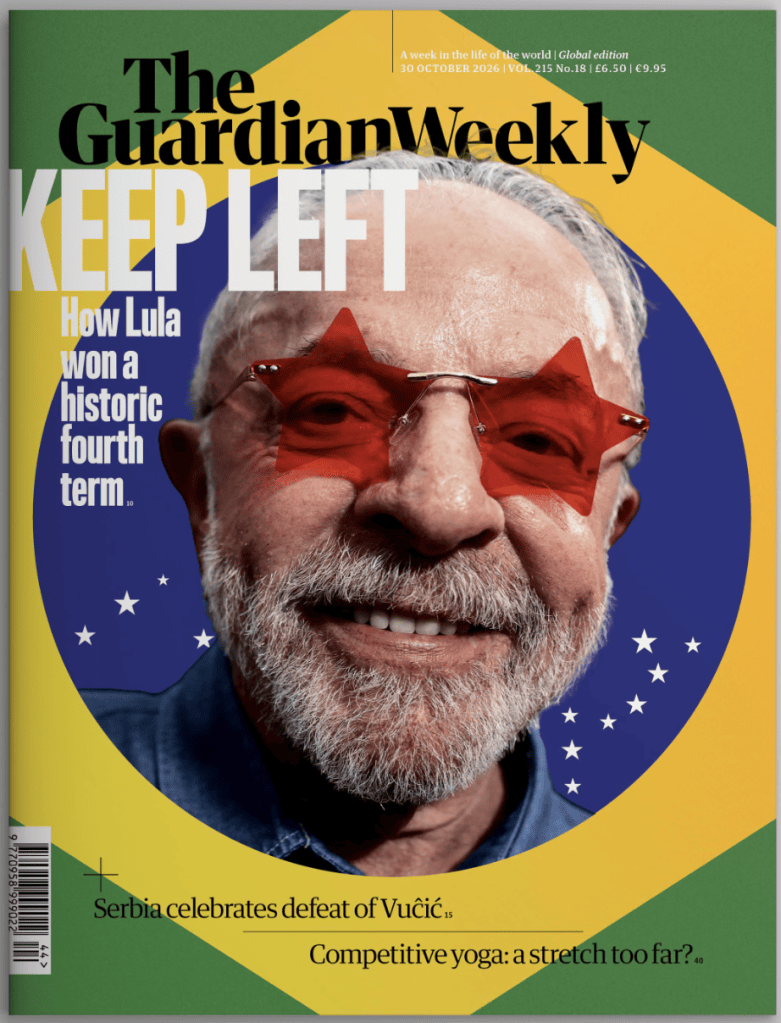
How many grinning faces, jubilant crowds and celebrating politicians can you fit into a single issue of the Guardian Weekly? That’s not a question that often troubles us, but the spectacular triumph of President Luiz Inácio Lula da Silva, winning a historic second-round vote after losing the first to rightwing opponent Flávio Bolsonaro, and the victory of the student-led campaign against autocrat Aleksandar Vučić in Serbia gave me a happy problem to solve this week. In an era when the right seems to be riding high in the world, popular pushbacks against strongmen politicians is something to celebrate.
For our Brazil cover story, Tom Phillips and Tiago Rogero report on the reaction to Lula’s victory and how he pulled eventual success from the jaws of what, until the first results came on Sunday evening, seemed a probable defeat. As government health minister Alexandre Padilha said that evening: “It’s a massive victory – not just for Brazil. It’s also an important signal to the rest of Latin America and to the world.” But, as commentator Jordana Timerman cautions, Brazil has been an exception in Latin America in successfully resisting Donald Trump’s attempt to achieve hegemony over the region.
Spotlight| ‘Pure arrogance’ Google has been in the dock in Finland over the illegal felling of hectares of woodland for its datacentres, reports Miranda Bryant
Science| Out of the blue Why are more planes encountering invisible air turbulence, what can they do about it and what effect will more frequent incidents have on travellers, asks Patrick Keneally
Feature| Bent out of shape? Competitive yoga may sound like anathema to some devotees of the ancient practice but, as Anita Chaudhuri discovers, there is a movement among some yogis to make it an Olympic sport
Opinion| Lame duck presidents can be dangerous beasts If Democratic midterm gains hamper Donald Trump at home, we should be very worried about what he might do abroad when foreign policy is his last bastion of power, says Steve Bloomfield
Culture| Stay faithful As the second series of Celebrity Traitors draws to its conclusion, Michael Hogan meets the people who made it the world’s biggest TV show and finds out why Claudia Winkleman never wants to leave the castle
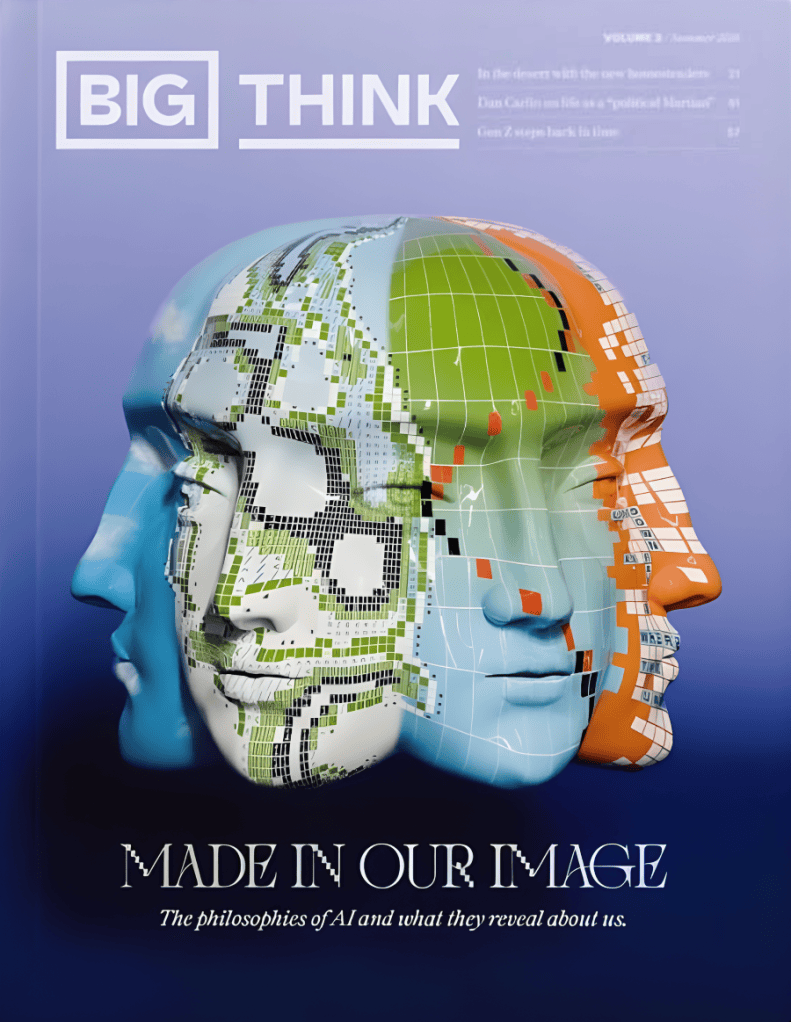
The philosophies of AI and what they reveal about us.
We can’t predict the future of artificial intelligence, but we do know its origin: us. The models we use today were trained on unfathomably huge sums of human-generated text: our books and blogs, our science and myths, our jokes and lies. In the output of language models, we see glimpses of ourselves refracted through a strange new form of intelligence we’re only beginning to understand. This issue is an attempt to make sense of those refractions — to use philosophy to turn over hard questions until we start to see them more clearly.
AI will likely impact everything from the economy to the battlefield, but exactly how remains to be seen.
In November 2022, I took on a writing assignment that, looking back, may have had a bigger impact on my life than any other: interview ChatGPT. It was the first day that OpenAI’s tool was available to the public, and my goal was to try to make sense of the tech — and then help readers make sense of it — by asking it questions about itself.
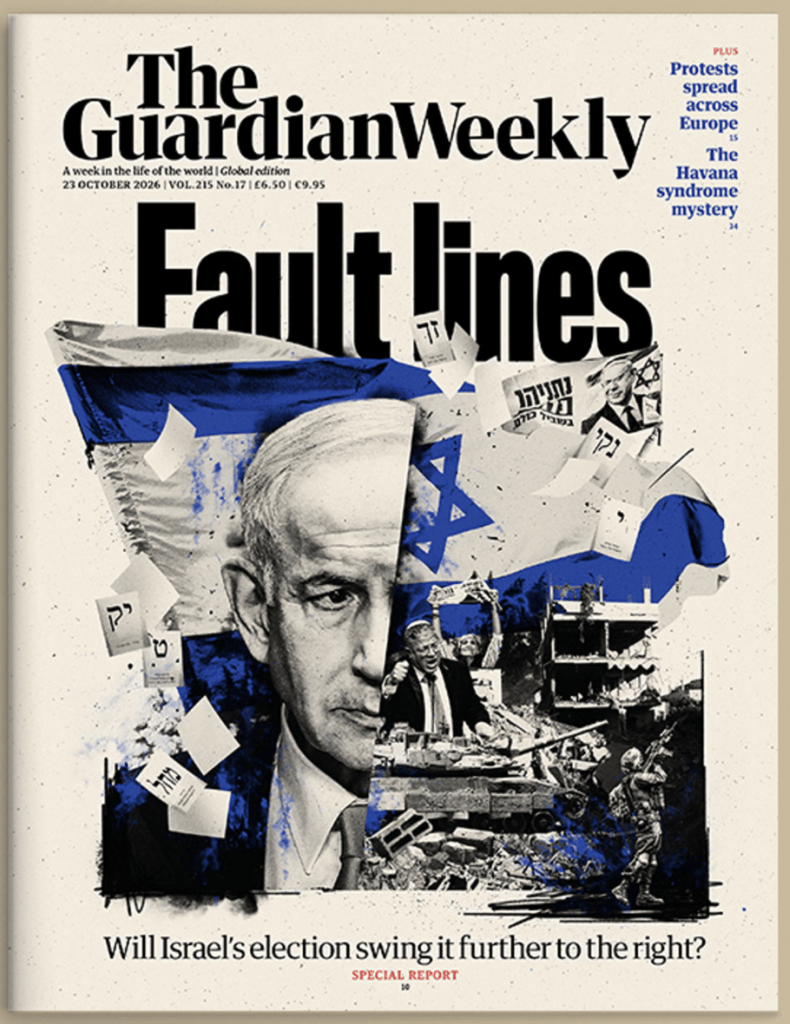
Israel is holding national elections next week, giving its citizens their first chance to pass judgment on Benjamin Netanyahu and his coalition since the Hamas-led attacks of 7 October 2023.
For our big story this week, chief Middle East correspondent Emma Graham-Harrison says that whether or not the prime minister can hold on to power, a more rightwing Knesset is expected to be voted in. More than half a million Israelis have reached voting age since the last election in 2022 and, according to polls, three-quarters of first-time Jewish voters define themselves as right or centre-right.
Peter Beaumont profiles opposition candidate Gadi Eisenkot. The former general contrasts with Netanyahu when it comes to style and character, he writes, yet on key policy points retains a studied ambiguity.
Then Israeli pollster and political analyst Dahlia Scheindlin argues that after three disastrous years, Israel needs to rethink itself, but only a clear opposition victory would let the country begin to heal, strengthen democracy and establish Palestinian rights.
Spotlight| ‘We are suffocating’ As protests that have convulsed Spain and France in recent weeks spill over to Italy and Portugal, Sam Jones reports on the rising wave of anger over the housing crisis and cost of living
Science| Taking a shot Could a drug to prevent shingles also protect our brains against dementia? The possibility, writes Ian Sample, is driving a boom in vaccinations
Feature| The Havana syndrome mystery Dozens of CIA officers have been afflicted by debilitating symptoms over the past decade. Are they the result of “mass hysteria” or are they from attacks with an energy weapon, asks Shaun Walker
Opinion| Another EU referendum? Not just yet The omertà on the UK rejoining has now been broken, but it would be folly to move too soon, says Polly Toynbee
Culture| Shygirl’s slog to the top She has opened for Beyoncé, writhed in a cubicle for Madonna – and is poised to take over the mainstream with her new rock sound. The pop auteur talks to Simran Hans about cash, class – and finding true love
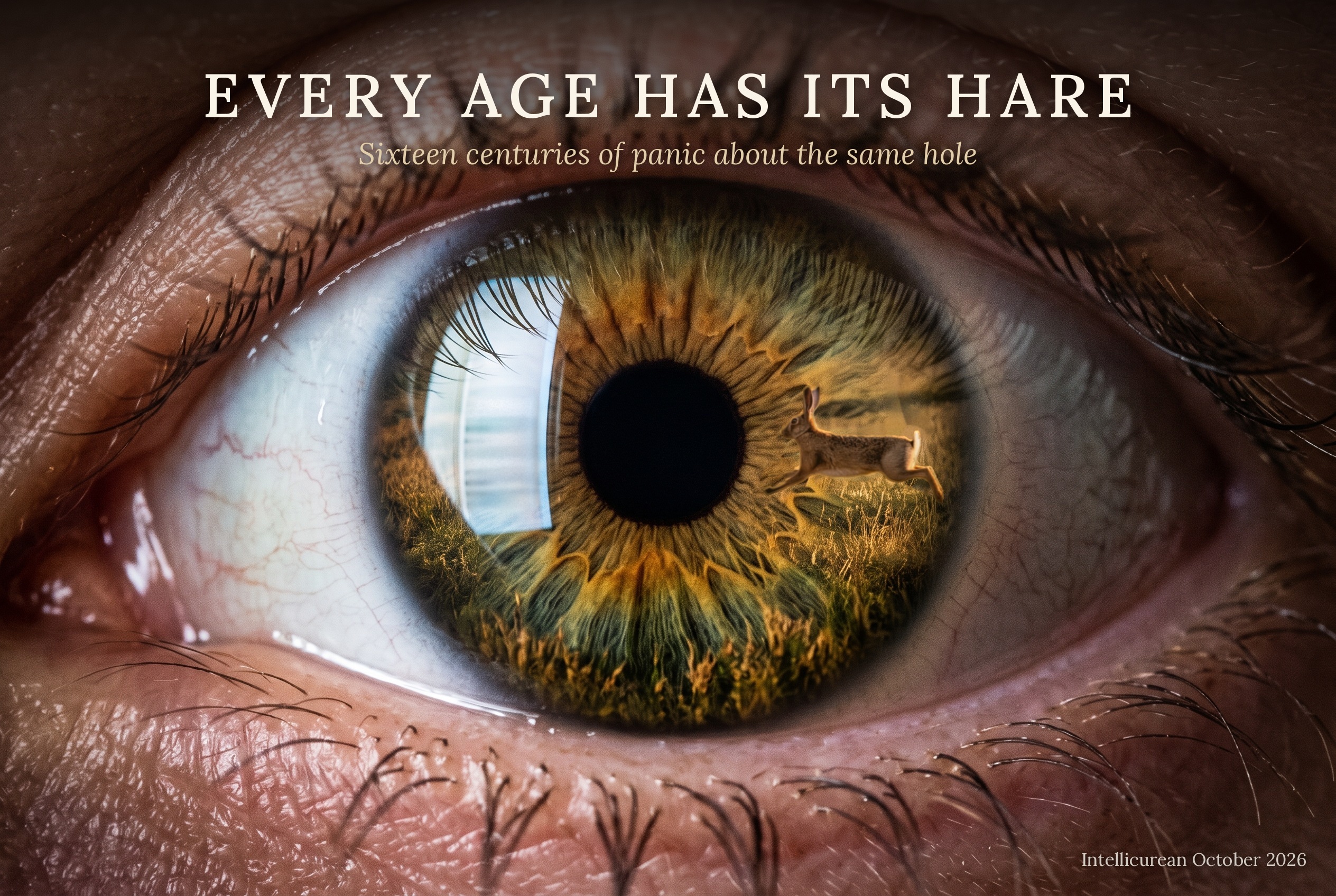
Put your phone face down and read to the end of this paragraph without touching it. Sixteen centuries ago a bishop in North Africa confessed that a dog chasing a hare across a field had turned him from some great thought. This month Scientific American asked how we get sober from the feed in our pockets. Every age has panicked about its hare, and no panic has ended in sobriety.
A hare in the field of an eye, running for the pupil, made for the essay.
WHY WE’RE POINTING YOU THERE
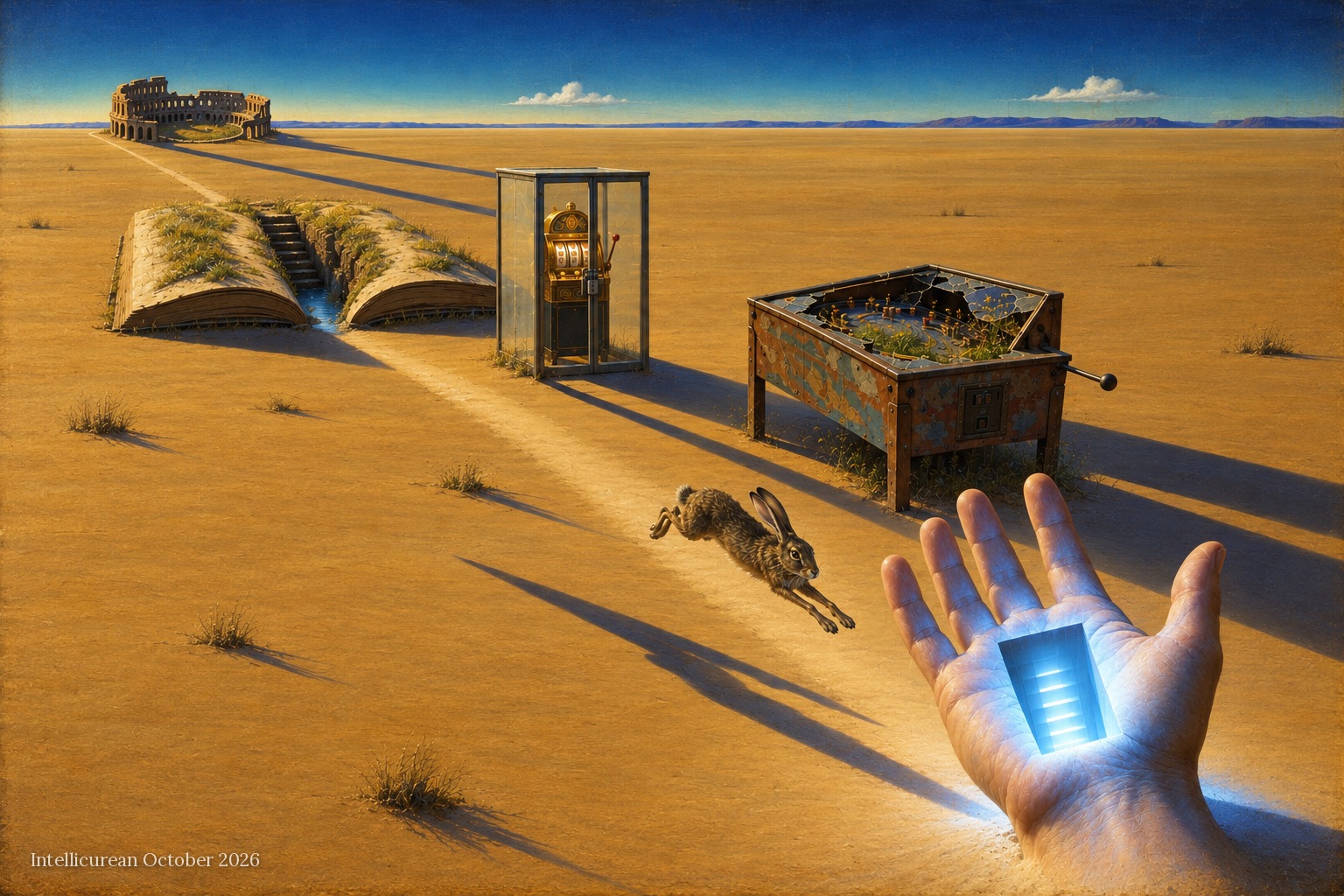
This month Scientific American asked whether we are addicted to social media and how we might get sober. Intellicurean’s essay answers by going back to the start of the complaint. It opens at the Roman games, on a young man who swore he would keep his eyes shut and was undone by the roar of the crowd. Then it follows the same hole through the centuries: a girl drowned in the river at Weimar in 1778, and the town blamed Goethe’s novel; London’s coffee houses, which a king tried to close and gave up on in eleven days; Dostoevsky at the roulette wheel, and the first slot machine; New York’s thirty-four-year ban on pinball; and a test account on TikTok that never searched for anything and was fitted to sadness in a little over half an hour.
It finds every earlier panic right about a few people and wrong about the many, and it finds the hole as old as the eye. What is new, it argues, is not the hole. It doesn’t scold anyone for their screen time, and it doesn’t pretend history hands us an easy answer.
The old holes became the floor. The new one is in the hand. Made for the essay.
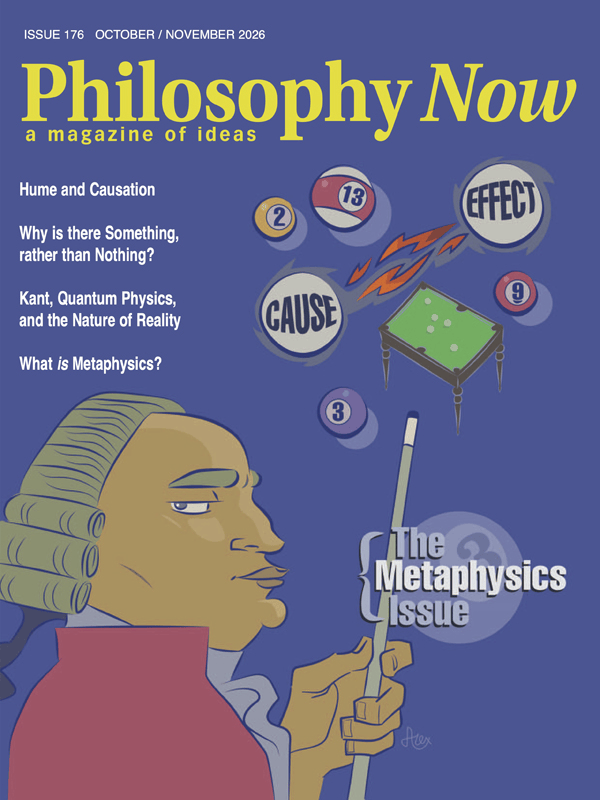
THE PHILOSOPHER MAGAZINE: This collection of essays explores diverse philosophical inquiries into culture, ethics, and human experience. Chloe Romanis uses ectogestation to evaluate the inherent value of pregnancy, while Jorge Sanchez-Perez addresses the methodological challenges of diversifying the philosophical canon through pre-colonial Andean philosophy. Laura Cecile Moore clarifies the boundaries between art and craft. Meena Dhanda advocates using Wittgensteinian reminders against injustice, and Grace Theodoly explores how psychological ideas challenge cognitive neutrality. Finally, Aanuoluwapo F. Sunday applies Yoruba environmental ethics, Tanya de Villiers-Botha maps artificial intelligence ethics, and Helga Varden navigates the complexities of transforming the Kantian tradition from within.
The recent trend of AI companies hiring philosophers has largely been celebrated as a vindication for the discipline. The Economist recently reported that American philosophy graduates now find work at higher rates than their computer science peers, and that leading AI laboratories are recruiting philosophers into senior roles -– not merely to sharpen a model’s chains of reasoning, but to draft the documents, such as Google’s published ‘AI Principles’, that are meant to govern how a system behaves. Where criticism of this trend exists, it has tended to focus on familiar concerns: ethics washing, the risk of philosophy becoming a public-relations exercise, and the migration of talent away from universities that Luciano Floridi has called a ‘haemorrhaging’. These concerns are real. But they may be missing a further, less visible risk, one that has nothing to do with where a philosopher’s paycheck comes from.
There is an old paradox at the heart of money: it seems to work best when left unexamined. When monetary trust holds, we barely notice it and rarely pause to ask what money is or what stands behind it. The moment we do – in monetary crises and periods of inflation – the very act of questioning can accelerate the unraveling. Money has a peculiarly oblique self-referential structure. Monetary systems depend on routine acceptance, on habits of trust that operate beneath conscious reflection. But as we shall see, this does not mean the right response is naïve ignorance or unreflective depoliticisation. Quite the contrary: for money to work reliably as institutionalised collective faith, it must remain anchored in shared social values and that requires the capacity for reflective, democratic engagement with questions of monetary power, who controls credit and, therefore, which futures are allowed to become possible.
I want to propose four ways to think about ‘finance,’ for those who want to critique it. Critics can think of finance as a parasite, as an organ, as an ongoing struggle, or as a decision. In what follows, I will explore these four different ways to think of finance, these different meanings, and the different possibilities they offer for mounting resistance to it.
Let’s divide talk about finance into two sides. Finance has meanings, but it also has a referent. Its referent is pretty evident to anyone who looks into it. Finance refers to economic functions that have to do with credit. The definition of credit is also pretty straightforward. Credit is value advanced on the promise of future increase. This makes it similar in structure to industrial capital, which is also value advanced on the promise of a future increase. The difference between capital and finance is production. Industrial capital receives its increase when value is invested in production. Say I am a capitalist. With my capital, however I obtained it, I found a company that produces microchips. As microchips roll off the line and are sold, the original value I advanced grows because workers work more than they are paid for and in the extra hours they make more microchips than I need in order to pay the costs.
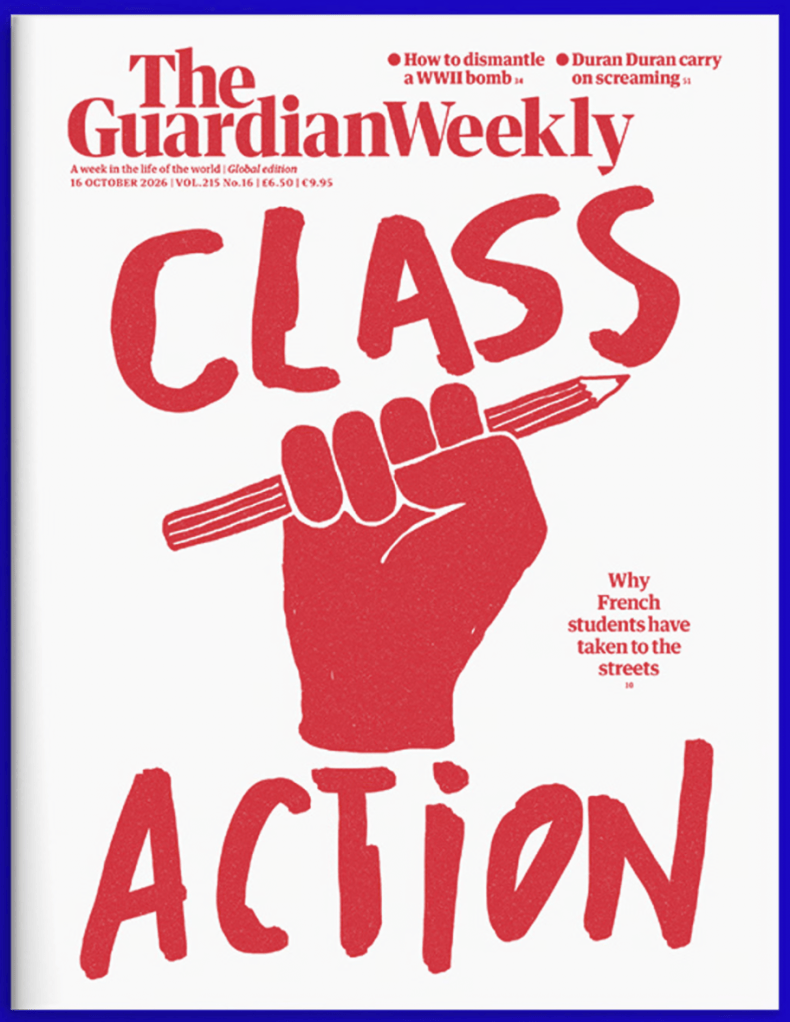
France has been rocked by huge youth protests in recent weeks over the state of high school education, bringing tens of thousands of people on to the streets.
The movement began with outrage over shoddy school conditions in a Paris banlieue, but has spread across the country as pupils voice their anger about a system they say is failing them.
For this week’s big story, Paris correspondent Angelique Chrisafis hears from protesters who feel abandoned by the French state. Angelique also looks at the evidence on students’ complaints of dilapidated buildings, teacher shortages, inequality and low investment.
Then, Alexander Hurst says fixing the broken education system should be just the start for an aloof political class if it is to finally pay attention to a generation who feel neglected.
Spotlight| The future of the death penalty Donald Trump has used the full might of the presidency to supercharge executions but, writes Ed Pilkington, an avalanche of mishaps has put the system’s flaws in the spotlight
Science| Sweet time A flurry of recent studies suggests that spending the first 1,000 days of life under sugar rationing may have left traces on people’s health more than seven decades later. Linda Geddes reports
Feature| The art of dismantling a second world war bomb British bomb disposal squads are being called to more unexploded devices than ever – and they risk their lives each time. Samira Shackle recounts the challenge they faced when two bombs were discovered on the same day
Opinion| A new era of instability The latest attack by Houthi rebels on Saudi Arabia may prove to be more calamitous for the region than the world imagines, says Nesrine Malik
Culture| Hungry like the werewolf Duran Duran talk to Alexis Petridis about 80s excess, tabloid scrutiny and their Halloween glow-up
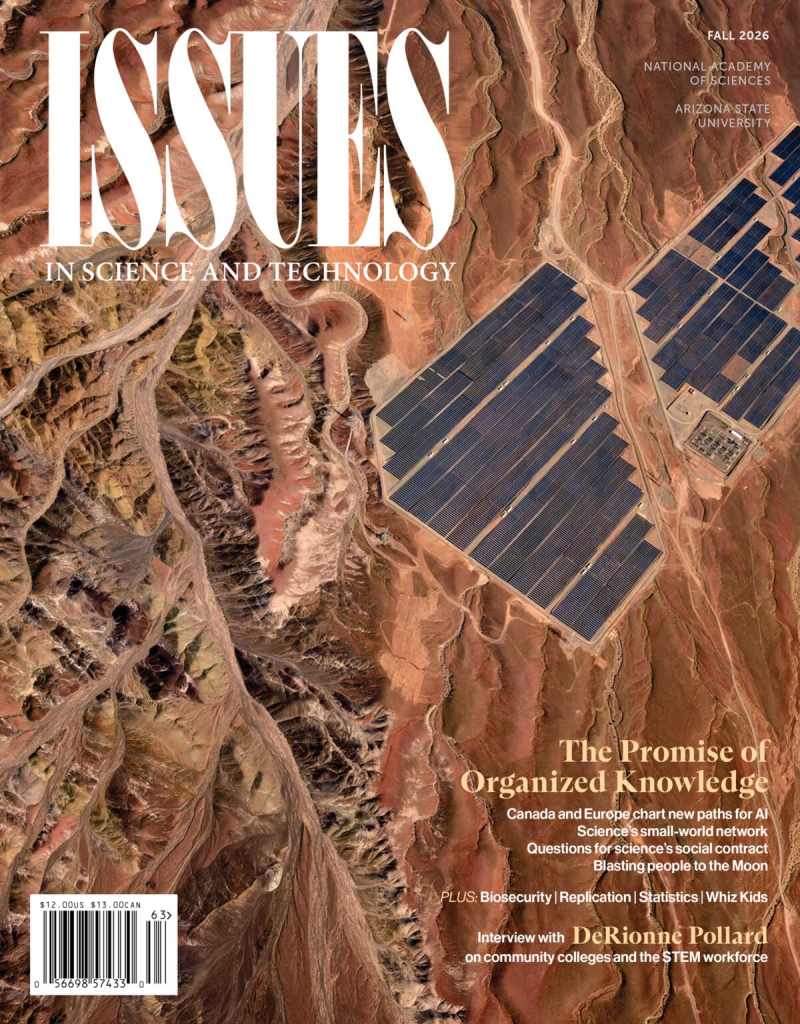
The Fall 2026 issue explores how artificial intelligence might affect public policy in a variety of domains. Take biosecurity: Despite the fear that AI could be used to engineer dangerous pathogens, a former FBI special agent argues that the technology can also be used to uncover suspicious activity and possible bad actors before they become a threat. On economic policy: Spectacular wealth from AI will accrue to relatively few companies and individuals. What if a country were to create an AI sovereign wealth fund to distribute these profits more equitably? A group of Canadian scholars and legislators proposes to set up just such a fund. And when it comes to trust, a cultural anthropologist argues that CERN, the world’s most successful large-scale science collaboration, has many lessons to offer European regulators about how to build trust and transparency when using AI for science.
What Are the Goals for AI?
In “Escaping AI’s Measurement Trap” (Issues, Summer 2026), Urs Gasser, Viktor Mayer-Schönberger, and Fabienne Marco make a compelling case that governance of artificial intelligence faces a problem. Once benchmarks become targets, systems and their developers adapt to them, and measured performance may increasingly diverge from behavior in the real world. Their argument leads to a broader question: How can democratic societies not only improve the oversight of increasingly optimized AI systems, but shape what gets optimized in the first place?
There is much discussion on how artificial intelligence poses threats to biosecurity; there should be at least as much focus on how AI can expand the solutions.
Today’s biosecurity approach is still grounded in a foundation laid nearly two decades ago. In 2008, when I reported to Federal Bureau of Investigation Headquarters as a newly minted supervisory special agent to support biosecurity policy, one important, emerging question was how providers of synthetic DNA should screen orders from customers. As commercial gene synthesis became increasingly accessible, many people worried that individuals could order genetic sequences coding for toxins and pathogens and then use them to cause harm.
News, Views and Reviews For The Intellectually Curious