
Tag Archives: Baking

THE GUARDIAN WEEKLY – SEPTEMBER 18, 2026

THE GUARDIAN WEEKLY: The latest issue features ‘Germany’s Nightmare’ – Can Merz Save His Country Or Himself?

Friedrich Merz is a man with few choices and little popular support as he faces the end of Germany’s postwar settlement and the collapse of all the checks and balances to maintain democratic norms after the second world war and reunification. While Alternative für Deutschland’s success in state elections in Saxony-Anhalt saw the party win 44% of the vote, they are three seats short of a governing majority and, so far, no other party has said they are prepared to work with them, which means that for the moment, at least, the threat of Germany’s first rightwing extremist state government since the Nazi period has not yet come to pass.

As Berlin correspondent Deborah Cole explains, Merz is seen as the wrong man to present and sell a political counterpoint to the AfD’s populist policies. Seen as lacking in empathy and political dexterity, his demeanour is in sharp contrast to Ulrich Siegmund, the AfD’s lead candidate in Saxony-Anhalt. But as Deborah’s Berlin colleague, Kate Connolly, reports, some of Siegmund’s prospective new MPs have questionable backgrounds, including criminal records, Stasi pasts and connections to far-right networks.

Spotlight | Stop, slow down and swerve the apocalypse
Can the world heave a collective sigh of relief after fellow tech bosses heeded a proposal by Anthropic CEO Dario Amodei’s to put the brakes on AI’s headlong rush to over take human intelligence? Nick Robins-Early weighs up our chances

Science | Can I borrow your coyote?
Guardian US reporter Lois Beckett visits a one-of-a-kind California lending library where you can check out taxidermied animals and fossilised dinosaur bones.

Feature | Slime is not as simple as it seems
Scientists are battling to determine whether supposedly simple organisms demonstrate a form of intelligence. If they do, what does it mean for our understanding of brain power, asks Samanth Subramanian

Opinion | Ethics make a return to UK foreign policy
The evidence is Ed Miliband’s bold decision to label settler violence in the West Bank as “ethnic cleansing” and institute a boycott, argues Steve Bloomfield

Culture | Shear fun
Catherine Shoard is rounded up for a trip down to Mossy Bottom farm to get a behind-the-scenes preview of the latest Shaun the Sheep film
THE GUARDIAN WEEKLY – SEPTEMBER 11, 2026

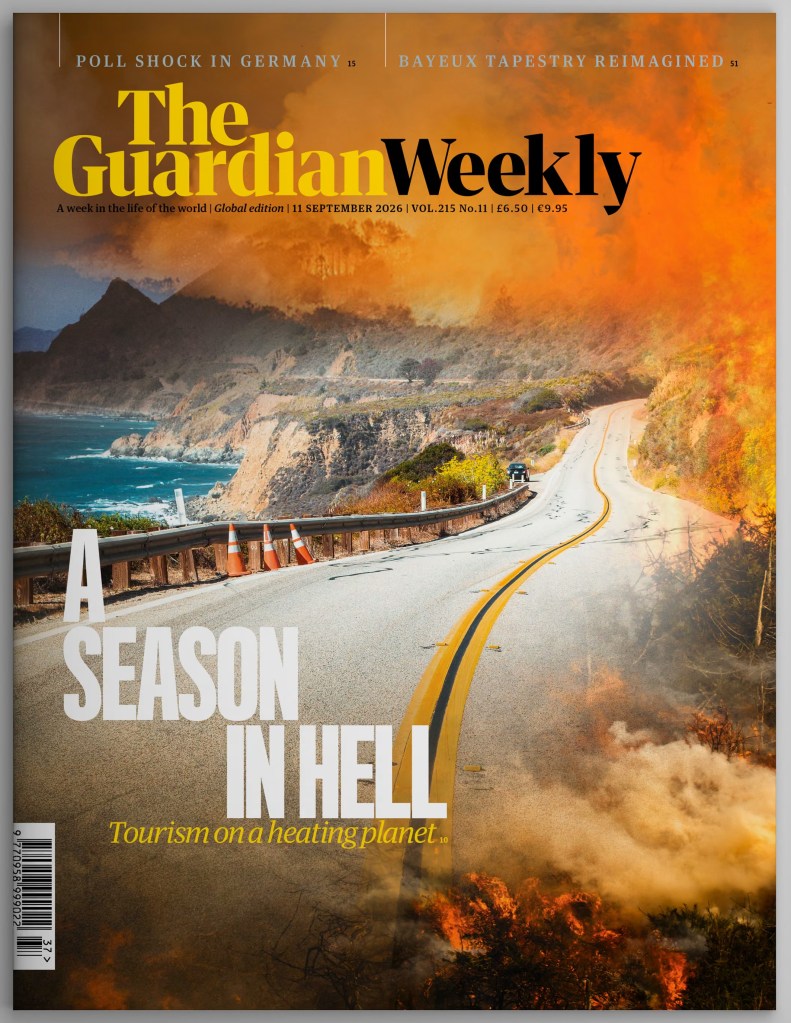
THE GUARDIAN WEEKLY: The latest issue features ‘A Season In Hell’ – Tourism on a heating planet.


California’s Big Sur coastline is often called a slice of heaven. But this year – beset by wildfires, road closures and disruptions to tourist amenities – it has endured a long summer of hell. Now questions are being asked about how many visitors it can sustain in the face of the climate crisis.

For our big story this week, Andrew Gumbel visits Big Sur, where the tourist industry accounts for about 90% of the local economy, to hear why the community fears its ethos is under threat.

The UN has warned that the El Niño climate phenomenon is “supersizing before our eyes”. Environment editor Damien Carrington reports on the latest forecasts, which predict the event is near certain to shatter temperature records.

Then, the mayors of Paris, Milan and Phoenix write about how their cities are learning from each other on responding to the heat crisis. “How do you protect millions of people,” they ask, “when extreme heat is no longer an exceptional event, but an increasingly familiar part of summer?”

Spotlight | ‘It breaks my heart’
Kate Connolly reports from Magdeburg, the capital of Saxony-Anhalt, where voters are digesting the far-right Alternative für Deutschland’s state election triumph

Science | Forbidden planet
Since it was stripped of planetary status, Pluto’s defenders have been fighting the decision – and they’re only getting more passionate, writes Tim Dowling

Feature | Your lying AIs
LLMs have an alarming tendency to deceive and manipulate their users. As they become ever more embedded in society, the race is on to find out why – and stop them doing it. Snigdha Poonam explains

Opinion | The route to a brighter future
The world is being driven to the brink by thugs and dictators, says Simon Tisdall, but ordinary people have more power than we think

Culture | A stitch up
As the Bayeux tapestry goes on show in London, cartoonist Edith Pritchett offers an alternative 21st century take, capturing today’s battles, while art critic Jonathan Jones reviews the British Museum’s blockbuster exhibition of the original masterpiece

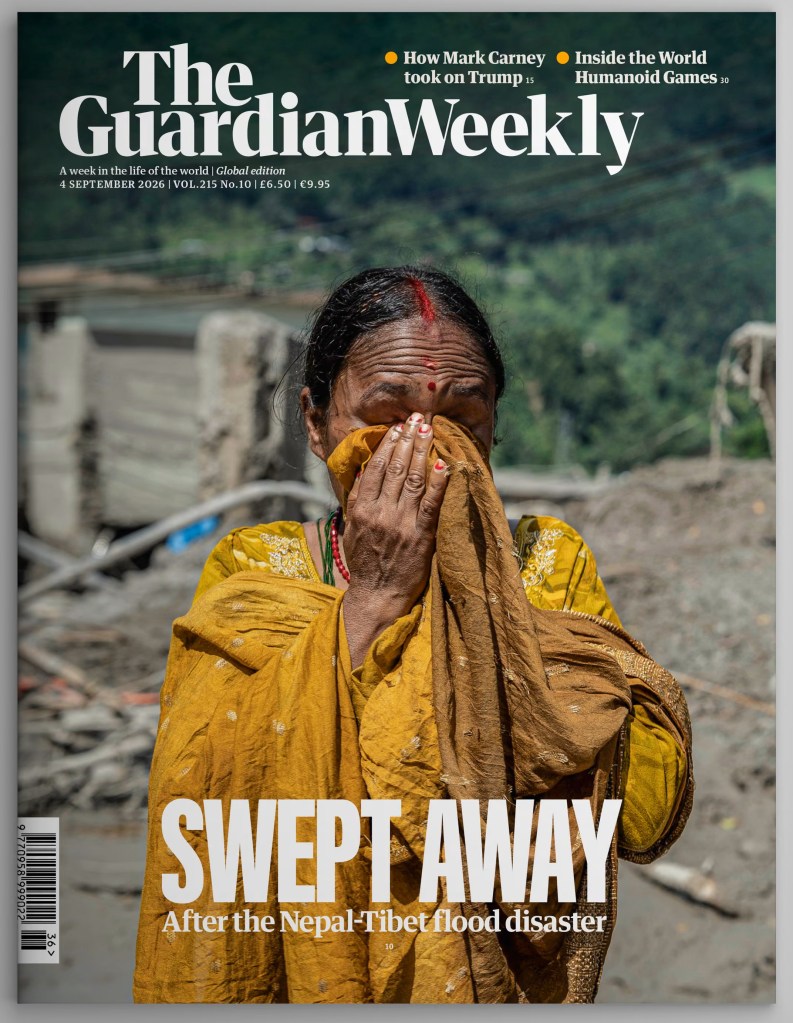
THE GUARDIAN WEEKLY – SEPTEMBER 4, 2026

THE GUARDIAN WEEKLY: The latest issue features ‘Swept Away’ – After the Nepal-Tibet flood disaster…

Over the last week, the world has watched with horror the scenes from the Tibet-Nepal border where a devastating torrent of mud, water and ice tore along the Bhotekoshi River, destroying entire communities and leaving more than 1,000 people dead and several thousand more missing.

From the Nepali town of Devighat, our south Asia correspondent Hannah Ellis-Petersen describes a nightmarish scene of overflowing mortuaries and unidentifiable bodies, as shellshocked survivors of the flood slowly return to the ruins of their homes.

The disaster happened after the collapse of a glacier – and while global heating has not been definitively attributed as the cause, it is undeniable that steep mountain slopes and valleys are especially vulnerable to flooding and landslides, while extreme weather events such as monsoons and melting glaciers have become more common because of warming due to human-caused climate breakdown, as our global environment writer Jonathan Watts explains.

Then columnist Nesrine Malik paints a wider picture and argues that while for many people these floods may feel as though they have happened a world away, the climate crisis is coming for us all, one way or another.

Spotlight | Mark Carney shows combative nature in face-off with Trump
The Canadian PM is one of the few world leaders to stand up to the US president. Former colleagues say they are not surprised. Leyland CeccoHeather Stewart and Kalyeena Makortoff report

Science | The robots are coming!
 Or are they? As entrants at the World Humanoid Games lurched from triumph to farce, Robert Booth finds that a robotics revolution may not be as close as it first appears

Interview | Gordon Brown on Burnham, billionaires – and a better Britain
The former UK prime minister is still shaping politics (even if he doesn’t want to interfere). He tells Charlotte Edwardes about keeping his temper, staying fit – and why he won’t splash out for a Scotland football shirt

Opinion | The tech titans must be stripped of their power, and soon
Those who said Meta harms children struck a blow, but the ability of big tech to gouge profits and cause harm is barely diminished. That’s the battle to come, argues Jonathan Freedland

Culture | Dolly Parton’s peerless career turned country music cliches inside out
Beneath the wig and rhinestones, the late US country singer was the genius behind strings of classic songs that continue to inspire new artists, says Alexis Petridis

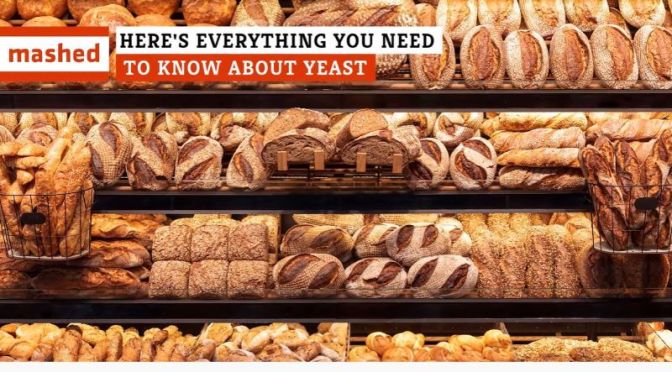
Fermentation: What To Know About ‘Yeast’ (Video)

Whether you’re making a recipe for cinnamon rolls or French bread, yeast factors into the equation. Yeast is a required ingredient for almost all bread recipes. While we typically just buy yeast at the grocery store and toss it in our mixing bowl, yeast has quite an interesting backstory.

Yeast are fungi, living organisms found all around us, floating in the air. According to producer Red Star Yeast, yeast is made up of egg-shaped cells, only visible through a microscope. They’re fungi just like the molds found on blue cheese, mushrooms, or even in antibiotics such as penicillin. However, yeast grows in a different form than other fungi, which are typically composed of tubular chains of cells called hyphae. Yeast is found in small clusters of cells, or as an individual cell. And since it’s alive, yeast can also die.

According to Red Star Yeast, their yeast is stamped with a best by date of two years from when the yeast is packaged. Keeping it in a cool, dry place such as your pantry or refrigerator will ensure it’ll live up to that date. If you’re not sure if your yeast is alive, pour it over warm water with a teaspoon of sugar. If it bubbles, it’s still kicking, The Spruce Eats advises.

Also? Yeast has been around for longer than pretty much any of us. In researching the ancient tomb of the Egyptian ruler Scorpion from around 3100 B.C., archaeologists found 700 jars of resinated wine. According to Scientific American, the resin was used to slow the wine’s natural progression into vinegar. Researchers found evidence of the same species as modern-day brewer’s yeast in the jars. While that isn’t solid evidence the ancient Egyptians knew that the addition of yeast could turn their juice into alcohol, it certainly does show that yeast has been prevalent for a very, very long time.

Timeline: It’s alive, and ancient | 0:00 Hundreds of varieties | 1:52 Commercial production | 2:38 Adult beverages | 3:24 Ooh, that smell | 4:36 The amount makes a difference | 5:30 Yeast-free bread | 6:17 Sourdough starter is DIY yeast | 7:01 2020’s yeast shortage | 7:45

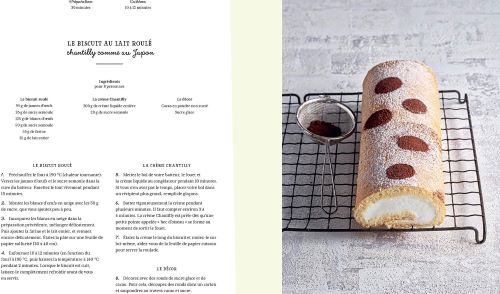
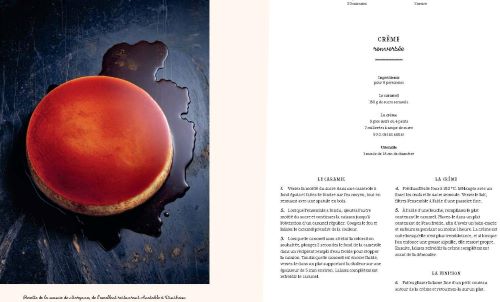
New Food Books: ‘Petite Patisserie: 180 Easy Recipes – Elegant French Treats’

Christophe Felder, along with his longtime collaborator, Camille Lesecq, are back with a new volume that focuses upon the delightful small pastries that are one of the highlights of the art of French baking. Both children and adults adore these often bite-size indulgences. Included here are all the fundamental recipes–the classics and the traditional favorites–along with original, inventive creations. 

A delightful volume devoted to the delicate, charming treats that are the soul of France’s neighborhood patisseries. With Felder’s expert guidance, any home cook can now re-create the sweet enchantments and small indulgences that are the hallmark of many a holiday in France.

Recipes include amandines, babas, biscuits, bostocks, creams, croquantes, croustillons, financiers, flans, madeleines, Alsatian manderlis, Napoleans, petits fours, sablés, tartlets, and much more.

The book opens with a section on twenty-seven base recipes from which all others can be made, including pâte brisée, pâte sucrée, sablé breton, dacquoise, pâte á choux, feuilletée rapide, and crème pâtissière. It is then divided into chapters of increasing complexity, with a final chapter on “funny” cakes–playfully decorated small cakes designed to delight children or for parties.

Each recipe comes with precise preparation and cooking times, step-by-step decorating tips, and suggestions for vegan and gluten-free alternatives–this seemingly petite package contains a wide range of sweet and simple pleasures to delight big and small gourmets alike.

About The Author

Christophe Felder is one of the most respected pastry masters in the world, having achieved fame during his fifteen-year tenure as the pastry chef at the Michelin-starred Hôtel de Crillon in Paris. In 2009, he founded Studio Christophe Felder, a pastry school open to the public and located in Strasbourg in his native Alsace. Together with Camille Lesecq, former pastry chef at Le Meurice, they operate a patisserie, Les Pâtissiers, in Mutzig, Alsace.

Read more