Category Archives: Economics

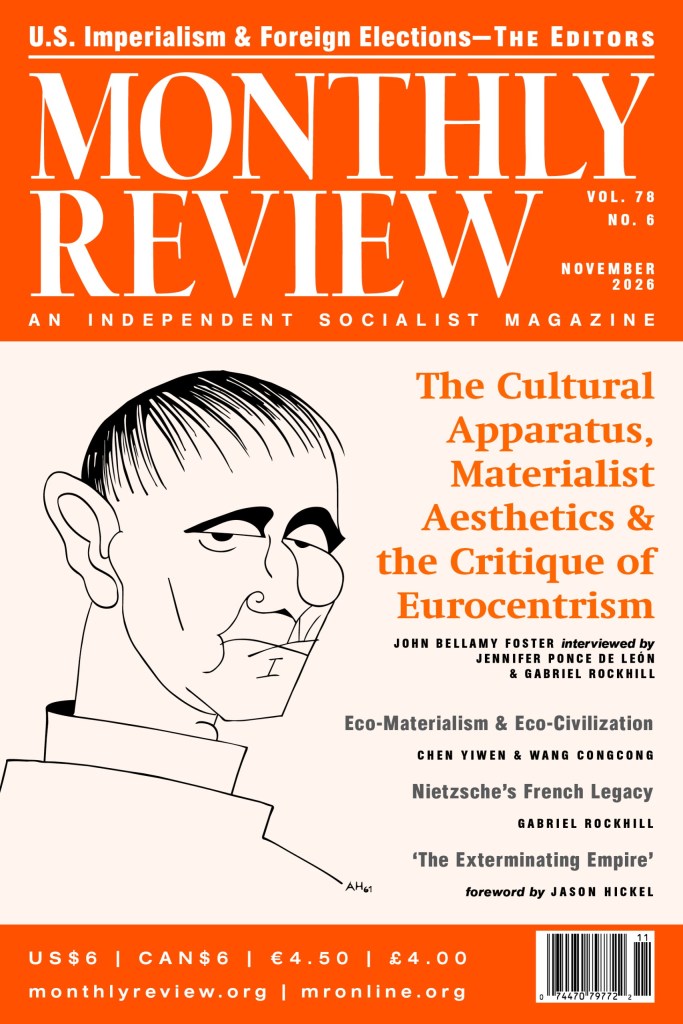
MONTHLY REVIEW MAGAZINE NOVEMBER 2026 PREVIEW

MONTHLY REVIEW MAGAZINE: The latest issue features the United States as the world’s chief enemy of sovereign elections.

Citing Dov Levin’s research, it counts 128 U.S. interventions in foreign elections from 1946 to 2014, rising after the Cold War, increasingly overt, and successful about 60 percent of the time before 2000. Methods include funding right-wing campaigns, dirty tricks, lawfare, social-media bots, aid threats, and CIA surrogates posing as “democracy assistance” groups. Recent examples include Venezuela, ending in Maduro’s abduction; $20 billion tied to electing Milei’s allies in Argentina; and Honduras, where Trump declared Asfura the winner. Leaked “Hondurasgate” tapes exposed regional manipulation schemes.

Nietzsche’s French Legacy

The Poverty of Left Nietzscheanism by Aymeric Monville
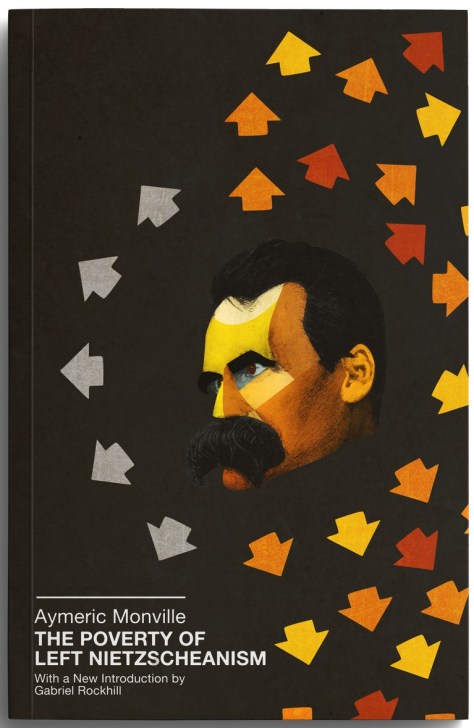
MR is pleased to be able to share with readers Gabriel Rockhill’s Introduction to The Poverty of Left Nietzscheanism by Aymeric Monville (Iskra Books, 2026). Rockhill provides readers with a thorough account of the rehabilitation of Nietzsche within French Theory and its consequences within the non-communist left. Fascism, Rockhill argues, “can only be understood and contested through materialist analysis and anticapitalist praxis”—a fitting preamble to a book that acts as “an insightful indictment of the dominant capitalist ideologies while clearly articulating the political path forward.”


A PROMISE, NOT A FORECAST

Intellicurean Essays· on Intellicurious

On a July morning in 2012, the head of the European Central Bank told a room in London that he would do whatever it took to save the euro, and then added two words: believe me. The program he went on to design was never used. A new essay asks how a sentence can do the work of a policy, and what it costs to keep one.


A Promise, Not a Forecast: a dark modern conference hall. A man in a dark suit stands at a slim lectern with his back to the viewer. A single ribbon of gold light runs from his hand up across a giant wall of falling red market data, and every red fragment stops above it. In the foreground, an audience in silhouette holds up phones and tablets whose screens show the gold line.
A line made of nothing, holding back the market, and a room recording it. Made for the essay.

Why we’re pointing you there

This week’s Nobel in economics went to Robert Hall and Michael Woodford, and Michael Cummins reads their theory as a theory of promising. Hall showed in 1978 that tomorrow is already inside today’s spending. For forty-six years he also chaired the committee that dates America’s recessions, the economy’s official narrator, always speaking after the fact. Woodford built the model central banks now use, and wrote that guidance must offer “a ‘promise’ and not merely a ‘forecast.’” Three years later Janet Yellen said of the Fed’s dot plot, “that’s not a promise.” Between those two sentences the essay sets the promises that held and the one that broke: the Swiss National Bank’s floor under the franc, called the cornerstone of its policy three days before it was abandoned, when the franc jumped almost 30 percent in minutes.

Then the turn. The fall in inflation after 2022 is being told as the theory’s triumph, but the economists who have studied it most closely disagree about why it happened, and the laureate himself spent the 2010s building a listener who believes less. Meanwhile the listener is changing: from a television anchor reading the thickness of Alan Greenspan’s briefcase to futures trading three milliseconds after a Fed release. The essay says plainly that it was drafted and edited with Claude, and it ends on one question: if the listener a central bank speaks to has read every promise it has ever made, what is a promise still worth?

A dark, steeply raked auditorium. On a distant stage a man at a lectern faces a large market screen. A gold ribbon of light bursts into hundreds of thin gold threads that fan out to cameras, tablets on tripods and server towers among mostly empty seats. In the front row, under a pool of warm light, an old leather briefcase sits alone; no thread reaches it.
A hall with no one in it, listening. Made for the essay.
Read the full essay at Intellicurean →

Essays & Reviews for the Intellectually Curious

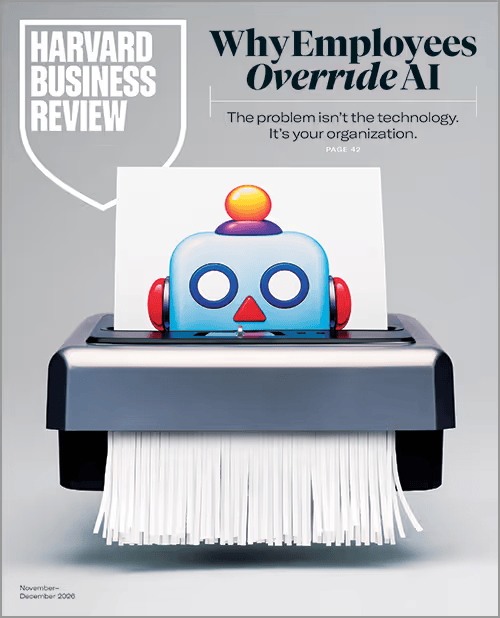
HARVARD BUSINESS REVIEW – NOVEMBER/DECEMBER 2026

HARVARD BUSINESS REVIEW: The latest issue features ‘WHY EMPLOYEES OVERRIDE AI’ – The problem isn’t the technology. It’s your organization.

Why Even Your Best Employees Override AI Systems That Work

It’s not that they don’t trust the technology. It’s that they don’t trust your organization.

Summary

Companies are deploying AI systems faster than they are redesigning the governance surrounding them. As a result, many AI systems remain permanent advisers rather than actual decision-makers—not because the technology falls short but because the…more

In late 2022 a global bank approved an AI system designed to automate routine credit decisions. On paper it looked exactly like the kind of forward-thinking move experts had been urging companies to make. In pilots the system processed applications faster than humans did, reduced errors, and promised meaningful cost savings. The risk management team signed off on it, compliance approved it, and the CEO touted it publicly as proof that the bank was leaning into the future.

Your Chatbot Will Define Your Brand

As conversational interfaces begin to dominate the customer experience, relationship design becomes a strategic priority.

For Real Performance Gains with AI, Start by Mapping Your Workflows

That’s how to reveal the most promising opportunities.

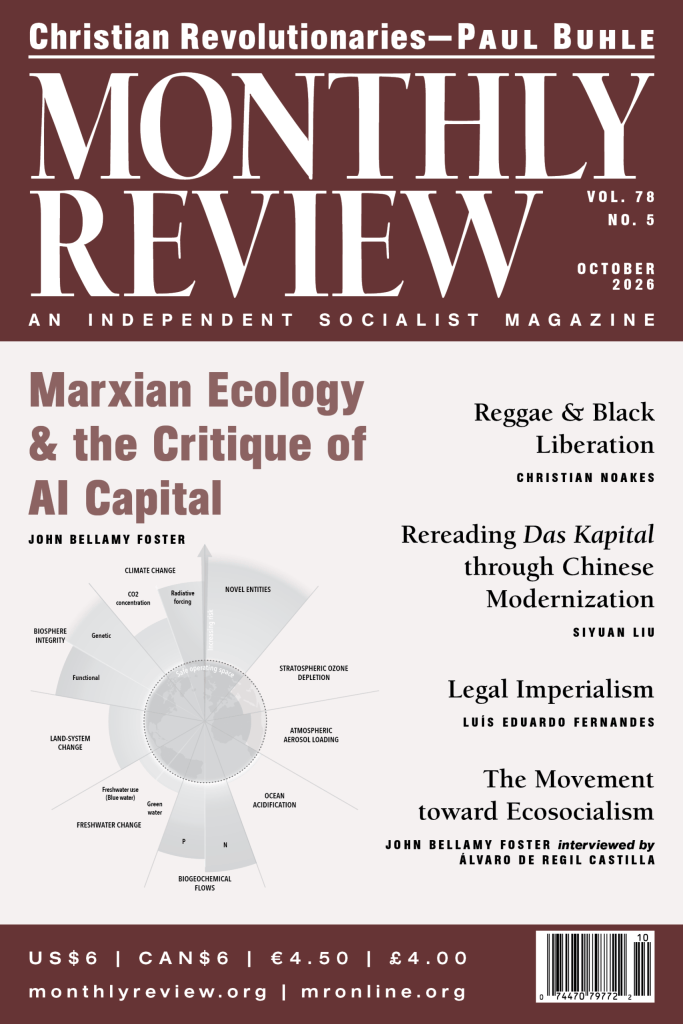
MONTHLY REVIEW MAGAZINE – OCTOBER 2026 PREVIEW

MONTHLY REVIEW MAGAZINE: The latest issue features ‘Marxian Ecology & the Critique of AI Capital’….

Marxian Ecology and the Critique of AI Capital

by John Bellamy Foster

What is the rise of AI capital, and what does it mean for contemporary work, culture, and the ecological state of our planet? John Bellamy Foster dispels the myth of a “hyperorganized AI capitalism.” As Foster writes: “We are not entering a stable new age…but rather a new, capitalist-engendered global disorder in which humanity, according to climate science, is headed ever more rapidly toward a planetary ‘point of no return.'” The only way out—the only way, that is, to ensure the survival of humanity—is a radical shift away from the catastrophically destructive regime of capital accumulation and toward sustainable human development through socialism.

Radical Jewish Tradition

by Paul Buhle

Paul Buhle reviews The Radical Jewish Tradition by Donny Glickstein and Janey Stone. The book, Buhle writes, is a window onto “the antinomies of nineteenth-century Jewish life”—including the growing movement against Zionism and for socialism among Eastern European Jews. This authors, Buhle notes, also tells the story of Jewish communists in Britain, the United States, and beyond, taking into account the wide sweep of Jewish left activity globally, situating the present struggles against genocide in Palestine squarely within the legacy of radical Jews everywhere.

Legal Imperialism: International Law and Dependency in Late Imperialism

by Luís Eduardo Fernandes

Today’s resurgence in U.S. imperialist interventions abroad and the concomitant so-called crisis of the “rules-based order” can be explained, Luís Eduardo Fernandes argues, through the category of “legal imperialism, which refers to how the international juridical form is internalized within societies and in the context of dependency, colonialism, unequal exchange, and monopoly capital. “International law and imperialism,” Fernandes writes, “do not stand as opposing poles. They are part of the same unity.… Violence is constitutive of the juridical form.”

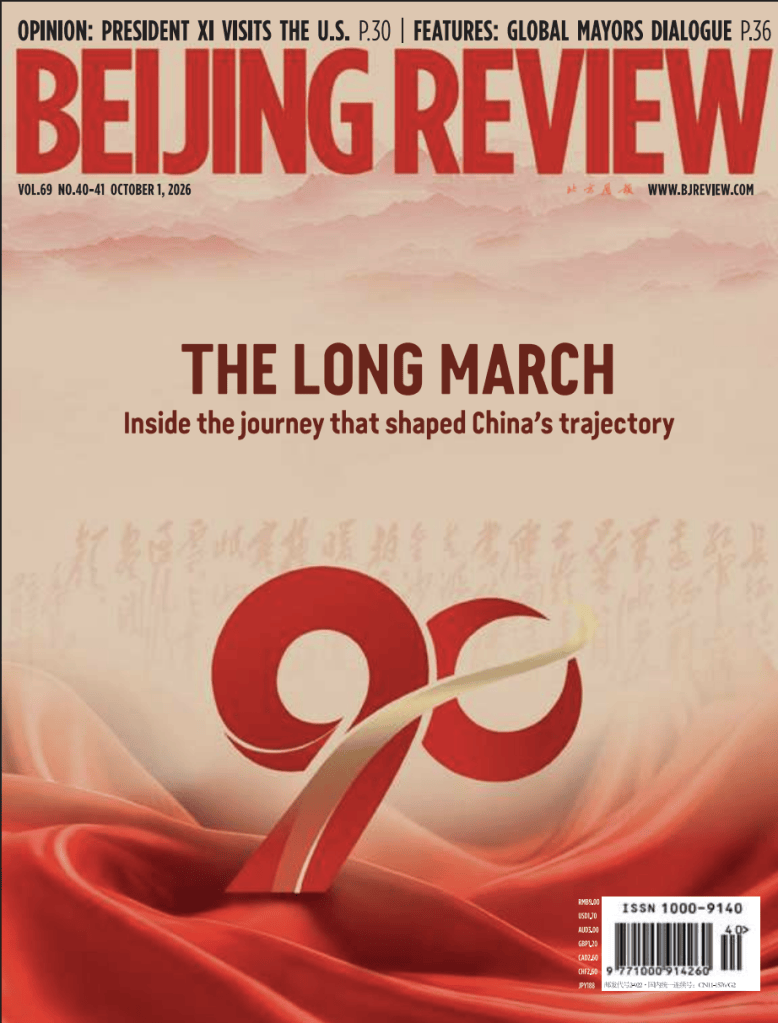
BEIJING REVIEW MAGAZINE – OCTOBER 1, 2026

BEIJING REVIEW MAGAZINE: The latest issue features ‘THE LONG MARCH’ – Inside the journey that shaped China’s trajectory…

OUT OF THE ROBOT CLASSROOM: CHINA’S EMBODIED AI TAKES ON REAL-WORLD JOBS

Thirty robots made up the first class at a robot school in Hangzhou, east China’s Zhejiang Province. After more than two months of training, four have graduated and landed formal jobs. 

THE LONG MARCH REVISITED

When the idea of the new Long March experience was first presented to me, I was enthusiastic. From early June through late July, we would spend six weeks following part of the route of the original Long March (1934-36) in honor of the journey’s conclusion 90 years ago this October.

The Long March was one of the seminal historical events of the 20th century. It had a transformative impact on the history of modern China.

WHY EU-CHINA MUST TEAM UP ON AI GOVERNANCE

At the World Intelligence Expo 2026 in Tianjin, I emphasized in my speech the principle that should guide every conversation about artificial intelligence (AI) today, namely without transparent, responsible, and ethical governance frameworks, the transformative potential of AI would be undermined by fragmentation and mistrust. The world now stands at a crossroads. A unified global AI governance framework remains elusive, so the question is no longer whether the EU and China should cooperate, but where and how they can do so most effectively.

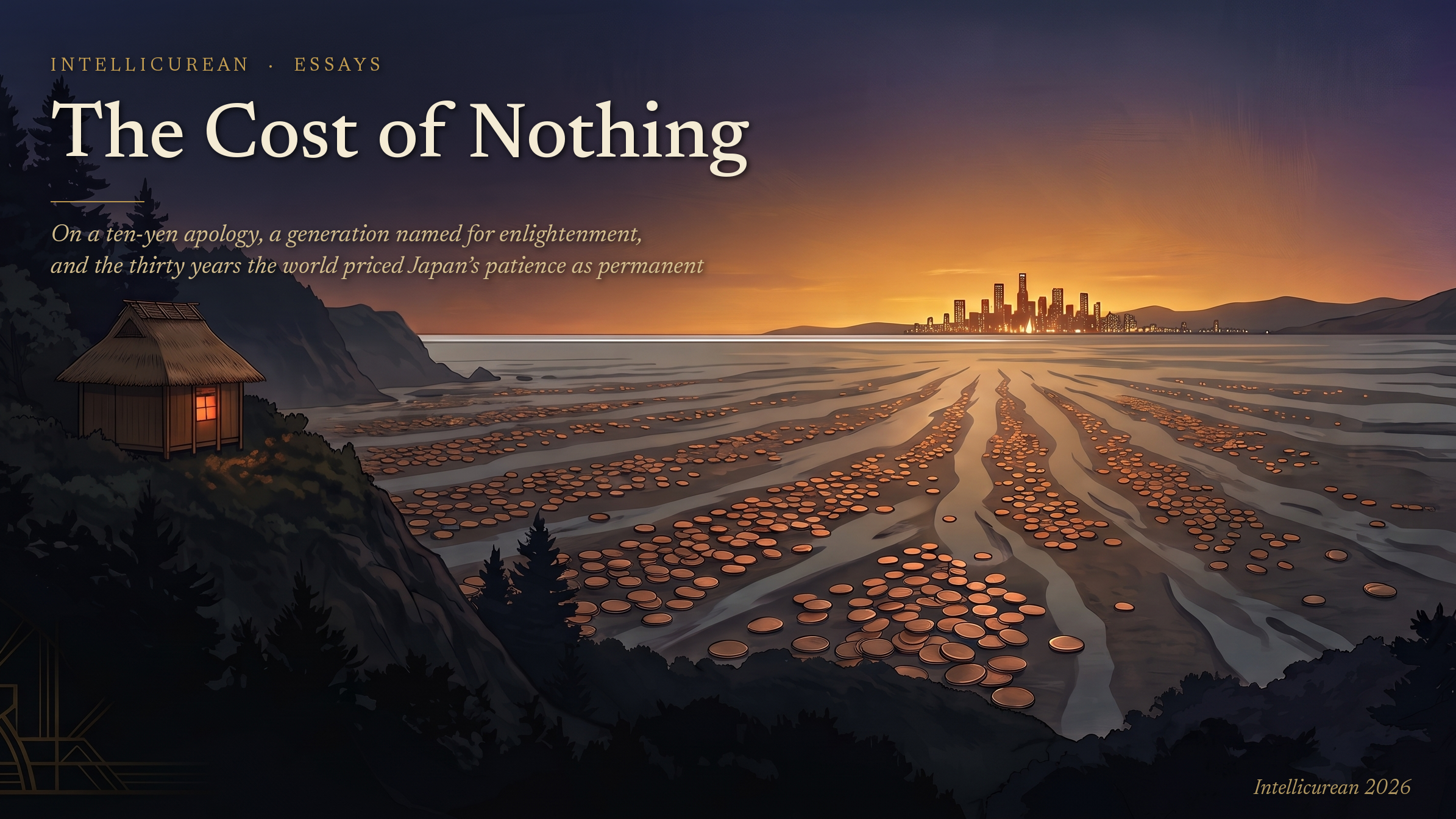
THE COST OF NOTHING – AN INTELLICUREAN ESSAY

Intellicurean Essays on Intellicurious

What nothing can cost: for thirty years Japan’s money was almost free to borrow, its young were told they had risen above wanting things, and the rest of the world quietly built on both. Now the tide is coming back in.

A tiny thatched hut with one lit window on a dark hillside, above a sea that has drawn far out, its bed covered in bronze coins leading to a distant glowing city
The hut, the coins and the city, painted for the essay. An invention, and disclosed as one there.

Why we’re pointing you there

A New York Times column this week warned that Japanese money, abroad for three decades, is starting to go home. Michael Cummins takes that market story and finds a second one underneath it. The same years that made yen the cheapest money on earth also produced a nickname for a whole generation: the satori sedai, the enlightened ones, young people said to want nothing. The essay is careful to keep the two apart. A central bank made the cheap money; a joke on an anonymous message board made the name. But the name was how the stillness got told, and the world priced it as if it would last forever.

What we liked most is how far back it reaches for its measure. It opens on an ice-pop company bowing on television to apologize for a ten-yen price rise, and it ends in a ten-foot hut built by a monk in 1212, who praised his reduced life and then, at the very end, doubted it. Between them come a young Natsume Sōseki translating that monk into English, a Texas hedge-fund manager ruined by being right too early, and one number about who owns Japan’s debt that explains three decades in a sentence. Both Japanese sources are translated fresh for the piece.

A lone figure in a dark suit bows deeply under a single spotlight, on a dark floor scattered with plain bronze coins
A bow over small change, painted for the essay.

Read the full essay at Intellicurean →

Essays & Reviews for the Intellectually Curious

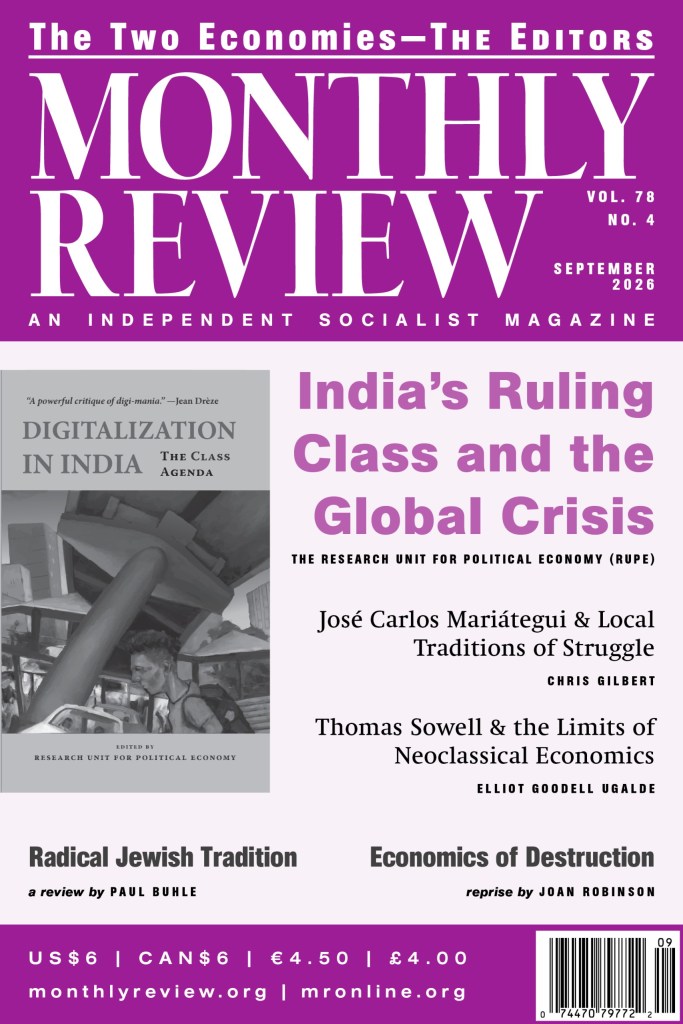
MONTHLY REVIEW MAGAZINE – SEPTEMBER 2026 PREVIEW

MONTHLY REVIEW MAGAZINE: The latest issue features ‘India’s Ruling Class and the Global Crisis’….

India’s Ruling Classes and the Global Crisis

In recent years, India’s ruling classes claimed—and perhaps came to believe—that their time had come on the world stage. India was the fastest-growing major economy, due soon to be the third largest, constituting a new global power. India’s biggest tycoons figured among the world’s top twenty billionaires, part of the transnational elite. Prime Minister Narendra Modi declared that India would be a “developed country” by 2047, the centenary of the end of colonial rule. 

Radical Jewish Tradition

The Economics of Destruction

Beyond Scarcity: Thomas Sowell and the Limits of Neoclassical Economics

José Carlos Mariátegui and Local Traditions of Struggle: The Vitality of Global South Marxism

HARVARD BUSINESS REVIEW – SEPTEMBER/OCTOBER 2026

September–October 2026

HARVARD BUSINESS REVIEW: The latest issue features ‘How AI is Reshaping Strategy’: Smart firms are using it to streamline
decision-making.

AI Is Revolutionizing Strategic Decision-Making

New tools can improve human judgment by tirelessly generating, evaluating, and synthesizing insights.

How AI Agents Orchestrate Work Across Silos

A new generation of tools can connect functions and reduce the friction that slows companies down.

The HBR Interview with Verizon CEO Dan Schulma

His mindset: “Losing doesn’t work for me.”

Life’s Work: An Interview with Dionne Warwick

The legendary singer on her six-decade career.

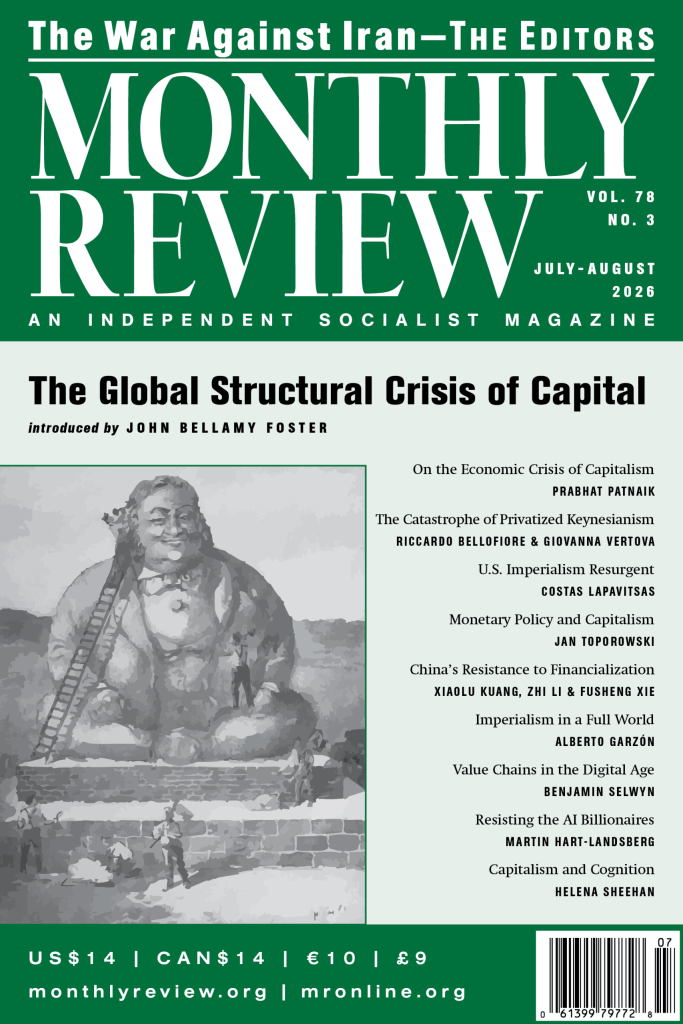
MONTHLY REVIEW MAGAZINE – JULY/AUGUST 2026 PREVIEW

MONTHLY REVIEW MAGAZINE: The latest issue features ‘The Global Structural Crisis of Capital’…

The Global Structural Crisis of Capital

The notion of a “global structural crisis of capital” defining our times was first introduced by István Mészáros in the third edition of his Marx’s Theory of Alienation in 1971, and in his Isaac Deutscher Memorial Lecture, “The Necessity of Social Control” that same year.2 In 1995 in Beyond Capital, Mészáros distinguished the emerging, epochal structural crisis of capital from the cyclical and conjunctural crises that are “capital’s natural mode of existence.” 

Capitalism and Cognition: The Fate of Science in a System in Decline

Tech Billionaires, the AI Threat, and Resistance

Value Chains in the Digital Age: Labor Exploitation and Systemic Ecocide

Imperialism in a Full World: Neomercantilism and the Return of the Zero-Sum Game

Why Can China Resist Financialization?

Monetary Policy and Capitalism

U.S. Imperialism Resurgent

Between the Times: Privatized Keynesianism, Permanent Catastrophe, and the Task of an Economy of Social Production

On the Economic Crisis of Capitalism

MONTHLY REVIEW MAGAZINE – MARCH 2026 PREVIEW

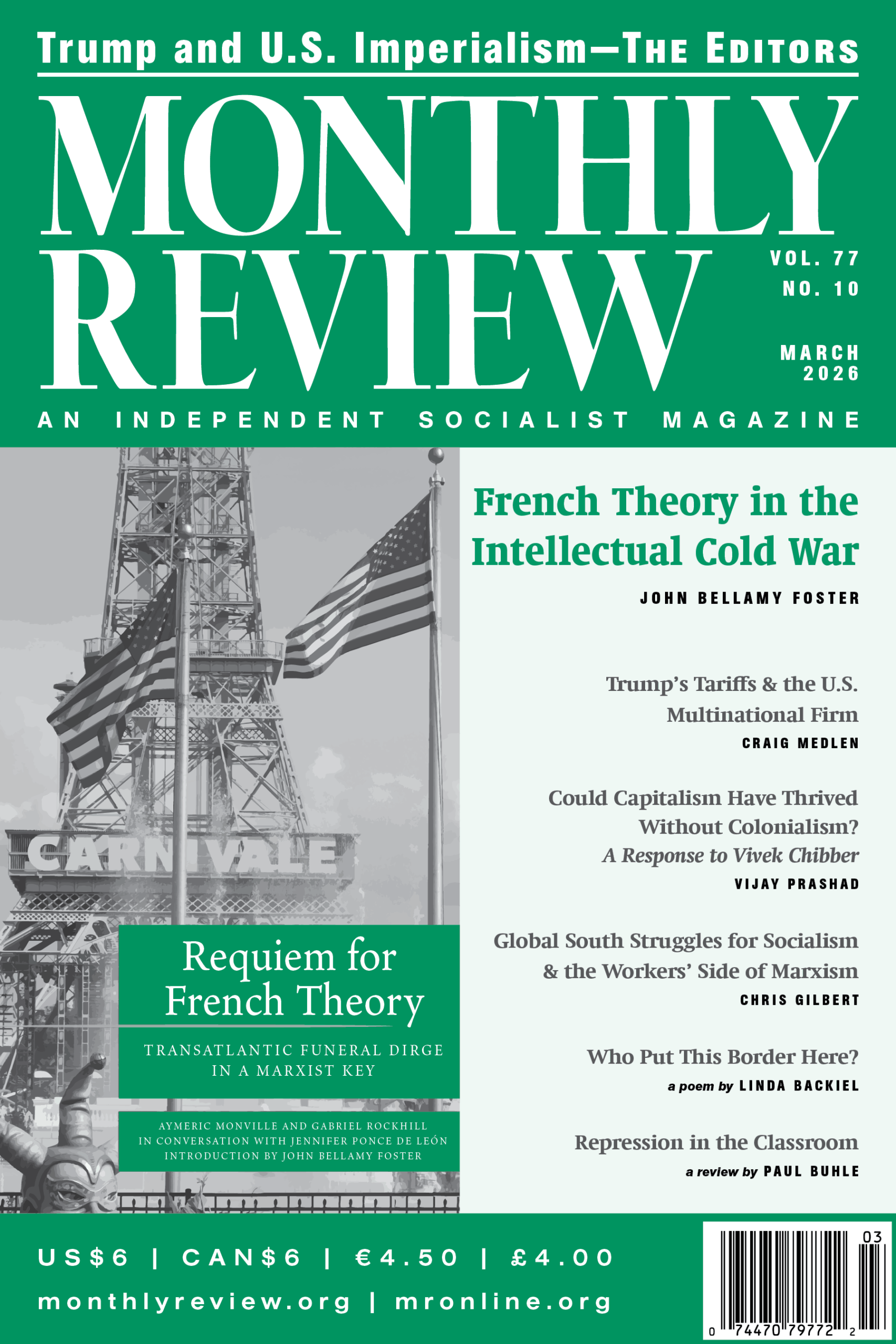
March 2026 (Volume 77, Number 10) - Monthly Review

MONTHLY REVIEW MAGAZINE: The latest issue feature ‘French Theory in the Intellectual Cold War’….

With the Trump administration’s backing down on its tariffs on China, its military abduction of Venezuelan President Nicolás Maduro, its insistence on seizing Greenland one way or another, its bombings in Nigeria, and its declaration that the official U.S. military budget will be increased by 50 percent in 2027—the last four events occurring in a two-week span in late December and early January—establishment commentators are all over the map.

Could Capitalism Have Thrived Without Colonialism? A Commentary on Vivek Chibber’s Jacobin Radio Interview

by Vijay Prashad

Vijay Prashad critiques the argument that colonialism was, at most, ancillary to the transition between capitalism and feudalism in Western Europe. Instead, Prashad argues, “capitalism as it historically emerged—industrial, global, racialized, and imperial—was inseparable from colonial expropriation.” This reality must fuel a Marxist conception of the global struggle for reparations for those who have been oppressed and exploited at the hands of empires past and present.

Repression in the Classroom

by Paul Buhle

In this dual review, Paul Buhle lends contemporary context to the histories of McCarthyism found in the recently published A Blacklist Education, by Jane S. Smith, and Operation Mind, by Natalie Zemon Davis and Elizabeth Donovan. In these two books, Buhle writes, readers can find parallels with the was that is today being waged against university professors and students for political activities—a stark reminder that political witch-hunts did not end with Joe McCarthy.

Trump’s Tariffs and the U.S. Multinational Firm

by Craig Medlen

Craig Medlen dissects the logic behind the Trump administration’s efforts to impose tariffs as a way to counteract “unfair” U.S. trade deficits. Situating these deficits in the longer history of U.S. trade hegemony and its crumbling position in the global economy, Medlen uses incontrovertible data to illustrate how mainstream economic orthodoxy fails to acknowledge the effects of foreign inputs that integral to the workings of U.S. monopoly capital.