Tag Archives: Climate Change

FABIAN REVIEW QUARTERLY MAGAZINE – AUTUMN 2026

FABIAN REVIEW QUARTERLY MAGAZINE: This edition of the Fabian Review centres on the global climate emergency, with contributions from climate experts and an interview with energy secretary Miatta Fahnbulleh MP, alongside pieces on Labour’s vision of freedom, the UK’s proscription regime, LGBTQ+ rights, education, AI in public services, higher education, and Britain’s relationship with Europe.

Cheap medicine

The NHS’s growing use of non-doctors risks creating a two-tier health service, argues Jatinder Hayre

After Aneurin Bevan created the National Health Service in 1948, the principle of universality became firmly embedded in the popular consciousness: illness would no longer divide the British people according to wealth, and the quality of care received in sickness would not depend upon the depth of one’s pockets. Bevan articulated another principle which receives rather less attention today: that the state might finance medicine, but it should not command medical judgement. Doctors needed sufficient professional independence to practise according to the needs of their patients rather than the administrative or financial convenience of the state. Both principles are now being tested – and in some cases, rewritten.

Across the NHS, work historically undertaken by doctors has increasingly been transferred to physician associates (PAs), advanced clinical practitioners (ACPs) and an expanding constellation of other roles. I use “Noctor” as an umbrella term for the phenomenon whereby non-doctors cease to complement doctors and begin to serve as a substitute for them.

The language surrounding this transformation is revealingly anaesthetic: “skill mix”, “workforce transformation”, “new models of care”. These phrases make a profound political choice sound like an administrative rearrangement. Beneath them sits a simple idea: medicine can be dismantled into tasks, those tasks redistributed amongst more rapidly trained practitioners, and the whole reconstructed without meaningful loss.

Green Room

Miatta Fahnbulleh is right about everything. Will it matter? She talks to Iggy Wood about her plan for a green transition that benefits all

In the not-so-distant past, consensus around the need to tackle climate change at least superficially encompassed the entirety of British society. It was the historic party of capital – the Conservatives – who enshrined net zero in law, eliminated coal from Britain’s energy mix, and committed to ending the sale of petrol and diesel cars. Some of the most important progress was made under Boris Johnson, who, while not on the right of the party per se, was a Brexit-supporting populist.

Grid system

Unglamorous electricity grid reforms could be the key to winning on the doorstep

Even Andy Burnham was surprised to get a standing ovation for taking VAT off electricity bills. His plans to address the plight of the industrialist seeking a grid connection did not meet with the same enthusiasm during his first Labour conference speech as prime minister. Yet faster grid access matters far more for bringing down Britain’s high energy costs.

On 29th September, the government announced GB Grid, a new entity under the government’s publicly-owned energy company, GB Energy. Seeded with £4bn of reallocated funding, GB Grid will be able to finance and build grid infrastructure and plans to compete with incumbent providers. Alongside GB Grid, the government announced it would expand self-build connections and accelerate competitive tendering for transmission projects, effectively increasing competitive pressure on networks. This is a refreshing approach to bringing down energy costs, combining a bold public ownership experiment with unglamorous but necessary competition reforms.

IS CHINA WINNING ENERGY?

The Intellitake
One argument · Two sides · One verdict · Daily
Saturday, September 26, 2026 · The Electrostate Debate
“

What the West calls China’s overcapacity, the climate calls a solution: too much clean energy, too cheap, too fast.

The Thesis — Azhar Azam, Eurasia Review

THE ARGUMENT

In Eurasia Review, geopolitical analyst Azhar Azam argues that the clean-energy “overcapacity” Washington and Brussels treat as an industrial threat is in fact accelerating global decarbonization — driving down technology costs and opening access across the developing world. The numbers behind him, from Ember’s new China Energy Transition Review: nearly 1,700 gigawatts of wind and solar added in a decade; roughly 60 percent of the world’s new battery storage installed in China last year; electric trucks at about 26 percent of new sales; and — the milestone — clean power grew fast enough in 2025 to meet all of China’s demand growth, pushing thermal generation down 0.7 percent, with coal generation broadly flat since early 2024. His conclusion: harness the benefits of Beijing’s scale without deepening strategic dependencies — but harness them.

vs

THE ANSWER

The sympathetic skeptic’s case runs through Bloomberg Opinion’s energy columns: in “China’s Energy Future Still Runs on Old Technology”, the celebrated “electrostate” is falling behind its own solarpunk dream — beneath the record solar farms, the system that actually powers China remains built on the old foundation. A companion column’s title states the charge plainly: “Xi’s Timidity Is Coal’s Last and Best Hope”. On this view, China still burns roughly half the world’s coal and keeps approving new plants; flat is not falling, and a transition that protects its incumbent isn’t finished — it’s hedged. The electrostate is real, the skeptics grant. So is the smokestack behind it.

iC

THE INTELLITAKE

Both sides read the same grid and agree on the astonishing part: no nation has ever built clean energy at this speed, and in 2025 the buildout finally outran demand itself. The dispute is over which fact is the trend and which is the residue — whether flat coal is the plateau before the fall, or the floor the system still stands on. Notice, too, the strange geometry of the argument: the West’s trade-policy complaint and the climate’s deepest need turn out to be the same fact — a country manufacturing more cheap clean energy than the world ordered. Whether China is “winning” energy may matter less than the question Azam forces: if someone must flood the world with solar panels, batteries, and electric trucks, does it matter to the atmosphere whose flag is on the crate?

TODAY’S PROVOCATION

If the fastest road to a livable climate runs through Beijing’s factories, should the West take it — dependencies and all?

— THE EDITORS, INTELLICURIOUS —

Time Magazine Cover – February 23, 2026

TIME MAGAZINE: The latest issue features ‘After The Ayatollah’,,,

Iran on the Edge

After the Islamic Republic regime unleashed lethal force to quell nationwide protests against its rule, five leading Iranian writers reflect on how the country arrived at this pivotal moment—and where it might go from here.

The Islamic Republic’s Founding Myth

he Islamic Republic’s already lengthy catalogue of fears has ballooned of late: alongside the possibility of being overthrown by its own citizens, it is haunted by the prospect of a full accounting of the massacres it has carried out; by the tenuous loyalty of its army, and its empty coffers; and by the shadow of Israeli spies and Islamic State militants. What terrifies Iran’s theocrats the most, the fear that eclipses all their fears, is the ability of the people at large to clearly see the essential realities of the present regime.

Iranian Progress Cannot Be Stopped

Today, the Islamic Republic of Iran resembles a half-lifeless body collapsed on the ground, yet still possessing powerful arms. With the support of the Islamic Revolutionary Guard Corps and other military forces, it has attacked the people of Iran and, through widespread killings, has delivered a brutal blow to the popular uprising. Yet this is only a temporary success. The republic is already dead morally, economically, and socially.

Time Magazine Cover – January 26, 2026

The New Old Age Longevity Time Magazine cover

TIME MAGAZINE: The latest issue features ‘The New Old Age’ – What to expect when you’re expecting to live longer…

“What we have is a fundamental change in the age structure of society,” says John Rowe, professor of health policy and aging at Columbia University’s Aging Center, referring to the way we’re aging—and also the way we’re creating young people, with birth rates plummeting in most countries. Globally, fertility levels have dropped below the so-called population replacement rate of just over two births per woman.

It is a sea change—and one that raises big questions about how we both individually and collectively navigate what, in a sense, is our new old age. How, for example, should we spend our extra time? Should employment still be confined to a finite number of years, or instead ebb and flow throughout an entire lifetime? And where, in a world of acute housing shortages, will everyone live?

The New Old Age

Ovaries Could Unlock Secrets of Longevity

9 Resolutions That Can Help You Age Better This Year

How to Think Yourself Young

What the World’s Longest-Lived Animals Can Teach Us About Aging

Review: “Solar’s Swift Ascent – Why The Energy Future Is Already Here”

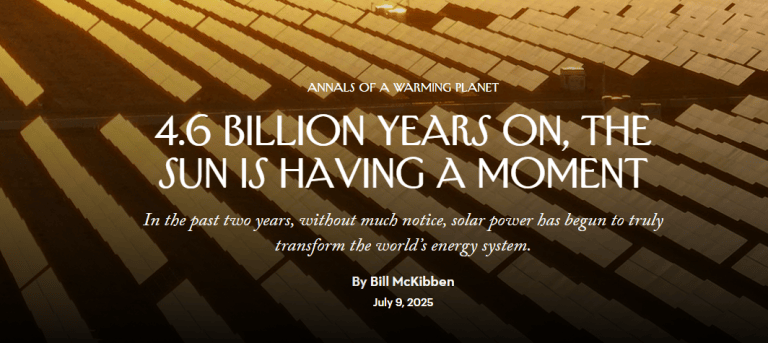
The following essay review was written by AI and edited by Intellicurean from a New Yorker article titled “4.6 Billion Years On, The Sun Is Having A Moment”, by Bill McKibben from his forthcoming book “Here Comes The Sun”.

Much like a seasoned playgoer at a modern drama, we find ourselves watching the improbable and the inevitable perform a dizzying pas de deux. For decades, renewable energy existed on the fringe—a topic for earnest environmentalists, academic dreamers, and early adopters armed with more zeal than capital. One recalls the almost quaint marvel of the first all-solar house at the University of Delaware in 1973, drawing curious crowds like pilgrims to a modern oracle. It was a novelty, an “alternative” to the fossil-fueled behemoth that powered Western economies for two centuries. And “alternative” was the key word—suggesting not a contender, but a polite afterthought.

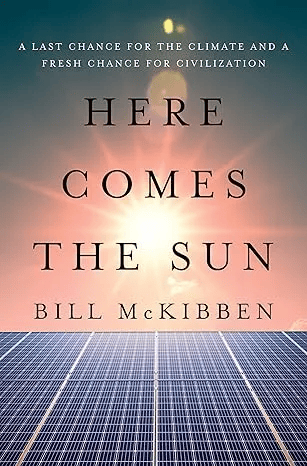
Yet as we move through the mid-2020s, a stunning twist has unfolded, largely unnoticed amid louder headlines. With little fanfare, renewable energy has shifted from a peripheral ideal to a mainstream economic reality. In a world often held hostage to political drama and climate paralysis, this shift—documented in a recent New Yorker piece drawn from Bill McKibben’s forthcoming book, Here Comes the Sun: A Last Chance for the Climate and a Fresh Chance for Civilization (August 2025)—feels both miraculous and overdue. What was once “too good to be true” is now simply true. Solar, wind, and battery storage have become the most cost-efficient, fastest-growing power sources on Earth. The implications are nothing short of a new Industrial Revolution—only this time, it’s clean, decentralized, and increasingly democratic.


The Solar Surge

The statistics McKibben explores in the excerpted material are not dry metrics—they’re signals of an epochal shift. It took nearly seventy years from the invention of the photovoltaic cell in 1954 to reach the first terawatt of installed solar power by 2022. The second terawatt arrived by 2024. The third? Expected by 2026. Solar is now being added at a rate of one gigawatt—equivalent to a coal plant—every fifteen hours. Wind power, a cousin to solar in its dependence on planetary physics, isn’t far behind.

Globally, renewables met 96% of new electricity demand in the past year. In the U.S., the figure was 93%. Fossil fuels, once the uncontested monarchs of modernity, are losing their crown. In March, for the first time, fossil fuels generated less than half of all U.S. electricity.

California provides a dramatic case study. In May, the state—now the fourth-largest economy in the world—hit a record: renewable sources produced 158% of its power demand. Over the entire day, they delivered 82% of electricity consumed. This wasn’t theoretical progress—it was operational proof.


Batteries and the Grid Reimagined

Equally revolutionary is the rise of energy storage. Battery deployment has surged 76% this year alone. These systems often act as California’s overnight power source, stabilizing the grid when sunlight fades or wind slows. One official from the North American Electric Reliability Corporation noted, “batteries can smooth out some of that variability from those times when the wind isn’t blowing or the sun isn’t shining.” The result? California now uses 40% less natural gas than it did just last year—a number McKibben hails as “the single most hopeful statistic I’ve seen in four decades of writing about the climate crisis.”

Even Texas, synonymous with oil and gas, is rapidly rebranding its energy identity. In March, it set records for solar, wind, and battery output. During a brutal May heatwave, over a quarter of its power came from renewables. By adding 10,000 megawatts of clean capacity, Texas slashed emergency blackout risk from 16% last year to less than 1% now. This isn’t green idealism—it’s grid-level, boots-on-the-ground practicality.


China and the Global Cascade

But the scale of change in the U.S. pales in comparison to what’s happening in China. More than half the world’s renewables and batteries are now installed within Chinese borders. In May alone, China added 93 gigawatts of solar—equivalent to one gigawatt every eight hours. The environmental payoff is immediate: carbon emissions dropped in the first quarter of 2025, with electricity-linked emissions falling nearly 6% as solar and wind displaced coal. Nearly half of all vehicles sold in China this year were electric or hybrid.

This trend isn’t isolated—it’s contagious. South America, once planning 15 new coal plants, now plans none. India’s solar output surged so rapidly in early 2025 that coal consumption plateaued while natural gas use fell by a quarter. Even Poland, long a coal bastion, saw solar outstrip coal in May. These aren’t anomalies—they’re geopolitical rewrites.

And why? Because solar is now the cheapest, fastest path to power. China’s relentless innovation has driven battery costs down by 95% in 15 years. In just the first half of 2024, the U.S. alone added 4 gigawatts of storage. A Chinese utility’s latest bidding round cut prices by another 30%. Grid-scale batteries now power entire cities for hours. Nations that ignore this transformation aren’t just polluting—they’re rendering themselves globally uncompetitive.

Even petro-states have noticed. Saudi Arabia, Qatar, and the UAE are all building massive solar fields. Their goal? 50% of electricity from solar by 2050. When oil empires go solar, the narrative has changed.


Forecasts vs. Reality

As with all revolutions, hindsight exposes how blind the experts were. In 2009, the International Energy Agency predicted 244 gigawatts of solar by 2030. That benchmark was reached by 2015. Their forecasts over the last decade missed by an average of 235%. The only group that got it close? Greenpeace.

Jenny Chase of Bloomberg, quoted in the book, admitted: “If you’d told me nearly 20 years ago what would be the case now… I would have laughed in your face.” The contrast between establishment analysts and environmentalists makes for a satisfying, if sobering, moment of vindication.


Leapfrogging the Fossil Age

Perhaps the most radical reordering is happening in places least expected. In Pakistan, widespread solar adoption is quietly displacing national grid demand—not from recession, but from progress. Diesel sales are down 30%. Corn farmers now gift solar inverters as wedding dowries. Panels are laid flat on the earth without costly mounts. DIY TikTok tutorials fill the role of training programs. This is grassroots ingenuity—climate transition as community-driven liberation.

A similar story is emerging across Africa. In Namibia and Eswatini, rooftop solar accounts for 11–15% of peak electricity. In South Africa, small-scale solar now contributes nearly 20% of national grid capacity. Many of these systems go unreported, installed informally by citizens weary of blackouts. As energy analyst Joel Nana puts it: “This is happening anyway, whether you like it or not.”


The Limits—And Why They’re Not So Limiting

What of minerals? What of land? These limits, once feared fatal, now seem manageable.

Lithium, long considered a bottleneck, has seen prices drop even as demand rises. New sources have been discovered. More importantly, recycling systems are maturing. A 2023 Energy Transitions Commission report found that all materials needed to reach net zero by 2050 amount to less than the coal burned in a single year. Battery tech is also becoming more efficient—using less lithium, less silver, and recovering more materials post-use. One roof of solar panels can now power ten replacements over 25 years. That’s not just sustainability—it’s a virtuous cycle.

Land, too, is more abundant than assumed. Rooftops and parking lots help, but a more powerful solution lies in reclaiming farmland used for ethanol. A single acre of solar produces as much energy as 100 acres of corn-based ethanol. Cornell researchers found that converting under half of U.S. ethanol fields could decarbonize the entire grid by 2050. That’s not fantasy. That’s arithmetic.


Policy vs. Physics

The obstacles now aren’t technical—they’re political. Thousands of renewable projects are stuck in “interconnection queues,” awaiting utility approval. The Biden Administration has taken steps to clear these logjams. But the Trump Administration is actively trying to reverse course, propping up coal and gas, and demonizing renewables. One appointee—formerly a fracking executive—labeled solar “a parasite on the grid.” That’s not science. That’s theater.

Ironically, such obstruction may accelerate the global transition. Nations are increasingly wary of U.S. energy instability and looking elsewhere. Wall Street sees the trend clearly: renewables are not just climate solutions, but hedges against geopolitical volatility. A 2023 global poll found that 68% of people support solar energy—five times more than fossil fuels. Even among likely Trump voters, 87% support clean energy tax credits. The political class may dither, but the public is marching forward.


The Future Is Diffuse, Not Centralized

The most profound feature of this transition may be its structure. Fossil fuels are scarce, located in select pockets, and easy to monopolize. But solar and wind are everywhere. You can’t own the sun. You can’t weaponize the wind. What this means geopolitically is staggering. Wars have been fought over oil. No one’s going to invade for sunshine.

And that’s the quiet promise of this revolution. Decentralized power doesn’t just decarbonize economies—it redistributes agency. It empowers individuals, communities, and nations to unshackle themselves from legacy dependencies.


Conclusion: The Sun Conquers

Paradigm shifts of this magnitude—the Industrial Revolution, the rise of computing—rarely announce themselves with fireworks. But when they arrive, they redefine everything.

The insights drawn from McKibben’s forthcoming book deliver that quiet shock. What emerges is not speculation, but evidence. A meticulously documented, unapologetically optimistic vision of a world poised on the edge of salvation—not by hope alone, but by hard math, falling prices, and widespread will.

The sun, it seems, is not merely rising. It is conquering.

READ THE INTELLICUREAN ESSAY HERE

Ideas & Research: Harvard Magazine September 2024

September-October 2024 cover

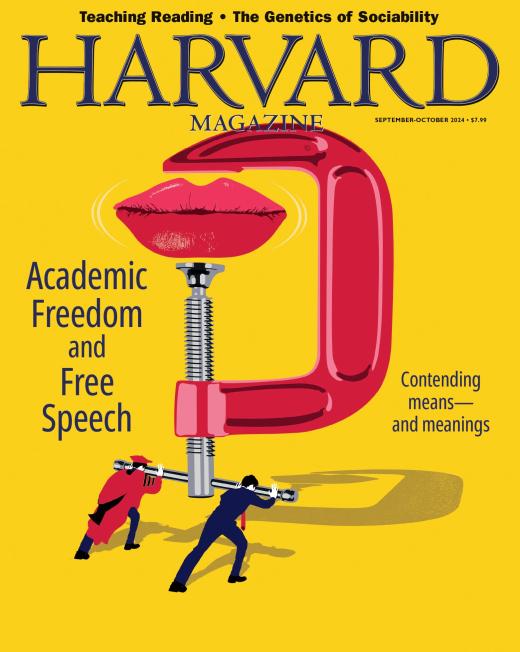
HARVARD MAGAZINE (August 15, 2024): The latest Academic Freedom and Free Speech – Contendin means, and meanings…

Academic Freedom and Free Speech

Robert Post explains how they differ—and why it matters, especially now by Lincoln Caplan

Climate Change’s Crippling Costs

The impact on global GDP is likely six times greater than previously estimated. 

In Search of the Social Microbiome

The microbiome may be socially exchanged, modulating both health and metabolism.

The Goodness of Being Together

Why social interactions are as vital as food and water by Erin O’Donnell

Research Preview: Nature Magazine – May 23, 2024

Volume 629 Issue 8013

‘Nature Magazine – May 22, 2024: The latest issue cover features ‘Moment In The Sun’ – Near-surface instabilities drive the solar magnetic dynamo…

How cheesemaking could cook up an antidote for alcohol excess

A gel made from a milk protein reduces alcohol levels in the blood of intoxicated mice.

Organoids merge to model the blood–brain barrier

Combining a brain organoid with a blood-vessel organoid yields a system similar to a protective mesh in the brain.

Africa’s lush tropical forests face a surprising threat: fire

Climate change and deforestation have increased the frequency of blazes in the humid forests of West and Central Africa.

Research Preview: Nature Magazine – May 9, 2024

Volume 629 Issue 8011

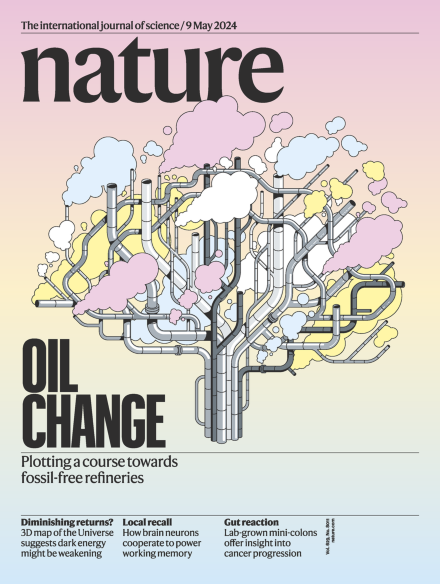
‘Nature Magazine – May 8, 2024: The latest issue cover features ‘ Oil Change’ – Plotting a course towards fossil-free refineries…

What China’s mission to collect rocks from the Moon’s far side could reveal

The Chang’e-6 mission aims to land in the Moon’s oldest and largest crater, where it will collect rocks to bring back to Earth.

First fetus-to-fetus transplant demonstrated in rats

The tissue developed into functioning kidneys and produced urine

Superconductivity hunt gets boost from China’s $220 million physics ‘playground’

From extreme cold to strong magnets and high pressures, the Synergetic Extreme Condition User Facility (SECUF) provides conditions for researching potential wonder materials

Research Preview: Nature Magazine – April 25, 2024

Volume 628 Issue 8009

‘Nature Magazine – April 24, 2024: The latest issue cover features ‘ Switching Channels’ – Organoids and assembloids offer model way to test potential therapy for Timothy syndrome…

Detectors deep in South Pole ice pin down elusive tau neutrino

Antarctic observatory gathers the first clear evidence of mysterious subatomic particles from space.

A spa session for humpback whales

The gigantic animals have worked out an unusual way to exfoliate — a perfect way to deal with whale lice.

This water bottle purifies your drink with energy from your steps

Static electricity generated by the foot striking the ground can be captured to kill pathogens.

Burnt remains of Maya royalty mark a dramatic power shift

Finds in pyramid at Guatemalan site suggest that remains were disinterred and desecrated in a public ritual.

‘

Research Preview: Nature Magazine – April 18, 2024

Volume 628 Issue 8008

‘Nature Magazine – April 17, 2024: The latest issue cover features ‘Large mammals benefitting from responsible logging through forest certification…

‘

Sea spray carries huge amounts of ‘forever chemicals’ into the air

Long-lived compounds emitted by industry reach the oceans and are then ferried by bubbles into the atmosphere.

An exoplanet is wrapped in glory

Astronomers spot the first planet outside the Solar System to boast a phenomenon reminiscent of a rainbow.

How to supercharge cancer-fighting cells: give them stem-cell skills

The bioengineered immune players called CAR T cells last longer and work better if pumped up with a large dose of a protein that makes them resemble stem cells.