Tag Archives: Fraud

NATIONAL REVIEW MAGAZINE – DECEMBER 2026 PREVIEW

NATIONAL REVIEW: The latest issue features ‘LOOMING DISASTER’…

Bracing for Two Years of Trench Warfare

What to expect in the midterms’ wake. By Jim Geraghty

All other things being equal, Donald Trump would rather have a Republican-controlled House and Senate than Democrats in charge of either.

But if the Democrats win a majority in the U.S. House of Representatives in November — which appears likely as of this writing — it may not change the dynamics of this presidency much at all. Trump already acts as if the primary purpose of the House is to applaud during his State of the Union address, and that’s when he has a largely compliant and loyal Republican majority. He has always preferred to do things through executive orders. Passing legislation is arduous and time-consuming and often requires compromise.

The Democrats Are Coming

Start worrying now about 2028. By Charles C. W. Cooke

Can Susan Collins Part the Blue Wave?

The Maine Republican has surely benefited from turbulence on the Democratic side of the race. By Charles Hilu

How the West Won Teddy Roosevelt

What’s a presidential library doing in the North Dakota badlands? By Judson Berger

Medora, N.D. — Spend enough time in Medora, an Old West outpost that leans into a Theodore Roosevelt theme with the approximate restraint of a Cracker Barrel decorator, and you’re bound to encounter the quote: “I never would have been president if it had not been for my experiences in North Dakota.”

HAS TECH OUTRUN THE LAW?

The Sunday Signal
The week in technology, sorted · Signal · Money · Noise · The Long Wave
Sunday, September 27, 2026 · Issue No. 1
SIGNAL — WHAT WILL STILL MATTER IN FIVE YEARS
1

The virtual wall that watched people die

Over 25 years, the U.S. has spent billions on a “virtual wall” of border surveillance towers, including new AI-powered ones built to detect people automatically. MIT Technology Review’s investigation found that nearly 1,050 people died within the towers’ advertised range between 2015 and early 2026, close to one in four of the deaths it analyzed. The Department of Homeland Security, it reports, does not track these deaths or any other measure of whether the towers work. Two days later, Rep. Delia Ramirez (D-Ill.) proposed ending the program.

Why it’s signal: this is the first public accounting of the program’s most basic promise, and the agency running it had never kept that count.

2

A mouse whose cortex is human

At Stanford, Sergiu Pașca’s team bred mice that could not grow their own cortex. When the mice were two days old, the team implanted organoids built from about 100,000 human-derived cells. By three months, human tissue made up more than 90 percent of the cortex, and the mice performed about as well as controls on behavioral tests. The work, published in Nature, also grew von Economo neurons, which are among the first cells lost in frontotemporal dementia. That gives researchers a new way to study the disease.

Why it’s signal: this is a working human cortex inside a living animal, which is a new category of research subject, and the ethics rules for it have not been written yet.

3

Why women with power in tech aren’t famous for it

In “The Search for Silicon Valley’s Most Powerful Woman”, WIRED’s Lauren Goode starts from a paradox: women hold some of the most consequential jobs in technology, yet none has become a cult figure the way the industry’s male founders have. The story leads WIRED’s special issue on tech and gender. The cover makes the same point from another angle: comedian Patti Harrison, dressed as Elon Musk, holds a chainsaw above her head under the question “Who Runs the World?” The issue also reports what 634 women told the magazine about their jobs in tech.

Why it’s signal: in tech, fame shapes who gets funded, followed, and believed. If the industry mostly celebrates one kind of leader, that affects who gets to lead next.

FOLLOW THE MONEY — WHERE INVESTORS ARE BETTING

AI starts replacing enterprise software

Ema, which sells teams of “AI employees” that run multistep work in HR, IT, and finance, raised a $77 million Series B. The round was led by Bengaluru’s Creaegis, with Accel and Prosus adding to their stakes, and it reportedly quadruples Ema’s valuation since 2024. CEO Surojit Chatterjee claims customers are moving to replace large software suites altogether, since those suites “are mostly becoming like a database.” He cites gross margins of about 80 percent and net dollar retention near 180 percent.

Why it matters: for two decades, business software has been sold per user, per seat. Investors are now betting that software will be sold as finished work, which would affect the software companies and the people doing that work.

NOISE — LOUD THIS WEEK, NOT NEW

“God told them to sell crypto”

Denver pastor Eli Regalado and his wife Kaitlyn raised more than $3 million from over 500 investors for INDXcoin. The coin’s exchange collapsed within hours of launching. A judge ordered them to pay $3.4 million, and they now face 40 felony counts. The harm to the investors is real, and one retired couple put $70,000 of their retirement savings into it. We file it under Noise because the only new element is the blockchain. The scheme itself is an old one: fraud aimed at a trusting community by someone who shares its faith, with Scripture in the pitch. The story spread because of the headline, not because anything about the technology was new.

iC

THE LONG WAVE

This week, technology kept ahead of the systems meant to account for it. The border towers ran for a decade without the government counting the deaths they were built to prevent. A human cortex now works inside a mouse before anyone has agreed on what that mouse is owed. Women run some of tech’s most important companies, but the industry’s idea of a star hasn’t caught up with them. Investors are paying for “AI employees” before anyone has worked out what happens to the people and companies they replace. The engineering works in every case. What lags is the accounting: the rule, the measure, even the list of names.

THE QUESTION FOR THE WEEK

Pick a technology you use every day. Who, if anyone, is keeping count of what it costs?

Sourced this week from MIT Technology Review, WIRED, and TechCrunch.

— THE EDITORS, INTELLICURIOUS —

NATIONAL REVIEW MAGAZINE – NOVEMBER 2026 PREVIEW

NATIONAL REVIEW: The latest issue features ‘The Fire Next Time’ – Noah Rothman on Woke, the Sequel

The Future of Woke

Are we ready for the sequel? Noah Rothman

Your Data Center Life

How the newly contentious facilities make the things we do possible. Charles C. W. Cooke

Weapons of Mass Construction

What America needs to do to keep its defenses strong. Rebeccah Heinrichs

The Brewing Revolution in Public Housing

A federal rule change could bring upward mobility. Howard Husock

NATIONAL REVIEW MAGAZINE – OCTOBER 2026 PREVIEW

NATIONAL REVIEW: The latest issue features ‘Improving By Degrees’…

Have We Turned the Corner on Higher Ed?

The battle has not yet been won, but the signs are auspicious. Frederick M. Hess

Mamdani’s Intifada

The dangerous Islamist-socialist vanguard. Andrew C. McCarthy

Chasing Lost Edens

The real divide in America today: nostalgia vs. reality. Charles C. W. Cooke

The New Generation of Defense Wizards

Where Silicon Valley meets the Pentagon, the wheels of innovation are whirring. Luther Ray Abel

Best Western: A Road Trip from Ohio to the Pacific

I hiked, I camped, I conquered. Sarah Schutte

NATIONAL REVIEW MAGAZINE – SEPTEMBER 2026 PREVIEW

NATIONAL REVIEW: The latest issue features ‘Running the Border’ – Our obsolete asylum laws…

America’s Asylum System Is Broken

How to make our humanitarian immigration policies serve national interests. Dan McLaughlin

Something Is Going to Happen

The gathering geopolitical crisis. Daniel Foster

Reading Is Not Dead

The future of literacy, literature, and liberal democracy. Dominic Green

NATIONAL REVIEW MAGAZINE – AUGUST 2026 PREVIEW

NATIONAL REVIEW: The latest issue features ‘The Fights on the Right’….

The Fights on the Right

Where ‘freedom conservatives’ and ‘national conservatives’ can, and can’t, find common ground. By Ramesh Ponnuru

Why Americans Fear the AI Future

Tech titans would be foolish to think they can resolve the public’s unease by PR alone. By Christine Rosen

Club Dread: On the Ground in NATO’s Nervous Eastern Flank

Will Trump really try to withdraw the U.S. from the alliance as Putin menaces the region? By Jim Geraghty

NATIONAL REVIEW MAGAZINE – JULY 2026 PREVIEW

NATIONAL REVIEW: The latest issue features ‘The Cost of Fraud’ – And what to do about it.

Why the Fight Against Fraud Must Be Won

American taxpayers deserve better. Robert VerBruggen

I, Obama: Our Insufferable Ex-President

He is a committed ideologue and a partisan brawler who’s worked out how to hide those traits from the general public. Charles C. W. Cooke

The Scourge of Left-Wing Violence

What we learned from the riots of 2020. Noah Rothman

Analysis: ‘Why Credit Card Fraud Is Rising’ (Video)

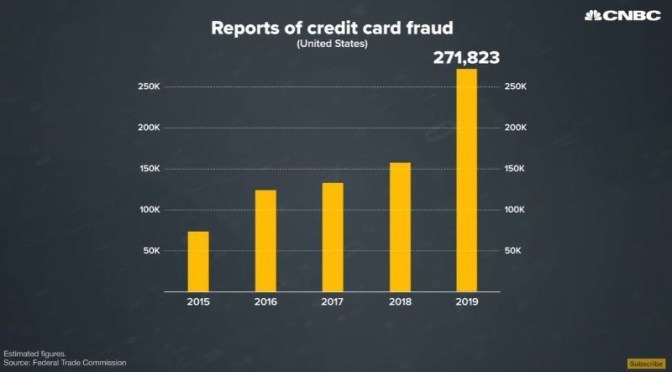
In 2019, payment card fraud losses reached nearly $28 billion worldwide. The United States alone is responsible for more than a third of the total global loss making America the most card fraud-prone country in the world. The economic cost of credit card fraud goes far beyond the cost of illegally purchased merchandise; businesses often spend millions to protect themselves from fraud, buying software and hiring security experts to monitor transactions. Experts say there aren’t enough regulations to help protect the U.S. economy, especially small businesses from card fraud.

Crime: Delivery Scams Imitating Amazon, UPS, FedEX & DHL On The Rise

As online shopping sees its biggest holiday season ever, hackers are sending fake delivery notices impersonating Amazon, UPS and FedEx, with scams up 72% from last year and 440% from October to November. Clicking a fake shipping notification link can launch ransomware or launch a counterfeit branded site to trick users into entering credit card and personal information to “reroute” a package that never existed.

Crime: “Social Security Administration Scams” Are #1 Fraud Reported To FTC

From an FTC online release:

FTC LogoThe Social Security Administration (SSA) scam is the number one scam reported to the FTC right now.

As soon as a caller threatens you, or demands you pay them with a gift card or by wiring money.  It’s a scam. Even if the caller ID tells you otherwise.

If you get a call from someone claiming to be from the Social Security Administration, hang up the phone and remember:

  • Your Social Security number is not about to be suspended.
  • The real Social Security Administration will never call to threaten your benefits.
  • The real SSA will never tell you to wire money, send cash, or put money on a gift card.


To read more: https://www.consumer.ftc.gov/blog/2019/12/getting-bombarded-scam-calls-youre-not-alone?utm_source=govdelivery