Tag Archives: Stanford

HAS TECH OUTRUN THE LAW?

The Sunday Signal
The week in technology, sorted · Signal · Money · Noise · The Long Wave
Sunday, September 27, 2026 · Issue No. 1
SIGNAL — WHAT WILL STILL MATTER IN FIVE YEARS
1

The virtual wall that watched people die

Over 25 years, the U.S. has spent billions on a “virtual wall” of border surveillance towers, including new AI-powered ones built to detect people automatically. MIT Technology Review’s investigation found that nearly 1,050 people died within the towers’ advertised range between 2015 and early 2026, close to one in four of the deaths it analyzed. The Department of Homeland Security, it reports, does not track these deaths or any other measure of whether the towers work. Two days later, Rep. Delia Ramirez (D-Ill.) proposed ending the program.

Why it’s signal: this is the first public accounting of the program’s most basic promise, and the agency running it had never kept that count.

2

A mouse whose cortex is human

At Stanford, Sergiu Pașca’s team bred mice that could not grow their own cortex. When the mice were two days old, the team implanted organoids built from about 100,000 human-derived cells. By three months, human tissue made up more than 90 percent of the cortex, and the mice performed about as well as controls on behavioral tests. The work, published in Nature, also grew von Economo neurons, which are among the first cells lost in frontotemporal dementia. That gives researchers a new way to study the disease.

Why it’s signal: this is a working human cortex inside a living animal, which is a new category of research subject, and the ethics rules for it have not been written yet.

3

Why women with power in tech aren’t famous for it

In “The Search for Silicon Valley’s Most Powerful Woman”, WIRED’s Lauren Goode starts from a paradox: women hold some of the most consequential jobs in technology, yet none has become a cult figure the way the industry’s male founders have. The story leads WIRED’s special issue on tech and gender. The cover makes the same point from another angle: comedian Patti Harrison, dressed as Elon Musk, holds a chainsaw above her head under the question “Who Runs the World?” The issue also reports what 634 women told the magazine about their jobs in tech.

Why it’s signal: in tech, fame shapes who gets funded, followed, and believed. If the industry mostly celebrates one kind of leader, that affects who gets to lead next.

FOLLOW THE MONEY — WHERE INVESTORS ARE BETTING

AI starts replacing enterprise software

Ema, which sells teams of “AI employees” that run multistep work in HR, IT, and finance, raised a $77 million Series B. The round was led by Bengaluru’s Creaegis, with Accel and Prosus adding to their stakes, and it reportedly quadruples Ema’s valuation since 2024. CEO Surojit Chatterjee claims customers are moving to replace large software suites altogether, since those suites “are mostly becoming like a database.” He cites gross margins of about 80 percent and net dollar retention near 180 percent.

Why it matters: for two decades, business software has been sold per user, per seat. Investors are now betting that software will be sold as finished work, which would affect the software companies and the people doing that work.

NOISE — LOUD THIS WEEK, NOT NEW

“God told them to sell crypto”

Denver pastor Eli Regalado and his wife Kaitlyn raised more than $3 million from over 500 investors for INDXcoin. The coin’s exchange collapsed within hours of launching. A judge ordered them to pay $3.4 million, and they now face 40 felony counts. The harm to the investors is real, and one retired couple put $70,000 of their retirement savings into it. We file it under Noise because the only new element is the blockchain. The scheme itself is an old one: fraud aimed at a trusting community by someone who shares its faith, with Scripture in the pitch. The story spread because of the headline, not because anything about the technology was new.

iC

THE LONG WAVE

This week, technology kept ahead of the systems meant to account for it. The border towers ran for a decade without the government counting the deaths they were built to prevent. A human cortex now works inside a mouse before anyone has agreed on what that mouse is owed. Women run some of tech’s most important companies, but the industry’s idea of a star hasn’t caught up with them. Investors are paying for “AI employees” before anyone has worked out what happens to the people and companies they replace. The engineering works in every case. What lags is the accounting: the rule, the measure, even the list of names.

THE QUESTION FOR THE WEEK

Pick a technology you use every day. Who, if anyone, is keeping count of what it costs?

Sourced this week from MIT Technology Review, WIRED, and TechCrunch.

— THE EDITORS, INTELLICURIOUS —

Diet Study: The Top 250 U.S. Movies Depict Unhealthy Foods & Drinks (Stanford)

Stanford researchers examined the 250 top-grossing American movies of recent decades and found the on-screen foods and beverages largely failed U.S. government nutrition recommendations and U.K. youth advertising standards.

Read more

Health: “Smart Hospitals” Using AI & Sensors Could Reduce Thousands Of Deaths Yearly (Stanford)

SEPTEMBER 9, 2020

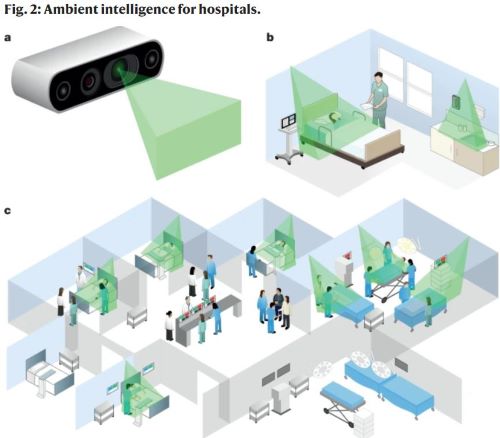
As many as 400,000 Americans die each year because of medical errors, but many of these deaths could be prevented by using electronic sensors and artificial intelligence to help medical professionals monitor and treat vulnerable patients in ways that improve outcomes while respecting privacy.

The Fix: Invisible light guided by AI?

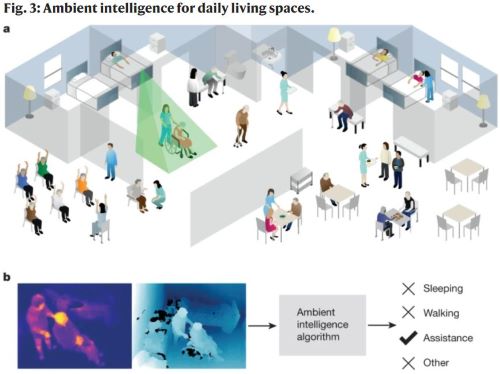
Haque, who compiled the 170 scientific papers cited in the Nature article, said the field is based largely on the convergence of two technological trends: the availability of infrared sensors that are inexpensive enough to build into high-risk care-giving environments, and the rise of machine learning systems as a way to use sensor input to train specialized AI applications in health care.

These alert systems are being tested to see if they can reduce the number of ICU patients who get nosocomial infections — potentially deadly illnesses contracted by patients due to failure of other people in the hospital to fully adhere to infection prevention protocols.

Constant monitoring by ambient intelligence systems in a home environment could also be used to detect clues of serious illness or potential accidents, and alert caregivers to make timely interventions. For instance, when frail seniors start moving more slowly or stop eating regularly, such behaviors can presage depression, a greater likelihood of a fall or the rapid onset of a dangerous health crisis. Researchers are developing activity recognition algorithms that can sift through infrared sensing data to detect changes in habitual behaviors, and help caregivers get a more holistic view of patient well-being.

Read more

Stanford: Researchers Find Way To “Regrow” New Cartilage In Joints

The Stanford researchers figured out how to regrow articular cartilage by first causing slight injury to the joint tissue, then using chemical signals to steer the growth of skeletal stem cells as the injuries heal. The work was published Aug. 17 in the journal Nature Medicine.

“Cartilage has practically zero regenerative potential in adulthood, so once it’s injured or gone, what we can do for patients has been very limited,” said assistant professor of surgery Charles K.F. Chan, PhD. “It’s extremely gratifying to find a way to help the body regrow this important tissue.”

STANFORD MEDICINE (Aug 17, 2020): Researchers at the Stanford University School of Medicine have discovered a way to regenerate, in mice and human tissue, the cushion of cartilage found in joints.

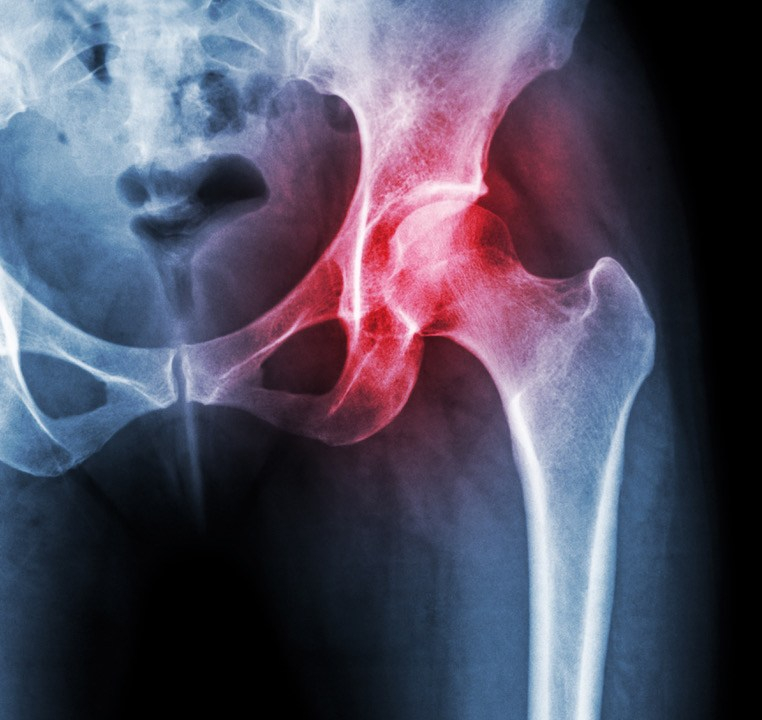
Loss of this slippery and shock-absorbing tissue layer, called articular cartilage, is responsible for many cases of joint pain and arthritis, which afflicts more than 55 million Americans. Nearly 1 in 4 adult Americans suffer from arthritis, and far more are burdened by joint pain and inflammation generally.

Read full article

Art Centers: Sculptor Auguste Rodin’s Enduring Appeal (Stanford Cantor)

Stanford University (July 20, 2020):

What makes Rodin’s sculptures “modern”?

The Three Shades, Rodin, Stanford
The Three Shades is among the works in the Rodin Sculpture Garden, adjacent to the Cantor Arts Center. The sculpture uses three separate casts of the same figure that has been rotated into different positions. (Image credit: L.A. Cicero)

The enduring appeal of Rodin, the modernity of his work, has to do with the way in which he makes visible an aesthetic of process – how, in other words, he takes traditional sculpture apart and puts it back together again in new and daring ways. Strategies of multiplication, scalability, fragmentation and recombinatory modes of assembly and display constitute some of the hallmarks of Rodin’s artistic practice.

Works by Rodin on view at the Cantor are often utilized by students and scholars from a range of disciplines, including medicine. In this moment, with outbreak of disease across the globe, what can Rodin’s works teach us about the relationship between art and nature?

Cantor Arts Center logoIt’s interesting that Rodin attracts so much attention from medical experts, especially here at Stanford, who have used his hands for diagnostic purposes. It’s true that Rodin was intensely interested in exploring pathologies of the body, especially now-discredited understandings of female hysteria. But there is also the irony that Rodin became furious after a critic accused him of making his first life-size figure through life casting, rather than modeling it himself. It should go without saying, but Rodin’s hands are not hands – not real ones, anyway – and their expressive forms don’t align neatly with the anatomical reality of hands in flesh and blood or even their more naturalistic counterparts. But the very fact that they elicit such responses demonstrates the power of art to provoke challenging questions that drive innovative paths of research that cut across disciplines, particularly in a university setting.

Website

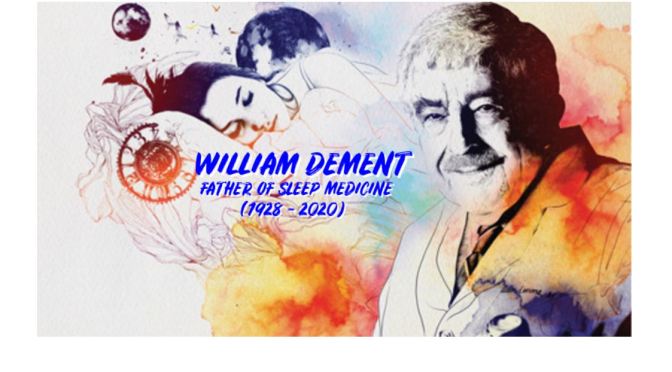
Tributes: Sleep Medicine Pioneer William Dement Dies At 91 – “Drowsiness Is Red Alert” (1928 – 2020)

Stanford Sleep Medicine logo
June 18, 2020

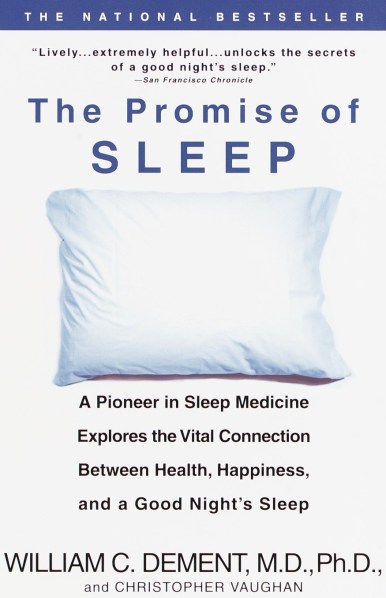
The Promise of Sleep - William C. Dement MDHis mission was to educate the world about the importance of sleep, which he believed was dangerously undervalued. His motto, “drowsiness is red alert,” is a message he tirelessly broadcast to his students, trainees, members of Congress and the world at large. 
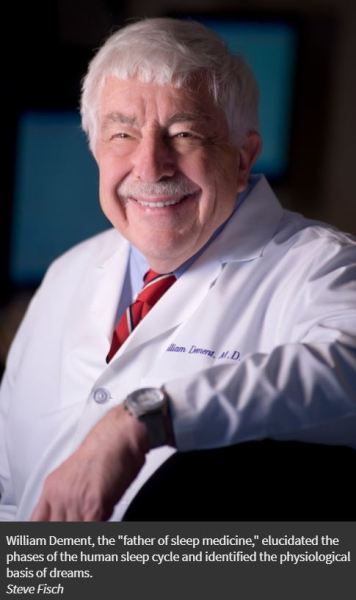
William Dement, MD, PhD, known as the father of sleep medicine, died June 17 after a two-year battle with cardiovascular disease. He was 91.

William Dement MD (1928- 2020) - Father of Sleep MedicineWith a handful of other scientists, Dement, a longtime faculty member of the Stanford School of Medicine, created the fields of sleep research and sleep medicine, and his many books and lectures helped raise awareness of sleep disorders and the dangers of sleep deprivation.

Dement’s many other accomplishments and accolades range far and wide: Dement and Guilleminault were the founding editors of the journal Sleep, the first major international journal devoted to sleep, publishing the first issue in 1978. He was the author of books for lay readers, including The Promise of Sleep, Some Must Watch While Some Must Sleep and The Sleepwatchers. The 2012 comedy film Sleepwalk with Me featured The Promise of Sleep and Dement in a cameo.

Read full tribute

2020 Innovation: “Remote-Only Organizations”: Is This The Future Of Work?

From a Stanford Engineering article (April 8, 2020):

Stanford Engineering Remote-Only Organizations April 8 2020Companies that structure themselves as location-independent have developed norms and practices that bridge the emotional and logistical distances. The same is true for their workers. For such companies, remote-only work can reduce costs, expand the talent pool and boost productivity. By contrast, being forced by a crisis to work remotely is likely to be disruptive and frustrating. It may be better than shutting down, but it will likely lead to a big drop in productivity.
In the span of a single month, the COVID-19 pandemic has forced companies and organizations of all types to have almost all of their employees work remotely from home.

Has the future of work, the all-remote workforce and even the virtual organization, arrived in full force? Though online technologies have made remote work increasingly common, most companies and organizations are still run out of brick-and-mortar facilities. Now they are scrambling to stand up virtual workspaces overnight.

Read full article

Health: All Adults 18-79 Should Be Screened For Hepatitis C Virus (HCV)

From a Stanford University online article (March 2, 2020):

Health Policy Stanford“The opioid epidemic has added fuel to the HCV fire, substantially increasing transmission,” said Owens. “HCV is now an enormous public health problem, affecting a much broader age range of people than before. Fortunately, we have the tools to identify people and treatment is now successful in the vast majority of patients, so screening can prevent the mortality and morbidity from HCV.”
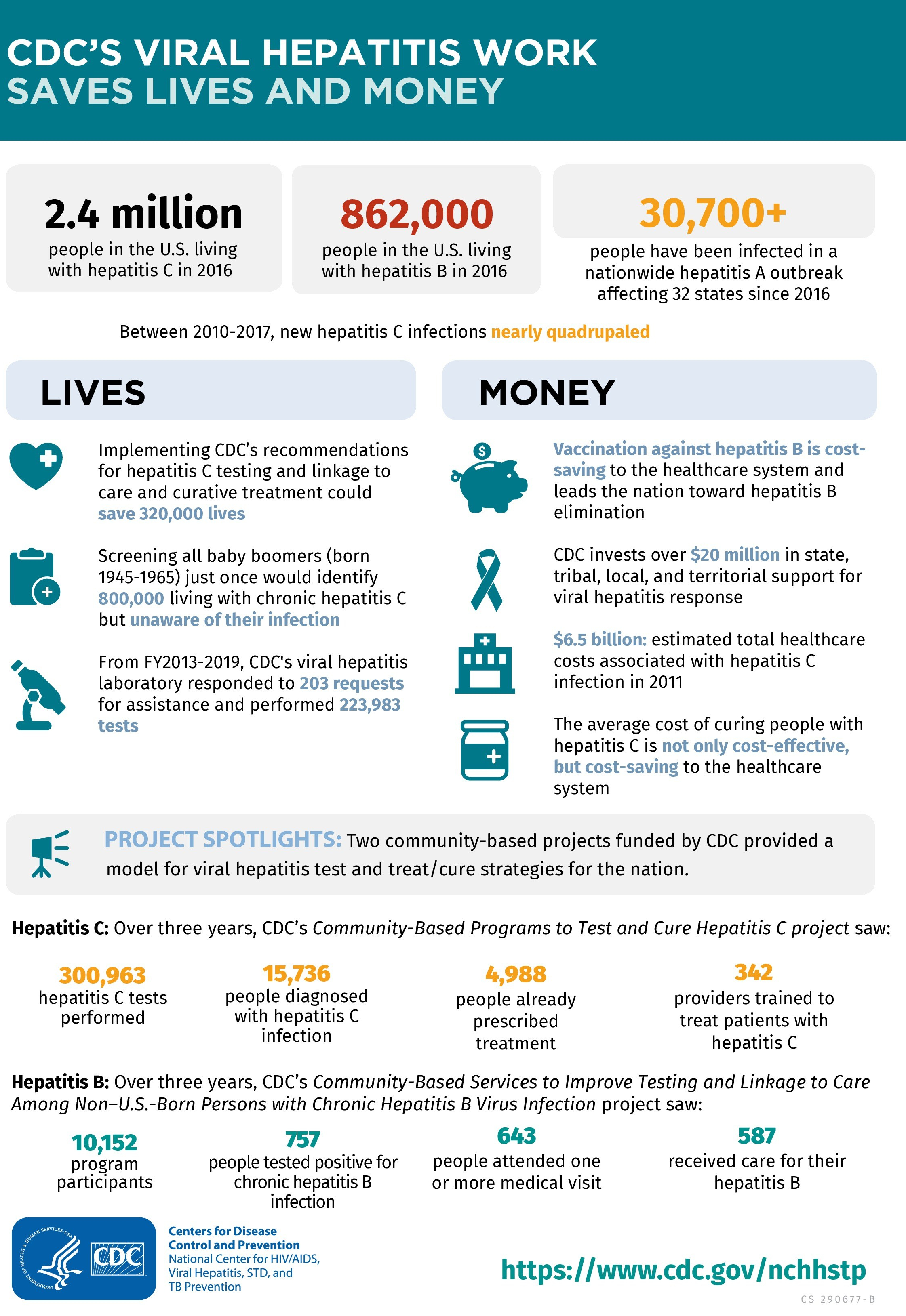

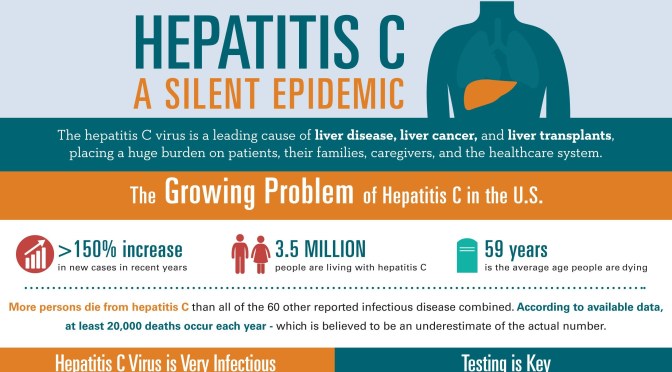
A task force of national health experts recommends clinicians screen all adults 18 to 79 for the hepatitis C virus (HCV), noting that the viral infection is now associated with more deaths in the United States than the top 60 reportable infectious diseases combined. Many people are unaware they are carrying the viral infection.

CDC-viral-hepatitis-work-P-page-0

“People with hepatitis C do not always feel sick and may not know they have it,” says chair of the U.S. Preventive Services Task Force Douglas K. Owens, M.D, M.S. “Screening is key to finding this infection early, when it’s easier to treat and cure, helping reduce illnesses and deaths.”

Owens, who is the director of Stanford Health Policy and the Henry J. Kaiser, Jr., Professor of Medicine, said the opioid epidemic now plays an important role in the prevalence of HCV. There are more than three times the number of acute HCV cases than a decade ago, particularly among young, white, injection drug users who live in rural areas. Women aged 15 to 44 have also been hit hard by the virus that is spread through contaminated blood.

Read full Article

Health Talk: Stanford Dermatology Professor Eleni Linos On “Tanning Bed” Cancer Research

Eleni Linos MD PhD Stanford Medicine Dermatology“Studies with financial links to the indoor tanning industry were much more likely to discuss perceived benefits of indoor tanning and to downplay the harms,” said Eleni Linos, MD, DrPH, professor of dermatology, who sees patients at Stanford Health Care’s dermatology clinic at the Hoover Pavilion. “The association is quite striking. We need scientific data to be independent of industry influence. I am concerned that funding sources may influence the conclusions of these papers.”

The BMJ podcastIn 2012, Eleni Linos, professor of dermatology at Stanford university, published a systematic review and meta-analysis of the link between non-melanoma cancer and sun-beds. That bit of pretty standard research, and a particular rapid response to it, has kicked of years of work – and in this podcast I talk to Eleni and her colleagues Stanton…

Read article


Health: New Stanford Hospital Features “Patient-Centric” Design (Video)

Precision Health puts the patient at the center of the health care paradigm, and at the newly-opened Stanford Hospital, the patient was the focus throughout the design process.

Learn more about how the building’s design combines with the latest medical and communications technology to put patient wellness first: http://stanmed.stanford.edu/2019fall/…