Tag Archives: Featured

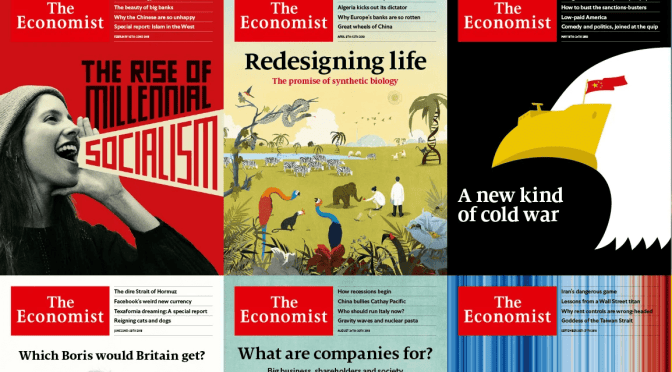
THE ECONOMIST MAGAZINE – SEPTEMBER 19, 2026

THE ECONOMIST MAGAZINE: The latest issue features Can the AI arms race be stopped?


Can the AI arms race be stopped?

America will struggle to make the technology safe while staying ahead of China

Markets are waking up to the rich world’s reckless borrowing

Governments are still, alas, asleep

In praise of Democrats’ disunity

Republicans show that party unity is overrated

How AI is creating jobs

The apocalypse is postponed. A mini boom is at hand

Why schoolchildren are getting dimmer

Machines are getting brighter; teenagers are not

The age of the orator

The transmission of ideas is moving away from text and back to the spoken word

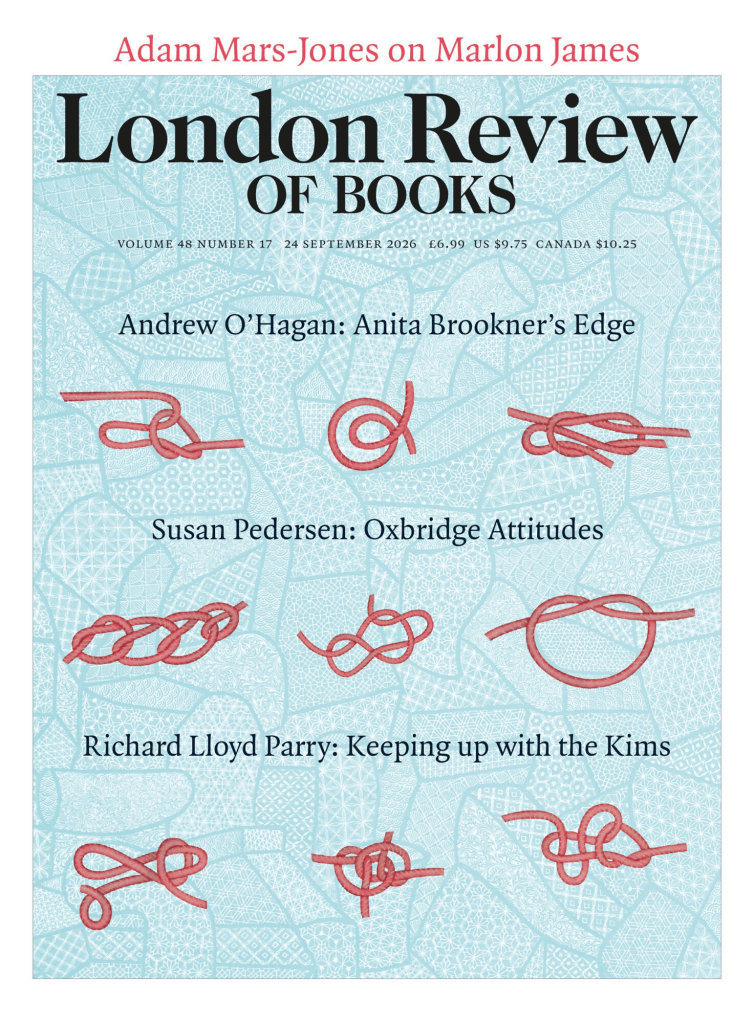
LONDON REVIEW OF BOOKS – SEPTEMBER 24, 2026 PREVIEW

LONDON REVIEW OF BOOKS: The latest issue features analyses on geopolitical tensions, national identities, and cultural retrospectives, including pieces on North Korea, English nationalism, Britain’s energy crisis, Italy’s neo-fascist cults, photographer Lisette Model, and a review of Marlon James’s novel.

Fallout: The Inside Story of America’s Failure to Disarm North Korea  by Joel S. Wit.

The West: The History of an Idea 
by Georgios Varouxakis

Twilight of the Dons: British Intellectuals from World War Two to Thatcherism by Colin Kidd

Polis: A New History of the Ancient Greek City-State from the Early Iron Age to the End of Antiquity by John Ma

Voltaire’s Workshop: The Sources of ‘Candide’ by Edward M. Langille

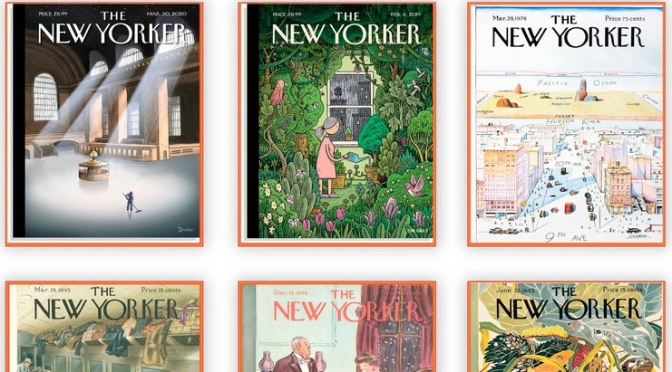
THE NEW YORKER MAGAZINE – SEPTEMBER 21, 2026

The cover of the September 21 2026 issue of The New Yorker on which a couple embraces in a city at night.

THE NEW YORKER MAGAZINE: The latest issue cover features Dean Rohrer’s “Beginnings” – The city as a blank canvas.

Jared Kushner’s Dollar Diplomacy

Donald Trump’s son-in-law represents the kind of Washington figure for whom public office serves as a means to extraordinary wealth.

Is Zionism’s Moral Crisis About Roads Not Taken—or Original Sin?

Where Benjamin Moser replaces one story of Jewish exceptionalism with another, Omer Bartov shows what’s lost when polemic takes the place of history.

How to Protect Democracy

The emergence of Germany’s far right as a political force represents an old dilemma. By Joshua Yaffa

The American Religion of Self-Storage Facilities

Why are we so obsessed with putting our belongings in metal boxes and then never looking at them again? By David Owen

THE PARIS REVIEW – FALL 2026

THE PARIS REVIEW : The latest features Interviews, Prose, Poetry and Art….

Svetlana Alexievich on the Art of Oral History: “If you cut straight to the part you need, which is what journalists do, it won’t be interesting, and it won’t be the truth, either. Not the whole truth.”

Donald Antrim on the Art of Fiction: “I deplored the idea that writing involves suffering, that it had to be a bloodletting. Later I found out that it would be, and maybe should be.”

Prose by Eka Kurniawan, Angie Sijun Lou, Brian Ma, Scott McClanahan, Sam McKinniss, Tomoka Shibasaki, and Woo Dayoung.

Poetry by Asha Futterman, Zakaria Mohammed, Geoffrey G. O’Brien, Vasko Popa, Diane Seuss, and Natalie Shapero.

Art by Gertrude Abercrombie, Silke Otto-Knapp, and Laura Owens; cover by Elizabeth Glaessner.

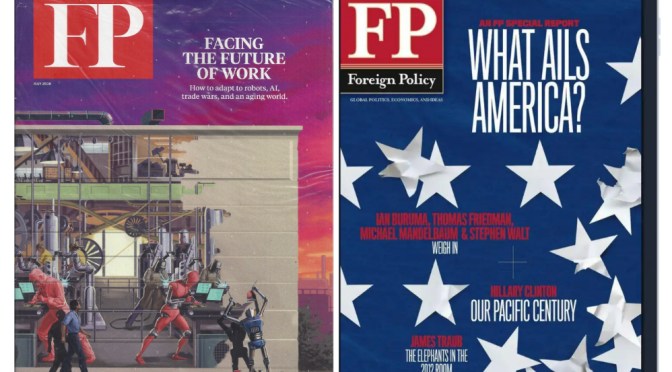
FOREIGN POLICY MAGAZINE – FALL 2026 PREVIEW

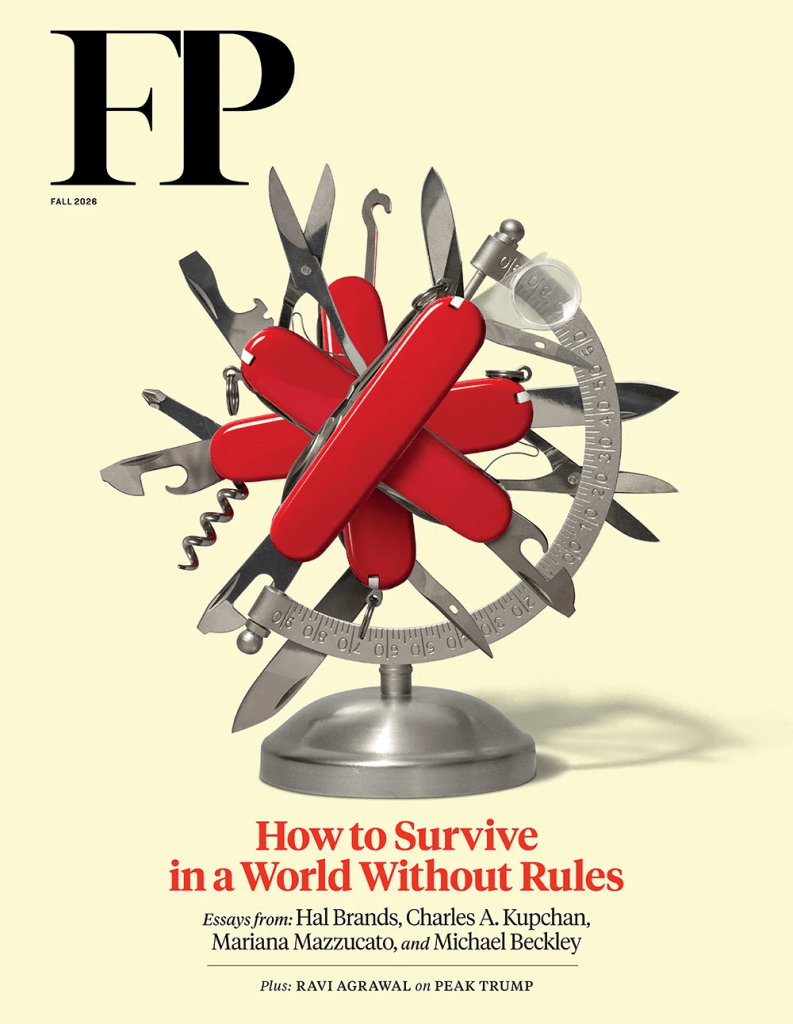
FOREIGN POLICY MAGAZINE: The latest issue features ‘How to Survive in a World Without Rules’ – Essays from: Hal Brands, Charles A. Kupchan, Mariana Mazzucato, and Michael Beckley….

How to Survive in a World Without Rules

Self-help is becoming more vital in a vicious world.

The World’s Only Real Hope of Maintaining Order This article has an audio recording

A proposal for a new international system that is at once centralized and regionalized. 

How to Write Better Rules for Global Finance

The importance of a “common good” compass.

A New Engine of Development

The era of easy growth is over, but rich and poor countries can still join forces.

MIT TECHNOLOGY REVIEW – SEPTEMBER/OCTOBER 2026

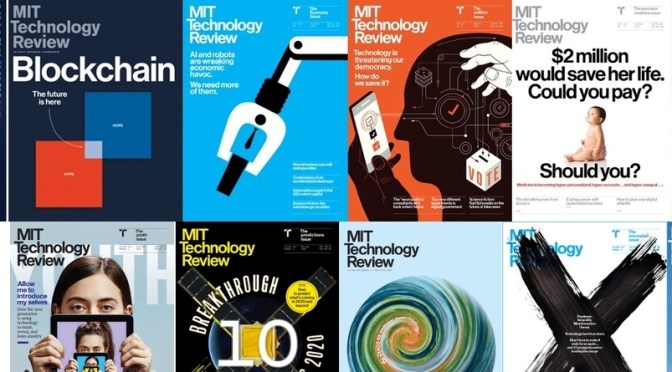
MIT TECHNOLOGY REVIEW: The Kids issue features… What does growing up in an age of chatbots and agents mean for kids’ future? From the role AI plays in their day-to-day lives to how they cope with the existential dread that comes with climate change, young people are asserting their smarts to define their relationship with technology and the world around them. Plus!…

How kids feel about AI, in their own words

Does an AI-filled future seem like promise or peril to today’s teens and tweens? We went right to the source.

Support networks aim to help kids through the polycrisis

Today’s world is a mess of troubling trends. Some groups are trying to help kids navigate their anxieties about it all.

What happens when a kid’s robot best friend dies?

AI companion toys for neurodivergent children promise connection and therapy, but can they deliver for the long haul?

Kids outlearn AI—and we still don’t know why

LLMs need vastly more data than children to learn language. Understanding why could help us create more efficient models—and reveal more about developing minds.

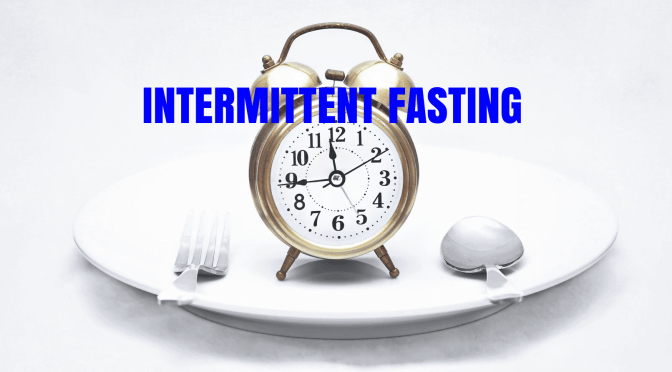
New Studies: Beneficial Effects Of “18-Hour Intermittent Fasting” On Health And Aging (NEJM)

From a New England Journal of Medicine online release:

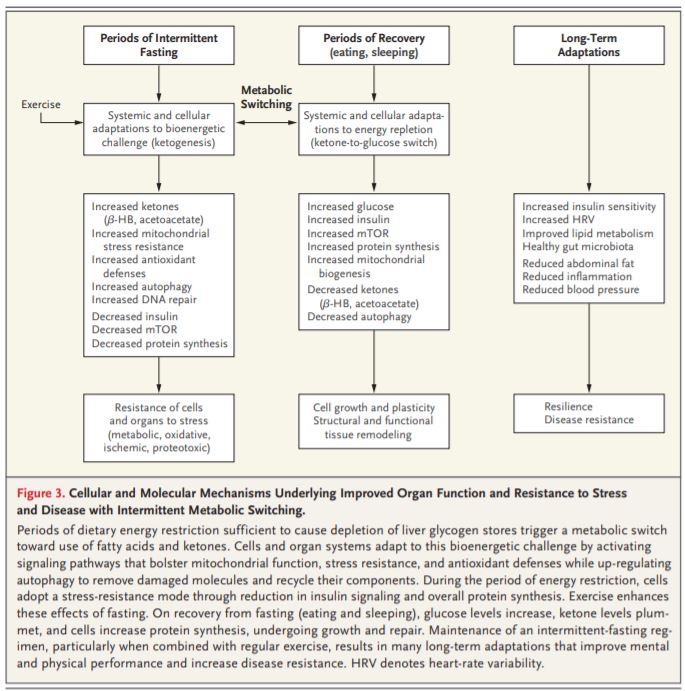
In humans, intermittent-fasting interventions ameliorate obesity, insulin resistance, dyslipidemia, hypertension, and inflammation. Intermittent fasting seems to confer health benefits to a greater extent than can be attributed just to a reduction in caloric intake.

Evidence is accumulating that eating in a 6-hour period and fasting for 18 hours can trigger a metabolic switch from glucose-based to ketone-based energy, with increased stress resistance, increased longevity, and a decreased incidence of diseases, including cancer and obesity.

The New England Journal of Medicine Logo

Preclinical studies and clinical trials have shown that intermittent fasting has broad-spectrum benefits for many health conditions, such as obesity, diabetes mellitus, cardiovascular disease, cancers, and neurologic disorders. Animal models show that intermittent fasting improves health throughout the life span, whereas clinical studies have mainly involved relatively short-term interventions, over a period of months.
Effects of Intermittent Fasting on Health, Aging, and Disease New England Journal of Medicine December 26 2019

BOOMERS-DAILY.COM “18-HOUR INTERMITTENT FASTING DIET” STUDY

How much of the benefit of intermittent fasting is due to metabolic switching and how much is due to weight loss? Many studies have indicated that several of the benefits of intermittent fasting are dissociated from its effects on weight loss. These benefits include improvements in glucose regulation, blood pressure, and heart rate; the efficacy of endurance training; and abdominal fat loss.

To read more

Inline image

Healthiest Adults: Early Risers With 7-8 Hours Of Sleep, No Insomnia Or Daytime Drowsiness

From a European Heart Journal study:

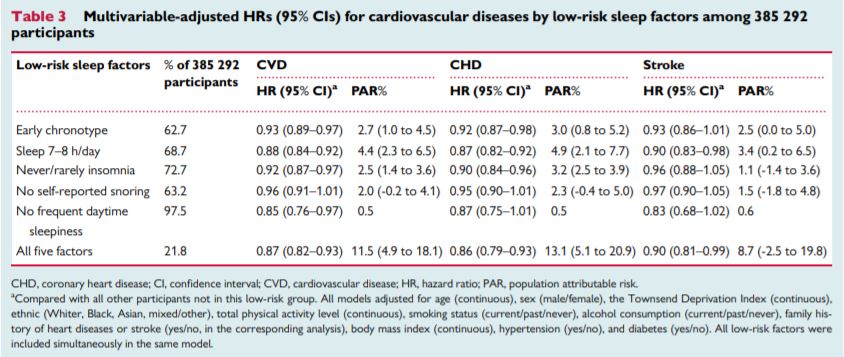
European Society of Cardiology logoWhen the five sleep factors were collapsed into binary categories of low risk vs. high risk (reference group), early chronotype, adequate sleep duration, free of insomnia, and no frequent daytime sleepiness were each independently associated with incident CVD, with a 7%, 12%, 8%, and 15% lower risk, respectively (Table 3). Early chronotype, adequate sleep duration, and free of insomnia were independently associated with a significantly reduced risk of CHD; while only adequate sleep duration was associated with stroke.European Society of Cardiology Sleep patterns, genetic susceptibity and incident cardiovascular disease a prospective study of 385,292 participants lowest risk factorsCardiovascular disease (CVD), including coronary heart disease (CHD) and stroke, is among the leading causes of mortality globally.1 In addition to traditional lifestyle behaviours, emerging evidence has implicated several unhealthy sleep behaviours were important risk factors for CVD.2,3 For example, short or long sleep duration,4–9 late chronotype,10,11 insomnia,12–17 snoring,18,19 and excessive daytime sleepiness20,21 were associated with a 10–40% increased CVD risk. European Society of Cardiology Sleep patterns, genetic susceptibity and incident cardiovascular disease a prospective study of 385,292 participants
 

To read more: https://academic.oup.com/eurheartj/advance-article/doi/10.1093/eurheartj/ehz849/5678714

Studies: “Why Your Brain Needs Exercise” (Scientific American)

From a Scientic American online article:

Scientific American logoIn our own study of more than 7,000 middle-aged to older adults in the U.K., published in 2019 in Brain Imaging and Behavior, we demonstrated that people who spent more time engaged in moderate to vigorous physical activity had larger hippocampal volumes. Although it is not yet possible to say whether these effects in humans are related to neurogenesis or other forms of brain plasticity, such as increasing connections among existing neurons, together the results clearly indicate that exercise can benefit the brain’s hippocampus and its cognitive functions.
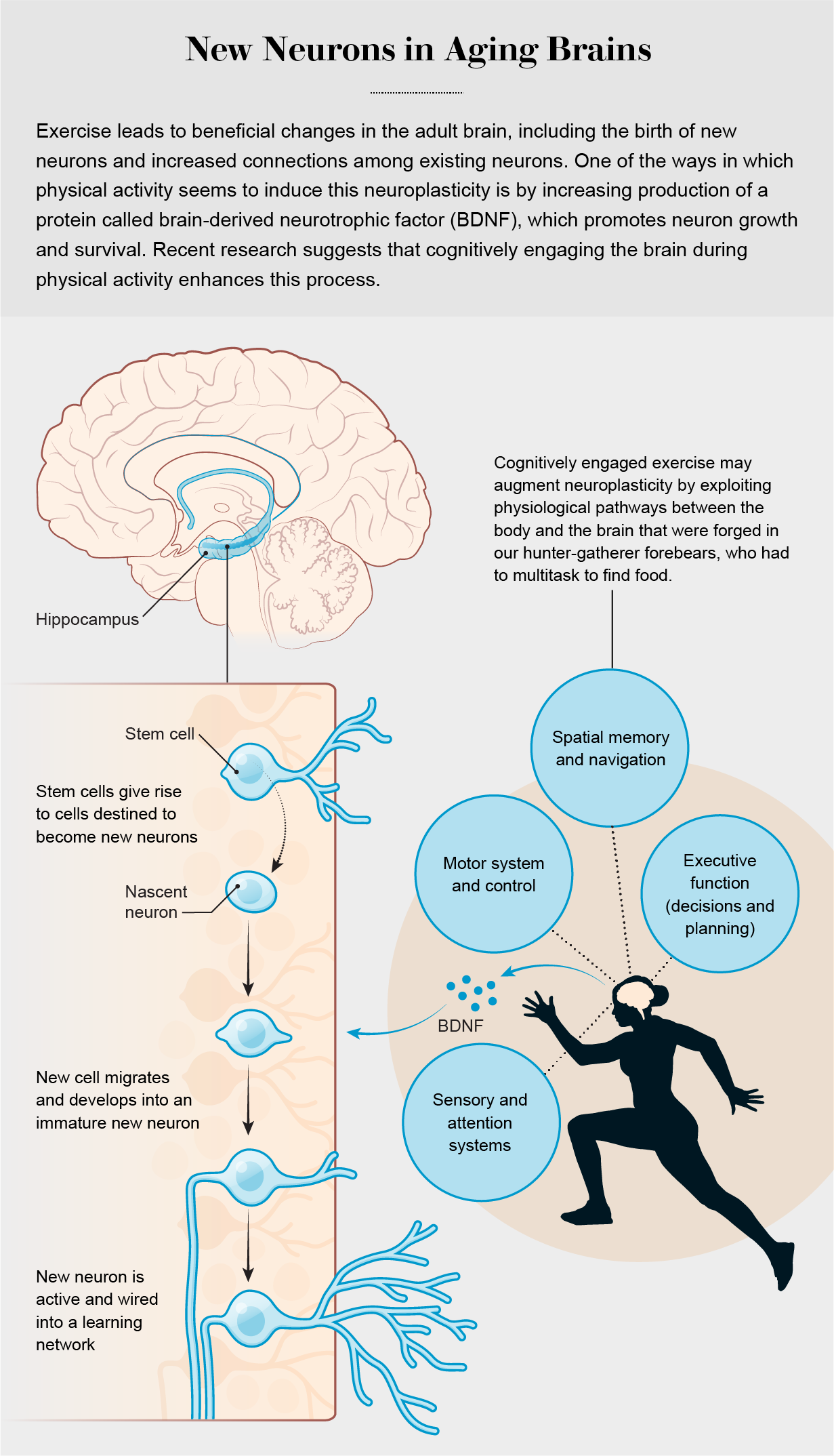
New Neurons in Aging Brains Why Your Brain Needs Exercise Scientific American December 18 2019

In fact, a growing body of research suggests that exercise that is cognitively stimulating may indeed benefit the brain more than exercise that does not make such cognitive demands. For example, Gerd Kempermann and his colleagues at the Center for Regenerative Therapies Dresden in Germany explored this possibility by comparing the growth and survival of new neurons in the mouse hippocampus after exercise alone or after exercise combined with access to a cognitively enriched environment. They found an additive effect: exercise alone was good for the hippocampus, but combining physical activity with cognitive demands in a stimulating environment was even better, leading to even more new neurons. Using the brain during and after exercise seemed to trigger enhanced neuron survival.

To read more: https://www.scientificamerican.com/article/why-your-brain-needs-exercise/

MIT AgeLab: Consumer Product Companies Need To Make Older Adults A “Core Constituency”

From an MIT Technology Review article by Joseph F. Coughlin:

MIT Technology Review Old Age Is Over October 2019Technologists, particularly those who make consumer products, will have a strong influence over how we’ll live tomorrow. By treating older adults not as an ancillary market but as a core constituency, the tech sector can do much of the work required to redefine old age. But tech workplaces also skew infamously young. Asking young designers to merely step into the shoes of older consumers (and we at the MIT AgeLab have literally developed a physiological aging simulation suit for that purpose) is a good start, but it is not enough to give them true insight into the desires of older consumers. Luckily there’s a simpler route: hire older workers.

Of all the wrenching changes humanity knows it will face in the next few decades—climate change, the rise of AI, the gene-editing revolution—none is nearly as predictable in its effects as global aging. Life expectancy in industrialized economies has gained more than 30 years since 1900, and for the first time in human history there are now more people over 65 than under 5—all thanks to a combination of increasing longevity, diminished fertility, and an aging Baby Boom cohort. We’ve watched these trends develop for generations; demographers can chart them decades in advance.

To read more click on the following link: https://www.technologyreview.com/s/614155/old-age-is-made-upand-this-concept-is-hurting-everyone/