Category Archives: Fiction

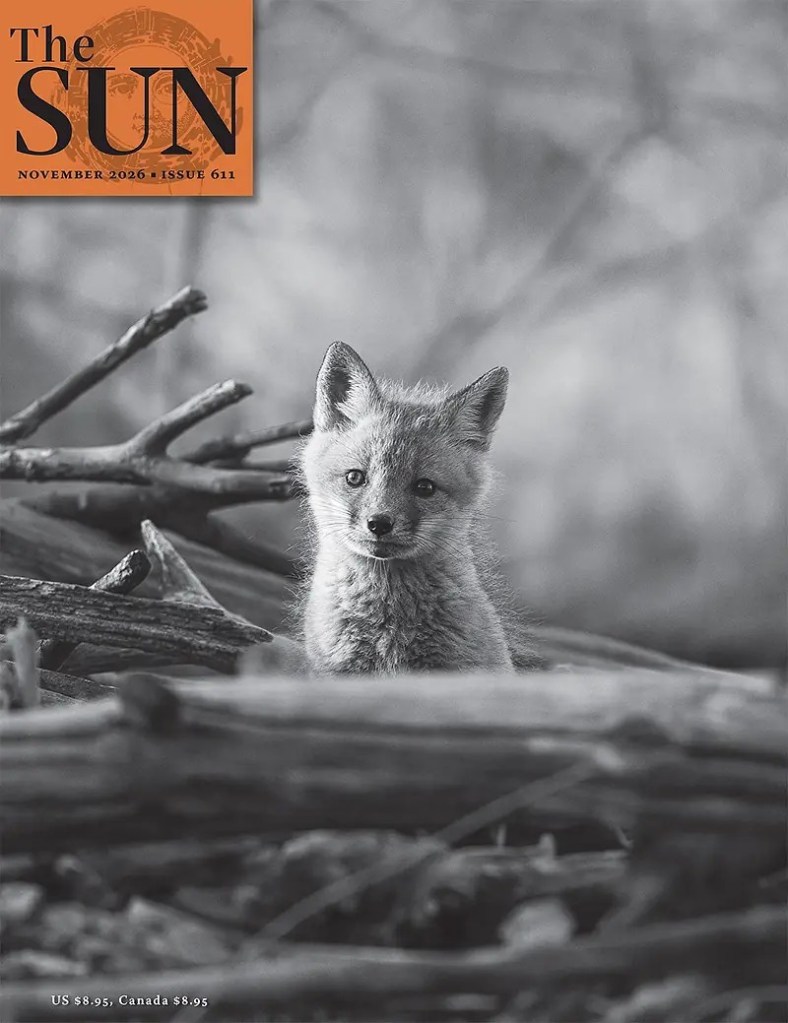
THE SUN LITERARY MAGAZINE – NOVEMBER 2026

THE SUN LITERARY MAGAZINE: The latest issue features an interview with Jason Baldes on restoring the North American buffalo as a keystone species, Laura Maylene Walter’s fiction piece “Rare Species,” Charles Hood’s essay examining the historical nuances of General Custer’s death, Amy Butcher’s memoir on personal boundary issues titled “Red Light, Green Light,” and a collection of reader-submitted reflections centered on the concept of “Too Much”.

The Healers – Jason Baldes on Restoring the North American Buffalo

Returning the buffalo to its ecological role as a keystone species, bringing back plant and animal biodiversity, is in itself healing. We take care of the buffalo, the buffalo takes care of the land, and both take care of us. By Leath Tonino

Aage eighteen, Jason Baldes, a member of the Eastern Shoshone Tribe, traveled with his father, a US Fish and Wildlife Service biologist, from the Wind River Indian Reservation in Wyoming to the Serengeti Plain of East Africa. In addition to lions and zebras and hyenas, Baldes witnessed the migration of 1.5 million wildebeests—one of the planet’s last remaining examples of a huge population of terrestrial mammals roaming freely over the land. “That was the light bulb moment for me,” he says today, reflecting on his decades of effort as an ecologist and activist. Watching the beautiful and awe-inspiring spectacle, he understood that the mega herd represented a mere fraction of the number of bison—or buffalo, as Baldes prefers to call them—that would have been visible in North America a few short centuries ago, when they numbered in the tens of millions and inhabited the majority of the continent.

The Many Deaths of George Armstrong Custer

In popular tradition General Custer was the last to die, though there is no way to know the final sequence of events. He reportedly had been shot twice: once in the left temple and once just below the heart. ByCharles Hood

The first time US Army general George Armstrong Custer died was on Sunday, June 25, 1876, a centennial year in Anglo-European America. He died in the late afternoon along with 267 other soldiers, civilians, and Native American scouts in the Little Bighorn Valley of Montana. These deaths took place during what are now called the “Indian Wars,” although for most of American history it’s hard to think of a time when there wasn’t an Indian war.

The Seventh Cavalry, which Custer led, had split into multiple columns, and all came under attack, though only Custer’s portion—made up of five out of eleven total companies—was wiped out completely. That outcome was more or less inevitable, given that Custer had misjudged the size of the coalition of Lakota, Dakota, Sioux, and Northern Cheyenne his two-hundred-odd men were facing. Or maybe he hadn’t wanted to admit to himself that he was up against a combined force of at least a thousand, and perhaps as many as three or even five thousand, depending on which source you asked. Once the battle started, there was no way Custer and his men would not all be killed. The only question was whether they would die before or after they had used up all of their water and ammunition.

Rare Species

I walked back to my sister’s room and stood in the doorway and listened to her breathe. Maybe some of those seahorse facts weren’t even true. ByLaura Maylene Walter
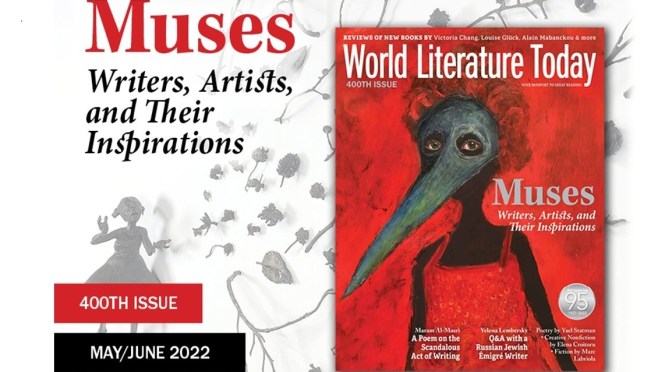
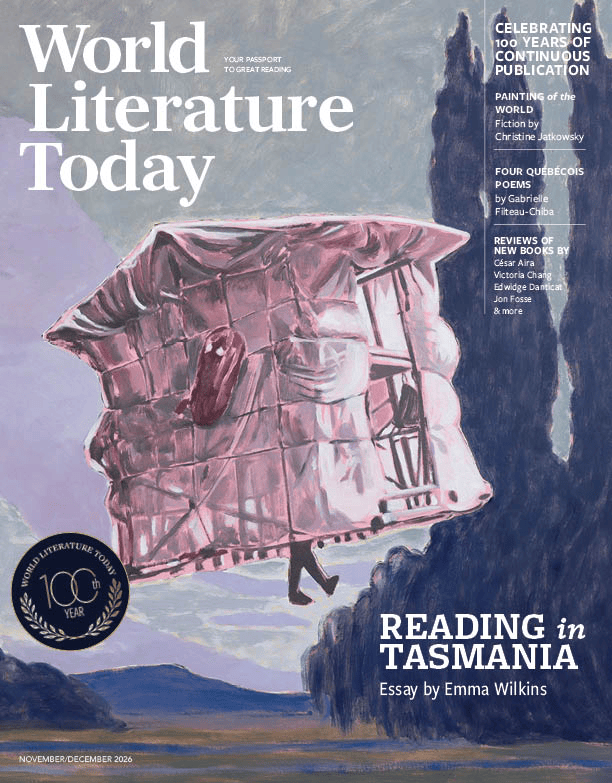
WORLD LITERATURE TODAY NOVEMBER 2026 PREVIEW

WORLD LITERATURE TODAY: The latest issue features ‘Reading in Tasmania’. The 100th year of continuous publication gifts readers all their favorite genres—a profusion of essays, poetry, book reviews, creative nonfiction, fiction, interviews, a booklist for Trans Awareness Month, a postcard from Colombia, and more. Emma Wilkins’s essay on Tasmanian literature provides the cover feature, and translated work from China, Egypt, Mexico, Quebec, and Russia enlivens the issue. Reviews of new books by Solvej Balle, Emmanuel Carrère, Victoria Chang, Edwidge Danticat, Jon Fosse, and dozens more round out the year with essential reading-list titles.


50 Years Ago in These Pages

by The Editors of WLT

The Ancient Nutrients Sustaining Cali, Colombia

by Erik Gleibermann

A Field Guide to Global Trans Literature: 7 Books for Trans Awareness Month

by Alton Melvar M. Dapanas

72 Years Ago Not in These Pages

by Rafael Heliodoro Valle

“The Garden of My Soul”: Edith Wharton’s Living Legacy in France

by Laura Sheahen

Why I Am Not an Indian English Writer

An Essay by Aruni Kashyap

Introduction: Eyes of the Pen, Voices of the Camera

by Yousef Khanfar

Writing on War’s Edge

by Yousri Alghoul

They Call It Displacement—In Reality, It’s Hell (This Is My Story)

by Nour Abo-Rokb

Ghost

by Basem Nabres

Ringtones of My Mobile Phone

by Omar Hammash

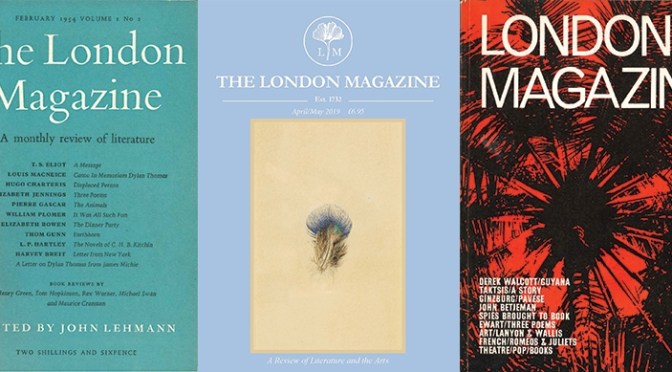
The London Magazine – October/November 2026

THE LONDON MAGAZINE: Despair – its causes, symptoms and consequences – becomes something of a theme across the issue. At least according to its etymological root, to despair is to be without hope (de-sperare), and in Mavis Gallant’s 1965 story ‘Paola and Renata’, published in the issue, mothers have no hope of controlling their inscrutable, insolent daughters.

Review | Comfort and Its Discontents by Devki Panchmatia

‘While it must be stressed that Rankine’s lyric practice is capacious and stylistically thrilling, that her insights are always valuable in isolation, I am left slightly unsure of what Triage’s greater intentions are.’

Essay | The Scale Against Poetry: Tony Harrison’s Prose by Dane Holt

‘Partly due to critical neglect, partly due to the single-minded determination to be a poet who survived on nothing but his poetry, Harrison’s prose is doomed to be a footnote in his career.’

Essay | It’s a Devil of a Gap by Alex Niven

‘Might there be something, beyond backwater nihilism, in the vanishing of the Tree at Sycamore Gap that speaks to us about a country increasingly unable to protect its social and civic structures in the most basic ways?’

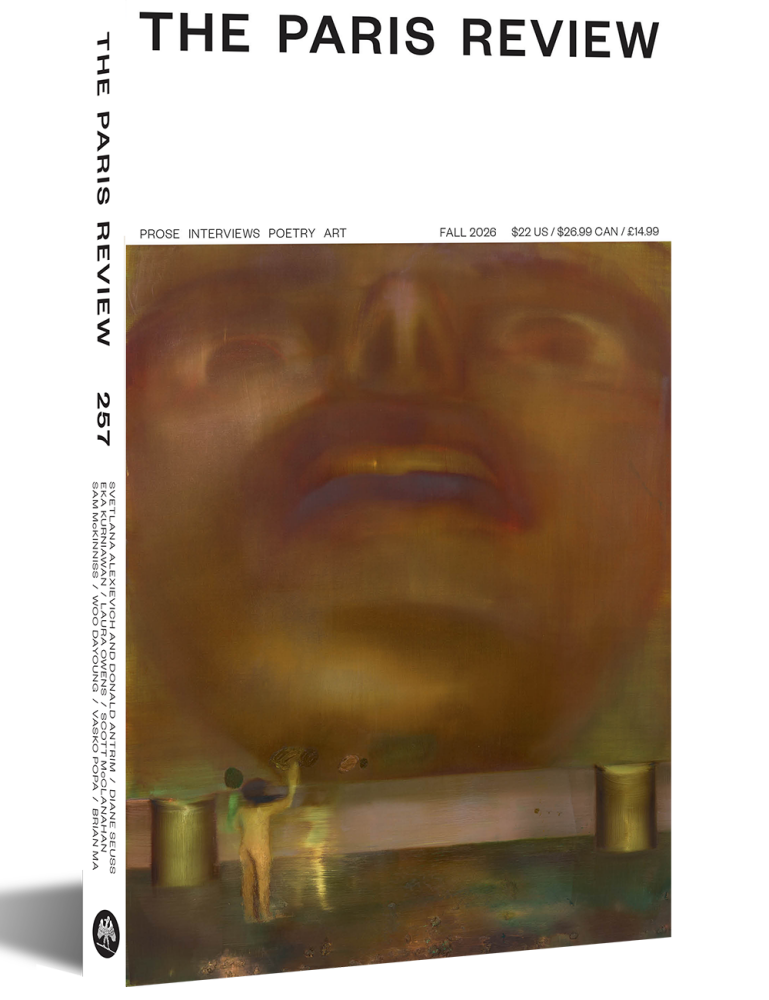
THE PARIS REVIEW – FALL 2026

THE PARIS REVIEW : The latest features Interviews, Prose, Poetry and Art….

Svetlana Alexievich on the Art of Oral History: “If you cut straight to the part you need, which is what journalists do, it won’t be interesting, and it won’t be the truth, either. Not the whole truth.”

Donald Antrim on the Art of Fiction: “I deplored the idea that writing involves suffering, that it had to be a bloodletting. Later I found out that it would be, and maybe should be.”

Prose by Eka Kurniawan, Angie Sijun Lou, Brian Ma, Scott McClanahan, Sam McKinniss, Tomoka Shibasaki, and Woo Dayoung.

Poetry by Asha Futterman, Zakaria Mohammed, Geoffrey G. O’Brien, Vasko Popa, Diane Seuss, and Natalie Shapero.

Art by Gertrude Abercrombie, Silke Otto-Knapp, and Laura Owens; cover by Elizabeth Glaessner.

THE YALE REVIEW JOURNAL – FALL 2026 PREVIEW

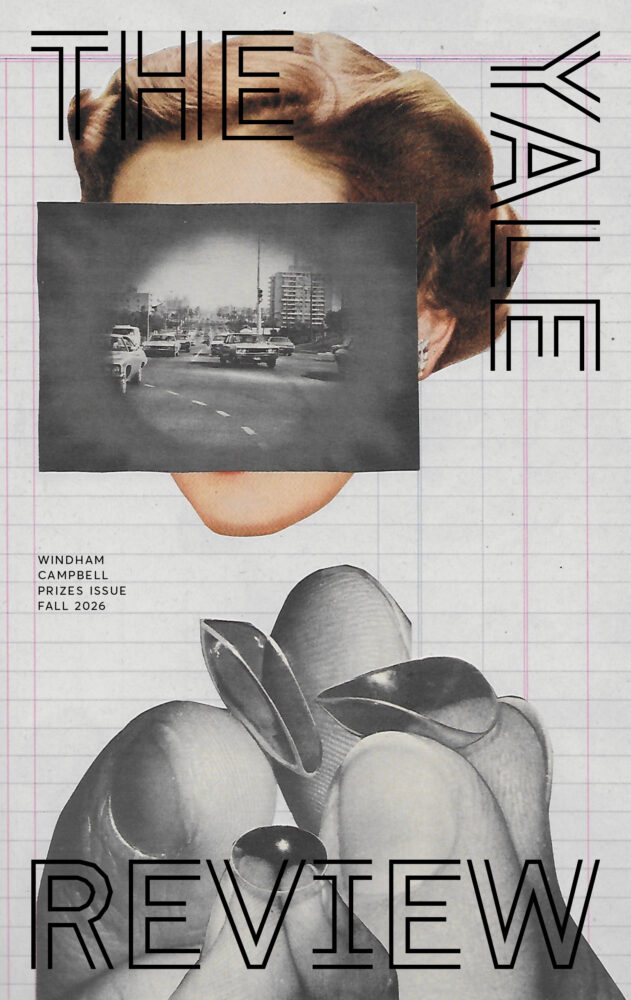
Fall 2026 cover image

THE YALE REVIEW: The latest issue features….

Famous Writers School

My encounters with literary greats by Lucy Sante

How to Talk About Murder

Edgar Allan Poe’s stories are full of ghastly crimes, but the true horror lies in their confessions. By Emily Ogden

Moby-Dick and the Indefinite Sublime

On facing the white page by Tom McCarthy

THE PARIS REVIEW —- SUMMER 2026 ISSUE

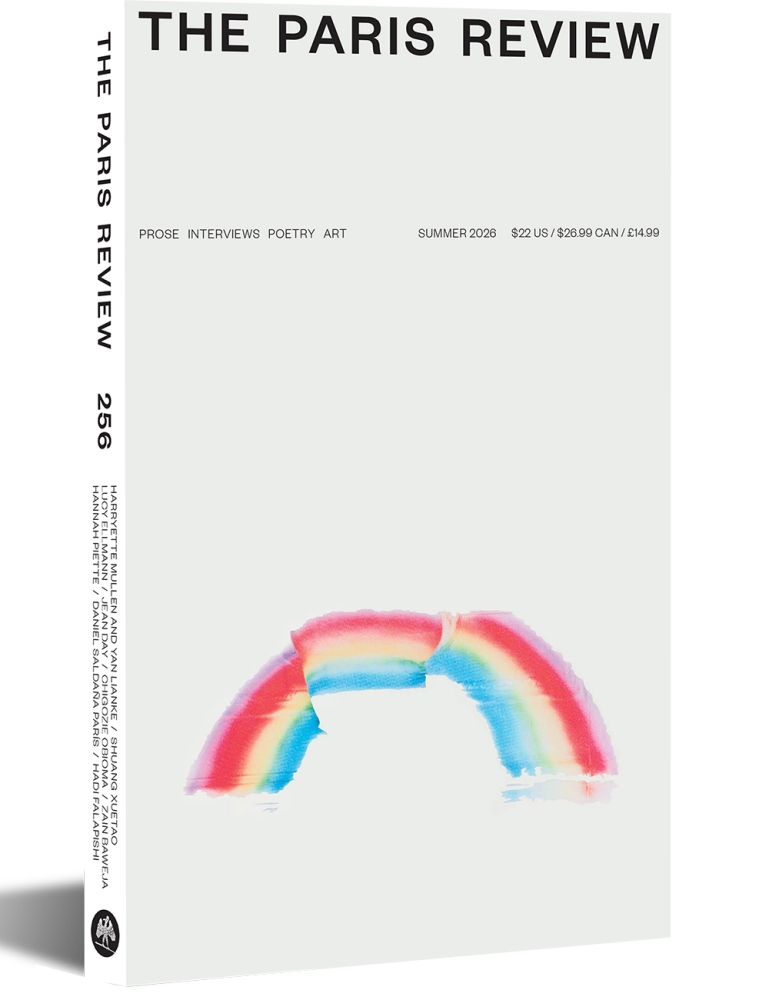
THE PARIS REVIEW : The latest features Interviews, Prose, Poetry and Art….

Harryette Mullen on the Art of Poetry: “I knew I would exhaust myself as subject matter, but I could take something and turn it upside down, inside out, add a few doodads, and that way it would become inexhaustible.”

Yan Lianke on the Art of Fiction:  “I personally didn’t think there was anything anti-war in writing about how an individual might be terrified of battle. I was really writing about my own fear.”

Prose by Lucy Ellmann, Chad Fore, Daisy Hildyard, Chigozie Obioma, Daniel Saldaña París, and Shuang Xuetao.

Poetry by Zain Baweja, Jean Day, Hannah Piette, Frederick Seidel, Shamsher Bahadur Singh, Katana Smith, and Tran Hang My.

Art by Hadi Falapishi, Andrew Kuo, and Hannah Tishkoff; cover by Alex Da Corte.

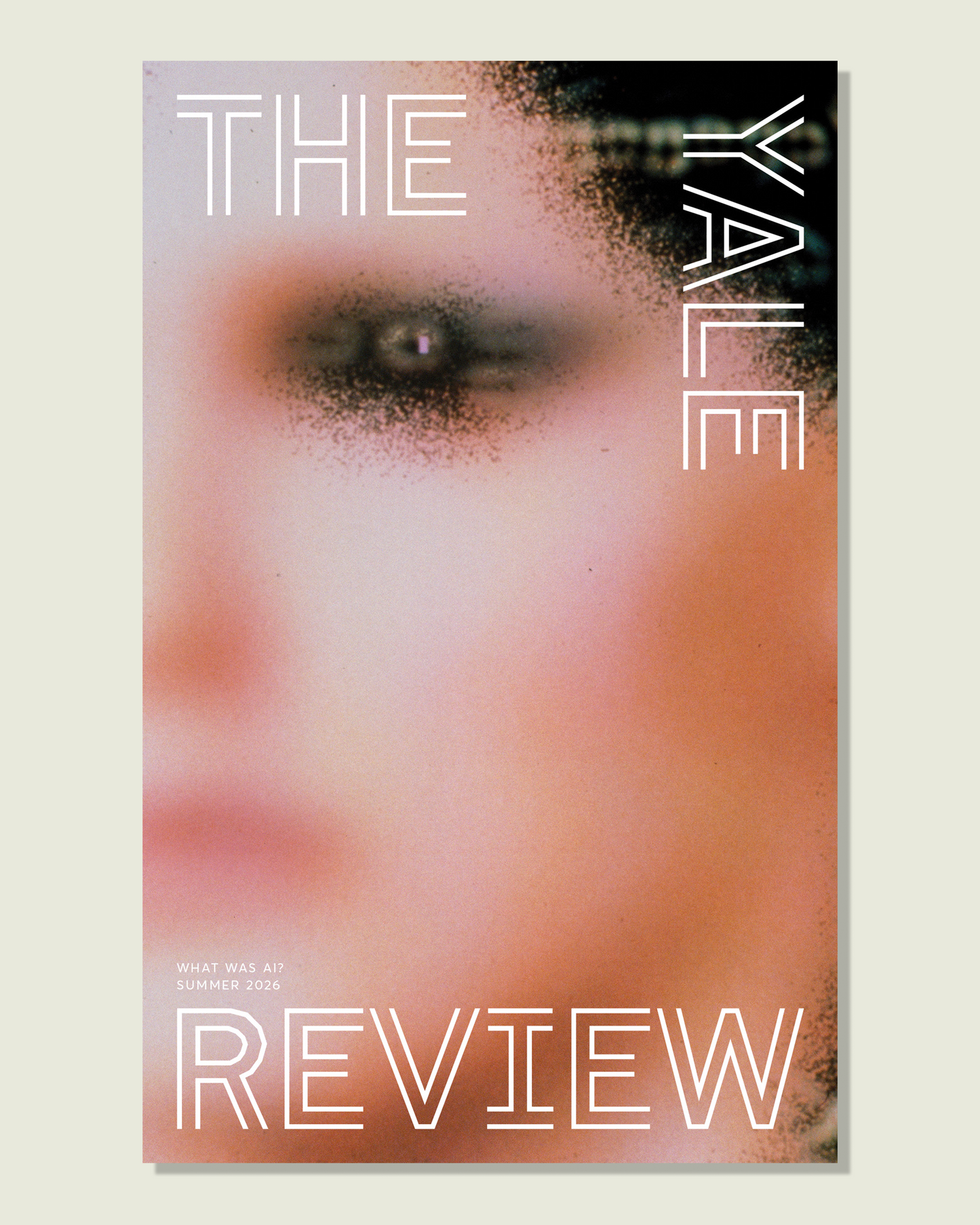
THE YALE REVIEW JOURNAL – SUMMER 2026 PREVIEW

The Yale Review Store

THE YALE REVIEW (March 11, 2025): The latest issue features a central folio, “What Was AI?,” exploring artificial intelligence through essays from Lauren Oyler, Christopher Sorrentino, and Melanie Mitchell. The issue also includes new memoirs and essays from Annie Ernaux and Namwali Serpell, alongside a visual portfolio by Vera Molnár.

Jagged Intelligence

The dangerous unknowns at the heart of LLMs by Melanie Mitchell

Reading the Declaration of Independence as Holy Text

How the American creed emerged—and evolved—over 250 years by Kathryn Lofton

Is the Twenty-First Century a Creative Void?

Critics mourn a bygone cultural era. But nostalgia for the new isn’t new by Audrey Wollen

The Birthday Party No One Wants

Why Americans aren’t celebrating the semiquincentennial by Samuel Moyn

I am back in writing hell. As if each time I start writing, I have to go through the same hell again. Annie Ernaux Unpublished journal entries

Zyzzyva Magazine —– Spring 2026 Preview

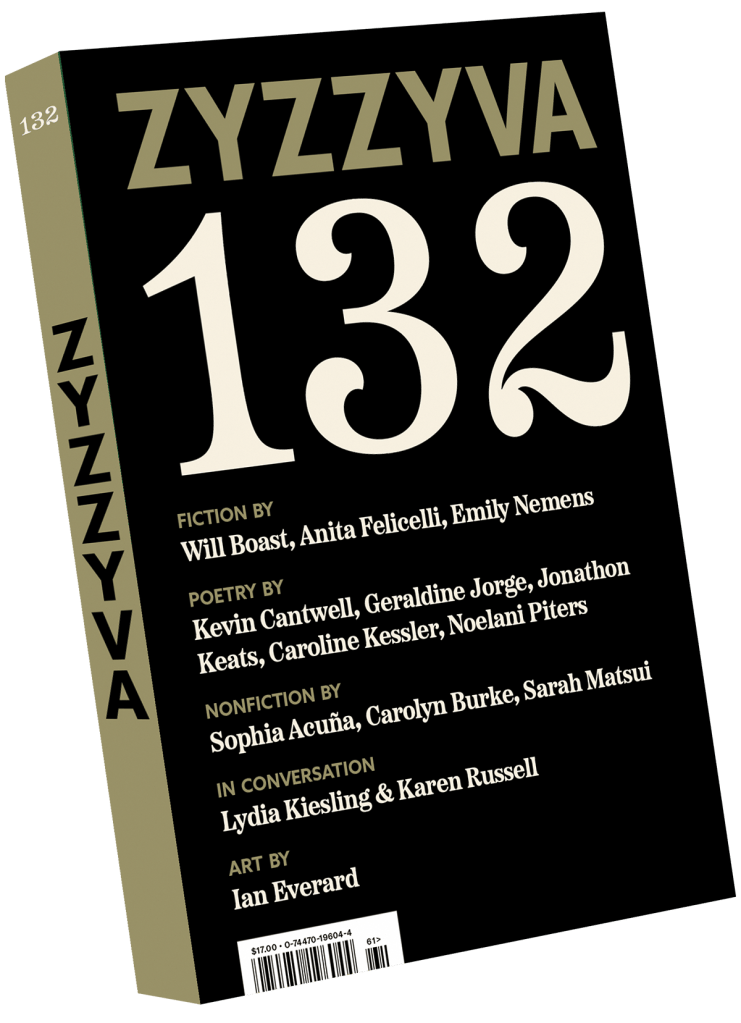
ZYZZYVA Magazine: The latest issue features…

Nonfiction

“Saguaro in the Sea” by Sophia Acuña: on surfing and indigeneity in Southern California, told through collage.

“Care Directive” by Sarah Matsui: a daughter’s attempt to keep her aging father in Hawaii from all sorts of calamity, but having to monitor him from the mainland.

“Triptych: A Biographer’s Sketchbook” by Carolyn Burke: “The Baroness was lively, curious, and still blond at eighty-five. She received me in a flurry of franglais, the mingling of two languages in which we would converse, and put us at ease with pink champagne, her favorite.”

Fiction

“Decoys” by Will Boast: goofing around working at the town supermarket, burning through the days till it all comes to head.

“Lilac Mud” by Anita Felicelli: A Bay Area artist in Amsterdam is approached one night by a man claiming to be a former student, leading to a crisis of identity and purpose.

“Grote geplumaceerde” by Emily Nemens: “Afterward, staring hard at her phone, which was her radio, which was the bearer of bad news, she wondered what mattered at all.”

Poetry

Kevin Cantwell, Geraldine Jorge, Jonathon Keats, Caroline Kessler, and Noelani Piters.

In Conversation

Lydia Kiesling talks to acclaimed author Karen Russell about Russell’s latest novel, The Antidote, and about Russell’s “fascination with foundational myths, the things we choose to know, and the things we choose to ignore or forget.”

Art

Ian Everard

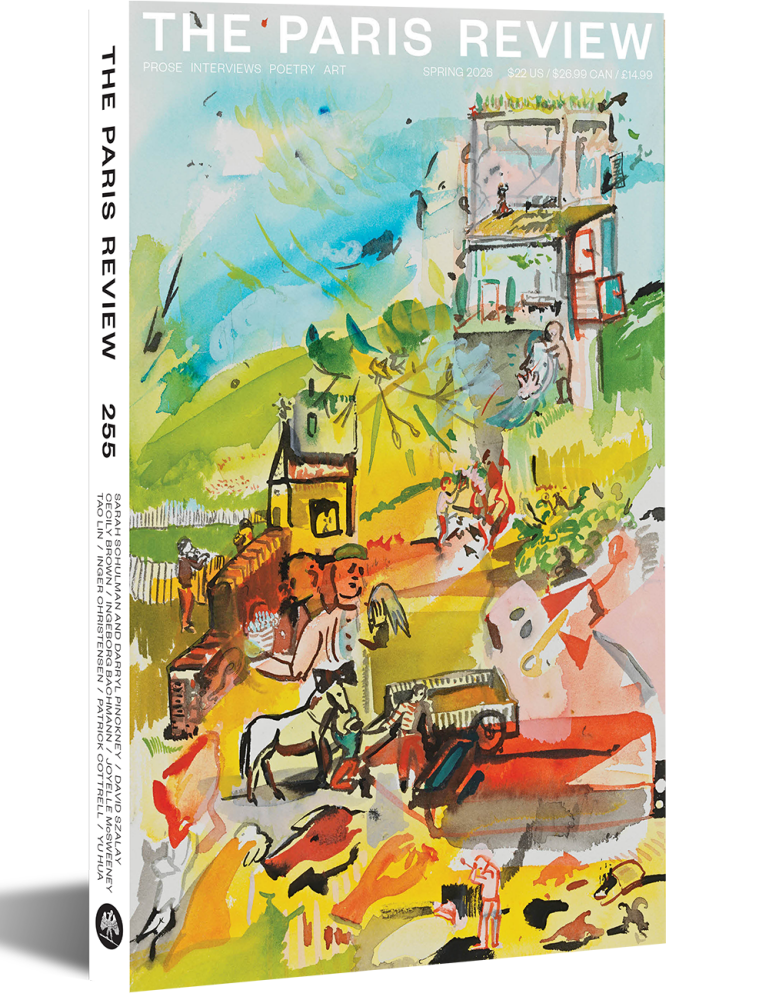
THE PARIS REVIEW-SPRING ’26

THE PARIS REVIEW : The Spring 2026 issue features Interviews, Prose, Poetry and Art….

  • Sarah Schulman on the Art of Nonfiction: “I like to have my say, obviously. And if people would have just let me talk, some of these books wouldn’t have had to be written.”
  • Darryl Pinckney on the Art of Nonfiction:  “There are moments when you run up against a white wall—there’s a white man, white man, white man, white man—and the story somehow has to be uncovered.”
  • Prose by Ingeborg Bachmann, Dan Bevacqua, Patrick Cottrell, Zans Brady Krohn, Tao Lin, David Szalay, and Yu Hua.
  • Poetry by Inger Christensen, Rachel Lapides, Enrique Lihn, Joyelle McSweeney, Nakahara Chuya, and Asiya Wadud.
  • Art by Cecily Brown, Tom Fairs, and Cauleen Smith; cover by Cecily Brown.