
From a New Yorker article by Louis Menand:
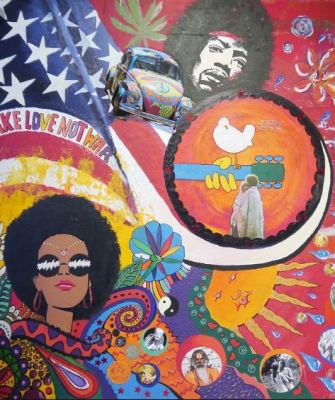 Although the boomers may not have contributed much to the social and cultural changes of the nineteen-sixties, many certainly consumed them, embraced them, and identified with them. Still, the peak year of the boom was 1957, when 4.3 million people were born, and those folks did not go to Woodstock. They were twelve years old. Neither did the rest of the 33.5 million people born between 1957 and 1964. They didn’t start even going to high school until 1971. When the youngest boomer graduated from high school, Ronald Reagan was President and the Vietnam War had been over for seven years.
The boomers get tied to the sixties because they are assumed to have created a culture of liberal permissiveness, and because they were utopians—political idealists, social activists, counterculturalists. In fact, it is almost impossible to name a single person born after 1945 who played any kind of role in the civil-rights movement, Students for a Democratic Society, the New Left, the antiwar movement, or the Black Panthers during the nineteen-sixties. Those movements were all started by older, usually much older, people.
To read more click on the following link: https://www.newyorker.com/culture/cultural-comment/the-misconception-about-baby-boomers-and-the-sixties

 Away from Lake Placid, Lake George and other more crowded regional hubs, are several smaller hamlets that provide access to a handful of exceptionally remote lakeside campgrounds reachable only by pontooned floatplanes. With round-trip charters typically priced at $150 or less per person, some of the most secluded frontiers of

 What does it mean for someone to flourish? Flourishing is more than just being happy—although that’s a part of it. But the idea of flourishing expands beyond happiness to look at a person’s overall well-being, taking into account things like life satisfaction or someone’s sense of purpose. That’s why studying flourishing is an interdisciplinary science drawing on public health, philosophy, psychology, and more.
 After a dramatic intro set to “The Star-Spangled Banner,” the band kicked off with “Street Fighting Man,” a song Keith Richards recently told Rolling Stone “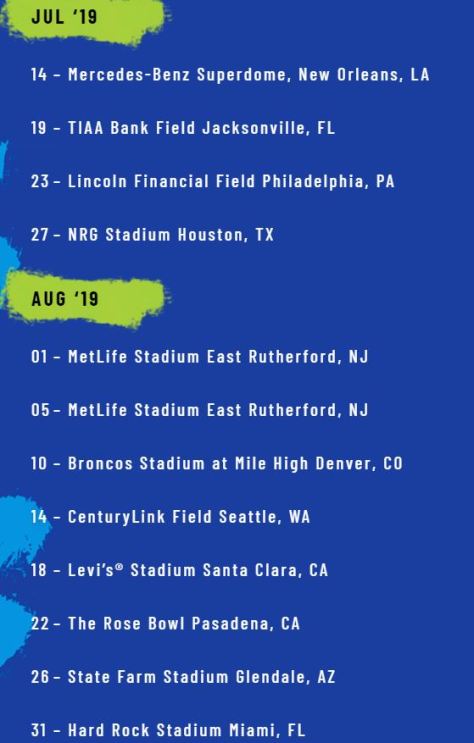






 Dr. Alan Zhang is an orthopedic surgeon at UCSF specializing in sports medicine and minimally invasive arthroscopic surgery of the hip, knee and shoulder. He explores conservative (non-surgical) treatment of the hip and also looks at hip arthroscopy surgery. Series: “Mini Medical School for the Public”





 Intellicurious