Tag Archives: North America

NEW INTERNATIONALIST MAGAZINE – NOV/DEC 2026

NI564 cover

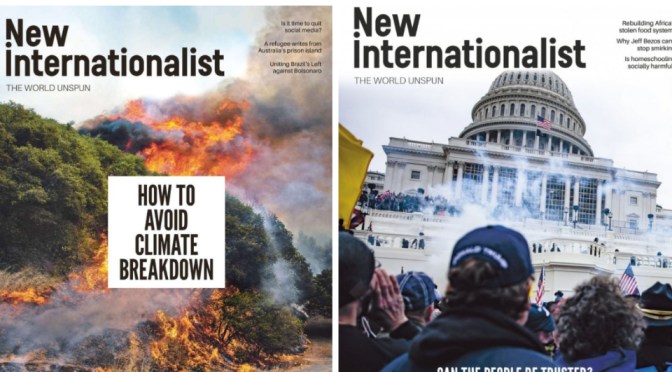
NEW INTERNATIONALIST MAGAZINE: The November-December 2026 issue features ‘Who Wins in Sudan’s War?’….

Who wins in Sudan’s War?

With Sudan still in the midst of conflict and the largest humanitarian and displacement crisis in the world, this magazine shows the complexity of the crisis and the political dynamics behind the headlines. In collaboration with independent Sudanese media platform Ayin Network, the Big Story explores the impact of the war on civilians, from the interruption of education to how displacement is changing the face of the country. We hear from revolutionaries turned fighters, and activists in exile who can’t escape the war, even outside Sudan’s borders. How does the revolutionary dream continue and what does it mean for the goal of civilian rule?

Also in this edition, a report from Syria on attacks against the Alawite minority, a long read exploring how Palestine became a focus of international anti-colonial solidarity, and is the AI apocalypse really on its way?

TAKE BACK THE LAND

The land beneath our feet is what sustains us – from it we can produce food, construct shelter and build livelihoods. But, it’s also a cultural marker and a source of identity. Its control has been a long-favoured tool of colonizers, wealth hoarders and polluters, while its fiercest protectors – often Indigenous peoples – are criminalized, violated and dispossessed. This edition hears from struggles to take back the land in Brazil, Bangladesh, Kenya and North America. We also launch our new series ‘Decolonize how?’ which will explore what people are doing to dismantle the impacts – and current realities – of British-linked colonialism.


WORLD JOURNALISM: NEW INTERNATIONALIST – NOV ’22

New Internationalist – NOVEMBER-DECEMBER 2022:

TAKE BACK THE LAND

The land beneath our feet is what sustains us – from it we can produce food, construct shelter and build livelihoods. But, it’s also a cultural marker and a source of identity. Its control has been a long-favoured tool of colonizers, wealth hoarders and polluters, while its fiercest protectors – often Indigenous peoples – are criminalized, violated and dispossessed. This edition hears from struggles to take back the land in Brazil, Bangladesh, Kenya and North America. We also launch our new series ‘Decolonize how?’ which will explore what people are doing to dismantle the impacts – and current realities – of British-linked colonialism.
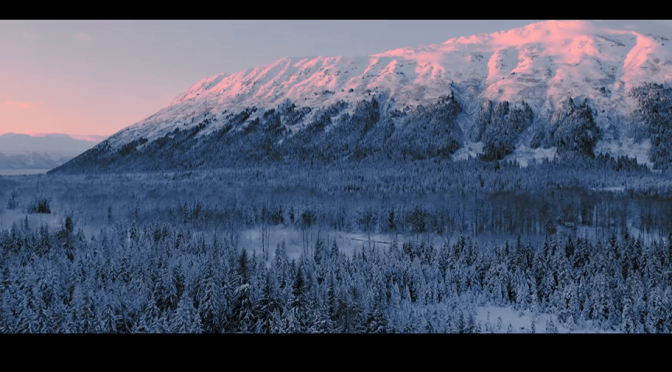
Cinematic Travel Films: ‘Lost In Alaska’ (2022)

A short film by Sam Newton.

Alaska, constituent state of the United States of America. It was admitted to the union as the 49th state on January 3, 1959.

Alaska lies at the extreme northwest of the North American continent, and the Alaska Peninsula is the largest peninsula in the Western Hemisphere. Because the 180th meridian passes through the state’s Aleutian Islands, Alaska’s westernmost portion is in the Eastern Hemisphere. Thus, technically, Alaska is in both hemispheres.

Alaska is bounded by the Beaufort Sea and the Arctic Ocean to the north, Canada’s Yukon territory and British Columbia province to the east, the Gulf of Alaska and the Pacific Ocean to the south, the Bering Strait and the Bering Sea to the west, and the Chukchi Sea to the northwest. The capital is Juneau, which lies in the southeast, in the panhandle region.

Magical Towns: Cholula & Puebla, Southern Mexico

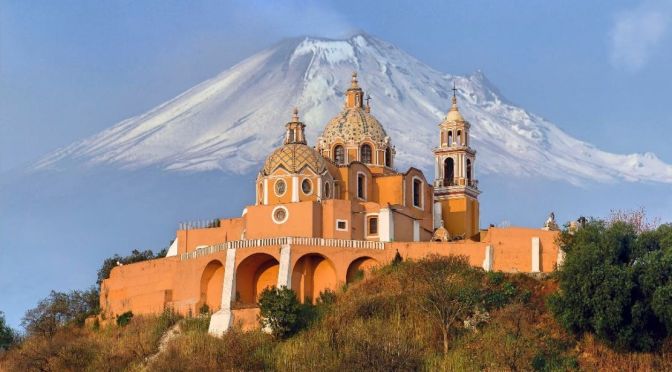
@Eva zu Beck takes you on a journey to Cholula and Puebla, two cities in central Mexico designated as Pueblos Mágicos, or Magical Towns. These are places that offer visitors a very special experience, owing to their typical historic character and in some cases, colonial-era architecture. As well as a spectacular pyramid and a miniature volcano, the towns are a great place to experience the Danza de los Voladores, or Dance of the Flyers.

360° Views: Mexico City – Capital Of Mexico (16K)

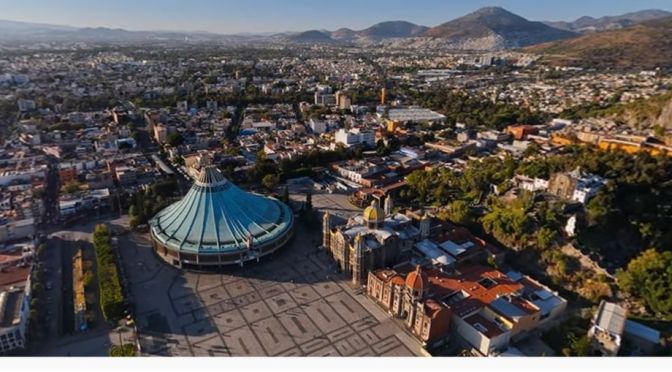
Mexico City is the densely populated, high-altitude capital of Mexico. It’s known for its Templo Mayor (a 13th-century Aztec temple), the baroque Catedral Metropolitana de México of the Spanish conquistadors and the Palacio Nacional, which houses historic murals by Diego Rivera. All of these are situated in and around the Plaza de la Constitución, the massive main square also known as the Zócalo.

Aerial Views: Mexico City – Capital Of Mexico (4K)

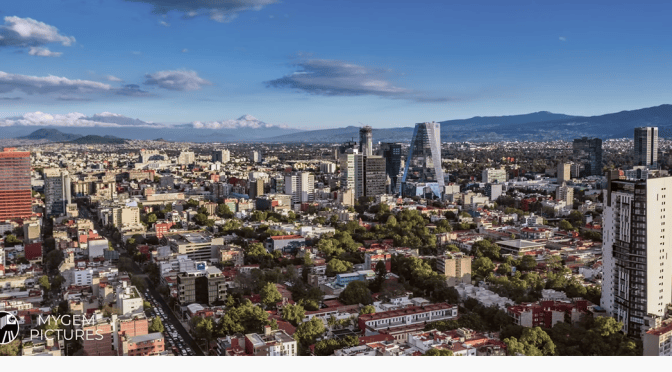
Mexico City is the densely populated, high-altitude capital of Mexico. It’s known for its Templo Mayor (a 13th-century Aztec temple), the baroque Catedral Metropolitana de México of the Spanish conquistadors and the Palacio Nacional, which houses historic murals by Diego Rivera. All of these are situated in and around the Plaza de la Constitución, the massive main square also known as the Zócalo. 

Science: Vikings In North America, Magnets Moving Non-Magnetic Metals

An ancient solar storm helps pinpoint when Vikings lived in the Americas, and using magnets to deftly move non-magnetic metals.

In this episode:

00:53 Pinpointing Viking presence in North America

It’s well-understood that Vikings went to North America around a thousand years ago. However, working out a precise date has proven difficult. Now, thanks to an ancient solar storm, researchers have been able to identify an individual year when Vikings were definitely living on the continent.

Research article: Kuitems et al.

14:57 Research Highlights

How shoulder muscles gave Pterosaurs an aerodynamic edge, and mysterious radio waves coming from near the centre of the Milky Way.

Research Highlight: How ancient reptiles were streamlined for flight

Research Highlight: A mysterious radio signal object is beaming radio waves into the Milky Way

17:45 Magnets move non-magnetic metals

Scientists have created an array of magnets capable of moving non-metallic objects in 6 dimensions. They hope their new approach could one day be used to clean up debris in space.

Research article: Pham et al.

News and Views: Non-magnetic objects induced to move by electromagnets

27:06 What Francis Collin’s retirement means for the US NIH

After 12 years, Francis Collins announced plans to retire from his role as Director of the United States National Institutes of Health. We discuss his legacy and what this means for the world’s biggest public funder of biomedical research.

Editorial: COVID, racism, China: three tests for the next NIH leader

News: Francis Collins to step down at NIH: scientists assess his legacy

Early Fall Views: Québec City, Southeast Canada

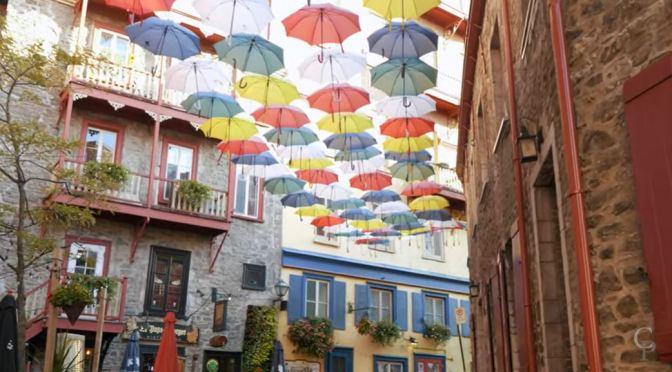
Québec City sits on the Saint Lawrence River in Canada’s mostly French-speaking Québec province. Dating to 1608, it has a fortified colonial core, Vieux-Québec and Place Royale, with stone buildings and narrow streets. This area is the site of the towering Château Frontenac Hotel and imposing Citadelle of Québec. The Petit Champlain district’s cobblestone streets are lined with bistros and boutiques.