In 1638 the king’s jester asked an archbishop, “Who’s fool now?” and was thrown out of court the same day. The fool’s license to mock has changed hands ever since. It has rarely been the fool’s to keep.
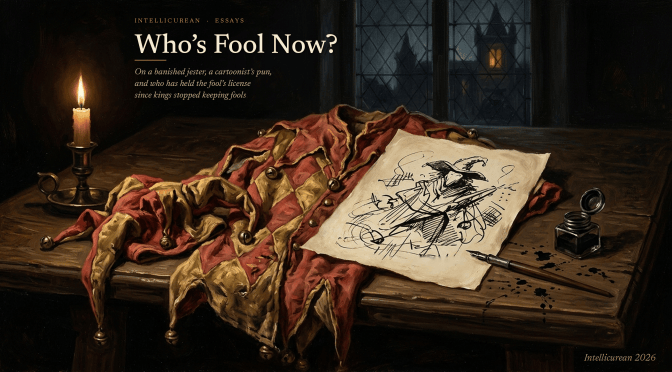
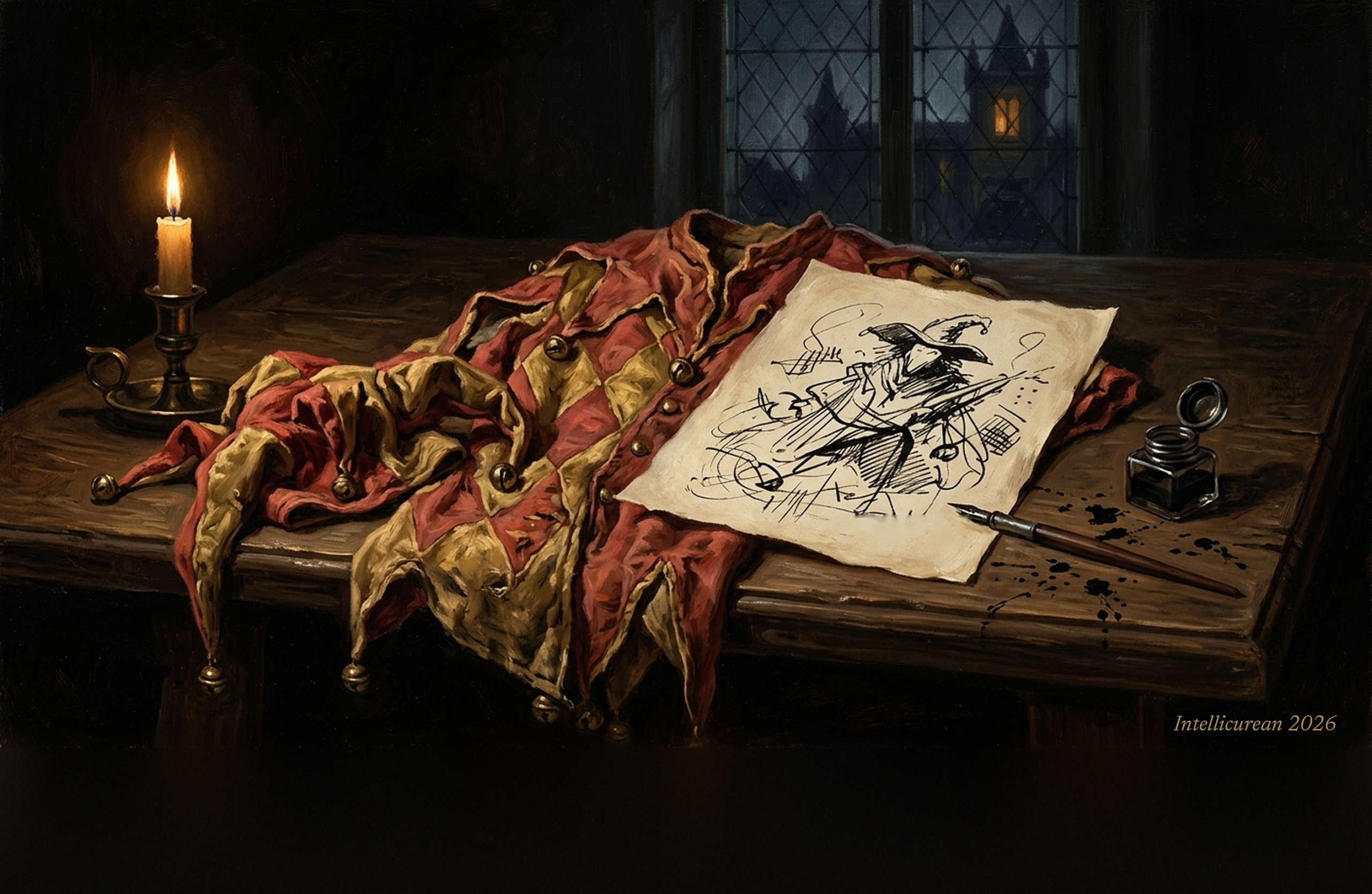
The fool’s coat set down and the pen taken up, made for the essay.
Why we’re pointing you there
Archibald Armstrong had jested for two kings when he mocked Archbishop Laud over the Scottish prayer-book revolt. The Privy Council sentenced him to have his coat pulled over his head and be banished the court. Michael Cummins starts there and asks who has held the fool’s license since kings stopped keeping fools. He follows it through Shakespeare’s “allowed fool,” a caricaturist on a party pension, and a Victor Hugo play banned after a single night. Then a British cabinet minister takes a cartoonist to lunch, and in January 2025 a Pulitzer Prize winner walks out of the Washington Post.
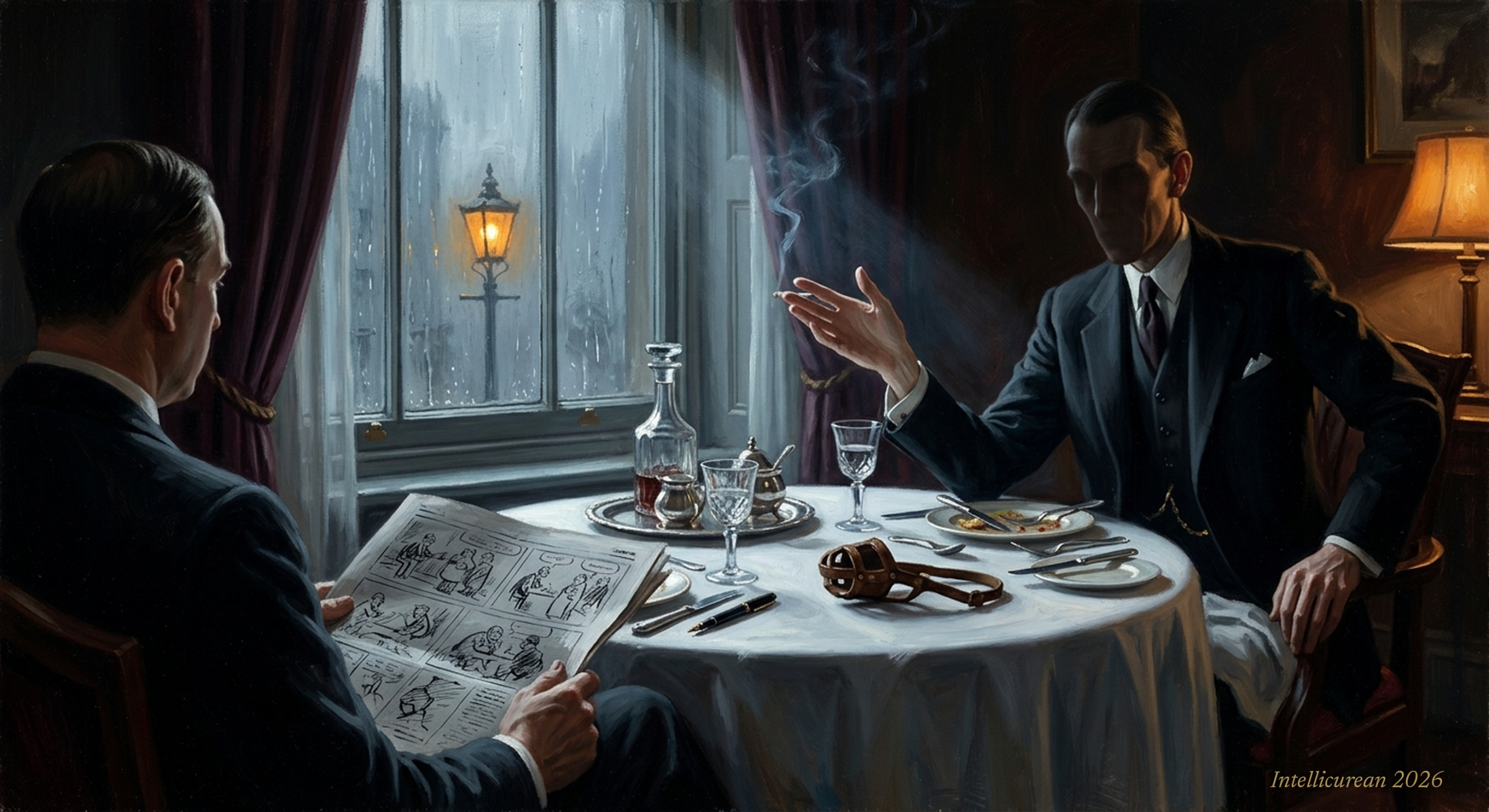
What we liked most is the centerpiece. In 1937 Goebbels complained about David Low’s cartoons, and Lord Halifax carried the complaint home. The newspaper said it couldn’t control Low, so the minister had to ask the cartoonist himself. Low agreed to ease off, and answered with a new character whose name was a pun on what had just happened to him. The essay grants that the cost of losing the license has fallen a long way since Armstrong’s day. It ends by asking whether a paying public is a freer master than a king, or only a larger court.
Prague, February 1948. A photograph of the new Communist leader on a balcony, a fur hat on his head, a comrade at his shoulder. Four years later the comrade is hanged and painted out of the picture. Milan Kundera built the most famous opening in Czech literature on what was left: the hat. A scholar has since checked the print, and the story is not quite what the photograph shows.
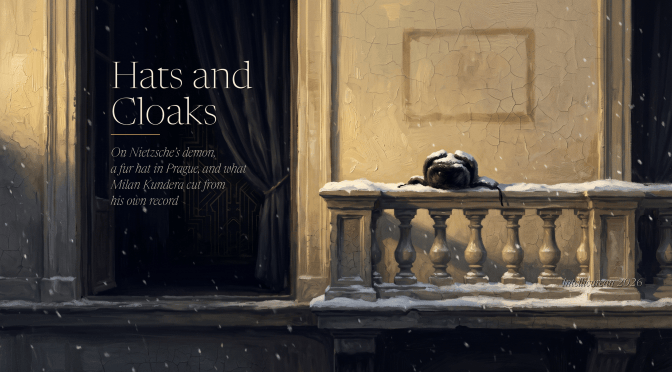
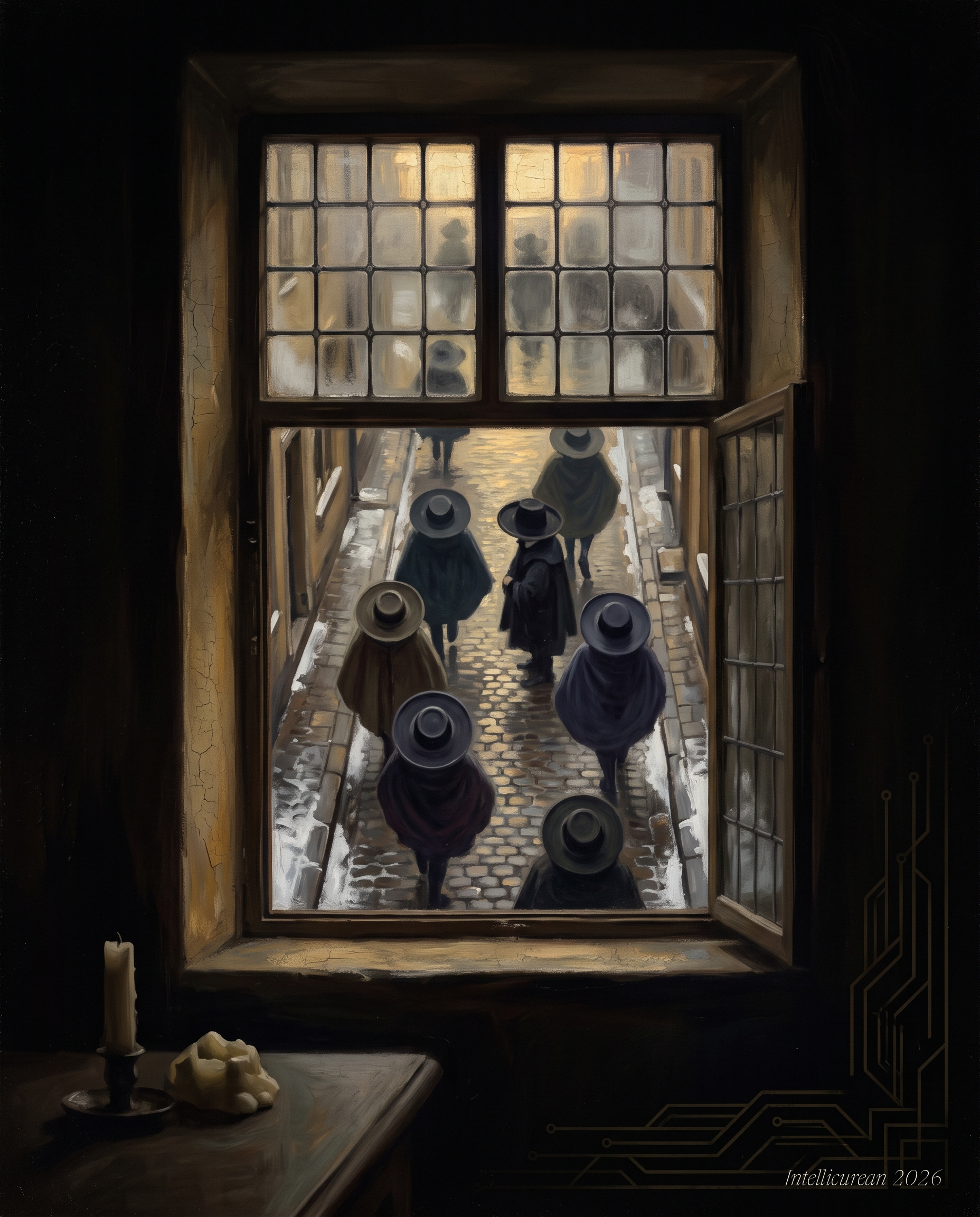
Descartes’s window, painted for the essay: hats and cloaks in the street, and the men supplied by judgment.
Why we’re pointing you there
Everyone quotes Kundera’s line about memory and forgetting. Michael Cummins reads the page it’s on, and finds that Kundera gave the line to a character who is busy trying to erase his own past, and knew exactly what he was doing. From there the essay follows one fur hat through four sets of hands: the state’s, the novelist’s, Kundera’s own on his early work, and Nietzsche’s sister’s on her brother’s notebooks. Descartes supplies the frame, from a window in 1641: we see hats and cloaks in the street, and the men beneath them are something we judge, not something we see.
The hardest section concerns a half-page police report from 1950 that surfaced in 2008 with Kundera’s name on it. The essay lays out what the document says, what is contested, who the witnesses are related to, and decides nothing, which is the only honest thing to do with it. It makes exactly one guess about Kundera, labels it as a guess, and gives its grade. Read it for the ending, where the record does something the novel never mentions.