
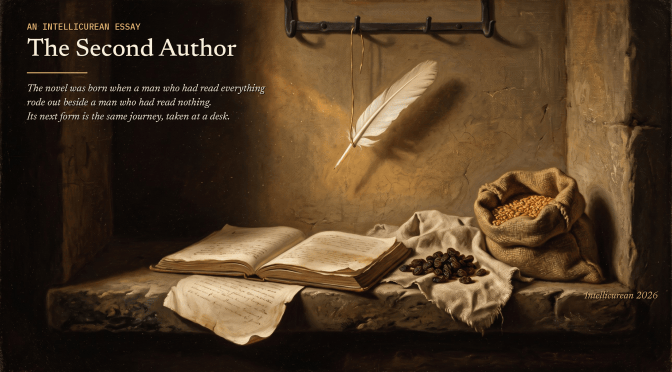

The first modern novel announces, a few dozen pages in, that it was not written by the man whose name is on it. Cervantes gave it a second author, a translator paid in raisins, and a source he told his readers not to trust. The pen has arrived in fact, and it writes in every language at once.
Why we’re pointing you there
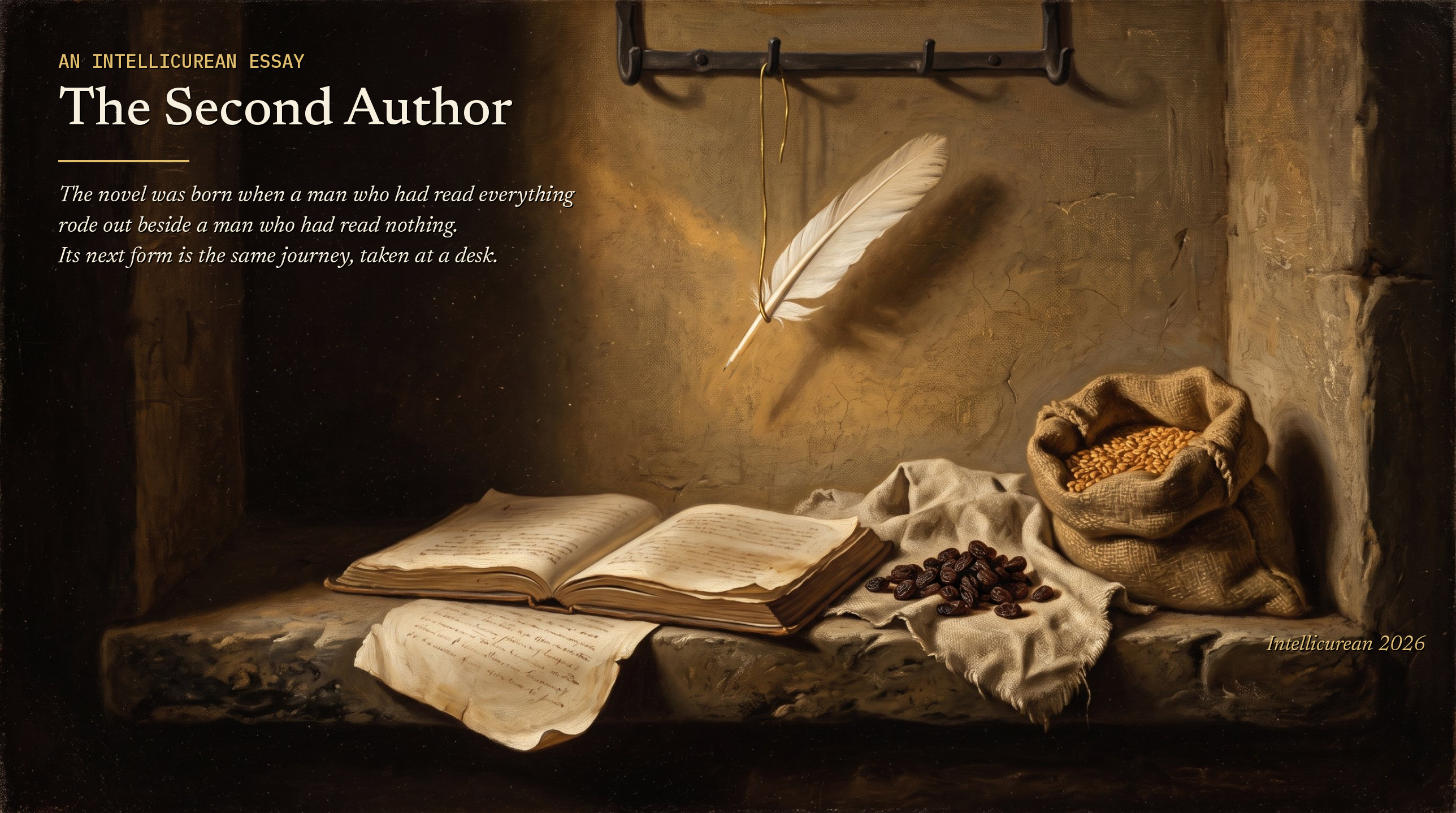
The essay starts where the first modern novel stops: mid-sword-stroke, at the end of chapter eight of Don Quixote, because the author has run out of manuscript. In the next chapter the narrator buys the rest from a boy in the Toledo market, hires a Morisco to translate it for two arrobas of raisins and two bushels of wheat, and calls himself the book’s “second author.” Michael Cummins takes that machinery as the form’s founding fact. The novel was always written by more than one hand, about a man made of books riding beside a man who had read nothing, and working with a generative model is that same meeting, now happening at the desk. The model is Quixote. The novelist is Sancho.
The objections are given at full strength: the novel’s need for solitude, the measured sameness of AI-assisted writing, the pirated library behind the machines (the essay names its own conflict here: it was drafted with Claude, whose maker was the defendant), and a law that requires a human author. Each is answered, and one is conceded as unsolved. Then the essay goes to Cervantes’s last page, where the historian hangs up his pen and lets the pen claim the book, and finds the line the form has always drawn: not between human writing and machine writing, but between a text someone answers for and a text no one does. The question left open is who takes the pen down.
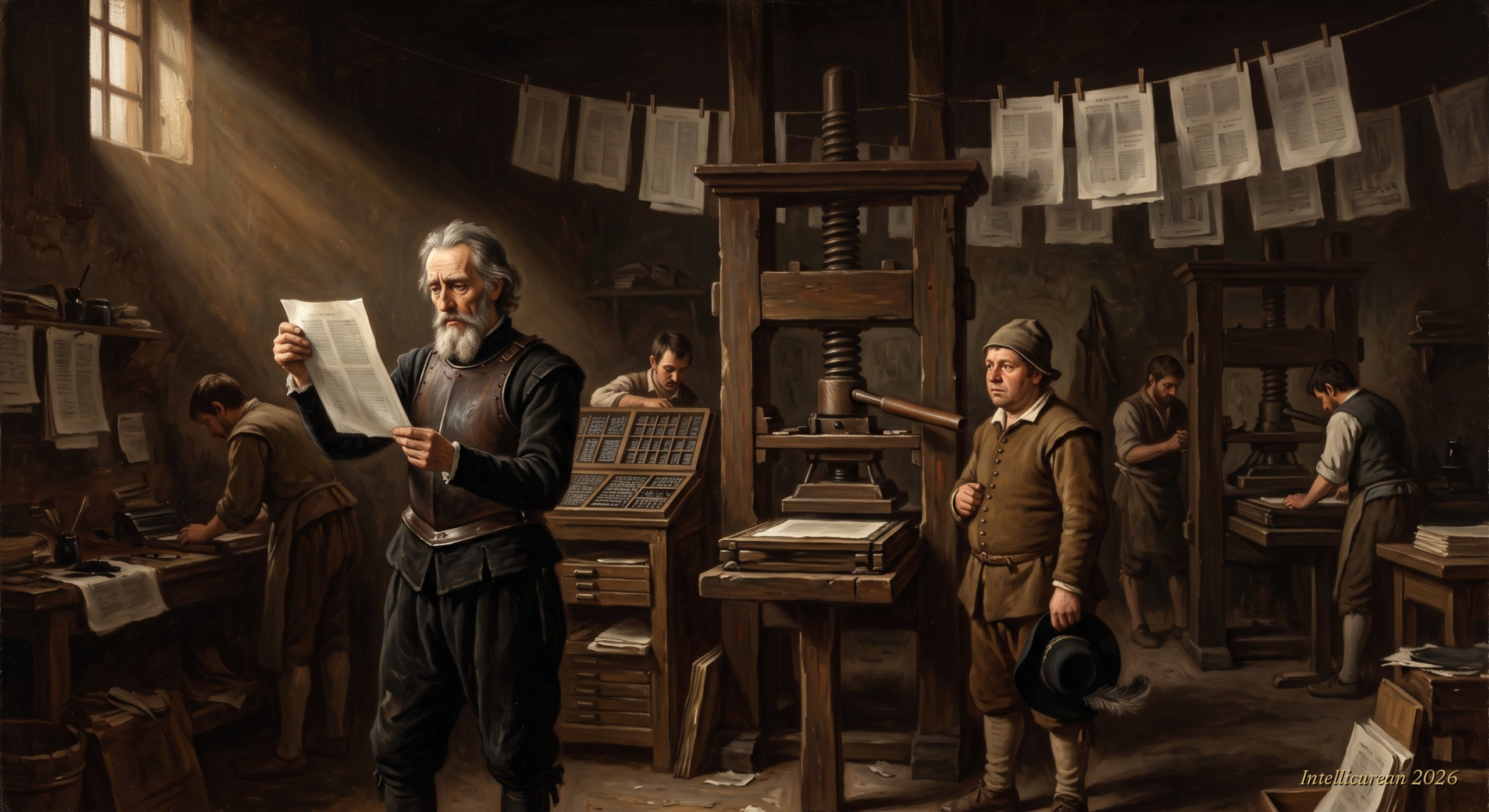
The Second Author continues on Wednesdays: on the library’s debt, on interiority with two voices in the room, on sameness, on what prizes and detectors can know, on novels about their own making, and on how a reader can tell where the choosing was done.
Read the full essay at Intellicurean →
Essays & Reviews for the Intellectually Curious

