Category Archives: Magazines

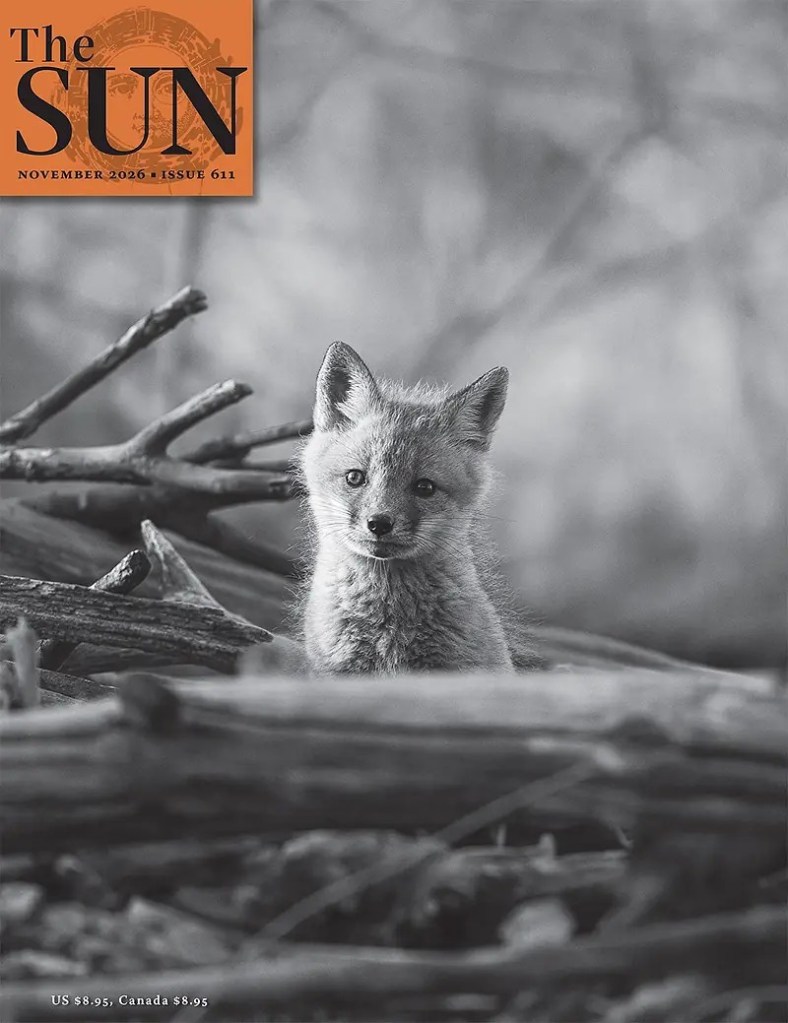
THE SUN LITERARY MAGAZINE – NOVEMBER 2026

THE SUN LITERARY MAGAZINE: The latest issue features an interview with Jason Baldes on restoring the North American buffalo as a keystone species, Laura Maylene Walter’s fiction piece “Rare Species,” Charles Hood’s essay examining the historical nuances of General Custer’s death, Amy Butcher’s memoir on personal boundary issues titled “Red Light, Green Light,” and a collection of reader-submitted reflections centered on the concept of “Too Much”.

The Healers – Jason Baldes on Restoring the North American Buffalo

Returning the buffalo to its ecological role as a keystone species, bringing back plant and animal biodiversity, is in itself healing. We take care of the buffalo, the buffalo takes care of the land, and both take care of us. By Leath Tonino

Aage eighteen, Jason Baldes, a member of the Eastern Shoshone Tribe, traveled with his father, a US Fish and Wildlife Service biologist, from the Wind River Indian Reservation in Wyoming to the Serengeti Plain of East Africa. In addition to lions and zebras and hyenas, Baldes witnessed the migration of 1.5 million wildebeests—one of the planet’s last remaining examples of a huge population of terrestrial mammals roaming freely over the land. “That was the light bulb moment for me,” he says today, reflecting on his decades of effort as an ecologist and activist. Watching the beautiful and awe-inspiring spectacle, he understood that the mega herd represented a mere fraction of the number of bison—or buffalo, as Baldes prefers to call them—that would have been visible in North America a few short centuries ago, when they numbered in the tens of millions and inhabited the majority of the continent.

The Many Deaths of George Armstrong Custer

In popular tradition General Custer was the last to die, though there is no way to know the final sequence of events. He reportedly had been shot twice: once in the left temple and once just below the heart. ByCharles Hood

The first time US Army general George Armstrong Custer died was on Sunday, June 25, 1876, a centennial year in Anglo-European America. He died in the late afternoon along with 267 other soldiers, civilians, and Native American scouts in the Little Bighorn Valley of Montana. These deaths took place during what are now called the “Indian Wars,” although for most of American history it’s hard to think of a time when there wasn’t an Indian war.

The Seventh Cavalry, which Custer led, had split into multiple columns, and all came under attack, though only Custer’s portion—made up of five out of eleven total companies—was wiped out completely. That outcome was more or less inevitable, given that Custer had misjudged the size of the coalition of Lakota, Dakota, Sioux, and Northern Cheyenne his two-hundred-odd men were facing. Or maybe he hadn’t wanted to admit to himself that he was up against a combined force of at least a thousand, and perhaps as many as three or even five thousand, depending on which source you asked. Once the battle started, there was no way Custer and his men would not all be killed. The only question was whether they would die before or after they had used up all of their water and ammunition.

Rare Species

I walked back to my sister’s room and stood in the doorway and listened to her breathe. Maybe some of those seahorse facts weren’t even true. ByLaura Maylene Walter
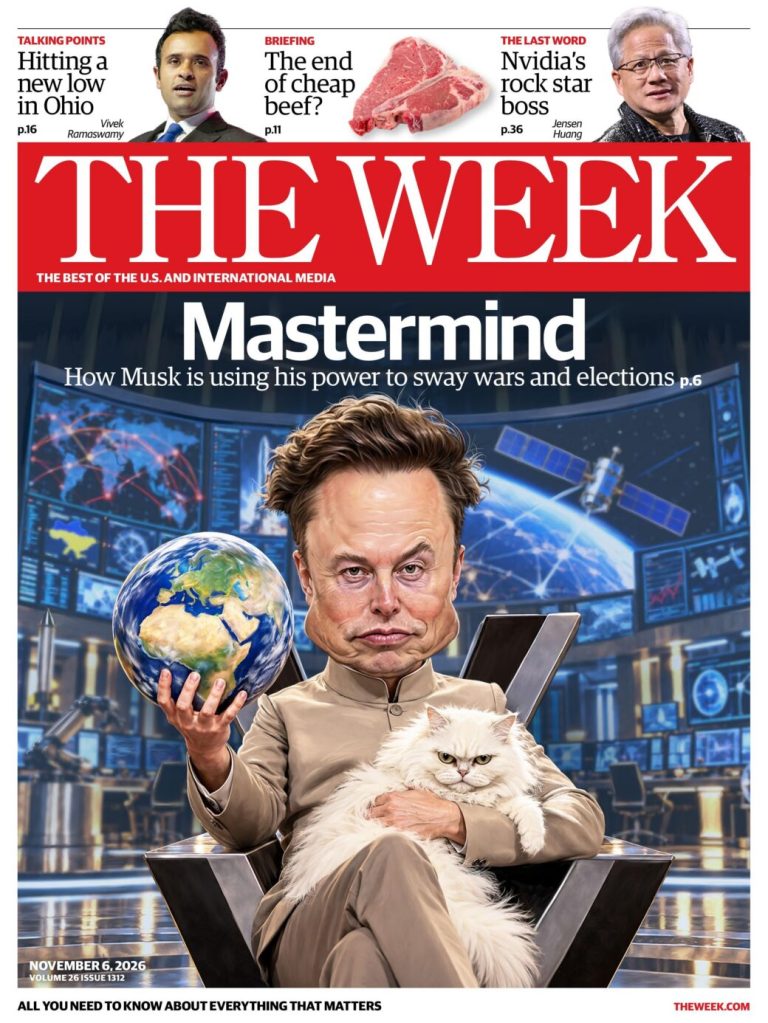
THE WEEK MAGAZINE NOVEMBER 6, 2026

THE WEEK MAGAZINE: The latest issue features ‘MASTERMIND’ – How Musk is using his power to sway wars and elections….

Musk: Does he have too much power?

Elon Musk is trying to “make himself more powerful than the government,” said Michael A. Cohen in MS.now. The SpaceX founder and world’s wealthiest man announced last week that he was behind the decision to temporarily throttle Ukraine’s access to a crucial battlefield technology, claiming Kyiv had violated the “terms of service” of his commercial Starlink satellite network by using it for offensive operations against Russia. Kyiv said that explanation didn’t make sense, because the slowdown hit Starlink’s Pentagon-controlled military equivalent Starshield, which Ukraine uses to guide attack drones and defensive drone interceptors. Most likely, Musk was “working in concert” with President Trump, trying to pressure Ukrainian President Volodymyr Zelensky into accepting Russia’s terms for ending the war. Either way, it’s outrageous that Musk, “unelected and unaccountable,” should hold such sway over U.S. foreign policy—or domestic policy. The trillionaire has spent over $442 million helping Republicans in next week’s midterms. That’s more than any individual has ever spent on a congressional election cycle and “dwarfs” the $250 million he spent returning Trump to the White House in 2024. If Democrats can overcome Musk’s money and win at least the House next week, they need to find ways to stop this “menace” wielding “such influence in American elections and on American statecraft.”

In The Spotlight

Trumpland is already looking for midterm scapegoats

Some of the president’s closest allies are in the hot seat ahead of an expected electoral drubbing

After winning the streaming wars, has Netflix peaked?

Viewership has slowed, while YouTube attracts eyeballs

Is Viktor Orbán being primed for UN’s top job?

Hungary’s authoritarian former PM would be controversial choice as new secretary general

THE NEW YORK TIMES MAGAZINE – NOV. 1, 2026

Current cover

THE NEW YORK TIMES MAGAZINE: The 11.1.26 Issue features Marcela Valdes on the actor Penélope Cruz; Francesca D’annunzio McKenzie Funk and Kirsten Luce on a small town in Texas and a local deputy who became the face of deportation; Sophie Haigney on dark nutrition; Lisa Lerer on OB-GYNs in Idaho; and more.

How Silicon Valley Stole the Future

A.I. will reshape our world. But does that mean the people who make the technology get to control our imagination, too? By Linda Kinstler

These days, the leading tech companies are not primarily fighting one another for market share or talent or computing power. The bigger battle is over who can claim to know the future.

In August, Meta’s chief executive, Mark Zuckerberg, published a manifesto titled “The Future Is for Everyone,” in which he argued that artificial intelligence will bring about “an abundance of personal agency” and other riches — but only if Meta is in charge. “If our beliefs and principles lead,” he wrote of his company, “then the balance of power will favor individuals and a better future for everyone.” In September, Sam Altman of OpenAI told the United Nations Security Council that A.I. could lead to either a society in which “more people can participate in the future” or one in which humans have lost “control of the future.” And in his recent call for the voluntary slowdown of A.I. development, Dario Amodei of Anthropic claimed it was imperative to stave off the future we are headed toward, if only for an “extra year or two.”

Martin McDonagh Says Art Can Change the World. Just Not as Much as Murder

The writer-director Martin McDonagh has carved out a highly esteemed cinematic career as a chronicler of extreme, and often extremely bloody, behavior carried out on a relatively intimate scale. “The Banshees of Inisherin” (2022), to pick one of his films, was about two friends on a remote Irish island descending into a feud. “Three Billboards Outside Ebbing, Missouri” (2017), to pick another, looked at a mother’s attempt to get justice for her murdered daughter. That those movies, despite their dark setups, are often as vulgarly funny as they are emotionally affecting is evidence of McDonagh’s originality — and his skill too. (McDonagh was an enfant terrible of the British theatrical world before he turned to filmmaking.) The 56-year-old’s films have earned a cumulative 18 Academy Award nominations, and “Six Shooter” (2004) earned him an Oscar for best live-action short. By David Marchese

The Vibe Is Dissatisfaction. The Result Is Endless Political Deadlock.

From France to Brazil, voters are railing against the status quo, even as the politics of disenchantment make lasting change nearly impossible. By David Wallace-Wells

She Was Racked With Anxiety and Crushed by Insomnia. Finally She Understood Why.

The woman’s symptoms were common, but the cause was not. By Lisa Sanders, M.D.

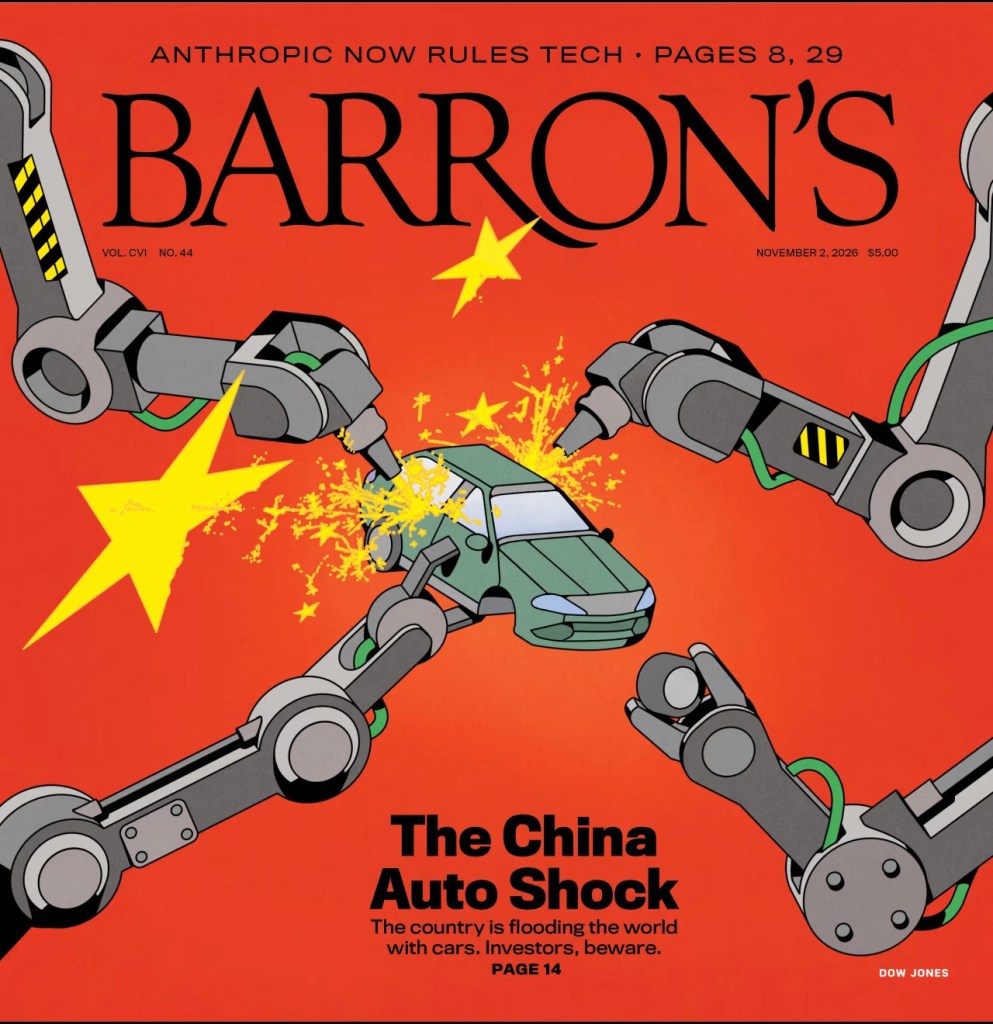
BARRON’S MAGAZINE NOVEMBER 2, 2026

BARRON’S MAGAZINE: The latest issue features ‘THE CHINA AUTO SHOCK’ – The country is flooding the world with cars. Investors, beware.

China Is Flooding the World With EVs—and Drowning Auto Stocks

China is flooding the world with cars, hurting rivals everywhere. Why GM and Lear could thrive anyway.

The Oil Giants Are Raking In Cash. Here’s What They’ll Do With It.

The five global oil majors added $67 billion to their huge cash piles in the third quarter. Don’t expect a spending spree anytime soon.

Half of ‘Big Money’ Managers Say the AI Boom Has Years Left to Run

The optimists cite robust earnings growth; the pessimists see a bubble in danger of bursting. Plus, the pros’ forecasts for interest rates, international markets, the midterm elections, and more.

Want to Be Like Larry Ellison? Then Borrow Like a Billionaire.

It’s an increasingly popular approach with investors. Just don’t get carried away.

California’s Billionaire Wealth Tax Is a Referendum on Big Tech

If passed, Proposition 40 will primarily affect leaders of technology companies, but that doesn’t mean everyone else supports it.

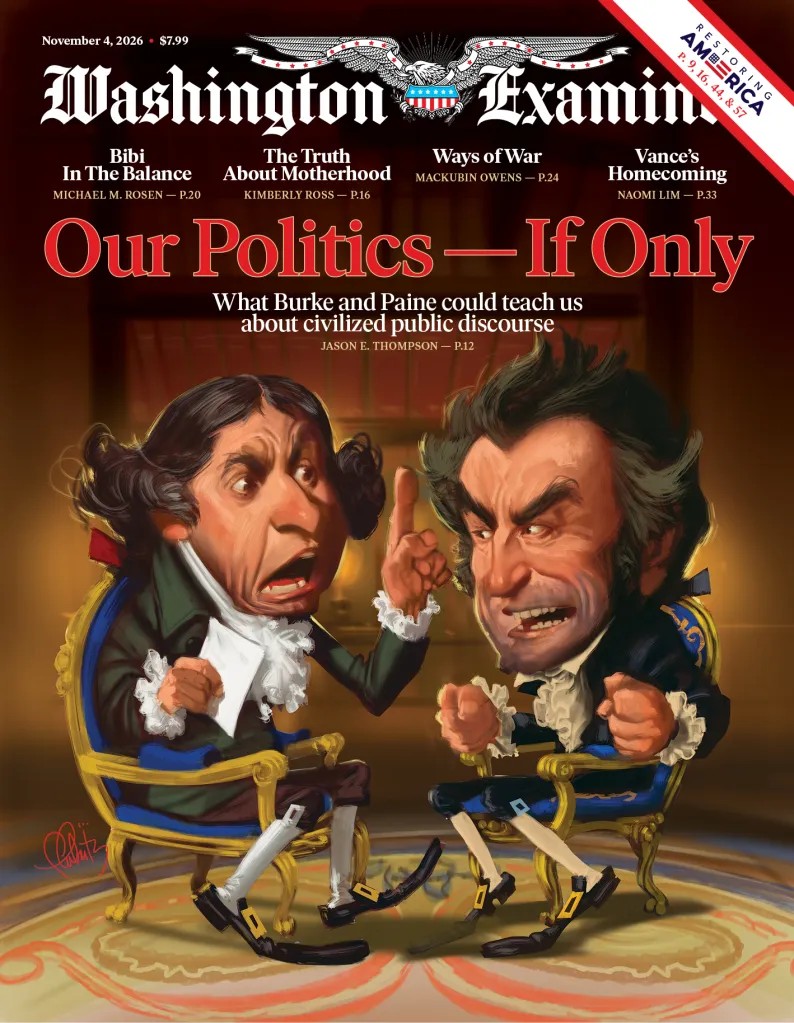
WASHINGTON EXAMINER MAGAZINE – NOV. 4, 2026

WASHINGTON EXAMINER MAGAZINE: The latest issue features ‘IF ONLY’ – What Burke, Paine, and Mason can teach conservatives about debate

What Burke, Paine, and Mason can teach conservatives about debate

​Americans have always argued over politics — the founders argued plenty — but something feels different now. By Jason Thompson

An inconclusive outcome to Israel’s first election since the Oct. 7 invasion

By Michael M. Rosen

Obama is ‘tired of being divided’: Pot, meet kettle

No phrase illustrates the irony of former President Barack Obama’s latest political pitch better than “right message, wrong… By Peter Cordi

It’s a brave new working world with Gen Z leading the charge

“The old straightforward dream of going to college and joining the middle class is going away,”… By Nick Thomas

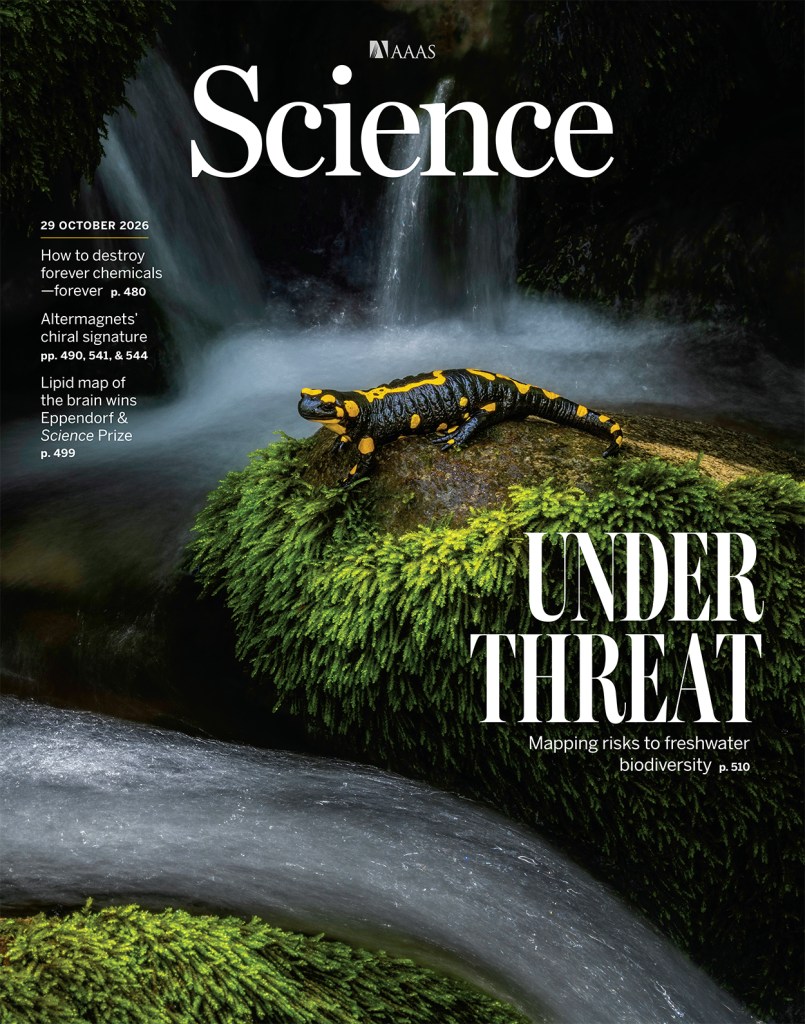
SCIENCE MAGAZINE – OCTOBER 29, 2026

SCIENCE MAGAZINE: The latest issue features ‘UNDER THREAT’ – Mapping risks to freshwater biodiverisity.

Wind turbines kill ‘shocking’ number of bats each year

Deaths can be prevented by adjusting when wind turbines operate

AI is shaking up math. But can its proofs be trusted?

As AI companies churn out math breakthroughs, their proofchecking system comes under scrutiny

Kennedy rejects NIH director’s pick for mental health institute

MAHA-aligned leader in “metabolic psychiatry” is now favored

Could your chatbot tip off a scientific rival? It’s possible, researchers say

AI experts offer tips for keeping sensitive research private

Milestone cancer vaccine success leaves hard questions unanswered

Messenger RNA vaccine from Merck and Moderna slashes risk of melanoma’s return, but why remains unclear

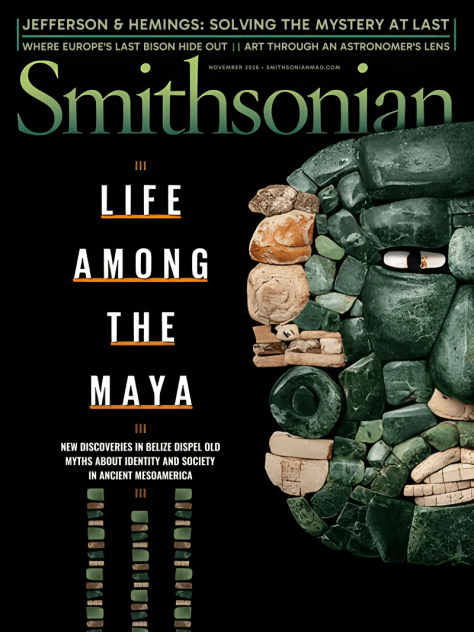
SMITHSONIAN MAGAZINE – NOVEMBER 2026

SMITHSONIAN MAGAZINE: The latest issue features ‘LIFE AMONG THE MAYA’ – New Discoveries in Belize Dispel Old Myths About Identity and Society in Ancient Mesoamerica…

The Mighty Metropolis of the Maya

In the rainforest of Belize, archaeologists are uncovering neighborhoods, local markets and urban farms that shed new light on daily life in the ancient world By Ellen Ruppel Shell | Photographs by Neil Ever Osborne

Untangling an American Mystery

A lock of hair, advances in genetic science and the Smithsonian’s 15-year quest to conclusively resolve an enduring question: Did Thomas Jefferson father Sally Hemings’ children? Dr. Richard Kurin, Ambassador at Large, Smithsonian Institution. Author, History by a Hair Portraits by Joshua Rashaad McFadden

The Skywatchers

Astronomers, astrophysicists and art historians are on a luminous quest to unlock the real-world secrets of classic paintings and literature By Michael Ray Taylor

Into the Woods

After centuries of setbacks, the European bison faces a new challenge: surviving in a primeval forest that isn’t its true home By Marta Zaraska | Photographs by Kasia Strek

THE ECONOMIST MAGAZINE OCTOBER 31, 2026

THE ECONOMIST MAGAZINE: The latest issue features ‘The Americans changing politics for the better’…

The Americans changing politics for the better

Hispanics and Asians have become their country’s most dynamic swing voters

Andy Burnham’s government talks of change, then does nothing

Britain’s unimpressive budget reveals a lack of ambition

Israel’s Jewish and Arab opposition parties should work together

If they want to dislodge Binyamin Netanyahu from office, they need to act fast

What to make of 25 years of Narendra Modi

He is learning that even rapid economic growth won’t placate voters if it fails to produce jobs

Markets are dismayed by Lula’s surprise win—and for good reason

The pressure is on Brazil’s re-elected president to avoid an economic slump

Let China copy American AI

Distillation annoys Anthropic and OpenAI. That is not reason enough to ban it

NEW INTERNATIONALIST MAGAZINE – NOV/DEC 2026

NI564 cover

NEW INTERNATIONALIST MAGAZINE: The November-December 2026 issue features ‘Who Wins in Sudan’s War?’….

Who wins in Sudan’s War?

With Sudan still in the midst of conflict and the largest humanitarian and displacement crisis in the world, this magazine shows the complexity of the crisis and the political dynamics behind the headlines. In collaboration with independent Sudanese media platform Ayin Network, the Big Story explores the impact of the war on civilians, from the interruption of education to how displacement is changing the face of the country. We hear from revolutionaries turned fighters, and activists in exile who can’t escape the war, even outside Sudan’s borders. How does the revolutionary dream continue and what does it mean for the goal of civilian rule?

Also in this edition, a report from Syria on attacks against the Alawite minority, a long read exploring how Palestine became a focus of international anti-colonial solidarity, and is the AI apocalypse really on its way?

TAKE BACK THE LAND

The land beneath our feet is what sustains us – from it we can produce food, construct shelter and build livelihoods. But, it’s also a cultural marker and a source of identity. Its control has been a long-favoured tool of colonizers, wealth hoarders and polluters, while its fiercest protectors – often Indigenous peoples – are criminalized, violated and dispossessed. This edition hears from struggles to take back the land in Brazil, Bangladesh, Kenya and North America. We also launch our new series ‘Decolonize how?’ which will explore what people are doing to dismantle the impacts – and current realities – of British-linked colonialism.