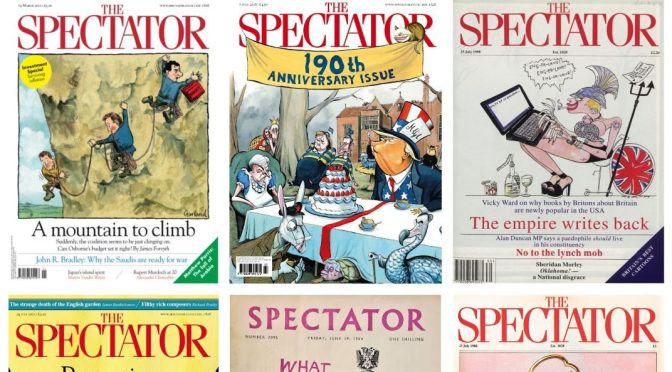
The Burlington Magazine: The latest issue features the upcoming 150th anniversary of Liverpool’s Walker Art Gallery in 2027, honors the career of late Victoria and Albert Museum jewelry curator Richard Edgcumbe, and reviews the monumental realism and modernist influence of nineteenth-century French painter Gustave Courbet.
Liverpool 2027
The Walker Art Gallery in Liverpool will be 150 years old in 2027. It was named after the local brewer Andrew Barclay Walker (1824–93), who donated £20,000 for the creation of the gallery. It opened in September 1877 and welcomed over 300,000 visitors during the next four months. Walker was not a collector of art but appears to have displayed an aesthetic sensibility through the high standards he insisted on for the design of his public houses. read more
Richard Edgcumbe (1951–2026)
A gifted curator who specialised in jewellery, Richard Edgcumbe pursued a successful career at the Victoria and Albert Museum, London, and notably published on gold chasing in the eighteenth century. read more
I, Gustave Courbet
Gustave Courbet (1819–77) was arguably the most important artist in nineteenth-century France. Over almost four decades, he created paintings of monumental achievement and innovation in all genres and changed how art was exhibited and sold – mostly in Paris, the capital of the international art world. He launched an aesthetic of realism that emphasised painterly facture and set the stage for modernist art in the decades that followed. read more
American women’s most listened-to podcast is Call Her Daddy. It is hosted by the glamorous Alex Cooper, whose shtick is grilling female celebrities on their sex lives. For example, she made Gwyneth Paltrow rank all her boyfriends according to their sexual skills. I hope her husband and kids didn’t bother listening to that episode. She recently hosted an actress named Sophia Bush. They discussed Sophia’s multiple divorces while Alex declared breathlessly that if a woman is questioning whether she can do better than her current husband, “the answer is always yes.” Sophia agreed. “The answer is always yes, and this idea that it’s too late or you’re too old, or who are you to want more – that’s patriarchy. That is crazy!” Something around here is crazy, yes, Ms. Bush.
Donald Trump has so dominated the news over the past decade that it is hard to imagine American politics without him. Yet now we are in the last 27 months of his presidency. And as this year ends and the next approaches, the national conversation turns toward the looming election cycle of 2028 and the vital question of who comes next. The Democratic nomination seems destined to be a complicated struggle between various factions and candidates. The outgoing Governor of California, Gavin Newsom, is a figure of ridicule yet strangely unsquashable. He remains the betting favorite. Senator Jon Ossoff, this magazine’s last cover star, is a contender. Alexandria Ocasio-Cortez is a telegenic and increasingly influential force – and Kamala Harris just won’t take no for an answer.
I’ve had hexes put on me by a university professor, had online vigilantes send packages of dogshit to my childhood home in New Jersey and been hounded by the trauma-informed journalists of the New York Times. CNN, Reuters, Agence France-Presse and other estimable sources have credited me with starting a dark…
In the fall of 2017, Virginia was going through its quadrennial tradition of giving the nation an electoral check-in on the president by holding an off-year gubernatorial election. The nation’s mood was, to say the least, heated. Four months earlier, at a baseball field in Alexandria, a radicalized and mentally imbalanced left-wing activist had nearly killed House whip Steve Scalise and three others in a shooting. So it was with some recklessness that Latino Victory Project, in
Super-Beast: The Mysterious Life of Saki By Oliver Soden
In some ways all you really need to know about Hector Hugh Munro (1870–1916) can be gleaned from the short story ‘Sredni Vashtar’, first published in the Westminster Gazette in the summer of 1910. Conradin – Munro’s heroes nearly always have these hifalutin names – is a sickly small boy quartered on a tyrannical guardian called Mrs de Ropp. Denied much in the way of freedom or material comfort, in particular the hot buttered toast he craves, Conradin makes a fetish out of a savage polecat-ferret hidden in the garden shed, worships it as a god and looks to it for vengeance.
Here in the World
Letters: 1944–1959 By Albert Camus & Maria Casarès (Edited by Béatrice Vaillant, translated from French by Sandra Smith & Cory Stockwell)
What an amazing behemoth of a book! I’ve been lugging it around for weeks. Nearly a thousand letters: the intimate correspondence of Albert Camus and Maria Casarès. When they first met in Paris – on D-Day, 1944 – Camus had already published L’Etranger (1942; The Outsider). Born and raised in Algeria, he was in Paris when the Second World War broke out, and later joined the French Resistance. Camus’s wife, Francine Faure, a mathematician and pianist, remained in Algeria. Maria Casarès was originally from Galicia, the daughter of an exiled former prime minister of Spain, Santiago Casares Quiroga. In 1944, Casarès was already known as an actress, having played the titular role in J M Synge’s Deirdre of the Sorrows. She later starred in Les Enfants du paradis (1945), Cocteau’s Orphée (1950) and La Lectrice (1988), among other films and plays.
Talk to the Animals
Minds I’ve Met: From Denying to Embracing the Inner Lives of Animals By Frans de Waal
Some years ago, a prominent animal-behaviour scientist hosted a colleague at his field station devoted to the study of chimpanzees. Talking together on top of the observation tower, the pair glanced at the apes but mostly stayed absorbed in conversation. Then a female chimpanzee named Thai began to scream and hit herself in dramatic fashion. In response to her outburst, other chimpanzees rushed to embrace, hold and kiss her.
Anger at Trump is driving a surge in Black turnout across the South.
The first hint appeared in the 2025 elections, when Democrats won larger-than-expected margins in Virginia and New Jersey. Then, beginning early this year, the turnout numbers in primaries were unmistakable. And now, the story is blaring in neon as early and absentee votes soar.
No clear challengers for Chuck Schumer’s post, barring a midterm catastrophe
If there’s a Democratic majority in the Senate, the New Yorker will almost certainly lead it. If not, buckle up.
What Hakeem Jeffries’ Albany years reveal about how he’d lead the House
The moderate Democrat developed a signature style in the New York capital that will be put to the test next year if his party wins the House.
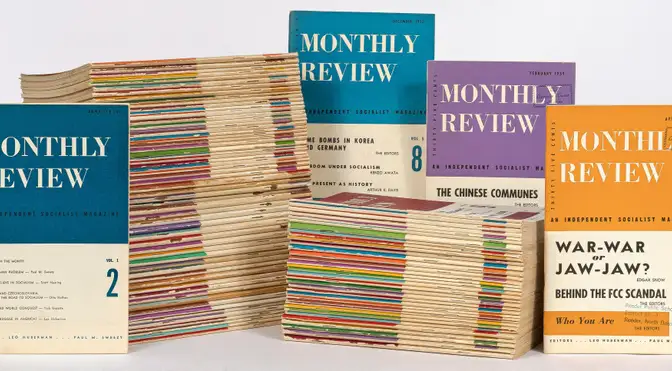
MONTHLY REVIEW MAGAZINE: The latest issue features the United States as the world’s chief enemy of sovereign elections.
Citing Dov Levin’s research, it counts 128 U.S. interventions in foreign elections from 1946 to 2014, rising after the Cold War, increasingly overt, and successful about 60 percent of the time before 2000. Methods include funding right-wing campaigns, dirty tricks, lawfare, social-media bots, aid threats, and CIA surrogates posing as “democracy assistance” groups. Recent examples include Venezuela, ending in Maduro’s abduction; $20 billion tied to electing Milei’s allies in Argentina; and Honduras, where Trump declared Asfura the winner. Leaked “Hondurasgate” tapes exposed regional manipulation schemes.
Nietzsche’s French Legacy
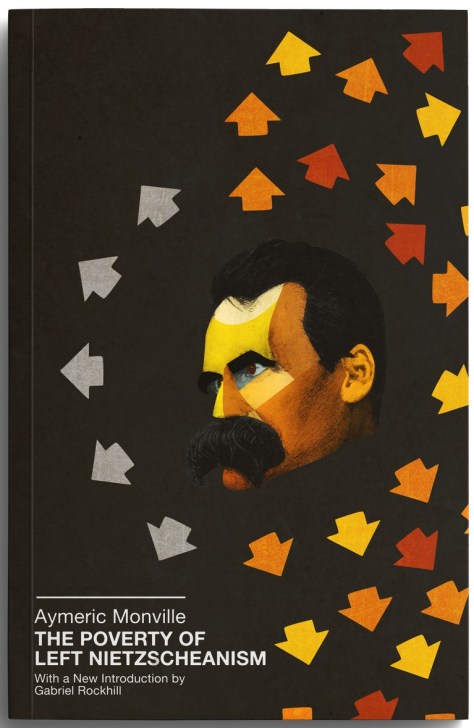
The Poverty of Left Nietzscheanism by Aymeric Monville
MR is pleased to be able to share with readers Gabriel Rockhill’s Introduction to The Poverty of Left Nietzscheanism by Aymeric Monville (Iskra Books, 2026). Rockhill provides readers with a thorough account of the rehabilitation of Nietzsche within French Theory and its consequences within the non-communist left. Fascism, Rockhill argues, “can only be understood and contested through materialist analysis and anticapitalist praxis”—a fitting preamble to a book that acts as “an insightful indictment of the dominant capitalist ideologies while clearly articulating the political path forward.”
Corruption is always an issue, but this year will it finally catapult from a topic of chronic bellyaching to an actual mechanism for changing votes? By Ruth Marcus
How a culture of dehumanization and denial keeps ICE and Border Patrol personnel “at war with an enemy that does not fight back.” By Francisco Cantú
Did the World Just Gain Hundreds of Millions of Alzheimer’s Patients?
A new definition of Alzheimer’s includes people without symptoms. Experts are fiercely divided over whether that makes sense—and whether the new drugs really help. By Manvir Singh
Roy Lichtenstein’s Witty Critiques of Masculinity
The artist’s best work, in a new retrospective at the Whitney Museum, directs his campy humor at gender stereotypes. By Hilton Als
The Healers – Jason Baldes on Restoring the North American Buffalo
Returning the buffalo to its ecological role as a keystone species, bringing back plant and animal biodiversity, is in itself healing. We take care of the buffalo, the buffalo takes care of the land, and both take care of us. By Leath Tonino
Aage eighteen, Jason Baldes, a member of the Eastern Shoshone Tribe, traveled with his father, a US Fish and Wildlife Service biologist, from the Wind River Indian Reservation in Wyoming to the Serengeti Plain of East Africa. In addition to lions and zebras and hyenas, Baldes witnessed the migration of 1.5 million wildebeests—one of the planet’s last remaining examples of a huge population of terrestrial mammals roaming freely over the land. “That was the light bulb moment for me,” he says today, reflecting on his decades of effort as an ecologist and activist. Watching the beautiful and awe-inspiring spectacle, he understood that the mega herd represented a mere fraction of the number of bison—or buffalo, as Baldes prefers to call them—that would have been visible in North America a few short centuries ago, when they numbered in the tens of millions and inhabited the majority of the continent.
In popular tradition General Custer was the last to die, though there is no way to know the final sequence of events. He reportedly had been shot twice: once in the left temple and once just below the heart. ByCharles Hood
The first time US Army general George Armstrong Custer died was on Sunday, June 25, 1876, a centennial year in Anglo-European America. He died in the late afternoon along with 267 other soldiers, civilians, and Native American scouts in the Little Bighorn Valley of Montana. These deaths took place during what are now called the “Indian Wars,” although for most of American history it’s hard to think of a time when there wasn’t an Indian war.
The Seventh Cavalry, which Custer led, had split into multiple columns, and all came under attack, though only Custer’s portion—made up of five out of eleven total companies—was wiped out completely. That outcome was more or less inevitable, given that Custer had misjudged the size of the coalition of Lakota, Dakota, Sioux, and Northern Cheyenne his two-hundred-odd men were facing. Or maybe he hadn’t wanted to admit to himself that he was up against a combined force of at least a thousand, and perhaps as many as three or even five thousand, depending on which source you asked. Once the battle started, there was no way Custer and his men would not all be killed. The only question was whether they would die before or after they had used up all of their water and ammunition.
I walked back to my sister’s room and stood in the doorway and listened to her breathe. Maybe some of those seahorse facts weren’t even true. ByLaura Maylene Walter
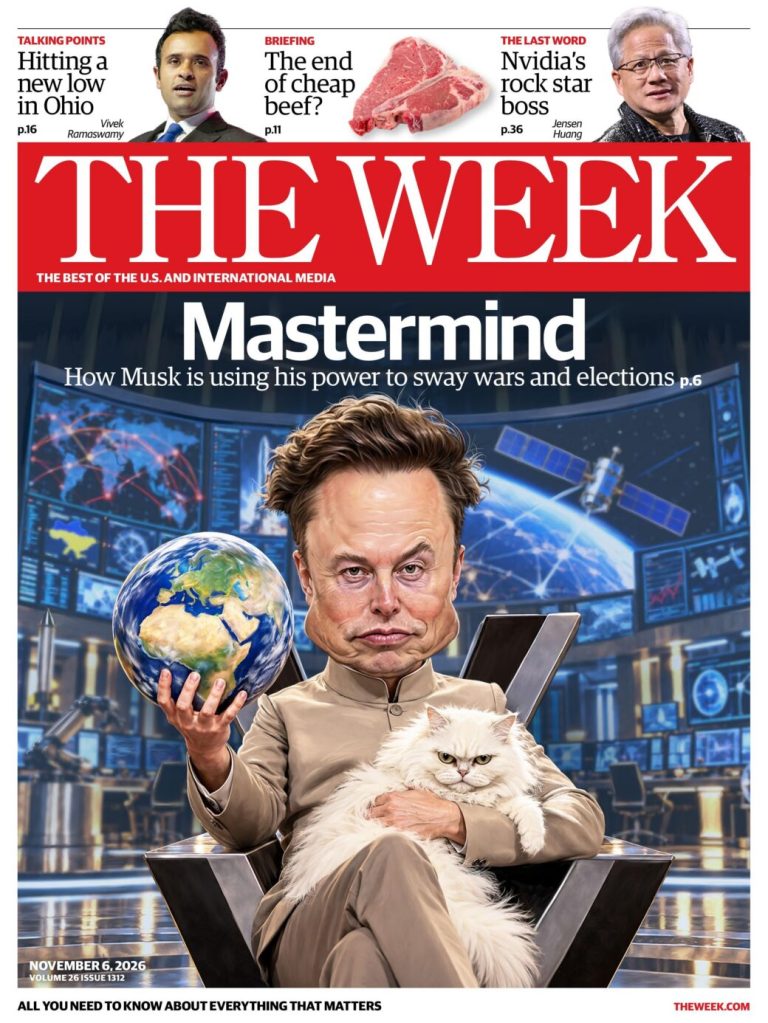
Elon Musk is trying to “make himself more powerful than the government,” said Michael A. Cohen in MS.now. The SpaceX founder and world’s wealthiest man announced last week that he was behind the decision to temporarily throttle Ukraine’s access to a crucial battlefield technology, claiming Kyiv had violated the “terms of service” of his commercial Starlink satellite network by using it for offensive operations against Russia. Kyiv said that explanation didn’t make sense, because the slowdown hit Starlink’s Pentagon-controlled military equivalent Starshield, which Ukraine uses to guide attack drones and defensive drone interceptors. Most likely, Musk was “working in concert” with President Trump, trying to pressure Ukrainian President Volodymyr Zelensky into accepting Russia’s terms for ending the war. Either way, it’s outrageous that Musk, “unelected and unaccountable,” should hold such sway over U.S. foreign policy—or domestic policy. The trillionaire has spent over $442 million helping Republicans in next week’s midterms. That’s more than any individual has ever spent on a congressional election cycle and “dwarfs” the $250 million he spent returning Trump to the White House in 2024. If Democrats can overcome Musk’s money and win at least the House next week, they need to find ways to stop this “menace” wielding “such influence in American elections and on American statecraft.”
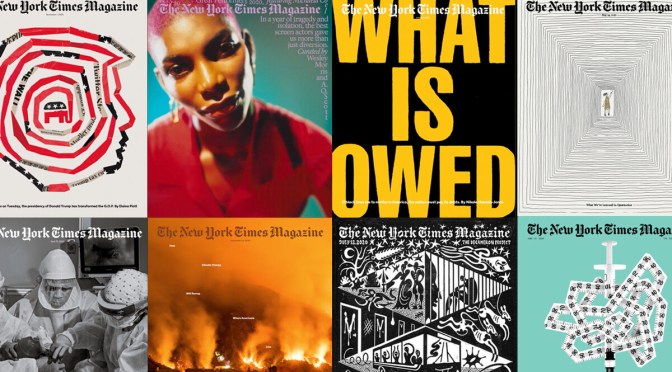
THE NEW YORK TIMES MAGAZINE: The 11.1.26 Issue features Marcela Valdes on the actor Penélope Cruz; Francesca D’annunzio McKenzie Funk and Kirsten Luce on a small town in Texas and a local deputy who became the face of deportation; Sophie Haigney on dark nutrition; Lisa Lerer on OB-GYNs in Idaho; and more.
A.I. will reshape our world. But does that mean the people who make the technology get to control our imagination, too? By Linda Kinstler
These days, the leading tech companies are not primarily fighting one another for market share or talent or computing power. The bigger battle is over who can claim to know the future.
In August, Meta’s chief executive, Mark Zuckerberg, published a manifesto titled “The Future Is for Everyone,” in which he argued that artificial intelligence will bring about “an abundance of personal agency” and other riches — but only if Meta is in charge. “If our beliefs and principles lead,” he wrote of his company, “then the balance of power will favor individuals and a better future for everyone.” In September, Sam Altman of OpenAI told the United Nations Security Council that A.I. could lead to either a society in which “more people can participate in the future” or one in which humans have lost “control of the future.” And in his recent call for the voluntary slowdown of A.I. development, Dario Amodei of Anthropic claimed it was imperative to stave off the future we are headed toward, if only for an “extra year or two.”
The writer-director Martin McDonagh has carved out a highly esteemed cinematic career as a chronicler of extreme, and often extremely bloody, behavior carried out on a relatively intimate scale. “The Banshees of Inisherin” (2022), to pick one of his films, was about two friends on a remote Irish island descending into a feud. “Three Billboards Outside Ebbing, Missouri” (2017), to pick another, looked at a mother’s attempt to get justice for her murdered daughter. That those movies, despite their dark setups, are often as vulgarly funny as they are emotionally affecting is evidence of McDonagh’s originality — and his skill too. (McDonagh was an enfant terrible of the British theatrical world before he turned to filmmaking.) The 56-year-old’s films have earned a cumulative 18 Academy Award nominations, and “Six Shooter” (2004) earned him an Oscar for best live-action short. By David Marchese
From France to Brazil, voters are railing against the status quo, even as the politics of disenchantment make lasting change nearly impossible. By David Wallace-Wells