The movement has often seen its ideas flourish as its organizations withered. Will today’s resurgence follow the same course?
The Ubiquitous Melancholy of Max Richter
The composer’s song “On the Nature of Daylight” has popped up in countless sob fests including “Arrival” and “Hamnet.” With billions of streams, he’s become one of the most popular and successful composers of our time.
An N.B.A. Player Got Hooked on Sports Betting. Soon, He Became the Bet
Jontay Porter got deep into FanDuel, and in debt to the wrong people. The only way out, it seemed, was to gamble on himself.
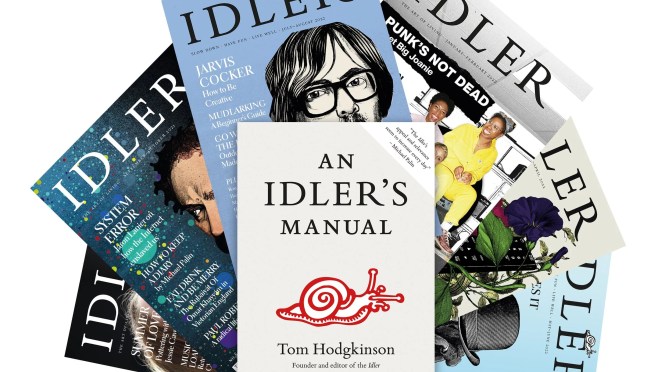
IDLER MAGAZINE: This Christmas special of The Idler (issue 113) mixes the seasonal with the quirky, promising the secrets of churchyard lichens, a tale of Dickens’ favourite outlaw, the oyster thief, John Harris on why he hates whistling, an explanation of why fitness gadgets fail, a new Bullshit Detector column with Murray Lachlan Young, and a first-person story of becoming a chimney sweep, plus Georgia Mann, Rowley Leigh and Arthur Smith, a Yayoi Kusama exhibition, a Cinderella story, spies on screen, walks around old York, lunch in Whitstable, scientists in sheds, a car turned into canvas, allotments, cassoulet, saving with sumo and Christmas ukulele albums.
Don’t rake them away, let them decay. Autumn’s fallen leaves will enrich your garden’s soil – or you can turn them into multi-purpose leaf mould, says Graham Burnett
Look at the trees nearest to where you are right now. Whether in your back garden, local park, woodland or out of a train window, they don’t seem to be doing much, do they? But trees are far from idle, even though much of their activity happens in ways imperceptible to our senses.
Since early spring, tap roots have been constantly pumping underground water and soil nutrients to the highest branches of the leafy canopy. Each of those tens of thousands of individual leaves is a highly efficient solar panel carrying out the magic of photosynthesis.
Join “A Drink with the Idler” as we chat to journalist Sarah O’Connor about the future of work in a world with AI, the perils and the potential.
Sarah O’Connor talks to Idler editor Tom about how AI and robots can change the ways we work, in both sinister and useful ways, and how we can harness new technology and shape its development in a way that makes jobs better, safer and more enjoyable.
Join Sarah and Tom as they discuss the ideas in her book We Are Not Machines, which is inspired by stories from nineteenth-century English cotton mills to twenty-first century Swedish mines, and how we can fight for work which is more respectful of our limits, and more worthy of our minds.
The discussion between Sarah and Tom will be followed by a live Q&A when you will be given the chance to ask Sarah your own questions.
We’ll have a philosophical “Thought for the Week” from Dr Mark Vernon and the event will be hosted by Idler Academy director Victoria Hull.
Welcome to How the Stoics Can Help You Get Happy. Over six lessons, Idler editor Tom will teach you how to apply Stoic wisdom to your outlook on life. Drawing on the ideas of ancient Greek philosophers from Zeno to Socrates and Plato, and touching on themes of politics, love, freedom and death, Tom will show you how the Stoics can help you live a happier life.
By leaning into nativist absolutism, Netanyahu almost doubled the Arab vote, creating a political — and foundational — crisis for Israel.By Roger Cohen
In 1995, Itamar Ben-Gvir appeared on camera brandishing the hood ornament of the Israeli prime minister Yitzhak Rabin’s Cadillac. “We got to his car,” he vowed, “and we’ll get him, too.” Soon after, in one of history’s most successful assassinations, Rabin was killed by a fanatical religious-nationalist Jew, and 27 years later the teenage hoodlum who boasted of his theft became Israel’s minister of national security.
There is perhaps no better representation of Israel’s steady march rightward over the past three decades than the ascent of Ben-Gvir to the high office he still holds. The vandal became responsible for preventing vandalism, the ethnocentric fanatic for stopping sectarian violence. This unhappy outcome, and its predictable consequences, reflects the nationalist and more messianic country that Israel has become as the idea of a two-state peace, the ultimate target of Rabin’s assassination, withered and died.
There used to be an honorable way to try to profit from online infamy: selling nearly worthless memecoins. The machines could take it over. By Willy Staley
I’m not afraid to admit it, right here in the newspaper: It finally happened to me. I saw an A.I. video, and I thought — if that’s the right word — it was real. It showed a guy standing on a street corner somewhere in Europe, with an insane haircut and a houndstooth suit, shadowboxing while a French rap song played in the background. In his misplaced confidence and swagger, he called to mind a protomemetic figure from my youth, Napoleon Dynamite.
This was Jean Phil, someone who — as far as anyone can tell — doesn’t exist. Has never existed. Was conjured from a bunch of NVIDIA chips in a low-slung building outside of Kenosha.
The term captures the self-defeating loop of losing and not being able to stop. It also describes doomscrolling, politics and our society’s default state. By Mitch Therieau
Five experts on how best to limit a rapidly evolving technology. By Emily Bazelon
Oct. 26, 2026
Artificial intelligence is alarming many of its human creators by leaping the guardrails designed to contain it. In the last few months, safety researchers have resigned from OpenAI and Anthropic, warning that their former employers could be courting disaster: A.I. that escapes our control irrevocably. The companies are reportedly gaming out scenarios of a catastrophic cyberattack or other event in the next six to 12 months.
The next generation, the little fellow below included, depends on it. Five potential endgames. By Jack Hough
Voters have spoken, and Congress has flipped blue, to counter a Republican White House. Which side will get its way? Increasingly, neither, and not just because of gridlock. America’s debt will write more of the rules from here.
ResMed, whose devices treat sleep apnea, has dropped on unfounded concerns that weight-loss drugs will replace its treatment. The stock is cheap and worth buying at current prices.
The Washington consensus is that Congress will be gridlocked for the rest of Trump’s presidency. Investors on Wall Street, however, see compromise on the horizon. Healthcare stocks, renewables, and more hang in the balance.
President Donald Trump got one of the rarest things in American politics: a second chance. Voters rendered the verdict that he blew it. By W. James Antle III
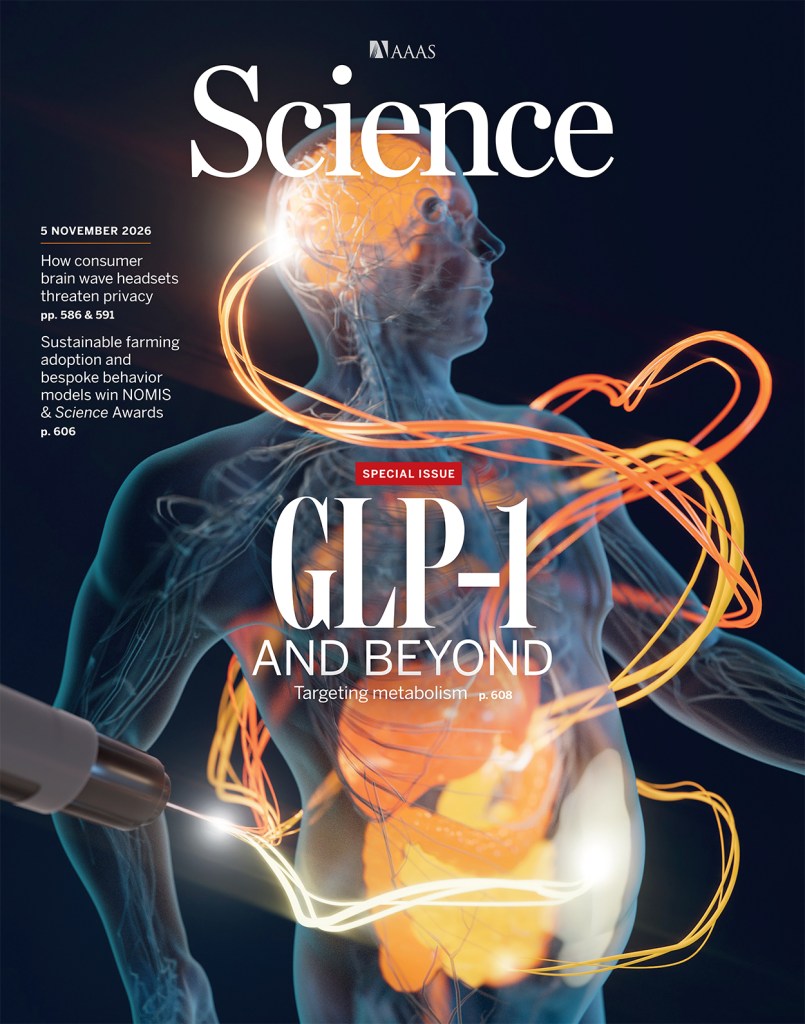
Until recently, people with obesity were generally expected to manage their weight through diet and exercise, and pharmacological interventions were developed for comorbid conditions such as diabetes and cardiovascular disease. Some drugs were available to promote weight loss, but they did not become established therapies owing to intolerable side effects, limited effectiveness, or both. By far, the most reliable intervention to treat obesity was bariatric surgery, but it was reserved for the most severely affected patients because of the risks associated with the surgery itself as well as lifelong side effects.
Use of GLP-1–based therapies for addiction could provide a bridge toward whole-person health care
Glucagon-like peptide-1 receptor agonist (GLP-1RA) medications have transformed the landscape of obesity and diabetes treatment. Evidence is accruing that they also might reduce cravings for alcohol, nicotine, opioids, and stimulants. Most research into the mechanisms by which GLP-1RAs might help to treat substance use disorders has focused on their ability to modulate the dopamine reward system in the brain, which also contributes to suppressing the consumption of highly palatable food. However, emerging understanding about the biology of GLP-1RAs suggests that a neurocentric framework might be too narrow to interpret their effects, which arise from complex interactions between brain processes and other aspects of an individual’s physiology. As such, these medications provide an opportunity to reconsider the effects of drugs and addiction through a whole-person health lens. This framework considers how the brain’s reward pathway interacts with metabolic, inflammatory, hormonal, and cardiovascular processes throughout the body.
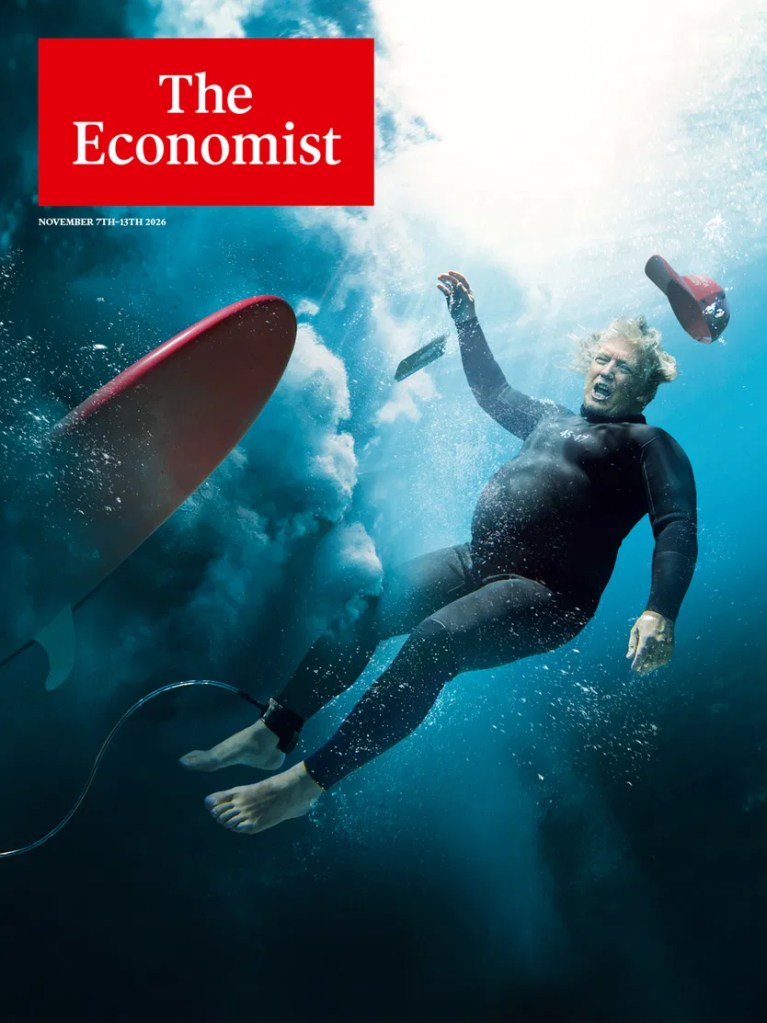
Voters demand a new way of doing things in Washington. Let them have it
SURFERS CALL it the washing machine. When a giant wave throws you off your board and plunges you underwater, you lose all sense of where you are. That is what befell Donald Trump and his party on November 3rd, as they were slammed by tens of millions of American voters. They have still to grasp just how much their country has changed.
Already it is clear this was not a normal midterm swing against a sitting president, but the biggest wave-election since the aftermath of Watergate more than 50 years ago. Democrats won control of both chambers of Congress, flipping seats deep into once-safe red waters, from South Carolina to Texas.
THE NEW STATESMAN: The latest issue features Emily Lawford’s cover story shows how Nigel Farage, by calling mass deportation “impossible” in 2024, drove young online nationalists to Rupert Lowe’s Restore Britain, whose small but growing vote now splits Reform’s and has pulled Farage and the mainstream right toward harder ethnic politics; Gideon Levy argues that Israel’s anti-Netanyahu bloc, which reaches 67 Knesset seats only by counting Arab parties that won a record 19 but that almost no one will govern with, has handed Benjamin Netanyahu a deadlock he can ride as caretaker or turn into a unity government; and Chris Thornton recounts how the five McCartney sisters’ campaign over their brother Robert’s 2005 murder in Belfast carried them to the White House and helped push the IRA to put its weapons beyond use, even though his killers were never convicted.
The theoretical objects would have left a larger imprint on cosmic radiation if they were a source of the invisible force pulling together the galaxies.
I’m writing this as the world wakes up to news of a blue wave of Democrat wins in the US midterms. What they mean for America and the world will be the subject of next week’s issue but this week we are focusing on Israel.
As seasoned Knesset watchers know, the plethora of parties on the ballot and proportional representation rarely produce immediate clear winners and a new government in short order. But as Jonathan Freedland puts it in this week’s cover story, the 2026 election presents a philosophical as well as a political puzzle.
Benjamin Netanyahu may have lost his parliamentary majority, but the opposition bloc needs more than Jewish parties to take control of the Knesset and offer Gadi Eisenkot the premiership. As Jonathan explains, Netanyahu’s loss contains the path to a possible win, while the road to success for Eisenkot means working with Palestinian parties, a red line many Jewish voters and MPs may not be willing to cross.
Spotlight| Connected through chaos As Donald Trump fans the flames of a world on fire with his vengeful foreign policy, can rational actors on the diplomatic stage douse the conflagration, asks Patrick Wintour
Science| The tales one fish can tell Pioneering research into the tambaqui has shown that it is a vital canary in the coalmine to monitor the effects of global heating and oxygen loss in the Amazon, reports Mac Margolis
Feature| A spectrum of opinion on autism Why have the numbers of people diagnosed with the condition ballooned over the past 20 years: is it overdiagnosis or an overly expansive definition? John Harris investigates
Opinion| Serbia deserves to succeed But the victorious Student List’s ability to consolidate democracy relies on a future in Europe and Brussels must court these new leaders, argues Srđjan Cvijić
Culture| Still on the line Jimmy Webb, who wrote the ever poignant Wichita Lineman for Glen Campbell as well other classic American hits, tells Dave Simpson about a new album and why, at 80, he still loves playing live
News, Views and Reviews For The Intellectually Curious