Tracy Daugherty’s biography of Cormac McCarthy is a landmark publication. Putting together the life of a writer who not only shunned publicity but actively worked to keep fans, journalists, the media, and academics off his trail requires the powers of both a skilled biographer and a nosy private detective. In that latter role, some of what Daugherty has uncovered is unsavory, though with the recent revelation of McCarthy’s relationship with Augusta Britt, who was sixteen when they began an affair, readers may be prepared for some of the shocks. One of Daugherty’s leitmotifs is McCarthy the “bad boy” and “outlaw,” and though such appellations risk cliché, the story he tells is of a man who, at least in the first half of his life, preferred the company of moonshiners, gamblers, hard drinkers, and petty criminals like his old Knoxville pal John Sheddan, who seems to have been the Falstaff to McCarthy’s Prince Hal.
There are two books before me, which, if I mistake not, will mark an epoch,” wrote W. E. B. Du Bois in The Crisis magazine in 1924. One was a novel of middle-class African-American life by Jessie Fauset called There Is Confusion. The other was a collection of stories, songs, poems, and character sketches called…
During the last quarter of the twentieth century, few writers were more admired by peers and critics than Andre Dubus. But because Dubus’s territory was the relatively confined space of the short story and novella, he never enjoyed great commercial success or recognition. Dubus was destined to be a writer’s writer—what Joshua Bodwell calls a…
In that we’ve been married for sixteen years, you really don’t have to try so hard to make your feelings known,” Janet said at the wheel. “I’m well aware you don’t want to do this.”
“I THINK I’ve been pretty stoic about it,” Rick said, eyes to the thick woods he’d be reflexively scanning for deer. Ever since they’d planted an ambitious garden behind their upstate New York summerhouse, the creatures that had once seemed so exquisite had become evil incarnate.
“Stoic? More like long-suffering,” Janet said. “You’ve hardly said a word the whole way here. But there’s no point in having joined Saint Peter’s if we don’t put our beliefs into practice. Charity doesn’t only mean parting with twenty bucks to get someone at the door to go away. It means sometimes doing what’s right when you don’t feel like it.”
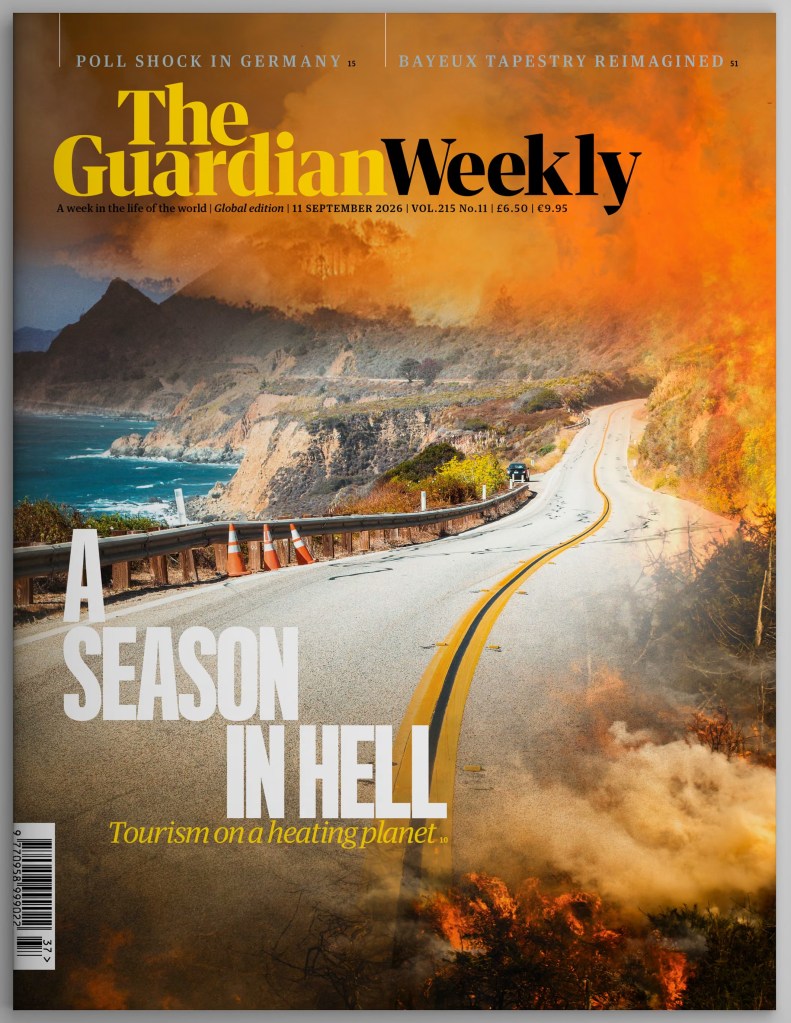
California’s Big Sur coastline is often called a slice of heaven. But this year – beset by wildfires, road closures and disruptions to tourist amenities – it has endured a long summer of hell. Now questions are being asked about how many visitors it can sustain in the face of the climate crisis.
For our big story this week, Andrew Gumbel visits Big Sur, where the tourist industry accounts for about 90% of the local economy, to hear why the community fears its ethos is under threat.
The UN has warned that the El Niño climate phenomenon is “supersizing before our eyes”. Environment editor Damien Carrington reports on the latest forecasts, which predict the event is near certain to shatter temperature records.
Then, the mayors of Paris, Milan and Phoenix write about how their cities are learning from each other on responding to the heat crisis. “How do you protect millions of people,” they ask, “when extreme heat is no longer an exceptional event, but an increasingly familiar part of summer?”
Spotlight | ‘It breaks my heart’ Kate Connolly reports from Magdeburg, the capital of Saxony-Anhalt, where voters are digesting the far-right Alternative für Deutschland’s state election triumph
Science | Forbidden planet Since it was stripped of planetary status, Pluto’s defenders have been fighting the decision – and they’re only getting more passionate, writes Tim Dowling
Feature | Your lying AIs LLMs have an alarming tendency to deceive and manipulate their users. As they become ever more embedded in society, the race is on to find out why – and stop them doing it. Snigdha Poonam explains
Opinion | The route to a brighter future The world is being driven to the brink by thugs and dictators, says Simon Tisdall, but ordinary people have more power than we think
Culture | A stitch up As the Bayeux tapestry goes on show in London, cartoonist Edith Pritchett offers an alternative 21st century take, capturing today’s battles, while art critic Jonathan Jones reviews the British Museum’s blockbuster exhibition of the original masterpiece
Svetlana Alexievich on the Art of Oral History: “If you cut straight to the part you need, which is what journalists do, it won’t be interesting, and it won’t be the truth, either. Not the whole truth.”
Donald Antrim on the Art of Fiction: “I deplored the idea that writing involves suffering, that it had to be a bloodletting. Later I found out that it would be, and maybe should be.”
Prose by Eka Kurniawan, Angie Sijun Lou, Brian Ma, Scott McClanahan, Sam McKinniss, Tomoka Shibasaki, and Woo Dayoung.
Poetry by Asha Futterman, Zakaria Mohammed, Geoffrey G. O’Brien, Vasko Popa, Diane Seuss, and Natalie Shapero.
Art by Gertrude Abercrombie, Silke Otto-Knapp, and Laura Owens; cover by Elizabeth Glaessner.
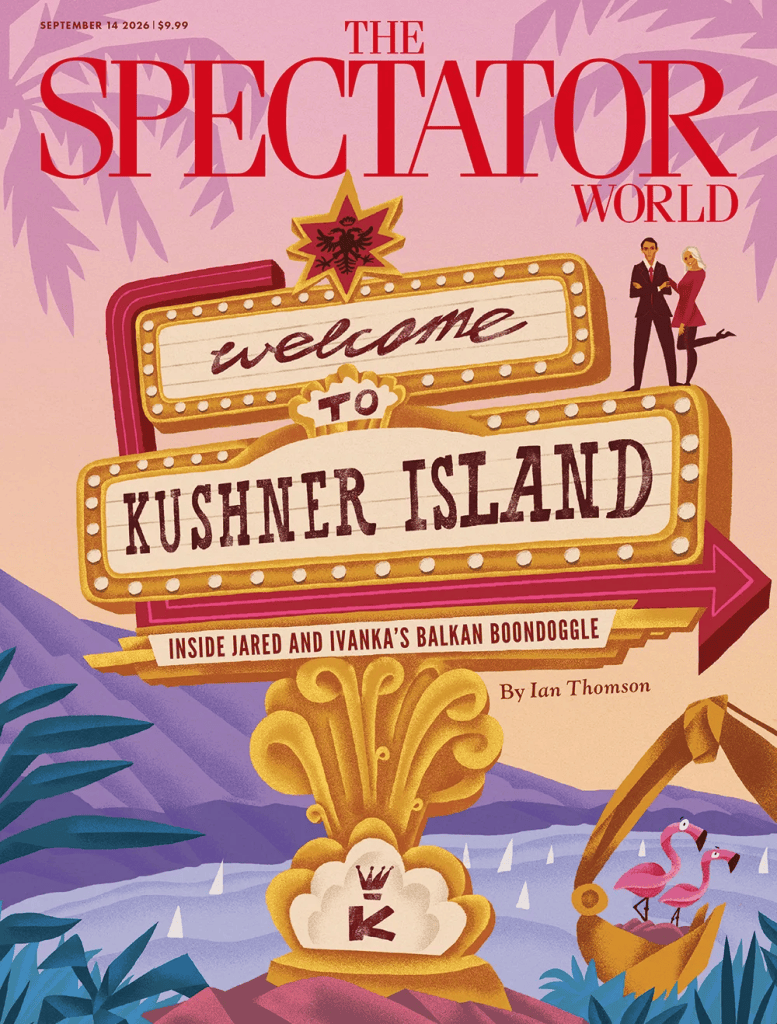
For much of its history, Albania remained as shadowy and remote as the fictional Syldavia of the Tintin comics. Letters to Albania were sometimes returned from Albany, New York, with the postal direction “Try Europe.” The country came into existence only after 1912, with the collapse of the Ottoman Empire. Its first ruler, King Zog, was hounded out by Mussolini when he invaded in 1939. Five years later, the Italians and…
In August, Donald Trump sided with consumers by increasing the tariff-free quota on imported beef for 90 days beginning September 1. The concession will last three months. It would be a minor story with any other president in the White House. But under Trump, even dull-sounding trade news can take on a sudden importance, especially when mixed up with foreign affairs. Trump’s justification for favoring Argentina, whose 2026 quota he increased by 80,000 metric tons, is partly geopolitical: he wants to give support to Javier Milei’s free-market regime, seeing it as a foil to left-leaning governments elsewhere in Latin America.
Pete Hegseth has a face for television and a machismo of sorts. It appears, even to parts of MAGA, that Donald Trump put him in charge of the armed forces because the President likes attractive people on TV. “Right out of central casting,” Trump once told Secretary Hegseth, patting him on the bicep. “Pete loves war!”
The crusade against ballot access, like virtually every other facet of Trump’s agenda, does nothing to serve the interests of “the people,” but our press is too brain-dead to notice.
A quarter century after the attacks, the grief, wars, and political furies of their aftermath still shape American life. By Jill Lepore
Have Conservatives Taken Sexy Back?
The culture wars have come for lingerie as the right, once the advocates of promise rings and purity culture, embarks on a crusade to “Make America Hot Again.” By Jennifer Wilson
Saudi Arabia’s Pursuit of Michelin Stardom
The kingdom, seeking to rebrand as a culinary juggernaut, has bankrolled new restaurants and conscripted big-name chefs. Will it succeed? By Ruby Tandoh
Donald Trump’s Capital Makeover
A coterie of advisers, planners, and architects is enabling the President’s passion project—renovating D.C. in his own image. By Antonia Hitchens
News, Views and Reviews For The Intellectually Curious