Arrests have reached a record high—nearly fifty-one thousand in August alone—with agents conducting operations nationwide at hospitals, at airports, and outside schools. By Jonathan Blitzer
A hospital administrator has a million dollars and a five-year-old who needs a new liver. When psychologists asked people to judge him, it mattered not only what he chose but how long he took to choose it.
Intellicurean · Essays
Above All Price
On a hospital administrator’s hesitation, a hypothesis about scalar reward, and what Kant meant by a thing raised above all price
What has a price, and what is raised above it, made for the essay.
Why we’re pointing you there
The administrator, Robert, comes from Philip Tetlock’s research on “taboo trade-offs,” and his hesitation is where Above All Price begins. From there the essay sets a modern hypothesis against an old idea and lets a theorem judge between them. Richard Sutton’s reward hypothesis holds that every goal can be understood as maximizing a single number. Kant held that some things have no price at all, only a dignity “raised above all price.” A 2023 theorem shows that a single number cannot represent that kind of ranking. The essay then gives the other side its full due: the life-valuations that governments use in the open, precisely so that lives are not traded away in secret.
What we liked most is that it refuses the easy version of either side. It takes the arithmetic seriously, takes the numbers that keep public decisions honest seriously, and then asks a question neither can answer for itself: when a system is built to obey a number, who decides what the number is for?
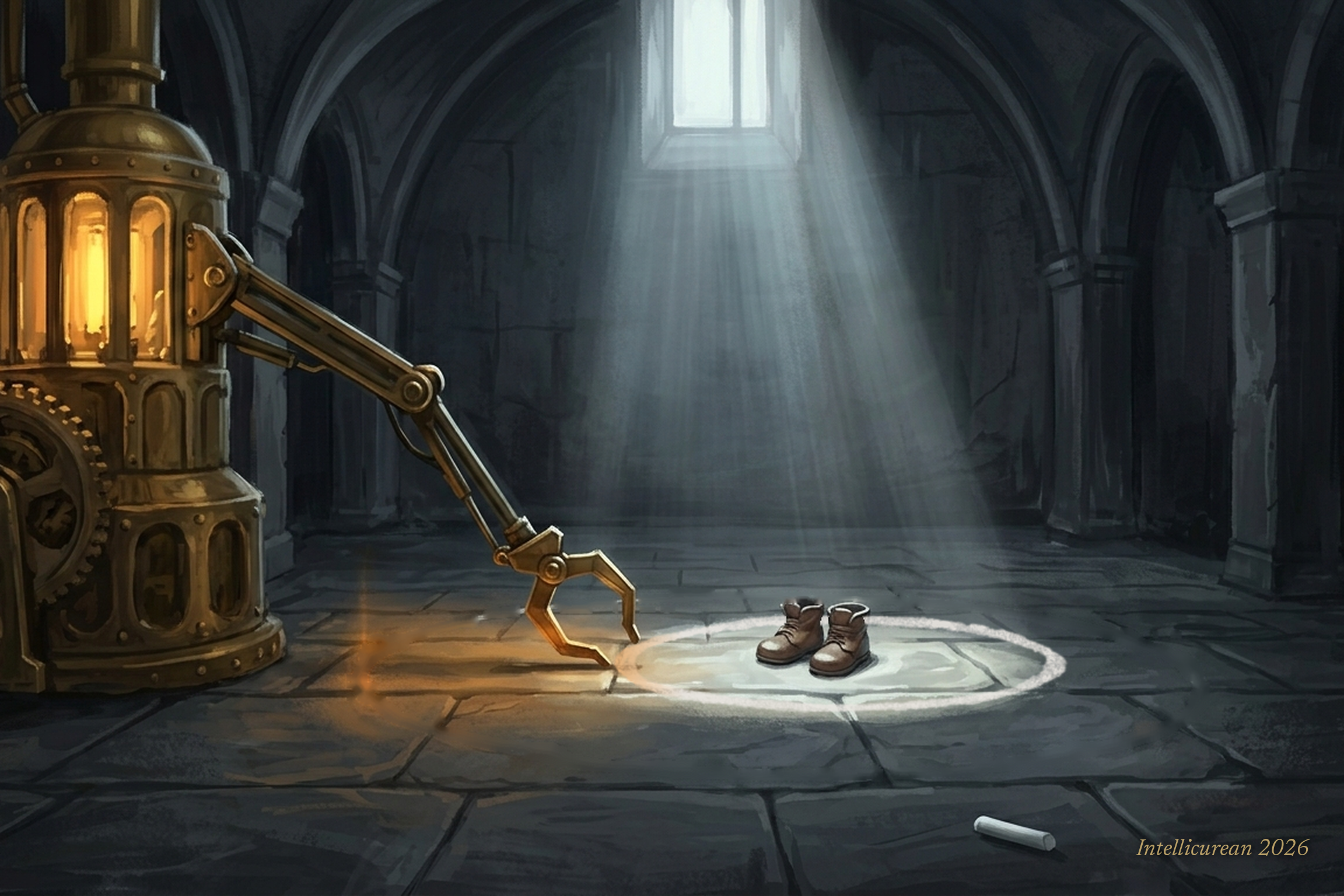
A line the machine did not draw, made for the essay.
The phrase “the X of it all” started as a joke to mock the vague lingo of studio bosses. But there’s something widely appealing about speaking “casually, broadly and vaguely in order to reduce friction.” By Nitsuh Abebe
My father dedicated his life to studying the Guna people of Panama, and they may soon allow unprecedented development through their land. I went on a trek through the jungle to find out why. By Ben Ryder Howe and Federico Rios
How Everything Became Gambling
It’s not just DraftKings and Polymarket — the logic of gambling undergirds everything coming out of Silicon Valley.
This fall, China made Charlotte Brontë’s Jane Eyre compulsory reading for 14- and 15-year-olds across the country. Writing in UnHerd, the novelist Philip Hensher notes the official reasoning, as reported in the Party-backed press: “the innocent, budding stage of first love is a crucial period for shaping a well-rounded personality.”
Hensher thinks Beijing has assigned more than a love story. Jane is the orphan who tells her cruel aunt that “the very thought of you makes me sick,” and she grows into a woman who answers to her own conscience rather than to the man with power over her. Those are dangerous lessons, he suggests, to hand every teenager in a country that ranks 178th of 180 in the World Press Freedom Index.
His conclusion is hopeful. A state that assigns a book about speaking the truth may be teaching it.
vs
THE ANSWER
The reporting tells a different story. China has had Jane Eyre for a century. A Chinese translation appeared in 1925, and a 1979 British film adaptation played in Chinese theaters as the country reopened after the Cultural Revolution (New York Times). Generations have read it, and the system has stood.
The choice also looks deliberate. Beijing Daily pitched the novel as a counterweight to social media’s “superficial notions about appearance and wealth” (CNN). UC San Diego scholar Ping Zhu told the Times that Jane is “an independent woman, but she’s not too outrageous in her challenge of patriarchal power.” She ends the book married and a mother, which fits a government urging young people to start families.
On this view, Beijing didn’t assign a rebel by accident. It chose a heroine whose independence ends in a home.
iC
THE INTELLITAKE
Both sides are reading the same novel and stopping at different chapters. Beijing assigned Jane Eyre for its ending: the marriage, the home, love that money can’t buy. Hensher is betting on its beginning: the child who talks back and the young woman who walks away from Thornfield with nothing rather than betray herself.
Notice what the two arguments share. Each assumes a book does what its readers are told it does. A ministry can set the exam question, but not the moment a 15-year-old reaches Jane’s declaration, “I am no bird; and no net ensnares me.” A novel doesn’t topple a government. It builds an inner life, and inner lives are the one thing no curriculum fully controls.
There is something worth admiring in the choice itself. A nation that wants its teenagers to value character over wealth reached for a Victorian Englishwoman’s conscience, and trusted 14-year-olds with it. Whatever Beijing intends, it has given millions of young readers a heroine who insists on choosing for herself.
TODAY’S PROVOCATION
Can a government assign a book without assigning what it means?
In 1959 Elizabeth Hardwick complained that American book reviews were drowning in praise. Sixty-seven years later the complaint still stands, and a new Intellicurean essay asks a harder question: who is left to be wrong?
An empty chair above a flood of praise, made for the essay.
Why we’re pointing you there
Hardwick’s “The Decline of Book Reviewing” is the most famous complaint about soft criticism, and Who Is Left to Be Wrong begins by taking her at her word, numbers and all. From there it moves through Rosalind Krauss’s six-word claim about video, a BuzzFeed pledge borrowed from Thumper, and Edmund Wilson’s six-month public quarrel with Vladimir Nabokov. Then it opens the published guidelines of twelve leading review outlets to see what any of them actually says about judgment.
What we liked most is that the essay holds itself to its own standard. Its claim narrowed when the evidence came back against it, and it abandoned a count it couldn’t make honestly, saying so plainly at the end. Along the way it arrives at a sentence about favours that haven’t happened yet, and we haven’t stopped thinking about it.
The weight of a favour not yet done, made for the essay.
Despite a hard-and-fast refusal to discuss Lilith for nearly six years on my social media platform, Jewitches, she remains the most popular question, request, and topic of discussion…Many know her as merely Adam’s first wife, the prequel to Eve, but her history is far more complex.
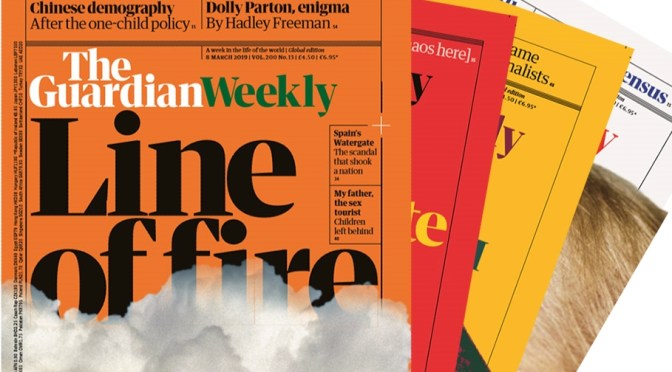
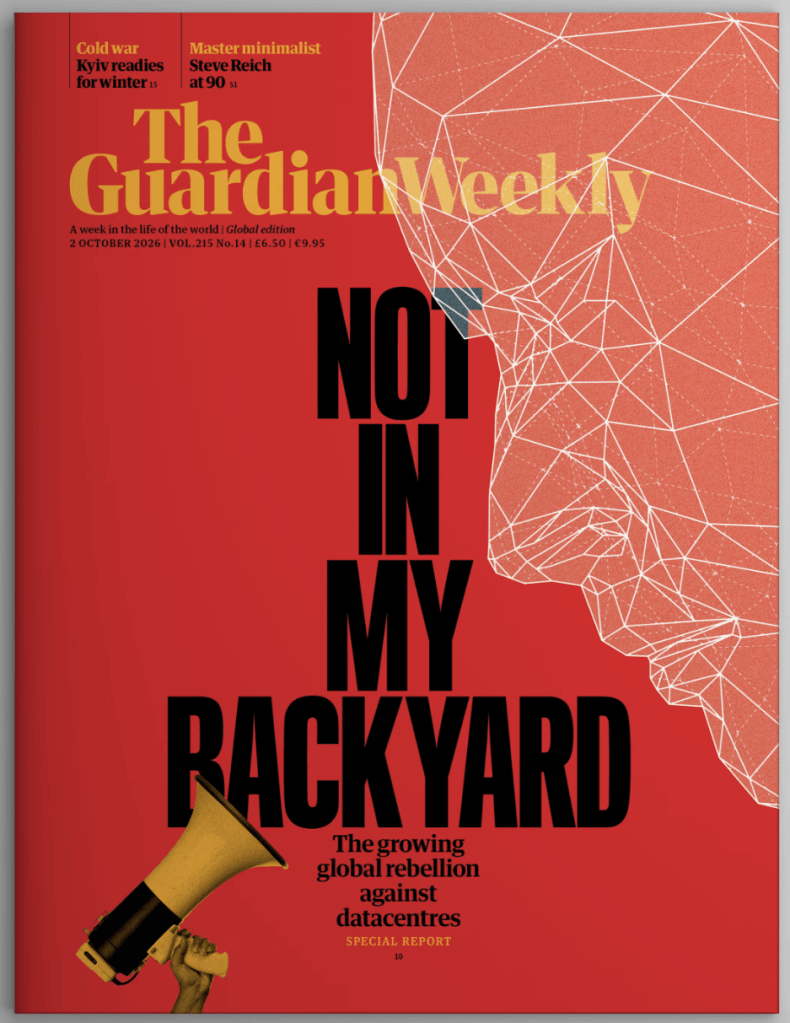
As the alarm bells sound ever louder about the potentially existential threat of breakneck AI development, people far removed from Silicon Valley debates about the future of the artificial intelligence revolution are voicing other more immediately tangible worries about the building of the vast datacentres that power these entities.
For this week’s cover story, economics and political writer Eduardo Porter, analyses why communities are pushing back against AI and the future that the big tech plutocrats want to create. These fears, based around environmental concerns over resource use and rapid societal change, are, he argues, far more complex than luddite attitudes or nimbyism.
It’s a position exemplified by reporting from two rural communities in India and the UK where vast datacentres are already under construction or being planned. As Hannah Ellis-Petersen and Aakash Hassan find out, the villagers of Tarluvada, in Andhra Pradesh, feel that government promises of a “golden age” that a hyperscale Google datacentre would bring them have been broken. Meanwhile, Sandra Laville meets protesters in Great Torrington, Devon, who sense that they are being kept in the dark about plans for an AI campus, one of Europe’s largest, in a Unesco-designated nature reserve.
Spotlight| Kyiv’s cold front is approaching Charlotte Higgins reports on how residents are preparing for winter, stocking up on food and determination, as Russia increases its attacks on energy infrastructure
Environment| What Nepal has taught Argentina What can the Patagonian town of El Chaltén at the foot of the Torre glacier do to avoid an event similar to the disaster in Nepal? María de los Ángeles Orfila finds out
Feature| Andy Burnham: a man with a plan As the first Labour conference with Andy Burnham as prime minister takes place, Hettie O’Brien finds out just how radical his policies could be
Opinion| Macron’s brave swansong In his final speech to the UN, Emmanuel Macron told the world how to stand up to Trump, says Steve Bloomfield
Culture| A minimalist at 90 As he prepares to celebrate a milestone birthday, Steve Reich tells Flora Willson how he developed his musical ideas and why he wants others to take up the baton of performing his works
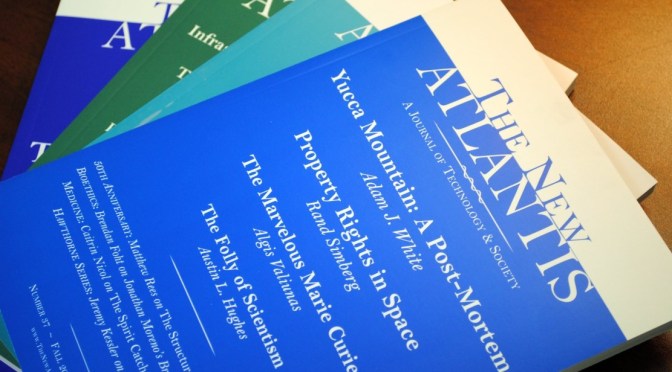
The shared dream of techno-optimizers, feminist liberators, and the kindly grandpa from Jurassic Park is getting closer to reality.
Zoning Alone
A hundred-year-old experiment in telling people what to build and where is part of why Americans have become so isolated. The Supreme Court may soon bring it to an end — and help bring back real neighborhoods.
The Pro-Human AI Declaration
A statement endorsed by The New Atlantis
In March 2026, a coalition of interest groups and individuals, organized by the Future of Life Institute, issued the following declaration at HumanStatement.org.
As companies race to develop and deploy AI systems, humanity faces a fork in the road. One path is a race to replace: humans replaced as creators, counselors, caregivers and companions, then in most jobs and decision-making roles, concentrating ever more power in unaccountable institutions and their machines. An influential fringe even advocates altering or replacing humanity itself. This race to replace poses risks to societal stability, national security, economic prosperity, civil liberties, privacy, and democratic governance. It also imperils the human experiences of childhood and family, faith, and community.
A remarkably broad coalition rejects this path, united by a simple conviction: artificial intelligence should serve humanity, not the reverse. There is a better path, where trustworthy and controllable AI tools amplify rather than diminish human potential, empower people, enhance human dignity, protect individual liberty, strengthen families and communities, preserve self-governance and help create unprecedented health and prosperity. This path demands that those who wield technological power be accountable to human values and needs, in support of human flourishing.
1. Keeping Humans in Charge
Human Control Is Non-Negotiable: Humanity must remain in control. Humans should choose how and whether to delegate decisions to AI systems.
Meaningful Human Control: Humans should have authority and capacity to understand, guide, proscribe, and override AI systems.
No Superintelligence Race: Development of superintelligence should be prohibited until there is broad scientific consensus that it can be done safely and controllably, and there is strong public buy-in.
Off-Switch: Powerful AI systems must have mechanisms that allow human operators to promptly shut them down.
No Reckless Architectures: AI systems must not be designed so that they can self-replicate, autonomously self-improve, resist shutdown, or control weapons of mass destruction.
Independent Oversight: Highly autonomous AI systems where controllability is not obvious require pre-development review and independent oversight: genuine authority to understand, prohibit, and override, not industry self-regulation.
Capability Honesty: AI companies must provide clear, accurate and honest representations of their systems’ capabilities and limitations.
2. Avoiding Concentration of Power
No AI Monopolies: AI monopolies that concentrate power, stifle innovation, and imperil entrepreneurship must be avoided.
Shared Prosperity: The benefits and economic prosperity created by AI should be shared broadly.
No Corporate Welfare: AI corporations should not be exempted from regulatory oversight or receive government bailouts.
Genuine Value Creation: AI development should prioritize solving real problems and creating authentic value.
Democratic Authority Over Major Transitions: Decisions about AI’s role in transforming work, society, and civic life require democratic support, not unilateral corporate or government decree.
Avoid Societal Lock-In: AI development must not severely limit humanity’s future options or irreversibly limit our agency over our future.
3. Protecting the Human Experience
Defense of Family and Community Bonds: AI should not supplant the foundational relationships that give life meaning — family, friendship, faith communities, and local connections.
Child Protection: Companies must not be allowed to exploit children or undermine their wellbeing with AI interactions creating emotional attachment or leverage.
Right to Grow: AI companies should not be allowed to stunt children’s physical, mental or social growth or deprive them of essential experiences for healthy development during critical periods.
Pre-Deployment Safety Testing: Like drugs, chatbots must undergo pre-deployment testing for increased suicidal ideation, exacerbation of mental health disorders, escalation of acute crisis situations, and other known harms.
Bot-or-Not Labeling: AI-generated content that could reasonably be mistaken for human-generated must be clearly labeled as such.
No Deceptive Identity: AI should clearly and correctly identify itself as artificial, nonhuman, and not a professional, and it should not claim experiences it lacks.
No Behavioral Addiction: AIs should not cause addiction or compulsive use through manipulation, sycophantic validation, or attachment formation.
4. Human Agency and Liberty
No AI Personhood: AI systems must not be granted legal personhood, and AI systems should not be designed such that they deserve personhood.
Trustworthiness: AI must be transparent, accountable, reliable, and free from perverse private or authoritarian interests.
Liberty: AI must not curtail individual liberty, freedom of speech, religious practice, or association.
Data Rights and Privacy: People should have power over their personal data, with rights to access, correct, and delete it from active systems, AI training sets, and derived inferences.
Psychological Privacy: AI should not be allowed to exploit data about the mental or emotional states of users.
Avoiding Enfeeblement: AI systems should be designed to empower, rather than enfeeble their users.
5. Responsibility and Accountability for AI Companies
No Liability Shield: AI must not be able to act as a liability shield, preventing those deploying it from being legally responsible for their actions.
Developer Liability: Developers and deployers bear legal liability for defects, misrepresentation of capabilities, and inadequate safety controls, with statutes of limitation that account for harms emerging over time.
Personal Liability: There should be criminal penalties for executives responsible for prohibited child-targeted systems or ones causing catastrophic harm.
Independent Safety Standards: AI development shall be governed by independent safety standards and rigorous oversight.
No Regulatory Capture: AI companies must not be allowed undue influence over rules that govern them.
Failure Transparency: If an AI system causes harm, it should be possible to ascertain why as well as who is responsible.
AI Loyalty: AI systems performing functions in professions with fiduciary duties, such as health, finance, law, or therapy, must fulfill all of those duties, including mandated reporting, duty of care, conflict of interest disclosure, and informed consent.
When the Englishman’s house was no longer his castle
Deborah Nicholls-Lee explores how the requisition of country houses played a crucial role in winning the Second World War
Look, listen, learn
Nature writer Mark Cocker delves into his new book to explain how we can open our eyes to the world around us
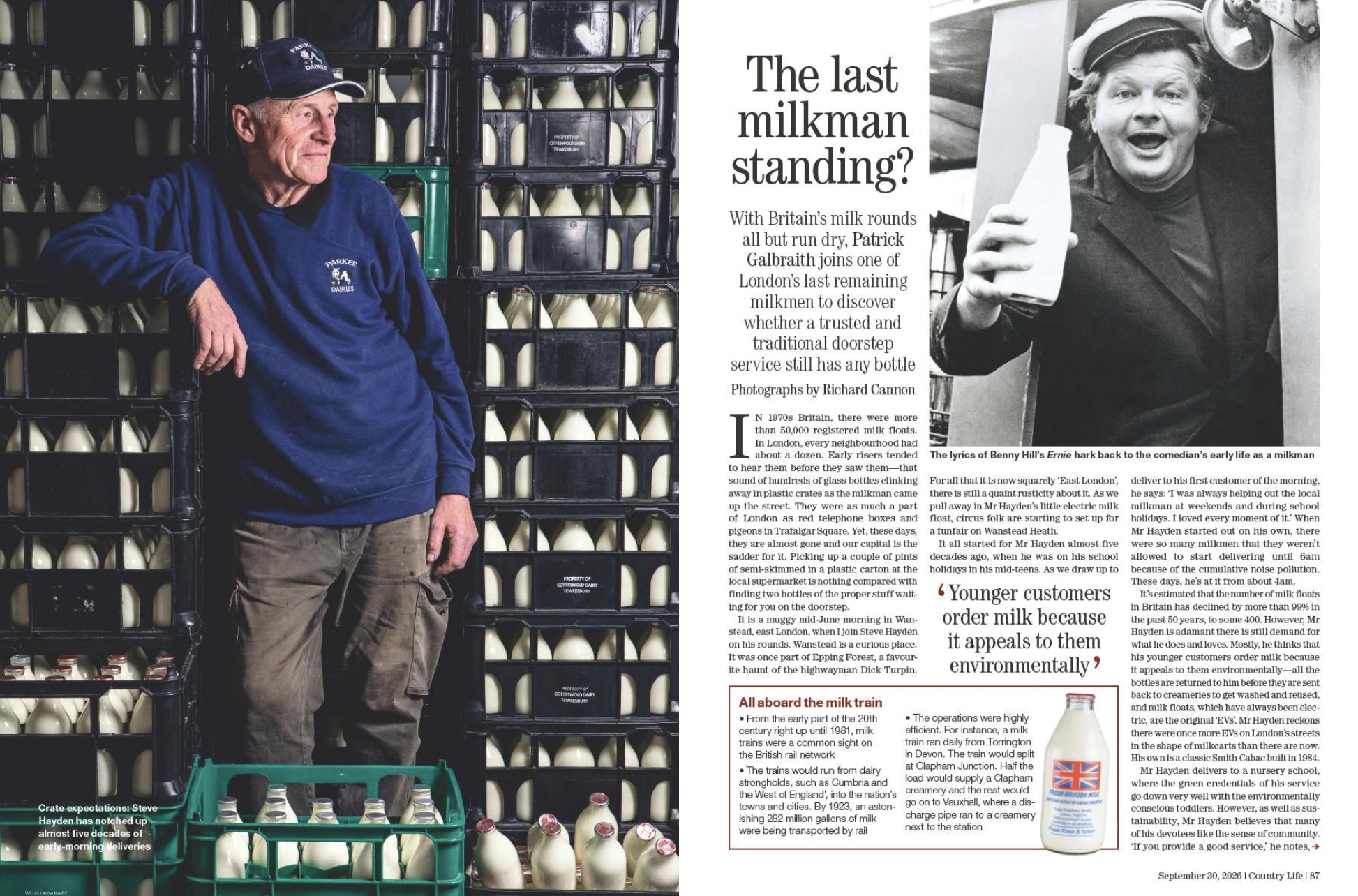
The last milkman standing?
Are doorstep dairy deliveries a thing of the past, asks Patrick Galbraith, as he joins one of the capital’s few remaining rounds
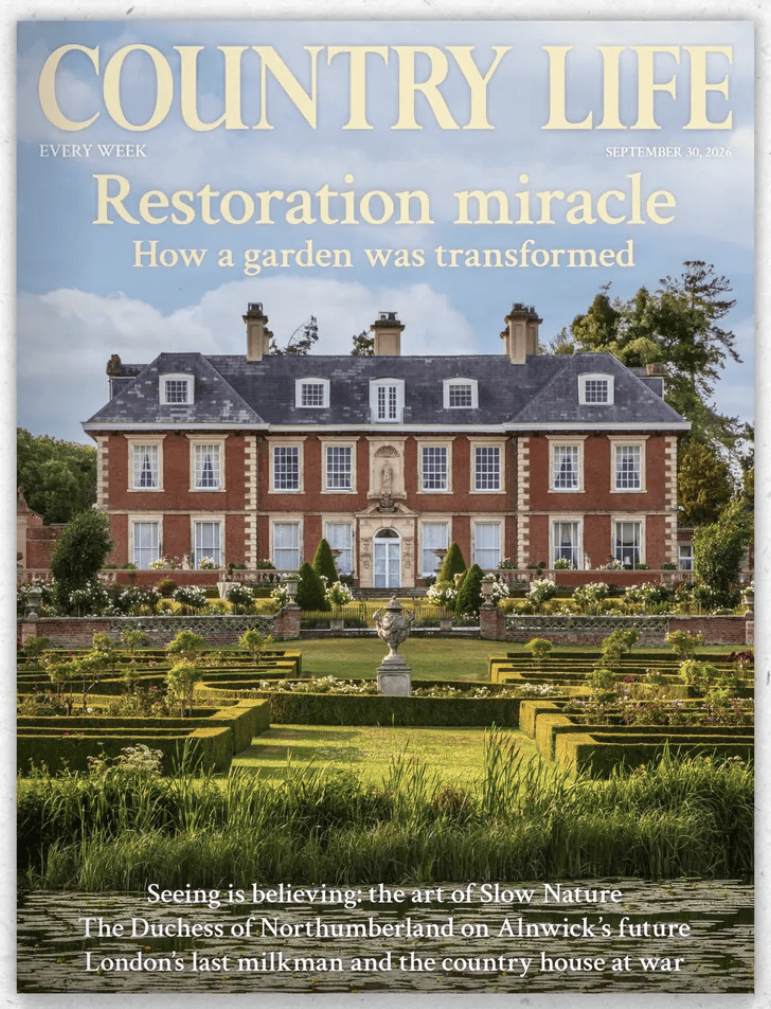
The restoration of ‘England’s green and pleasant land’
Timothy Mowl admires the revival of one of the finest and earliest Pulhamite gardens at Highnam Court in Gloucestershire
The Versailles of the north
The Duchess of Northumberland tells Charles Quest-Ritson of her plans for the Alnwick Garden as it celebrates its 25th anniversary
Tony Iommi’s favourite painting
The Black Sabbath founder chooses a work depicting beauty, strength and grace
Country-house treasure
John Goodall raises a glass to the late-Victorian ‘Braxted Bar’ that dominates the entrance hall at Braxted Park in Essex
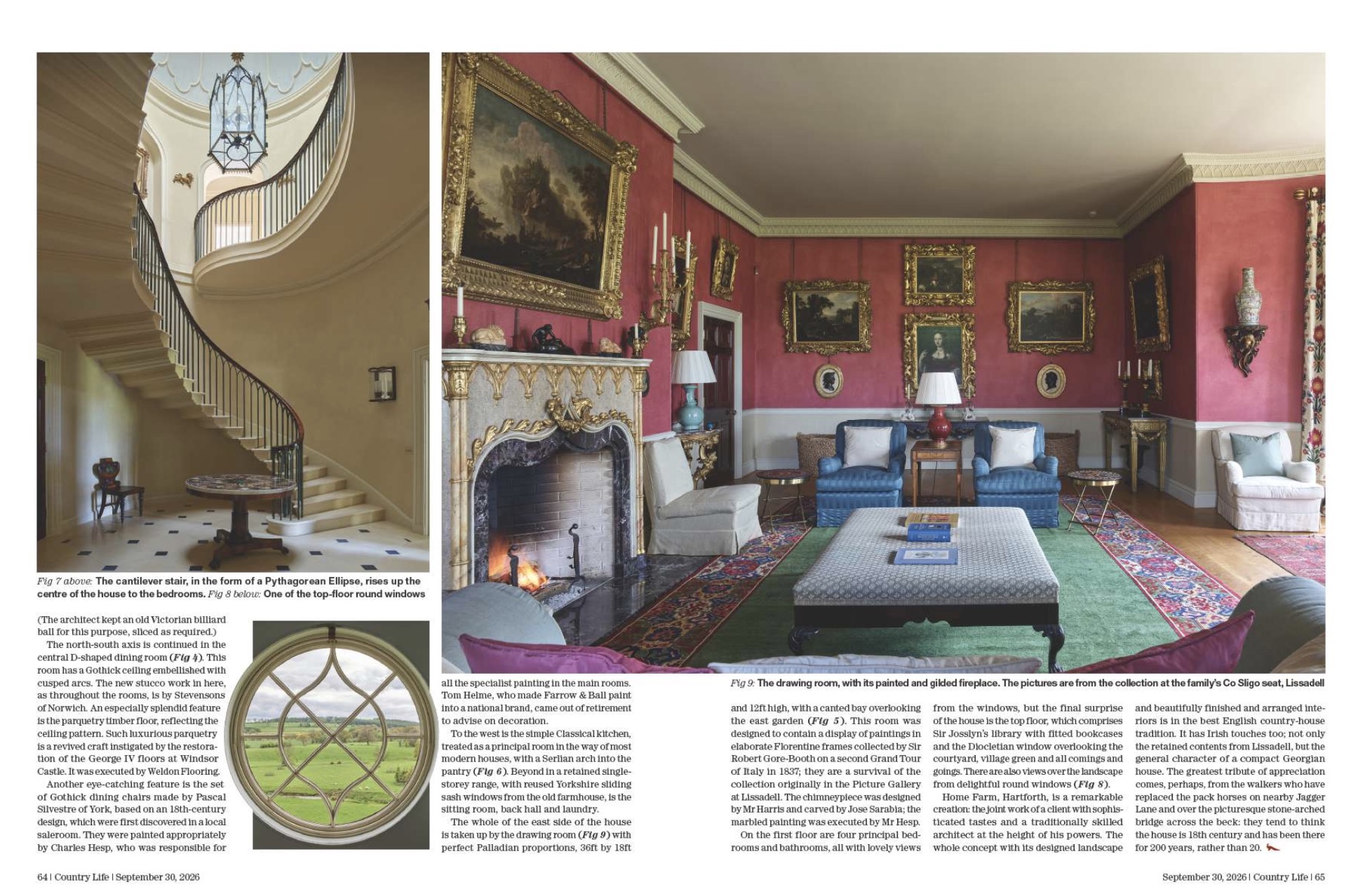
The genius of place
Classical and Gothic detailing are employed to dramatic effect at Home Farm in North Yorkshire, finds John Martin Robinson
On the brink of extinction
In a last call for the telephone exchange, Ptolemy Dean ponders the future of the obsolete edifices
The legacy
Octavia Pollock hails the vision of John Bateman, whose dams and reservoirs still serve us today
There goes summer
John Lewis-Stempel prepares to get hands-on with his flock as thoughts turn to tupping time with the transition to autumn
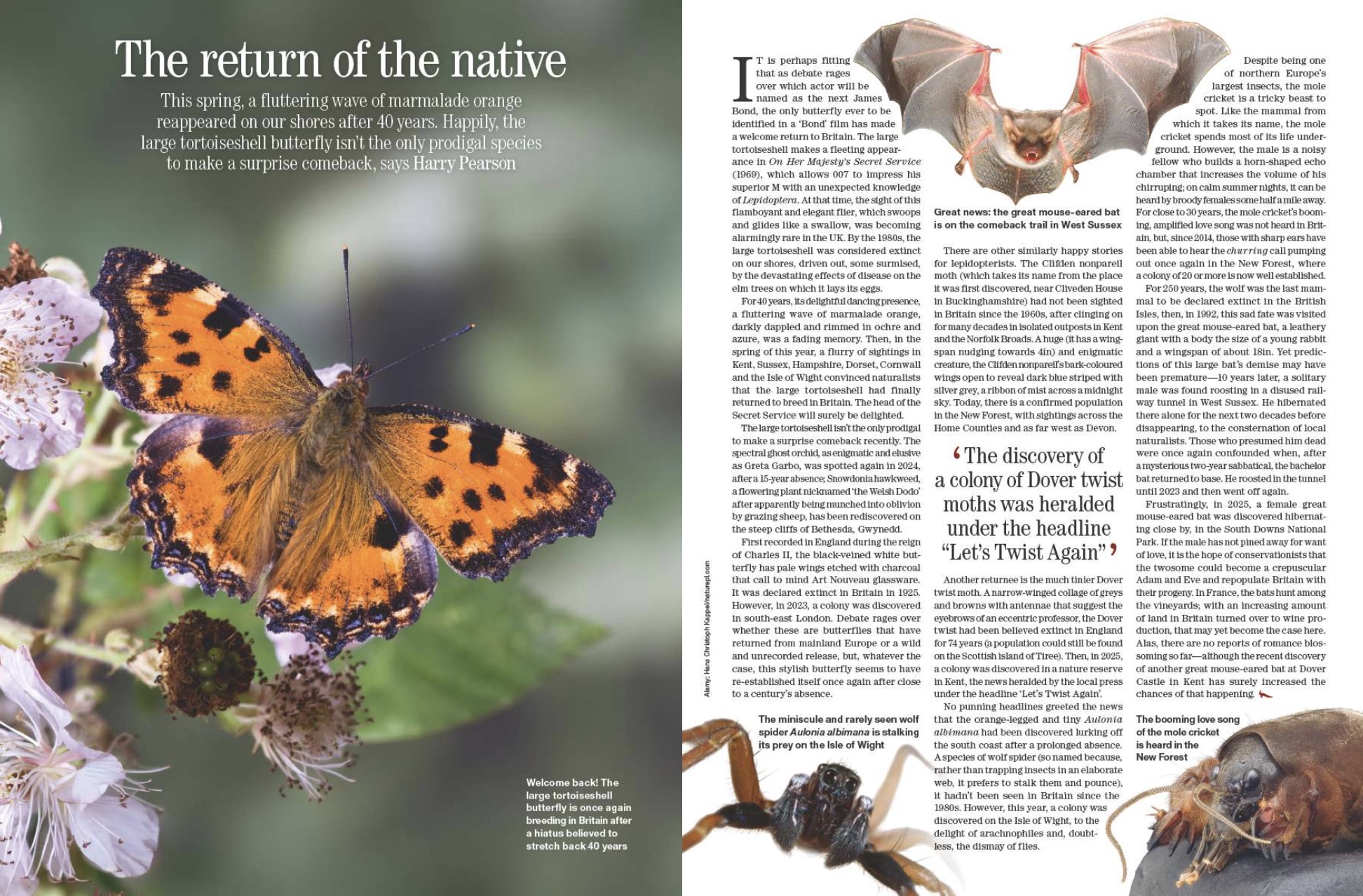
The return of the native
The large tortoiseshell butterfly is back. Harry Pearson hails British species risen from the dead
Luxury
Amie Elizabeth White showcases floral jewels and country classics, plus Rita Konig’s favourite things
Interiors
Amelia Thorpe picks companies that add a touch of craftsmanship to country-house renovations
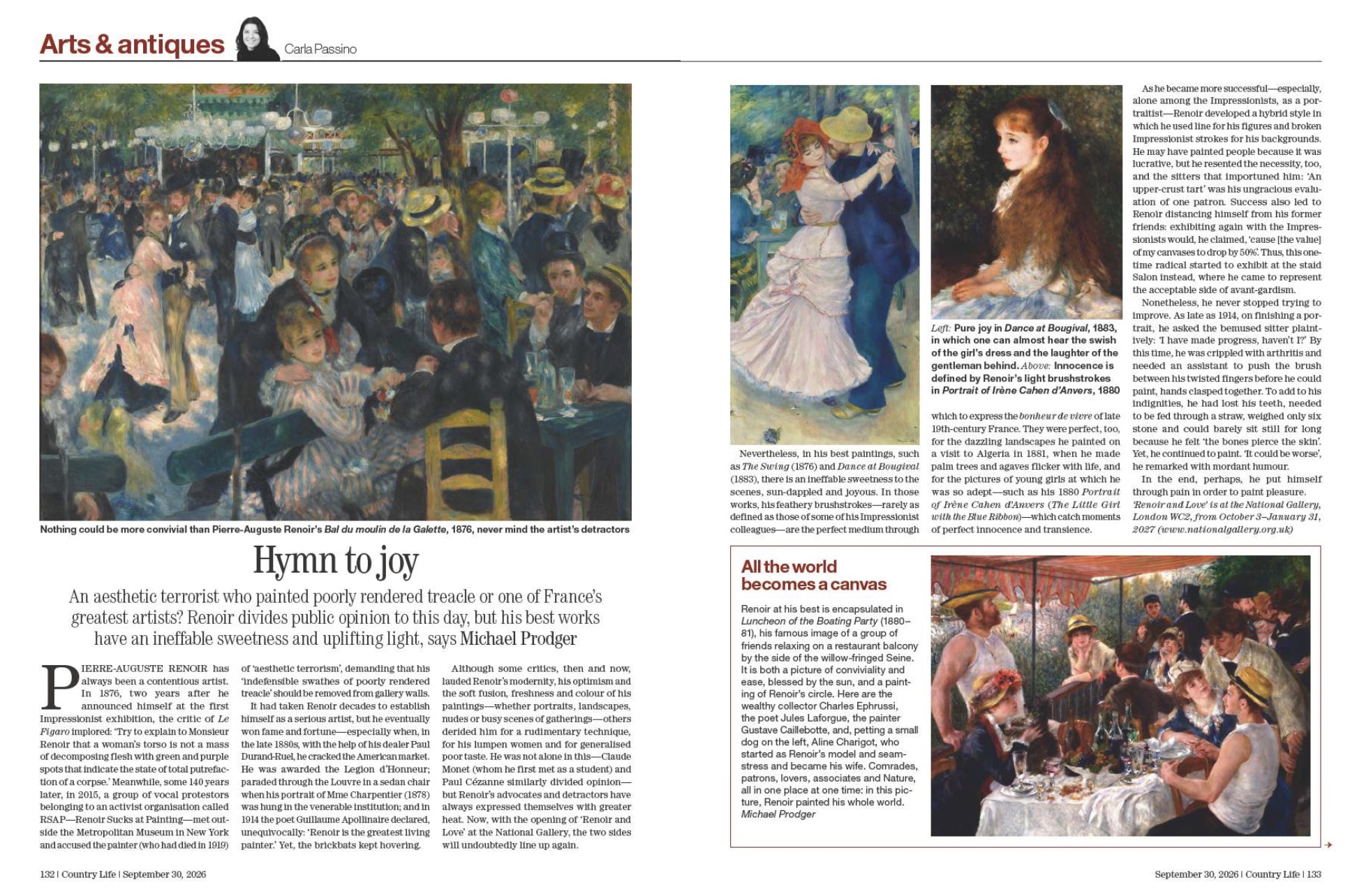
Arts & antiques
Ahead of a new Pierre-Auguste Renoir exhibition at the National Gallery, Michael Prodger looks at how the French Impressionist is still dividing critical opinion
Countryside mystery
Straying livestock could prove costly in the days of the village pound, as John Wright reveals
Travel
Rosie Paterson visits the Algarve in Portugal and finds a natural haven that is truly worth its salt
Ripe for the picking
From apples to pears and pomegranates, painters down the ages have used all manner of fruit as artistic symbols, as Michael Prodger discovers
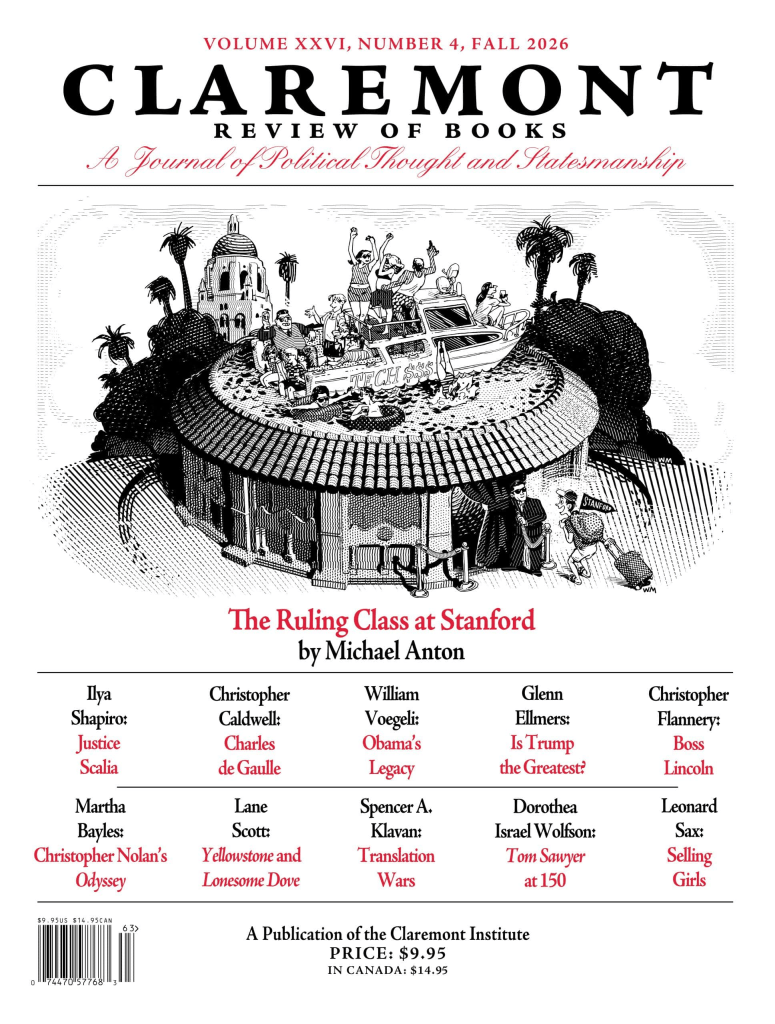
Because I’m going to be quite critical of Theo Baker’s How to Rule the World, it feels only right to start with three pieces of sincere praise: the book held my attention all the way to the end, I learned things from it, and I read it twice. These are not reactions I expect most new books to generate, let alone one written by someone not yet of legal drinking age. Hence on this basis alone, I would have to concede that Rule (borrowing Baker’s shorthand for a “secret” Stanford class, about which more below) is a real achievement.
The first marriage in Tuscan history was not between a man and a woman but between a vine and a tree. Before the Etruscans cleared these hills, they were dense with oakwood, through which wild grape vines climbed naturally toward the canopy, wedded to the forest in which they grew. The Etruscans formalized that marriage. Vines were trained up living maples, elms, and poplars. Grapes were cut from ladders or with long sickles. Later Italians called it the vite maritata—the married vine.
After watching Christopher Nolan’s The Odyssey in a sold-out IMAX theater, my husband and I were heading for the exit when we were attacked by smiling employees brandishing free rolled-up posters. Raising our shields, we broke through their phalanx, leaped aboard our vessel moored in the parking lot, and sailed homeward with only a few posters glancing off the moonroof.
News, Views and Reviews For The Intellectually Curious