

From a Phys.org online article:
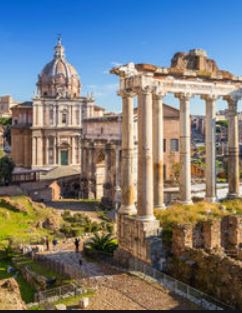 There was a massive shift in Roman residents’ ancestry, the researchers found, but that ancestry came primarily from the Eastern Mediterranean and Near East, possibly because of denser populations there relative to the Roman Empire’s western reaches in Europe and Africa.
The next several centuries were full of turmoil: the empire split in two, diseases decimated Rome’s population and a series of invasions befell the city. Those events left a mark on the city’s population, which shifted toward western European ancestry. Later, the rise and reign of the Holy Roman Empire brought an influx of central and northern European ancestry.
Scholars have been studying Rome for hundreds of years, but it still holds some secrets—for instance, relatively little is known about the ancestral origins of the city’s denizens. Now, an international team led by researchers from Stanford University, the University of Vienna and Sapienza University of Rome is filling in the gaps with a genetic history that shows just how much the Eternal City’s populace mirrored its sometimes tumultuous history.
To read more: https://phys.org/news/2019-11-genetic-history-rome.html

 Scientists believe they have located the ancestral home of one of humanity’s early ancestors—in northern Botswana. Tom Siebel, a Silicon Valley veteran and the founder of C3.ai, explains how digital transformation stops companies from going extinct. And, host Kenneth Cukier takes a trip to the Natural History Museum in London to learn about
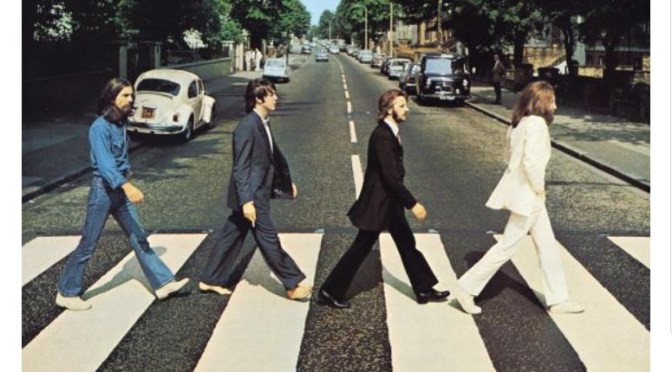
 “Abbey Road” was the Beatles’ last word—the final recordings by the most popular and influential artists of the nineteen-sixties. Now, on the occasion of its fiftieth anniversary, “Abbey Road” has been expertly remixed by Giles Martin, George Martin’s son and protégé, and reissued in a super-deluxe edition that comes with an archive of studio outtakes and a hundred-page book of essays and liner notes that chronicle how the recordings were made. “The Beatles are good even though everybody already knows that they’re good,” the classical composer Ned Rorem observed in 1968, alluding to how the band’s immense popularity confounded the usual notions of discriminating taste. If anyone needs to be reminded of this, this new edition of “Abbey Road” should do the trick.
 The Huntington’s
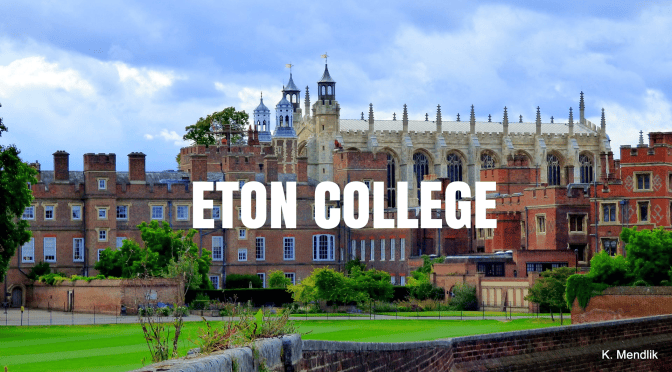
 James Wood: These Etonians

 More than 1,600 museums nationwide will be opening their doors for free on Sept. 21 in honor of Museum Day.
 Although the boomers may not have contributed much to the social and cultural changes of the nineteen-sixties, many certainly consumed them, embraced them, and identified with them. Still, the peak year of the boom was 1957, when 4.3 million people were born, and those folks did not go to Woodstock. They were twelve years old. Neither did the rest of the 33.5 million people born between 1957 and 1964. They didn’t start even going to high school until 1971. When the youngest boomer graduated from high school, Ronald Reagan was President and the Vietnam War had been over for seven years.

